Can Viracid Support Immune Balance and T-Cell Function in Long COVID and ME/CFS?
March 6, 2026
ViracidImmune SupportLong COVID
Share:
Disclaimer: The information provided here is for educational purposes only and is not intended as medical advice. It should not be used to diagnose, treat, cure, or prevent any medical condition. Instead, use it as a starting point for discussion with your healthcare provider. Always consult with a qualified healthcare provider before starting any new medication, supplement, device, or making changes to your health regimen.
Months or even years after an initial viral infection, many patients with complex chronic conditions find themselves trapped in a relentless cycle of symptom flares, profound fatigue, and heightened susceptibility to new illnesses. For individuals living with Long COVID, myalgic encephalomyelitis/chronic fatigue syndrome (ME/CFS), and associated dysautonomia, the immune system often feels like it is simultaneously exhausted and in overdrive. You might experience the constant sensation of fighting off a "phantom flu," complete with swollen lymph nodes, a sore throat, and deep muscle aches, yet standard blood tests often return "normal." This paradoxical state of immune dysregulation—where the body cannot effectively clear lingering pathogens but remains locked in a state of chronic, low-grade inflammation—is a hallmark of post-viral syndromes.
Navigating this complex immunological landscape requires more than just generic immune boosters; it demands a targeted, synergistic approach that can both stimulate sluggish antiviral defenses and calm hyperactive inflammatory pathways. This is where comprehensive formulations like Viracid come into play. By combining high-potency essential nutrients with standardized botanical extracts, Viracid is designed to support the delicate balance of the immune system. In this comprehensive guide, we will explore the intricate biochemistry behind Viracid's key ingredients—including Astragalus, Andrographis, Elderberry, Echinacea, Vitamin C, and Zinc—and examine how they may help restore immune homeostasis, support T-cell function, and improve quality of life for those battling chronic, invisible illnesses.
TL;DR
Viracid combines essential nutrients and botanical extracts to support immune balance in chronic conditions like Long COVID.
Ingredients like Zinc, Vitamin C, and Elderberry may help support viral clearance and reduce chronic inflammation.
Standardized extracts ensure consistent dosing, minimizing the risk of symptom flares or mast cell activation.
Consult your healthcare provider to determine if an acute or maintenance dosing strategy is right for you.
What is Viracid?
The Foundation of Immune Defense
The human immune system is a remarkably complex network of cells, tissues, and signaling molecules designed to identify and eliminate foreign invaders while maintaining tolerance to the body's own tissues. In a healthy state, this system operates with exquisite precision. The innate immune system, acting as the body's rapid response team, deploys macrophages and Natural Killer (NK) cells to immediately neutralize threats. Simultaneously, the adaptive immune system, composed of T-cells and B-cells, develops highly specific, targeted responses and creates a lasting "memory" of the pathogen to prevent future infections. However, this dynamic defense mechanism is highly metabolically demanding and exquisitely sensitive to nutrient deficiencies and chronic stress.
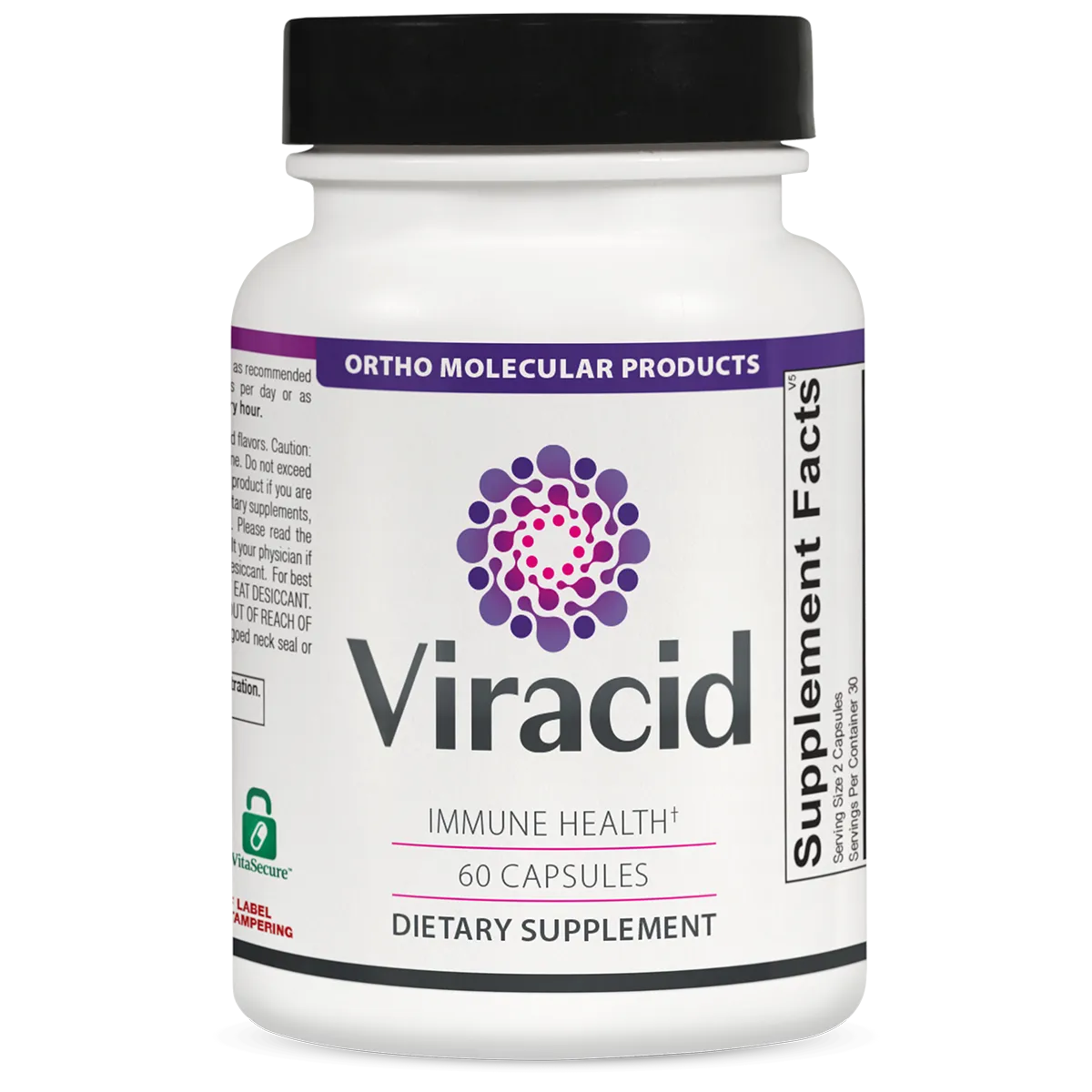
Viracid is a specialized immune support formulation created by Ortho Molecular Products. Unlike single-ingredient supplements, Viracid is engineered to provide immediate, broad-spectrum support for immune challenges by addressing multiple biological pathways simultaneously. It achieves this through a carefully calibrated blend of essential vitamins, trace minerals, and potent botanical extracts. The philosophy behind this formulation is synergy—the concept that the combined effect of these compounds is greater than the sum of their individual actions. By providing the exact molecular building blocks required for immune cell proliferation alongside botanicals that modulate cellular signaling, Viracid aims to optimize the body's natural defense mechanisms without pushing them into a state of harmful overactivity.
The Synergy of Botanicals and Essential Nutrients
At the core of Viracid's efficacy is its combination of foundational nutrients: Vitamin A, Vitamin C, Vitamin B12, Pantothenic Acid, and Zinc. These nutrients are not merely optional "boosters"; they are absolute biochemical prerequisites for immune function. For instance, immune cells accumulate Vitamin C at concentrations 10 to 100 times higher than the surrounding blood plasma, utilizing it to protect themselves from the intense oxidative stress generated during the destruction of pathogens a 2022 study on viral T-cell responses. Similarly, Zinc acts as a critical structural component for over 2,000 transcription factors and is the essential cofactor for thymulin, the hormone responsible for maturing naive T-cells into active, pathogen-fighting lymphocytes research on zinc as an immune gatekeeper.
Complementing these nutritional foundations are four heavily researched botanical extracts: Astragalus membranaceus, European Elderberry (Sambucus nigra), Andrographis paniculata, and Echinacea purpurea. In traditional herbal medicine, these plants have been utilized for centuries to combat respiratory infections and fevers. Modern pharmacological research has now elucidated their specific mechanisms of action at the molecular level. These botanicals contain unique bioactive compounds—such as polysaccharides, alkamides, anthocyanins, and diterpenoids—that interact directly with human immune cell receptors. They can trigger the release of antiviral interferons, physically block viral entry into host cells, and modulate the inflammatory cascade to prevent excessive tissue damage.
The Role of Standardized Extracts
A critical distinction in botanical supplementation is the use of standardized extracts, which Viracid employs extensively. In nature, the concentration of active compounds in a plant can vary wildly depending on soil quality, climate, and harvesting methods. A standard, unrefined herbal powder may contain very little of the actual molecule responsible for the therapeutic effect. Viracid utilizes extracts that are scientifically standardized to guarantee a specific percentage of the active constituent. For example, its Andrographis extract is standardized to contain 30% andrographolides, and its Elderberry extract is standardized to 13% anthocyanins.
This standardization is paramount for patients with complex chronic conditions like Long COVID and ME/CFS. When managing severe immune dysregulation, predictable dosing is essential to avoid triggering symptom flares or mast cell degranulation. Standardized extracts ensure that every capsule delivers a consistent, clinically relevant dose of the bioactive molecules needed to interact with cellular receptors, providing a reliable tool for immune modulation rather than a biological gamble. By combining these high-quality botanicals with bioavailable forms of essential nutrients, Viracid offers a comprehensive approach to supporting the body's intricate defense networks.
How Immune Dysregulation Impacts Long COVID and ME/CFS
Viral Persistence and the Ghost of Infections Past
To understand how a supplement like Viracid might aid in recovery, we must first examine the profound immunological chaos that characterizes conditions like Long COVID and ME/CFS. One of the leading hypotheses for the continuation of debilitating symptoms is the concept of viral persistence. Rather than fully clearing the initial infection, recent research suggests that fragments of the virus—or even replication-competent viral reservoirs—may hide within "immune-privileged" tissues such as the central nervous system, the gut lining, or the vascular endothelium. This persistent presence acts as a constant, low-level trigger, forcing the immune system into a state of perpetual, exhausting warfare.
Furthermore, this state of chronic immune activation can lead to the reactivation of latent viruses that the body previously had under control. A 2023 study on ME/CFS and Long COVID demonstrated a significant increase in the reactivation of the Epstein-Barr Virus (EBV) and Herpes Simplex Virus 1 (HSV-1) in these patient populations. These reactivated herpesviruses produce proteins that bind to cytoskeletal structures and disrupt mitochondrial dynamics, leading to impaired cellular energy production (OXPHOS) and the profound fatigue characteristic of these illnesses. This viral reactivation creates a vicious cycle: the immune system is too weak to suppress the latent virus, and the active virus further damages the cellular machinery needed for a robust immune response. You can explore more about this phenomenon in our guide on Autoimmunity and Immune Dysregulation in Long COVID.
T-Cell Exhaustion and the Loss of Immune Memory
As the immune system continuously battles these persistent or reactivated viral antigens, a phenomenon known as "T-cell exhaustion" occurs. T-cells are the highly specialized assassins of the adaptive immune system, responsible for hunting down and destroying virus-infected cells. However, when they are exposed to the same viral antigen for months on end, they begin to lose their effector functions. They express inhibitory receptors on their surface, produce fewer antiviral cytokines (like Interferon-gamma), and eventually lose the ability to proliferate and destroy their targets.
Recent clinical analyses have identified a pronounced CD8+ T-cell dysfunction in both ME/CFS and Long COVID patients. When researchers isolated these specific immune cells and stimulated them, they produced markedly fewer protective cytokines compared to healthy controls. This exhaustion leaves the patient highly vulnerable to secondary infections and unable to fully clear the primary viral reservoirs. The body is effectively trapped in a stalemate: it recognizes the threat but lacks the cellular vitality to mount a decisive, clearing attack. This is why patients often feel like they are constantly on the verge of coming down with the flu, experiencing post-exertional malaise (PEM) whenever they push their bodies too hard and divert energy away from this ongoing immune struggle.
The Cytokine Storm and Chronic Neuroinflammation
While the adaptive immune system (T-cells) becomes exhausted, the innate immune system often becomes hyperactive and dysregulated, leading to chronic inflammation. Macrophages and mast cells, sensing the ongoing tissue damage and viral presence, continuously pump out pro-inflammatory cytokines such as Interleukin-6 (IL-6), Interleukin-1 beta (IL-1β), and Tumor Necrosis Factor-alpha (TNF-α). This localized inflammation can easily become systemic, crossing the blood-brain barrier and activating microglia (the resident immune cells of the brain).
This chronic neuroinflammation is a primary driver of the severe cognitive dysfunction, or "brain fog," experienced by so many patients. Research investigating post-COVID brain fog highlights that the overexpression of specific ion channels (Kv1.3) in brain leukocytes contributes to this enhanced, damaging immune response. The constant flood of inflammatory signaling molecules disrupts normal neural circuitry, triggering sickness behavior, autonomic nervous system dysfunction (dysautonomia), and profound metabolic shifts. To break this cycle, an intervention must be capable of not only supporting the exhausted T-cells but also actively dampening the hyperactive, inflammatory cytokine response—a dual-action approach that the ingredients in Viracid are specifically designed to provide.
Viracid: Supporting Immune Balance and Viral Clearance
Activating Macrophages and Natural Killer Cells
Viracid utilizes a multi-targeted approach to support immune homeostasis, beginning with the activation of the innate immune system's first responders: macrophages and Natural Killer (NK) cells. The Echinacea purpurea extract in Viracid plays a pivotal role here. Extensive pharmacological research demonstrates that the active compounds in Echinacea—specifically polysaccharides like arabinogalactans and caffeic acid derivatives—bind directly to Toll-Like Receptor 4 (TLR4) on the surface of macrophages. This binding triggers an intracellular signaling cascade involving Mitogen-Activated Protein Kinases (MAPKs), which ultimately activates the transcription factor NF-κB, pushing the macrophage from a resting state into an active, pathogen-destroying state a 2024 study in Planta Medica.
Simultaneously, Echinacea acts as a potent stimulant for NK cells, the specialized lymphocytes responsible for recognizing and inducing apoptosis (programmed cell death) in virus-infected cells. It achieves this through a fascinating synergistic mechanism: the plant's polysaccharides stimulate macrophages to release signaling cytokines, while its alkamides suppress endogenous inhibitors (like prostaglandins) that normally keep NK cells dormant. By "taking the brakes off," Echinacea allows for a rapid expansion and activation of NK cells, providing immediate support against viral replication. This mechanism is particularly relevant for patients dealing with the reactivation of latent herpesviruses, where robust NK cell activity is required to clear infected cells.
Reversing T-Cell Exhaustion and Promoting Maturation
To address the profound T-cell exhaustion seen in Long COVID and ME/CFS, Viracid relies on the powerful combination of Astragalus membranaceus and Zinc. Astragalus, a foundational herb in traditional medicine, contains Astragalus polysaccharides (APS) that act as precise immune modulators. Recent immunological reviews have demonstrated that APS can help restore the function and proliferation of exhausted CD8+ T-cells, effectively reprogramming the immune microenvironment to improve the clearance of persistent viruses. Astragalus also robustly induces the production of Type I interferons (like IFN-β), which are crucial signaling proteins that prompt surrounding cells to heighten their antiviral defenses.
Zinc acts as the essential structural partner in this process. It is the required cofactor for thymulin, the hormone that drives the maturation of naive T-cells into active fighters. Even a mild zinc deficiency—which is common in chronic illness due to poor absorption and high metabolic demand—can lead to a severe reduction in T-cell counts and an imbalance between Th1 (antiviral) and Th2 (allergic/inflammatory) immune responses. By providing highly bioavailable Zinc Bisglycinate Chelate, Viracid ensures that the thymus gland has the raw materials necessary to continuously generate fresh, fully functional T-cells to replace those that have become exhausted by chronic viral exposure. For more on the importance of essential nutrients in cellular recovery, see our guide on Balanced Immune Support.
Blocking Viral Entry and Replication Pathways
Beyond stimulating the host's immune cells, the botanicals in Viracid actively interfere with the life cycle of invading pathogens. European Elderberry (Sambucus nigra) is rich in phenolic compounds, specifically anthocyanins like cyanidin-3-glucoside. These molecules possess the remarkable ability to physically bind to viral glycoproteins on the surface of virions. By competitively inhibiting these attachment proteins (such as the Hemagglutinin protein in influenza or the Spike protein in SARS-CoV-2), elderberry anthocyanins block the virus from entering host cells according to a 2022 review in Nutrients.
Furthermore, elderberry exerts powerful late-stage antiviral effects by trapping the virus inside already infected cells. Its compounds bind to the active pockets of viral enzymes (like Neuraminidase or papain-like protease), inhibiting the release of newly formed virions and halting viral propagation. This dual-action blockade—preventing both entry and exit—makes standardized elderberry extract a formidable tool for reducing the viral load and easing the burden on an already overworked immune system.
Dampening Hyperinflammation and the Cytokine Storm
Perhaps the most critical function of Viracid for Long COVID and ME/CFS patients is its ability to modulate the immune response and prevent the runaway inflammation known as a cytokine storm. This is primarily driven by Andrographis paniculata and its active constituent, andrographolide. Computational and clinical studies reveal that andrographolide acts as a powerful immunomodulator by binding directly to the TLR4-MD2 complex and targeting the NF-κB1 signaling pathway. By covalently binding to NF-κB1, it effectively suppresses the transcription of pro-inflammatory cytokines like IL-6, IL-1β, and TNF-α.
This anti-inflammatory action is beautifully complemented by high-dose Vitamin C (provided as Ascorbic Acid and Acerola Fruit Juice Concentrate). Vitamin C acts as a vital epigenetic regulator, working alongside specific enzymes to stabilize induced regulatory T-cells (iTregs). These Tregs are the "peacekeepers" of the immune system, responsible for shutting down the immune response once a threat has been neutralized and preventing autoimmune attacks on healthy tissue. Together, Andrographis and Vitamin C may help break the cycle of chronic neuroinflammation and vascular damage, offering a pathway toward true immune homeostasis. You can learn more about the role of Vitamin C in our Ascorbic Acid Supplement Guide.

Symptoms Viracid May Help Manage
Targeted Symptom Relief
Because Viracid addresses immune dysfunction at the cellular level—modulating both the innate and adaptive responses while dampening inflammation—it can help manage a wide array of symptoms associated with chronic post-viral conditions. While it is not a cure, supporting these fundamental biochemical pathways can significantly improve daily quality of life.
Patients incorporating Viracid into their management protocols may experience relief from the following symptoms:
Frequent or Lingering Infections: By boosting Natural Killer (NK) cell activity and supporting T-cell maturation via Zinc and Astragalus, Viracid may help the body clear opportunistic infections and reactivated latent viruses more efficiently.
Sore Throat and Nasal Congestion: The standardized Elderberry and Echinacea extracts possess direct antiviral properties that inhibit viral attachment in the upper respiratory tract, which may help soothe acute mucosal irritations.
"Phantom Flu" Sensations and Swollen Lymph Nodes: By dampening the overactive NF-κB signaling pathway and reducing the systemic circulation of pro-inflammatory cytokines (IL-6, TNF-α) via Andrographis, Viracid may help alleviate the constant feeling of being acutely ill.
Immune-Driven Post-Exertional Malaise (PEM): Chronic immune activation is a massive energy drain. By improving the efficiency of viral clearance and reducing the metabolic burden of a hyperactive inflammatory response, Viracid may help conserve cellular ATP, potentially reducing the severity of immune-related crashes.
Brain Fog and Cognitive Dysfunction: The reduction of systemic inflammation and the stabilization of regulatory T-cells (Tregs) by Vitamin C and Andrographis may help mitigate the chronic neuroinflammation that disrupts normal neural signaling and cognitive clarity.
Mast Cell Hyperactivity: While not a primary mast cell stabilizer, the overall reduction in inflammatory cytokines and the promotion of a balanced Th1/Th2 immune response can create a less reactive environment, indirectly supporting those with concurrent mast cell activation syndrome (MCAS). Learn more about managing MCAS in our guide on Ketotifen.
Practical Considerations: Forms, Dosing, and Absorption
Acute vs. Maintenance Dosing Strategies
When utilizing a potent, multi-ingredient formulation like Viracid, understanding the appropriate dosing strategy is crucial for maximizing benefits while minimizing potential side effects. The manufacturer, Ortho Molecular, suggests two distinct dosing protocols based on the patient's immediate immunological needs. For immediate immune support—such as at the very first sign of a viral infection, a sore throat, or a sudden flare in "flu-like" chronic symptoms—the recommendation is 1-2 capsules per hour, not to exceed 2 capsules every hour, as recommended by a healthcare professional. This intensive, pulsed dosing strategy is designed to rapidly saturate the blood with water-soluble nutrients (like Vitamin C) and botanical active compounds, providing an immediate blockade against viral replication and a swift boost to macrophage activity.
However, for individuals with Long COVID, ME/CFS, or dysautonomia, the immune system is often highly sensitive, and aggressive stimulation can sometimes trigger an unintended inflammatory response or mast cell degranulation. Therefore, the immune maintenance dose of 2 capsules per day is often more appropriate for long-term, daily support. This lower, sustained dose provides a steady supply of Zinc, Vitamin A, and adaptogenic Astragalus to continuously support T-cell maturation and maintain regulatory T-cell (Treg) stability without overwhelming the system. It is always recommended to start low and go slow, carefully tracking your symptoms to determine how your unique immune system responds to the botanical synergy.
Bioavailability and Standardized Potency
The effectiveness of any supplement is heavily dependent on its bioavailability—the proportion of the ingested substance that actually enters systemic circulation and reaches the target tissues. Viracid addresses this by utilizing highly bioavailable forms of its core nutrients. For instance, it uses Zinc Bisglycinate Chelate (from Albion® Minerals), a form of zinc that is bound to two molecules of the amino acid glycine. This chelated form is significantly easier for the gastrointestinal tract to absorb compared to standard zinc oxide or zinc sulfate, and it is far less likely to cause the nausea commonly associated with zinc supplementation. Similarly, it includes Vitamin B12 in its active, methylated form (Methylcobalamin), bypassing the need for hepatic conversion and providing immediate support for cellular methylation and energy pathways.
Furthermore, the inclusion of Acerola Fruit Juice Concentrate serves a dual purpose. Not only does it provide a natural, highly bioavailable source of Vitamin C (standardized to 17%), but it also contains a complex matrix of natural bioflavonoids. These bioflavonoids work synergistically with the Ascorbic Acid USP to enhance its absorption and prolong its antioxidant effects within the body. You can explore the specific vascular benefits of this combination in our Acerola Vitamin C and Bioflavonoids Guide. The standardized botanical extracts (e.g., Elderberry at 13% anthocyanins) ensure that the large, complex plant molecules are concentrated enough to survive the digestive process and exert their pharmacological effects on the immune receptors in the gut-associated lymphoid tissue (GALT).
Potential Interactions and Contraindications
While the ingredients in Viracid are generally recognized as safe and well-tolerated, the profound immunomodulatory effects of these botanicals necessitate careful consideration of potential interactions, particularly for patients managing complex chronic illnesses with multiple medications. Andrographis paniculata, for example, has been noted in some clinical trials to cause mild, reversible elevations in liver enzymes when combined with certain hepatically metabolized antiviral drugs. Therefore, liver function should be monitored if you are taking Viracid alongside heavy prescription regimens.
Additionally, because Astragalus and Echinacea actively stimulate the immune system, individuals with diagnosed autoimmune diseases (where the immune system is actively attacking specific host tissues, such as in Rheumatoid Arthritis or Lupus) should consult their healthcare provider before using Viracid. While these herbs have adaptogenic, balancing properties, there is a theoretical risk that stimulating macrophage and T-cell activity could exacerbate autoimmune flares. Finally, high doses of Vitamin C and Zinc can occasionally cause gastrointestinal upset; taking the capsules with a small amount of food can help mitigate this effect and improve the absorption of the fat-soluble Vitamin A (Palmitate) included in the formula.

Follow the Science
Clinical Evidence for Botanical Interventions
The individual ingredients in Viracid have been the subject of extensive scientific inquiry, particularly in the context of viral infections and immune modulation. During the COVID-19 pandemic, Andrographis paniculata extract (APE) gained significant global attention. A double-blind, placebo-controlled randomized clinical trial involving early-stage, mild COVID-19 patients demonstrated that APE significantly reduced the incidence of pneumonia and lowered viral detection rates via RT-PCR compared to a placebo. Furthermore, patients receiving the extract showed a dramatic reduction in highly elevated C-reactive protein (CRP), a key biomarker of systemic inflammation, validating its role in preventing the dangerous cytokine storm.
Similarly, European Elderberry (Sambucus nigra) has a robust clinical profile against respiratory viruses. A 2019 study published in the Journal of Functional Foods detailed how elderberry juice exerts a high therapeutic index in the post-infection phase of influenza by trapping the virus inside host cells. More recent in vitro studies from 2022 to 2025 have shown that elderberry phenolic compounds actively inhibit the papain-like protease (PLpro) of SARS-CoV-2, effectively blocking late-stage viral propagation across multiple variants. These findings underscore the broad-spectrum antiviral utility of standardized botanical extracts.
The Impact of Essential Nutrients on Immune Recovery
The synergistic effects of Vitamin C and Zinc on T-cell function have been well-documented in clinical literature. A landmark study by the USDA Agricultural Research Service evaluated the impact of zinc supplementation on older adults, a population naturally prone to declining T-cell function (immunosenescence). The researchers found that a 30 mg daily protocol of zinc significantly increased blood zinc concentrations and dramatically improved overall T-cell function and proliferation by 67%. This highlights the absolute necessity of adequate zinc levels for maintaining a responsive adaptive immune system.
Furthermore, research into the epigenetic regulation of the immune system has revealed that Vitamin C is an absolute requirement for the stabilization of induced regulatory T cells (iTregs), promoting DNA demethylation via TET enzymes and maintaining the stable expression of the Foxp3 gene. This genetic stabilization ensures that Tregs can effectively control systemic inflammation and prevent the immune system from attacking healthy tissues—a critical mechanism for patients suffering from the autoimmune-like presentations of Long COVID and ME/CFS.
Emerging Research in Post-Viral Syndromes
The scientific understanding of post-viral syndromes is rapidly evolving, with a growing focus on the intersection of viral persistence, immune exhaustion, and mitochondrial dysfunction. Recent analyses of the NIH RECOVER program data have explicitly identified CD8+ T-cell dysfunction as a core component of both ME/CFS and Long COVID symptomology. The same researchers noted that interventions aimed at providing antioxidant support and reducing the viral/pathogen burden led to parallel increases in CD8 cytokine production and a significant reduction in self-reported symptom severity. While large-scale clinical trials specifically testing Viracid in Long COVID populations are still needed, the established pharmacological mechanisms of its individual ingredients align perfectly with the current scientific consensus on how to address the root causes of chronic post-viral immune dysregulation.
The Path Forward
A Comprehensive Approach to Healing
Living with a complex chronic condition like Long COVID, ME/CFS, or dysautonomia is an exhausting, unpredictable journey. The constant battle against invisible symptoms—the profound fatigue, the sudden inflammatory flares, the lingering sensation of a viral infection that never quite resolves—can leave you feeling betrayed by your own body. It is important to validate that these symptoms are not in your head; they are the result of measurable, physiological dysregulation within your immune and nervous systems. Your body is fighting a very real, very taxing war at the cellular level.
While no single supplement can act as a magic cure for these deeply entrenched conditions, targeted nutritional and botanical support can be a powerful ally. By providing your body with the precise biochemical tools it needs—such as the T-cell supporting Zinc and Astragalus, the viral-blocking Elderberry, and the inflammation-dampening Andrographis and Vitamin C found in Viracid—you can help tip the scales back toward immune homeostasis. Supplements are most effective when integrated into a comprehensive management strategy that includes aggressive pacing to prevent post-exertional malaise, nervous system regulation, and ongoing medical supervision.
Moving Forward with Targeted Support
As you navigate the complexities of immune recovery, remember that healing is rarely linear. It requires patience, careful symptom tracking, and a willingness to adjust your approach as your body's needs change. By understanding the science behind your symptoms and the mechanisms of the tools available to you, you empower yourself to make informed decisions about your health.
If you are struggling with chronic immune dysregulation, frequent viral flares, or the exhausting cycle of post-viral inflammation, Viracid may offer the synergistic support your body requires to regain its balance. Always consult with your healthcare provider before introducing new supplements to ensure they align with your specific medical history and current treatment protocols.