Sleep Optimization for ME/CFS: Addressing Non-Restorative Sleep
March 10, 2026
me cfs sleepnon restorative sleepchronic fatigue syndrome
Share:
Disclaimer: The information provided here is for educational purposes only and is not intended as medical advice. It should not be used to diagnose, treat, cure, or prevent any medical condition. Instead, use it as a starting point for discussion with your healthcare provider. Always consult with a qualified healthcare provider before starting any new medication, supplement, device, or making changes to your health regimen.
For individuals living with myalgic encephalomyelitis/chronic fatigue syndrome (ME/CFS), sleep is rarely a source of rest or recovery. Instead, it is often a battleground. You might spend ten hours in bed, perfectly adhering to standard sleep advice, only to wake up feeling as though you have run a marathon while poisoned. This phenomenon, known as non-restorative sleep (NRS) or unrefreshing sleep, is not merely a frustrating inconvenience; it is a core, mandatory diagnostic criterion for the disease. Patients consistently describe waking up with profound exhaustion, severe cognitive impairment, and amplified widespread pain, regardless of the duration or apparent quality of their time asleep.
The reality of ME/CFS is that the body’s internal battery is fundamentally broken, and the standard mechanisms for recharging it—namely, deep sleep—are biologically compromised. While healthy individuals rely on sleep to repair tissues, consolidate memories, and regulate the immune system, people with ME/CFS are often trapped in a state of neurological hyperarousal. Their brains and bodies are unable to fully transition into the restorative phases of sleep. This comprehensive guide will explore the complex biological pathophysiology of non-restorative sleep in ME/CFS, examine why standard insomnia advice often causes severe harm, and provide actionable, evidence-based strategies for sleep optimization, ranging from autonomic nervous system regulation to targeted pharmacological support.
TL;DR
Non-restorative sleep in ME/CFS is a biological dysfunction, not standard insomnia, requiring specialized management.
Standard sleep advice like sleep restriction or strict stimulus control can trigger severe crashes and should be avoided.
Strategies like active cooling, pacing, and sensory deprivation may help calm the nervous system and improve sleep quality.
Why Sleep Optimization Matters for ME/CFS
The Reality of Non-Restorative Sleep
To understand why sleep optimization matters so profoundly for ME/CFS, we must first validate the severity of the symptom itself. Up to 95% of patients with ME/CFS report severe sleep disturbances, with non-restorative sleep being the most universally experienced issue. Unlike typical insomnia, where the primary struggle is simply falling asleep or staying asleep, non-restorative sleep means that the sleep achieved is biologically ineffective. You can sleep for twelve uninterrupted hours and still wake up feeling completely unrefreshed, trapped in a state of profound physical and cognitive heaviness. This is because the architecture of the sleep itself is fundamentally flawed at a microstructural level.
This lack of restorative sleep creates a devastating feedback loop that exacerbates every other symptom of the disease. Deep sleep is the critical period when the body clears metabolic waste from the brain via the glymphatic system, repairs cellular damage, and down-regulates the sympathetic nervous system. When this process fails night after night, patients experience amplified neuroinflammation, worsened orthostatic intolerance, and severe cognitive dysfunction commonly referred to as "brain fog." The chronic sleep deprivation at a cellular level makes the body increasingly fragile and reactive to minimal physical or cognitive stressors.
Furthermore, the inability to achieve restorative sleep directly lowers the threshold for triggering post-exertional malaise (PEM). PEM is the defining hallmark of ME/CFS, characterized by a severe, disproportionate worsening of symptoms following minor exertion. When the nervous system is already frayed from a lack of deep sleep, the "energy envelope"—the amount of activity a person can safely tolerate—shrinks dramatically. For more information on this core symptom, you can read our comprehensive guide on What is Post-Exertional Malaise (PEM)?.
Beyond Normal Tiredness and Standard Insomnia
It is crucial to differentiate the sleep dysfunction seen in ME/CFS from normal tiredness or standard primary insomnia. In the general population, poor sleep is often the result of acute stress, poor sleep hygiene, or lifestyle factors like excessive caffeine consumption. In these cases, correcting the external factors usually resolves the fatigue. However, in ME/CFS, the sleep dysfunction is driven by deeply entrenched neuro-immune and autonomic abnormalities. The brain is actively preventing itself from entering the deep, restorative stages of sleep due to a state of chronic physiological alarm.
This distinction is vital because treating ME/CFS sleep problems as if they were standard insomnia can lead to disastrous clinical outcomes. Many patients are mistakenly prescribed aggressive behavioral therapies or heavy sedative-hypnotic medications that their sensitive nervous systems cannot tolerate. Understanding that ME/CFS sleep issues are a manifestation of systemic neuro-immune dysfunction—rather than a psychological or behavioral failing—is the first step toward effective management. You can explore this distinction further in our article, Chronic Fatigue vs. Normal Tiredness: Understanding the Difference.
Ultimately, optimizing sleep in ME/CFS is not about achieving a perfect eight hours of uninterrupted slumber; for many, that may be biologically impossible at present. Instead, sleep optimization is about harm reduction. It is about utilizing strategic interventions to calm the autonomic nervous system, align circadian rhythms as much as possible, and squeeze the maximum amount of restorative value out of whatever sleep the body can achieve. By focusing on the quality of sleep architecture rather than just the quantity of hours, patients can begin to stabilize their baseline and improve their overall quality of life.
The Science Behind Non-Restorative Sleep
Alpha-Delta Sleep Intrusions and Micro-Arousals
The biological basis of non-restorative sleep in ME/CFS is deeply rooted in abnormal brain wave activity, specifically a phenomenon known as alpha-delta sleep. In a healthy sleep cycle, the brain progresses through various stages, eventually reaching deep, slow-wave sleep (NREM Stage 3). This deep sleep is characterized by high-amplitude, slow "delta" waves (0.5–4 Hz) on an electroencephalogram (EEG). It is during this delta-wave sleep that the body performs its most critical restorative functions, including immune regulation and tissue repair. However, in many patients with ME/CFS, this process is hijacked by the abnormal intrusion of fast brain waves.
Research pioneered by Dr. Harvey Moldofsky and later expanded by researchers like Decker et al. has shown that ME/CFS patients frequently experience intrusions of "alpha" waves (8–13 Hz) during their deep delta sleep. Alpha waves are typically seen when a person is awake, relaxed, but alert. When these wakeful alpha waves superimpose upon the deep sleep delta waves, they act as neurological "micro-arousals." Even though the patient appears to be fast asleep, their brain is being constantly jolted into a state of localized wakefulness and hypervigilance.
These alpha-delta intrusions severely fragment the sleep architecture. The brain is essentially denied continuous, uninterrupted time in the restorative phases. Furthermore, quantitative EEG (qEEG) studies have demonstrated that ME/CFS patients have significantly diminished overall delta power during slow-wave sleep, meaning the electrical intensity of their deep sleep is fundamentally watered down. This microstructural failure explains why an ME/CFS patient can sleep for ten hours but wake up feeling entirely unrefreshed; their brain was fighting a localized state of wakefulness the entire night. For a deeper dive into this phenomenon, see our article on Sleep in ME/CFS: Why Unrefreshing Sleep Is a Defining Feature.
Autonomic Hyperarousal and the "Tired but Wired" State
Another primary driver of sleep dysfunction in ME/CFS is severe dysautonomia, or dysfunction of the autonomic nervous system (ANS). The ANS controls involuntary bodily functions and is divided into the sympathetic ("fight or flight") and parasympathetic ("rest and digest") branches. In a healthy individual, the transition into sleep is accompanied by a process called "autonomic de-arousal." The sympathetic nervous system quiets down, heart rate drops, and the parasympathetic nervous system takes over to facilitate healing and recovery.
In ME/CFS, this autonomic de-arousal frequently fails to occur. Patients are often locked in a state of sympathetic dominance, flooded with excitatory neurotransmitters like norepinephrine and glutamate. This results in the classic "tired but wired" sensation, where the body is physically exhausted but the nervous system is buzzing with hyperactive energy. Studies utilizing nocturnal heart rate variability (HRV) tracking have consistently shown that ME/CFS patients have significantly lower parasympathetic activity during sleep compared to healthy controls. Their nervous systems remain on high alert, scanning for danger even while unconscious.
This constant state of autonomic arousal has devastating downstream effects. It prevents the core body temperature from dropping—a necessary physiological step for initiating deep sleep. It also exacerbates neuroinflammation and central sensitization, meaning the brain amplifies sensory input, leading to increased pain and discomfort throughout the night. The sympathetic overdrive essentially acts as a biological roadblock, preventing the brain from accessing the deep, restorative sleep stages required for energy production. You can learn more about how this impacts overall energy in our guide on Managing Fatigue with ME/CFS: Understanding Cellular Energy Failure.
Circadian Rhythm Dysregulation and Hormonal Imbalance
The third pillar of ME/CFS sleep pathobiology is the severe dysregulation of circadian rhythms. Circadian rhythms are the 24-hour internal clocks that dictate sleep-wake cycles, hormone secretion, and cellular metabolism. These clocks are governed by a master pacemaker in the brain's hypothalamus, which coordinates with peripheral clocks in organs throughout the body. In ME/CFS, research indicates that this intricate timing system often becomes desynchronized, leading to profound metabolic and sleep disturbances.
This desynchronization is most clearly seen in the abnormal hormonal profiles of ME/CFS patients. A healthy circadian rhythm relies on a spike in cortisol in the morning to promote wakefulness, and a spike in melatonin at night to initiate sleep. However, many individuals with ME/CFS exhibit inverted or flattened cortisol curves. They may have abnormally low cortisol in the morning, making it nearly impossible to wake up and function, while experiencing elevated cortisol at night, which fuels the "tired but wired" insomnia. Furthermore, the onset of melatonin secretion is frequently delayed, pushing the biological sleep window far into the early morning hours.
Emerging evidence suggests that this circadian disruption may be driven by chronic immune activation and neuroinflammation. Elevated levels of pro-inflammatory cytokines, such as Transforming Growth Factor Beta (TGF-β) and Interleukin-6 (IL-6), have been shown to directly interfere with the molecular clock genes that regulate circadian rhythms. This means that the immune system's constant, low-grade battle against perceived threats is actively dismantling the body's ability to maintain a normal, restorative sleep-wake cycle.
How to Implement Sleep Optimization: Step by Step
Adapting Sleep Hygiene for Sensory Overload
Implementing sleep optimization in ME/CFS requires a highly customized approach. Standard sleep hygiene—such as keeping the room dark and avoiding caffeine—is a necessary foundation, but it must be adapted to account for the severe sensory processing issues common in ME/CFS. Because the central nervous system is hyper-aroused, even minimal sensory input can trigger a stress response and prevent sleep onset. Therefore, creating a "sensory deprivation" environment is often crucial for patients trying to calm their sympathetic nervous system.
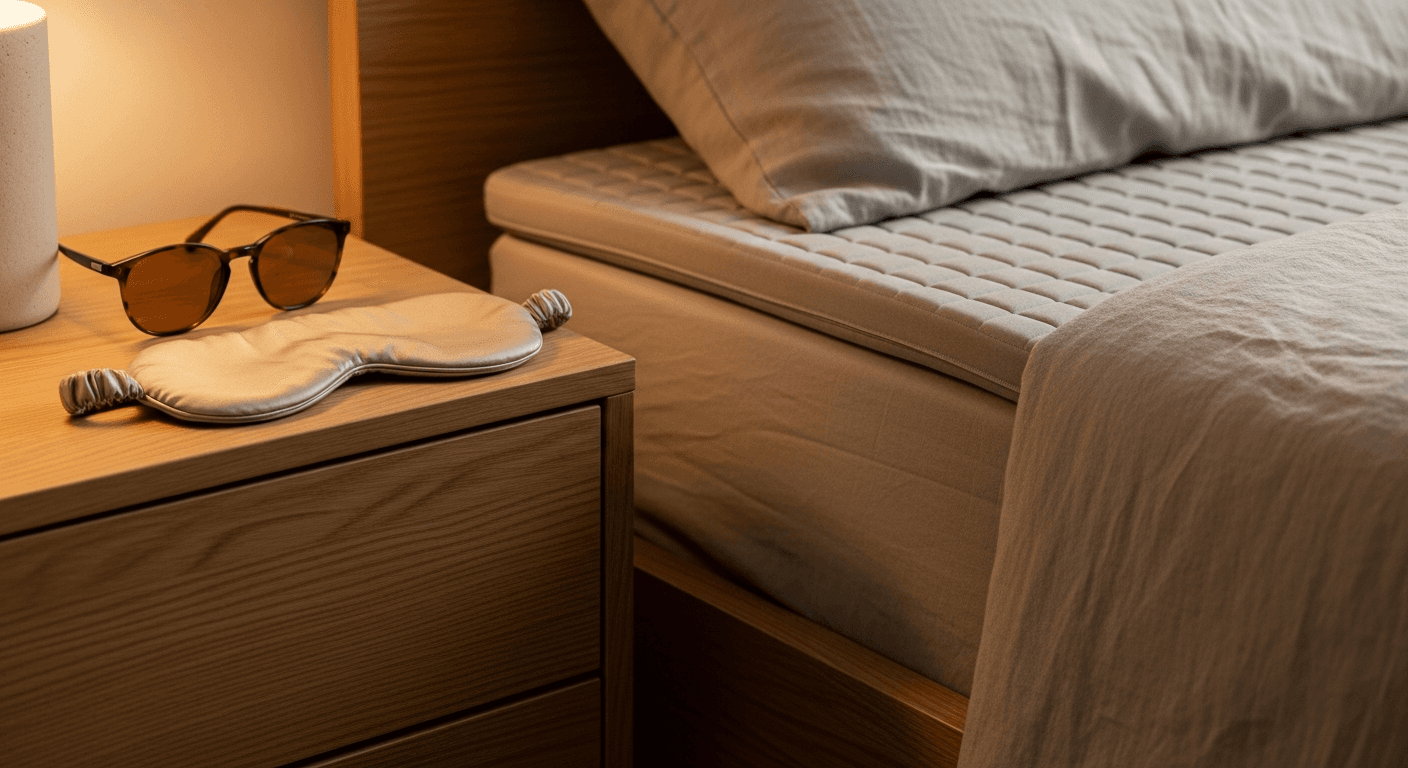
Start by aggressively managing light exposure. The use of high-quality, 100% blackout curtains is essential to prevent any external light from signaling the brain to wake up. Additionally, because ME/CFS patients are highly sensitive to blue light (which suppresses melatonin production), wearing amber-tinted blue-light-blocking glasses for at least two hours before bed can significantly aid the natural circadian wind-down process. For auditory sensory management, custom-molded silicone earplugs or continuous, low-volume brown noise machines can help mask sudden environmental sounds that might trigger an exaggerated startle response and an adrenaline surge.
Temperature regulation is another critical component of adapted sleep hygiene. Because dysautonomia impairs the body's ability to thermoregulate, the bedroom environment must do the heavy lifting. The ambient room temperature should be kept cool, ideally between 60 to 67 degrees Fahrenheit (15 to 19 degrees Celsius). Using breathable, natural fiber bedding (like bamboo, linen, or percale cotton) helps prevent the trapping of body heat, which is a common issue with synthetic materials and traditional memory foam mattresses.
Utilizing Active Cooling Mattress Technology
One of the most effective, evidence-based physical interventions for ME/CFS sleep optimization is the use of active cooling mattress toppers. Because the autonomic nervous system is stuck in sympathetic overdrive, the core body temperature often fails to drop the required 1 to 2 degrees necessary to initiate deep, slow-wave sleep. Active cooling systems—which use a bedside hub to circulate temperature-controlled water through a thin mattress pad—allow patients to externally force this vital temperature drop, essentially "hacking" their biology.
By sleeping on a continuously cooled surface, patients can directly stimulate the vagus nerve and increase parasympathetic ("rest and digest") tone. Recent bioengineering studies utilizing active cooling pads like the Eight Sleep system have demonstrated remarkable results, showing that sleeping at cooler temperatures during the first half of the night can increase deep sleep by up to 22% and significantly improve nocturnal Heart Rate Variability (HRV). This means the heart and nervous system are actually recovering, rather than fighting a state of hyperarousal.
When implementing this strategy, it is important to choose a system that allows for dynamic temperature adjustments. Many ME/CFS patients also suffer from severe cold intolerance or Raynaud's phenomenon. The ideal setup involves programming the mattress pad to be cool during the first half of the night to facilitate deep sleep onset, and then gradually warming up toward the morning to prevent joint stiffness and ensure a gentler, less jarring wake-up process.
Pharmacological and Supplement Support
Because the sleep dysfunction in ME/CFS is deeply neurological, behavioral and environmental changes are rarely enough on their own. Pharmacological and supplement support is often necessary to break the cycle of hyperarousal. However, ME/CFS patients are notoriously sensitive to medications, often experiencing severe side effects or paradoxical reactions. Therefore, the golden rule of ME/CFS pharmacology is always: start low and go slow. You must always consult your healthcare provider before starting or stopping any medication or supplement.
Melatonin is frequently used as a first-line supplement, not just as a sleep aid, but as a chronobiotic to help resynchronize broken circadian rhythms. It is also a potent antioxidant that may help protect mitochondrial function and reduce neuroinflammation. Dosing can be highly individual; some patients benefit from micro-doses (0.3 mg) to gently nudge the circadian clock, while others require higher doses for its anti-inflammatory properties. For a detailed exploration of this supplement, read our guide: Can High-Dose Melatonin Support Cellular Health and Immune Function in Long COVID and ME/CFS?.
For prescription support, leading ME/CFS specialists often utilize off-label medications in very low doses. Trazodone, a serotonin antagonist and reuptake inhibitor, is frequently prescribed at low doses (12.5 mg to 50 mg) because it has been shown to improve sleep architecture by increasing deep stage 3 and 4 sleep without causing significant daytime grogginess. Another option recommended by the US ME/CFS Clinician Coalition is very low-dose Clonazepam (0.25 mg to 0.5 mg). While benzodiazepines carry risks of dependence and must be used cautiously, clonazepam is uniquely helpful for ME/CFS because it acts as a central nervous system depressant, a muscle relaxant, and a mast cell stabilizer, directly combating the "tired but wired" autonomic arousal.
Common Mistakes and Pitfalls
The Danger of Standard CBT-I and Stimulus Control
One of the most common and dangerous mistakes made in the management of ME/CFS sleep disorders is the blind application of standard Cognitive Behavioral Therapy for Insomnia (CBT-I). In the general population, CBT-I is the gold-standard treatment. A core component of this therapy is stimulus control, which dictates strict rules: the bed is only for sleep, and if you cannot fall asleep within 20 minutes, you must physically get out of bed, move to another room, and engage in a wakeful activity until you feel tired again.
For a patient with ME/CFS, this advice is actively harmful. Getting in and out of bed repeatedly requires significant physical and orthostatic (upright) energy. For someone with severe energy impairment and co-morbid postural orthostatic tachycardia syndrome (POTS), this physical exertion can trigger a massive spike in heart rate, a surge of adrenaline, and a severe post-exertional malaise (PEM) crash. The act of leaving the bed destroys whatever minimal physical rest the patient was achieving and thrusts the autonomic nervous system further into sympathetic "fight or flight" overdrive.
Furthermore, many people with ME/CFS are largely housebound or bedbound. Their bed is not just a place for sleep; it is their primary safe space for pacing, resting, and existing within their energy envelope. Forcing them to associate the bed only with sleep, and demanding they leave it when awake, ignores the biological reality of their disability. Instead of strict stimulus control, ME/CFS patients should practice "resting in place"—staying in bed, keeping the lights off, and engaging in low-energy, soothing audio activities to conserve physical energy while waiting for sleep to return.
Sleep Restriction and the Boom-Bust Trap
Another perilous component of standard insomnia treatment is sleep restriction therapy. This technique involves deliberately limiting the amount of time a person is allowed to spend in bed to match their actual sleep time, thereby building up a massive "sleep debt" or homeostatic sleep drive. The theory is that this overwhelming exhaustion will eventually force the brain to consolidate sleep into a solid, uninterrupted block. While effective for primary insomnia, sleep restriction is a recipe for disaster in ME/CFS.
Deliberate sleep deprivation is a known, potent trigger for severe ME/CFS crashes. When an ME/CFS patient is forced to stay awake and push through their profound fatigue, their body does not simply get "sleepier." Instead, the cellular energy failure triggers an emergency stress response. The adrenal glands pump out cortisol and adrenaline to keep the body functioning, leading directly back to the hyper-aroused, "tired but wired" state. This creates a vicious boom-bust cycle where the patient becomes far too neurologically stimulated to ever achieve deep sleep.
Instead of restricting sleep, ME/CFS patients must utilize pacing as their primary sleep aid. Pacing requires taking preemptive, radical rest breaks during the day before the battery runs out. By carefully staying within their energy envelope and resting frequently, patients prevent the adrenaline surges that ruin nighttime sleep. Counterintuitively, for an ME/CFS patient, resting more during the day often leads to significantly better, less fragmented sleep at night. You can learn more about this vital strategy in our guide: Pacing for ME/CFS: The Energy Envelope Method Explained.
Ignoring the Orthostatic Toll of Bedtime Routines
A frequently overlooked pitfall is the physical toll of the bedtime routine itself. Standard sleep hygiene often recommends a relaxing pre-sleep routine, such as taking a warm bath, doing light stretching, or engaging in a multi-step skincare regimen. However, for ME/CFS patients with dysautonomia and orthostatic intolerance, these activities can be exhausting and counterproductive. Standing at a bathroom sink for ten minutes to wash your face and brush your teeth requires sustained orthostatic effort, which pools blood in the lower extremities and forces the heart to beat faster to compensate.
By the time the patient actually gets into bed, their heart rate is elevated, and their sympathetic nervous system is activated, completely negating the goal of winding down. To avoid this pitfall, patients must adapt their routines to be entirely "PEM-safe." This means performing nighttime hygiene tasks while seated on a shower stool or sitting on the edge of the bed. It means avoiding hot baths right before sleep, as the heat causes vasodilation, which worsens POTS symptoms and prevents the necessary drop in core body temperature. Every step of the bedtime routine must be evaluated for its energy cost.
Tools, Apps, and Resources
Wearables for Autonomic Tracking
Oura Ring: A highly regarded smart ring that tracks nocturnal Heart Rate Variability (HRV), resting heart rate, body temperature trends, and sleep stages. It is excellent for monitoring autonomic nervous system recovery and determining if your sleep was truly restorative.
Garmin Smartwatches: Devices featuring the "Body Battery" and continuous stress tracking metrics. These watches use HRV to estimate how much your autonomic nervous system is draining or recharging throughout the day and night, providing real-time pacing feedback.
Visible App: A specialized pacing and symptom-tracking app designed specifically for Long COVID and ME/CFS. It pairs with a Polar heart rate monitor to measure morning HRV and provides a daily "PacePoint" budget to help you avoid overexertion and the subsequent "tired but wired" crashes.
Temperature Regulation Devices
Eight Sleep Pod: An advanced, active cooling mattress cover that circulates temperature-controlled water. It allows for dual-zone temperature control and dynamic adjustments throughout the night, actively lowering core body temperature to increase deep sleep and parasympathetic tone.
Sleepme (ChiliSleep) Systems: Another highly effective active cooling pad system (such as the Cube or Dock Pro) that uses water circulation to provide intense, targeted cooling or warming to the sleep surface, bypassing the body's broken thermoregulation.
Breathable Natural Bedding: Investing in 100% bamboo, linen, or percale cotton sheets. Unlike synthetic blends or heavy memory foams, these natural fibers wick away moisture and allow body heat to dissipate, which is crucial for managing severe ME/CFS night sweats.
Environmental and Sensory Aids
TheraSpecs or FL-41 Glasses: Precision-tinted glasses designed to block the specific wavelengths of blue and green light that trigger photophobia, migraines, and melatonin suppression. Wearing these in the evening helps signal the brain that it is time to wind down.
Manta Sleep Masks: High-quality, 100% blackout sleep masks with deep eye cups that put zero pressure on the eyelids. These are essential for creating a sensory deprivation environment, especially for patients who must rest during daylight hours.
Custom Silicone Earplugs: Molded earplugs (like Loop or custom audiologist molds) that block out sharp, sudden environmental noises without causing the physical ear pain often associated with standard foam plugs, helping to prevent nocturnal adrenaline surges.

What Research Shows
Objective Sleep Meta-Analysis Data
For decades, patients with ME/CFS have been told that their sleep issues are merely psychological or the result of poor sleep habits. However, robust clinical data now objectively proves the physiological reality of their sleep dysfunction. A comprehensive systematic review and meta-analysis of objective sleep measures utilizing polysomnography (PSG) in adult ME/CFS patients revealed several statistically significant impairments when compared to healthy, matched controls. The data paints a clear picture of a broken sleep architecture.
The meta-analysis found that ME/CFS patients experience significantly increased sleep latency, taking an average of nearly 8 minutes longer to fall asleep. More importantly, they suffer from severe sleep fragmentation, spending an average of 16.21 minutes longer awake during the night after initially falling asleep (Wake After Sleep Onset, or WASO). Overall sleep efficiency is markedly reduced, and the onset of REM sleep is delayed by an average of over 12 minutes. These objective metrics validate the patient experience: the brain is struggling to initiate, maintain, and properly cycle through the necessary stages of restorative sleep.
Furthermore, quantitative EEG (qEEG) studies have consistently shown that ME/CFS patients exhibit altered spectral signatures during rest and sleep. Specifically, research demonstrates a general trend for increased low-frequency EEG band activity (such as delta, theta, and alpha) and decreased high-frequency beta activity. This means that even when the patient is objectively asleep according to standard visual scoring, the electrical intensity and restorative quality of that sleep are fundamentally compromised by neurological dysfunction.
The Harvard and OMF Sleep Studies
Some of the most exciting and rigorous research into ME/CFS sleep pathobiology is currently being conducted by the Open Medicine Foundation (OMF) and Harvard Medical School. Led by Dr. Janet Mullington, this ongoing 2024–2025 study is utilizing a multi-system, intensive approach to track the exact neurochemical drivers of non-restorative sleep. Unlike standard overnight sleep studies, this research involves continuous 24-hour monitoring of patients in a controlled clinical environment.
The study is measuring hourly levels of melatonin, cortisol, and ACTH (adrenocorticotropic hormone) in the blood and spinal fluid of ME/CFS patients to map out the precise nature of their circadian rhythm dysregulation. Early data from these intensive investigations highlights severe sleep fragmentation and a notable deficiency in "sleep spindles"—bursts of brain activity that are crucial for memory consolidation and protecting sleep from environmental noise. By identifying these specific neurochemical and structural failures, researchers hope to pinpoint exact pharmacological targets for future ME/CFS treatments.
Cooling Interventions and Autonomic Recovery
Recent clinical trials have also provided strong evidence for the efficacy of environmental temperature manipulation in improving sleep architecture and autonomic function. A 2024 study published in Bioengineering analyzed over 300 nights of sleep data using an active temperature-controlled mattress cover (the Eight Sleep Pod). The researchers specifically looked at how cooling the sleep surface during the first half of the night impacted sleep stages and cardiovascular recovery metrics.
The results were highly significant for chronic illness management. The data showed that sleeping at cooler temperatures increased deep sleep by an average of 14 minutes (a 22% increase) for men, and increased REM sleep by an average of 9 minutes (a 25% increase) for women. Crucially, the study also found that overall sleeping Heart Rate Variability (HRV) improved by 7%, while sleeping heart rate dropped by 2%. This provides objective proof that actively cooling the body not only improves the structural quality of sleep but directly enhances parasympathetic nervous system recovery, directly combating the dysautonomia seen in ME/CFS.
The Path Forward
Setting Realistic Expectations
When navigating the complexities of ME/CFS, it is vital to set realistic, compassionate expectations for your sleep. Non-restorative sleep is a deeply entrenched neurobiological symptom, and there is currently no magic pill or quick fix that will instantly return your sleep to its pre-illness state. The goal of sleep optimization is not immediate perfection; it is steady, incremental harm reduction. By implementing these strategies, you are working to slowly calm your hyper-aroused nervous system, reduce the frequency of severe crashes, and improve your baseline quality of life.
There will still be nights where, despite doing everything "right"—perfect pacing, optimal room temperature, and taking your supplements—your sleep will be fragmented and unrefreshing. This is the unpredictable nature of a complex neuro-immune disease. It is crucial not to blame yourself or fall into the trap of sleep anxiety. Acknowledge that your body is fighting a difficult biological battle, and focus on the variables you can control, such as resting aggressively during the day and maintaining a sensory-friendly environment at night.
Working With Your Healthcare Provider
Because ME/CFS involves severe autonomic and neurochemical dysfunction, managing your sleep often requires professional medical guidance. The pharmacological strategies discussed in this guide, such as low-dose trazodone or clonazepam, involve off-label uses of prescription medications. You must always consult a knowledgeable healthcare provider before starting, stopping, or adjusting any treatment regimen. A provider who understands ME/CFS can help you navigate the "start low and go slow" approach, monitor for paradoxical reactions, and ensure that your sleep interventions do not conflict with other aspects of your care.
Advocating for yourself in medical settings can be exhausting, especially when dealing with brain fog and fatigue. Bring objective data to your appointments, such as HRV trends from a wearable device or a symptom log tracking your sleep latency and morning exhaustion. This data can help bridge the communication gap and provide your doctor with a clearer picture of your autonomic dysfunction, moving the conversation away from standard sleep hygiene and toward targeted neuro-immune support.
Connecting with RTHM
You do not have to navigate the complexities of ME/CFS, dysautonomia, and non-restorative sleep alone. Finding a clinical team that validates your experience and understands the underlying biology of your symptoms is a critical step toward better management. RTHM specializes in providing comprehensive, evidence-based care for complex chronic conditions, offering personalized treatment plans that address the root causes of your symptoms.
If you are struggling with unrefreshing sleep, severe fatigue, and post-exertional malaise, we are here to help. Our team of specialists can work with you to develop a tailored approach to sleep optimization, incorporating advanced diagnostics, autonomic nervous system support, and targeted therapies. Learn more about RTHM and discover how our specialized clinical care can support your journey toward improved health and stability.
Sources
Moldofsky, H., et al. (1975). Musculosketal symptoms and non-REM sleep disturbance in patients with "fibrositis syndrome" and healthy subjects. Psychosomatic Medicine. https://pubmed.ncbi.nlm.nih.gov/164227/
Decker, M. J., et al. (2009). Electroencephalographic correlates of chronic fatigue syndrome. Sleep. https://academic.oup.com/sleep/article/32/11/1483/2454316
Boissoneault, J., et al. (2018). Circadian rhythm abnormalities and autonomic dysfunction in patients with Chronic Fatigue Syndrome/Myalgic Encephalomyelitis. PLOS One. https://journals.plos.org/plosone/article?id=10.1371/journal.pone.0198106
McCarthy, M. I., et al. (2022). Circadian rhythm disruption in Myalgic Encephalomyelitis/Chronic Fatigue Syndrome: Implications for the post-acute sequelae of COVID-19. Journal of Translational Medicine. https://www.ncbi.nlm.nih.gov/pmc/articles/PMC8918235/
Mullington, J., et al. (2024). An ME/CFS Sleep Study Goes Where No Sleep Study Has Gone Before. Health Rising / Harvard Open Medicine Foundation. https://www.healthrising.org/blog/2024/12/04/chronic-fatigue-syndrome-sleep-study-harvard-mullington/
US ME/CFS Clinician Coalition. (2021). Diagnosing and Treating Myalgic Encephalomyelitis/Chronic Fatigue Syndrome (ME/CFS). Bateman Horne Center. https://batemanhornecenter.org/wp-content/uploads/filebase/Treatment-Recs-MECFS-Clinician-Coalition-V1-Feb.-2021.pdf
Gao, C., et al. (2023). Objective sleep measures in chronic fatigue syndrome patients: A systematic review and meta-analysis. Sleep Medicine Reviews. https://www.ncbi.nlm.nih.gov/pmc/articles/PMC10103738/
Zebhauser, P. T., et al. (2023). A systematic review of quantitative EEG findings in Long COVID, Fibromyalgia and Chronic Fatigue Syndrome. medRxiv. https://doi.org/10.1101/2023.11.06.23298171
Kishi, A., et al. (2008). Sleep-stage dynamics in patients with chronic fatigue syndrome with or without fibromyalgia. Sleep. https://pubmed.ncbi.nlm.nih.gov/18341058/
Menghini, L., et al. (2024). Effects of a Temperature-Controlled Mattress Cover on Sleep and Cardiovascular Recovery. Bioengineering. https://www.mdpi.com/2306-5354/11/2/150