Can Liposomal Vitamin C Support Immune Function and Endothelial Health in Long COVID and MCAS?
March 6, 2026
Liposomal Vitamin CLong COVIDMCAS
Share:
Disclaimer: The information provided here is for educational purposes only and is not intended as medical advice. It should not be used to diagnose, treat, cure, or prevent any medical condition. Instead, use it as a starting point for discussion with your healthcare provider. Always consult with a qualified healthcare provider before starting any new medication, supplement, device, or making changes to your health regimen.
Months or even years after an initial viral infection, many individuals find themselves navigating a bewildering maze of debilitating symptoms. Whether you have been diagnosed with Long COVID, myalgic encephalomyelitis/chronic fatigue syndrome (ME/CFS), mast cell activation syndrome (MCAS), or dysautonomia, the daily reality of living with a complex chronic illness is profoundly challenging. You might experience crushing fatigue that worsens after minimal effort, a racing heart when you simply stand up, or unpredictable allergic-type reactions to foods you once tolerated perfectly. If you are reading this, you are likely searching for validating answers and science-backed strategies to help manage these relentless symptoms and regain a sense of stability in your body.
In the pursuit of managing these interconnected conditions, researchers and clinicians are increasingly focusing on the foundational biochemical pathways that become disrupted by chronic inflammation and oxidative stress. One of the most critical molecules in this equation is Vitamin C (ascorbic acid). While often dismissed as a simple cold remedy, Vitamin C is actually a potent, multi-targeted biochemical modulator essential for vascular health, immune regulation, and mast cell stabilization. However, for patients with sensitive gastrointestinal tracts or severe cellular depletion, standard oral Vitamin C often falls short due to poor absorption. This is where Liposomal Vitamin C emerges as a powerful tool, utilizing advanced delivery technology to bypass digestive bottlenecks and deliver this crucial nutrient directly into the cells that need it most.
TL;DR
Liposomal Vitamin C offers enhanced absorption, bypassing digestive limits to support cellular health.
It acts as a potent antioxidant, helping manage oxidative stress in complex chronic illnesses.
Research suggests it supports vascular function, immune regulation, and mast cell stabilization.
Always consult a healthcare provider before adding new supplements to your management protocol.
What is Liposomal Vitamin C?
The Essential Role of Ascorbic Acid
At its core, Vitamin C, scientifically known as ascorbic acid, is an essential water-soluble vitamin that the human body cannot synthesize on its own. Unlike most mammals, humans lack the functional enzyme L-gulonolactone oxidase, which is required to convert glucose into Vitamin C. Consequently, we must obtain it entirely through our diet or supplementation. In a healthy body, Vitamin C acts as a primary electron donor. This means it readily gives up its own electrons to neutralize highly reactive, unstable molecules known as free radicals. By doing so, it helps protect against these free radicals stealing electrons from healthy cellular structures, a destructive process known as oxidative stress.
Beyond its role as an antioxidant, Vitamin C is an obligate cofactor for a family of enzymes called monooxygenases and dioxygenases. These enzymes are responsible for synthesizing critical structural proteins and signaling molecules. For instance, Vitamin C is required for the hydroxylation of proline and lysine amino acids, a step that gives collagen its stable, triple-helix structure. Without adequate Vitamin C, connective tissues—including blood vessels, skin, and cartilage—become weak and permeable. Furthermore, Vitamin C is heavily concentrated in immune cells, particularly leukocytes (white blood cells), where it is rapidly consumed during active infections to protect the immune cells themselves from the toxic byproducts they generate to kill pathogens.
The Liposomal Delivery Advantage
While the physiological importance of Vitamin C is undisputed, delivering therapeutic doses into the bloodstream presents a significant biological challenge. Standard oral Vitamin C (unencapsulated ascorbic acid) relies on specific active transport proteins in the gut, primarily the sodium-dependent vitamin C transporters (SVCT1 and SVCT2). These transporters act like turnstiles; they can only process a certain amount of Vitamin C at a time. When you consume more than 200 mg to 500 mg of standard Vitamin C, these turnstiles become saturated. The absorption efficiency plummets, and the unabsorbed ascorbic acid remains in the gastrointestinal tract, drawing in water and often causing uncomfortable bloating, gas, or osmotic diarrhea.
Liposomal Vitamin C elegantly circumvents this biological bottleneck. In a liposomal formulation, the Vitamin C is encapsulated within microscopic, spherical vesicles made of phospholipids—the exact same fat molecules that make up human cell membranes. This lipid bilayer acts as a protective shield, escorting the Vitamin C safely through the harsh, acidic environment of the stomach. Because the liposome mimics the body's own cellular architecture, it does not rely on the easily saturated SVCT transporters. Instead, the liposomes are absorbed directly across the intestinal wall through passive diffusion and endocytosis, allowing for vastly superior bioavailability.
Bypassing Cellular Bottlenecks
Once in the bloodstream, the liposomal advantage continues at the cellular level. Traditional Vitamin C circulating in the blood still requires active transport to enter target tissues like the brain, heart, and immune cells. Liposomes, however, can fuse directly with the outer membranes of these cells, releasing their ascorbic acid payload directly into the intracellular space. This mechanism is particularly vital for patients with chronic illnesses, whose cellular transport mechanisms may be impaired by chronic inflammation or mitochondrial dysfunction.
By utilizing this phospholipid delivery system, Liposomal Vitamin C achieves pharmacokinetic profiles that standard oral powders or pills simply cannot match.
How Complex Chronic Illness Impacts Antioxidant and Immune Pathways
Oxidative Stress and the Viral Aftermath
To understand why Liposomal Vitamin C is so relevant for conditions like Long COVID, myalgic encephalomyelitis/chronic fatigue syndrome (ME/CFS), and dysautonomia, we must examine the cellular environment created by these illnesses. A unifying feature of these complex conditions is a state of profound, unrelenting oxidative stress. When the body is exposed to a severe viral infection, such as SARS-CoV-2 or Epstein-Barr Virus (EBV), the immune system launches a massive inflammatory response. Macrophages and neutrophils release floods of reactive oxygen species (ROS) to destroy the invading pathogens. While necessary in the acute phase, in chronic illness, this oxidative fire fails to extinguish.
This chronic oxidative stress wreaks havoc on the mitochondria, the energy-producing powerhouses of the cells. As ROS accumulate, they damage mitochondrial DNA and cellular membranes, leading to inefficient adenosine triphosphate (ATP) production. This mitochondrial dysfunction is a primary driver of the debilitating, leaden fatigue and post-exertional malaise (PEM) experienced by ME/CFS and Long COVID patients. The body’s natural antioxidant reserves, including intracellular Vitamin C and glutathione, become rapidly depleted in a futile attempt to neutralize the ongoing oxidative damage, leaving tissues vulnerable to further injury.
Endothelial Dysfunction and Microclots
One of the most devastating targets of this unchecked oxidative stress is the vascular endothelium—the delicate, single-cell layer lining our blood vessels. In a healthy state, endothelial cells produce nitric oxide (NO), a crucial signaling molecule that tells blood vessels to relax and dilate, ensuring proper blood flow and oxygen delivery. However, excess superoxide radicals generated by this inflammation bind rapidly with nitric oxide, destroying it and forming a highly toxic molecule called peroxynitrite.
The destruction of nitric oxide leads to widespread endothelial dysfunction. Blood vessels become stiff, constricted, and "leaky." This localized hypoxia (lack of oxygen) is a major contributor to the autonomic nervous system dysfunction seen in postural orthostatic tachycardia syndrome (POTS) and dysautonomia. Furthermore, the damaged, inflamed endothelium exposes tissue factors that trigger abnormal coagulation cascades. This leads to the formation of fibrin amyloid microclots—tiny, degradation-resistant clots that block capillaries, further starving muscles and the brain of oxygen and nutrients, perpetuating the cycle of fatigue and brain fog.
Mast Cell Hyperactivity and Histamine Overload
Concurrently, the immune dysregulation seen in these conditions heavily impacts mast cells. Mast cells are the sentinels of the immune system, packed with granules containing histamine, tryptase, and inflammatory cytokines. In mast cell activation syndrome (MCAS), these cells become hyper-reactive, degranulating inappropriately in response to minor triggers like temperature changes, specific foods, or even physical exertion. Recent immunological studies have shown that the profound oxidative stress and viral persistence in Long COVID act as constant triggers, keeping mast cells in a state of hair-trigger reactivity.
This constant degranulation floods the body with histamine, leading to systemic symptoms ranging from hives and gastrointestinal distress to tachycardia and neurological impairment. To make matters worse, the chronic inflammation depletes the body's supply of diamine oxidase (DAO), the primary enzyme responsible for breaking down extracellular histamine. Without adequate DAO, histamine accumulates in the tissues, creating a state of histamine intolerance that further exacerbates vascular permeability and neurological inflammation.
Liposomal Vitamin C: Supporting Immune, Vascular, and Mast Cell Function
Restoring Endothelial Health and Nitric Oxide
Liposomal Vitamin C offers a multi-pronged therapeutic approach to interrupting the vicious cycles of chronic illness, starting with the vascular system. As a potent, bioavailable antioxidant, Vitamin C directly scavenges the superoxide radicals that destroy nitric oxide. By neutralizing these ROS, Vitamin C protects the existing nitric oxide pool, allowing blood vessels to relax and dilate properly. This vasodilation is critical for patients with dysautonomia and POTS, as it helps restore adequate blood flow to the brain and peripheral tissues, reducing symptoms of lightheadedness and cognitive impairment.
Furthermore, Vitamin C plays a highly specific, mechanistic role in endothelial repair by salvaging a critical enzyme cofactor known as tetrahydrobiopterin (BH4). BH4 is essential for the function of endothelial nitric oxide synthase (eNOS), the enzyme that actually produces nitric oxide. Under conditions of high oxidative stress, BH4 is rapidly oxidized and destroyed, causing eNOS to "uncouple." When eNOS uncouples, it stops producing healthy nitric oxide and instead produces more destructive superoxide, accelerating vascular damage. Clinical research explores the influence of liposomal-encapsulated ascorbic acid on Vitamin C bioavailability and its capacity to protect against ischemia-reperfusion injury.
Stabilizing Mast Cells and Degrading Histamine
For patients battling MCAS and histamine intolerance, Liposomal Vitamin C acts as a foundational, natural mast cell stabilizer. At the cellular level, Vitamin C modulates the electrophysiological properties of the mast cell membrane. Studies utilizing whole-cell patch-clamp techniques have shown that ascorbic acid dose-dependently suppresses the increase in membrane capacitance that occurs during exocytosis—the physical process of degranulation. By stabilizing the membrane, Vitamin C helps keep the mast cell from inappropriately dumping its inflammatory payload into the bloodstream.
Additionally, Vitamin C is an absolute prerequisite for the management of circulating histamine. It functions as a vital enzymatic cofactor for the production and optimal function of diamine oxidase (DAO). By supplying the body with highly absorbable Liposomal Vitamin C, patients can support their endogenous DAO production, enhancing their ability to clear excess histamine from the gut and systemic circulation. Furthermore, observational studies have explored the use of intravenous vitamin C in the treatment of allergies.
Modulating the Immune Response and T-Cells
The immune dysregulation inherent in Long COVID and ME/CFS often involves a depletion or exhaustion of T-cells, alongside a hyperactive innate immune response. Liposomal Vitamin C is uniquely suited to address this imbalance. Because liposomes can fuse directly with cell membranes, they efficiently deliver ascorbic acid into the intracellular space of leukocytes (white blood cells).
Once inside the immune cells, Vitamin C enhances phagocytosis—the process by which immune cells engulf and destroy viral particles and cellular debris. It also promotes the proliferation and differentiation of T-cells, helping to restore a more coordinated, effective adaptive immune response. Simultaneously, by neutralizing the ROS produced during immune activity, Vitamin C protects the immune cells from auto-destruction, helping to calm the systemic inflammatory storm and support the body's transition from a state of chronic alarm to one of cellular repair.
Supporting Collagen and Neurotransmitter Synthesis
Finally, the structural and neurological benefits of Liposomal Vitamin C cannot be overstated. By acting as a cofactor for prolyl hydroxylase, Vitamin C ensures the continuous synthesis of strong, cross-linked collagen. This is vital for repairing the "leaky" blood vessels caused by endotheliitis and supporting the integrity of joint cartilage and skin. In the nervous system, Vitamin C is required by the enzyme dopamine beta-hydroxylase to convert dopamine into norepinephrine. This crucial neurotransmitter pathway is heavily involved in regulating mood, energy levels, and autonomic nervous system function, providing another mechanism by which Vitamin C supports recovery from complex chronic illness.

Symptoms Liposomal Vitamin C May Help Manage
Vascular and Autonomic Symptoms
By restoring endothelial function and neutralizing oxidative stress, Liposomal Vitamin C targets several debilitating cardiovascular and autonomic symptoms:
Blood Pooling and Acrocyanosis: By salvaging the BH4 cofactor and restoring nitric oxide production, Vitamin C helps blood vessels dilate appropriately, reducing the peripheral vasoconstriction that causes blood to pool in the legs and hands (often seen as a purple or red discoloration) in POTS patients.
Tachycardia and Palpitations: When blood vessels function properly and blood volume distribution improves, the heart does not have to race abnormally fast to pump blood to the brain upon standing, helping to stabilize heart rate in dysautonomia.
Brain Fog and Cognitive Impairment: By reducing endothelial inflammation and supporting the breakdown of microclots, Vitamin C helps restore healthy microvascular blood flow to the brain, alleviating the hypoxia that drives severe cognitive dysfunction and memory issues.
Immune and Allergic Symptoms
Through its profound effects on mast cell stabilization and leukocyte function, Liposomal Vitamin C addresses the hyper-reactive immune responses common in MCAS and Long COVID:
Unpredictable Allergic Reactions: By inhibiting mast cell degranulation and suppressing histidine decarboxylase, Vitamin C reduces the sudden, inappropriate release of histamine that causes hives, flushing, and throat tightness in response to minor triggers.
Histamine-Driven Gastrointestinal Distress: As a necessary cofactor for the DAO enzyme, Vitamin C enhances the breakdown of dietary and localized histamine in the gut, helping to alleviate bloating, cramping, and food sensitivities.
Frequent Infections and Viral Reactivation: By driving high concentrations of ascorbic acid directly into white blood cells, liposomal delivery enhances phagocytosis and T-cell function, supporting the immune system's ability to keep latent viruses (like EBV) in check.
Energy and Connective Tissue Symptoms
By supporting mitochondrial antioxidant defenses and collagen synthesis, Liposomal Vitamin C aids in foundational physical recovery:
Post-Exertional Malaise (PEM) and Severe Fatigue: By neutralizing the flood of reactive oxygen species that damage mitochondria during physical or cognitive effort, Vitamin C helps protect cellular energy production, potentially reducing the severity and duration of crashes.
Joint Pain and Easy Bruising: By acting as an obligate cofactor for collagen synthesis, Vitamin C helps repair weak connective tissues and fragile capillaries, reducing the joint hypermobility pain and unexplained bruising often seen in patients with overlapping connective tissue disorders.
Practical Considerations: Forms, Dosing, and Absorption
Why Liposomal Delivery Matters
When selecting a Vitamin C supplement for chronic illness management, the delivery mechanism is arguably as important as the nutrient itself. As discussed, standard ascorbic acid powders and tablets are limited by the body's active transport turnstiles, leading to poor absorption and frequent gastrointestinal distress at therapeutic doses. Pharmacokinetic studies consistently show that liposomal encapsulation provides a marked advantage. By encasing the Vitamin C in a phospholipid bilayer, the supplement bypasses the digestive bottlenecks, resulting in a significantly higher maximum plasma concentration (Cmax) and a greater total absorption over time (AUC).
This enhanced bioavailability means that patients can achieve the high intracellular levels of Vitamin C required to neutralize profound oxidative stress and stabilize mast cells, without having to resort to intravenous (IV) infusions. Furthermore, because the liposomes are absorbed directly into the bloodstream, very little unabsorbed Vitamin C is left behind in the gut. This drastically reduces the risk of the osmotic diarrhea, cramping, and bloating that often force patients to abandon standard high-dose Vitamin C protocols.
Sodium Ascorbate vs. Ascorbic Acid
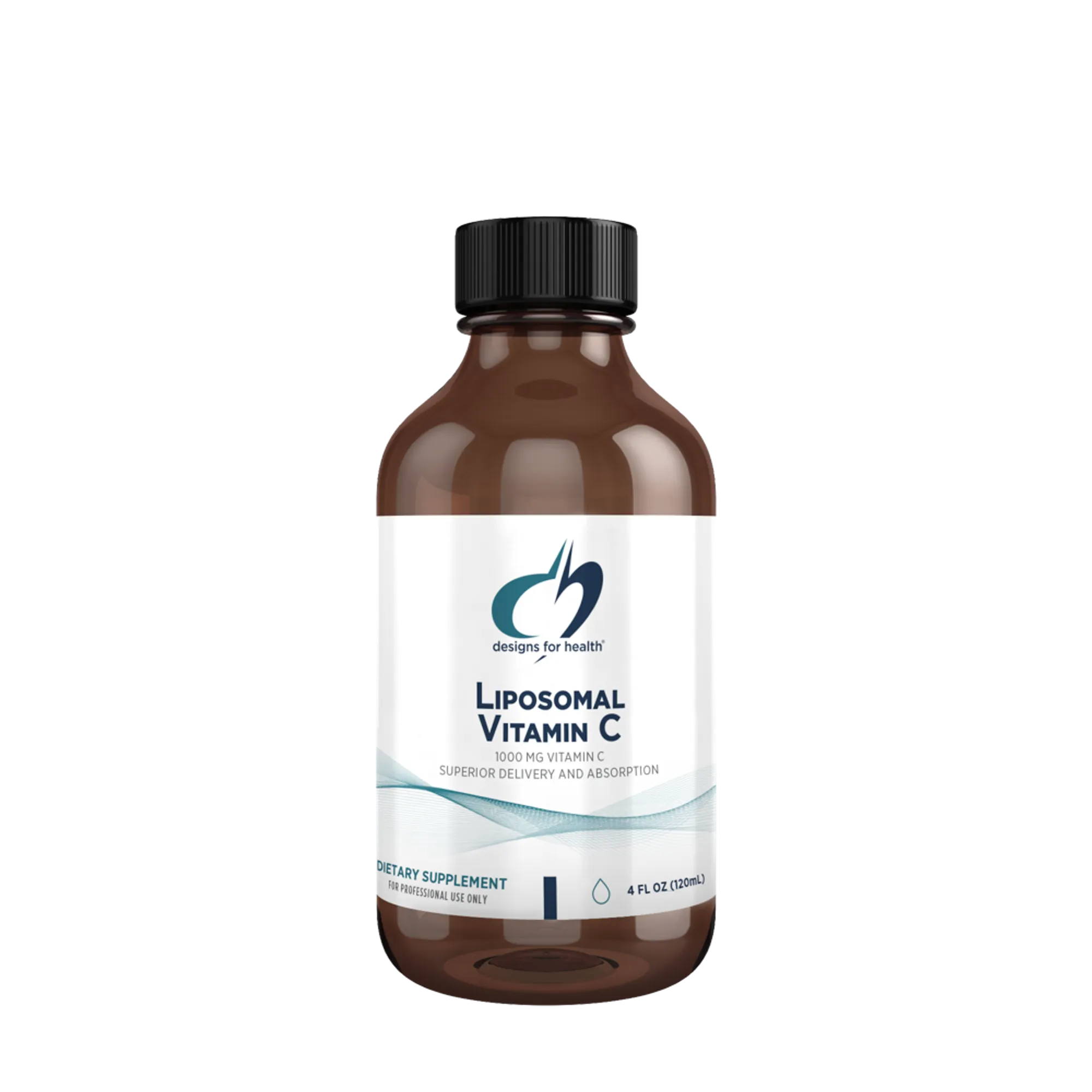
The specific form of Vitamin C used inside the liposome also matters. The Designs for Health Liposomal Vitamin C utilizes sodium ascorbate rather than pure ascorbic acid. Pure ascorbic acid is highly acidic, which can irritate the stomach lining of sensitive individuals, even when encapsulated. Sodium ascorbate is a buffered, non-acidic form of Vitamin C that is exceptionally gentle on the digestive tract.
Additionally, the inclusion of sodium is highly beneficial for patients with dysautonomia and POTS. These conditions often require increased dietary sodium intake to help expand blood volume and maintain healthy blood pressure upon standing. Each 1,000 mg dose of this liposomal formula provides 130 mg of sodium, offering a gentle, dual-action approach to supporting both antioxidant status and autonomic stability. The liquid format, naturally flavored with lemon, is also ideal for patients who experience pill fatigue or have difficulty swallowing large capsules.
Dosing Strategies and Timing
The suggested use for this liquid formula is 5 mL (approximately one teaspoon), which delivers a potent 1,000 mg dose of Vitamin C. For optimal absorption, it is recommended to hold the liquid in your mouth for 30 seconds before swallowing. This allows some of the liposomes to be absorbed directly through the highly vascularized mucosal tissues in the mouth (sublingual absorption), providing an even faster route to the bloodstream.
Because Vitamin C is water-soluble and continuously utilized by the body, especially during times of high oxidative stress, many practitioners recommend splitting the daily intake into divided doses (e.g., half a teaspoon in the morning and half in the afternoon) to maintain steady plasma levels. However, because Vitamin C can be mildly stimulating for some individuals due to its role in neurotransmitter synthesis, it is generally best to avoid taking large doses right before bedtime to avoid sleep disruption.
Potential Interactions and Sensitivities
While Liposomal Vitamin C is generally exceptionally safe and well-tolerated, there are a few practical considerations. Vitamin C significantly enhances the absorption of non-heme iron (the type of iron found in plant foods and supplements). While this is beneficial for those with iron deficiency, individuals with iron overload conditions, such as hemochromatosis, should consult their doctor before taking high doses of Vitamin C.
Additionally, for patients with severe MCAS, sourcing is critical. Many standard Vitamin C supplements are derived from fermented corn, which can trigger mast cell reactions. While liposomal formulations are generally cleaner, patients with extreme sensitivities should always introduce any new supplement slowly, starting with a fraction of the recommended dose to monitor for any individual reactions, and work closely with a mast cell-literate healthcare provider.

Follow the Science
Clinical Evidence for Liposomal Bioavailability
The scientific consensus regarding the superiority of liposomal delivery for Vitamin C has grown significantly in recent years.
Perhaps most importantly for immune function, a 2024 randomized, double-blind, placebo-controlled crossover trial evaluated the intracellular uptake of a 500 mg dose of liposomal Vitamin C. The researchers found that the liposomal formulation increased the peak concentration of Vitamin C inside leukocytes (white blood cells) by 20% compared to standard Vitamin C. This proves that liposomal delivery does not just keep Vitamin C in the blood longer; it actively drives the nutrient into the immune cells where it is needed to fight latent infections and modulate inflammation.
Vitamin C in POTS and Dysautonomia
The application of Vitamin C for autonomic dysfunction is grounded in compelling physiological research. A landmark study published in the American Journal of Physiology investigated the use of systemic ascorbate in patients with Postural Orthostatic Tachycardia Syndrome (POTS). The researchers sought to determine if oxidative stress was actively driving the peripheral vasoconstriction and blood pooling characteristic of the condition.
The results were striking. Following the administration of Vitamin C, the POTS patients experienced a nearly 50% decrease in peripheral vascular resistance, and their cardiac output increased by 40%. Their highly abnormal calf capacitance and venous resistance normalized to match the healthy control group. The researchers noted visible physical changes, with patients' extremities warming and returning to a healthy pink color. This study provided concrete experimental evidence that oxidative stress destroys nitric oxide in POTS patients, and that ascorbic acid can rapidly reverse these deficits, restoring healthy blood flow.
The LINCOLN Study and Long COVID Recovery
In the context of Long COVID, researchers are actively utilizing Vitamin C to combat endothelial damage and microclot formation. The nationwide multicenter LINCOLN study investigated a combination therapy of L-arginine (an amino acid precursor to nitric oxide) and Vitamin C in Long COVID patients. The rationale was that L-arginine would fuel nitric oxide production, while Vitamin C would help protect that newly formed nitric oxide from being destroyed by oxidative stress.
The clinical outcomes demonstrated that this combination significantly reduced the incidence and severity of Long COVID symptoms. Patients receiving the L-arginine and Vitamin C therapy reported substantial reductions in asthenia (profound weakness), dyspnea (shortness of breath), chest tightness, and brain fog compared to the control group. This highlights the critical importance of addressing vascular inflammation and oxidative stress as a primary therapeutic target in post-viral syndromes.
The Path Forward
A Validating Approach to Chronic Symptoms
Living with conditions like Long COVID, ME/CFS, MCAS, and dysautonomia is an arduous journey, often compounded by a medical system that struggles to understand the invisible, systemic nature of your symptoms. The profound fatigue, the racing heart, the unpredictable reactions—these are not in your head; they are the result of measurable biochemical disruptions, profound oxidative stress, and cellular dysfunction. Seeking out targeted, scientifically grounded strategies to support your body's foundational pathways is a vital step in reclaiming your quality of life.
Integrating Vitamin C into Your Protocol
Liposomal Vitamin C represents a powerful, accessible tool for addressing the root causes of vascular and immune dysregulation. By bypassing digestive bottlenecks, this advanced formulation delivers therapeutic doses of ascorbic acid directly to your cells, helping to neutralize oxidative stress, restore endothelial nitric oxide, and stabilize hyper-reactive mast cells. The gentle, sodium-buffered liquid format ensures that even those with sensitive stomachs or pill fatigue can consistently support their antioxidant status.
However, it is important to remember that no single supplement is a cure-all for complex chronic illness. Liposomal Vitamin C should be viewed as one crucial component of a comprehensive management strategy. This strategy must also include aggressive pacing to help avoid post-exertional crashes, careful symptom tracking, dietary modifications to support mast cell health, and ongoing collaboration with a medical team that understands the nuances of post-viral and autonomic conditions.
Next Steps
As you continue to build your personalized management toolkit, consider how targeted antioxidant support might fit into your daily routine. Always consult with your healthcare provider before introducing new supplements, especially if you have a history of severe mast cell reactions, iron overload, or are taking prescription medications. By taking a methodical, science-based approach to your health, you can begin to restore balance to your immune and vascular systems.