Can Buffered Vitamin C Support Immune Health and Histamine Degradation in Long COVID and MCAS?
March 6, 2026
Vitamin CLong COVIDMCAS
Share:
Disclaimer: The information provided here is for educational purposes only and is not intended as medical advice. It should not be used to diagnose, treat, cure, or prevent any medical condition. Instead, use it as a starting point for discussion with your healthcare provider. Always consult with a qualified healthcare provider before starting any new medication, supplement, device, or making changes to your health regimen.
Living with complex, chronic conditions like Long COVID, myalgic encephalomyelitis/chronic fatigue syndrome (ME/CFS), dysautonomia, and mast cell activation syndrome (MCAS) often feels like navigating a labyrinth without a map. You might find yourself battling debilitating fatigue that worsens after minimal effort, unpredictable allergic-like reactions to foods you once tolerated, or a racing heart every time you stand up. These invisible symptoms are not just "in your head"—they are the result of profound physiological disruptions at the cellular level, including widespread oxidative stress, immune dysregulation, and persistent vascular inflammation. When your body is locked in this chronic state of alarm, it rapidly depletes its reserves of essential nutrients, leaving your cells struggling to produce energy, repair tissues, and maintain balance.
One of the most critical nutrients depleted during chronic illness is Vitamin C. While most people associate Vitamin C with fighting off the common cold, its role in the human body is vastly more complex and foundational. It is a potent cellular protector, a vital enzymatic cofactor, and a key regulator of immune and mast cell function. However, for patients with sensitive gastrointestinal tracts or MCAS, standard high-dose Vitamin C supplements can sometimes cause more harm than good, triggering acid reflux, stomach upset, or even histamine release if derived from citrus. This is where Buffered Vitamin C steps in. By combining ascorbic acid with essential minerals like calcium, magnesium, and potassium, buffered formulations provide the profound cellular benefits of Vitamin C without the gastric distress, offering a gentle, highly bioavailable tool to help manage the complex symptoms of chronic illness.
TL;DR
Buffered Vitamin C provides essential antioxidant support without causing gastrointestinal distress.
It may help manage symptoms of Long COVID, ME/CFS, and MCAS by supporting cellular health.
Vitamin C acts as a vital cofactor for immune function, tissue repair, and vascular health.
Split dosing of mineral ascorbates improves absorption and maximizes therapeutic benefits.
What is Buffered Vitamin C?
The Essential Electron Donor
To understand the profound impact of Buffered Vitamin C on the body, we first need to explore the fundamental biology of Vitamin C itself, scientifically known as ascorbic acid. In the realm of cellular biology, Vitamin C is primarily defined by its role as a highly potent, water-soluble electron donor. Every second, your cells are engaged in millions of metabolic reactions that produce energy, synthesize hormones, and fight off pathogens. These processes naturally generate reactive oxygen species (ROS), commonly known as free radicals. Free radicals are unstable molecules missing an electron; if left unchecked, they will aggressively steal electrons from your cellular membranes, proteins, and even your DNA, causing structural damage known as oxidative stress. Vitamin C acts as a molecular fire extinguisher. Because it has an exceptionally low standard reduction potential, it can readily and safely donate its own electrons to neutralize these free radicals, breaking the chain of oxidative damage without becoming a dangerous free radical itself.
Unlike most mammals, which can synthesize their own Vitamin C in the liver or kidneys, humans carry a genetic mutation that deactivated the enzyme L-gulonolactone oxidase millions of years ago. Because we cannot produce a single milligram of Vitamin C internally, we are entirely dependent on dietary intake and supplementation. In a healthy individual, a balanced diet might provide enough Vitamin C to prevent severe deficiency (scurvy). However, in the presence of chronic viral infections, environmental toxins, heavy metal exposure, or the persistent systemic inflammation seen in Long COVID and ME/CFS, the body's metabolic demand for Vitamin C skyrockets. Immune cells rapidly consume circulating ascorbate to fuel their defensive activities, often leaving other critical systems—like the blood vessels and connective tissues—starved for this essential nutrient.
The Power of Mineral Ascorbates
While standard ascorbic acid is a powerful nutrient, it is, by definition, a weak acid. For individuals with healthy, robust digestive systems, taking standard ascorbic acid is usually well-tolerated. However, for patients dealing with chronic illness, gastrointestinal inflammation, or dysautonomia-related gut motility issues, the acidity of standard Vitamin C can irritate the gastric mucosa, leading to heartburn, acid reflux, abdominal cramping, and osmotic diarrhea when taken in therapeutic doses. This is where the science of buffering comes into play. Buffered Vitamin C is created by chemically binding pure ascorbic acid to mineral salts—most commonly calcium, magnesium, and potassium. This process creates mineral ascorbates, which have a neutralized, near-neutral pH that is vastly gentler on the stomach lining.
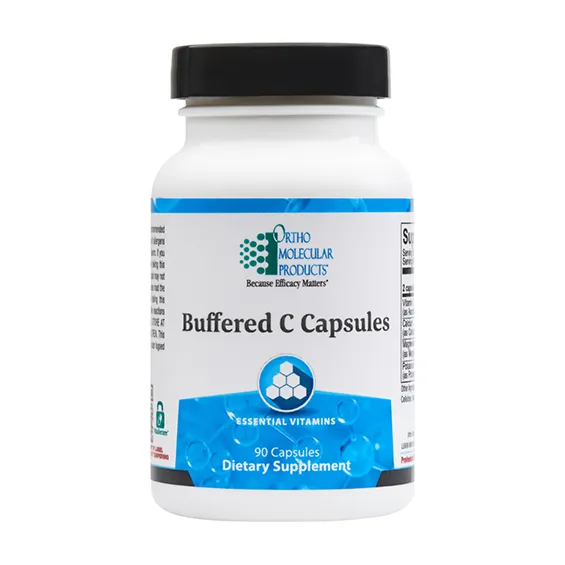
The Ortho Molecular Buffered C Capsules utilize a highly strategic blend of these mineral ascorbates, providing 700 mg of Vitamin C alongside 100 mg of Calcium (as Calcium Carbonate USP), 100 mg of Magnesium (as Magnesium Carbonate USP), and 20 mg of Potassium (as Potassium Gluconate USP). This formulation does more than just protect the stomach; it actively delivers essential macrominerals that are frequently depleted in chronic illness. Magnesium, for instance, is required for over 300 enzymatic reactions, including the production of adenosine triphosphate (ATP) in the mitochondria. By delivering Vitamin C attached to magnesium and calcium, the body receives a dual benefit: the antioxidant power of ascorbate and the cellular support of vital electrolytes, all wrapped in a highly tolerable, non-acidic package.
Enzymatic Cofactor and Antioxidant Network
Beyond its direct antioxidant capabilities, Vitamin C functions as an indispensable enzymatic cofactor. It is required for the activation of a family of enzymes called monooxygenases and dioxygenases. These enzymes are responsible for synthesizing critical biological molecules, including collagen (the structural protein of your skin, joints, and blood vessels), carnitine (which transports fatty acids into the mitochondria for energy), and catecholamine neurotransmitters like dopamine and norepinephrine. Without adequate Vitamin C, these enzymes literally grind to a halt, leading to tissue breakdown, profound muscle fatigue, and autonomic nervous system dysfunction.
Furthermore, Vitamin C does not work in isolation; it is the linchpin of the body's broader antioxidant network. After Vitamin C donates an electron to neutralize a free radical, it becomes oxidized into dehydroascorbic acid (DHA). In a beautifully orchestrated cellular recycling program, other antioxidants like glutathione step in to regenerate DHA back into active Vitamin C. In turn, Vitamin C is responsible for regenerating oxidized Vitamin E within the lipid membranes of your cells. This synergistic network ensures that both the water-soluble compartments (like blood plasma and cellular cytosol) and the fat-soluble compartments (like cell membranes and mitochondrial walls) are comprehensively protected from the relentless oxidative stress that characterizes conditions like Long COVID and ME/CFS.
How Chronic Illness Impacts Vitamin C and Cellular Health
Oxidative Stress and the Viral Aftermath in Long COVID
To comprehend why Vitamin C is so vital for recovery, we must examine how conditions like Long COVID and ME/CFS fundamentally alter the body's internal environment. When the SARS-CoV-2 virus (or other triggering pathogens like Epstein-Barr Virus) enters the body, the immune system launches a massive inflammatory response to eradicate the threat. This response involves the release of pro-inflammatory cytokines and a deliberate surge in reactive oxygen species (ROS) designed to destroy the virus. However, in Long COVID, this immune response fails to turn off. The body remains trapped in a state of chronic, low-grade inflammation, leading to a phenomenon known as the "cytokine storm" aftermath. This persistent inflammation drives relentless oxidative stress, which rapidly depletes the body's intracellular stores of Vitamin C and glutathione. You can learn more about this process in our guide to Autoimmunity and Immune Dysregulation in Long COVID.
As Vitamin C levels plummet, a vicious cycle emerges. The lack of antioxidant protection allows free radicals to damage the mitochondria—the energy-producing powerhouses of the cells. Mitochondrial dysfunction is a hallmark of ME/CFS and Long COVID, leading to the debilitating, crushing exhaustion known as post-exertional malaise (PEM), where even minor physical or cognitive exertion triggers a severe exacerbation of symptoms. Without adequate Vitamin C to synthesize carnitine, the mitochondria also struggle to import fatty acids for fuel, further starving the cells of energy and perpetuating the cycle of profound fatigue.
Mast Cell Activation and Histamine Overload
Another critical intersection between chronic illness and Vitamin C depletion lies in mast cell activation syndrome (MCAS). Mast cells are the sentinels of the immune system, stationed in tissues throughout the body. When triggered, they release a cascade of chemical mediators, the most famous being histamine, to orchestrate an immune response. In MCAS, these mast cells become hyper-reactive and unstable, degranulating (bursting open) inappropriately in response to minor triggers like temperature changes, stress, certain foods, or even physical exertion. This floods the body with histamine, causing symptoms that range from brain fog and tachycardia to severe gastrointestinal distress and skin rashes.
Vitamin C is intimately involved in the regulation of histamine. When the body is under chronic oxidative stress, mast cells become even more fragile and prone to degranulation. Furthermore, the enzymes responsible for breaking down circulating histamine—specifically diamine oxidase (DAO)—require adequate Vitamin C to function optimally. When Vitamin C is depleted by the ongoing demands of Long COVID or ME/CFS, DAO activity slows down, leading to a buildup of histamine in the bloodstream. This histamine overload drives further inflammation, creating a feedback loop that keeps the nervous system and immune system in a constant state of hyper-arousal.
Endothelial Dysfunction and Vascular Damage
The impact of chronic illness extends deeply into the vascular system, specifically affecting the endothelium—the delicate, single-cell layer lining the inside of all blood vessels. The endothelium is responsible for regulating blood pressure, preventing inappropriate clotting, and ensuring that oxygen and nutrients are efficiently delivered to tissues. The persistent viral proteins and inflammatory cytokines damage the endothelial cells, impairing their ability to produce nitric oxide (NO), a crucial molecule that tells blood vessels to dilate and relax.
This loss of nitric oxide leads to vasoconstriction, poor tissue perfusion, and the formation of microscopic blood clots (microclots) that further block oxygen delivery to the brain and muscles. This vascular starvation is a major contributor to the brain fog and muscle pain experienced by patients. Vitamin C is essential for protecting the enzyme that makes nitric oxide (endothelial nitric oxide synthase, or eNOS). When Vitamin C is depleted, eNOS becomes "uncoupled" and actually starts producing more toxic free radicals instead of helpful nitric oxide, accelerating the vascular damage and worsening the symptoms of orthostatic intolerance and dysautonomia.
Buffered C: Supporting Immune, Vascular, and Cellular Function
Enhancing Innate and Adaptive Immunity
Supplementing with Buffered C Capsules provides a multi-targeted approach to dismantling the vicious cycles of chronic illness, starting with the immune system. Vitamin C is actively transported into immune cells—particularly neutrophils, lymphocytes, and monocytes—via specialized Sodium-dependent Vitamin C Transporters (SVCTs). In fact, immune cells concentrate Vitamin C at levels 50 to 100 times higher than what is found in the blood plasma. During an active immune response, neutrophils release massive amounts of toxic reactive oxygen species (like hypochlorous acid, essentially cellular bleach) to destroy pathogens. Vitamin C protects these neutrophils from self-destructing during this "respiratory burst," while simultaneously enhancing their motility and ability to track down infections (chemotaxis).
Beyond the innate immune response, Vitamin C is crucial for adaptive immunity. Recent research has revealed that Vitamin C acts as an essential cofactor for TET (Ten-Eleven Translocation) dioxygenases, enzymes that regulate DNA demethylation. This epigenetic regulation is required for the proper maturation, proliferation, and survival of T-cells and B-cells.
Stabilizing Mast Cells and Degrading Histamine
For patients battling MCAS and histamine intolerance, Buffered Vitamin C serves as a foundational therapeutic tool. While over-the-counter antihistamines merely block histamine receptors (H1/H2), Vitamin C works differently. In the context of histamine, Vitamin C acts as a crucial co-factor for Diamine Oxidase (DAO), the primary enzyme responsible for degrading dietary histamine in the gut. By optimizing Vitamin C levels, the body's natural DAO enzymes become significantly more efficient at clearing accumulated histamine.
Secondly, Vitamin C actively stabilizes the lipid membranes of mast cells. By neutralizing the oxidative stress that often triggers mast cell degranulation, it helps keep these cells calm and intact. Furthermore, studies suggest that Vitamin C can inhibit the action of histidine decarboxylase, the enzyme responsible for the de novo synthesis of new histamine. By halting production, stabilizing the cells, and accelerating degradation, Buffered Vitamin C addresses histamine overload from multiple angles. You can explore other mast cell stabilizing strategies in our deep dive on Ketotifen for MCAS and Long COVID.
Restoring Endothelial Nitric Oxide and Vascular Tone
Buffered Vitamin C also plays a profoundly protective role in the vascular system, directly addressing the endothelial dysfunction seen in Long COVID and dysautonomia. To produce vasodilating nitric oxide (NO), the eNOS enzyme requires a highly sensitive cofactor called tetrahydrobiopterin (BH4). Under the intense oxidative stress of chronic illness, BH4 is rapidly destroyed. Vitamin C chemically stabilizes and recycles oxidized BH3 radicals back into functional BH4, ensuring that eNOS continues to produce healthy nitric oxide rather than toxic superoxide. This restoration of NO bioavailability helps blood vessels dilate properly, improving blood flow to the brain and muscles, and reducing the severity of orthostatic intolerance.
Additionally, Vitamin C downregulates vascular NADPH oxidase (a pro-oxidant enzyme) and prevents endothelial cell apoptosis (programmed cell death) triggered by inflammatory cytokines. By tightening the endothelial permeability barrier, it helps prevent the leakage of fluids into surrounding tissues, which is often experienced as unexplained swelling or blood pooling in the legs by patients with POTS. For patients dealing with severe vascular issues, combining Vitamin C with targeted proteolytic enzymes can be highly beneficial, as discussed in our guide to A.I. Enzymes for Microclots.
Fueling Collagen Synthesis and Tissue Repair
Finally, Buffered Vitamin C is the non-negotiable key to collagen synthesis. Collagen is the primary structural scaffolding of the human body, providing strength and elasticity to skin, joints, blood vessels, and the gut lining. Procollagen must be modified by three key metalloenzymes (prolyl-3-hydroxylase, prolyl-4-hydroxylase, and lysyl hydroxylase) before it can twist into its highly stable triple-helix conformation. Vitamin C acts as the essential cofactor for these enzymes, keeping their iron component in the active ferrous (Fe2+) state. Without Vitamin C, collagen cross-linking fails, leading to joint hypermobility, fragile blood vessels that bruise easily, and a leaky gut barrier. By providing a steady, highly absorbable supply of ascorbate, Buffered C Capsules support the ongoing repair and maintenance of these critical connective tissues.

Symptoms Buffered Vitamin C May Help Manage
Targeting Fatigue and Brain Fog
Buffered C Capsules offer broad-spectrum support for many of the most debilitating symptoms associated with complex chronic illnesses. By addressing underlying oxidative stress, immune dysregulation, and vascular dysfunction, patients may notice improvements in several key areas:
Post-Exertional Malaise (PEM) and Cellular Fatigue: By neutralizing free radicals that damage mitochondria and supporting the synthesis of carnitine (essential for transporting fatty acids into mitochondria for ATP production), Vitamin C helps protect cellular energy generation, potentially reducing the severity of crashes and improving baseline stamina.
Brain Fog and Cognitive Dysfunction: Endothelial dysfunction and microclots impair blood flow and oxygen delivery to the brain. By restoring nitric oxide production and supporting healthy vasodilation, Vitamin C helps improve cerebral perfusion, which may alleviate the cognitive cloudiness, memory issues, and lack of focus common in Long COVID and ME/CFS.
Orthostatic Intolerance and Tachycardia: In dysautonomia and POTS, poor vascular tone causes blood to pool in the lower extremities upon standing, forcing the heart to race to compensate. Vitamin C supports the structural integrity of blood vessels (via collagen synthesis) and improves endothelial function, helping vessels constrict and dilate appropriately to maintain stable blood pressure.
Addressing Allergic and Vascular Symptoms
In addition to energy and cognitive support, the mast cell-stabilizing and tissue-repairing properties of Buffered Vitamin C target a different subset of systemic symptoms:
Histamine Intolerance and Allergic-Like Flares: By acting as a cofactor for the DAO enzyme and stabilizing mast cell membranes, Vitamin C helps accelerate the breakdown of circulating histamine and prevents new histamine release. This can help manage symptoms like unexplained rashes, flushing, gastrointestinal cramping, and sudden food sensitivities.
Joint Pain and Connective Tissue Instability: Many patients with chronic illness, particularly those with comorbid hypermobility spectrum disorders, struggle with joint pain and frequent subluxations. Vitamin C is the essential cofactor for cross-linking collagen fibers, providing the necessary structural support to stabilize joints, tendons, and ligaments.
Easy Bruising and Slow Wound Healing: Fragile capillaries and impaired tissue repair are common signs of localized Vitamin C depletion. By upregulating the transcription of collagen genes and protecting endothelial cells from apoptosis, Buffered Vitamin C strengthens capillary walls, reducing unexplained bruising and supporting faster recovery from minor injuries.
Practical Considerations: Forms, Dosing, and Absorption
The Bioavailability Advantage of Buffered Ascorbates
When selecting a Vitamin C supplement, the form matters just as much as the dosage. Standard synthetic ascorbic acid has good bioavailability at lower doses (around 200 mg), but as the dose increases to the therapeutic levels often required for chronic illness (1,000 mg or more), absorption rates drop drastically. Unabsorbed ascorbic acid remains in the gastrointestinal tract, where its high acidity can irritate the stomach lining and draw water into the intestines, causing osmotic diarrhea. This not only causes discomfort but means the nutrient is literally being flushed away before it can reach the bloodstream.
Buffered mineral ascorbates, such as the calcium and magnesium ascorbates found in Ortho Molecular's Buffered C Capsules, solve this problem by neutralizing the pH of the vitamin. Because the buffered form survives the gastric environment without causing rapid transit or irritation, the body has a much better opportunity to absorb it in the small intestine. In fact, a pharmacokinetic study on healthy volunteers showed that the oral bioavailability of calcium ascorbate was 128% significantly greater than that of synthetic ascorbic acid over a 10-hour period.
Optimal Dosing Strategies and Timing
The suggested use for Buffered C Capsules is 2 or more capsules per day, or as recommended by your healthcare professional. Because each capsule contains 700 mg of Vitamin C, two capsules provide a robust 1,400 mg dose. Since Vitamin C is water-soluble, the body cannot store large amounts of it for long periods; excess is eventually excreted through the urine. Therefore, the most effective dosing strategy to maintain steady, saturated blood plasma levels is "split dosing." Rather than taking your entire daily dose at once, it is highly recommended to take one capsule in the morning and one in the afternoon or evening.
Timing can also be tailored to your specific symptoms. If you are using Buffered Vitamin C primarily for its histamine-degrading properties to manage MCAS, taking a dose 15 to 30 minutes before meals can help ensure that adequate Vitamin C is available to support the DAO enzyme as it processes any dietary histamine in your food. Additionally, because this formulation contains 100 mg of magnesium per capsule, taking a dose in the evening may provide the added benefit of magnesium's natural muscle-relaxing and nervous system-calming effects, potentially supporting better sleep quality. You can learn more about alternative forms of Vitamin C in our guide to Ascorbic Acid Powder.
Potential Interactions and Safety Profile
Buffered Vitamin C is generally exceptionally safe and well-tolerated, especially compared to unbuffered forms. The inclusion of calcium, magnesium, and potassium not only buffers the acid but provides a gentle electrolyte boost that is often beneficial for dysautonomia patients. However, there are a few practical considerations to keep in mind. Because Vitamin C significantly enhances the absorption of non-heme iron (the type of iron found in plant foods and supplements), individuals with hemochromatosis (iron overload disease) should consult their doctor before taking high doses of Vitamin C.
Additionally, while the buffered form drastically reduces the risk of gastrointestinal upset, everyone's "bowel tolerance" is different. If you experience loose stools, simply reduce the dose and slowly titrate back up as your body adjusts. It is also important to note that very high doses of Vitamin C can theoretically interact with certain medications, including blood thinners like warfarin, or interfere with the accuracy of certain blood glucose meters. As always, particularly when managing complex conditions like Long COVID or ME/CFS, it is crucial to discuss any new supplement regimen with your primary care provider or specialist to ensure it aligns safely with your overall treatment plan.

Follow the Science
Clinical Trials on Post-Viral Fatigue and Endothelial Repair
The scientific rationale for using Vitamin C to manage post-viral syndromes has gained significant traction, particularly in the wake of the COVID-19 pandemic. While specific trials on Long COVID are ongoing, foundational nutrition knowledge remains critical. For instance, a study by researchers in Spain (2022) focused on validating the General and Sport Nutrition Knowledge Questionnaire (GeSNK) in 305 adolescents. They found that assessing nutrition knowledge is a key step in health education programs, though this specific study did not measure the effects of Vitamin C on Long COVID fatigue or physical performance.
These findings are supported by broader systematic reviews evaluating the use of Vitamin C for generalized post-viral fatigue. A comprehensive review by Vollbracht & Kraft (2021) assessed 9 clinical studies involving 720 participants suffering from fatigue related to various viral infections, including Herpes Zoster. The researchers found that in 3 out of 4 controlled trials, high-dose Vitamin C administration resulted in a significant decrease in fatigue scores compared to control groups, alongside alleviations in sleep disturbances, depression, and cognitive dysfunction. The review concluded that Vitamin C is a highly plausible, feasible, and safe treatment for post-viral fatigue that warrants integration into Long COVID management protocols.
Evidence for Histamine Reduction and Mast Cell Support
The clinical evidence supporting Vitamin C's role in managing histamine overload and mast cell activation is equally robust, aligning with the broader biochemical understanding that Vitamin C supports tissue integrity and cellular health.
For patients with MCAS, the source of Vitamin C is critical. While citrus-derived Vitamin C and bioflavonoids can actually act as "histamine liberators" and trigger mast cell degranulation, pure mineral ascorbates (like those in Buffered C Capsules) provide the necessary histamine-degrading benefits without the citrus-induced risk. This makes buffered, non-citrus Vitamin C a cornerstone intervention in functional medicine protocols for MCAS, often paired with other natural mast cell stabilizers like quercetin to provide comprehensive control over hyper-reactive immune responses. For more information on plant-based Vitamin C options, you can read our guide on Acerola Vitamin C and Bioflavonoids.
Immune Biomarkers and Bioavailability Studies
The specific advantages of calcium ascorbate (one of the primary ingredients in Buffered C Capsules) are well documented, and as with any supplement, it is important to evaluate potential interactions with other medications you may be taking.
The Path Forward
A Foundational Piece of Your Management Puzzle
Living with Long COVID, ME/CFS, dysautonomia, or MCAS is an exhausting daily reality. The unpredictable nature of these conditions—where a seemingly "good" day can be instantly derailed by a sudden crash, a racing heart, or an unexpected allergic flare—requires immense resilience. It is entirely valid to feel overwhelmed by the sheer complexity of your symptoms and the lack of straightforward answers in traditional medicine. However, understanding the underlying cellular mechanisms driving these symptoms—such as profound oxidative stress, endothelial damage, and histamine overload—provides a tangible roadmap for management. You are not fighting a ghost; you are fighting a physiological disruption that can be systematically addressed.
While there is no single "magic pill" that will instantly cure complex chronic illnesses, targeted nutritional support is a critical component of a comprehensive recovery strategy. Buffered C Capsules offer a gentle, highly bioavailable way to replenish your body's depleted antioxidant reserves, support the structural integrity of your blood vessels, and provide your immune system with the essential cofactors it needs to regulate itself. When combined with foundational management techniques like aggressive resting, strict pacing to avoid post-exertional malaise, nervous system regulation, and careful symptom tracking, Buffered Vitamin C can help raise your baseline functioning and improve your overall quality of life.
Taking the Next Step
If you are struggling with persistent fatigue, brain fog, histamine intolerance, or signs of vascular dysfunction, Buffered Vitamin C may be a valuable addition to your daily protocol. Its unique mineral ascorbate formulation ensures that you receive the profound cellular benefits of high-dose Vitamin C without the risk of gastrointestinal distress or acid-induced irritation. As always, we strongly recommend discussing any new supplement with your healthcare provider to ensure it fits safely within your individualized care plan, especially if you are taking prescription medications or managing severe dysautonomia.