Can A.I. Enzymes Help Manage Joint Pain and Microclots in Long COVID and ME/CFS?
March 5, 2026
A.I. EnzymesLong COVIDME/CFS
Share:
Disclaimer: The information provided here is for educational purposes only and is not intended as medical advice. It should not be used to diagnose, treat, cure, or prevent any medical condition. Instead, use it as a starting point for discussion with your healthcare provider. Always consult with a qualified healthcare provider before starting any new medication, supplement, device, or making changes to your health regimen.
You finish a carefully prepared meal, hoping for nourishment, but within minutes, your heart rate spikes, your stomach bloats painfully, and a familiar, heavy brain fog settles in. For individuals living with complex chronic conditions like Long COVID, myalgic encephalomyelitis/chronic fatigue syndrome (ME/CFS), dysautonomia, and mast cell activation syndrome (MCAS), the simple act of eating can feel like navigating a minefield. The body's natural ability to break down food, absorb nutrients, and manage the resulting inflammatory cascade is often severely compromised, leaving patients trapped in a vicious cycle of gastrointestinal distress and systemic symptom flares. This bidirectional relationship between the gut and the immune system means that poor digestion doesn't just cause localized discomfort; it acts as a primary driver for widespread, debilitating symptoms that affect every system in the body.
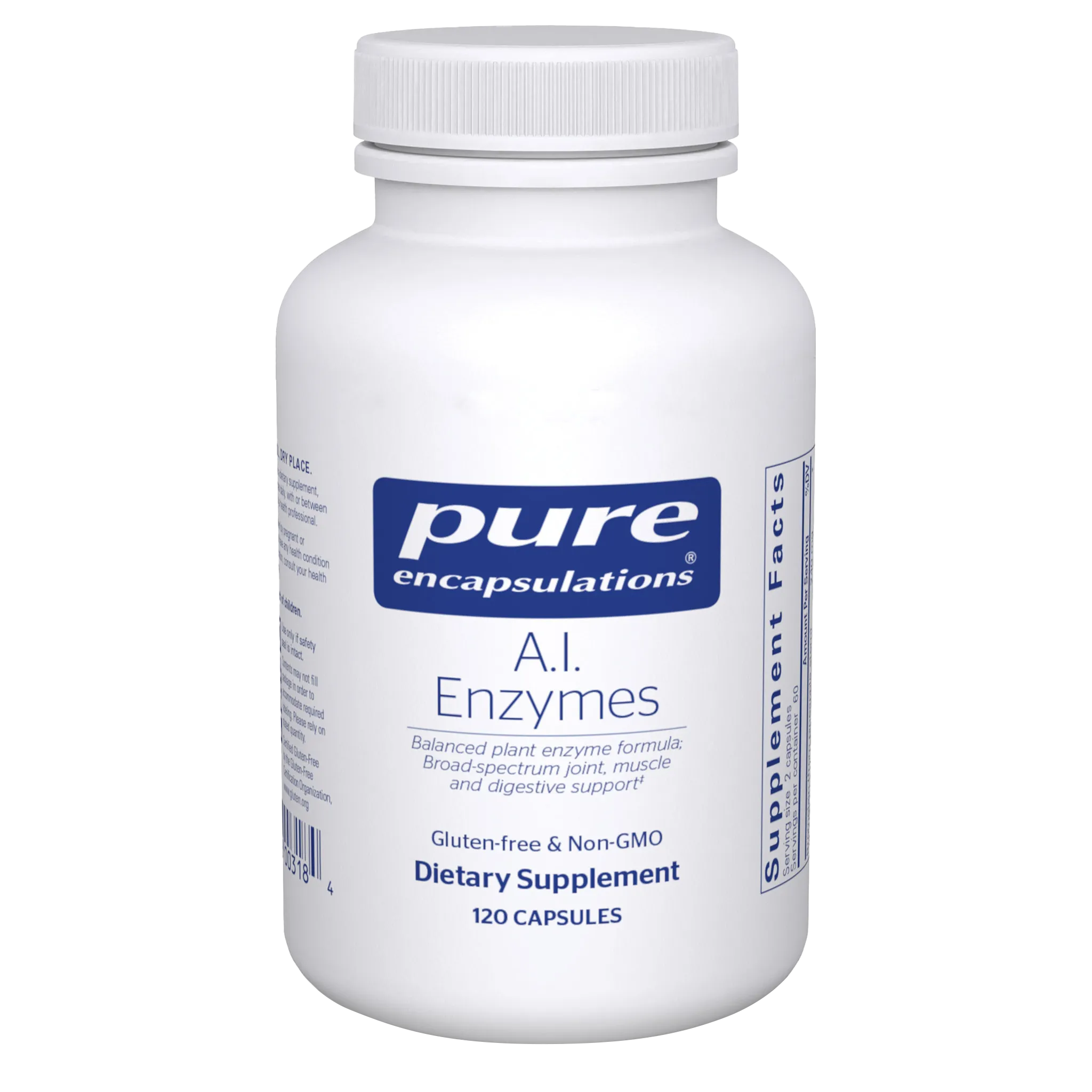
But the dysfunction doesn't stop in the gut. Beyond digestion, these chronic illnesses are frequently characterized by widespread systemic inflammation, persistent muscle and joint pain, and microscopic circulatory issues that starve tissues of oxygen. Addressing this multifaceted dysfunction requires a comprehensive approach. Enter A.I. Enzymes by Pure Encapsulations—a highly specialized, broad-spectrum plant enzyme formula designed to provide dual-action support. When taken with meals, it acts as a powerful digestive aid; when taken on an empty stomach, it enters the bloodstream to support healthy joint function, muscle recovery, and systemic inflammatory balance. In this article, we will explore the deep biochemical mechanisms behind these enzymes and how they may offer a vital piece of the puzzle for chronic illness management.
TL;DR
A.I. Enzymes offer dual-action support: aiding digestion with meals and supporting systemic inflammation on an empty stomach.
Digestive enzymes may help reduce gastrointestinal distress, bloating, and food-triggered mast cell flares.
Systemic enzymes like bromelain and papain support microcirculation and may help clear inflammatory debris.
Timing is critical: take with food for digestion, or on an empty stomach for systemic benefits.
What is A.I. Enzymes?
The Dual Nature of Enzyme Therapy: Digestive vs. Systemic
Enzymes are specialized protein molecules that act as biological catalysts, dramatically speeding up the chemical reactions necessary for life. In a healthy body, enzymes are responsible for everything from dismantling the food we eat to clearing out cellular debris after an injury. A.I. Enzymes leverages this biological principle by combining a precise ratio of plant-based enzymes that can serve two entirely different functions depending on how they are administered. When taken alongside a meal, these enzymes remain in the gastrointestinal tract, where they act as digestive workhorses to break down complex proteins, carbohydrates, and fats into absorbable nutrients. This process is essential for helping to keep food from fermenting and triggering immune responses in the lower gut.
Conversely, when taken on an empty stomach—a practice known as Systemic Enzyme Therapy (SET)—these same molecules can survive the gastric environment, cross the intestinal lining into the bloodstream, and circulate throughout the body. Once in the vascular system, they act as powerful modulators of the immune and inflammatory systems. They seek out and degrade rogue proteins, clear circulating immune complexes, and support tissue repair. This dual nature makes A.I. Enzymes a uniquely versatile tool for patients battling complex, multi-systemic conditions.
The Proteolytic Powerhouses: Bromelain and Papain
At the heart of this formula are two potent proteolytic (protein-digesting) enzymes: bromelain and papain. Bromelain is a complex mixture of thiol endopeptidases extracted from the stem and fruit of the pineapple plant (Ananas comosus). At the molecular level, bromelain is highly adept at cleaving peptide bonds within large protein structures, a mechanism that allows it to dismantle inflammatory mediators and cellular debris in the bloodstream. It is standardized to 2,400 Gelatin Digesting Units (GDU) per gram, ensuring a high level of enzymatic activity capable of breaking down tough protein matrices.
Papain, a powerful cysteine protease derived from the latex of unripe papaya (Carica papaya), shares a similar protein-cleaving ability but operates through slightly different enzymatic pathways. Standardized to 800 TU/mg, papain is particularly effective at breaking down the protective shields (biofilms) created by pathogenic bacteria. Together, these proteolytic powerhouses work synergistically to degrade rogue proteins, scavenge reactive oxygen species (ROS), and accelerate the regeneration of damaged tissues in muscles and joints, providing a robust foundation for systemic recovery.
The Digestive Core: Amylase, Protease, and Lipase
To provide comprehensive gastrointestinal support, A.I. Enzymes includes enhanced levels of amylase, protease, and lipase sourced from the resilient fungi Aspergillus oryzae and Aspergillus niger. Amylase is the specific enzyme responsible for hydrolyzing complex carbohydrates and starches into simple, absorbable sugars. By breaking down these starches early in the digestive tract, amylase helps keep them from reaching the lower intestine where they would otherwise ferment, produce excessive gas, and feed opportunistic bacterial overgrowths.
Protease works in tandem with bromelain and papain to further dismantle dietary proteins into bioavailable amino acids, ensuring that large, potentially antigenic protein molecules do not trigger immune responses as they pass through the gut lining. Finally, lipase is crucial for the emulsification and breakdown of dietary lipids (fats) into free fatty acids. This process is absolutely essential for the absorption of fat-soluble vitamins like Vitamin D, A, E, and K, which play critical roles in regulating mucosal immunity and maintaining cellular health.
The Antioxidant Synergist: Rutin
Rounding out the A.I. Enzymes formula is rutin (also known as rutoside), a powerful plant-based bioflavonoid found naturally in foods like buckwheat, apples, and citrus. While rutin is not an enzyme itself, it is heavily utilized in systemic enzyme formulations because of its profound synergistic effects on the vascular system. Rutin provides necessary cytoprotective (cell-protecting) and antioxidant activity by scavenging the free radicals that are released during a chronic inflammatory response, thereby helping to protect against secondary tissue damage.
Furthermore, research on conditions like medial tibial stress syndrome highlights the importance of managing tissue stress, though specific effects of rutin require further targeted study. This vasoprotective action helps limit the excessive leakage of fluids and inflammatory proteins into surrounding tissues, which is a primary driver of localized edema and joint swelling. By combining proteolytic enzymes with this potent bioflavonoid, the formula addresses both the protein-based triggers of inflammation and the resulting oxidative stress.
How Complex Chronic Illness Impacts the Gut and Immune System
The Gut-Immune Axis and Mast Cell Activation Syndrome (MCAS)
In patients with mast cell activation syndrome (MCAS), the gastrointestinal tract often becomes ground zero for systemic symptom flares. The gut lining is densely packed with mast cells, which act as the immune system's frontline sentinels. When the gut microbiome becomes imbalanced—a state known as dysbiosis—opportunistic bacteria can overgrow and produce inflammatory endotoxins like lipopolysaccharides (LPS). These endotoxins trigger the release of zonulin, a protein that widens the tight junctions between intestinal cells, creating a phenomenon commonly referred to as "leaky gut."
As undigested food particles and bacterial toxins leak into the bloodstream, hyper-reactive mast cells degranulate, releasing massive amounts of histamine, tryptase, and cytokines that drive widespread allergic and inflammatory symptoms. Furthermore, certain opportunistic bacteria that overgrow during dysbiosis—such as Morganella and Klebsiella—naturally produce exogenous histamine. This adds to the body's internal histamine load, overwhelming the patient's natural Diamine Oxidase (DAO) enzyme capacity and triggering severe MCAS flares that manifest as brain fog, hives, diarrhea, and palpitations.
Dysautonomia, Digestion, and Nutrient Malabsorption
This gastrointestinal dysfunction is frequently compounded by dysautonomia, a dysfunction of the autonomic nervous system commonly seen in Long COVID and ME/CFS. Conditions like Postural Orthostatic Tachycardia Syndrome (POTS) cause blood to pool in the lower extremities when standing, which triggers the body's "fight or flight" sympathetic nervous system. When the body is perpetually stuck in this sympathetic state, blood flow is actively diverted away from the digestive organs to prioritize the heart and skeletal muscles.
This lack of splanchnic blood flow leads to delayed gastric emptying (gastroparesis) and a significant reduction in the secretion of stomach acid (hypochlorhydria) and pancreatic enzymes. Without adequate natural enzymes, food sits stagnant in the digestive tract, fermenting and feeding the very pathogenic bacteria that drive MCAS and systemic inflammation. This creates a vicious cycle of malabsorption, where the body is starved of the essential nutrients and amino acids it desperately needs to repair the autonomic nervous system and stabilize mast cells.
Fibrin Amyloid Microclots in Long COVID and ME/CFS
Beyond the gut, complex chronic illnesses profoundly impact the circulatory and coagulation systems. Groundbreaking research by Prof. Resia Pretorius and Prof. Douglas Kell has revealed that the SARS-CoV-2 Spike protein—as well as other viral or bacterial pathogens—can bind to fibrinogen in the blood, causing it to misfold into an abnormal, beta-sheet-rich "amyloid" structure. These resulting formations, known as fibrin amyloid microclots, are highly resistant to the body's natural clot-busting enzyme, plasmin.
Because they cannot be easily degraded by normal physiological processes, these microclots trap inflammatory molecules, anti-plasmin, and autoantibodies. This creates a persistent, highly toxic environment within the bloodstream that drives chronic illness pathology. The presence of these fibrinaloids indicates a severe breakdown in the body's natural fibrinolytic system, leaving patients vulnerable to widespread vascular inflammation and endothelial dysfunction.
The Vicious Cycle of Inflammation and Hypoxia
The presence of these stubborn microclots creates a devastating downstream effect on cellular energy production. Ranging from 5 to 200 micrometers in diameter, these fibrinaloids can physically lodge in the body's smallest blood vessels (microcapillaries), blocking the passage of red blood cells. This microvascular obstruction severely impairs the delivery of oxygen to the muscles, organs, and the brain, a state known as localized cellular hypoxia.
Researchers believe this oxygen starvation is a primary driver of debilitating symptoms like severe brain fog, muscle pain, and the hallmark symptom of ME/CFS: post-exertional malaise (PEM). As tissues suffocate, the mitochondria cannot produce adequate adenosine triphosphate (ATP) for energy. The stressed tissues release more inflammatory signals, which in turn triggers more clotting, trapping the patient in a relentless cycle of hypoxia, severe fatigue, and prolonged recovery times after even minimal exertion.
A.I. Enzymes: Supporting Digestion, Circulation, and Tissue Repair
Restoring Gut Integrity and Starving Dysbiosis
When taken with meals, the broad-spectrum digestive components of A.I. Enzymes act as a mechanical buffer to protect the immune system from antigenic triggers. By supplying robust levels of amylase, protease, and lipase, the supplement ensures that macronutrients are thoroughly dismantled early in the digestive process. This helps keep complex carbohydrates from reaching the lower intestine where they would otherwise ferment and feed Small Intestinal Bacterial Overgrowth (SIBO).
Clinical data suggests that by starving these opportunistic, histamine-producing bacteria, digestive enzymes can significantly lower the body's overall histamine burden. Furthermore, fully digesting proteins prevents large, antigenic molecules from crossing the leaky gut barrier, directly helping to reduce the frequency and severity of mast cell degranulation. As the gastrointestinal tract heals from the absence of fermenting food, the intestinal mucosa can regenerate, potentially restoring the body's natural ability to produce the DAO enzyme needed to manage dietary histamine.
Breaking Down the Microclot Burden (Fibrinolytic Action)
When administered on an empty stomach, the systemic actions of bromelain and papain offer a targeted approach to addressing circulatory dysfunction. Both of these proteolytic enzymes possess profound fibrinolytic (fibrin-degrading) properties. Once absorbed into the bloodstream, they actively seek out and cleave the peptide bonds within excess fibrin deposits, working to dismantle the structural matrix of blood clots.
While standard pharmaceutical blood thinners primarily help reduce the formation of new clots, emerging research indicates that systemic fibrinolytics may help actively dissolve existing, stubborn amyloid microclots. By breaking down this anomalous fibrin mesh, systemic enzymes act as natural blood thinners, helping to restore healthy microcirculation and clear trapped inflammatory debris from the vascular system. This action is critical for patients looking to address the root cause of microvascular hypoxia.
Modulating the Inflammatory Cascade and Kinins
Rather than completely suppressing the immune system like traditional NSAIDs or corticosteroids, systemic enzymes intelligently modulate the inflammatory response to accelerate healing. Bromelain specifically targets the arachidonic acid cascade, inhibiting the production of pro-inflammatory prostaglandins (like PGE-2) while preserving anti-inflammatory pathways. This balanced approach allows the body to resolve inflammation naturally without shutting down the necessary immune responses required for tissue repair.
Additionally, bromelain has been clinically proven to down-regulate the levels of plasma kininogen, the precursor protein to bradykinin. Because bradykinin is a potent chemical mediator that causes severe localized swelling and directly stimulates pain receptors, depleting kininogen effectively short-circuits the pain signal. This mechanism dramatically attenuates both swelling and nociceptive pain in damaged joints and muscles, offering a natural alternative for chronic pain management.
Enhancing Cellular Oxygenation and Muscle Recovery
By clearing microvascular blockages and reducing localized edema, systemic enzymes profoundly enhance cellular oxygenation. As fresh, oxygen-rich blood is finally able to reach previously hypoxic tissues, the mitochondria can resume efficient ATP energy production. This improved perfusion is particularly crucial for muscle recovery after exertion, as it allows for the rapid clearance of lactic acid and metabolic waste products that accumulate during physical activity.
In clinical trials observing delayed-onset muscle soreness (DOMS), patients taking systemic enzymes exhibited vastly superior recovery of contractile muscle function and faster resolution of localized edema compared to placebo. By clearing leaked inflammatory proteins from skeletal muscle fibers, A.I. Enzymes may help mitigate the severe muscle pain and prolonged recovery times associated with PEM and chronic fatigue, allowing patients to gently expand their energy envelopes.
Symptoms A.I. Enzymes May Help Manage
Gastrointestinal and Mast Cell Symptoms
Post-Meal Bloating and Distention: By providing amylase and lipase to fully break down fermentable carbohydrates and complex fats, the enzymes help reduce the excessive gas production caused by bacterial fermentation in the gut.
Food-Triggered MCAS Flares: Protease dismantles large, antigenic protein molecules before they can cross the intestinal barrier, reducing the immune system's perceived threat level and helping to reduce subsequent mast cell degranulation.
Histamine Intolerance: By starving the specific strains of opportunistic gut bacteria that naturally produce exogenous histamine, broad-spectrum digestion support helps lower the body's total systemic histamine bucket.
Fat Malabsorption and Steatorrhea: Supplemental lipase ensures that dietary fats are properly emulsified, helping to reduce fatty, loose stools and allowing for the crucial absorption of fat-soluble vitamins that regulate mucosal immunity.
Musculoskeletal and Circulatory Symptoms
Chronic Joint Pain and Stiffness: Bromelain and papain actively downregulate the production of pain-signaling kinins and pro-inflammatory prostaglandins, providing natural, non-toxic relief for degenerative joint discomfort.
Muscle Aches and Heavy Limbs: By exerting fibrinolytic action to clear microcapillary blockages, systemic enzymes improve localized blood flow, flushing out irritating lactic acid and cellular debris from muscle tissues.
Prolonged Recovery from Exertion: The synergistic combination of proteolytic enzymes and the antioxidant rutin protects muscle fibers from oxidative stress, helping to shorten the duration of post-exertional muscle soreness and PEM crashes.
Localized Swelling and Edema: Rutin strengthens capillary walls to help limit excessive fluid leakage, while bromelain breaks down the fibrin matrix that traps fluid in the tissues, effectively resolving stubborn swelling.
Systemic and Energy-Related Symptoms
Brain Fog and Cognitive Fatigue: By helping to dissolve the fibrin amyloid microclots that restrict cerebral microcirculation, systemic fibrinolytics may improve oxygen delivery to the brain, supporting clearer cognitive function.
Systemic Inflammation: The continuous systemic absorption of bromelain and papain helps degrade circulating immune complexes (CICs) in the bloodstream, lowering overall systemic inflammatory markers like C-reactive protein (CRP).
Nutrient-Deficiency Fatigue: By optimizing the breakdown and assimilation of macronutrients at the intestinal level, digestive enzymes ensure the body actually absorbs the vitamins and minerals required for baseline cellular energy production.
Practical Considerations: Forms, Dosing, and Absorption
The Critical Importance of Timing (With vs. Without Food)
The most crucial factor in utilizing A.I. Enzymes effectively is understanding the strict rules of timing, as the supplement's function changes entirely based on stomach contents. If your goal is to support digestion, reduce bloating, and manage food-triggered MCAS flares, you must take the capsules with your meal or immediately before eating. In this scenario, the enzymes mix directly with the food bolus in your stomach to aid the physical breakdown of macronutrients, acting as a substitute for compromised pancreatic function.
However, if your goal is systemic support—such as targeting joint pain, muscle recovery, or microclotting—you must take the capsules on a strictly empty stomach, typically 45 to 60 minutes before a meal or two hours after eating. If taken with food, the proteolytic enzymes will simply digest your meal rather than crossing into your bloodstream. Adhering to this empty-stomach rule is the absolute foundation of Systemic Enzyme Therapy, ensuring the molecules survive the gastric phase and reach the vascular system intact.
Bioavailability and Enteric Survival
Historically, skeptics argued that large enzyme molecules could not survive the harsh, acidic environment of the stomach or cross the intestinal wall. However, modern pharmacokinetic research has proven that compounds like bromelain have a surprisingly high oral bioavailability. Approximately 40% of functionally intact bromelain is absorbed into the bloodstream after oral administration, reaching peak blood concentrations roughly one hour post-administration with a biological half-life of 6 to 9 hours.
Once in the blood, these enzymes bind to specific transport proteins (such as alpha-2-macroglobulin), which act as a protective shield. This binding helps keep the enzymes from indiscriminately digesting healthy blood proteins while preserving their targeted anti-inflammatory and fibrinolytic activity for when they reach sites of tissue damage. The inclusion of vegetarian capsules in A.I. Enzymes helps protect the delicate compounds during their journey through the upper digestive tract, optimizing their systemic absorption.
Potential Interactions and Contraindications
While A.I. Enzymes boasts an excellent safety profile compared to pharmaceutical anti-inflammatories, its powerful systemic effects require careful consideration. Because bromelain and papain possess natural blood-thinning (fibrinolytic) properties, they should be used with extreme caution by individuals taking prescription anticoagulants (like warfarin or apixaban) or those with diagnosed bleeding disorders. Combining natural fibrinolytics with pharmaceutical blood thinners can significantly increase the risk of bruising and bleeding events.
Additionally, systemic bromelain can significantly increase the tissue absorption and blood concentrations of certain antibiotics, such as amoxicillin and tetracycline, potentially amplifying their effects and side effects. As always, pregnant or lactating women should avoid high-dose proteolytic enzymes, as compounds like papain are contraindicated during pregnancy due to potential risks of fetal toxicity. Always consult your healthcare provider before introducing systemic enzymes to your regimen.
Setting Realistic Expectations for Enzyme Therapy
When integrating A.I. Enzymes into your protocol, it is vital to set realistic timelines for symptom relief. When used as a digestive aid with meals, patients often notice a reduction in bloating, gas, and gastrointestinal discomfort almost immediately, within the first few days of use. The mechanical breakdown of food provides rapid, noticeable relief for those suffering from hypochlorhydria or exocrine pancreatic insufficiency.
However, when utilizing the supplement for Systemic Enzyme Therapy to address chronic joint pain, muscle recovery, or complex circulatory issues, the effects are cumulative and require patience. It typically takes two to four weeks of consistent, empty-stomach dosing for the enzymes to sufficiently modulate inflammatory cytokines, clear circulating immune complexes, and begin breaking down stubborn fibrin deposits. Consistency and strict adherence to the empty-stomach rule are the keys to long-term systemic success.

Follow the Science: Clinical Evidence for Enzyme Therapy
Research on Systemic Enzymes for Joint and Muscle Pain
The combination of bromelain, papain, and rutin has been extensively validated in clinical literature, particularly as a safer alternative to NSAIDs for pain management. A 2022 review discussed the management of medial tibial stress syndrome, highlighting the broader need for safe, long-term inflammatory management strategies in musculoskeletal conditions.
Systemic enzyme therapy continues to be an active area of research within the broader context of inflammatory and musculoskeletal health.
Emerging Data on Fibrinolytics and Microclots
In the realm of Long COVID and ME/CFS, the clinical investigation into fibrinolytic enzymes is rapidly accelerating. Following the discovery of fibrin amyloid microclots by Pretorius and Kell, researchers have begun exploring how to safely dissolve these structures. While pharmaceutical "triple anticoagulant therapy" has shown promise in early South African cohorts, the high risk of bleeding has led many clinicians to investigate natural fibrinolytics like bromelain, nattokinase, and lumbrokinase as potentially safer alternatives.
Current research, such as a recent preprint study, is actively investigating new methods like pulsed speckle contrast optical spectroscopy (p-SCOS) to detect and monitor microclots in transparent biofluids, which could eventually help track the success of targeted therapies. Additionally, new diagnostic tools, such as thermal imaging for microcirculation, are being developed to better track the success of these fibrinolytic therapies in real-time, offering hope for more personalized treatment protocols in the near future.
The Clinical Link Between Digestive Enzymes and MCAS
The scientific understanding of how digestion impacts systemic mast cell activation has also seen significant breakthroughs. A landmark 2025 study published in the Journal of Allergy and Clinical Immunology: Global sequenced the gut microbiomes of patients with systemic mast cell disorders and found definitive evidence of profound dysbiosis. The researchers correlated these bacterial imbalances directly with elevated serum tryptase levels, a key marker of mast cell degranulation, proving the bidirectional link between gut health and mast cell stability.
By utilizing broad-spectrum digestive enzymes (amylase, protease, and lipase) to ensure complete macronutrient breakdown, clinicians can actively help reduce the fermentation that drives this dysbiosis. This mechanical support lowers the antigenic load on the gut lining, reduces the production of exogenous histamine by opportunistic bacteria, and mitigates the systemic triggers for MCAS flares. As research continues to evolve, the role of digestive enzymes as a foundational treatment for complex immune disorders is becoming increasingly undeniable.
The Path Forward
Validating the Complexity of Your Symptoms
Living with complex chronic conditions like Long COVID, ME/CFS, dysautonomia, and MCAS is an exhausting, full-body experience. When your symptoms range from severe post-meal bloating to debilitating muscle pain and crushing brain fog, it can feel impossible to find a management strategy that addresses the sheer scope of the dysfunction. It is entirely valid to feel overwhelmed by a medical system that often treats these interconnected symptoms as isolated, unrelated issues. Understanding the profound links between your gut health, your circulatory system, and your inflammatory pathways is the first step toward reclaiming your quality of life. You are not imagining the complexity of your illness, and science is finally beginning to map the biochemical realities of what you experience every day.
Integrating Enzymes into a Comprehensive Strategy
While A.I. Enzymes offers a powerful, dual-action approach to supporting both digestion and systemic inflammation, it is not a standalone cure. True management of complex chronic illness requires a holistic, multi-layered strategy. Enzyme therapy works best when combined with rigorous symptom tracking, aggressive pacing to manage your energy envelope, and dietary modifications tailored to your specific sensitivities. As you work to stabilize your mast cells and improve your microcirculation, you may also find it helpful to explore practical lifestyle adaptations, such as learning How to Maintain Your Independence with Chronic Illness or implementing 5 Tips for Surviving the Holidays with a Chronic Illness. Every small intervention builds upon the next, creating a stronger foundation for your recovery.
Exploring Your Supplement Options
If you are struggling with the dual burden of gastrointestinal distress and systemic joint or muscle pain, broad-spectrum enzyme therapy may be a valuable addition to your protocol. Because of the potent fibrinolytic and proteolytic nature of these compounds, it is imperative to consult with your primary care doctor or a specialist before beginning supplementation, especially if you are taking blood thinners or antibiotics. When you are ready to take the next step in supporting your gut-immune axis and systemic circulation, we invite you to explore your options and discover how targeted plant-based support can fit into your comprehensive care plan.