Can Phospholipids Like BioPC Pro® Clear Brain Fog and Fatigue in Long COVID and ME/CFS?
March 6, 2026
BioPC ProPhospholipidsLong COVID
Share:
Disclaimer: The information provided here is for educational purposes only and is not intended as medical advice. It should not be used to diagnose, treat, cure, or prevent any medical condition. Instead, use it as a starting point for discussion with your healthcare provider. Always consult with a qualified healthcare provider before starting any new medication, supplement, device, or making changes to your health regimen.
Months or even years after a mild acute infection, many individuals with Long COVID and myalgic encephalomyelitis/chronic fatigue syndrome (ME/CFS) find themselves trapped in a body that feels fundamentally broken. The profound, crushing fatigue is not simply "tiredness"—it is a cellular energy crisis. The cognitive dysfunction, often minimized as "brain fog," feels like trying to think through thick mud. For those also navigating dysautonomia, mast cell activation syndrome (MCAS), and postural orthostatic tachycardia syndrome (POTS), the nervous system seems stuck in a perpetual state of fight-or-flight, unable to find the brakes. If you are experiencing these interconnected symptoms, you are not alone, and your symptoms are not in your head. They are rooted in measurable, physiological dysfunction at the deepest levels of your cells.
Emerging research into post-viral syndromes has begun to illuminate a critical, often-overlooked factor driving this systemic dysfunction: the degradation of cellular and mitochondrial membranes. These microscopic barriers are constructed from specialized fats called phospholipids. When viral infections, chronic inflammation, and severe oxidative stress deplete these vital structural molecules, the very foundation of cellular energy production and neurological communication begins to crumble. This is where targeted nutritional support, such as the highly concentrated phospholipid complex found in BioPC Pro®, comes into play. By supplying the body with a full-spectrum blend of phosphatidylcholine, phosphatidylserine, and other essential phosphatides derived from sunflower lecithin, we can begin to rebuild these cellular boundaries, fuel the parasympathetic nervous system, and support the recovery of cognitive and physical energy.
TL;DR
BioPC Pro® provides essential phospholipids to support cellular and mitochondrial membrane repair.
Chronic illnesses like Long COVID and ME/CFS can degrade these membranes, causing severe fatigue and brain fog.
Targeted lipid support may help manage cognitive dysfunction, physical exhaustion, and autonomic nervous system imbalance.
Always consult your healthcare provider before starting new supplements to ensure they fit your treatment plan.
What is BioPC Pro® and the Role of Phospholipids?
The Architecture of Cellular Membranes
To understand how a supplement like BioPC Pro® functions, we must first look at the microscopic architecture of the human body. Every single cell, and every organelle within those cells, is encased in a protective, dynamic barrier known as a lipid bilayer. This membrane is primarily composed of phospholipids, which are unique amphipathic molecules. This means they possess a hydrophilic (water-attracting) phosphate head and two hydrophobic (water-repelling) fatty acid tails. In the watery environment of the body, these molecules spontaneously self-assemble into a double layer, tucking their tails inward and exposing their heads outward. This creates a selectively permeable matrix that dictates what enters and exits the cell, while also providing a stable scaffold for integral membrane proteins, receptors, and ion channels.
BioPC Pro® delivers a "full-spectrum" blend of these critical molecules, mirroring the natural composition of healthy human cell membranes. The most abundant of these is phosphatidylcholine (PC), a cylindrical lipid that forms the broad structural foundation of the membrane, maintaining its intrinsic curvature and structural integrity. Phosphatidylserine (PS), on the other hand, is primarily a signaling lipid. In a healthy cell, ATP-dependent enzymes called flippases actively restrict PS to the inner leaflet of the membrane, where its negative charge acts as an electrostatic switch to regulate vital survival enzymes like Protein Kinase C (PKC). The blend also includes phosphatidylethanolamine (PE) and phosphatidylinositol (PI), which play specialized roles in membrane fusion, cellular signaling cascades, and the anchoring of complex proteins.
Mitochondrial Bioenergetics and Lipid Transport
The role of phospholipids extends far beyond simple structural boundaries; they are the absolute lifeblood of mitochondrial bioenergetics. Mitochondria, the powerhouses responsible for generating adenosine triphosphate (ATP) to fuel our bodies, possess two distinct membranes: the Outer Mitochondrial Membrane (OMM) and the Inner Mitochondrial Membrane (IMM). Because mitochondria cannot synthesize all of their own structural lipids, they rely on a constant influx of phospholipids from the endoplasmic reticulum (ER). This transport occurs at highly specialized contact sites known as Mitochondria-Associated Membranes (MAMs), where the two organelles come within nanometers of each other to facilitate direct, non-vesicular lipid exchange.
Once delivered to the mitochondria, phosphatidylcholine (PC) becomes the dominant lipid, accounting for up to 50% of all mitochondrial phospholipids. PC is fundamentally required to stabilize the Sorting and Assembly Machinery (SAM) complex, which allows the mitochondria to import the proteins necessary for survival. Furthermore, recent molecular dynamics research has revealed that Voltage-Dependent Anion Channels (VDAC) in the outer membrane act as scramblase-type lipid transporters, rapidly moving these phospholipids across the membrane without expending ATP. Without a robust supply of PC and other phosphatides, the mitochondrial membranes lose their optimal curvature and fluidity, causing the electron transport chain (ETC) to physically destabilize and drastically reducing the cell's ability to produce energy.
The Sunflower Lecithin Advantage
BioPC Pro® utilizes 10 grams of sunflower lecithin powder per serving as its primary delivery vehicle for these vital phospholipids. Lecithin is a naturally occurring fatty substance found in various plant and animal tissues. Historically, most commercial lecithin supplements were derived from soy. However, sunflower lecithin has emerged as a superior clinical alternative for several reasons. First, it is naturally non-GMO and is typically extracted using cold-press methods rather than harsh chemical solvents like hexane, which are often used in soy processing.
More importantly for patients with complex chronic conditions like mast cell activation syndrome (MCAS) or severe food sensitivities, sunflower lecithin is entirely soy-free and highly hypoallergenic. It provides an exceptionally dense, bioavailable concentration of phosphatidylcholine, alongside naturally occurring phosphorus (270 mg per serving). This high concentration ensures that the body receives a therapeutic dose of the raw materials required to synthesize cellular membranes, support bile production in the liver, and fuel the neurological pathways that govern our autonomic nervous system.
How Chronic Illness Impacts Cellular and Mitochondrial Membranes
Oxidative Stress and Membrane Degradation
In post-viral conditions like Long COVID and ME/CFS, the immune system's prolonged battle against viral persistence or immune dysregulation generates a massive amount of reactive oxygen species (ROS). This state of severe oxidative stress is highly destructive to lipid bilayers. A landmark study published in the Proceedings of the National Academy of Sciences (PNAS) discovered that the enzyme phospholipase A2 (specifically PLA2G4A) is significantly upregulated in the immune cells of ME/CFS patients. This enzyme aggressively cleaves and breaks down fatty acids in cellular membranes, resulting in elevated levels of toxic lipid peroxides and degraded phospholipids.
Untargeted lipidomics studies evaluating Long COVID patients have confirmed this systemic degradation, revealing profound dysregulation in phosphatidylcholine and sphingomyelin pathways. When the phosphatidylcholine in the mitochondrial membrane is oxidized and degraded, the membrane becomes "leaky." The electron transport chain loses its structural scaffolding, leading to a massive drop in ATP production. This is not just theoretical; it is the exact biochemical mechanism that drives the profound physical fatigue and post-exertional malaise (PEM) experienced by patients. The cells simply cannot generate enough energy to meet the demands of even minor physical or cognitive exertion.
"Fusogen Storms" and Neuroinflammation
The impact of phospholipid dysregulation extends deep into the central nervous system, providing a clear physiological explanation for cognitive dysfunction in Long COVID. Recent research into how SARS-CoV-2 affects the brain has highlighted a phenomenon known as cellular senescence and syncytia (cell-to-cell fusion). The molecular machinery driving this pathological fusion relies heavily on the abnormal behavior of phosphatidylserine (PS).
In a healthy environment, PS is kept strictly on the inside of the cell membrane. However, during severe viral-induced stress, enzymes called scramblases are activated, rapidly flipping PS to the outer leaflet of the membrane. This externalized phosphatidylserine (ePS) acts as a pathological signal, triggering adjacent neurons and glial cells to fuse improperly. This "fusogen storm" disrupts normal neural circuitry, triggers severe neuroinflammation, and impairs the brain's ability to process information, retrieve memories, and maintain focus.
Autoantibodies and Vascular Microclotting
Another critical intersection between phospholipids and chronic illness lies in the vascular system. Post-viral conditions frequently trigger autoimmune responses, where the body's adaptive immune system begins to attack its own tissues, a phenomenon driving immune dysregulation in Long COVID. Clinical studies have shown that a significant percentage of patients hospitalized with acute COVID-19 developed prothrombotic autoantibodies targeting their own phospholipids, including anti-phosphatidylserine and anti-prothrombin antibodies.
These anti-phospholipid antibodies (aPLs) mimic the pathology seen in Antiphospholipid Syndrome (Hughes Syndrome). They attack the endothelial cells lining the blood vessels, contributing to the formation of amyloid fibrin microclots. These microclots create a "sticky blood" environment that severely impairs capillary microcirculation, a process detailed in our guide on managing microclots in Long COVID and ME/CFS. When oxygen and vital nutrients cannot effectively reach the brain tissues and skeletal muscles, the result is localized hypoxia, which further exacerbates the crushing fatigue, muscle pain, and dysautonomia symptoms so prevalent in the Long COVID and ME/CFS communities.
BioPC Pro®: Supporting Energy, Cognition, and the Vagus Nerve
Restoring Mitochondrial ATP Production
The primary therapeutic goal of supplementing with a highly concentrated phospholipid complex like BioPC Pro® is to engage in what researchers call Lipid Replacement Therapy (LRT). Because the chronic oxidative stress of Long COVID and ME/CFS physically destroys the phosphatidylcholine in mitochondrial membranes, the body requires a massive influx of undamaged, exogenous lipids to repair the damage. By providing a highly bioavailable source of PC, PE, and PS, BioPC Pro® supplies the exact molecular building blocks needed to patch these "leaky" membranes.
Once integrated into the Inner Mitochondrial Membrane (IMM), these fresh phospholipids restore the optimal curvature and fluidity required to stabilize the supercomplexes of the electron transport chain. This stabilization allows electrons to flow efficiently through the four steps of cellular respiration, ultimately culminating in the robust production of ATP. By addressing the energy crisis at its structural root, Lipid Replacement Therapy aims to raise the cellular energy baseline, potentially increasing the threshold for post-exertional malaise (PEM) and alleviating the profound physical exhaustion that characterizes these conditions.
Fueling the Parasympathetic Nervous System
Beyond structural repair, the phosphatidylcholine in BioPC Pro® serves as a critical biochemical precursor for the nervous system. When you digest sunflower lecithin, the body breaks down the phosphatidylcholine to extract choline, an essential nutrient. This choline is then transported to the brain and nervous system, where it is synthesized into acetylcholine (ACh), the most abundant and vital neurotransmitter in the human body. Acetylcholine is the primary chemical messenger utilized by the vagus nerve (Cranial Nerve X), which acts as the master control center for the parasympathetic nervous system (the "rest, digest, and heal" state).
Many patients with dysautonomia and POTS are stuck in a state of "sympathetic dominance," where the fight-or-flight nervous system is constantly overactive, leading to a rapid heart rate (tachycardia), palpitations, and severe anxiety. By providing the raw materials needed to produce acetylcholine, BioPC Pro® helps bolster parasympathetic tone. When the vagus nerve is properly fueled with ACh, it can effectively transmit inhibitory signals to the cardiac muscle tissue, helping to slow down an erratic heart rate, stabilize cardiac rhythm, and improve overall Heart Rate Variability (HRV).
The Cholinergic Anti-Inflammatory Pathway
Perhaps the most profound mechanism of action for phosphatidylcholine supplementation in the context of chronic illness is its role in the "Cholinergic Anti-Inflammatory Pathway." This is a highly specialized immune reflex controlled entirely by the vagus nerve and acetylcholine. When the body detects systemic inflammation, the vagus nerve sends signals to the spleen, stimulating a specific subset of T-cells to synthesize and release acetylcholine directly into the immune environment.
This newly released acetylcholine binds to alpha-7 nicotinic acetylcholine receptors (α7 nAChRs) located on the surface of macrophages (white blood cells). The moment ACh binds to these receptors, it acts as a hard physiological "brake," signaling the macrophages to immediately halt the production of pro-inflammatory cytokines like TNF-alpha and Interleukin-6. If a patient is deficient in choline due to degraded cellular membranes, this vital anti-inflammatory reflex cannot function properly. Supplementing with the full-spectrum phosphatide blend in BioPC Pro® ensures the vagus nerve has the chemical ammunition it needs to actively suppress runaway systemic inflammation.

Symptoms BioPC Pro® May Help Manage
Cognitive and Neurological Symptoms
The brain is the most lipid-rich organ in the body, making it highly responsive to targeted phospholipid therapy. By supporting membrane fluidity, neurotransmitter synthesis, and neuro-inflammation reduction, BioPC Pro® may help manage several debilitating neurological symptoms:
Brain Fog and Cognitive Dysfunction: By providing the direct precursor to acetylcholine, BioPC Pro® supports the neurotransmitter pathways essential for memory formation, information processing, and sustained focus, helping to lift the cognitive haze associated with Long COVID and ME/CFS.
Neurological Fatigue: Phosphatidylserine (PS) is highly concentrated in the cerebral cortex and helps regulate the hypothalamic-pituitary-adrenal (HPA) axis, potentially lowering excess cortisol and reducing the "wired but tired" neurological exhaustion many patients experience.
Nerve Pain and Neuropathy: The fatty acids in sunflower lecithin are critical for nourishing and repairing the myelin sheath, the protective coating around peripheral nerves, which may help mitigate tingling, numbness, and neuropathic pain.
Energy and Systemic Symptoms
By directly repairing the mitochondrial membranes where cellular energy is produced, and by modulating the autonomic nervous system, a full-spectrum phosphatide blend targets the core systemic symptoms of post-viral illness:
Profound Physical Fatigue: By replacing oxidized lipids in the Inner Mitochondrial Membrane, Lipid Replacement Therapy stabilizes the electron transport chain, restoring the cell's ability to produce ATP and raising the baseline of physical energy.
Post-Exertional Malaise (PEM): While pacing remains the most critical tool for managing PEM, improving mitochondrial efficiency means the body may generate less oxidative stress during minor exertion, potentially reducing the severity and duration of crashes.
POTS and Tachycardia: By supplying choline to fuel the vagus nerve, BioPC Pro® bolsters parasympathetic tone, allowing the nervous system to send inhibitory signals to the heart, which can help manage abnormally fast heart rates and improve orthostatic tolerance.
Gastrointestinal and Immune Symptoms
The gut-brain axis relies heavily on both structural integrity and vagal nerve communication, both of which are supported by phospholipids:
Gastroparesis and Sluggish Digestion: The vagus nerve uses acetylcholine to trigger peristalsis (the wave-like muscle contractions of the intestines) and stimulate the release of stomach acid and digestive enzymes. Fueling this pathway can improve gastrointestinal motility.
Leaky Gut and Intestinal Inflammation: Phosphatidylcholine makes up a significant portion of the protective mucosal barrier in the gastrointestinal tract. Supplementing with PC helps restore this barrier, reducing intestinal permeability and calming localized gut inflammation.
Systemic Hyper-Inflammation: By activating the Cholinergic Anti-Inflammatory Pathway, acetylcholine binds to macrophages to halt the release of pro-inflammatory cytokines, helping to calm the systemic immune dysregulation seen in MCAS and Long COVID.
Practical Considerations: Forms, Dosing, and Absorption
Bioavailability of Sunflower Lecithin
When considering a phospholipid supplement, bioavailability is paramount. BioPC Pro® is formulated as a high-concentration powder derived from sunflower lecithin, which is naturally highly bioavailable. When you consume this powder, the digestive process begins in the small intestine, where pancreatic phospholipases cleave the phospholipids into lysophospholipids and free fatty acids. These components spontaneously form microscopic spheres called micelles, which easily cross the watery barrier of the intestinal lining.
Once absorbed into the enterocytes (intestinal cells), they are reassembled into complete phospholipids and packaged into chylomicrons—specialized transport vehicles that carry the lipids through the lymphatic system and directly into the bloodstream. Because BioPC Pro® utilizes a natural, full-spectrum blend rather than isolated, synthetic lipids, it mimics the exact structural format the body is evolutionarily designed to recognize, digest, and utilize, ensuring rapid absorption and integration into cellular membranes.
Optimal Dosing and Timing
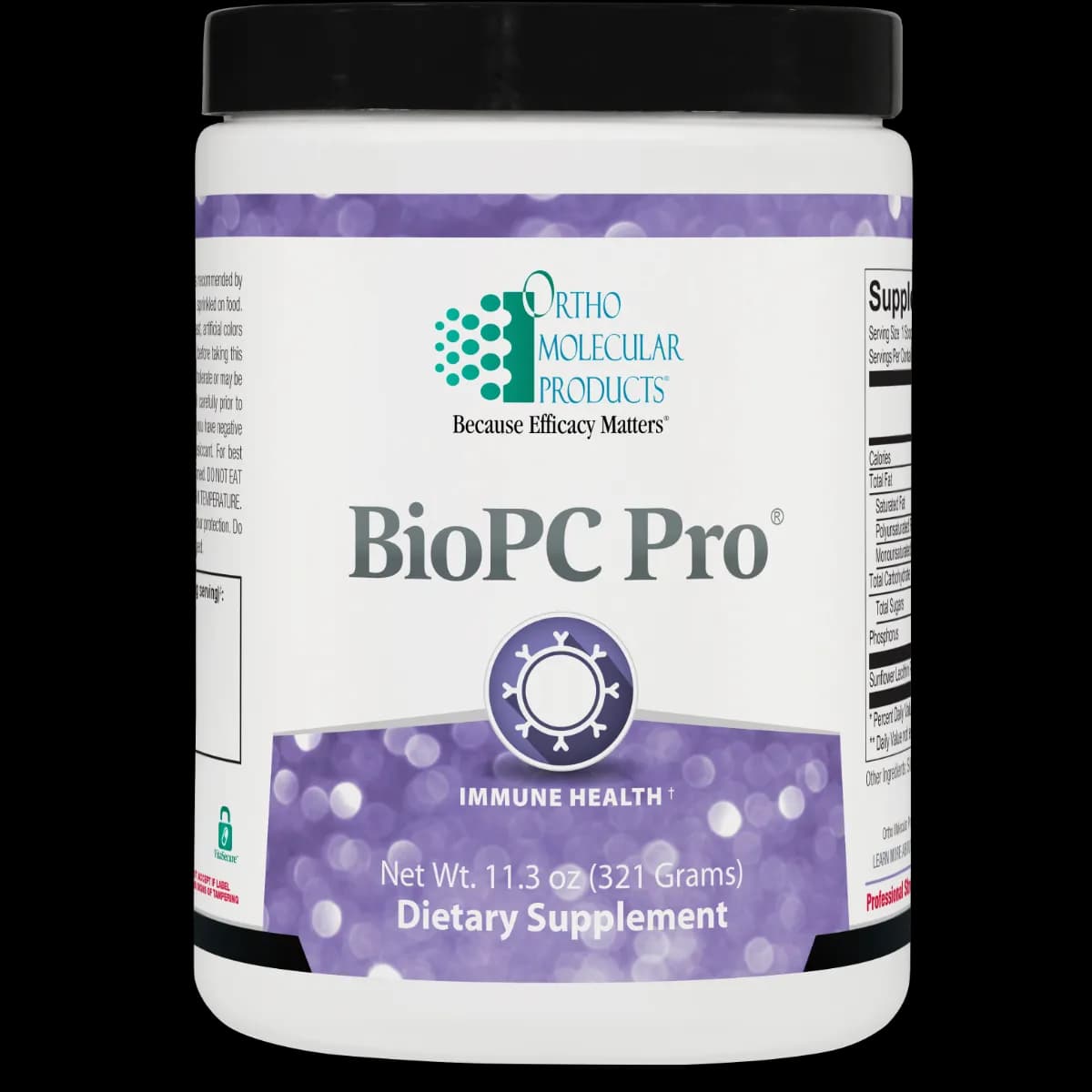
The suggested use for BioPC Pro® is 1 scoop (10.7 grams) per day, which provides a robust 10 grams of sunflower lecithin powder and 270 mg of naturally occurring phosphorus. Because phospholipids are dietary fats, it is highly recommended to take this supplement alongside a meal that contains some healthy fats (such as avocado, olive oil, or nuts). The presence of dietary fat triggers the release of bile from the gallbladder, which acts as a natural emulsifier, significantly enhancing the breakdown and absorption of the lecithin powder.
The powder format offers excellent dosing flexibility. It can be easily mixed into water, juice, or protein shakes, or even sprinkled directly onto food like yogurt or oatmeal. For patients with severe gastrointestinal sensitivity or MCAS, starting with a partial scoop (e.g., 1/4 or 1/2 scoop) and slowly titrating up to the full dose over a few weeks can help the digestive system acclimate to the influx of complex lipids. Because Lipid Replacement Therapy involves physically rebuilding cellular membranes, it typically requires consistent daily use for 4 to 8 weeks before patients notice significant improvements in cognitive clarity or baseline energy levels.
Safety and Potential Interactions
Sunflower lecithin is generally recognized as safe (GRAS) and is exceptionally well-tolerated by most individuals, especially compared to soy-derived alternatives which can trigger allergic responses. It is non-toxic and does not typically cause severe side effects. However, because it directly increases acetylcholine levels, taking excessively high doses beyond the recommended amount could theoretically lead to mild cholinergic side effects, such as excessive salivation, mild gastrointestinal upset, or loose stools.
Patients taking anticholinergic medications (drugs designed to block acetylcholine, often used for overactive bladder, COPD, or certain psychiatric conditions) should consult their healthcare provider, as the choline in BioPC Pro® may counteract the effects of these drugs. Additionally, while the supplement supports parasympathetic tone, individuals with pre-existing bradycardia (an abnormally slow heart rate) should monitor their symptoms, as enhanced vagal tone naturally slows the heart rate. Always discuss new supplements with your medical team to ensure they fit safely within your comprehensive treatment plan.

Follow the Science: Clinical Evidence for Phospholipids
Lipidomics and Post-Viral Syndromes
The scientific understanding of how post-viral syndromes damage cellular membranes has advanced rapidly through the use of lipidomics—the large-scale study of cellular lipid pathways. A comprehensive untargeted lipidomics study published in 2023 evaluated Long COVID patients up to two years after their initial recovery. The researchers discovered 170 dysregulated lipid features, with distinct, profound abnormalities specifically in the phosphatidylcholine and sphingomyelin pathways. This data provides concrete, measurable proof that the fatigue and brain fog of Long COVID are rooted in long-term metabolic and structural damage to the cell membranes, validating the necessity of targeted Lipid Replacement Therapy.
Furthermore, a 2024 study investigated novel biomarkers of mitochondrial dysfunction in Long COVID patients.
Cognitive Improvements in Clinical Trials
Clinical trials are exploring various interventions for post-viral fatigue. A November 2024 randomized controlled trial published in Frontiers in Neurology explored the efficacy of oxaloacetate for improving fatigue in patients with myalgic encephalomyelitis/chronic fatigue syndrome (ME/CFS).
Other research explores different mechanisms of post-viral symptoms. A narrative review discussed mitochondrial reactive oxygen species as a unifying mechanism in Long COVID and spike protein-associated injury.
Vagal Tone and Systemic Inflammation
More recent population studies and narrative reviews have shown that individuals with higher dietary choline intake exhibit significantly enhanced vagal tone and lower levels of systemic inflammatory markers like homocysteine. By providing a highly concentrated dose of phosphatidylcholine, supplements like BioPC Pro® directly supply the precursor necessary to fuel this vital anti-inflammatory reflex, offering a science-backed strategy for calming the immune dysregulation seen in MCAS and post-viral dysautonomia.
The Path Forward
Validating the Cellular Reality of Chronic Illness
Living with a complex chronic illness like Long COVID, ME/CFS, or dysautonomia often means fighting a two-front war: battling debilitating physical symptoms while simultaneously fighting to be believed by a medical system that frequently dismisses invisible illnesses. It is vital to understand that your symptoms are not a manifestation of anxiety, deconditioning, or a lack of willpower. The profound fatigue, the cognitive haze, and the erratic heart rates are rooted in measurable, physiological damage at the deepest levels of your biology. The degradation of your cellular membranes and the depletion of your mitochondrial energy reserves are real, documented phenomena. Validating this cellular reality is the first crucial step toward finding effective, science-based management strategies.
A Comprehensive Management Strategy
While the science behind Lipid Replacement Therapy is incredibly promising, it is important to approach supplementation with realistic expectations. There is no single magic pill that will instantly cure complex neuro-immune conditions. Rebuilding damaged mitochondrial membranes and restoring autonomic nervous system balance takes time, consistency, and patience. Supplements like BioPC Pro® are most effective when utilized as one pillar of a comprehensive, multi-disciplinary management strategy. This strategy must include radical rest, strict pacing to avoid post-exertional malaise, nervous system regulation techniques, and ongoing collaboration with a medical provider who truly understands the nuances of post-viral illness.
Next Steps for Your Healing Journey
If you are struggling with the crushing fatigue of mitochondrial dysfunction, the cognitive impairment of neuroinflammation, or the sympathetic overdrive of dysautonomia, supporting your cellular architecture may be a powerful next step. By providing your body with the full-spectrum phosphatide blend it needs to repair its lipid bilayers and fuel the vagus nerve, you are giving your cells the raw materials required to begin the slow, steady process of healing. Always consult with your healthcare provider before beginning any new supplement regimen to ensure it aligns safely with your specific medical needs.