Can Acetyl-L-Carnitine Help Clear Brain Fog in Long COVID and ME/CFS?
March 5, 2026
Acetyl-L-CarnitineLong COVIDME/CFS
Share:
Disclaimer: The information provided here is for educational purposes only and is not intended as medical advice. It should not be used to diagnose, treat, cure, or prevent any medical condition. Instead, use it as a starting point for discussion with your healthcare provider. Always consult with a qualified healthcare provider before starting any new medication, supplement, device, or making changes to your health regimen.
For individuals living with complex, chronic conditions like Long COVID, myalgic encephalomyelitis/chronic fatigue syndrome (ME/CFS), and dysautonomia, the daily reality is often defined by a profound, unyielding lack of energy. This isn't the standard tiredness that follows a poor night's sleep; it is a deep, cellular depletion that makes even the simplest cognitive and physical tasks feel like moving through wet concrete. Patients frequently describe this cognitive dysfunction as "brain fog"—a terrifying sensation where memories slip away, words become impossible to find, and concentration shatters. When your body’s fundamental energy-producing mechanisms are compromised, every system suffers, leaving you searching for validating answers and scientifically grounded management strategies.
In the pursuit of restoring this lost cellular vitality, researchers and clinicians have increasingly turned their attention to mitochondrial health and cellular metabolism. One compound that has garnered significant clinical interest is Acetyl-L-Carnitine (ALCAR). While standard carnitine is a well-known amino acid derivative responsible for transporting fats into our cellular powerhouses, the acetylated form—ALCAR—possesses unique biochemical properties that allow it to cross the blood-brain barrier. By acting as both a critical shuttle for cellular fuel and a direct precursor to vital neurotransmitters, ALCAR offers a targeted approach to supporting the neurological and metabolic pathways that are so often disrupted in post-viral and neuroimmune conditions.
TL;DR
ALCAR supports cellular energy and may help manage brain fog in Long COVID and ME/CFS.
It crosses the blood-brain barrier to aid neurotransmitter production, supporting cognitive function and mood.
For best absorption, divide your daily ALCAR dose and take it on an empty stomach.
Always consult your healthcare provider before starting ALCAR, especially if taking thyroid or blood-thinning medications.
What is Acetyl-L-Carnitine?
To understand how Acetyl-L-Carnitine (ALCAR) functions, we must first look at its foundational molecule: L-carnitine. L-carnitine is a naturally occurring amino acid derivative synthesized primarily in the liver and kidneys from the essential amino acids lysine and methionine. In a healthy body, L-carnitine's primary job is logistical. It acts as a microscopic freight train, transporting long-chain fatty acids across the highly impermeable inner membrane of the mitochondria—the energy-producing powerhouses of our cells. Without L-carnitine, these dietary fats cannot enter the mitochondrial matrix to undergo beta-oxidation, the biochemical process that breaks down fats to generate adenosine triphosphate (ATP), the universal energy currency of the human body.
While standard L-carnitine is highly effective at facilitating physical energy production in muscle tissues, its ability to reach the central nervous system is notoriously limited. This is where the acetylated form, ALCAR, distinguishes itself. ALCAR is simply an L-carnitine molecule that has an acetyl group attached to it. This seemingly minor structural modification drastically alters the compound's pharmacokinetics and biological capabilities. The addition of the acetyl group makes the molecule more lipophilic (fat-soluble), allowing it to interact uniquely with specialized transport proteins in the body, fundamentally changing where it can go and what it can do once it gets there.
The most critical advantage of this structural change is ALCAR's ability to efficiently cross the highly selective blood-brain barrier (BBB). Permeation across this protective barrier is actively mediated by the organic cation/carnitine transporter known as OCTN2 (SLC22A5). Microdialysis studies have proven that this specific transporter is functionally responsible for pulling ALCAR from the systemic bloodstream directly into the extracellular fluid of the brain. Because of this targeted transport mechanism, ALCAR is not just a metabolic supplement; it acts as a potent neurological and cognitive support agent, delivering both energy substrates and neurotransmitter building blocks directly to energy-starved neurons.
Once ALCAR successfully navigates across the blood-brain barrier and enters the cellular cytoplasm, it is transported into the mitochondria. Upon crossing the inner mitochondrial membrane, ALCAR undergoes a fascinating biochemical split. Within the mitochondrial matrix, specific enzymes cleave the molecule into its two constituent parts: free L-carnitine and an acetyl group. The liberated L-carnitine immediately goes to work binding to long-chain fatty acids, creating acyl-carnitine, and pulling them into the beta-oxidation cycle to produce ATP. However, it is the fate of the newly freed acetyl group that makes ALCAR so therapeutically valuable for neurological health.
This acetyl group rapidly binds with Coenzyme A (CoA) to form Acetyl-CoA, one of the most important metabolic intermediates in human biology. Acetyl-CoA is the primary fuel that feeds into the Krebs cycle (also known as the citric acid cycle), the central driver of cellular respiration and ATP generation. By supplying a direct, ready-to-use pool of Acetyl-CoA, ALCAR bypasses several rate-limiting steps in cellular metabolism. This is particularly crucial when normal glucose metabolism is impaired, a phenomenon frequently observed in neuroinflammatory conditions. ALCAR essentially provides an alternative, highly efficient fuel source that keeps the mitochondrial engines running even under physiological stress.
Furthermore, ALCAR acts as a critical cellular buffer through the action of the enzyme carnitine acetyltransferase (CAT). This enzyme catalyzes the reversible conversion of acetyl-CoA and carnitine into acetylcarnitine and free Coenzyme A. In a comprehensive clinical overview, researchers explain that this buffering system prevents the toxic accumulation of unoxidized, short-chain acyl groups within the mitochondria. If these toxic byproducts build up, they can halt energy production entirely. By binding to these metabolic waste products and exporting them out of the mitochondria, ALCAR frees up Coenzyme A, ensuring that the Krebs cycle can continue churning out the ATP required for everything from muscle contraction to complex cognitive processing.
How Long COVID and ME/CFS Impact Cellular Energy and the Brain
In conditions like Long COVID and ME/CFS, the body's ability to generate and utilize energy becomes profoundly dysregulated. Patients do not simply feel "tired"; they experience a systemic energy crisis at the cellular level. Emerging research suggests that viral infections, including SARS-CoV-2, can directly hijack and damage host mitochondria. This viral interference disrupts the electron transport chain, the final and most crucial stage of ATP production. When the mitochondria cannot efficiently convert food and oxygen into ATP, the body enters a hypometabolic state. This is why patients experience severe post-exertional malaise (PEM)—their cells literally lack the energetic currency required to recover from even minor physical or cognitive exertion.
This energy crisis is further compounded by specific metabolic deficiencies. Comprehensive plasma metabolomics studies of ME/CFS patients have identified significant dysregulation in lipid and energy metabolism, notably revealing decreased levels of circulating carnitine and choline. When the body is deficient in carnitine, long-chain fatty acids cannot be efficiently transported into the mitochondria for beta-oxidation. Instead of being burned for fuel, these fats accumulate outside the mitochondria, leading to lipotoxicity and further cellular stress. This carnitine deficiency effectively starves the cells of their primary fuel source, locking the patient in a state of perpetual energetic depletion that cannot be resolved simply by resting or eating more calories.
The brain is an incredibly energy-demanding organ, consuming roughly 20% of the body's total ATP despite accounting for only 2% of its weight. When systemic mitochondrial dysfunction occurs, the neurological consequences are severe. This metabolic starvation is a primary driver of the cognitive dysfunction patients experience. If you want to understand more about how this energy deficit manifests neurologically, you can read our detailed breakdown of What Is “Brain Fog” and Cognitive Dysfunction in Long COVID?. Without adequate ATP, neurons cannot maintain their resting membrane potentials, fire action potentials efficiently, or synthesize the neurotransmitters required for memory, focus, and emotional regulation.
Beyond the raw energy deficit, chronic illness profoundly impacts the delicate balance of neurotransmitters in the brain. In Long COVID and ME/CFS, chronic immune activation and neuroinflammation create a toxic environment for neurons. Inflammatory cytokines can cross the blood-brain barrier, activating microglial cells (the brain's resident immune cells). Once activated, these microglia release neurotoxic substances that further damage neuronal synapses and disrupt the synthesis of vital neurotransmitters like acetylcholine, dopamine, and serotonin. This inflammatory cascade is a significant contributor to the mood disturbances, depression, and anxiety frequently seen in these patient populations, a topic we explore deeply in our article on Long COVID and Mental Health.
Acetylcholine, in particular, is highly vulnerable to this neuroinflammatory state. It is the primary neurotransmitter responsible for learning, memory consolidation, and sustained attention. Furthermore, acetylcholine plays a critical role in the autonomic nervous system, specifically in regulating the parasympathetic "rest and digest" response via the vagus nerve. In dysautonomia, a condition frequently comorbid with Long COVID and ME/CFS, this autonomic signaling is severely impaired. The depletion of acetylcholine not only causes devastating cognitive brain fog but also contributes to the rapid heart rate, digestive motility issues, and temperature dysregulation that make dysautonomia so debilitating.
The final pillar of pathophysiology in these complex chronic conditions is oxidative stress. When mitochondria are damaged or dysfunctional, they become inefficient at processing oxygen. Instead of safely converting oxygen into water at the end of the electron transport chain, they prematurely leak electrons. These rogue electrons bind to oxygen to create highly reactive molecules known as reactive oxygen species (ROS) or free radicals. While a healthy body can neutralize normal amounts of ROS using endogenous antioxidants, the sheer volume of free radicals produced by damaged mitochondria in Long COVID and ME/CFS overwhelms the system.
This unchecked oxidative stress wreaks havoc on the cellular environment. Free radicals aggressively attack lipids in the cell membranes, a process known as lipid peroxidation, which destroys the structural integrity of neurons and mitochondria alike. They also damage cellular DNA and denature critical metabolic enzymes. This creates a vicious, self-perpetuating cycle: mitochondrial dysfunction causes oxidative stress, and that oxidative stress causes further mitochondrial destruction. Breaking this cycle requires potent, targeted interventions that can neutralize free radicals while simultaneously repairing the underlying mitochondrial machinery—a dual action that makes compounds like ALCAR so clinically relevant.
Acetyl-L-Carnitine: Supporting Cognitive Function and Cellular Energy
When exploring how to combat the profound cognitive dysfunction of chronic illness, we must look at how ALCAR directly supports neurotransmitter production. As previously established, ALCAR successfully crosses the blood-brain barrier and donates its acetyl group to form Acetyl-CoA. In the brain, this Acetyl-CoA serves as the direct, rate-limiting precursor for the synthesis of acetylcholine. The enzyme choline acetyltransferase (ChAT) takes the acetyl group from Acetyl-CoA and binds it to circulating choline to create this vital neurotransmitter. By providing an abundant supply of Acetyl-CoA, ALCAR effectively supercharges the brain's ability to produce acetylcholine, directly counteracting the neurotransmitter depletion caused by neuroinflammation.
The clinical implications of this are profound. Increased acetylcholine availability in the synaptic cleft enhances synaptic plasticity—the brain's ability to form new neural connections and adapt to new information. This is why ALCAR is so frequently studied for its ability to improve memory recall, sustained attention, and executive function. For patients struggling to hold onto a thought or find the right word, supporting acetylcholine synthesis is a critical therapeutic target. This mechanism is complementary to other cognitive support strategies; for instance, you can learn more about how different pathways are targeted in our guide to Lifting Brain Fog with Guanfacine or exploring if Pyridostigmine is Right for You.
Furthermore, the acetyl group donated by ALCAR isn't exclusively used for acetylcholine. It also feeds into the GABA shunt, an alternative metabolic pathway that produces Gamma-aminobutyric acid (GABA), the brain's primary inhibitory neurotransmitter. By supporting GABA production, ALCAR helps to calm the overexcited, neuroinflammatory state of the brain, promoting a sense of emotional well-being and reducing the neurological hyperarousal that often accompanies dysautonomia and ME/CFS. This multi-pathway neurotransmitter support is a key reason why clinical evaluations of ALCAR consistently note improvements in mood and emotional resilience alongside cognitive gains.
ALCAR's ability to support cellular energy goes far beyond simply transporting fatty acids. Preclinical studies have demonstrated that ALCAR possesses a remarkable ability to actually rejuvenate aging and damaged mitochondria, restoring the substrate-binding affinity and enzymatic activity of carnitine acetyltransferase (CAT). By repairing this critical enzyme, ALCAR effectively reversed the functional and structural decay of liver and brain mitochondria, returning them to a "more youthful state" capable of robust ATP production.
For patients with Long COVID and ME/CFS, this mechanism is a beacon of hope. It suggests that the mitochondrial dysfunction driving their profound fatigue is not necessarily permanent. By restoring the efficiency of the CAT enzyme and ensuring a steady flow of Acetyl-CoA into the Krebs cycle, ALCAR helps to reboot the stalled metabolic engines of the cell. Research has shown that high doses of ALCAR significantly increased the uptake and phosphorylation of glucose in the brain. This proves that ALCAR can trigger a rapid, measurable spike in brain energy metabolism, directly addressing the hypometabolic state that causes brain fog.
Additionally, ALCAR plays a vital role in lipid synthesis. The brain is composed of nearly 60% fat, and maintaining the lipid-rich myelin sheaths that insulate neurons is essential for rapid cognitive processing. The Acetyl-CoA generated from ALCAR is a crucial building block for these structural lipids. By providing the raw materials needed for cellular membrane repair and neuronal myelination, ALCAR helps to rebuild the physical infrastructure of the brain that may have been damaged by chronic neuroinflammation and oxidative stress.
The third pillar of ALCAR's therapeutic action is its potent neuroprotective and antioxidant properties. While ALCAR is not a traditional direct antioxidant like Vitamin C, it exerts powerful indirect antioxidant effects by upregulating the body's endogenous defense systems. Research has shown that ALCAR increases the expression and activity of Superoxide Dismutase (SOD), one of the most important antioxidant enzymes in the mitochondria. By boosting SOD activity, ALCAR helps to neutralize the highly reactive superoxide radicals before they can cause lipid peroxidation and destroy the mitochondrial membrane.
This antioxidant defense is critical for breaking the vicious cycle of oxidative stress seen in chronic illness. By protecting the structural integrity of the mitochondria, ALCAR ensures that the energy-producing machinery remains intact and functional. For patients looking to maximize this antioxidant protection, combining ALCAR with other targeted supplements can be highly beneficial. You can explore complementary strategies in our article, Can Açai and Pomegranate Extracts Combat Oxidative Stress in Long COVID and ME/CFS?.
Beyond neutralizing free radicals, ALCAR actively promotes neuronal survival and growth. It has been shown to preserve and elevate levels of Nerve Growth Factor (NGF) in the brain. NGF is a specialized protein that stimulates the growth, maintenance, and survival of target neurons. By maintaining healthy NGF levels, ALCAR mitigates neuronal decay and supports the brain's innate ability to heal and rewire itself. Furthermore, through epigenetic mechanisms—specifically the acetylation of histones—ALCAR can upregulate specific receptors like metabotropic glutamate 2 (mGlu2), a pathway that stimulates neurogenesis, enhances synaptic plasticity, and has been strongly tied to the compound's clinical antidepressant effects.

Symptoms Acetyl-L-Carnitine May Help Manage
Based on its complex mechanisms of action—spanning mitochondrial energy production, neurotransmitter synthesis, and neuroprotection—Acetyl-L-Carnitine has been studied for its ability to manage a specific cluster of debilitating symptoms. For patients navigating the unpredictable landscape of post-viral syndromes, understanding exactly why a supplement might help is crucial for building an effective management protocol. Here are the primary symptoms ALCAR may help alleviate:
Severe Brain Fog and Cognitive Dysfunction: By directly supplying the Acetyl-CoA needed to synthesize acetylcholine, ALCAR supports the neurotransmitter pathways responsible for memory recall, sustained concentration, and executive function. It also increases brain glucose metabolism, providing energy-starved neurons with the fuel they need to process information efficiently.
Mental and Physical Fatigue (PEM): ALCAR acts as an essential shuttle, transporting long-chain fatty acids into the mitochondria for beta-oxidation. By restoring this critical energy pathway and repairing the carnitine acetyltransferase enzyme, it helps to resolve the cellular energy crisis that drives profound exhaustion and post-exertional malaise.
Depression and Emotional Dysregulation: Through its ability to acetylate histones and upregulate mGlu2 receptors, ALCAR promotes neurogenesis and synaptic plasticity. Additionally, by feeding into the GABA shunt, it helps to calm neuroinflammatory hyperarousal, supporting a more stable, positive mood and emotional resilience.
Musculoskeletal Pain and Fibromyalgia Symptoms: Chronic pain in ME/CFS and Long COVID is often linked to localized cellular energy deficits and oxidative stress in muscle tissues. By improving mitochondrial efficiency and reducing lipid peroxidation, ALCAR can help lower the metabolic stress that triggers widespread musculoskeletal pain.
Neuropathic Pain and Nerve Damage: ALCAR preserves Nerve Growth Factor (NGF) and provides the lipid building blocks necessary for repairing the myelin sheaths that insulate nerves. This makes it a valuable tool for managing the tingling, burning, and numbness associated with peripheral neuropathy and dysautonomia.
It is important to note that while ALCAR addresses these symptoms at a foundational cellular level, it is not a standalone solution. The interconnected nature of these symptoms often requires a multi-faceted approach. For example, if you are also struggling with severe sleep disturbances alongside brain fog, you might consider exploring how other pathways interact by reading Can 5-HTP Lift the Brain Fog and Sleep Disturbances of Long COVID?. Tracking which specific symptoms respond to ALCAR can help you and your healthcare provider tailor your broader management strategy.
Practical Considerations: Forms, Dosing, and Absorption
When incorporating Acetyl-L-Carnitine into a management regimen, understanding its pharmacokinetics—how the body absorbs, distributes, and excretes the compound—is essential for achieving therapeutic results. The oral absorption of ALCAR is a highly regulated, complex process. When you consume an ALCAR capsule, it travels to the gastrointestinal tract where it is absorbed by the enterocytes (intestinal cells). In vitro and in vivo studies suggest that a portion of the ALCAR is hydrolyzed, or deacetylated, back into standard L-carnitine during this absorption phase. However, pharmacokinetic research confirms that a significant therapeutic amount of intact ALCAR successfully enters systemic circulation.
Despite this successful entry, the overall bioavailability of oral carnitine supplements is relatively low, typically ranging from 14% to 18% (and up to 25% depending on the specific dose and individual metabolism). This is significantly lower than the bioavailability of dietary L-carnitine obtained from food sources like red meat, which can be absorbed at rates of 54% to 87%. Because of this low oral bioavailability, clinical formulations of ALCAR must be dosed high enough to ensure that an adequate amount of the active compound survives the digestive process and reaches the blood-brain barrier.
Crucially, the body tightly controls carnitine homeostasis through a mechanism known as saturation kinetics. As circulating carnitine levels increase following an oral dose, the kidneys rapidly decrease their reabsorption efficiency and increase renal clearance. This means that if you take a massive single dose of ALCAR, the biological transport mechanisms become saturated, and the excess compound is simply filtered out by the kidneys and excreted in the urine. Research has demonstrated saturation kinetics of ALCAR in HIV patients taking 3g versus 1g once daily.
Because of these saturation kinetics and ALCAR's relatively short elimination half-life, the timing of your doses is just as important as the total daily amount. Clinical pharmacokinetic studies show that a standard 500 mg oral dose of ALCAR reaches its peak plasma concentration ($C_{max}$) at approximately 3.1 hours post-dose. The compound has an elimination half-life of roughly 4.2 hours, meaning that plasma concentrations generally return to baseline within 12 hours. To maintain a stable, therapeutic level of ALCAR in your bloodstream and brain throughout the day, it is highly recommended to divide your total daily dose into two or three smaller administrations.
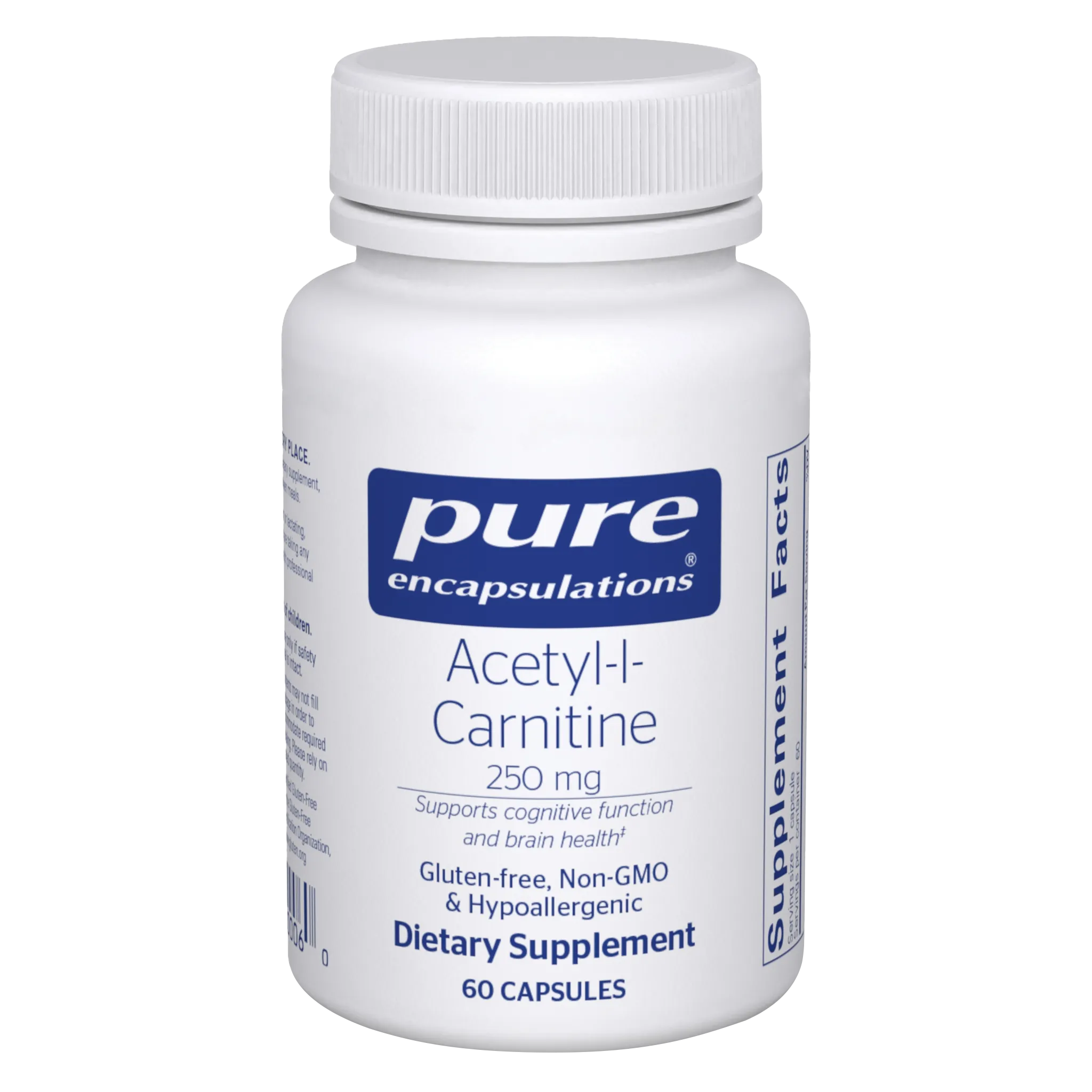
For general cognitive support and mild fatigue, typical doses range from 500 mg to 1,000 mg per day. However, in clinical trials targeting severe cognitive impairment, chronic fatigue syndrome, or neuropathy, therapeutic doses usually range from 1,500 mg to 3,000 mg (1.5g – 3g) daily. Pure Encapsulations Acetyl-l-Carnitine provides 250 mg per vegetarian capsule, allowing for highly customizable, incremental dosing. A common starting strategy for patients with sensitive systems is to begin with 250 mg to 500 mg in the morning, gradually increasing the dose and adding a second midday administration as tolerated.
It is generally advised to take ALCAR on an empty stomach or between meals to maximize absorption, as taking it with a heavy meal—particularly one high in protein—can cause the compound to compete with other amino acids for intestinal transport. However, if taking it on an empty stomach causes mild gastrointestinal upset, taking it with a small, light carbohydrate snack can mitigate this issue without severely compromising absorption. Because ALCAR has stimulating, energy-promoting properties, it is best to avoid taking doses late in the evening or right before bed, as it may interfere with sleep onset.
Acetyl-L-Carnitine is naturally produced by the body and is generally considered very safe and well-tolerated, even at higher clinical doses. The established Observed Safe Level (OSL) for chronic, long-term supplementation is generally recognized as 2,000 mg per day, though higher doses have been used safely in monitored trials. When side effects do occur, they are typically mild and dose-dependent. The most common adverse effects are gastrointestinal in nature, including nausea, stomach upset, or mild diarrhea. These can usually be resolved by lowering the dose or dividing it into smaller, more frequent administrations.
A unique, though harmless, side effect of high-dose carnitine supplementation is the potential development of a "fishy" body odor. This occurs because unabsorbed carnitine in the gut can be metabolized by intestinal bacteria into a compound called trimethylamine (TMA), which is then excreted through sweat and breath. If this occurs, reducing the daily dose will quickly resolve the issue. Additionally, because ALCAR increases energy metabolism and cholinergic activity, some sensitive individuals may experience mild overstimulation, restlessness, or insomnia if the dose is too high or taken too late in the day.
Regarding interactions, patients should always consult their healthcare provider before starting ALCAR, particularly if they are taking medications that alter blood sugar, as ALCAR can increase glucose metabolism and potentially enhance the effects of hypoglycemic drugs. Furthermore, because ALCAR can influence thyroid hormone activity by blocking the entry of thyroid hormone into the cell nucleus, individuals with hypothyroidism or those taking thyroid replacement medications should use ALCAR with caution and under medical supervision. It may also interact with blood-thinning medications like acenocoumarol or warfarin, potentially increasing their effects.

Follow the Science
As the medical community races to understand and manage Long COVID (Post-COVID Syndrome), researchers have noted significant clinical overlaps between this novel condition and established neuroimmune disorders like ME/CFS. Driven by the hypothesis that Long COVID is fundamentally rooted in neuroinflammation and mitochondrial dysfunction, clinical trials have begun testing metabolic interventions. A notable 2022 observational case-control study published in Applied Sciences (MDPI) by Scaturro et al. evaluated the effectiveness of combining physical rehabilitation with ALCAR therapy in patients suffering from Post-COVID syndrome.
In this study, patients were randomized into two groups: a control group receiving only functional rehabilitation, and an intervention group receiving rehabilitation alongside 500 mg of ALCAR per day. The results were highly encouraging. After the study period, the ALCAR group demonstrated statistically significant improvements in musculoskeletal pain, depression, and overall quality of life compared to the control group. Specifically, the Patient Health Questionnaire (PHQ-9) score for depression dropped significantly from 13.03 to 9.84, and the Fibromyalgia Impact Questionnaire (FIQ) score dropped from 49.55 to 43.03. These metrics clearly indicate that ALCAR provides targeted relief for the neuropsychiatric and pain-related symptoms of Long COVID.
These findings are supported by recent pilot observational studies involving Long COVID patients, which reported a noticeable decrease in profound fatigue and an increase in subjective energy levels after just two weeks of taking a low-dose ALCAR supplement. While massive, double-blind, randomized controlled trials (RCTs) investigating ALCAR as a standalone intervention for Long COVID are still pending, these early case-control studies strongly validate its use as a supportive, rehabilitative therapy for patients struggling with post-viral metabolic exhaustion.
Acetyl-L-Carnitine has a much longer, established history of clinical research in the context of Myalgic Encephalomyelitis/Chronic Fatigue Syndrome (ME/CFS). This research is largely driven by early biomarker discoveries showing that many ME/CFS patients suffer from a deficiency in serum acylcarnitine, which directly impairs mitochondrial oxidative phosphorylation. A heavily cited randomized comparative trial by Vermeulen et al. specifically evaluated different forms of carnitine for managing CFS symptoms, yielding fascinating insights into how different molecular structures target different symptoms.
The Vermeulen study found a clear divergence in therapeutic effects: Acetyl-L-Carnitine (ALCAR) had a statistically significant, targeted positive effect on mental fatigue and cognitive concentration, whereas Propionyl-L-Carnitine was more effective for general, physical fatigue. This perfectly aligns with ALCAR's unique ability to cross the blood-brain barrier and synthesize acetylcholine. Interestingly, the researchers noted that combining the two forms resulted in less overall improvement than using them individually, suggesting a potential competition for intestinal absorption or cellular transport mechanisms.
More recently, a comprehensive 2025 systematic review published by The ME Association evaluated the efficacy of various dietary supplements for ME/CFS. The reviewers concluded that L-carnitine supplementation consistently showed significant reductions in fatigue levels across multiple studies. However, they also noted that historic literature often suffers from methodological limitations, such as small sample sizes (averaging ~36 participants) and short study durations. Despite these limitations, the consistent signal of fatigue reduction makes ALCAR a cornerstone of metabolic support protocols for ME/CFS, often used alongside other amino acids as detailed in our guide, Can Free-Form Amino Acids Support Energy and Brain Fog in Long COVID and ME/CFS?.
Beyond post-viral fatigue, ALCAR is one of the most extensively researched compounds for age-related cognitive decline and neurodegeneration. A major analysis of the effects of ALCAR on older adults suffering from Mild Cognitive Impairment (MCI) and early-stage Alzheimer's disease found that administering 1.5 to 3 grams of ALCAR per day for 3 to 12 months resulted in significant improvements across multiple cognitive function metrics, clinical scales, and psychometric tests compared to placebos.
Furthermore, ALCAR has shown remarkable efficacy in managing severe geriatric fatigue. In studies observing elderly adults suffering from profound mental and physical exhaustion, high doses of ALCAR (up to 4 grams per day) significantly reduced both mental and physical fatigue while improving everyday functional capacity. These neurological studies are highly relevant for Long COVID and ME/CFS patients, as they confirm ALCAR's potent ability to cross the blood-brain barrier, reduce neuroinflammation, and restore the energetic capacity of the central nervous system, regardless of the initial trigger of the cognitive dysfunction.
The Path Forward
Living with the relentless brain fog, profound fatigue, and unpredictable symptoms of Long COVID, ME/CFS, or dysautonomia can feel like an endless battle against your own biology. It is entirely valid to feel frustrated when your cognitive clarity slips away or when your body refuses to generate the energy required for daily life. Understanding that these symptoms are rooted in measurable, physiological dysfunctions—like mitochondrial decay, carnitine depletion, and neuroinflammation—is a crucial step toward reclaiming your health. You are not simply "tired"; you are navigating a complex cellular energy crisis.
Acetyl-L-Carnitine offers a scientifically grounded, targeted mechanism to address this crisis. By crossing the blood-brain barrier, supplying the Acetyl-CoA necessary for acetylcholine synthesis, and repairing the mitochondrial machinery that produces ATP, ALCAR provides the brain and body with the essential tools needed to begin restoring metabolic balance. While it is not a miracle fix that will erase complex chronic illness overnight, the clinical evidence strongly supports its role in reducing mental fatigue, lifting brain fog, and improving emotional resilience.
It is vital to remember that supplements like ALCAR are most effective when integrated into a comprehensive, holistic management strategy. Restoring cellular energy is only half the battle; the other half is fiercely protecting the energy you have. This means committing to rigorous pacing strategies, tracking your symptoms to identify your unique energetic envelope, and avoiding the push-and-crash cycles that trigger severe post-exertional malaise (PEM). ALCAR can help raise your energetic baseline, but it should not be used as a chemical crutch to push through fatigue and overexert yourself.
As with any metabolic intervention, finding the right approach requires patience and professional guidance. Because ALCAR can interact with thyroid medications, blood thinners, and glucose metabolism, it is imperative to consult with a healthcare provider who understands the nuances of complex chronic illness before adding it to your regimen. They can help you determine the optimal dosage, monitor for any potential interactions, and ensure that ALCAR fits safely into your broader management plan.
If you and your medical team believe that supporting your mitochondrial function and neurotransmitter pathways is the right next step in your management journey, you can Explore Acetyl-L-Carnitine to learn more about this specific formulation. By combining targeted, science-backed nutritional support with compassionate medical care and strict pacing, you can begin to clear the fog and rebuild your cellular vitality, one day at a time.