Can Vitamin D3 Support Immune Balance in Long COVID and MCAS?
March 5, 2026
Vitamin D3Long COVIDMCAS
Share:
Disclaimer: The information provided here is for educational purposes only and is not intended as medical advice. It should not be used to diagnose, treat, cure, or prevent any medical condition. Instead, use it as a starting point for discussion with your healthcare provider. Always consult with a qualified healthcare provider before starting any new medication, supplement, device, or making changes to your health regimen.
Living with complex, chronic conditions like Long COVID, myalgic encephalomyelitis/chronic fatigue syndrome (ME/CFS), dysautonomia, and mast cell activation syndrome (MCAS) often feels like navigating a labyrinth in the dark. You may find yourself dealing with debilitating symptoms—profound fatigue, unpredictable heart rates, cognitive dysfunction, and sudden allergic-like reactions—while searching for validating, science-backed strategies to regain your quality of life. Among the many nutritional compounds being researched for these interconnected conditions, one foundational prohormone continually stands out in the clinical literature: Vitamin D3.
While often simply associated with bone health and calcium absorption, modern immunology has revealed that Vitamin D is actually a potent, steroid-like hormone that orchestrates complex responses across your entire immune and nervous system. For individuals battling the persistent inflammation, viral reactivation, and immune dysregulation characteristic of Long COVID and MCAS, maintaining optimal Vitamin D levels is not just about preventing deficiency—it is about providing the body with the critical molecular signals it needs to stabilize hyperactive immune cells, support cardiovascular function, and promote healthy cellular metabolism.
What is Vitamin D3?
The "Sunshine Hormone" and Its Receptors
Although commonly referred to as a vitamin, Vitamin D3 (cholecalciferol) functions biologically as a powerful, systemic prohormone. In a healthy body, it is primarily synthesized in the skin upon exposure to ultraviolet B (UVB) radiation from sunlight, though it can also be obtained through specific dietary sources and supplementation. Once in the bloodstream, Vitamin D3 undergoes a two-step activation process. First, the liver converts it into 25-hydroxyvitamin D [25(OH)D], the major circulating form of the hormone that doctors measure in blood tests. Then, the kidneys—and critically, various immune cells—convert it into its biologically active form, 1,25-dihydroxyvitamin D3, also known as calcitriol.
The profound biological effects of calcitriol are mediated almost entirely through the Vitamin D Receptor (VDR), a ligand-dependent nuclear transcription factor found in nearly every tissue in the body. When active Vitamin D binds to the VDR inside a cell, the receptor forms a complex with another protein called the Retinoid X Receptor (RXR). This newly formed VDR/RXR heterodimer complex then physically enters the cell nucleus and binds to specific DNA sequences known as Vitamin D Response Elements (VDREs). By binding to these elements, Vitamin D actively regulates the expression of over 900 different genes, controlling everything from cellular proliferation and apoptosis (programmed cell death) to profound immune system modulation.
The Local Conversion Process in Immune Cells
One of the most fascinating discoveries in modern immunology is that the immune system does not merely rely on the kidneys to supply active Vitamin D. Immune cells, including macrophages, dendritic cells, and lymphocytes, possess their own internal supply of the enzyme CYP27B1 (1-alpha-hydroxylase). This enzyme allows these immune cells to pull inactive circulating 25(OH)D directly from the bloodstream and convert it into highly active calcitriol locally, exactly when and where an immune response is occurring. This localized, autocrine/paracrine loop means that immune cells can bathe themselves in active Vitamin D to fight off pathogens or calm local inflammation without waiting for systemic hormonal changes.
When a macrophage encounters a pathogen, such as a virus or bacteria, its surface Toll-Like Receptors (specifically TLR2/1 and TLR4) are activated. This activation aggressively upregulates the expression of both the VDR and the CYP27B1 enzyme within the cell. The resulting local surge of active Vitamin D binds to the VDR/RXR complex, inducing the transcription of critical antimicrobial peptides, primarily cathelicidin (LL-37) and human β-defensin 2 (HBD2). These peptides physically disrupt microbial membranes and promote viral autophagy, highlighting how essential Vitamin D is for a robust innate immune defense.
Orchestrating Calcium and Bone Homeostasis
Beyond its advanced immunological roles, Vitamin D3 remains the absolute master regulator of calcium and phosphorus homeostasis in the body. It promotes intestinal calcium and phosphorus absorption by upregulating the expression of calcium transport proteins in the gut lining. Without adequate Vitamin D, the body can only absorb about 10% to 15% of dietary calcium, but with optimal levels, this absorption rate increases to 30% to 40%. This mechanism is essential for maintaining proper calcium levels in the blood, which is required for healthy nerve conduction, muscle contraction, and cardiovascular rhythm.
Furthermore, Vitamin D reduces urinary calcium loss by interacting with the kidneys to reabsorb calcium before it is excreted. By maintaining this delicate mineral balance, Vitamin D3 ensures healthy bone composition and mineralization. It regulates the dynamic, ongoing process of bone remodeling by modulating the activity of osteoblasts (cells that build bone) and osteoclasts (cells that break down bone tissue). This continuous remodeling is vital for repairing micro-damage in the skeleton, preventing osteoporosis, and maintaining structural integrity throughout a person's lifespan.
How Long COVID and MCAS Impact Immune and Cellular Function
The Vicious Cycle of Viral Reactivation and Inflammation
In conditions like Long COVID and ME/CFS, the immune system becomes trapped in a maladaptive state of chronic activation. Research suggests that acute viral infections, such as SARS-CoV-2, can cause severe endothelial damage and immune exhaustion, leading to a persistent, low-grade inflammatory state. This environment often triggers the reactivation of latent viruses, such as Epstein-Barr Virus (EBV) or Herpes Simplex Virus (HSV-1), which further burden the immune system. In this state of chronic viral combat, the body's local reserves of active Vitamin D are rapidly depleted as macrophages and T-cells constantly upregulate CYP27B1 to produce antimicrobial peptides and manage the inflammatory fallout.
When systemic Vitamin D levels drop, a vicious cycle emerges. Without sufficient calcitriol to bind to the Vitamin D Receptors (VDRs) on immune cells, the body loses its primary "brake" against hyper-inflammation. Pro-inflammatory signaling pathways, such as Nuclear Factor-κB (NF-κB) and the NLRP3 inflammasome, run unchecked. This leads to a massive overproduction of inflammatory cytokines like Interleukin-6 (IL-6), Interleukin-1β (IL-1β), and Tumor Necrosis Factor-alpha (TNF-α). This systemic cytokine storm contributes directly to the profound neuro-inflammation, severe fatigue, and post-exertional malaise (PEM) that define the daily reality for so many patients.
Mast Cell Destabilization and Hypersensitivity
For patients living with mast cell activation syndrome (MCAS), the depletion of Vitamin D has direct and devastating consequences on cellular stability. Mast cells are specialized immune cells residing in connective tissues, blood vessels, and the gut lining, packed with granules containing histamine, leukotrienes, and interleukins. In a healthy body, these cells only release their contents (degranulate) when encountering a genuine threat. However, mast cells rely heavily on Vitamin D binding to their internal VDRs to maintain their structural integrity and suppress IgE-mediated activation pathways.
Scientific studies have demonstrated that in a Vitamin D-deficient environment, mast cells become intrinsically unstable and can activate automatically, even in the complete absence of an allergen or environmental trigger. Without the genomic calming signals provided by calcitriol, the mast cells are left in a hyper-reactive state. They begin to interpret everyday stimuli—such as temperature changes, emotional stress, normal foods, or mild exertion—as life-threatening attacks. This constant, inappropriate degranulation floods the body with histamine, driving systemic symptoms ranging from severe brain fog and gastrointestinal distress to sudden tachycardia and profound allergic-like reactions.
Autonomic Nervous System Imbalance
Dysautonomia, including postural orthostatic tachycardia syndrome (POTS), involves a profound dysfunction of the autonomic nervous system, which controls automatic bodily functions like heart rate, blood pressure, and digestion. The autonomic nervous system is highly sensitive to systemic inflammation and oxidative stress. When Vitamin D levels are depleted due to chronic illness, the resulting neuro-inflammation can directly impair the function of the vagus nerve and disrupt the delicate balance between the sympathetic ("fight or flight") and parasympathetic ("rest and digest") nervous systems.
Furthermore, Vitamin D acts as a neuroactive hormone that supports the health of neurons and glial cells in the brain and peripheral nervous system. A deficiency in this critical prohormone is linked to increased pain sensitivity, impaired vascular tone, and orthostatic intolerance. Because patients with severe ME/CFS or dysautonomia are often partially or entirely housebound, their lack of exposure to direct sunlight severely limits natural Vitamin D synthesis, compounding their autonomic dysfunction and creating a secondary layer of debilitating symptoms that mimic and worsen their primary condition.
Vitamin D3: Supporting Immune Regulation and Cellular Health
Modulating the Innate and Adaptive Immune Systems
Supplementing with high-potency Vitamin D3 provides the body with the raw materials necessary to restore immune homeostasis. At the cellular level, Vitamin D acts as a master immunomodulator, simultaneously boosting the innate immune system's ability to clear persistent pathogens while suppressing the adaptive immune system's tendency toward autoimmunity and hyper-inflammation. When calcitriol binds to the VDR on T-lymphocytes, it actively shifts the immune profile away from a pro-inflammatory state. It suppresses the differentiation of T helper 1 (Th1) and Th17 cells, drastically reducing the production of damaging cytokines like Interferon-gamma (IFN-γ) and IL-17.
Conversely, Vitamin D promotes a tolerogenic state by encouraging the development of T helper 2 (Th2) cells and Regulatory T cells (Tregs). These specialized cells produce anti-inflammatory cytokines like IL-10 and TGF-β, which act as cooling agents for the inflamed nervous system and vascular tissues. By restoring this delicate Th1/Th2 balance, Vitamin D3 helps quiet the systemic cytokine storm that drives the debilitating brain fog, joint pain, and profound exhaustion seen in Long COVID and ME/CFS, allowing the body's cellular energy to be redirected toward healing and repair.
Stabilizing Mast Cells and Reducing Histamine
For those managing MCAS, Vitamin D3 acts as a foundational mast cell stabilizer. Because mast cells express the CYP27B1 enzyme, they can take the supplemented Vitamin D3 and convert it directly into active calcitriol locally. Once active, the calcitriol binds to the mast cell's internal VDRs, sending genomic signals to the DNA to halt the production of pro-inflammatory mediators. This process actively blocks the MAPK and NF-κB inflammatory signaling pathways, effectively preventing the mast cell from breaking open and spilling histamine into the bloodstream.
Furthermore, long-term optimization of Vitamin D levels has been shown in cellular models to induce mast cell apoptosis (programmed cell death) in cases of mast cell hyperplasia, where the body has produced too many of these reactive cells. By safely clearing out overactive immune cells without triggering further inflammation, Vitamin D3 helps lower the overall histamine burden in the body. This stabilization can lead to a reduction in spontaneous allergic reactions, improved gastrointestinal tolerance, and a calmer central nervous system, significantly improving the daily quality of life for highly sensitive patients.
Supporting Cardiovascular and Endothelial Function
The cardiovascular symptoms of Long COVID and dysautonomia—such as palpitations, chest tightness, and blood pooling—are heavily driven by endothelial dysfunction. The endothelium, the delicate inner lining of blood vessels, is rich in Vitamin D Receptors. Vitamin D3 supports cardiovascular function by maintaining healthy blood vessel elasticity and promoting the production of endothelial nitric oxide (eNO), a critical molecule that helps blood vessels dilate and improves systemic blood flow. This improved vasodilation is particularly beneficial for patients struggling with the orthostatic intolerance characteristic of POTS.
Additionally, research indicates that Vitamin D promotes broader cellular health, including support for breast and prostate tissue, by maintaining healthy cell metabolism and preventing abnormal cellular proliferation. By reducing oxidative stress within the vascular walls and lowering systemic markers of cardiovascular risk, such as oxidized LDL cholesterol, high-potency Vitamin D3 supplementation helps repair the microvascular damage caused by chronic viral infections, supporting a more stable heart rate and improved oxygen delivery to oxygen-starved tissues like the brain and muscles.

Symptoms Vitamin D3 May Help Manage
Brain Fog and Cognitive Dysfunction: By reducing neuro-inflammation and lowering pro-inflammatory cytokines like IL-6 in the central nervous system, Vitamin D3 helps protect neurons and glial cells, potentially alleviating the confusion, poor concentration, and memory issues associated with Long COVID.
Severe Fatigue and Post-Exertional Malaise (PEM): Vitamin D supports mitochondrial function and cellular energy metabolism. By shifting the immune system away from a constant, energy-draining state of hyper-activation, it helps preserve cellular ATP, potentially reducing the severity of crashes after physical or mental exertion.
Mast Cell Reactivity and Histamine Symptoms: Acting as a potent mast cell stabilizer, Vitamin D3 binds to VDRs inside mast cells to block degranulation pathways, significantly reducing the spontaneous release of histamine and lowering the frequency of allergic-like reactions, flushing, and chemical sensitivities.
Bone and Deep Muscle Pain: By optimizing intestinal calcium and phosphorus absorption, high-potency Vitamin D3 prevents the leaching of calcium from the skeleton, supporting healthy bone composition and alleviating the deep, aching bone and muscle pain often reported by housebound ME/CFS patients.
Cardiovascular Palpitations and Orthostatic Intolerance: Vitamin D improves endothelial function and promotes nitric oxide production, which helps regulate blood vessel constriction and dilation. This vascular support can help stabilize blood pressure upon standing and reduce the severity of tachycardia in dysautonomia patients.
Frequent Infections and Viral Reactivation: By upregulating the production of antimicrobial peptides like cathelicidin (LL-37) in macrophages, Vitamin D3 enhances the innate immune system's ability to clear persistent pathogens and keep latent viruses like EBV in check.
Practical Considerations: Forms, Dosing, and Absorption
Maximizing Absorption with Dietary Fats
Because Vitamin D3 is a fat-soluble vitamin, its bioavailability is heavily dependent on how it is consumed. Taking a high-potency supplement on an empty stomach drastically reduces the amount of the prohormone that actually enters your bloodstream, as it requires dietary lipids (fats) and the release of bile in the intestines for optimal absorption. Clinical studies have demonstrated that taking Vitamin D with a meal containing fats can increase its absorption by 32% to 50% compared to taking it with a fat-free meal.
Interestingly, research suggests that you do not need an excessively high-fat meal to achieve this benefit; a moderate amount of healthy fat—approximately 11 to 15 grams—is highly effective. To maximize the absorption of a 10,000 IU capsule, it is strongly recommended to take it alongside the largest meal of the day, or with foods naturally rich in healthy fats, such as eggs, avocados, nuts, olive oil, or fatty fish. This simple timing strategy ensures that the prohormone is properly emulsified and transported through the intestinal wall into the systemic circulation.
Understanding High-Potency Dosing (10,000 IU)
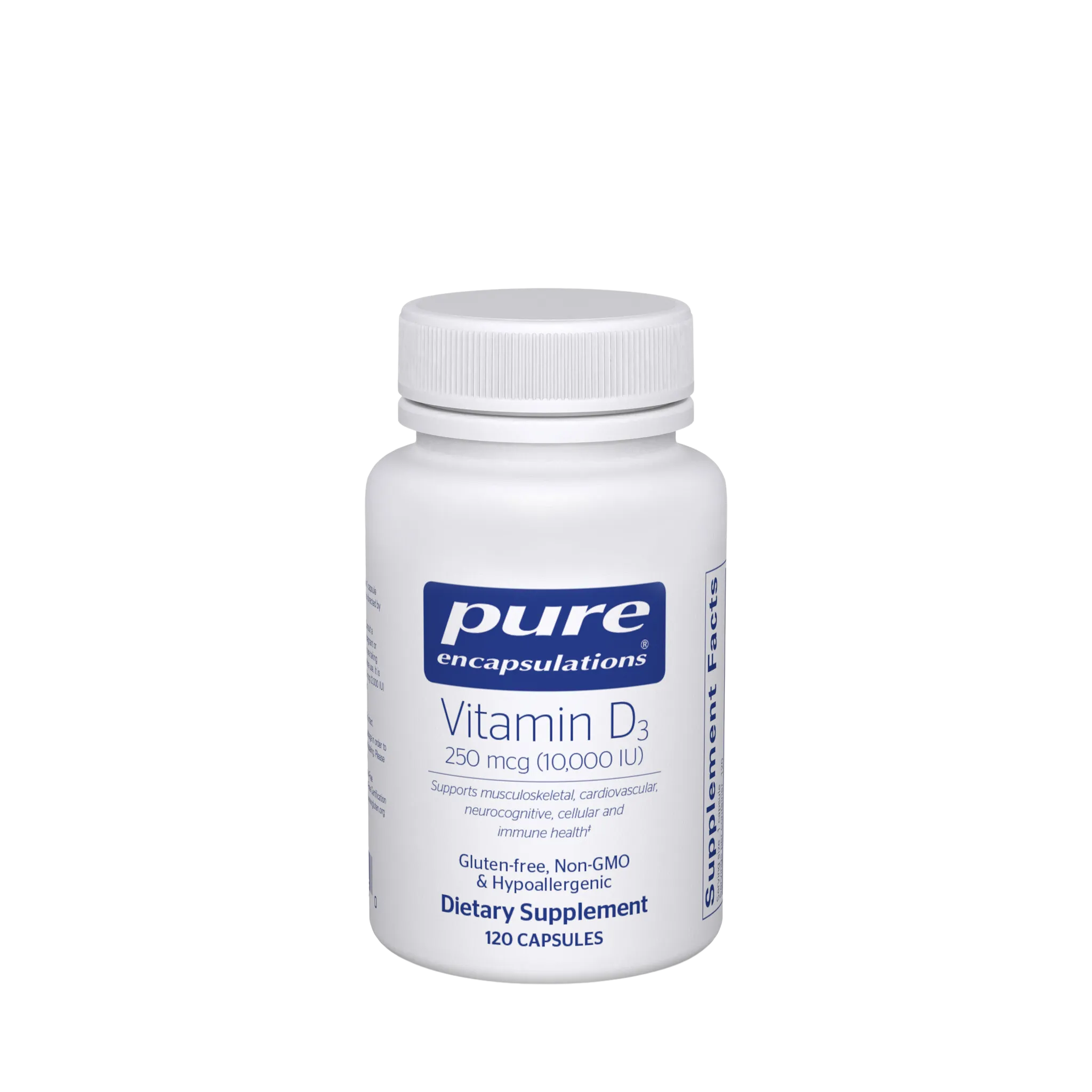
A dosage of 250 mcg (10,000 IU) is considered a high-potency intervention, typically utilized to rapidly correct a clinical deficiency or to provide robust immune support during periods of severe chronic illness. Medical professionals routinely prescribe 10,000 IU daily for short periods (e.g., 6 to 10 weeks) as a "loading dose" to quickly elevate serum 25(OH)D levels into the optimal therapeutic range (often considered 50-80 ng/mL for complex chronic conditions). Pure Encapsulations suggests taking this specific supplement for up to five days per week, and not for use beyond 3 months without medical supervision.
While clinical trials and observational studies show that doses up to 10,000 IU per day do not cause toxicity or adverse events in healthy individuals in the short term, long-term use requires careful management. Because the body stores excess fat-soluble vitamins in fat and liver tissues, taking extreme doses over many months can lead to a toxic buildup. Therefore, it is highly recommended that individuals taking more than 50 mcg (2,000 IU) per day have their blood levels monitored regularly by a healthcare provider to ensure they remain within a safe and effective range.
The Importance of Co-factors: Vitamin K2 and Magnesium
When taking high doses of Vitamin D3, the body's demand for specific nutritional co-factors increases significantly. Because Vitamin D3 dramatically increases the intestinal absorption of calcium, it is crucial to ensure that this calcium is directed to the correct tissues. Vitamin K2 (specifically MK-7) works synergistically with Vitamin D by activating osteocalcin, a protein that binds calcium and integrates it into the bone matrix, preventing the calcium from depositing in soft tissues or blood vessels.
Additionally, the enzymatic conversion of inactive Vitamin D into its active form (calcitriol) is a magnesium-dependent process. If a patient is deficient in magnesium—which is common in conditions like ME/CFS and dysautonomia—high-dose Vitamin D supplementation can rapidly deplete their remaining magnesium stores, potentially triggering muscle cramps, palpitations, or anxiety. Therefore, many functional medicine practitioners recommend ensuring adequate magnesium intake alongside Vitamin D therapy to support proper metabolism and prevent secondary symptom flares.

Follow the Science
Recent Clinical Trials in Long COVID
The clinical evidence supporting Vitamin D3 for post-viral syndromes has grown exponentially. A groundbreaking randomized controlled trial published in Nutrients in early 2025 by researchers at University Hospitals (Cleveland) investigated the effects of high-dose Vitamin D3 combined with Vitamin K2 on 151 adults with moderate-to-severe Long COVID. The study found that the treatment group experienced a significant improvement in the total number of Long COVID symptoms, with a profound decrease in body pain and post-exertional malaise (PEM). The researchers noted that the supplementation significantly attenuated systemic hyper-inflammation and reversed gut permeability, a major driver of Long COVID pathophysiology.
Furthermore, a highly controlled 2023 retrospective study from IRCCS San Raffaele Hospital explicitly matched patients with and without Long COVID to remove confounding variables. The findings firmly established that Long COVID patients had significantly lower Vitamin D levels at the 6-month post-discharge mark. Crucially, this deficiency was most heavily correlated with neurocognitive symptoms, specifically the profound "brain fog," confusion, and poor concentration that so many patients experience, highlighting the hormone's critical role in neurological recovery.
Evidence in ME/CFS and Dysautonomia
In the realm of myalgic encephalomyelitis and dysautonomia, research emphasizes the high prevalence of deficiency due to the nature of the illnesses. A 2025 cross-sectional study of adult CFS patients found that 68% had a clinical Vitamin D deficiency, which significantly correlated with higher fatigue severity scores. While Vitamin D is not considered a standalone cure for these complex conditions, a recent 2025 randomized controlled trial focusing on patients who developed ME/CFS following a COVID-19 infection found that targeted Vitamin D replacement therapy dramatically improved symptoms, with the mean symptom count dropping significantly in the intervention group.
For dysautonomia and POTS, the data points to Vitamin D's role as a neuroactive modulator. A notable case study published by Chaudhari et al. described a POTS patient who possessed a genetic incapacity to convert Vitamin D3 into active calcitriol. When the patient was supplemented directly with the active form, their POTS went into complete remission. While this is a rare genetic case, it underscores the profound impact that Vitamin D pathways have on autonomic nervous system stability and vascular tone.
Mast Cell Research and Immunomodulation
Immunological research has solidified the clinical link between Vitamin D3 and mast cell stabilization. A landmark study by Liu et al. (2017) in Allergy titled "Vitamin D contributes to mast cell stabilization" demonstrated that in a Vitamin D-deficient environment, mast cells automatically degranulate. When active Vitamin D was introduced, it increased VDR expression and successfully blocked the inflammatory signaling pathways, preventing the release of TNF-alpha and histamine.
Similarly, research published in the Journal of Allergy and Clinical Immunology by Yip et al. showed that mast cells actively metabolize Vitamin D3 to suppress allergic reactions. These peer-reviewed findings provide a robust scientific foundation for the use of high-potency Vitamin D3 as a targeted, mechanistic intervention for patients struggling with the unpredictable and severe hypersensitivity reactions characteristic of MCAS.
The Path Forward
A Foundational Piece of the Puzzle
Living with invisible, systemic conditions like Long COVID, ME/CFS, dysautonomia, and MCAS requires immense resilience. While the medical community continues to unravel the exact mechanisms of these complex illnesses, correcting foundational nutritional deficiencies remains a critical step in regaining your baseline health. High-potency Vitamin D3 is not a miracle cure, but it is a scientifically validated tool that provides your immune system, mast cells, and cardiovascular network with the essential hormonal signals they need to calm inflammation and restore cellular balance.
As you navigate your recovery journey, remember that supplements are most effective when integrated into a comprehensive management strategy that includes aggressive pacing, nervous system regulation, and symptom tracking. Because of the high dosage, it is imperative to consult with your healthcare provider or functional medicine practitioner before starting this supplement, especially to monitor your blood levels and ensure you are taking the appropriate co-factors like Vitamin K2 and magnesium. By taking a targeted, science-backed approach to your cellular health, you can build a stronger foundation for long-term healing.
Sources
Nutrients (2025): High-Dose Vitamin D3 and K2 Supplementation in Long COVID
The Journal of Clinical Endocrinology & Metabolism: Vitamin D Deficiency and Brain Fog in Long COVID
BMJ Open: Vitamin D status in chronic fatigue syndrome/myalgic encephalomyelitis
Neurology: Vitamin D status in postural tachycardia syndrome
Journal of Allergy and Clinical Immunology: Vitamin D3 represses IgE-dependent mast cell activation
Journal of the Academy of Nutrition and Dietetics: Dietary Fat Increases Vitamin D-3 Absorption
Journal of Bone and Mineral Research: Taking vitamin D with the largest meal improves absorption