Can Vitamin D3 Support Immune Health and Fatigue in Long COVID and ME/CFS?
March 5, 2026
Vitamin D3Long COVIDME/CFS
Share:
Disclaimer: The information provided here is for educational purposes only and is not intended as medical advice. It should not be used to diagnose, treat, cure, or prevent any medical condition. Instead, use it as a starting point for discussion with your healthcare provider. Always consult with a qualified healthcare provider before starting any new medication, supplement, device, or making changes to your health regimen.
Months or even years after an acute viral infection, many individuals find themselves battling a complex web of debilitating symptoms—profound fatigue, orthostatic intolerance, cognitive dysfunction, and immune hyper-reactivity. For patients navigating Long COVID, myalgic encephalomyelitis/chronic fatigue syndrome (ME/CFS), postural orthostatic tachycardia syndrome (POTS), and mast cell activation syndrome (MCAS), the search for underlying mechanisms and validating treatments is often exhausting. While there is no single cure for these interconnected conditions, researchers are increasingly uncovering how foundational biological pathways become disrupted in the wake of chronic illness. One of the most critical, yet frequently misunderstood, components of this puzzle is Vitamin D3.
Often dismissed as simply a "bone vitamin" that we get from the sun, Vitamin D3 is actually a highly potent neuro-steroid hormone that dictates the function of nearly every cell in the human body. It serves as a master regulator of the immune system, a stabilizer of hyperactive mast cells, and a crucial player in autonomic nervous system function. In the context of complex chronic illness, a deficiency or inability to properly utilize Vitamin D3 can trap the body in a vicious cycle of inflammation, vascular dysfunction, and immune exhaustion. By understanding the deep molecular mechanisms of this vital pro-hormone, patients and providers can better utilize targeted supplementation to support cellular repair, modulate immune responses, and improve daily quality of life.
TL;DR
Vitamin D3 acts as a powerful hormone that supports immune balance and cellular repair.
Chronic illnesses like Long COVID and ME/CFS can disrupt Vitamin D pathways and deplete stores.
Supplementing with Vitamin D3 may help manage fatigue, autonomic dysfunction, and mast cell hyper-reactivity.
For best absorption, take Vitamin D3 with dietary fats and essential cofactors like magnesium.
What is Vitamin D3?
The Endocrine Nature of a "Vitamin"
Despite its name, Vitamin D3 (cholecalciferol) is not technically a vitamin; it is a vital pro-hormone that the body synthesizes from cholesterol when the skin is exposed to ultraviolet B (UVB) radiation. In a healthy body, this initial synthesis is just the beginning of a complex endocrine pathway. Once absorbed into the bloodstream, whether from sunlight, diet, or supplementation, Vitamin D3 is biologically inactive. It must undergo a rigorous two-step enzymatic conversion process to become the potent hormone that our cells actually use. This conversion is essential for maintaining systemic homeostasis, regulating calcium and phosphorus absorption, and supporting healthy bone composition.
The first step of this activation occurs in the liver, where enzymes hydroxylate cholecalciferol to form 25-hydroxyvitamin D (25(OH)D), also known as calcidiol. It is widely recognized in biochemistry that specific liver enzymes drive this conversion. However, 25(OH)D is still relatively inactive. To unlock its true physiological power, it must travel to the kidneys, where the enzyme 1-alpha-hydroxylase (CYP27B1) converts it into 1,25-dihydroxyvitamin D3, or calcitriol. Calcitriol is the highly active, hormonal form of Vitamin D that directly interacts with our cellular machinery to drive biological changes.
The Vitamin D Receptor (VDR) and Gene Expression
The true magic of calcitriol lies in its interaction with the Vitamin D Receptor (VDR), a nuclear steroid hormone receptor found in nearly all human tissues, including the brain, heart, muscles, and immune cells. When active calcitriol enters a cell, it binds to the VDR located in the cytoplasm. This binding triggers the receptor to translocate into the cell's nucleus, where it pairs up with another receptor called the Retinoid X Receptor (RXR). Together, this VDR-RXR complex acts as a master genetic switch.
Once inside the nucleus, the VDR-RXR complex binds to specific DNA sequences known as Vitamin D Response Elements (VDREs). By binding to these elements, active Vitamin D directly modulates the transcription of over 900 different target genes. This massive genetic influence explains why Vitamin D is so deeply integrated into our overall health. It upregulates genes responsible for producing anti-inflammatory proteins, downregulates genes that drive oxidative stress, and controls the expression of crucial antimicrobial peptides. When Vitamin D levels are optimal, this genetic signaling operates smoothly, keeping the immune system balanced and cellular metabolism functioning efficiently.
Intracrine Synthesis: Local Control in Immune Cells
For decades, scientists believed that the kidneys were the sole site of calcitriol production. However, groundbreaking research has revealed that immune cells—including macrophages, dendritic cells, and T-lymphocytes—possess their own local supply of the CYP27B1 enzyme. This means that immune cells do not have to wait for the kidneys to deliver active Vitamin D; they can pull circulating 25(OH)D directly from the blood and convert it into active calcitriol right inside the cell. This localized, "intracrine" synthesis allows the immune system to rapidly deploy active Vitamin D precisely at sites of inflammation or infection.
This local conversion is critical for mounting an effective immune response. When a macrophage encounters a pathogen, it dramatically upregulates its expression of both the VDR and the CYP27B1 enzyme. The locally produced calcitriol then binds to the VDR within that exact macrophage, triggering the release of pathogen-destroying peptides while simultaneously signaling surrounding cells to avoid excessive, tissue-damaging inflammation. In healthy individuals, this elegant system ensures that immune responses are both powerful and perfectly contained.
How Complex Chronic Illness Impacts Vitamin D Pathways
Viral Disruption and the Immune Toll
In complex chronic illnesses like Long COVID and ME/CFS, the elegant pathways that regulate Vitamin D metabolism are frequently hijacked or exhausted. Severe viral infections, such as SARS-CoV-2, place an immense metabolic burden on the body. During the acute phase of infection, the immune system rapidly consumes available Vitamin D stores to fuel the production of antimicrobial peptides and manage the ensuing cytokine storm. If these stores are not adequately replenished, the patient enters the post-viral phase in a state of severe depletion, leaving the immune system without its primary regulatory hormone.
Furthermore, emerging research suggests that certain viruses may actively interfere with the Vitamin D Receptor (VDR) itself. By downregulating VDR expression or blocking its ability to translocate to the nucleus, viruses can evade the immune system's localized defenses. This receptor dysfunction means that even if a patient has technically "normal" levels of circulating 25(OH)D in their blood, their cells may be functionally starving for the active hormone. This cellular resistance contributes to the chronic, low-grade inflammation and immune dysregulation that characterizes Long COVID and post-viral ME/CFS.
The POTS, MCAS, and Histamine Loop
The impact of Vitamin D deficiency becomes even more complex when we examine the interconnected triad of dysautonomia (specifically POTS), mast cell activation syndrome (MCAS), and hypermobility. Mast cells, which are responsible for releasing histamine and other inflammatory mediators during allergic responses, rely heavily on Vitamin D for stabilization. When Vitamin D levels drop, mast cells lose their regulatory braking system. They become hyper-reactive, degranulating and flooding the surrounding tissues with histamine at the slightest provocation—or sometimes with no trigger at all.
This chronic histamine release directly fuels the symptoms of dysautonomia and POTS. Histamine is a potent vasodilator, meaning it causes blood vessels to widen and become "leaky." In POTS, patients already struggle with blood pooling in their lower extremities when they stand up. The constant presence of vasodilating histamine makes it physically impossible for the blood vessels to constrict properly. To compensate for the lack of blood reaching the brain, the autonomic nervous system panics and dumps massive amounts of adrenaline (epinephrine and norepinephrine) into the bloodstream, triggering severe tachycardia, palpitations, and an intense "fight or flight" sensation.
Mitochondrial Failure and Oxidative Stress
This autonomic adrenaline dump creates a vicious feedback loop. Stress hormones like adrenaline act as direct triggers for mast cells, causing them to release even more histamine, which in turn causes more vasodilation and worsens the POTS symptoms. Caught in the middle of this chaos are the mitochondria, the energy-producing powerhouses of our cells. The constant state of systemic inflammation and sympathetic nervous system overdrive generates massive amounts of reactive oxygen species (ROS), leading to severe oxidative stress.
In ME/CFS and Long COVID, this oxidative stress physically damages the mitochondria, impairing their ability to produce adenosine triphosphate (ATP). Because Vitamin D is required to activate the Nrf2 pathway—the body's primary antioxidant defense system—a deficiency leaves the mitochondria entirely unprotected. The resulting energy crisis manifests as profound, debilitating fatigue and post-exertional malaise (PEM), where even minor physical or cognitive exertion triggers a catastrophic crash in cellular energy.
Vitamin D3: Supporting Immune, Autonomic, and Cellular Function
Modulating the Immune System and Reducing Inflammation
Targeted Vitamin D3 supplementation aims to restore the body's natural regulatory mechanisms, acting as a profound immunomodulator. Rather than simply "boosting" the immune system—which can be dangerous in autoimmune or hyper-reactive states—active calcitriol intelligently balances it. It suppresses the proliferation of pro-inflammatory T helper type-1 (Th1) and Th17 cells, drastically reducing the production of inflammatory cytokines like Interleukin-6 (IL-6), Interferon-gamma (IFN-γ), and Tumor Necrosis Factor-alpha (TNF-α). This suppression is vital for cooling the systemic inflammation seen in Long COVID and ME/CFS.
Simultaneously, modulating inflammatory signaling, such as the Nuclear Factor NF-κB pathway, is crucial for managing inflammation, while Vitamin D is widely studied for its role in inducing the development of Regulatory T-cells (Tregs). Tregs act as the peacekeepers of the immune system, fostering immune tolerance and preventing the body from attacking its own tissues. By upregulating the production of Interleukin-10 (IL-10), an anti-inflammatory cytokine, Vitamin D helps to quiet the auto-antibody-driven processes that are frequently hypothesized to trigger and perpetuate post-viral syndromes.
Stabilizing Mast Cells in MCAS
For patients battling MCAS, Vitamin D3 acts as a crucial cellular stabilizer. Research has demonstrated that human mast cells possess both the Vitamin D Receptor (VDR) and the CYP27B1 enzyme, allowing them to locally convert and utilize Vitamin D. When active calcitriol binds to the VDR on a mast cell, it fundamentally alters the cell's internal signaling pathways, specifically repressing the MAPK and NF-κB pathways. This repression directly inhibits IgE-dependent mast cell activation, significantly reducing the inappropriate release of histamine and inflammatory leukotrienes.
Furthermore, long-term exposure to adequate Vitamin D3 has been shown to induce apoptosis (programmed cell death) in hyperactive mast cells. In MCAS, the body often produces an overabundance of overly sensitive mast cells. By encouraging the natural die-off of these dysfunctional cells, Vitamin D helps to thin out the hyper-reactive population, gradually reducing the severity and frequency of allergic-type reactions, flushing, and gastrointestinal distress. This stabilization is a critical step in breaking the histamine-vasodilation loop that drives dysautonomia.
Supporting Mitochondrial and Autonomic Function
Beyond immune and mast cell regulation, Vitamin D3 plays a direct role in supporting mitochondrial respiration and autonomic nervous system health. By activating the Nrf2/PGC-1α axis, Vitamin D increases the transcription of major antioxidant enzymes, which neutralize the reactive oxygen species (ROS) that damage mitochondrial membranes. This protection allows the mitochondria to resume efficient ATP production, directly addressing the cellular energy deficits that cause severe fatigue and post-exertional malaise (PEM).
In the context of dysautonomia and POTS, Vitamin D acts as a vital neuro-steroid. It is required for the healthy function of baroreceptors—the sensors in our blood vessels that communicate with the brain to regulate blood pressure and heart rate upon standing. By reducing vascular inflammation and supporting the structural integrity of the endothelial lining, Vitamin D helps restore normal vascular tone. This improves the blood vessels' ability to constrict, reducing lower-extremity blood pooling and minimizing the secondary adrenaline rushes that cause POTS-related tachycardia.

Symptoms Vitamin D3 May Help Manage
Targeted Symptom Relief
Because Vitamin D3 receptors are expressed in almost every tissue in the body, restoring optimal levels can have a wide-ranging impact on the diverse symptoms associated with complex chronic illnesses. While it is not a standalone cure, clinical research and patient experiences suggest that targeted supplementation may help manage the following symptoms:
Profound Fatigue and PEM: By protecting mitochondria from oxidative stress and supporting efficient ATP energy production, Vitamin D3 may help raise a patient's energy baseline and reduce the severity of post-exertional crashes.
Orthostatic Intolerance and Tachycardia: By supporting baroreceptor function and reducing histamine-driven vasodilation, Vitamin D helps improve vascular tone, potentially reducing the blood pooling and rapid heart rate associated with POTS.
Allergic Hyper-reactivity and Flushing: By stabilizing mast cells and repressing IgE-dependent activation, Vitamin D helps reduce the inappropriate release of histamine, mitigating MCAS symptoms like skin flushing, hives, and sudden food sensitivities.
Brain Fog and Cognitive Dysfunction: As a neuro-steroid, Vitamin D regulates vital neurotransmitters (like dopamine and serotonin) and reduces neuro-inflammation, which may help alleviate the cognitive clouding and memory issues common in Long COVID.
Bone and Deep Muscle Pain: Vitamin D is essential for calcium absorption and bone mineralization; correcting a deficiency can resolve the deep, aching bone pain and muscle weakness (osteomalacia) that often accompanies chronic illness.
Frequent Infections: By upregulating the production of antimicrobial peptides like cathelicidin and β-defensin 2, Vitamin D strengthens the innate immune system's ability to fight off opportunistic bacterial and viral infections.
Practical Considerations: Forms, Dosing, and Absorption
The Importance of Dietary Fat for Absorption
When it comes to Vitamin D3 supplementation, what you take it with is just as important as the dose itself. Vitamin D3 (cholecalciferol) is a fat-soluble vitamin, meaning it cannot dissolve in water and requires dietary lipids (fats) to be properly absorbed through the intestinal wall. Taking a standard Vitamin D capsule on an empty stomach or with a fat-free meal severely blunts its bioavailability, meaning much of the supplement will simply pass through the digestive tract unutilized.
It is generally understood that Vitamin D3 absorption is influenced by diet. Because it is a fat-soluble vitamin, consuming your Vitamin D3 supplement alongside a meal containing healthy fats like avocado, olive oil, nuts, or eggs is often recommended to help maximize its uptake.
Crucial Cofactors: Magnesium and Vitamin K2
Vitamin D3 does not operate in a vacuum; it relies on a delicate network of nutritional cofactors to function safely and effectively. The most critical of these is Magnesium. Magnesium is biologically required to convert inactive Vitamin D3 into its active, hormonal form (calcitriol) in the liver and kidneys. Without sufficient magnesium, Vitamin D remains stored and inactive, which can lead to a false assumption of "Vitamin D resistance." Furthermore, the process of synthesizing Vitamin D actively depletes the body's magnesium stores. High-dose D3 supplementation without concurrent magnesium support can unmask a severe magnesium deficiency, leading to muscle cramps, palpitations, and increased anxiety.
The second vital cofactor is Vitamin K2 (specifically the MK-7 form). While Vitamin D3 efficiently increases the absorption of calcium from the gut into the bloodstream, it does not control where that calcium goes. Vitamin K2 acts as the "traffic cop" by activating a protein called osteocalcin, which binds to the circulating calcium and shuttles it directly into the bones and teeth. Without adequate Vitamin K2, the excess calcium absorbed via Vitamin D3 can inappropriately deposit into soft tissues, kidneys, and blood vessels, leading to dangerous arterial calcification.
Pure Encapsulations Formulation and Bioavailability
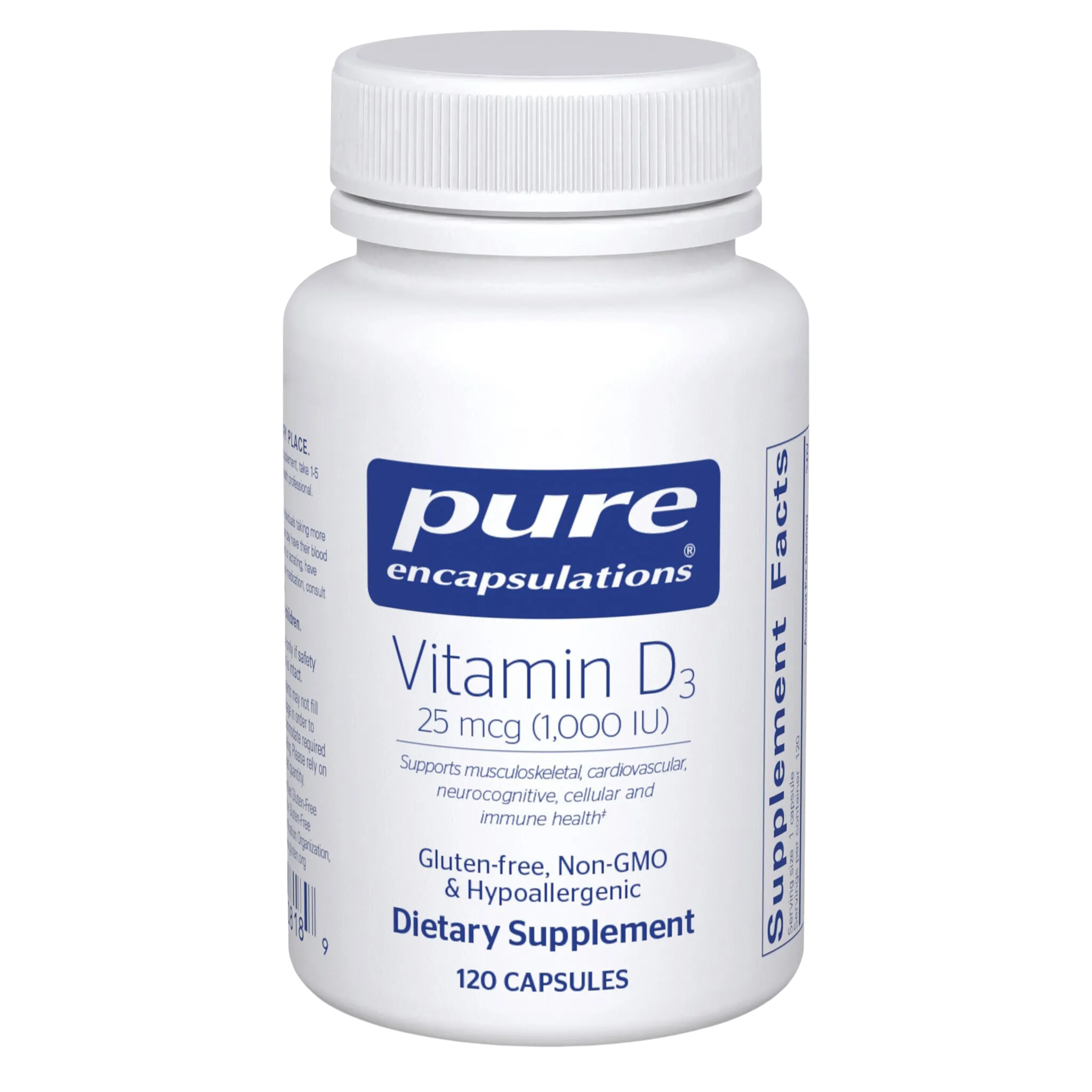
For patients with complex chronic illnesses, gastrointestinal dysfunction and malabsorption are common hurdles. Pure Encapsulations Vitamin D3 is formulated to address these challenges. As a practitioner-grade supplement, it is hypoallergenic and free from unnecessary binders, fillers, artificial dyes, and common allergens that might trigger sensitive mast cells. The cholecalciferol is delivered in a clean, vegetarian-friendly capsule designed for rapid dissolution.
Because dosing needs vary wildly among chronic illness patients—ranging from low daily maintenance doses to high-dose repletion protocols—the 25 mcg (1,000 IU) sizing allows for precise, modular titration. Patients can easily adjust their intake from 1 to 5 capsules daily based on their specific lab results and provider recommendations. For those with severe lipid malabsorption issues, working with a provider to explore micellized or MCT-oil-based liquid forms may also be beneficial, but the clean encapsulation of this product ensures a high baseline of tolerability for sensitive systems.

Follow the Science
Recent Breakthroughs in Long COVID Trials
The clinical understanding of Vitamin D3's role in post-viral syndromes has evolved rapidly. In 2023, observational studies, such as the retrospective analysis from San Raffaele Hospital in Italy, established a clear correlation between deficiency and symptom severity. Researchers found that patients diagnosed with Long COVID had significantly lower 25(OH)D levels (averaging 20.1 ng/mL) compared to those who fully recovered, with low levels strongly correlating to severe neurocognitive impairment and "brain fog."
By 2025, research transitioned from observation to targeted intervention. A landmark randomized controlled trial published in Nutrients by the University Hospitals Cleveland Medical Center (UHCMC) evaluated 151 adults with Long COVID. The treatment group received a daily dose of 2,000 IU of Vitamin D3 co-formulated with 240 µg of Vitamin K2 MK-7 for 24 weeks. The results were profound: the treatment group experienced statistically significant reductions in total Long COVID symptoms, specifically in body pain and post-exertional malaise. Furthermore, biomarker analysis showed distinct reductions in systemic inflammatory markers (like IL-6) and a notable decrease in gut permeability, highlighting the combination's ability to heal vascular and endothelial tissue.
Evolving Data on ME/CFS and Autonomic Dysfunction
The data regarding Vitamin D and ME/CFS has historically been mixed, largely due to study design. Older trials, such as a 2015 study utilizing massive intermittent doses (100,000 IU every 2 months), failed to show significant improvements in fatigue or vascular health. However, recent data suggests that consistent, daily dosing combined with comprehensive management is far more effective. A retrospective study by Kodama et al. evaluated 28 patients who developed ME/CFS following COVID-19 vaccination. The patients received Vitamin D replacement therapy, which included dietary counseling, sun exposure recommendations, and oral supplementation, to help manage their symptoms.
In the realm of mast cell and autonomic research, foundational studies continue to guide clinical practice, highlighting the complex mechanisms driving allergic inflammation and asthma exacerbations. Understanding these inflammatory triggers, alongside clinical observations of Vitamin D's role in the body, underscores the necessity of maintaining optimal pathways for autonomic and immunological stability.
The Path Forward
A Foundational Piece of the Puzzle
Living with conditions like Long COVID, ME/CFS, POTS, and MCAS is an exhausting, unpredictable journey. It is completely valid to feel frustrated by the lack of simple answers or quick fixes in the medical world. While Vitamin D3 is not a miracle cure that will erase complex chronic illness overnight, the science clearly shows that it is a foundational piece of the recovery puzzle. By stabilizing hyperactive mast cells, cooling systemic inflammation, and providing the neuro-steroid support your autonomic nervous system desperately needs, optimizing your Vitamin D levels can help raise your baseline and improve your resilience.
Next Steps in Your Management Strategy
Remember that supplementation is most effective when integrated into a comprehensive management strategy. Pacing to avoid post-exertional crashes, tracking your symptoms, optimizing your diet, and working closely with a dysautonomia or chronic illness specialist are all critical steps. Always consult your healthcare provider before beginning any new supplement regimen, especially to check your baseline 25(OH)D levels and ensure you are properly balancing essential cofactors like magnesium and Vitamin K2.
Sources
The Vitamin D Receptor and T Cell Function (Frontiers in Immunology)
Molecular Insight into the Role of Vitamin D in Immune-Mediated Inflammatory Diseases (MDPI)
Exploring the Immunomodulatory Effects of Vitamin D3 in Sars-Cov2 Management (Longdom Publishing)
Mechanisms Underlying the Regulation of Innate and Adaptive Immunity by Vitamin D (Nutrients)
Vitamin D and molecular actions on the immune system: modulation of innate and autoimmunity (PMC)
Low Vitamin D Levels Tied to Long COVID (Medscape / San Raffaele Hospital Study)
Vitamin K2 and D3 Supplementation in Long COVID: A Randomized Controlled Trial (Nutrients 2025)