Can Vitamin D3 Support Immune Function and Fatigue in Long COVID and ME/CFS?
March 5, 2026
Vitamin D3Long COVIDME/CFS
Share:
Disclaimer: The information provided here is for educational purposes only and is not intended as medical advice. It should not be used to diagnose, treat, cure, or prevent any medical condition. Instead, use it as a starting point for discussion with your healthcare provider. Always consult with a qualified healthcare provider before starting any new medication, supplement, device, or making changes to your health regimen.
Months after recovering from an initial SARS-CoV-2 infection, many people still fight debilitating symptoms with what we call Long COVID. For others, the onset of myalgic encephalomyelitis/chronic fatigue syndrome (ME/CFS) or dysautonomia has completely altered their daily reality. When navigating these complex, invisible illnesses, patients often find themselves searching for foundational tools to support their body's recovery and manage unpredictable symptom flares. One of the most heavily researched and frequently discussed nutrients in this clinical context is Vitamin D3.
While traditionally known simply as the "bone vitamin," modern immunology has revealed that Vitamin D3 is actually a potent, pleiotropic hormone that orchestrates a vast network of cellular and immune functions. From modulating hyperactive immune responses to supporting the integrity of our blood vessels, its role extends far beyond basic calcium absorption. In this comprehensive guide, we will explore the intricate biochemical mechanisms of Vitamin D3, how complex chronic illnesses impact its systemic levels, and how targeted supplementation—alongside crucial cofactors—may support your journey toward improved quality of life.
TL;DR
Vitamin D3 acts as a hormone, supporting immune function, bone health, and cardiovascular stability.
Chronic illness and indoor isolation often lead to severe Vitamin D deficiency, worsening fatigue and pain.
Supplementing with Vitamin D3 may help manage inflammation and support endothelial health in Long COVID and ME/CFS.
For optimal absorption and safety, take Vitamin D3 with healthy fats, magnesium, and Vitamin K2.
What is Vitamin D3?
The "Sunshine Hormone" and Cellular Receptors
To understand how Vitamin D3 (cholecalciferol) functions in the body, we must first recognize that it is not a true vitamin in the traditional sense, but rather a prohormone. In a healthy body, when ultraviolet B (UVB) rays from sunlight strike the skin, they interact with a cholesterol derivative called 7-dehydrocholesterol, rapidly converting it into pre-vitamin D3, which then isomerizes into Vitamin D3. This newly synthesized compound, or the cholecalciferol obtained through diet and supplementation, enters the bloodstream where it binds to the Vitamin D Binding Protein (DBP) for transport throughout the systemic circulation.
Once it reaches its target tissues, the true complexity of Vitamin D3 begins. The biological effects of this hormone are mediated entirely through the Vitamin D Receptor (VDR), a specialized ligand-activated nuclear transcription factor. VDRs are not just found in the bones or kidneys; they are ubiquitously expressed in nearly every tissue in the human body, including the brain, heart, endothelium, and almost all cells of the immune system. This widespread receptor presence explains why Vitamin D3 exerts such profound, systemic effects on human physiology.
When the active form of Vitamin D binds to the VDR inside a cell, it triggers a remarkable genetic cascade. The receptor dimerizes (pairs up) with another nuclear receptor called the Retinoid X Receptor (RXR). This newly formed VDR-RXR heterodimer complex then physically translocates into the cell's nucleus and binds to specific DNA sequences known as Vitamin D Response Elements (VDREs). By binding to these genetic promoter regions, Vitamin D directly upregulates or represses the transcription of hundreds of primary target genes, controlling everything from cellular metabolism to the release of inflammatory cytokines.
The Enzymatic Activation Pathway
The Vitamin D3 that our skin produces or that we ingest is biologically inert; it cannot activate the VDR on its own. It must undergo a strict, two-step enzymatic activation process to become a functional hormone. First, the inactive cholecalciferol is transported to the liver, where the enzyme 25-hydroxylase (CYP2R1) adds a hydroxyl group to the molecule. This converts it into 25-hydroxyvitamin D, or calcifediol (25(OH)D). This is the major circulating form of the vitamin and the specific biomarker that doctors measure when assessing your Vitamin D status via blood tests.
However, calcifediol is still only a precursor. The second and most critical activation step traditionally occurs in the kidneys. Here, another enzyme called 1-alpha-hydroxylase (CYP27B1) adds a second hydroxyl group, transforming the molecule into 1,25-dihydroxyvitamin D3 (1,25(OH)2D3), also known as calcitriol. Calcitriol is the highly potent, biologically active hormonal form of Vitamin D that actually binds to the VDR to exert physiological changes.
Crucially, modern immunological research has discovered that the kidneys are not the only organs capable of this final activation step. Immune cells, such as macrophages and dendritic cells, possess their own intracellular CYP27B1 enzymes. This means that when the immune system detects a threat, these cells can pull circulating calcifediol from the blood and locally convert it into active calcitriol right at the site of infection or inflammation. This localized, intracrine signaling is a fundamental mechanism by which Vitamin D regulates the immune response without disrupting systemic calcium levels.
Regulating Bone Composition and Calcium
While its immune functions are vast, the classical and most well-understood role of Vitamin D3 remains the regulation of calcium and phosphorus homeostasis to maintain healthy bone composition. When blood calcium levels drop, the parathyroid glands release parathyroid hormone (PTH), which stimulates the kidneys to rapidly produce more active calcitriol. This surge in active Vitamin D travels to the intestines, where it powerfully upregulates the expression of calcium transport proteins in the enterocytes (intestinal lining cells).
By enhancing these transport mechanisms, Vitamin D3 dramatically promotes the intestinal absorption of dietary calcium and phosphorus. Without adequate Vitamin D, the intestines can only absorb about 10% to 15% of dietary calcium, but with optimal levels, this absorption efficiency increases to 30% to 40%. This influx of minerals is absolutely essential for the continuous remodeling of the skeletal system, providing the raw materials needed by osteoblasts (bone-building cells) to mineralize the bone matrix and maintain structural density.
Furthermore, Vitamin D3 reduces the urinary excretion of calcium by promoting its reabsorption in the renal tubules of the kidneys. If Vitamin D levels fall too low, the body is forced to maintain blood calcium levels by pulling calcium out of the bones via osteoclast activity, leading to osteomalacia (softening of the bones) and generalized musculoskeletal pain. By ensuring a steady supply of absorbed calcium, Vitamin D3 protects the skeletal reservoir and supports overall structural integrity.
How Chronic Illness Impacts Vitamin D Levels
The Vicious Cycle of Fatigue and Indoor Isolation
Living with complex chronic illnesses like myalgic encephalomyelitis/chronic fatigue syndrome (ME/CFS), Long COVID, and dysautonomia often traps patients in a vicious physiological and behavioral cycle. Many patients wonder, can Long COVID trigger ME/CFS? The overlap in symptoms often directly decimates their Vitamin D levels. One of the hallmark symptoms of these conditions is post-exertional malaise (PEM), a severe exacerbation of symptoms following even minor physical or cognitive exertion. To manage PEM and avoid debilitating "crashes," patients frequently must adopt strict pacing strategies, which often necessitates spending the vast majority of their time resting indoors.
This necessary indoor isolation drastically reduces exposure to direct sunlight, cutting off the body's primary mechanism for synthesizing cholecalciferol. Recent studies evaluating ME/CFS populations have consistently found that a significant majority of patients suffer from profound Vitamin D deficiency or insufficiency. In a 2021 cross-sectional study, researchers found that 68% of adult CFS patients were clinically deficient, and those with the lowest levels scored the highest on fatigue severity scales. The lack of sunlight creates a secondary layer of illness, as the resulting deficiency exacerbates muscle weakness, bone pain, and lethargy, further mimicking and amplifying the primary disease state.
Viral Infection, Inflammation, and Nutrient Depletion
Beyond behavioral factors, the pathophysiology of the illnesses themselves actively depletes the body's Vitamin D reserves. Conditions like Long COVID and mast cell activation syndrome (MCAS) are characterized by chronic, systemic inflammation and immune dysregulation. When the body is locked in a persistent state of immune activation—constantly battling lingering viral antigens, autoantibodies, or environmental triggers—the metabolic demand for immunomodulatory nutrients skyrockets.
During an active inflammatory response, immune cells rapidly consume available circulating 25(OH)D, converting it into active calcitriol to help regulate cytokine production and prevent tissue damage. If the body is not receiving a continuous, high-volume supply of Vitamin D3 through diet or supplementation to replace what is being burned through, systemic levels plummet. This creates a dangerous feedback loop: the chronic inflammation depletes Vitamin D, and the resulting Vitamin D deficiency removes the "brakes" from the immune system, allowing the inflammation to spiral further out of control.
Furthermore, research into Long COVID suggests that the initial SARS-CoV-2 infection may actively interfere with the body's metabolic pathways. The immense oxidative stress generated during the acute viral phase can impair liver and kidney function, potentially disrupting the enzymatic conversion of inactive Vitamin D into its active hormonal forms. This means that even if a patient is getting some sun exposure, their body may struggle to efficiently utilize the synthesized prohormone.
Autonomic Dysfunction and Receptor Dysregulation
In patients with dysautonomia, particularly postural orthostatic tachycardia syndrome (POTS), the impact of chronic illness on Vitamin D pathways takes on a neurological dimension. The autonomic nervous system, which controls involuntary functions like heart rate and blood pressure, is heavily regulated by the hypothalamus and brainstem—areas of the brain that are densely populated with Vitamin D Receptors (VDRs). When systemic Vitamin D levels drop due to chronic illness, these neurological control centers lose a critical modulating signal.
Vitamin D deficiency in dysautonomia patients has been clinically linked to worsened orthostatic intolerance, meaning the body struggles even more to regulate blood vessel constriction and heart rate upon standing. Additionally, Vitamin D plays a crucial role in modulating pain pathways in the central nervous system. A lack of active calcitriol binding to VDRs in the brain can lead to central sensitization, a phenomenon where the nervous system becomes hyper-reactive to stimuli, amplifying the widespread chronic pain and migraines frequently experienced by patients with POTS and ME/CFS.
Vitamin D3: Supporting Immune and Cellular Function
Modulating the Innate Immune Response (Macrophages)
One of the most profound therapeutic mechanisms of Vitamin D3 is its ability to directly support and modulate the innate immune system, our body's first line of defense against pathogens. When a macrophage—a type of white blood cell that engulfs and digests cellular debris and microbes—encounters a viral or bacterial threat, its Toll-Like Receptors (TLRs) are activated. This activation immediately triggers the macrophage to upregulate the expression of both the Vitamin D Receptor (VDR) and the CYP27B1 enzyme.
By expressing this enzyme, the macrophage can pull circulating Vitamin D3 (calcifediol) from the blood and convert it into active calcitriol internally. This active hormone then binds to the VDR within the macrophage, initiating the transcription of potent endogenous antimicrobial peptides, specifically Cathelicidin (LL-37) and Beta-defensin 4. These peptides act as natural antibiotics; they physically disrupt the lipid membranes of invading pathogens, neutralizing them effectively. Studies have shown that without adequate Vitamin D3, this critical cathelicidin response is virtually absent, leaving the body highly vulnerable to lingering infections, a key concern when exploring what causes Long COVID.
Crucially, while Vitamin D3 boosts the macrophage's ability to clear pathogens, it simultaneously acts as an anti-inflammatory "brake." It downregulates the surface expression of Major Histocompatibility Complex Class II (MHC-II) molecules on the macrophage. This limits the cell's ability to present antigens to the rest of the immune system, thereby preventing the macrophage from triggering an excessive, runaway inflammatory cascade (such as a cytokine storm) that damages healthy host tissue.
Balancing the Adaptive Immune System (Lymphocytes)
While Vitamin D3 stimulates the innate immune system to clear acute threats, it generally suppresses or "tolerizes" the adaptive immune system, which is heavily implicated in autoimmune conditions and the chronic inflammation seen in ME/CFS and Long COVID. Activated T lymphocytes (T cells) rapidly upregulate VDR expression, making them highly responsive to the active Vitamin D produced locally by macrophages.
At the molecular level, active Vitamin D3 alters the differentiation profile of these T cells. It directly inhibits the development of pro-inflammatory T-helper 1 (Th1) and Th17 cells, repressing the transcription of inflammatory cytokines like Interferon-gamma (IFN-γ) and Interleukin-17 (IL-17). Simultaneously, Vitamin D3 shifts the immune balance by promoting the development of Regulatory T cells (Tregs). Tregs are the peacekeepers of the immune system; they secrete anti-inflammatory cytokines like IL-10 and are responsible for suppressing immune responses and maintaining tolerance to self-antigens, thereby preventing autoimmune attacks on the body's own tissues.
Furthermore, Vitamin D3 regulates B lymphocytes, the cells responsible for producing antibodies. By interrupting B cell differentiation into plasma cells, Vitamin D3 can reduce the overall secretion of autoantibodies. For patients dealing with the suspected autoimmune components of Long COVID or dysautonomia, this immunomodulatory shift—calming the adaptive immune system while supporting innate clearance—is a vital mechanism for restoring systemic homeostasis.
Endothelial Health and Cardiovascular Support
Beyond the immune system, Vitamin D3 plays a critical role in maintaining cardiovascular function and cellular health, particularly within the endothelium (the inner lining of blood vessels). Endothelial dysfunction is a major driver of symptoms in Long COVID, POTS, and ME/CFS, leading to microvascular clotting, poor tissue oxygenation, and orthostatic intolerance. The endothelial cells that line our blood vessels are rich in Vitamin D Receptors.
When active Vitamin D binds to these endothelial VDRs, it promotes the production of nitric oxide (NO), a crucial signaling molecule that tells blood vessels to relax and dilate (vasodilation). This helps maintain healthy blood flow and regulates blood pressure, which is particularly beneficial for patients struggling with the cardiovascular instability of dysautonomia. Recent proteomic profiling in Long COVID patients has highlighted severe vascular damage, making endothelial support a top priority.
Additionally, Vitamin D3 helps protect the endothelium from oxidative stress. It downregulates the expression of adhesion molecules on the surface of endothelial cells, preventing pro-inflammatory white blood cells from sticking to the blood vessel walls and causing vascular inflammation. By maintaining healthy blood vessel function and supporting cellular metabolism, Vitamin D3 ensures that oxygen and essential nutrients can efficiently reach the brain and muscles, helping to combat the profound physical and cognitive fatigue characteristic of complex chronic illnesses.

Symptoms Vitamin D3 May Help Manage
Profound Physical Fatigue: By supporting mitochondrial cellular metabolism and ensuring adequate calcium levels for muscle contraction, Vitamin D3 helps combat the generalized lethargy and muscle weakness that frequently accompany ME/CFS and Long COVID.
Bone and Muscle Pain (Myalgia): Vitamin D deficiency directly causes osteomalacia (softening of the bones) and muscle hypersensitivity. Supplementation restores calcium homeostasis, which can alleviate the deep, aching bone and muscle pain often reported by patients.
Frequent Viral Infections: By upregulating the production of antimicrobial peptides like cathelicidin in macrophages, Vitamin D3 strengthens the innate immune system's ability to clear lingering viral antigens and fight off opportunistic secondary infections.
Brain Fog and Cognitive Dysfunction: Vitamin D Receptors are abundant in the brain. By supporting neuroprotection, reducing neuroinflammation, and improving endothelial blood flow to cerebral tissues, adequate Vitamin D levels may help clear cognitive haziness and improve focus.
Orthostatic Intolerance and Dizziness: Through its role in promoting endothelial nitric oxide production and modulating autonomic nervous system receptors in the brainstem, Vitamin D3 supports healthy blood vessel function and cardiovascular stability, potentially easing POTS symptoms upon standing.
Hyper-Inflammatory Flares: By promoting the development of Regulatory T cells (Tregs) and suppressing pro-inflammatory Th1/Th17 cells, Vitamin D3 acts as a biological brake, helping to calm the systemic immune overactivation seen in MCAS and Long COVID.
Practical Considerations: Forms, Dosing, and Absorption
Maximizing Bioavailability with Fats
When incorporating a Vitamin D3 supplement into your daily routine, understanding its bioavailability is just as important as the dosage itself. Vitamin D3 (cholecalciferol) is a fat-soluble molecule. This means that unlike water-soluble vitamins (such as Vitamin C or B-complex), it cannot be easily absorbed by the intestines on an empty stomach. When ingested, it requires the presence of dietary fats to trigger the gallbladder to release bile salts into the digestive tract.
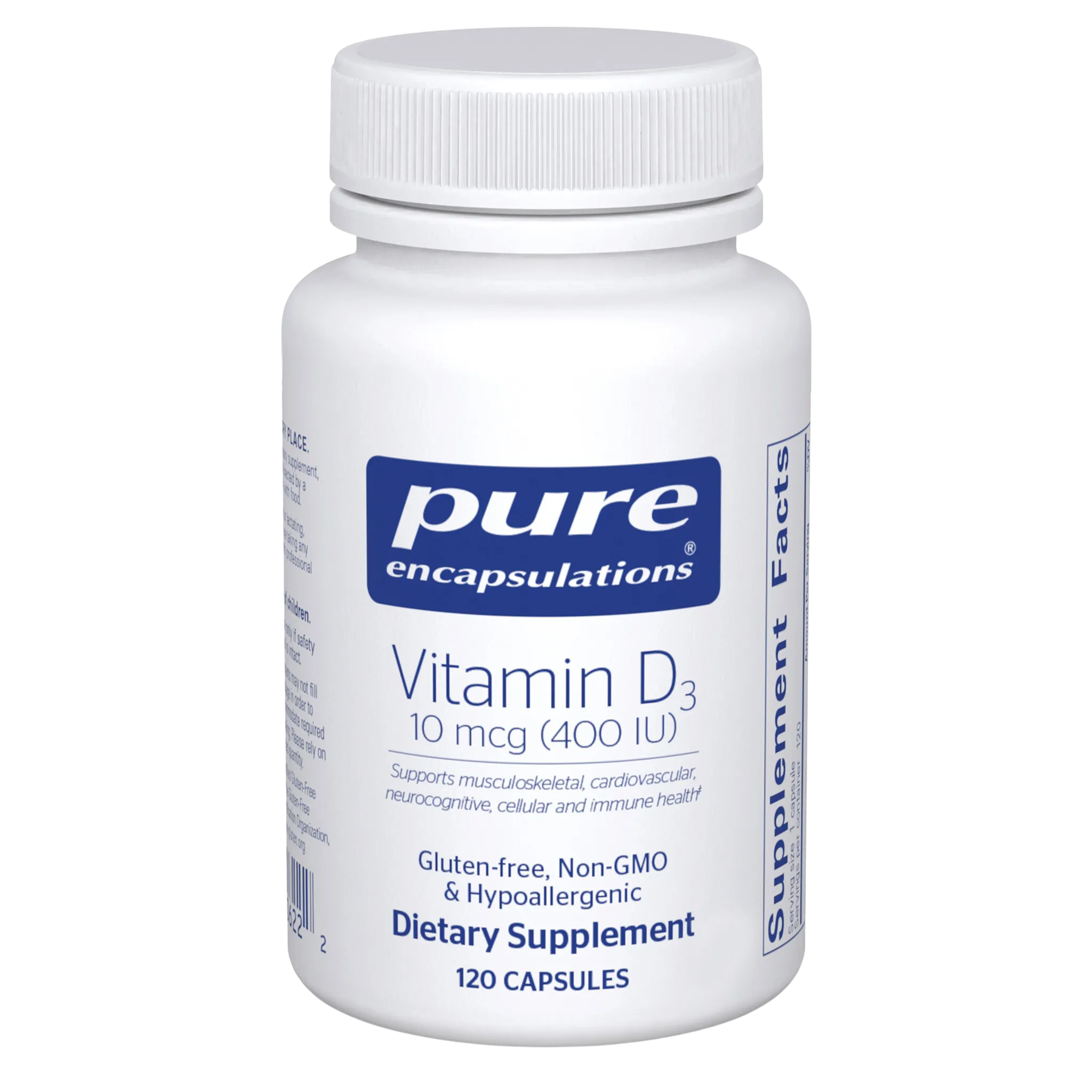
These bile salts emulsify the Vitamin D3, breaking it down into tiny droplets called "mixed micelles." These micelles act as delivery vehicles, transporting the vitamin across the watery environment of the gut lumen and into the enterocytes (intestinal cells) for systemic absorption. To maximize the absorption of your 10 mcg (400 IU) supplement, it is highly recommended to take your capsules alongside a meal that contains healthy fats, such as avocados, nuts, olive oil, or eggs. If you are learning to eat nutritionally with changes to your sense of smell and taste, finding palatable fat sources is a crucial step for vitamin absorption.
The Critical Role of Magnesium
Perhaps the most overlooked aspect of Vitamin D supplementation is its absolute dependency on Magnesium. Magnesium acts as the fundamental, non-negotiable "activator" for Vitamin D. As discussed in the mechanisms section, the inactive cholecalciferol must be converted by the CYP2R1 and CYP27B1 enzymes in the liver and kidneys to become active. Current biochemical research demonstrates that magnesium is an essential enzymatic cofactor for both of these critical hydroxylation steps.
Furthermore, magnesium is required for the Vitamin D Binding Protein (DBP) to transport the vitamin through the bloodstream, and for the active hormone to successfully bind to the VDR on target cells. If you are deficient in magnesium—a common occurrence in chronic illness due to high metabolic burn rates—taking high doses of Vitamin D can actually lead to "Vitamin D resistance," where blood levels fail to rise because the body lacks the raw materials to process it. Conversely, processing high amounts of Vitamin D can rapidly deplete your existing magnesium stores, leading to muscle cramps and palpitations. Therefore, co-supplementing with a highly bioavailable form of magnesium (like magnesium glycinate) is a crucial practical consideration.
Vitamin K2 and the "Calcium Paradox"
While Vitamin D3 effectively increases the intestinal absorption of calcium, it cannot control where that calcium is deposited in the body. This leads to the "Calcium Paradox." Without proper regulation, an influx of calcium can deposit into soft tissues and arterial walls (vascular calcification) rather than the bones, which can negatively impact cardiovascular health. This is where Vitamin K2 (particularly the MK-7 form) becomes vital as the "director" of calcium.
Vitamin D3 upregulates the genetic expression of two specific proteins: Osteocalcin (which binds calcium into the bone matrix) and Matrix Gla Protein (MGP, which sweeps calcium out of the arteries). However, when synthesized, these proteins are inactive. Clinical studies confirm that Vitamin K2 is required to carboxylate (activate) these proteins. While a baseline dose of 400 IU of Vitamin D3 is generally safe and supportive, those taking higher therapeutic doses should discuss combining their D3 with Vitamin K2 to ensure that the absorbed calcium is safely directed to the skeletal system, protecting endothelial and cardiovascular function.

Follow the Science
Recent Clinical Trials in Long COVID
The role of Vitamin D in preventing and managing Long COVID has been the subject of intense scrutiny in recent clinical trials. As patients and providers navigate how a doctor diagnoses Long COVID, identifying biomarkers like Vitamin D deficiency has become increasingly important. Because of its potent immunomodulatory and endothelial-protective properties, researchers have sought to determine if correcting deficiencies can resolve lingering post-viral symptoms. A comprehensive review published in MDPI evaluated the critical interaction between Vitamin D3 and Vitamin K2 for calcium metabolism and bone health.
The review highlights that while Vitamin D increases calcium absorption, Vitamin K2 is essential for activating proteins that direct calcium into the bone matrix and prevent it from depositing in blood vessels. For patients managing complex chronic conditions, this synergistic supplementation supports cardiovascular and skeletal health, addressing systemic vulnerabilities without contributing to vascular calcification.
Furthermore, robust observational data supports the importance of maintaining adequate Vitamin D levels. A 2024 prospective cohort study tracking 350 post-hospitalized patients measured serum 25(OH)D levels at discharge. At the 6-month follow-up mark, researchers found that 68.1% of Vitamin D–deficient patients developed Long COVID, compared to only 42.9% of those with sufficient levels. After adjusting for confounding variables, the study revealed that Vitamin D deficiency was associated with an Adjusted Odds Ratio (aOR) of 2.35 for developing Long COVID, with deficient patients being more than twice as likely to experience severe fatigue and shortness of breath.
Observational Data in ME/CFS and Dysautonomia
In the realm of myalgic encephalomyelitis/chronic fatigue syndrome (ME/CFS) and dysautonomia, research heavily underscores the prevalence and impact of Vitamin D deficiency. A 2021 cross-sectional study evaluated adult CFS patients and discovered that a staggering 68% were clinically deficient in Vitamin D (<20 ng/mL), with another 22% showing insufficiency. The researchers noted a statistically significant correlation showing that patients with the lowest Vitamin D levels scored the highest on the Fatigue Severity Scale (FSS), directly linking the deficiency to extreme exhaustion.
For dysautonomia and POTS, the neurological implications of Vitamin D have been explored in several clinical settings. A clinical trial at Wake Forest University observing adolescents with severe POTS and unexplained chronic nausea found that these orthostatic-intolerant subjects had significantly lower 25-hydroxy vitamin D compared to healthy peers. Additionally, case reports in the BMJ have documented POTS patients with specific "1-alpha hydroxylation defects"—an inability to convert Vitamin D to its active form—whose autonomic symptoms went into remission upon supplementation with active calcitriol, highlighting the hormone's critical role in autonomic nervous system regulation.
Current Medical Consensus
Despite these promising findings, systematic reviews and living evidence syntheses moving through 2025 maintain a nuanced perspective. The current medical consensus is that Vitamin D3 is not a standalone "magic bullet" cure for complex chronic illnesses. Studies show that high-dose supplementation provides dramatic clinical benefits primarily in patients who are already deficient at baseline, while offering marginal added value to those with already sufficient systemic levels.
However, because deficiency is so rampant in the chronic illness community due to indoor isolation and high inflammatory metabolic demands, major clinical guidelines (such as the UK NICE Guidelines for ME/CFS) officially mandate that Vitamin D status should form part of routine clinical assessment. Correcting a deficiency is universally viewed as a safe, highly cost-effective, and critically important foundational step in managing recovery, modulating systemic inflammation, and supporting cardiovascular health.
The Path Forward
A Foundational Step in Your Recovery
Living with conditions like Long COVID, ME/CFS, and dysautonomia is an exhausting, unpredictable journey. When your body feels like it is constantly working against you, it is entirely valid to feel overwhelmed by the sheer number of symptoms you have to manage daily. If you are wondering how you can live with long-term COVID, understanding the biochemical needs of your body provides a powerful tool for regaining a sense of control. Addressing foundational nutritional gaps, such as a Vitamin D deficiency, is a critical step in stabilizing your cellular environment.
By providing your immune system with the cholecalciferol it needs to modulate inflammation, and giving your endothelial cells the support required to maintain healthy blood flow, you are actively lowering the overall physiological burden on your body. A daily dose of 10 mcg (400 IU) of Vitamin D3 serves as an excellent, gentle baseline to support bone composition, immune cell activity, and healthy cell metabolism without overwhelming your system.
Integrating Supplements with Comprehensive Care
It is important to remember that supplements are just one piece of a comprehensive, holistic management strategy. Vitamin D3 works best when integrated into a broader care plan that includes strict pacing to avoid post-exertional malaise, detailed symptom tracking to identify specific triggers, and ongoing medical supervision. Always consult with your healthcare provider before starting any new supplement, especially to check your baseline 25(OH)D levels and ensure you are incorporating the necessary cofactors like magnesium and Vitamin K2.
By taking proactive, science-backed steps to support your foundational biology, you are laying the groundwork for more stable days and an improved quality of life on your path forward.