Can Vitamin D + K2 Support Immune Balance and Vascular Health in Complex Chronic Illness?
March 6, 2026
Vitamin D + K2Long COVIDMCAS
Share:
Disclaimer: The information provided here is for educational purposes only and is not intended as medical advice. It should not be used to diagnose, treat, cure, or prevent any medical condition. Instead, use it as a starting point for discussion with your healthcare provider. Always consult with a qualified healthcare provider before starting any new medication, supplement, device, or making changes to your health regimen.
Living with complex chronic conditions like Long COVID, myalgic encephalomyelitis/chronic fatigue syndrome (ME/CFS), dysautonomia, and mast cell activation syndrome (MCAS) often feels like navigating a labyrinth without a map. Patients frequently endure debilitating symptoms—from profound post-exertional malaise (PEM) and orthostatic intolerance to unpredictable allergic flares and severe cognitive fatigue. In the search for stability, both patients and practitioners often turn to foundational nutritional support to help repair the cellular and immunological dysfunctions driving these illnesses.
Among the most critical, yet frequently misunderstood, foundational interventions is the combined supplementation of Vitamin D and Vitamin K2. While traditionally viewed simply as "bone vitamins," emerging clinical research paints a far more complex picture. These two fat-soluble nutrients act as powerful epigenetic modulators, immune stabilizers, and vascular protectors. For individuals battling the systemic inflammation and autonomic nervous system dysregulation inherent in post-viral syndromes, understanding the profound molecular synergy between Vitamin D3 and Vitamin K2—and why the specific forms and delivery methods matter—can be a vital step toward reclaiming quality of life.
TL;DR
Vitamin D3 and K2 work synergistically to support bone, cardiovascular, and immune health in chronic illness.
Vitamin K2 helps direct calcium into bones, which may help protect blood vessels and support autonomic function.
This combination may help stabilize mast cells and support mitochondrial health for ME/CFS and Long COVID patients.
Always pair D3/K2 with dietary fats for absorption and consult a doctor before starting, especially if on blood thinners.
What is Vitamin D + K2?
The Master Hormone: Vitamin D3's Systemic Reach
To understand the clinical value of Vitamin D, we must first recognize that it is not actually a vitamin in the traditional sense; it is a powerful steroid prohormone known as a secosteroid. When ultraviolet B (UVB) radiation strikes the skin, it converts 7-dehydrocholesterol into vitamin D3 (cholecalciferol). This compound is then transported to the liver, where it is hydroxylated into 25-hydroxyvitamin D [25(OH)D], the primary circulating form measured in blood tests. Finally, the kidneys convert it into its biologically active form, 1,25-dihydroxyvitamin D (calcitriol). Calcitriol exerts its effects by binding to the Vitamin D Receptor (VDR), a nuclear receptor present in nearly every cell type in the human body, including immune cells, endothelial cells, and neurons.
Once bound to the VDR, calcitriol acts as a master epigenetic switch, directly regulating the expression of over 2,000 genes. This massive genomic influence controls vital physiological processes ranging from cellular proliferation and apoptosis to the modulation of both the innate and adaptive immune systems. In the context of mineral metabolism, Vitamin D's primary role is to drastically upregulate the intestinal absorption of calcium and phosphorus. Without adequate Vitamin D, the body can only absorb about 10-15% of dietary calcium; with optimal levels, this absorption increases to 30-40%. However, this powerful ability to flood the bloodstream with calcium presents a significant biological danger if left unchecked, leading us to the critical need for a synergistic partner.
The Calcium Paradox and the Need for Vitamin K2
The physiological danger of unopposed Vitamin D supplementation is known in medical literature as the "Calcium Paradox." When high doses of Vitamin D are administered alone, the intestines efficiently absorb massive amounts of calcium into the bloodstream. However, Vitamin D lacks the biological mechanism to dictate where that calcium should go. Without directional guidance, circulating calcium naturally precipitates and deposits into soft tissues, the kidneys (forming stones), and most dangerously, the endothelial lining of blood vessels. This ectopic calcification leads to arterial stiffness, a major driver of cardiovascular disease and a significant complication for patients with autonomic nervous system disorders like Postural Orthostatic Tachycardia Syndrome (POTS).
This is where Vitamin K2 becomes absolutely essential. While Vitamin K1 (phylloquinone) is primarily involved in hepatic blood coagulation, Vitamin K2 (menaquinone) operates predominantly in extrahepatic tissues like bones and blood vessels. Vitamin K2 acts as the molecular traffic director for the calcium absorbed by Vitamin D. It ensures that calcium is actively pulled out of the bloodstream and securely integrated into the skeletal matrix, simultaneously supporting bone health and helping to protect the cardiovascular system from dangerous calcification. The interplay between these two nutrients is a perfect example of biological synergy, where the efficacy and safety of one compound are highly dependent on the presence of the other.
The Molecular Synergy: Carboxylation and Protein Activation
The exact mechanism of this synergy occurs at the enzymatic level through the activation of Vitamin K-dependent proteins (VKDPs). When Vitamin D binds to its receptors in bone and vascular tissue, it stimulates the genetic expression and production of two crucial proteins: Osteocalcin (in the bones) and Matrix Gla Protein (MGP) (in the blood vessels). However, Vitamin D only produces these proteins in an inactive, "undercarboxylated" state. In this dormant form, they are largely incapable of binding to calcium. This means that even with optimal Vitamin D levels, the body's calcium management tools remain functionally useless without their necessary activator.
Vitamin K2 serves as the essential enzymatic cofactor for gamma-glutamyl carboxylase, the enzyme responsible for adding a carboxyl group to these proteins. This process, known as carboxylation, physically alters the shape of Osteocalcin and MGP, activating their calcium-binding sites. Once activated by Vitamin K2, Osteocalcin binds tightly to circulating calcium and weaves it into the hydroxyapatite lattice of the bone, increasing bone mineral density. Simultaneously, activated MGP—recognized as a potent naturally occurring inhibitor of vascular calcification—scavenges excess calcium from the arterial walls, preserving endothelial flexibility and cardiovascular health.
How Chronic Illness Impacts Bone, Immune, and Cardiovascular Health
Viral Persistence and Immune Exhaustion in Long COVID and ME/CFS
The pathophysiology of post-viral syndromes like Long COVID and ME/CFS is deeply intertwined with chronic immune dysregulation and viral persistence. Following an acute infection, such as SARS-CoV-2 or Epstein-Barr Virus (EBV), the immune system may fail to return to baseline, remaining locked in a state of chronic hyper-activation. This persistent inflammatory state demands massive amounts of cellular energy and rapidly depletes systemic reserves of immunomodulatory nutrients, particularly Vitamin D. As immune cells (like macrophages and T-cells) continuously utilize calcitriol to attempt to regulate the cytokine storm, serum 25(OH)D levels plummet, leaving the patient in a severe state of deficiency that perpetuates the cycle of inflammation.
Recent research highlights the devastating downstream effects of this immune exhaustion. A 2023 study on ME/CFS and Long COVID demonstrated heightened reactivation of latent herpesviruses (like EBV and HSV-1), along with increased circulating fibronectin and depletion of natural IgM. This viral-induced immune dysregulation may directly contribute to the debilitating post-exertional malaise (PEM) that defines these conditions. When Vitamin D levels are depleted, the immune system may lose a primary epigenetic tool for managing these viral reactivations, allowing the systemic strain to continue unchecked.
Autonomic Dysfunction and Vascular Stress in POTS
Postural Orthostatic Tachycardia Syndrome (POTS) and other forms of dysautonomia are characterized by the autonomic nervous system's inability to properly regulate blood vessel constriction and heart rate upon standing. This leads to blood pooling in the lower extremities, cerebral hypoperfusion (lack of blood flow to the brain), and a compensatory, often violent, spike in heart rate. The structural health and flexibility of the vascular endothelial lining are paramount for patients with POTS, as rigid or inflamed blood vessels cannot respond accurately to the baroreceptor signals attempting to stabilize blood pressure.
Research suggests a striking correlation: over 50% of POTS patients suffer from significant Vitamin D deficiency. This deficiency exacerbates autonomic dysfunction in multiple ways. First, Vitamin D is crucial for the synthesis of neurotransmitters like serotonin and dopamine, which regulate autonomic signaling. Second, without adequate Vitamin D and its synergistic partner K2, the risk of vascular micro-calcification increases. When MGP remains inactive due to a lack of K2, calcium deposits stiffen the endothelial walls. For a POTS patient, this arterial stiffness further impairs the already compromised vasoconstrictive response, worsening orthostatic intolerance, brain fog, and cardiovascular strain.
The Vicious Cycle of Mast Cell Activation Syndrome (MCAS)
Mast Cell Activation Syndrome (MCAS) is a complex immunological condition where mast cells—the body's first responders—become hyper-reactive and inappropriately degranulate, releasing massive amounts of histamine, tryptase, and inflammatory cytokines into the surrounding tissues. This condition frequently co-occurs with POTS and Long COVID, creating a devastating triad of symptoms. The chronic inflammatory environment of post-viral illness creates a hostile terrain that keeps mast cells in a constant state of trigger-ready agitation, leading to unpredictable allergic reactions, severe gastrointestinal distress, and systemic pain.
The depletion of Vitamin D plays a central role in the pathogenesis of MCAS. Mast cells are densely populated with Vitamin D Receptors (VDRs). In a healthy body, circulating calcitriol binds to these receptors, providing a continuous, stabilizing "brake" on the mast cell's degranulation pathways. When a patient becomes deficient in Vitamin D—often due to the metabolic demands of chronic illness, poor absorption, or lack of sunlight due to being bedbound—this critical braking mechanism is removed. Without the epigenetic stabilization provided by Vitamin D, mast cells are left highly vulnerable to even minor environmental triggers, locking the patient into a vicious cycle of chronic allergic inflammation and autonomic flare-ups.
Vitamin D + K2: Supporting Immune Balance and Vascular Health
Epigenetic Modulation and Mast Cell Stabilization
Supplementing with Vitamin D3 and K2 offers a mechanistically targeted approach to supporting patients with complex chronic illnesses, beginning with mast cell stabilization. The molecular interaction between Vitamin D and mast cells is one of the reasons functional medicine practitioners utilize targeted therapy for MCAS. Research suggests that Vitamin D may play a role in supporting the stability of mast cells. Studies indicate that in a Vitamin D-deficient environment, mast cells may be more prone to activation and degranulation, even without the presence of an allergen.
The mechanism behind this stabilization is elegantly complex. When calcitriol binds to the VDR on a mast cell, it increases the expression of the receptor, which then forms a physical complex with the Lyn tyrosine kinase protein. This complex actively inhibits downstream intracellular signaling pathways, specifically the MAPK and NF-κB pathways, which are the primary drivers of degranulation. By blocking these pathways, Vitamin D may help reduce the release of tumor necrosis factor-alpha (TNF-α) and histamine. However, achieving the serum levels of Vitamin D required to maintain this epigenetic suppression (often targeted between 50-70 ng/mL by specialists) necessitates the co-administration of Vitamin K2 to ensure the resulting influx of calcium does not cause systemic harm.
Restoring Endothelial Integrity and Vascular Health
For patients battling the vascular complications of Long COVID and the orthostatic challenges of dysautonomia, the combination of D3 and K2 provides critical endothelial support. Long COVID is increasingly recognized as an endothelial disease, characterized by persistent microvascular inflammation, the formation of fibrin amyloid microclots, and severe hypoperfusion. This constant vascular stress damages the delicate endothelial lining, making it highly susceptible to rigidification and plaque formation. By actively supporting the structural integrity of the blood vessels, this supplement combination helps restore the vascular flexibility required for healthy autonomic function.
Vitamin K2's activation of Matrix Gla Protein (MGP) is the linchpin of this vascular defense. Activated MGP acts as a biological scavenger, binding to calcium ions that threaten to crystallize within the inflamed endothelial tissue. By preventing this ectopic calcification, K2 preserves the production and utilization of nitric oxide, a vital signaling molecule that allows blood vessels to dilate and constrict smoothly. For a patient with POTS, maintaining this arterial elasticity is essential for the baroreceptors to accurately detect pressure changes and signal the heart to adjust its rate appropriately upon standing, thereby reducing the severity of tachycardic episodes and improving cerebral blood flow.
Cellular Calcium Regulation and Mitochondrial Support
Beyond the macro-level protection of bones and blood vessels, the D3/K2 synergy operates at the microscopic level to protect mitochondrial function—a critical factor for patients suffering from the severe energy deficits of ME/CFS. Research from the National Centre for Neuroimmunology and Emerging Diseases has identified that ME/CFS patients often have impaired TRPM3 ion channels on their Natural Killer (NK) immune cells. These channels are responsible for regulating the flow of calcium into the cell. When they dysfunction, it leads to aberrant intracellular calcium signaling, which severely impairs the cell's ability to function and respond to viral threats.
Vitamin D directly influences the genetic expression and regulation of these calcium channels, helping to restore proper intracellular mineral balance. Furthermore, the precise calcium-routing capabilities of Vitamin K2 may help protect the mitochondria themselves from calcium overload. When excess calcium floods a cell, the mitochondria absorb it to protect the cytosol. However, massive mitochondrial calcium overload triggers the opening of the mitochondrial permeability transition pore (mPTP), leading to the release of cytochrome c, mitochondrial fragmentation, and ultimately, cellular apoptosis. By ensuring that calcium is safely locked away in the skeletal matrix, Vitamin K2 indirectly supports the mitochondrial network against this catastrophic failure, aiding cellular energy production and helping to manage the severity of post-exertional malaise (PEM).

Symptoms Vitamin D + K2 May Help Manage
Immunological and Inflammatory Symptoms
By acting as a master epigenetic regulator and mast cell stabilizer, the combination of Vitamin D3 and K2 targets several core immunological symptoms driven by chronic hyper-inflammation:
Chronic Allergic Reactions and Histamine Intolerance: By binding to VDRs on mast cells and inhibiting the NF-κB signaling pathway, Vitamin D may reduce the inappropriate release of histamine and inflammatory cytokines, helping to calm the unpredictable flares associated with MCAS.
Frequent Viral Reactivations: Vitamin D enhances the innate immune system's production of antimicrobial peptides (like cathelicidins) and supports Natural Killer cell function, supporting the body in managing latent viruses like EBV and HSV-1 that frequently reactivate in ME/CFS and Long COVID.
Systemic Joint and Muscle Pain: By lowering circulating levels of pro-inflammatory cytokines (such as TNF-α and IL-6) and ensuring calcium is directed into the bones rather than depositing in soft tissues and joints, this combination may help reduce widespread musculoskeletal pain.
Autonomic and Cardiovascular Symptoms
The vascular protection afforded by Vitamin K2's activation of MGP, combined with Vitamin D's neurological support, addresses several debilitating autonomic symptoms:
Orthostatic Intolerance and Blood Pooling: By preventing endothelial calcification and preserving arterial elasticity, K2 supports the blood vessels' ability to constrict efficiently, aiding the autonomic nervous system in maintaining blood pressure and reducing lower-extremity blood pooling in POTS.
Brain Fog and Cognitive Fatigue: Improved vascular flexibility enhances cerebral perfusion (blood flow to the brain). Additionally, Vitamin D is essential for the synthesis of neurotransmitters like dopamine and serotonin, which are critical for cognitive clarity and focus.
Heart Palpitations and Tachycardia: While not a cure for POTS, supporting overall cardiovascular health and ensuring that calcium does not stiffen the cardiac tissue or arterial walls can reduce the mechanical strain on the heart, potentially easing the severity of tachycardic episodes.
Musculoskeletal and Structural Symptoms
For patients who are frequently bedbound or suffering from severe exercise intolerance, protecting the physical structure of the body is paramount:
Bone Density Loss (Osteopenia/Osteoporosis): Prolonged bed rest and lack of weight-bearing exercise rapidly deplete bone mass. The synergistic activation of osteocalcin by K2 ensures that any absorbed calcium is aggressively woven into the bone matrix, which may help protect against fractures.
Muscle Weakness and Myopathy: Vitamin D receptors are highly expressed in skeletal muscle tissue. Optimizing Vitamin D levels may help support muscle fiber morphology and strength, potentially reducing the profound physical weakness often experienced during an ME/CFS crash.
Dental Health Issues: Just as it protects the bones, activated osteocalcin is responsible for binding calcium into the dentin of the teeth. Patients with chronic illness often struggle with dental decay due to dry mouth or nutritional deficits; D3 and K2 provide foundational structural support for oral health.
Practical Considerations: Forms, Dosing, and Absorption
The MK-4 vs. MK-7 Debate: Why Form Matters for Sensitive Patients
When selecting a Vitamin K2 supplement, patients are typically presented with two primary forms: Menaquinone-4 (MK-4) and Menaquinone-7 (MK-7). The number refers to the length of the isoprenoid side chain attached to the menaquinone molecule, which drastically alters how the body processes the vitamin. MK-7 has a very long half-life (up to 72 hours) and is highly bioavailable, making it a popular choice for general cardiovascular supplements. However, MK-7 is traditionally derived from natto, a highly fermented soybean product. Because fermented foods are massive triggers for histamine release, MK-7 can often induce severe degranulation and allergic flares in patients with Mast Cell Activation Syndrome (MCAS). Furthermore, a subset of sensitive patients reports experiencing heart palpitations, agitation, and insomnia when taking MK-7.
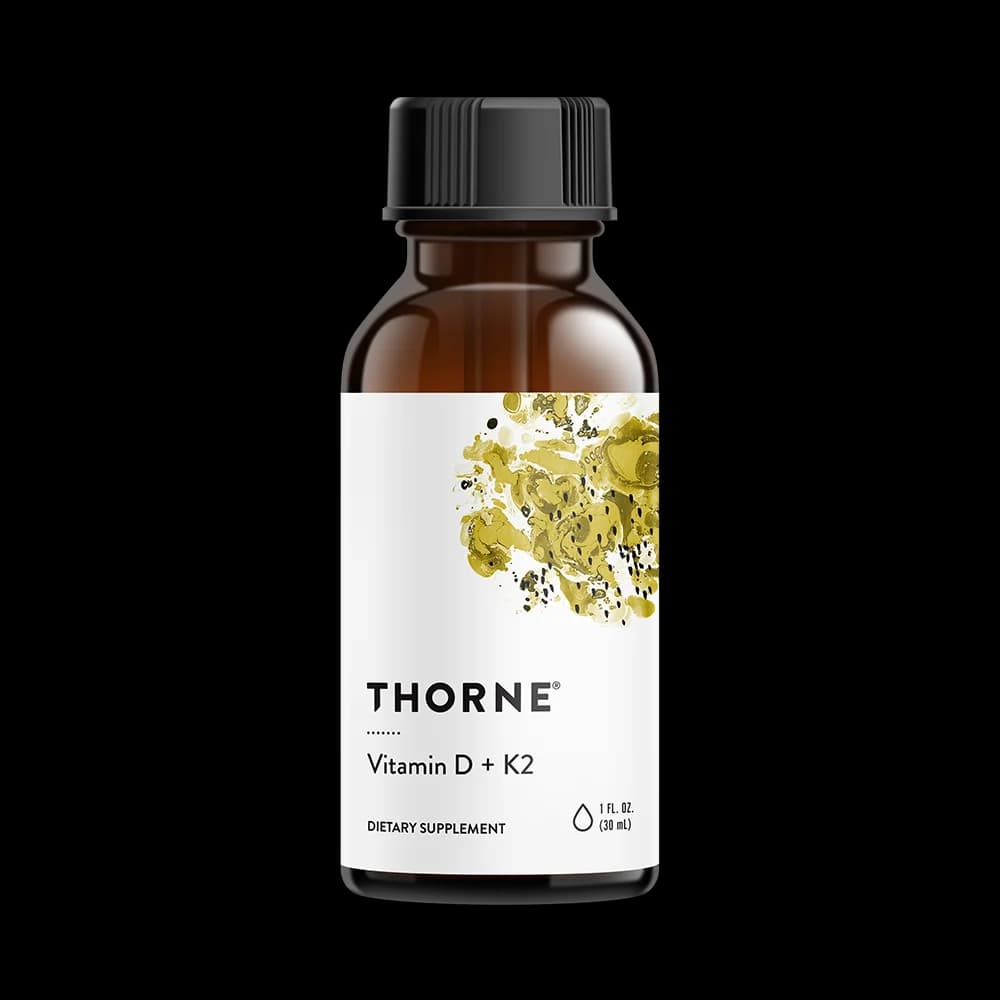
For complex chronic illness populations, MK-4 is widely considered the safer and more biologically appropriate choice, which is why Thorne formulates their liquid D/K2 exclusively with MK-4. MK-4 is the body's preferred tissue form of Vitamin K; in fact, mammals possess a specific enzyme (UBIAD1) that actively converts other forms of Vitamin K into MK-4 so it can be utilized by the brain, pancreas, and reproductive organs. MK-4 has a much shorter half-life in the blood (1-2 hours) because it is rapidly absorbed directly into the tissues and bones. Crucially, MK-4 is typically synthesized from non-soy plant extracts (like flower derivatives), making it completely hypoallergenic, soy-free, and highly unlikely to trigger a mast cell reaction or autonomic palpitations.
Navigating Absorption: The Role of MCT Oil and Dietary Fats
Because Vitamins D3 and K2 are highly lipophilic (fat-soluble), they require the presence of dietary fat to be absorbed across the intestinal wall. If taken as a dry powder on an empty stomach, their bioavailability is exceptionally poor. To combat this, high-quality liquid supplements suspend the vitamins in a carrier oil. Thorne utilizes Medium-Chain Triglyceride (MCT) oil, which provides an incredibly stable, oxidation-resistant matrix that protects the delicate chemical structures of the vitamins, ensuring a long shelf life and a clean, tasteless delivery system that is easy for sensitive patients to tolerate sublingually.
However, there is a crucial biochemical nuance to absorption that patients must understand. MCTs are composed of shorter fatty acid chains (6-10 carbons) that bypass the lymphatic system entirely, absorbing directly into the portal vein and traveling straight to the liver for rapid energy conversion. While this is excellent for ketone production, the optimal biological pathway for absorbing highly fat-soluble vitamins like D3 and K2 is actually through the lymphatic system, which requires Long-Chain Triglycerides (LCTs) to stimulate the release of bile and form chylomicrons. Therefore, to maximize the absorption of an MCT-based D3/K2 liquid, it should always be taken alongside a meal containing healthy LCT fats, such as avocados, olive oil, eggs, or nuts. The dietary LCTs will trigger the lymphatic pathway, perfectly capturing and absorbing the vitamins suspended in the MCT oil.
Dosing Strategies, Safety, and Contraindications
One of the primary advantages of a liquid formulation is the ability to precisely titrate the dose. Patients with dysautonomia or ME/CFS are notoriously sensitive to new supplements and often require "low and slow" micro-dosing to avoid overwhelming their fragile systems. A self-dispensing liquid allows a patient to start with a single drop and slowly build up to a therapeutic level. Because Vitamin D is fat-soluble and stores in the liver and fat tissues, it can build up to toxic levels over time. Therefore, patients should always obtain a baseline 25(OH)D blood test before beginning high-dose therapy, aiming for an optimal functional range (often considered 50-70 ng/mL by specialists) rather than just avoiding severe deficiency.
It is also critical to recognize the necessary cofactors and absolute contraindications. Vitamin D requires substantial amounts of magnesium to be converted into its active form (calcitriol); supplementing high doses of D3 without adequate magnesium can rapidly deplete the body's magnesium stores, leading to muscle cramps, anxiety, and worsened POTS symptoms. Most importantly, Vitamin K is strictly contraindicated for individuals taking Vitamin K antagonist blood thinners, such as Warfarin (Coumadin). Because Vitamin K directly facilitates blood coagulation pathways, supplementing with K2 will neutralize the life-saving effects of these specific anticoagulant medications. Patients on any blood-thinning therapy must consult their cardiologist or prescribing physician before introducing Vitamin K2.

Follow the Science
Groundbreaking RCTs in Long COVID Recovery
The clinical evidence supporting the use of Vitamins D3 and K2 for post-viral syndromes has accelerated dramatically in recent years. A landmark Randomized Controlled Trial (RCT) published in January 2025 in the journal Nutrients provided some of the most compelling data to date regarding Long COVID recovery. Led by researchers at University Hospitals and Case Western Reserve University, the trial tracked 151 adults suffering from severe Long COVID symptoms for over three months. The treatment group received a daily intervention of 2,000 IU of Vitamin D3 combined with 240 µg of Vitamin K2 for 24 weeks.
The results were highly significant. At the 6-month mark, the supplemented group experienced a 15–20% reduction in reports of debilitating post-exertional malaise (PEM), widespread body pain, and shortness of breath compared to the standard-of-care group. Furthermore, blood analysis revealed that the D3/K2 combination successfully reduced oxidized LDL (a marker of cardiovascular stress) and significantly decreased levels of (1,3)-β-d-glucan (BDG). BDG is a primary marker of fungal translocation and gut permeability ("leaky gut"), which is increasingly recognized as a major driver of systemic inflammation in Long COVID. This trial provided concrete evidence that D3 and K2 work synergistically to repair mucosal barriers and lower systemic inflammatory indices.
Decades of Clinical Data on Bone Density and Fracture Prevention
While the application for post-viral illness is relatively new, the clinical pedigree of Vitamin K2—specifically the MK-4 form—in managing severe bone density loss is well established. In Japan, high-dose MK-4 (administered at 45 mg per day, divided into three doses) has been an officially approved and prescribed medical treatment for osteoporosis since 1995. Decades of robust clinical trials have demonstrated that MK-4 aggressively halts bone resorption and stimulates osteoblast (bone-building) activity.
A comprehensive review of legacy studies, including those by Iwamoto et al. and Ushiroyama et al., confirmed that the co-supplementation of Vitamin D3 and Vitamin K2 significantly outperforms the administration of either vitamin alone. In trials tracking postmenopausal women over two years, the combination therapy predictably reduced levels of undercarboxylated (inactive) osteocalcin, dramatically enhanced Bone Mineral Density (BMD), and improved the microarchitectural quality of the bone, leading to a statistically significant reduction in fracture rates. For bedbound ME/CFS patients at high risk for osteopenia, this synergistic protection is clinically invaluable.
Emerging Evidence in Mast Cell and Autonomic Research
The intersection of Vitamin D deficiency and autonomic/immunological dysfunction continues to be a major focus of functional neurology. Beyond research suggesting Vitamin D's role in mast cell stabilization, ongoing research into dysautonomia highlights the critical need for vascular protection. The AVADEC (Aortic Valve Decalcification) trial, a rigorous two-year study, investigated individuals at high risk for coronary artery calcification. The trial demonstrated that combining Vitamin D with Vitamin K2 significantly slowed the progression of arterial plaque development and reduced overall cardiovascular events compared to a placebo.
For patients with POTS, where endothelial inflammation and impaired vasoconstriction are primary drivers of orthostatic intolerance, this data is highly relevant. By utilizing K2 to ensure that the calcium absorbed via Vitamin D is directed away from the delicate autonomic vasculature and into the skeletal system, practitioners can safely leverage high-dose Vitamin D therapy to support neurotransmitter synthesis and immune modulation without risking the cardiovascular stiffening that exacerbates dysautonomia symptoms.
The Path Forward
Validating the Invisible Struggle
Living with invisible, complex chronic illnesses like Long COVID, ME/CFS, dysautonomia, and MCAS is an exhausting daily battle. The profound fatigue, the unpredictable allergic flares, and the terrifying spikes in heart rate are not just "in your head"—they are the result of measurable, physiological dysfunctions at the cellular, immunological, and autonomic levels. It is entirely valid to feel overwhelmed when your body no longer feels like a safe place to inhabit. Finding therapies that address the root biochemical causes of these symptoms, rather than just masking them, is a crucial step toward regaining a sense of physical stability and autonomy.
Integrating Supplements into a Broader Strategy
While the synergistic combination of Vitamin D3 and K2 offers powerful, evidence-based support for immune balance, mast cell stabilization, and vascular health, it is not a standalone cure. True management of complex chronic illness requires a comprehensive, multi-disciplinary approach. Supplements must be integrated alongside rigorous pacing strategies to manage PEM, nervous system regulation techniques, dietary modifications to support gut health, and careful symptom tracking. Learning how to maintain your independence with chronic illness involves building a personalized toolkit of interventions that work harmoniously to lower your overall inflammatory burden and support cellular recovery.
Next Steps in Your Healing Journey
If you are struggling with the systemic impacts of post-viral syndromes, optimizing your foundational nutrients is an excellent place to start. Thorne's Vitamin D + K2 Liquid provides a highly bioavailable, hypoallergenic, and easily titratable way to safely deliver these essential epigenetic modulators to your tissues. Always consult with your healthcare provider or a functional medicine specialist to check your baseline 25(OH)D levels, ensure you have adequate magnesium cofactors, and confirm that this supplement is safe for your specific medical history, especially if you are taking prescription medications.