Can Thyroid Synergy™ Support Metabolic Health in Long COVID and ME/CFS?
March 6, 2026
Thyroid SynergyLong COVIDME/CFS
Share:
Disclaimer: The information provided here is for educational purposes only and is not intended as medical advice. It should not be used to diagnose, treat, cure, or prevent any medical condition. Instead, use it as a starting point for discussion with your healthcare provider. Always consult with a qualified healthcare provider before starting any new medication, supplement, device, or making changes to your health regimen.
Months or even years after a viral infection, many patients living with complex chronic conditions find themselves battling a profound, unyielding exhaustion that sleep cannot fix. When standard blood tests come back "normal," it can be incredibly frustrating to know deep down that your body's internal engine is sputtering. For individuals navigating Long COVID, myalgic encephalomyelitis/chronic fatigue syndrome (ME/CFS), and dysautonomia, this metabolic dysfunction is often not just in their heads—it is rooted in the complex neuroendocrine networks that govern energy production, specifically the thyroid and adrenal glands.
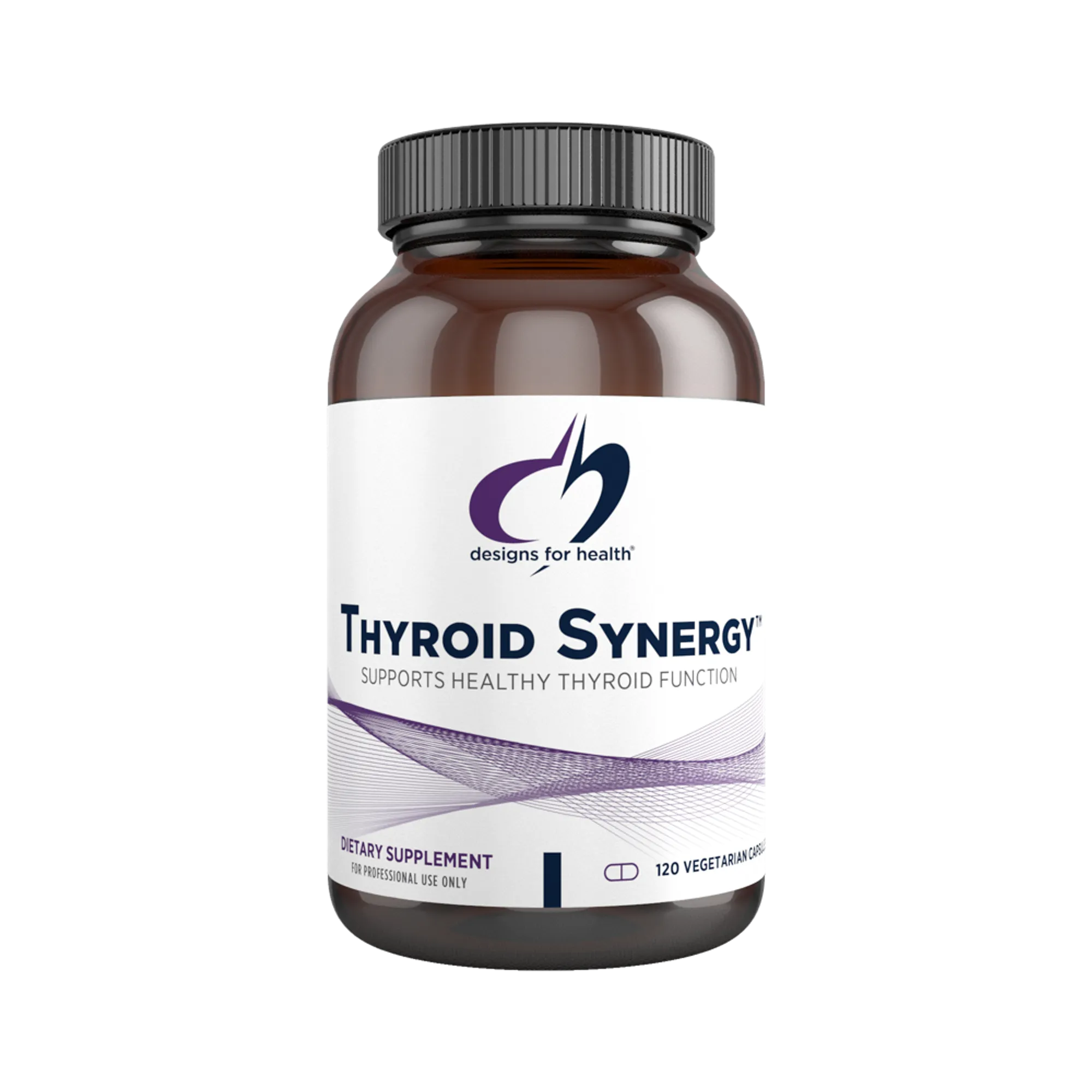
The thyroid gland acts as the master thermostat for cellular metabolism, dictating how efficiently every cell in your body converts oxygen and calories into usable energy (ATP). However, in the wake of severe physiological stress, chronic inflammation, or viral invasion, the delicate mechanisms that produce and convert thyroid hormones can become profoundly dysregulated. Thyroid Synergy™ by Designs for Health is a comprehensive nutritional formula designed to support these exact pathways. By combining essential structural minerals, enzymatic cofactors, and adaptogenic botanicals, this supplement aims to promote healthy thyroid hormone production, facilitate the crucial conversion of inactive hormones to active ones, and maintain a balanced stress response. In this article, we will explore the deep biochemical mechanisms behind these ingredients and how they may support metabolic health in the context of chronic illness.
TL;DR
Thyroid Synergy™ provides essential nutrients like iodine and selenium to support thyroid hormone production and metabolism.
Chronic illnesses like Long COVID can disrupt thyroid function, leading to fatigue and metabolic sluggishness.
Supplementing with targeted vitamins and adaptogens may help manage symptoms of cellular hypothyroidism and stress.
Always consult your healthcare provider before starting new supplements, especially if taking thyroid medications.
What is Thyroid Synergy™?
The Foundation of Metabolic Health
To understand how Thyroid Synergy™ works, we must first look at the natural function of the thyroid gland in a healthy body. Located at the base of your neck, the thyroid is a butterfly-shaped endocrine gland responsible for producing hormones that regulate metabolism, heart rate, body temperature, and cellular growth. The production of these hormones is controlled by the Hypothalamic-Pituitary-Thyroid (HPT) axis. When the body needs more energy, the hypothalamus releases Thyrotropin-Releasing Hormone (TRH), which signals the pituitary gland to release Thyroid-Stimulating Hormone (TSH). TSH then commands the thyroid gland to synthesize and release thyroid hormones into the bloodstream.
The two primary hormones produced by the thyroid are Thyroxine (T4) and Triiodothyronine (T3). T4 is considered a "prohormone"—it is relatively inactive and serves as a stable storage form of the hormone as it travels through the blood. T3, on the other hand, is the biologically active hormone that actually binds to cellular receptors to ignite metabolic processes. In a healthy system, the thyroid gland produces mostly T4 (about 80%) and a small amount of T3 (about 20%). The critical transformation of T4 into the active T3 occurs outside the thyroid gland, primarily in peripheral tissues like the liver, kidneys, and skeletal muscles, through a highly regulated enzymatic process called deiodination.
The Synergistic Blend of Nutrients
Thyroid Synergy™ is formulated to support every step of this complex metabolic assembly line. It provides the literal physical building blocks required to construct thyroid hormones, specifically Iodine and N-Acetyl-L-Tyrosine. Without these foundational elements, the thyroid gland simply cannot synthesize T4 or T3, regardless of how much TSH the brain produces. The formula also includes critical trace minerals like Selenium, Zinc, Copper, and Manganese. These minerals act as essential enzymatic cofactors, meaning they are the "spark plugs" that allow the enzymes responsible for converting T4 into active T3 to function efficiently at the cellular level.
Furthermore, the cellular receptors that receive active T3 and translate its signal into gene expression require specific structural components to operate. For example, thyroid hormone receptors inside the nucleus of your cells rely on "zinc finger" proteins to bind to DNA. By supplying a comprehensive array of these micronutrients, the supplement ensures that the entire lifecycle of the thyroid hormone—from initial synthesis in the gland to peripheral conversion in the liver, and finally to receptor activation inside the cell—is nutritionally supported.
Adaptogens for Endocrine Balance
Beyond basic vitamins and minerals, the formula incorporates targeted botanical extracts to address the broader endocrine environment. The thyroid does not operate in a vacuum; it is intimately connected to the adrenal glands and the body's stress response system, known as the Hypothalamic-Pituitary-Adrenal (HPA) axis. When the body is under chronic stress—whether from a viral infection, chronic pain, or systemic inflammation—the adrenal glands pump out high levels of cortisol. Elevated cortisol directly suppresses the HPT axis, lowering TSH production and inhibiting the conversion of T4 to T3.
To counteract this, the supplement includes American Ginseng (Panax quinquefolius), a non-stimulating adaptogen. Adaptogens are unique botanical compounds that help the body maintain homeostasis in the face of physiological stress. Unlike stimulants that force the body into overdrive, adaptogens work by modulating the HPA axis, helping to buffer the release of stress hormones and maintain healthy cortisol levels. Additionally, the inclusion of Forskolin Extract (Coleus forskohlii) provides a unique mechanism for supporting cellular signaling pathways that mimic the action of TSH, further encouraging the thyroid to maintain healthy hormone production even when the broader endocrine system is under duress.
How Chronic Illness Impacts Thyroid Function
The HPT Axis and Viral Disruption in Long COVID
The pathogenesis of thyroid dysfunction in Long COVID is multifactorial, involving both direct viral damage and indirect immune-mediated disruption. The SARS-CoV-2 virus gains entry into host cells via the Angiotensin-Converting Enzyme 2 (ACE2) receptor and the transmembrane protease serine 2 (TMPRSS2). Research has shown that thyroid follicular cells express ACE2 and TMPRSS2 at levels comparable to, or even higher than, human lung tissue. This allows the virus to directly invade the thyroid gland, causing structural damage, acute inflammation (thyroiditis), and the spilling of stored thyroid hormones into the bloodstream.
Following the acute infection, the lingering immune dysregulation characteristic of Long COVID continues to wreak havoc on the endocrine system. The persistent "cytokine storm"—particularly elevated levels of Interleukin-6 (IL-6) and IL-1β—suppresses the regular operations of the hypothalamus and pituitary gland. This systemic inflammation dampens the production of TRH and TSH, leading to a state of central hypothyroidism where the brain fails to adequately signal the thyroid to produce hormones. Furthermore, the hyper-inflammatory response can initiate or exacerbate autoimmune thyroid disorders, such as Hashimoto's thyroiditis, due to molecular mimicry, where the immune system confuses thyroid tissue with viral proteins.
Non-Thyroidal Illness Syndrome (NTIS) and ME/CFS
In conditions like myalgic encephalomyelitis/chronic fatigue syndrome (ME/CFS), standard thyroid panels (which predominantly look at TSH and T4) often appear "normal," masking deep, tissue-level cellular hypothyroidism. This phenomenon is closely related to Non-Thyroidal Illness Syndrome (NTIS), also known as Euthyroid Sick Syndrome. NTIS is an adaptive metabolic response to severe illness, trauma, or chronic infection. During prolonged critical illness, the body intentionally down-regulates the HPT axis to conserve energy—essentially putting the body into a metabolic "hibernation" state to survive the perceived threat.
Normally, as a patient heals from an acute illness, the endocrine system rebounds. However, in both Long COVID and ME/CFS, evidence suggests the body fails to exit this maladaptive survival state. The continuous presence of systemic inflammation, endothelial dysfunction, and mitochondrial redox imbalances prevents the neuroendocrine system from resetting. This perpetuates the classic symptoms of profound fatigue, cognitive impairment (brain fog), and post-exertional malaise (PEM) that define these complex chronic conditions.
The Vicious Cycle of High Reverse T3 (rT3)
One of the most significant biochemical disruptions in ME/CFS and Long COVID involves the peripheral conversion of thyroid hormones. Chronic low-grade inflammation alters the activity of the deiodinase enzymes responsible for converting inactive T4 into active T3. Instead of producing the energy-yielding T3, the inflamed body shunts T4 into producing Reverse T3 (rT3). Reverse T3 is an inactive isomer that acts as a competitive inhibitor; it physically blocks the thyroid receptors on your cells, preventing any available active T3 from binding and doing its job.
This creates a devastating vicious cycle. A landmark study comparing ME/CFS patients to healthy controls found that while TSH levels were identical between the groups, the ME/CFS patients had significantly lower levels of free T3 and a markedly higher percentage of reverse T3. The resulting cellular hypothyroidism impairs mitochondrial ATP energy production, which in turn impairs the body's ability to clear the very inflammation that is causing the deiodinase dysfunction in the first place. Patients are left locked in a state of metabolic insufficiency, feeling profoundly exhausted despite having "normal" lab results on basic thyroid screenings.
Thyroid Synergy™: Supporting Hormone Production and Conversion
Iodine and Tyrosine: The Structural Building Blocks
Thyroid Synergy™ supports the disrupted endocrine pathways by first providing the raw materials necessary for hormone synthesis. Iodine (100 mcg) is the physical backbone of thyroid hormones; T4 contains four iodine atoms, while active T3 contains three. Without adequate iodine, the thyroid gland cannot manufacture these hormones, leading to an enlarged gland (goiter) and systemic metabolic slowing. The formula utilizes Potassium Iodide, a highly bioavailable form that is readily absorbed by the sodium/iodide symporter (NIS) proteins in the thyroid follicular cells.
Coupled with iodine is N-Acetyl-L-Tyrosine (200 mg), a soluble derivative of the amino acid L-Tyrosine. Inside the thyroid gland, a large protein called thyroglobulin is synthesized, which is rich in tyrosine residues. An enzyme called Thyroid Peroxidase (TPO) oxidizes the incoming iodine and attaches it to these tyrosine molecules. Through a complex "phenol coupling" reaction, these iodinated tyrosine molecules are combined to form actual T4 and T3.
Selenium and Zinc: The Deiodinase Catalysts
Perhaps the most critical mechanism of action for this supplement lies in its ability to support peripheral hormone conversion. Selenium (50 mcg) is the catalytic core of the deiodinase enzymes (Types 1 and 2) that convert T4 to T3. These enzymes are actually "selenoproteins." Their active site contains a rare amino acid called selenocysteine, which performs the mechanical cleavage of the iodine atom off the T4 molecule.
Zinc (25 mg) operates synergistically with selenium. It acts as a vital enzymatic cofactor for the deiodinases, facilitating their optimal function in peripheral tissues like the liver. Furthermore, even if T4 is perfectly converted to T3, the active hormone cannot initiate metabolic action without zinc. The Thyroid Hormone Receptor (TR) inside the nucleus of your cells relies on "zinc finger" structural motifs—proteins that require zinc to fold correctly—to bind to DNA and initiate the transcription of metabolism-boosting genes.
Forskolin: Bypassing Receptors with cAMP
A unique and powerful addition to this formula is Forskolin Extract (50 mg), derived from the root of Coleus forskohlii. Forskolin has a fascinating cellular mechanism: it directly activates the enzyme adenylate cyclase, bypassing the need for a hormone receptor. Once activated, adenylate cyclase converts ATP into cyclic adenosine monophosphate (cAMP), a critical intracellular "second messenger." In the thyroid gland, the production and secretion of thyroid hormones are heavily dependent on the cAMP pathway. Because TSH normally uses cAMP to command the thyroid to work, forskolin effectively mimics the intracellular effects of TSH.
When forskolin elevates cAMP in thyroid cells, it triggers several vital steps: it increases the expression of iodine-pulling proteins, promotes the organification of iodine into thyroglobulin, and stimulates the rapid release of stored T3 and T4 into the bloodstream. This mechanism is particularly relevant for patients with dysautonomia or chronic illness where central pituitary signaling (TSH production) may be blunted by systemic inflammation. By acting directly on the cellular machinery, forskolin helps maintain thyroid output independent of upstream neuroendocrine disruptions.
American Ginseng: Modulating the HPA Axis
Finally, the inclusion of American Ginseng (200 mg) addresses the crucial intersection of the thyroid and the adrenal glands. American Ginseng (Panax quinquefolius) is a "cooling" adaptogen, meaning it calms the nervous system and restores balance without the stimulating effects of Asian Ginseng. Its primary active compounds, called ginsenosides, share a similar chemical structure to steroid hormones. This allows them to interact directly with glucocorticoid receptors, modulating the release of adrenocorticotropic hormone (ACTH) and helping to buffer the excessive secretion of cortisol during stressful events.
By buffering the Hypothalamic-Pituitary-Adrenal (HPA) axis, American Ginseng helps protect the body from the immunosuppressive and metabolism-halting effects of chronic high cortisol. By lowering the stress burden on the body, the HPT axis is freed from cortisol-induced suppression, allowing for normalized TSH signaling and improved peripheral T4 to T3 conversion.

Symptoms Thyroid Synergy™ May Help Manage
Targeting Metabolic and Endocrine Symptoms
By providing comprehensive support for thyroid hormone synthesis, peripheral conversion, and HPA axis modulation, the ingredients in Thyroid Synergy™ may help manage several debilitating symptoms associated with metabolic dysfunction in chronic illness:
Profound Fatigue and Lethargy: By supplying Selenium and Zinc to support the deiodinase enzymes, the formula promotes the conversion of inactive T4 into active T3. Active T3 is essential for mitochondrial ATP production, helping to restore cellular energy levels and help manage the deep, unyielding exhaustion seen in ME/CFS.
Brain Fog and Cognitive Impairment: The brain is highly dependent on active thyroid hormones for neurotransmitter synthesis and synaptic function. American Ginseng also helps modulate glutamatergic activity in the hippocampus, protecting brain cells from stress-induced excitotoxicity and supporting working memory.
Cold Intolerance: A classic sign of cellular hypothyroidism and high Reverse T3 (rT3) is the inability to regulate body temperature. By promoting healthy T3 levels, the supplement supports basal metabolic rate and thermogenesis.
Unexplained Weight Gain or Metabolic Sluggishness: Forskolin elevates intracellular cAMP, which not only mimics TSH to stimulate the thyroid but also signals adipose (fat) tissue to initiate lipolysis, supporting healthy lipid metabolism and body composition.
Stress Intolerance and "Wired but Tired" Sensations: The adaptogenic properties of American Ginseng help buffer the HPA axis, preventing excessive cortisol spikes. This can alleviate the feeling of being constantly on edge while simultaneously deeply fatigued, a common experience in dysautonomia and Long COVID.
Hair Thinning and Dry Skin: Thyroid hormones dictate the growth cycles of hair follicles and the turnover rate of epidermal cells. Providing foundational building blocks like Iodine and Tyrosine supports the structural integrity of these rapidly dividing tissues.
Practical Considerations: Forms, Dosing, and Absorption
Understanding Ingredient Bioavailability
When utilizing a comprehensive formula like Thyroid Synergy™, understanding the bioavailability of its components is crucial for maximizing therapeutic benefit. The supplement utilizes highly absorbable chelated minerals, specifically TRAACS® (The Real Amino Acid Chelate System) Copper Bisglycinate, Manganese Bisglycinate, and Chromium Nicotinate Glycinate. Chelation is a process where a mineral is chemically bound to an amino acid (like glycine). This allows the mineral to bypass the competitive absorption pathways in the gut that often block inorganic minerals, significantly increasing cellular uptake and reducing gastrointestinal distress.
The formula also uses Selenomethionine, an organic form of selenium where the mineral is naturally bound to the amino acid methionine. Additionally, the inclusion of N-Acetyl-L-Tyrosine (NALT) provides a highly water-soluble form of the amino acid precursor, ensuring it can easily dissolve in the digestive tract for rapid assimilation.
Optimal Timing and Absorption Strategies
The suggested use for Thyroid Synergy™ is to take two capsules per day with meals, or as directed by your healthcare practitioner. Taking the supplement with food is highly recommended for several reasons. First, the formula contains Vitamin A (as Retinyl Palmitate), which is a fat-soluble vitamin. Consuming the capsules alongside a meal that contains healthy dietary fats (such as avocado, olive oil, or nuts) will significantly enhance the intestinal absorption of the Vitamin A.
Second, taking the supplement with food helps buffer the stomach against potential mild nausea that can sometimes occur when taking concentrated zinc and copper on an empty stomach. Because the formula contains adaptogens like American Ginseng and metabolic stimulators like Forskolin, it is generally best to take the capsules in the morning or early afternoon. Taking them too late in the evening may promote an increase in cellular energy and metabolic rate that could potentially interfere with the onset of sleep, particularly in patients with pre-existing insomnia or dysautonomia-related sleep disturbances.
Contraindications and Safety Precautions
While the ingredients in Thyroid Synergy™ are generally well-tolerated, there are important safety considerations, particularly for patients with complex chronic illnesses. Individuals with hyperthyroidism or Graves' disease must exercise extreme caution. Because this formula provides the direct substrates (Iodine and Tyrosine) and stimulators (Forskolin) for thyroid hormone production, it can exacerbate an already overactive thyroid gland, potentially leading to dangerous increases in heart rate and anxiety.
Furthermore, patients currently taking prescription thyroid replacement medications (such as Levothyroxine/Synthroid or Liothyronine/Cytomel) should consult their prescribing physician before starting this supplement. The synergistic effect of the nutrients may improve peripheral T4 to T3 conversion, which could alter the required dosage of your prescription medication. Additionally, because Forskolin elevates cAMP and can cause mild systemic vasodilation, it may interact with anti-hypertensive medications (blood pressure lowerers) or blood thinners. Always discuss new supplements with your healthcare provider to ensure they fit safely within your comprehensive management plan.

Follow the Science
Clinical Evidence for Micronutrients in Thyroid Health
The scientific literature robustly supports the role of specific micronutrients in maintaining thyroid homeostasis, particularly in states of physiological stress.
Similarly, the role of zinc as an essential cofactor is well-documented.
Adaptogens and Stress Response Research
The adaptogenic properties of American Ginseng (Panax quinquefolius) have been extensively studied for their ability to modulate the HPA axis.
In human trials, the cognitive and immune benefits of American Ginseng are well-documented. A crossover study involving older adults demonstrated that supplementation with American ginseng resulted in significant improvements in working memory and reaction times compared to a placebo. Because chronic high cortisol is known to shrink brain volume and impair memory, the ability of ginsenosides to mitigate this neurotoxicity by improving cerebral blood flow and HPA axis stability offers a promising avenue for patients dealing with the severe cognitive dysfunction often seen in Long COVID.
Bridging the Gap in Chronic Illness Care
The emerging paradigm of "Prolonged Critical Illness" is helping researchers bridge the gap between acute viral infections and chronic conditions like ME/CFS. Leading researchers hypothesize that the continuous presence of autoantibodies, micro-clots, and mitochondrial redox imbalances prevents the neuroendocrine system from exiting its protective, down-regulated state. By supplying the precise metabolic cofactors (Selenium, Zinc, Iodine) and adaptogenic signals (Ginseng, Forskolin) needed to overcome this cellular hibernation, comprehensive formulas like Thyroid Synergy™ represent a targeted, science-backed approach to supporting the body's natural recovery mechanisms.
The Path Forward
Validating the Endocrine Struggle
Living with a complex chronic illness like Long COVID, ME/CFS, or dysautonomia often means navigating a medical system that relies heavily on standard, surface-level lab tests. When your TSH comes back "normal," but you are still experiencing debilitating fatigue, brain fog, and cold intolerance, it is easy to feel dismissed. It is vital to understand that your symptoms are valid and rooted in deep, cellular-level metabolic dysregulation. The failure of peripheral tissues to convert T4 into active T3, driven by chronic inflammation and HPA axis burnout, is a documented physiological reality, not a psychological failing.
A Comprehensive Approach to Healing
While the biochemical support provided by targeted nutrients is powerful, it is important to remember that there is no single "cure" for complex neuroimmune conditions. Thyroid Synergy™ should be viewed as one vital piece of a much larger, comprehensive management strategy. Restoring metabolic health requires a multifaceted approach that includes aggressive pacing to avoid post-exertional malaise (PEM), meticulous symptom tracking, nervous system regulation techniques, and ongoing collaboration with a medical team that understands the nuances of living with long-term COVID.
Next Steps
If you suspect that cellular hypothyroidism, high reverse T3, or HPA axis dysfunction is contributing to your chronic symptoms, consider discussing comprehensive thyroid support with your healthcare provider. They can help you run advanced thyroid panels (including Free T3, Reverse T3, and thyroid antibodies) to get a true picture of your metabolic health. By providing your body with the structural building blocks, enzymatic cofactors, and adaptogenic botanicals it desperately needs, you can take a proactive step toward supporting your cellular energy production and improving your overall quality of life.