Can Taurine Support Cardiovascular Health and Energy in Long COVID and ME/CFS?
March 5, 2026
TaurineLong COVIDME/CFS
Share:
Disclaimer: The information provided here is for educational purposes only and is not intended as medical advice. It should not be used to diagnose, treat, cure, or prevent any medical condition. Instead, use it as a starting point for discussion with your healthcare provider. Always consult with a qualified healthcare provider before starting any new medication, supplement, device, or making changes to your health regimen.
Months or even years after recovering from an initial SARS-CoV-2 infection, millions of people continue to fight debilitating, invisible symptoms with what we now call Long COVID. For those living with this condition, as well as those battling myalgic encephalomyelitis/chronic fatigue syndrome (ME/CFS) and dysautonomia, the daily reality is often defined by profound exhaustion, unpredictable heart palpitations, and severe cognitive dysfunction. But what exactly is happening at the cellular level that allows these symptoms to persist, and why do some patients experience such severe cardiovascular and metabolic crashes? Recent biomedical research is increasingly pointing toward the depletion of critical cellular building blocks, highlighting the profound impact that specific amino acids have on our body's ability to heal and regulate itself.
In the search for answers, one naturally occurring compound has emerged at the forefront of post-viral medical research: taurine. Long known for its role in cardiovascular health, recent clinical data has revealed that taurine is far more than just a simple nutrient; it is a fundamental regulator of mitochondrial energy, endothelial function, and autonomic nervous system stability. In fact, breakthrough studies have identified plasma taurine levels as a highly accurate biomarker for predicting the severity of Long COVID. By understanding how this vital amino acid interacts with our cellular pathways, patients and healthcare providers can better navigate the complex web of chronic illness. In this comprehensive guide, we will explore the science behind taurine, its mechanisms of action, and how targeted supplementation may support cardiovascular health and energy production in those living with complex chronic conditions.
TL;DR
Taurine is a vital amino acid supporting cardiovascular health, mitochondrial function, and cellular energy production.
Post-viral infections can deplete taurine levels, potentially worsening fatigue, endothelial damage, and autonomic dysfunction.
Supplementation may help manage symptoms like POTS, brain fog, and post-exertional malaise (PEM).
Recent research suggests plasma taurine levels could be a key biomarker for predicting Long COVID severity.
What is Taurine?
A Crucial Amino Acid for the Heart and Brain
Taurine (2-aminoethanesulfonic acid) is a conditionally essential, sulfur-containing amino acid that is highly abundant throughout the human body. Unlike most other amino acids, which act as the structural building blocks for protein synthesis, taurine exists almost entirely as a "free-form" amino acid. This means it floats freely within the intracellular fluid of our tissues, where it performs a myriad of critical regulatory functions. In a healthy, optimally functioning body, taurine is particularly vital to the cardiovascular system. Astonishingly, it accounts for 25% to 50% of the total free amino acid pool in the myocardium (the muscular tissue of the heart). It is also found in exceptionally high concentrations in the brain, the retina of the eye, and skeletal muscles, making it indispensable for both neurological and physical endurance.
Under normal physiological conditions, the human body can synthesize small amounts of taurine from other amino acids like cysteine and methionine, primarily in the liver. However, this endogenous production is often insufficient to meet the body's demands, especially during periods of severe biological stress, chronic inflammation, or post-viral recovery. When the body is subjected to the systemic shock of an acute infection like COVID-19, these vital intracellular taurine stores can become rapidly depleted. This depletion removes a critical buffer against oxidative stress, leading to cascading dysfunctions across multiple organ systems. Because taurine is so heavily concentrated in energy-demanding tissues, its absence is immediately felt in the form of cardiovascular instability and profound muscular fatigue.
Cellular Stabilization and Ion Transport
At the molecular level, taurine acts as a powerful electro-mechanical stabilizer for cellular membranes. Every cell in your body relies on a delicate balance of electrolytes to maintain its electrical resting membrane potential. Taurine facilitates the precise movement of vital ions—specifically sodium ($Na^+$), potassium ($K^+$), calcium ($Ca^{2+}$), and magnesium ($Mg^{2+}$)—into and out of cells. By interacting directly with the lipid bilayer of the cell membrane, taurine alters the surface charge, preventing sudden, abrupt ionic shifts that can lead to cellular misfiring. This electro-mechanical stabilization is absolutely crucial in the heart and the nervous system, where electrical precision dictates heart rhythm and nerve transmission.
One of taurine's most critical mechanisms of action is its ability to modulate intracellular calcium levels. During periods of cellular stress or ischemia (lack of oxygen), cells can experience a toxic influx of calcium. Taurine acts as a protective barrier by inhibiting voltage-dependent L-type calcium channels, preventing this calcium overload from triggering cell death. Conversely, when intracellular calcium is too low, taurine enhances the sodium-calcium exchanger (NCX), mildly increasing sodium to prompt the influx of calcium needed for the heart muscle to contract. Furthermore, taurine maintains healthy cyclic adenosine monophosphate (cAMP) activity. cAMP is a vital secondary messenger that activates Protein Kinase A (PKA), an enzyme essential for ensuring that the heart muscle contracts with optimal force and relaxes efficiently between beats.
Bile Acids and Detoxification
Beyond its profound effects on the heart and brain, taurine plays an indispensable role in the liver and the gastrointestinal tract. It is a primary and essential component of bile acids, specifically promoting the formation of a substance known as taurocholate. When we consume dietary fats, the liver secretes taurocholate into the gallbladder and intestines, where it acts much like a biological detergent. It emulsifies the fats, breaking them down into smaller, digestible droplets. This emulsification process is absolutely essential for the absorption of fat-soluble vitamins, including Vitamins A, D, E, and K. Without sufficient taurine to form these bile acids, the body cannot effectively absorb these critical nutrients, leading to secondary deficiencies that impair immune function, bone health, and antioxidant defense.
Additionally, taurine's role in bile acid formation is a cornerstone of the body's natural detoxification pathways. By supporting the secretion of cholesterol and other metabolic waste products into the bile, taurine helps the liver efficiently clear toxins from the bloodstream. It also supports lipid metabolism within the liver itself, preventing the toxic accumulation of fats that can lead to hepatic stress. In the context of complex chronic illnesses, where patients often struggle with sluggish detoxification pathways and heavy toxic burdens from chronic inflammation, maintaining adequate taurine levels is a vital step in supporting the liver's ability to filter and cleanse the body.
How Long COVID and ME/CFS Impact Cardiovascular and Cellular Health
Endothelial Dysfunction and Vascular Damage
In complex chronic conditions like Long COVID and myalgic encephalomyelitis/chronic fatigue syndrome (ME/CFS), the cardiovascular system is often under constant, invisible siege. One of the primary pathophysiological drivers of these illnesses is endothelial dysfunction—the severe impairment of the delicate inner lining of blood vessels. Following an acute SARS-CoV-2 infection, patients often harbor persistent viral fragments and circulating extracellular vesicles that create a highly oxidative and inflammatory environment in the bloodstream. Recent studies have demonstrated that these extracellular vesicles directly alter endothelial function, stripping the blood vessels of their protective mechanisms. This chronic oxidative stress damages the endothelial cells, drastically reducing their ability to produce nitric oxide, a crucial gas that signals blood vessels to relax and dilate.
When the endothelium fails to produce sufficient nitric oxide, patients experience widespread vascular constriction and increased arterial stiffness. This state of chronic vasoconstriction severely limits blood flow, preventing adequate oxygen and nutrients from reaching the brain, muscles, and vital organs. Furthermore, this damaged vascular environment promotes the formation of micro-clots, further obstructing capillary blood flow. Clinically, this endothelial dysfunction manifests as the profound fatigue, brain fog, and exercise intolerance that define post-viral syndromes. The depletion of taurine, which normally protects the endothelium from oxidative damage, leaves the vascular system entirely vulnerable to this inflammatory cascade. You can learn more about the vascular implications of post-viral illness in our comprehensive guide on What Causes Long COVID?.
Mitochondrial Failure and the WASF3 Protein
The profound exhaustion and post-exertional malaise (PEM) experienced by patients with ME/CFS and Long COVID are deeply rooted in mitochondrial dysfunction. Mitochondria are the microscopic powerhouses of our cells, responsible for generating adenosine triphosphate (ATP)—the fundamental currency of cellular energy—through a complex biochemical process called the electron transport chain (ETC). In a healthy state, electrons flow smoothly through four structural supercomplexes in the mitochondria to produce ATP. However, in patients with ME/CFS and Long COVID, this metabolic machinery is severely compromised. Untargeted metabolomic profiles of ME/CFS patients consistently reveal a "hypometabolic" state, akin to a cellular hibernation response to overwhelming biological stress, where the production of ATP grinds to a halt.
Breakthrough research published by the NIH has revealed a specific mechanism behind this energy failure: patients with ME/CFS often have abnormally high levels of a protein called WASF3, which is triggered by chronic endoplasmic reticulum (ER) stress. The overexpression of this WASF3 protein physically disrupts the formation of mitochondrial supercomplexes, specifically blocking the critical transfer of electrons between Complex III and Complex IV. This disruption not only halts ATP production but also causes electrons to leak out of the chain. These leaked electrons generate massive amounts of destructive superoxide radicals (oxidative stress), which further damage the cell and perpetuate the cycle of fatigue. Without sufficient intracellular taurine to buffer this ER stress and support mitochondrial protein translation, the cell remains trapped in this energy-depleted state.
Autonomic Nervous System Dysregulation (POTS)
Many individuals living with Long COVID and ME/CFS also develop severe forms of dysautonomia, most notably Postural Orthostatic Tachycardia Syndrome (POTS). This condition is characterized by a profound dysfunction of the autonomic nervous system, leading to rapid heart rates (tachycardia), palpitations, dizziness, and pre-syncope upon standing. The chronic neuroinflammation seen in post-viral conditions can dysregulate the paraventricular nucleus (PVN) in the hypothalamus of the brain. This localized inflammation throws the sympathetic nervous system—the body's "fight or flight" response—into chronic overdrive. Patients are left in a constant state of adrenaline-fueled hyperarousal, which places immense strain on the heart muscle and the vascular system.
Furthermore, patients with POTS and dysautonomia frequently struggle with chronic hypovolemia (low blood volume) and poor cellular hydration. When the delicate intracellular balance of electrolytes is disrupted, the body loses its mechanical ability to effectively manage blood pressure and heart rhythm. Taurine is a primary osmoregulator in the body, meaning it controls the flow of water and electrolytes across cell membranes. When taurine levels are depleted due to chronic illness, the cells cannot retain the necessary potassium and magnesium required for electrical stability, nor can they keep excess sodium out. This loss of cellular homeostasis traps patients in a vicious cycle of cardiovascular instability, making even simple tasks like standing up or walking across a room feel like running a marathon.
Taurine: Supporting Cardiovascular Function and Energy Production
Modulating Calcium Channels and Heart Contractility
Taurine supplementation offers a highly targeted, mechanistic approach to supporting the cardiovascular system, particularly for those battling the unpredictable cardiac symptoms of dysautonomia and POTS. At the cellular level, taurine exerts a profound, dual-protective effect on intracellular calcium homeostasis. Inside the cardiomyocyte (heart muscle cell), calcium is stored in a structure called the sarcoplasmic reticulum. The reuptake of calcium into this structure allows the heart to relax between beats, a process driven by the SERCA2a pump. This pump is regulated by a critical protein called phospholamban. Research indicates that a healthy SERCA2a/phospholamban ratio is critical for clearing calcium efficiently, a process that taurine is thought to support. By ensuring this pump clears calcium efficiently, taurine enhances diastolic function, allowing the heart to relax fully and stabilizing erratic heart rhythms.
Additionally, taurine actively upregulates the cAMP-dependent PKA-CREB (Protein Kinase A–cAMP Response Element-Binding protein) pathway. By boosting this specific secondary messenger pathway, taurine exerts potent anti-trophic effects, meaning it directly blocks the pathological remodeling and enlargement (hypertrophy) of the heart muscle that can occur under chronic stress or high blood pressure. By acting as an electro-mechanical stabilizer that depresses fast sodium currents and prevents toxic calcium overload, taurine acts as a natural antiarrhythmic agent. For patients experiencing the terrifying palpitations and premature ventricular contractions (PVCs) associated with dysautonomia, restoring taurine levels provides the heart with the biochemical tools it needs to maintain a steady, calm, and forceful rhythm.
Restoring Endothelial Health and Nitric Oxide
To combat the severe vascular damage and micro-clotting seen in Long COVID, taurine acts as a potent, systemic endothelial protectant. Clinical studies demonstrate that taurine actively upregulates the expression and activity of endothelial nitric oxide synthase (eNOS), specifically increasing phosphorylation at the Ser1177 site. This enzymatic activation drastically increases the bioavailability of both nitric oxide (NO) and hydrogen sulfide (H2S) in the bloodstream. These vital signaling gases communicate directly with the smooth muscles surrounding the arterial walls, instructing them to relax. This process, known as vasodilation, immediately improves arterial flexibility, lowers systemic blood pressure, and restores healthy blood flow to oxygen-starved tissues in the brain and skeletal muscles.
Furthermore, taurine possesses powerful anti-thrombotic (anti-clotting) properties that are highly relevant to the micro-vascular complications of Long COVID. Taurine is naturally found in blood platelets at concentrations six times higher than any other amino acid. Inside the platelet, taurine works synergistically with cAMP to inhibit the sudden intracellular calcium spikes that trigger platelet activation. By preventing the release of alpha granules and decreasing thromboxane A2 production, taurine is thought to suppress abnormal platelet aggregation. This means it helps keep the blood flowing smoothly, reducing the risk of the microscopic clots that are theorized to drive much of the chronic tissue hypoxia and fatigue in post-viral syndromes.
Protecting Mitochondrial Supercomplexes
Taurine's indispensable role in cellular energy production makes it a critical nutrient for managing the debilitating fatigue and post-exertional malaise of ME/CFS. While it does not act purely as a traditional free-radical scavenger like Vitamin C, taurine is absolutely essential for the structural integrity of the mitochondria. Inside the mitochondrial matrix, taurine conjugates with mitochondrial transfer RNAs (tRNAs). This conjugation is a non-negotiable step for the accurate translation of the specific proteins required to build the electron transport chain (ETC). Without taurine, the mitochondria cannot assemble Complex I or Complex IV correctly, leading to immediate electron leakage, massive oxidative stress, and a catastrophic drop in ATP production.
By restoring intracellular taurine levels, patients can support the physical reconstruction of these mitochondrial supercomplexes. Furthermore, pre-clinical pharmacological models suggest that taurine is highly effective at alleviating the endoplasmic reticulum (ER) stress that drives the overproduction of the detrimental WASF3 protein in ME/CFS patients. By buffering this cellular stress, preserving reduced glutathione (GSH) levels, and drastically reducing lipid peroxidation markers like malondialdehyde (MDA), taurine helps protect the delicate mitochondrial machinery from destroying itself. This comprehensive metabolic support is vital for restoring efficient ATP output, thereby raising the patient's baseline energy levels and increasing their threshold for physical and cognitive exertion.
Symptoms Taurine May Help Manage
Targeted Symptom Relief
Cardiovascular Palpitations and Tachycardia: By modulating voltage-dependent calcium and potassium ion channels, and by soothing sympathetic nervous system overactivity, taurine helps stabilize electrical signaling in the heart. This can significantly reduce the rapid heart rates, premature ventricular contractions (PVCs), and pounding palpitations frequently experienced by patients with dysautonomia and POTS.
Profound Fatigue and Low Energy: Taurine supports the structural integrity of mitochondrial supercomplexes by conjugating with mitochondrial tRNAs. This ensures the proper translation of electron transport chain proteins, optimizing ATP (cellular energy) production and actively combating the metabolic derangement that drives chronic, unyielding fatigue.
Brain Fog and Neurocognitive Issues: Operating as an inhibitory neuromodulator in the central nervous system, taurine helps protect the integrity of the blood-brain barrier. It actively downregulates pro-inflammatory cytokines (like TNF-α and IL-6), mitigating the microglial activation and neuroinflammation that contribute to severe cognitive dysfunction, memory loss, and sensory hypersensitivity.
Exercise Intolerance and PEM: By reducing lactic acid buildup, buffering oxidative stress (lipid peroxidation) in skeletal muscles, and supporting healthy vasodilation for better tissue oxygenation, taurine may help increase the cellular threshold for physical exertion. This metabolic buffering can reduce the severity and duration of post-exertional malaise (PEM) crashes.
Digestive Issues and Malabsorption: As a primary and essential component of bile acids (forming taurocholate), taurine promotes the efficient emulsification and breakdown of dietary fats. This ensures the proper absorption of crucial fat-soluble vitamins (A, D, E, K) and supports overall gastrointestinal health and liver detoxification pathways, which are often sluggish in chronic illness.
Practical Considerations: Forms, Dosing, and Absorption
Bioavailability and Optimal Absorption
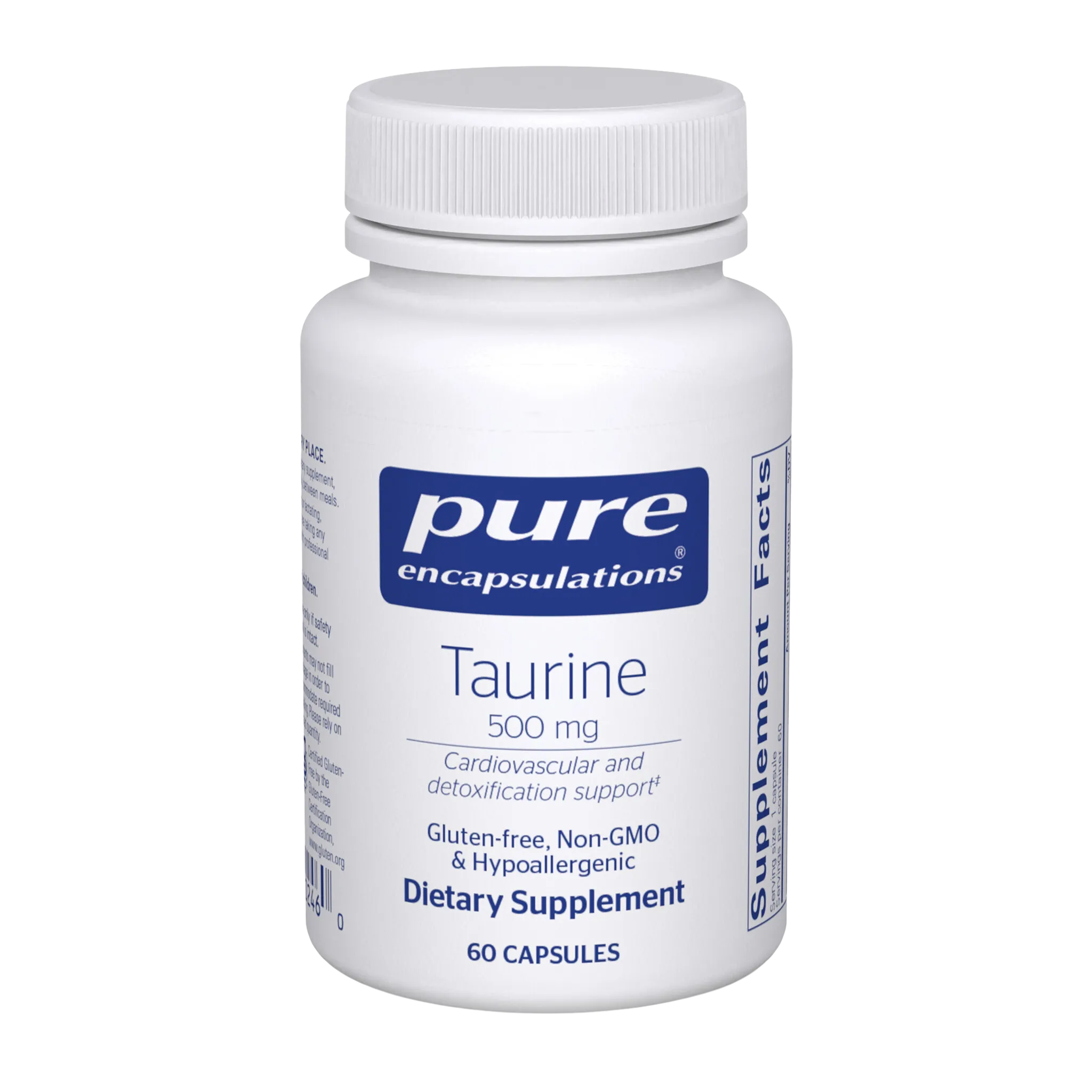
When considering supplementation, the specific form of the amino acid plays a major role in its clinical efficacy. The free-form version of taurine—such as that found in Taurine 500 mg by Pure Encapsulations—is highly bioavailable and rapidly absorbed by the human gastrointestinal tract. Clinical pharmacokinetic studies demonstrate that oral taurine has near 100% bioavailability. Once ingested, it utilizes a specific, dedicated transport protein known as the taurine transporter (SLC6A6) to cross the intestinal barrier and enter the systemic bloodstream. Because it does not need to be cleaved from a larger protein molecule, plasma concentrations of free-form taurine begin to rise within just 10 minutes of ingestion.
To maximize this absorption rate and ensure the supplement reaches the tissues that need it most, it is highly recommended to take taurine on an empty stomach, or strictly between meals. If taken alongside a heavy, protein-rich meal, taurine must compete with other dietary amino acids for access to the intestinal transporters, which can significantly blunt its uptake. When taken correctly on an empty stomach, the supplement typically reaches its maximum plasma concentration (Cmax) within 1.5 to 2.5 hours. Understanding this timeline is an important practical consideration for patients utilizing taurine to support specific daily activities, such as taking a dose an hour before necessary physical exertion or physical therapy to ensure peak mitochondrial support during the activity.
Dosing Guidelines
Because taurine is a naturally occurring compound that the body is accustomed to processing, it possesses a remarkably wide therapeutic window. In robust clinical trials evaluating cardiovascular health, blood pressure regulation, and metabolic function, effective dosages generally range from 500 mg to 3,000 mg (3 grams) per day. For patients managing the complexities of Long COVID, ME/CFS, or dysautonomia, a common and well-tolerated clinical approach is to start with a conservative dose, such as one 500 mg capsule daily, to assess individual tolerance. From there, patients can gradually increase the dosage to 1 to 4 capsules daily (500 mg to 2,000 mg), divided evenly throughout the day based on symptom severity and medical guidance.
The rationale for dividing the doses lies in taurine's specific pharmacokinetic profile. The human body clears taurine relatively quickly; it has a short plasma elimination half-life of approximately 1 to 1.5 hours, and elevated blood levels typically return to baseline within 6 to 8 hours post-ingestion. By dividing the total daily amount into smaller doses (for example, taking one capsule in the morning, one in the afternoon, and one in the early evening), patients can maintain stable, elevated blood levels throughout their waking hours. This steady-state approach provides consistent, round-the-clock support for the autonomic nervous system, continuous endothelial protection, and sustained mitochondrial energy output. As always, it is imperative to consult with a healthcare provider to determine the optimal, personalized dosage for your specific metabolic needs.
Safety and Potential Interactions
Taurine is widely recognized by global health authorities as exceptionally safe, with a highly favorable toxicological profile. Major regulatory bodies, including the European Food Safety Authority (EFSA), note that doses up to 6 grams per day are generally well-tolerated in humans without significant adverse effects. However, because taurine is a biologically active compound that actively influences physiological pathways, it can interact with certain prescription medications. Taurine acts as a mild inhibitor of cytochrome P450 enzymes in the liver. This means it could potentially slow down the liver's ability to metabolize certain drugs, potentially raising the blood levels of specific antidepressants, antiepileptic drugs, statins, and blood thinners like warfarin.
Additionally, patients must be mindful of taurine's potent cardiovascular effects. Because taurine naturally promotes vasodilation and actively lowers blood pressure, it can have an additive, compounding effect when taken alongside prescription antihypertensive medications. If you are taking ACE inhibitors, calcium channel blockers, or beta-blockers, combining them with high doses of taurine could potentially cause your blood pressure to drop too low (hypotension). Furthermore, patients with pre-existing kidney dysfunction or those taking lithium should exercise caution, as taurine's mild diuretic effect can alter the clearance rates of these drugs, potentially leading to lithium accumulation. Always disclose all supplements to your prescribing physician to ensure safe and effective integration into your care plan.
Follow the Science
Taurine as a Biomarker for Long COVID Severity
Recent breakthrough research has fundamentally shifted our understanding of taurine, positioning it not just as a supportive dietary supplement, but as a critical, predictive biomarker for post-viral illness. A landmark 2024 study conducted by researchers at the University of Alberta analyzed the blood plasma of 117 patients recovering from acute COVID-19, tracking their clinical outcomes over 18 months. Utilizing advanced machine learning models analyzing 20 different molecules, the research team discovered that plasma taurine levels were the single most accurate predictor of Long COVID severity, forecasting adverse clinical outcomes with 83% accuracy.
The data points from this study are striking. Patients who experienced a trajectory of lower plasma taurine levels suffered significantly higher symptom burdens, experienced more frequent hospitalizations, and faced a higher risk of mortality. Conversely, patients whose blood taurine levels naturally recovered between the acute infection phase and the convalescence phase experienced far fewer ongoing Long COVID symptoms, yielding a remarkable hazard ratio of 0.13 for adverse clinical events. This robust, multivariate analysis strongly suggests that systemic taurine depletion is a primary, driving force behind the prolonged physiological breakdown, severe fatigue, and endothelial dysfunction seen in post-COVID conditions.
Cardiovascular Meta-Analyses and Blood Pressure
The profound cardiovascular benefits of taurine have been rigorously validated by a wave of recent large-scale meta-analyses published in 2023 and 2024. A comprehensive review published in Nutrition & Diabetes analyzed 25 randomized controlled trials involving over 1,000 participants at risk for metabolic syndrome. The researchers concluded that taurine supplementation significantly reduced both Systolic Blood Pressure (by an average of -4.0 mmHg) and Diastolic Blood Pressure (-1.5 mmHg). Furthermore, it improved fasting blood glucose and triglyceride levels without causing any adverse side effects compared to a placebo, demonstrating a clear, dose-dependent benefit for metabolic health.
Another pooled analysis evaluating cardiac hemodynamics across 20 RCTs found that taurine significantly lowered resting heart rates by nearly 4 beats per minute and improved Left Ventricular Ejection Fraction (LVEF) by almost 5%. This indicates a notable, measurable enhancement in the heart's structural ability to pump blood efficiently. These findings underscore taurine's potent ability to modulate endothelial function and support cardiac contractility, which is particularly relevant for patients navigating the cardiovascular complexities of conditions like POTS. For more context on managing metabolic risks alongside post-viral illness, consider reading our detailed article on Diabetes and Long COVID: A Pandemic Within a Pandemic.
Ongoing Clinical Trials for Post-Viral Illness
The compelling observational data regarding taurine depletion has catalyzed active, high-level clinical investigations into its therapeutic potential for chronic illness. Currently, a major Phase II clinical trial (NCT06721949) sponsored by York University and the Long COVID Web in Canada is evaluating the direct efficacy of targeted taurine supplementation for prolonged post-COVID symptoms. In this rigorous study, participants receive 675 mg of taurine twice daily for 12 weeks.
The trial is specifically designed to measure whether taurine supplementation can physically enhance vascular function and improve orthostatic responses—the body's ability to regulate heart rate and blood pressure when changing posture, which is the exact autonomic mechanism that fails in dysautonomia and POTS. As researchers utilize advanced EndoPAT and ultrasound technologies to assess brain and heart responses before and after the intervention, the medical community is highly optimistic. These ongoing trials aim to definitively establish taurine as a vital, evidence-based, and accessible intervention for restoring autonomic and endothelial stability in post-viral syndromes.
The Path Forward
Validating the Chronic Illness Experience
Living with a complex chronic condition like Long COVID, ME/CFS, or dysautonomia often feels like navigating a dark labyrinth without a map. The profound, leaden fatigue, the unpredictable and terrifying heart palpitations, and the debilitating brain fog are not just "in your head"—they are the direct result of measurable, physiological disruptions occurring at the deepest cellular levels. When your mitochondria struggle to produce basic energy and your blood vessels lose their ability to regulate oxygen flow, every single aspect of daily life becomes a monumental challenge. It is completely valid to feel exhausted and frustrated by a medical system that often lacks immediate, definitive answers for invisible illnesses.
However, as biomedical research into biomarkers like taurine continues to accelerate at an unprecedented pace, we are gaining a much clearer, scientifically grounded understanding of the exact biochemical pathways that are failing—and more importantly, how to support them. You are not alone in this journey, and understanding the hard science behind your symptoms is a powerful first step toward reclaiming your agency and your quality of life. For more insights on navigating the emotional and practical realities of this journey, explore our compassionate guide on How Can You Live with Long-Term COVID.
Integrating Taurine into Your Care Plan
While no single supplement or medication is a magic cure-all for complex chronic illnesses, targeted nutritional support can be a highly effective component of a comprehensive symptom management strategy. By actively addressing endothelial inflammation, supporting the structural integrity of mitochondrial supercomplexes, and providing vital electro-mechanical stability to your heart cells, taurine offers a scientifically validated approach to managing cardiovascular and energy-related symptoms. When combined with careful symptom tracking, radical pacing to avoid PEM, and personalized medical care, restoring depleted amino acids can help rebuild your body's foundational resilience from the inside out.
If you are struggling with the cardiovascular, autonomic, and metabolic impacts of post-viral illness, Explore Taurine to see if this highly bioavailable, free-form amino acid is the right addition to your protocol. Always remember to consult with your primary healthcare provider or specialist before starting any new supplement to ensure it aligns safely with your current medications, lab results, and long-term treatment goals.