Can Vitamin C and Bioflavonoids Support Immune and Vascular Health in Long COVID and POTS?
March 6, 2026
Vitamin CLong COVIDPOTS
Share:
Disclaimer: The information provided here is for educational purposes only and is not intended as medical advice. It should not be used to diagnose, treat, cure, or prevent any medical condition. Instead, use it as a starting point for discussion with your healthcare provider. Always consult with a qualified healthcare provider before starting any new medication, supplement, device, or making changes to your health regimen.
Months, and sometimes years, after an acute viral infection, many individuals find themselves battling a relentless array of symptoms—debilitating fatigue, racing heart rates upon standing, unpredictable allergic reactions, and profound brain fog. For patients navigating complex chronic conditions like Long COVID, myalgic encephalomyelitis/chronic fatigue syndrome (ME/CFS), postural orthostatic tachycardia syndrome (POTS), and mast cell activation syndrome (MCAS), the search for underlying mechanisms often points to a few common culprits: severe oxidative stress, endothelial dysfunction, and immune dysregulation. When the body is locked in a chronic inflammatory state, its natural reserves of essential antioxidants and cellular protectors are rapidly depleted, leaving tissues vulnerable to ongoing damage.
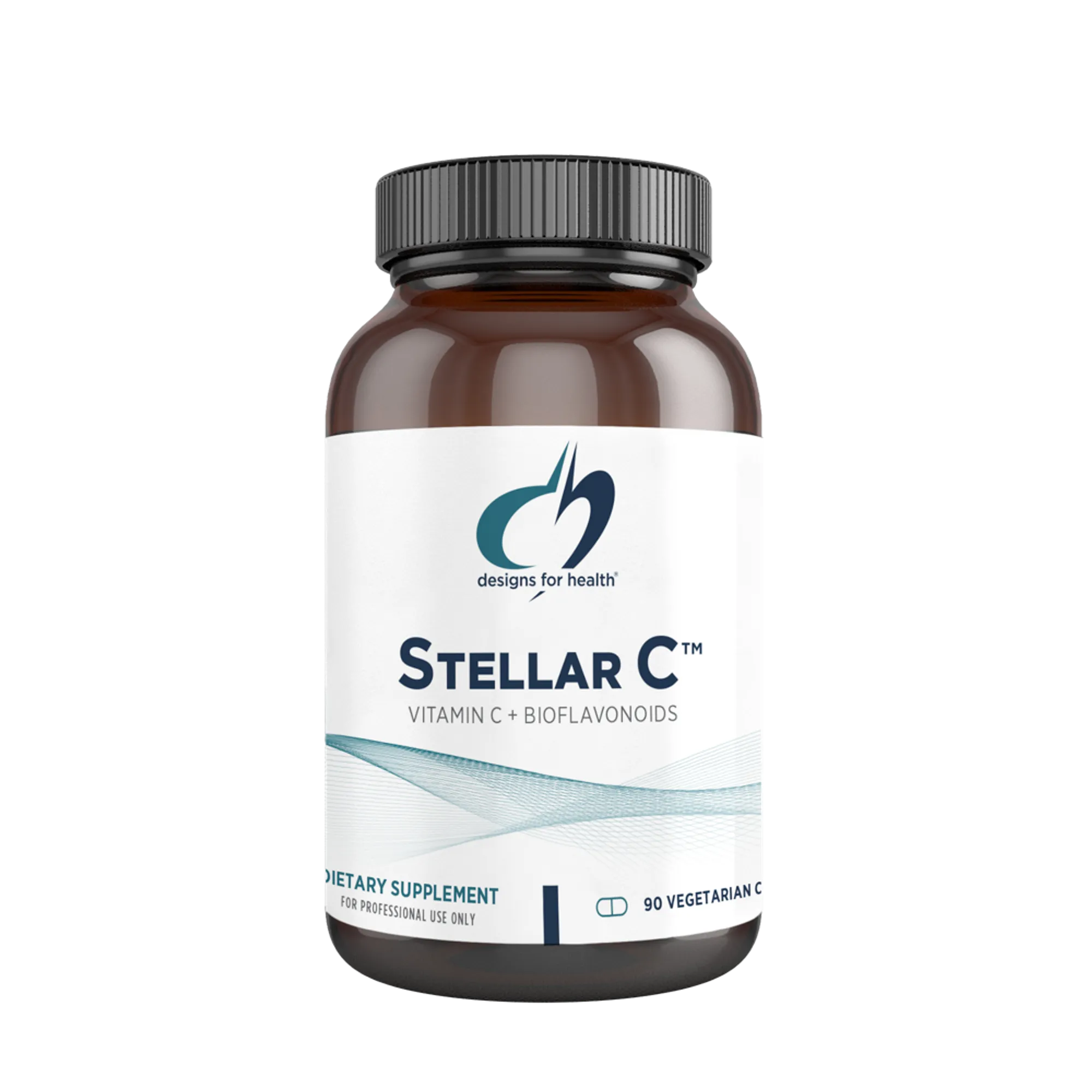
In the pursuit of restoring balance, targeting these foundational physiological processes is critical. Stellar C™ by Designs for Health offers a comprehensive, science-backed blend of ascorbic acid, natural acerola fruit, and potent plant bioflavonoids including quercetin, rutin, and hesperidin. Far more than a standard immune support supplement, this specific combination of nutrients acts synergistically to support blood vessel integrity, stabilize hyperactive immune cells, and neutralize the free radicals that drive post-viral fatigue. By understanding the intricate biochemistry of how these compounds interact with our vascular and immune systems, patients and practitioners can better utilize them as part of a holistic management strategy for complex chronic illness.
TL;DR
Stellar C™ combines Vitamin C and bioflavonoids to support vascular and immune health in complex chronic conditions.
Vitamin C neutralizes oxidative stress and supports endothelial function, which may help reduce fatigue and brain fog.
Quercetin acts as a natural mast cell stabilizer, helping to manage histamine overload and allergic-like flares.
Rutin and hesperidin support capillary integrity and venous tone, potentially aiding patients with POTS and blood pooling.
What is Stellar C™?
The Power of Synergistic Antioxidants
At its core, Stellar C™ is a sophisticated antioxidant formulation designed to mimic the complex nutrient matrices found in nature. In a healthy human body, Vitamin C (ascorbic acid) is a vital, water-soluble nutrient that serves as a primary electron donor. Because humans lack the enzyme L-gulono-gamma-lactone oxidase, we cannot synthesize Vitamin C internally and must obtain it entirely through diet or supplementation. At the molecular level, Vitamin C circulates through the bloodstream and intracellular fluids, actively seeking out and neutralizing reactive oxygen species (ROS)—highly unstable molecules that cause oxidative damage to cellular DNA, proteins, and lipid membranes. By donating an electron to these free radicals, Vitamin C halts the destructive chain reactions of oxidative stress that naturally occur during metabolism and immune responses.
However, Vitamin C rarely works alone in nature. In whole foods, it is almost always accompanied by plant bioflavonoids—a diverse class of polyphenolic compounds that give fruits and vegetables their vibrant colors. Stellar C™ incorporates a specific matrix of these bioflavonoids, including quercetin, rutin, and hesperidin. These compounds act as powerful synergistic partners to ascorbic acid. They not only possess their own distinct antioxidant and anti-inflammatory properties, but they also protect Vitamin C from premature oxidation, effectively extending its half-life and recycling it within the body. This synergy ensures that the antioxidant defense system remains robust, providing sustained protection against cellular damage.
Acerola: A Natural Vitamin C Powerhouse
One of the defining features of this formulation is the inclusion of Acerola (Malpighia glabra L.) fruit extract. Acerola cherries are widely recognized as one of the most concentrated natural sources of ascorbic acid in the world, containing up to 50 to 100 times more Vitamin C than oranges or lemons by weight. Beyond its sheer concentration of ascorbic acid, acerola provides a rich, whole-food matrix of phytonutrients, including anthocyanins, phenolic acids, and trace minerals. This natural biological packaging is crucial because it enhances the bioavailability and cellular uptake of the Vitamin C, allowing the body to utilize it more efficiently than isolated, synthetic ascorbic acid alone.
The biochemical advantage of utilizing a whole-food source like acerola lies in its complex enzymatic cofactors. When Vitamin C enters the digestive tract bound to these natural cofactors, it is recognized and transported across the intestinal epithelium with greater ease. Once in the bloodstream, the phytonutrients from the acerola fruit continue to support the physiological functions of Vitamin C, particularly in the synthesis of structural proteins. This makes acerola an invaluable ingredient for patients who require high-level antioxidant support but may struggle with the absorption or gastrointestinal tolerance of purely synthetic, high-dose ascorbic acid supplements.
The Role of Bioflavonoids in Structural Integrity
Beyond their antioxidant capabilities, the bioflavonoids in Stellar C™—specifically rutin and hesperidin—play an essential, structural role in the human body. These specific compounds are classified in pharmacological literature as venoactive agents or phlebotonics. In a healthy circulatory system, the inner lining of the blood vessels (the endothelium) and the microscopic capillary beds must maintain a delicate balance of permeability. They must be porous enough to allow oxygen and nutrients to pass into the tissues, but tight enough to keep blood plasma and large proteins inside the circulatory loop. Rutin and hesperidin actively support the structural integrity of these capillary walls by reinforcing the connective tissue matrix and protecting the endothelial cells from inflammatory degradation.
Furthermore, Vitamin C is an absolute, non-negotiable requirement for the biosynthesis of collagen, the most abundant structural protein in the human body. Collagen forms the scaffolding for our skin, bones, tendons, and, crucially, our blood vessels. At the cellular level, Vitamin C acts as an essential cofactor for the enzymes prolyl hydroxylase and lysyl hydroxylase. These enzymes are responsible for adding hydroxyl groups to the amino acids proline and lysine, a process that allows collagen molecules to cross-link and form strong, stable triple-helix structures. Without adequate Vitamin C and the supporting bioflavonoids to protect it, collagen production falters, leading to weak, fragile blood vessels and degraded connective tissues.
How Chronic Illness Impacts the Vascular and Immune Systems
Oxidative Stress and Endothelial Dysfunction
In complex chronic illnesses such as Long COVID and myalgic encephalomyelitis/chronic fatigue syndrome (ME/CFS), the body's baseline physiology is severely disrupted by an ongoing, vicious cycle of inflammation. Following an acute viral infection like SARS-CoV-2, the immune system often fails to return to a baseline state of rest. Instead, it continues to produce a massive amount of reactive oxygen species (ROS) and pro-inflammatory cytokines. This systemic oxidative stress rapidly depletes the body's natural antioxidant reserves, including its stores of Vitamin C. As research published in Pharmacological Research highlights, this severe redox imbalance is a primary driver of the persistent, debilitating fatigue seen in Long COVID patients.
One of the most devastating consequences of this unchecked oxidative stress is endothelial dysfunction. The endothelium is the delicate, single-cell-thick lining of our blood vessels. In a healthy state, endothelial cells produce Nitric Oxide (NO), a signaling molecule that tells the blood vessels to relax (vasodilation), ensuring smooth, efficient blood flow and oxygen delivery to the brain and muscles. However, the SARS-CoV-2 virus and the resulting inflammatory storm directly damage these endothelial cells. The excess free radicals scavenge and destroy Nitric Oxide before it can do its job, leading to constricted, stiff blood vessels, micro-clotting, and severe tissue hypoxia (lack of oxygen). This vascular failure is a major reason why Long COVID patients experience profound exercise intolerance, shortness of breath, and brain fog.
The Mast Cell Connection and Histamine Overload
Another critical piece of the chronic illness puzzle is the dysregulation of the immune system's mast cells. Mast cells are the body's first responders, stationed in tissues throughout the body, particularly in the gut, skin, and respiratory tract. They contain granules filled with potent chemical mediators, including histamine, tryptase, and various cytokines. In a healthy immune response, mast cells release these chemicals to fight off pathogens or heal injuries. However, in conditions like mast cell activation syndrome (MCAS)—which frequently co-occurs with Long COVID and dysautonomia—these cells become hyper-sensitized and unstable. They begin to degranulate (break open) inappropriately in response to harmless triggers like food, temperature changes, or mild physical exertion.
When mast cells constantly flood the bloodstream with histamine and inflammatory cytokines, it creates a state of systemic chaos. High levels of histamine cause profound vasodilation and increased capillary permeability, leading to sudden drops in blood pressure, flushing, hives, and gastrointestinal distress. Furthermore, the release of the enzyme tryptase from mast cells actively degrades connective tissue and fascia. This creates a devastating feedback loop for patients who also suffer from hypermobility spectrum disorders or Ehlers-Danlos Syndrome (EDS), as the mast cell-driven inflammation further weakens their already fragile connective tissues and blood vessels.
Connective Tissue Laxity and Capillary Leakage
For patients living with dysautonomia and postural orthostatic tachycardia syndrome (POTS), the structural integrity of the vascular system is a central point of failure. POTS is characterized by an inability of the autonomic nervous system to properly regulate blood flow when a person stands up. Normally, gravity pulls blood down into the legs and abdomen, and the nervous system immediately signals the veins to constrict, pushing the blood back up to the heart and brain. In POTS, this venoconstriction is impaired, leading to severe venous pooling in the lower extremities. The heart then races (tachycardia) in a desperate attempt to compensate for the lack of returning blood volume.
This mechanical failure is heavily exacerbated by capillary permeability, or "leaky blood vessels." In many POTS patients, particularly those with comorbid connective tissue disorders, the capillary walls lack the structural density required to hold fluid inside the circulatory system. As blood pools in the legs, the increased hydrostatic pressure forces plasma to leak out of the capillaries and into the surrounding tissues, causing dependent edema (swelling). This capillary leakage physically removes fluid from the active bloodstream, worsening the state of central hypovolemia (low blood volume) and forcing the heart to work even harder to keep the patient from fainting.
Stellar C™: Supporting Vascular, Immune, and Cellular Function
Restoring Endothelial Nitric Oxide with Vitamin C
Supplementing with the comprehensive nutrient matrix in Stellar C™ provides targeted support for the physiological pathways disrupted by chronic illness. For patients battling the endothelial dysfunction of Long COVID and ME/CFS, high-dose Vitamin C acts as a crucial vascular restorer. At the cellular level, the enzyme responsible for producing Nitric Oxide—endothelial nitric oxide synthase (eNOS)—requires a specific co-factor called tetrahydrobiopterin (BH4) to function properly. In a state of high oxidative stress, BH4 is rapidly oxidized and destroyed, causing eNOS to malfunction and produce even more destructive free radicals instead of Nitric Oxide.
Vitamin C directly intervenes in this destructive cycle. As a potent intracellular antioxidant, ascorbic acid aggressively neutralizes the reactive oxygen species in the endothelium, protecting the delicate BH4 molecules. Furthermore, Vitamin C actively recycles oxidized BH4 back into its active form. By restoring the intracellular availability of BH4, Vitamin C allows the eNOS enzyme to resume the healthy production of Nitric Oxide. This biochemical restoration of NO leads to improved vasodilation, enhanced microcirculation, and better oxygen delivery to the brain and muscles, directly combating the crushing fatigue and brain fog associated with Long COVID.
Stabilizing Mast Cells with Quercetin
The inclusion of quercetin in the Stellar C™ formula offers profound therapeutic potential for patients managing MCAS and histamine intolerance. Quercetin is widely recognized in immunological research as one of the most potent natural mast cell stabilizers available. Unlike traditional over-the-counter antihistamines, which only block histamine receptors after the chemical has already been released into the bloodstream, quercetin works upstream to prevent the mast cell from degranulating in the first place. It achieves this by regulating intracellular calcium levels; since a sudden influx of calcium is the primary trigger for mast cell degranulation, quercetin's ability to block the PLCγ-IP3R signaling pathway effectively keeps the mast cell closed and stable.
In vitro studies on human mast cells have demonstrated that quercetin can effectively inhibit the secretion of histamine and Prostaglandin D2 (PGD2). Furthermore, quercetin blocks the release of pro-inflammatory cytokines like Interleukin-8 (IL-8) and Tumor Necrosis Factor (TNF), helping to protect tissues from inflammatory degradation.
Tightening Capillaries with Rutin and Hesperidin
For the management of dysautonomia, POTS, and venous pooling, the bioflavonoids rutin and hesperidin act as targeted structural therapeutics. In vascular pharmacology, these compounds are utilized to decrease capillary permeability and increase venous tone. At the endothelial level, rutin and hesperidin inhibit the inflammatory pathways that cause the tight junctions between endothelial cells to separate. By keeping these cellular junctions tightly sealed, the bioflavonoids prevent blood plasma from leaking out of the capillaries and into the surrounding tissues. This directly combats the dependent edema and fluid loss that exacerbates hypovolemia in POTS patients.
Additionally, rutin and hesperidin help to physically strengthen the veins. Research indicates that these bioflavonoids prolong the activity of noradrenaline on the vein walls by blocking its enzymatic breakdown. This prolonged noradrenaline activity helps the smooth muscle of the veins stay constricted, acting almost like a "chemical compression garment." By increasing venous tone and reducing capillary leakage, these bioflavonoids help push pooled blood out of the lower extremities and back up to the heart and brain, thereby improving orthostatic tolerance and reducing the compensatory tachycardia that defines POTS.
Supporting Collagen Synthesis for Connective Tissue
The synergistic combination of Vitamin C and bioflavonoids is also the ultimate support system for collagen production. For patients whose chronic illness is complicated by hypermobility or Ehlers-Danlos Syndrome (EDS), supporting the structural integrity of connective tissue is paramount. The high-concentration ascorbic acid from the acerola fruit provides the essential electron-donating power required by the prolyl hydroxylase enzymes to cross-link collagen fibers, giving them their tensile strength. Meanwhile, the bioflavonoids protect these newly formed collagen structures from being broken down by free radicals and mast cell tryptase. This dual-action approach—stimulating new collagen synthesis while protecting existing structures—helps to fortify the blood vessels, skin, and joints against the mechanical stresses of daily life.
Symptoms Stellar C™ May Help Manage
Cardiovascular and Autonomic Symptoms
By targeting endothelial dysfunction and venous pooling, the ingredients in Stellar C™ may help alleviate several cardiovascular symptoms associated with dysautonomia:
Orthostatic Intolerance and Dizziness: By increasing venous tone and reducing capillary leakage through rutin and hesperidin, more blood volume is returned to the brain upon standing, potentially reducing lightheadedness and pre-syncope.
Blood Pooling and Dependent Edema: The bioflavonoids act as venotonics, tightening capillary junctions to prevent fluid from leaking into the lower extremities, which helps reduce the heavy, swollen feeling in the legs.
Compensatory Tachycardia: By improving central blood volume and venous return, the heart does not have to beat as rapidly to maintain blood pressure, potentially easing the racing heart rates characteristic of POTS.
Immune and Allergic Responses
The mast cell-stabilizing properties of quercetin and the antioxidant power of Vitamin C provide comprehensive support for hyperactive immune systems:
Unpredictable Allergic-Like Flares: Quercetin blocks the intracellular calcium influx required for mast cell degranulation, significantly reducing the sudden release of histamine that causes flushing, hives, and sudden gastrointestinal distress.
Histamine Intolerance: Vitamin C helps stimulate the activity of Diamine Oxidase (DAO), the primary enzyme responsible for breaking down dietary histamine in the gut, while quercetin reduces internal histamine synthesis.
Connective Tissue Pain: By inhibiting the release of tryptase from mast cells, quercetin helps protect fascia and joints from inflammatory degradation, potentially reducing the deep tissue pain experienced by patients with comorbid hypermobility.
Fatigue and Energy Deficits
Addressing oxidative stress at the cellular level can have a profound impact on energy production and cognitive function:
Post-Exertional Malaise (PEM) and Persistent Fatigue: By neutralizing the severe oxidative stress that damages mitochondria, Vitamin C supports more efficient cellular energy (ATP) production, helping to raise the baseline energy envelope.
Brain Fog and Cognitive Dysfunction: Vitamin C restores endothelial Nitric Oxide production, improving microcirculation and ensuring that the brain receives adequate oxygen and nutrients to clear metabolic waste and function optimally.
Easy Bruising and Slow Healing: The combination of Vitamin C and bioflavonoids supports robust collagen synthesis, strengthening fragile capillaries that easily rupture and promoting faster repair of damaged tissues.
Practical Considerations: Forms, Dosing, and Absorption
The Advantage of Whole-Food Sources
When considering Vitamin C supplementation, bioavailability—the amount of the nutrient that actually enters systemic circulation and reaches the cells—is a critical factor. The human gastrointestinal tract tightly regulates the absorption of isolated, synthetic ascorbic acid. When taken in high doses, unabsorbed synthetic Vitamin C remains in the gut, drawing in water and frequently causing gastrointestinal distress, cramping, and osmotic diarrhea. This is a significant barrier for patients with chronic illnesses who already suffer from sensitive digestive systems or conditions like irritable bowel syndrome (IBS).
Stellar C™ addresses this absorption bottleneck by utilizing Acerola fruit extract alongside ascorbic acid. Because the Vitamin C in acerola is bound within a natural matrix of phytonutrients, enzymes, and bioflavonoids, it is recognized by the body's transport mechanisms as a whole food. This natural packaging facilitates smoother, more efficient transport across the intestinal lining, allowing for higher cellular uptake without the harsh gastrointestinal side effects associated with pure synthetic megadoses. The inclusion of the citrus bioflavonoids further enhances this process, as they naturally protect the ascorbic acid from oxidation in the digestive tract, ensuring that a higher percentage of the active molecule reaches the bloodstream intact.
Optimizing Absorption and Timing
To maximize the therapeutic benefits of Stellar C™, the timing and frequency of dosing are important considerations. Vitamin C is a water-soluble nutrient with a relatively short half-life in the bloodstream, typically peaking within two to three hours of ingestion and returning to baseline shortly thereafter. Therefore, rather than taking a massive single dose once a day, clinical experts often recommend dividing the daily dosage into smaller increments taken two or three times throughout the day. This strategy, known as "bowel tolerance dosing" or divided dosing, helps maintain a steady, elevated concentration of Vitamin C and bioflavonoids in the blood plasma, providing continuous antioxidant protection and mast cell stabilization.
Additionally, while Vitamin C is water-soluble, the bioflavonoid quercetin is lipophilic, meaning it is better absorbed in the presence of dietary fats. To optimize the absorption of the entire Stellar C™ matrix, it is generally advisable to take the supplement alongside a meal or snack that contains healthy fats, such as avocado, olive oil, or nuts. Patients managing MCAS may also find enhanced benefits by taking their doses approximately 30 minutes before meals, allowing the quercetin time to stabilize gastrointestinal mast cells before they are exposed to potential food triggers.
Potential Interactions and Safety
While Vitamin C and bioflavonoids are generally considered very safe and well-tolerated, there are important clinical considerations and potential interactions to keep in mind. High doses of Vitamin C can increase the absorption of dietary iron; while this is beneficial for patients with iron-deficiency anemia, it may be contraindicated for individuals with hemochromatosis (iron overload disease). Furthermore, because Vitamin C is metabolized into oxalate in the body, individuals with a history of calcium-oxalate kidney stones should consult their healthcare provider before initiating high-dose supplementation, as it may increase the risk of stone formation.
The bioflavonoids in Stellar C™, particularly quercetin and rutin, can interact with certain pharmaceutical pathways. Quercetin is a known inhibitor of the CYP3A4 enzyme in the liver, which is responsible for metabolizing a wide variety of medications, including certain blood thinners, calcium channel blockers, and immunosuppressants. Inhibiting this enzyme can cause these medications to accumulate in the bloodstream, potentially leading to adverse effects. Therefore, it is absolutely essential for patients taking prescription medications, particularly those managing complex Long COVID treatment regimens, to discuss bioflavonoid supplementation with their prescribing physician or pharmacist to ensure safety and prevent unwanted drug interactions.
Follow the Science
Clinical Trials on Vitamin C and Long COVID
The scientific community has increasingly focused on the role of oxidative stress and endothelial dysfunction in post-viral syndromes, yielding compelling clinical data. A landmark observational study known as the LINCOLN Survey, published in Pharmacological Research (2022), evaluated the effects of combining Vitamin C with L-arginine in 1,390 Long COVID survivors. The rationale was that Vitamin C would reduce oxidative stress and recycle BH4, while L-arginine would provide the raw material for Nitric Oxide production. After 30 days, the patients receiving the Vitamin C combination showed significantly lower Long COVID symptom scores and vastly improved physical effort tolerance compared to those taking a standard multivitamin.
These findings were further validated by a single-blind randomized controlled trial published in MDPI (2022). In this study, 46 adult participants with persistent Long COVID fatigue were given either the Vitamin C/L-arginine combination or a placebo for 28 days. The results were striking: the active treatment group increased their 6-minute walk distance by an average of 30 meters, while the placebo group saw no improvement. Furthermore, ultrasound measurements of flow-mediated dilation showed significant improvements in endothelial health. Most notably, after 28 days, persistent fatigue was reported by only 8.7% of the Vitamin C group, compared to a staggering 80.1% in the placebo group, strongly supporting the efficacy of targeted antioxidant therapy for vascular restoration.
Quercetin vs. Pharmaceutical Stabilizers
In the realm of mast cell activation, quercetin has been rigorously studied and compared against standard pharmaceutical interventions. A pivotal 2012 study published in PLoS One by Weng et al. evaluated the efficacy of quercetin against Cromolyn Sodium, a widely prescribed mast cell stabilizer. Using human cultured mast cells, the researchers found that quercetin was more effective than the prescription drug at blocking human mast cell cytokine release, and effectively inhibited the secretion of histamine and PGD2.
Crucially, the research noted a significant pharmacological advantage of quercetin over traditional medications: the avoidance of tachyphylaxis. Tachyphylaxis is a phenomenon where the body rapidly builds a tolerance to a drug, causing it to lose effectiveness over time—a common complaint among MCAS patients using pharmaceutical stabilizers. Quercetin does not induce this tolerance, making it a highly viable, sustainable option for long-term prophylactic use in managing hyperactive mast cells and systemic histamine overload.
Bioflavonoids in Vascular Dysfunction
While large-scale, double-blind trials specifically testing bioflavonoids for POTS are still emerging, their clinical utility is heavily supported by extensive research into Chronic Venous Insufficiency (CVI)—a condition that shares the exact same mechanisms of venous pooling, capillary leakage, and lower-limb edema seen in dysautonomia. Meta-analyses of micronized purified flavonoid fractions (MPFF), which consist primarily of diosmin and the hesperidin found in Stellar C™, consistently demonstrate significant decreases in leg circumference (edema) and profound improvements in venous hemodynamics. By tightening capillary junctions and increasing venous tone, these bioflavonoids act as internal structural supports, validating their widespread off-label use in the POTS and hypermobility communities to improve orthostatic tolerance.
The Path Forward
A Comprehensive Approach to Healing
Living with invisible, unpredictable conditions like Long COVID, ME/CFS, POTS, and MCAS is an exhausting and deeply frustrating journey. When your body feels like it is constantly locked in a state of hyper-reactivity or profound energy depletion, finding a path forward can seem overwhelming. It is important to validate that these symptoms are not in your head; they are the result of complex, measurable physiological disruptions—from severe oxidative stress and broken blood vessels to hyperactive immune cells. While there is no single miracle cure for these intricate conditions, understanding the underlying biochemistry empowers you to target the root causes of your symptoms rather than just masking them.
Integrating Nutritional Support
Supplements like Stellar C™ are not meant to replace comprehensive medical care, but they can serve as a powerful, foundational piece of your management strategy. By providing your body with the synergistic antioxidant power of Vitamin C and the structural, mast-cell-stabilizing benefits of bioflavonoids like quercetin and rutin, you are actively supporting your vascular and immune systems at the cellular level. When combined with pacing strategies, symptom tracking, and guidance from a knowledgeable healthcare provider, targeted nutritional support can help lower your baseline inflammation, improve your orthostatic tolerance, and slowly expand your energy envelope.
Disclaimer: The information provided in this blog is for educational purposes only and is not intended to diagnose, treat, cure, or prevent any disease. Always consult with your healthcare provider before starting any new supplement, especially if you are taking prescription medications or have underlying health conditions.