Can Rhodiola Support Energy and Cognitive Function in Long COVID and ME/CFS?
March 6, 2026
RhodiolaLong COVIDME/CFS
Share:
Disclaimer: The information provided here is for educational purposes only and is not intended as medical advice. It should not be used to diagnose, treat, cure, or prevent any medical condition. Instead, use it as a starting point for discussion with your healthcare provider. Always consult with a qualified healthcare provider before starting any new medication, supplement, device, or making changes to your health regimen.
Months after recovering from an initial viral infection, many people find themselves fighting a daily, exhausting battle against debilitating symptoms. The profound fatigue, cognitive impairment often described as "brain fog," and unpredictable energy crashes are hallmarks of complex chronic conditions like Long COVID and myalgic encephalomyelitis/chronic fatigue syndrome (ME/CFS). For those living with these invisible illnesses, the search for validating, science-backed management strategies is a constant and often frustrating journey. When standard medical tests return "normal" results despite life-altering symptoms, finding targeted support for cellular energy and neurological health becomes paramount.
In the realm of botanical medicine and clinical research, certain compounds have emerged as powerful tools for supporting the body's resilience against profound physiological stress. Rhodiola rosea, a well-documented brain adaptogen, has garnered significant attention in recent years for its unique ability to modulate neurotransmitters and support mitochondrial energy production. Unlike synthetic stimulants that can trigger severe post-exertional malaise (PEM) or "crashes," Rhodiola works synergistically with the central nervous system to balance key brain chemicals like serotonin, norepinephrine, and dopamine. By influencing the body's stress response at a molecular level, this adaptogen offers a promising avenue for patients seeking to improve cognitive function, mood stability, and physical endurance without the side effects of drowsiness or artificial stimulation.
TL;DR
Rhodiola rosea is an adaptogen that may help manage fatigue, brain fog, and stress in chronic conditions.
It supports cellular energy by aiding mitochondrial ATP synthesis and improving oxygen utilization.
Rhodiola helps balance the nervous system by modulating cortisol and preserving key neurotransmitters like serotonin.
Always consult a healthcare provider before starting, as Rhodiola can interact with medications like SSRIs.
What is Rhodiola?
The Golden Root of Adaptogenic Medicine
Rhodiola rosea, commonly referred to as "golden root" or "Arctic root," is a highly regarded botanical compound with a rich history of use in the traditional medicine systems of Scandinavia and Russia. For over 35 years, it has been the subject of extensive clinical and pharmacological research, primarily utilized to enhance physical and mental endurance, relieve stress-induced fatigue, and support emotional well-being. In the context of modern clinical herbalism, Rhodiola is firmly categorized as an adaptogen. Adaptogens are a unique class of natural substances that enhance the body’s non-specific resistance to a wide range of chemical, biological, and physical stressors, helping to restore and maintain physiological homeostasis.
Unlike conventional stimulants such as caffeine or amphetamines, which force the body into a state of heightened arousal and inevitably lead to a depletion of energy reserves, adaptogens work by modulating the body's natural stress response systems. They act somewhat like a thermostat, upregulating cellular activity when the body is fatigued and downregulating hyperactive stress pathways when the nervous system is overstimulated. This bidirectional balancing act makes Rhodiola particularly valuable for individuals dealing with the chronic, unremitting stress of complex illnesses, where the nervous system is often stuck in a state of dysautonomia or chronic "fight or flight."
The Bioactive Powerhouses: Salidroside and Rosavin
The therapeutic efficacy of Rhodiola rosea is not derived from a single molecule, but rather a complex matrix of phytochemicals. However, clinical research has identified two primary bioactive compounds responsible for its potent effects: salidroside (also known as rhodioloside) and a group of cinnamyl glycosides known collectively as rosavins (including rosavin, rosin, and rosarin). These compounds exert a dual-action mechanism on the central nervous system, directly modulating neurotransmitter activity while simultaneously regulating the body's primary stress response system, the hypothalamic-pituitary-adrenal (HPA) axis.
Salidroside is a water-soluble phenolic compound and is widely considered the most pharmacologically active and bioavailable constituent of the plant. It is primarily responsible for the herb's neuroprotective, antioxidant, and fatigue-fighting properties. Rosavins, on the other hand, are unique to the Rhodiola rosea species and contribute heavily to the plant's mood-balancing and anxiolytic (anti-anxiety) profile. High-quality clinical extracts are typically standardized to contain specific ratios of these compounds—usually 3% rosavins and 1% salidroside—to ensure consistent therapeutic outcomes in research and clinical practice.
Neurotransmitter Modulation and MAO Inhibition
At the molecular level, one of Rhodiola's most profound mechanisms of action is its ability to influence the levels and activity of biogenic monoamines—specifically the neurotransmitters serotonin, dopamine, and norepinephrine. Research published in the Journal of Ethnopharmacology indicates that Rhodiola root extracts act as mild to moderate inhibitors of the enzymes Monoamine Oxidase A (MAO-A) and Monoamine Oxidase B (MAO-B). These enzymes are naturally responsible for the metabolic breakdown and clearance of neurotransmitters in the brain. By inhibiting their degradation, Rhodiola increases the concentration and availability of these crucial "feel-good" and "focus" chemicals in the synaptic cleft.
Furthermore, Rhodiola has been shown to increase the permeability of the blood-brain barrier to the specific amino acid precursors of serotonin and dopamine, facilitating higher rates of endogenous neurotransmitter synthesis. Interestingly, the adaptogenic properties of Rhodiola are also attributed to its influence on amino acids that mimic the effect of opiates in the brain, such as beta-endorphins. By promoting the release of these opioid peptides, Rhodiola helps lower the physiological intensity of the stress response and provides a natural sense of well-being. Crucially, because it is an adaptogen and not a true opiate, Rhodiola normalizes these neurotransmitter levels without causing the drowsiness, fatigue, or dependency associated with pharmaceutical opioids.
How Long COVID and ME/CFS Impact the Nervous System and Energy Production
The HPA Axis Dysfunction and Cortisol Dysregulation
To understand how Rhodiola supports patients with chronic illness, we must first examine how conditions like Long COVID and ME/CFS disrupt the body's foundational systems. One of the primary casualties of chronic viral infection and prolonged physiological stress is the Hypothalamic-Pituitary-Adrenal (HPA) axis. The HPA axis is the neuroendocrine system responsible for managing the body's reaction to stress, primarily through the secretion of cortisol. In a healthy individual, cortisol rises in the morning to promote wakefulness and spikes appropriately in response to acute stressors, returning to baseline once the threat has passed.
However, in patients navigating the complexities of What Causes Long COVID?, the HPA axis often becomes profoundly dysregulated. Months or years of systemic inflammation, immune activation, and autonomic nervous system dysfunction can lead to HPA axis "burnout." This manifests as a blunted cortisol awakening response, erratic cortisol fluctuations throughout the day, or sustained low levels of cortisol that leave the patient feeling perpetually exhausted and unable to mount a healthy response to even minor physical or emotional stressors. This neuroendocrine failure is a key driver of the profound, unrefreshing sleep and profound daytime fatigue seen in these conditions.
Mitochondrial Impairment and ATP Depletion
Beyond the neuroendocrine system, chronic illnesses like ME/CFS and Long COVID strike at the very core of cellular energy production: the mitochondria. Mitochondria are the powerhouses of our cells, responsible for converting the food we eat and the oxygen we breathe into adenosine triphosphate (ATP), the primary energy currency of the body. Emerging research suggests that the SARS-CoV-2 virus, as well as the chronic inflammatory states seen in ME/CFS, can induce severe mitochondrial dysfunction. This includes mitochondrial fragmentation, reduced oxygen utilization, and an inability to efficiently synthesize ATP.
When mitochondria fail to produce adequate ATP, the body is forced to rely on less efficient, anaerobic energy pathways that generate excessive lactic acid and oxidative stress. This metabolic shift is heavily implicated in post-exertional malaise (PEM), a hallmark symptom where even minor physical or cognitive exertion triggers a disproportionate and debilitating exacerbation of symptoms. As discussed in our exploration of Can Long COVID Trigger ME/CFS? Unraveling the Connection, this cellular energy crisis leaves patients feeling as though their internal batteries are completely drained, making basic daily tasks feel insurmountable.
Neuroinflammation and Neurotransmitter Depletion
The systemic inflammation characteristic of Long COVID, ME/CFS, and mast cell activation syndrome (MCAS) does not stop at the periphery; it actively crosses the blood-brain barrier, leading to neuroinflammation. Chronic neuroinflammation fundamentally alters the brain's chemical landscape. Inflammatory cytokines like Interleukin-6 (IL-6) and Tumor Necrosis Factor-alpha (TNF-alpha) can shunt the building blocks of serotonin (like tryptophan) away from neurotransmitter production and toward the creation of neurotoxic byproducts via the kynurenine pathway.
This inflammation-driven depletion of serotonin, dopamine, and norepinephrine is directly responsible for many of the neurological and psychiatric symptoms experienced by patients. The severe cognitive impairment commonly referred to as "brain fog," the sudden onset of mood instability, anxiety, and the inability to concentrate are not merely psychological reactions to being ill; they are the direct biochemical consequences of a brain starved of its essential neurotransmitters. This vicious cycle of neuroinflammation and neurotransmitter depletion creates a profound barrier to healing and daily functioning.
Rhodiola: Supporting Cellular Energy and Cognitive Function
Restoring Mitochondrial ATP Synthesis
Rhodiola rosea offers a multi-targeted approach to supporting the disrupted pathways seen in chronic illness, beginning at the cellular level. Clinical research has demonstrated that Rhodiola, particularly its active compound salidroside, directly supports mitochondrial health and ATP synthesis. By reducing exercise-induced oxidative damage and neutralizing reactive oxygen species (ROS) within the cellular environment, Rhodiola helps protect the delicate mitochondrial membranes from inflammatory destruction. This antioxidant defense allows the mitochondria to function more efficiently under stress.
Furthermore, studies have shown that Rhodiola supplementation can activate the synthesis and resynthesis of ATP in skeletal muscles. By improving the way cells utilize oxygen during periods of physical exertion, Rhodiola helps delay the onset of physical exhaustion and supports the body's transition back to efficient aerobic energy production. For patients dealing with the severe energy limitations of ME/CFS and Long COVID, this mechanistic support for cellular respiration can translate into improved physical stamina and a higher threshold before triggering post-exertional malaise (PEM).
Normalizing the HPA Axis and Cortisol Response
One of the most clinically valuable properties of Rhodiola is its ability to act as a master regulator of the HPA axis. Rather than simply suppressing or artificially stimulating cortisol production, Rhodiola promotes allostasis—the process of achieving physiological stability through change. Studies have demonstrated that salidroside can reduce the expression of the c-Fos gene in the paraventricular nucleus of the hypothalamus. This specific neuronal activation marker is associated with the secretion of corticotropin-releasing hormone (CRH).
By inhibiting the excessive release of CRH at the very top of the stress cascade, Rhodiola downregulates the downstream release of adrenocorticotropic hormone (ACTH) and normalizes the release of cortisol from the adrenal glands. Additionally, Rhodiola stimulates the expression and release of Neuropeptide Y (NPY) in neuroglial cells. NPY plays a crucial role in stress resilience, naturally inhibiting excessive cortisol secretion and suppressing pro-inflammatory cytokines. This profound neuroendocrine modulation helps pull the nervous system out of chronic "fight or flight," allowing for deeper restorative rest and a more balanced daily energy envelope.
Balancing Serotonin and Dopamine for Mental Clarity
To combat the neuroinflammation and neurotransmitter depletion that drive "brain fog," Rhodiola leverages its properties as a mild Monoamine Oxidase (MAO) inhibitor. By gently inhibiting the enzymes that break down serotonin and dopamine, Rhodiola ensures that these critical neurotransmitters remain active in the brain for longer periods. This mechanism is essential for restoring cognitive function, improving focus, and stabilizing mood in patients whose neurochemistry has been disrupted by chronic viral illness.
Beyond preservation, Rhodiola actively supports mood and stress reduction. Research indicates that Rhodiola extract can significantly reduce self-reported anxiety, stress, anger, confusion, and depression. However, this specific study noted no relevant differences in cognitive performance, suggesting its benefits in this context may be primarily mood-related rather than strictly cognitive.
The Role of Beta-Endorphins in Well-Being
The chronic pain, systemic discomfort, and emotional toll of invisible illnesses can severely degrade a patient's quality of life. Rhodiola addresses this through its unique influence on beta-endorphins, the body's endogenous opioid peptides. By promoting an increase in the secretion of these opiate-mimicking amino acids, Rhodiola helps lower the physiological intensity of the stress response and provides a natural, mild analgesic effect. This mechanism promotes a profound sense of well-being and emotional stability. Crucially, because Rhodiola normalizes these pathways without acting as a true narcotic, it achieves this mood-lifting effect without causing the sedation, drowsiness, or cognitive dulling that often accompanies pharmaceutical pain management strategies.

Symptoms Rhodiola May Help Manage
Cognitive and Neurological Symptoms
Brain Fog and Poor Concentration: By inhibiting MAO enzymes and preserving dopamine and norepinephrine in the prefrontal cortex, Rhodiola supports executive function, mental clarity, and sustained attention, helping to lift the cognitive haze associated with neuroinflammation.
Mood Instability and Mild Depression: Through the preservation of serotonin and the stimulation of beta-endorphins, Rhodiola helps stabilize emotional fluctuations and promotes a baseline sense of well-being, counteracting the mood-depleting effects of chronic illness.
Stress Intolerance: By modulating the HPA axis and increasing Neuropeptide Y (NPY), Rhodiola raises the body's threshold for stress, making patients less reactive to minor physical or emotional triggers that might otherwise cause a symptom flare.
Physical and Energetic Symptoms
Profound Fatigue and Exhaustion: Rhodiola directly supports mitochondrial ATP synthesis and improves cellular oxygen utilization, providing a foundational boost to physical stamina and reducing the sensation of heavy, leaden exhaustion.
Post-Exertional Malaise (PEM): While not a cure for PEM, Rhodiola's ability to reduce exercise-induced oxidative stress and support efficient aerobic metabolism may help patients slightly expand their energy envelope and recover more smoothly from exertion.
Burnout and Physical Weakness: By preventing the hyper-secretion of cortisol and protecting the adrenal glands from chronic depletion, Rhodiola helps reverse the physiological markers of burnout, restoring a sense of physical resilience.
Sleep and Autonomic Symptoms
Sleep Disturbances: Although Rhodiola is activating and should be taken early in the day, its ability to normalize the daytime cortisol curve helps restore a healthy circadian rhythm, which can indirectly improve nighttime sleep architecture. Learn more about Long COVID: Sleep Changes and Disturbances.
Autonomic Dysregulation: By calming the sympathetic nervous system's chronic "fight or flight" response and supporting the HPA axis, Rhodiola can help smooth out the erratic heart rates and blood pressure fluctuations associated with dysautonomia.
Practical Considerations: Forms, Dosing, and Absorption
Understanding Salidroside vs. Rosavin Bioavailability
When incorporating Rhodiola rosea into a management protocol, understanding the pharmacokinetics—how the body absorbs and processes the supplement—is critical. The two primary bioactive compounds, salidroside and rosavin, behave very differently in the human digestive tract. Salidroside is highly water-soluble and boasts excellent oral bioavailability. It is absorbed rapidly in the intestines via the Sodium-dependent Glucose Transporter (SGLT1), reaching peak blood concentration in humans relatively quickly and maintaining an elimination half-life of approximately 4 to 6 hours. This rapid absorption is why the energizing and cognitive effects of Rhodiola are often felt within 30 to 60 minutes of ingestion.
In contrast, rosavin suffers from exceptionally poor oral bioavailability, often recorded at less than 5% in pharmacokinetic studies. This is due to its low intestinal membrane permeability, heavy first-pass metabolism in the liver, and breakdown by stomach acid. In human clinical assays, rosavin is often undetectable in blood plasma for the first hour after ingestion, eventually reaching its peak concentration at the 2-hour mark. Because both compounds clear the human body completely within 8 to 24 hours, Rhodiola does not bioaccumulate. This means it requires consistent daily dosing, or strategic pre-stressor dosing, to maintain its adaptogenic benefits.
Optimal Dosing and Standardization
The clinical efficacy of Rhodiola is highly dependent on the quality and standardization of the extract. Medical research and clinical trials consistently utilize extracts standardized to contain roughly 3% rosavins and 0.8–1% salidrosides, which mirrors the natural ratio found in the high-quality Rhodiola rosea root. Supplements that do not list their standardization percentages may lack the bioactive compounds necessary to produce a therapeutic effect.
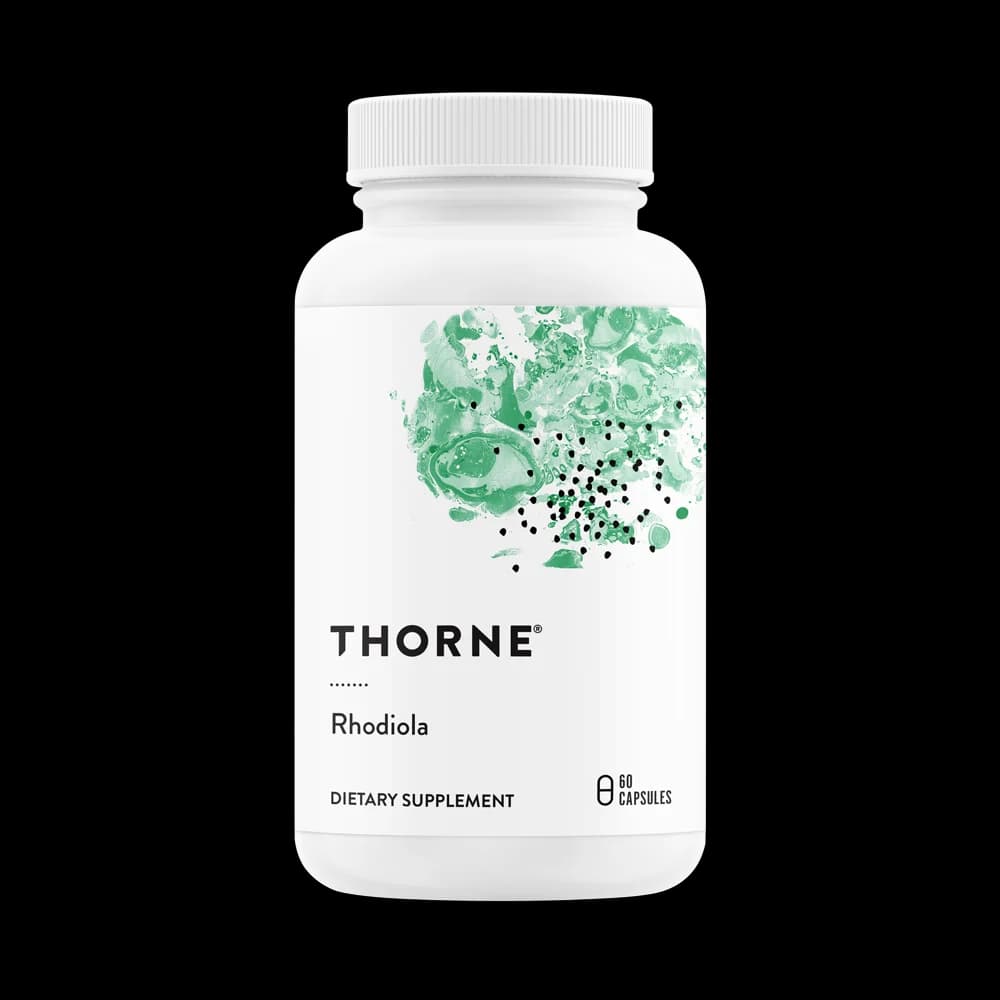
In terms of dosage, clinical trials suggest the optimal therapeutic range for managing symptoms of stress, fatigue, and cognitive dysfunction is between 100 mg to 600 mg per day. For example, Thorne's Rhodiola provides 100 mg of standardized extract per capsule, with a suggested use of one capsule taken two to three times daily. This divided dosing strategy helps maintain stable blood plasma levels of salidroside throughout the active parts of the day, providing sustained support for mitochondrial function and neurotransmitter balance without overwhelming the nervous system.
Timing and Administration Strategies
Because of its dopaminergic and pro-cognitive focus, Rhodiola is considered a highly activating adaptogen. This stands in contrast to more calming, GABA-focused adaptogens like Ashwagandha. Due to its mildly stimulating effects, it is heavily recommended to take Rhodiola in the morning or early afternoon. Taking it late in the day or before bedtime can lead to overstimulation, vivid dreams, or insomnia. For optimal absorption, particularly of the water-soluble salidroside, Rhodiola is best taken on an empty stomach, approximately 20 to 30 minutes before a meal.
Safety, Contraindications, and Drug Interactions
While Rhodiola has a highly favorable safety profile as a monotherapy, its potent biochemical effects create significant contraindications, particularly regarding psychiatric medications. Because Rhodiola acts as a mild Monoamine Oxidase Inhibitor (MAOI) and inhibits several cytochrome P450 enzymes in the liver (including CYP2D6 and CYP3A4), it must be used with extreme caution in individuals taking Selective Serotonin Reuptake Inhibitors (SSRIs) or SNRIs. Combining Rhodiola with prescription antidepressants can prevent the body from clearing serotonin, creating a highly plausible risk for Serotonin Syndrome, a potentially life-threatening condition characterized by autonomic instability and tremors. Patients exploring What Drugs Are Used for COVID Long Haulers? must consult their prescribing physician before adding Rhodiola to their regimen.
Additionally, because Rhodiola exerts antidepressant-like effects and mild MAO inhibition, it carries a risk of inducing manic episodes in patients with bipolar disorder and is generally contraindicated for this demographic. Furthermore, as an immune-modulating adaptogen, it should be used with caution by individuals with severe autoimmune diseases (such as rheumatoid arthritis or multiple sclerosis), as it may theoretically exacerbate immune activity or interact with immunosuppressant medications. Pregnant and nursing individuals should also avoid use due to a lack of sufficient toxicological data.

Follow the Science
Clinical Trials on Long COVID and Post-Viral Fatigue
The scientific community has increasingly turned its attention to adaptogens as potential interventions for the profound exhaustion associated with post-viral syndromes. A notable 2022 quadruple-blind, randomized, placebo-controlled trial investigated the effects of a pharmaceutical-grade adaptogen blend (ADAPT-232, containing Rhodiola rosea, Schisandra chinensis, and Siberian ginseng) on 100 Long COVID patients. After 14 days of treatment, the adaptogen group experienced a significant increase in physical capacity, with patients seeing their walking time double from an average of 18 minutes to 36 minutes at the 21-day mark. Furthermore, in 50% of the patients, the duration of daily fatigue and pain was reduced by 1 to 2 days compared to the placebo group.
Supporting these findings, a 2023 medical review assessed a standardized Rhodiola rosea extract (WS® 1375) specifically for post-COVID-19 fatigue. The researchers analyzed data from multiple clinical trials utilizing 400 mg daily over 4 to 12 weeks. They concluded that the extract is a highly promising candidate for Long COVID treatment, noting repeated, statistically significant improvements in life-stress symptoms, lack of concentration, and physical exhaustion. These studies provide a strong evidence base for patients navigating the complexities of How Does a Doctor Diagnose Long COVID? and seeking targeted symptom management.
Evidence in ME/CFS and Burnout Syndrome
Because ME/CFS and severe burnout share overlapping pathophysiological markers—such as HPA axis dysfunction and profound fatigue—clinical trials on burnout syndrome offer valuable insights. An exploratory, multicenter clinical trial evaluated 118 outpatients suffering from stress-related burnout. Patients were given 400 mg of Rhodiola extract daily for 12 weeks. The subjects experienced profound improvements across all main symptoms of burnout: exhaustion, cynicism, and lack of efficacy. Notably, symptoms of overload, tension, and fatigue began to significantly decrease within the first week of treatment and continued to improve throughout the study.
Similarly, a randomized, double-blind, placebo-controlled trial observed 60 individuals clinically diagnosed with fatigue syndrome. The treatment group, receiving 576 mg/day of a standardized Rhodiola extract for 28 days, showed significant improvements in fatigue levels, cognitive attention, and concentration. Crucially, physiological testing revealed that Rhodiola significantly reduced the subjects' excessive cortisol response to awakening stress, providing objective evidence of its ability to normalize the neuroendocrine stress response.
Studies on Shift Workers and Cognitive Performance
Rhodiola's ability to preserve cognitive function under extreme stress has been rigorously tested in populations subjected to sleep deprivation and high-stakes performance. A landmark double-blind crossover trial evaluated 56 healthy young physicians working highly stressful night shifts. The physicians taking a standardized Rhodiola extract exhibited significantly higher scores on complex perceptive and cognitive brain functions, including associative thinking, short-term memory, and calculation, compared to the placebo group. This demonstrates Rhodiola's potent ability to stave off exhaustion-induced cognitive decline.
Further research on medical students during stressful exam periods corroborates these findings. Students supplemented with Rhodiola reported significantly improved concentration and academic performance, alongside enhanced overall well-being, improved sleep quality, and greater mood stability. These pro-cognitive effects highlight why Rhodiola is considered a premier brain adaptogen for individuals struggling to maintain mental clarity amidst chronic physiological stress.
The Path Forward
Integrating Rhodiola into a Comprehensive Plan
Living with a complex chronic condition like Long COVID, ME/CFS, or dysautonomia is an exhausting, full-time job. The profound fatigue, unpredictable symptom flares, and cognitive limitations can make the path forward feel incredibly daunting. It is important to validate that these symptoms are not in your head; they are the result of measurable, physiological disruptions in your cellular energy pathways and neuroendocrine systems. While no single supplement is a miracle cure, targeted interventions like Rhodiola rosea can offer meaningful support by addressing these underlying mechanisms—helping to balance neurotransmitters, support mitochondrial ATP production, and normalize the HPA axis.
However, Rhodiola should be viewed as one piece of a comprehensive, holistic management strategy. Supplements are most effective when paired with foundational lifestyle modifications, such as aggressive pacing, strict energy envelope management, heart rate monitoring, and symptom tracking. By combining the biochemical support of an adaptogen with careful daily management, you can begin to build a more resilient foundation for your nervous system.
Partnering with Your Healthcare Provider
Because Rhodiola exerts powerful effects on liver enzymes, monoamine oxidase, and the immune system, it is absolutely critical to approach supplementation with professional guidance. If you are currently taking prescription medications—especially SSRIs, SNRIs, blood pressure medications, or immunosuppressants—you must consult with your healthcare provider or a functional medicine practitioner before introducing Rhodiola to your regimen. A knowledgeable provider can help you navigate potential drug interactions, determine the optimal dosage for your specific needs, and monitor your progress safely.
Taking the Next Step
If you and your healthcare team determine that a brain adaptogen is a safe and appropriate addition to your management plan, prioritizing a high-quality, standardized extract is essential for achieving clinical benefits. Thorne's Rhodiola offers a meticulously formulated, standardized extract designed to support mental performance, balance key neurotransmitters, and help the body adapt to chronic stress without causing drowsiness or fatigue.