Can PhytoBalance II Support Hormonal Balance During Long COVID and Menopause?
March 5, 2026
PhytoBalance IILong COVIDDysautonomia
Share:
Disclaimer: The information provided here is for educational purposes only and is not intended as medical advice. It should not be used to diagnose, treat, cure, or prevent any medical condition. Instead, use it as a starting point for discussion with your healthcare provider. Always consult with a qualified healthcare provider before starting any new medication, supplement, device, or making changes to your health regimen.
For women navigating the complex landscape of chronic illness, the intersection of hormonal changes and neuroimmune dysfunction can feel like an insurmountable hurdle. Conditions like Long COVID, myalgic encephalomyelitis/chronic fatigue syndrome (ME/CFS), and dysautonomia frequently trigger severe autonomic nervous system dysregulation. When these post-viral conditions collide with the natural hormonal fluctuations of perimenopause and menopause, the resulting symptom burden is often magnified exponentially. Patients frequently describe a confusing web of debilitating fatigue, sudden temperature dysregulation, cognitive impairment, and cardiovascular instability, leaving them unsure if their symptoms are driven by their chronic illness, their hormones, or a vicious combination of both.
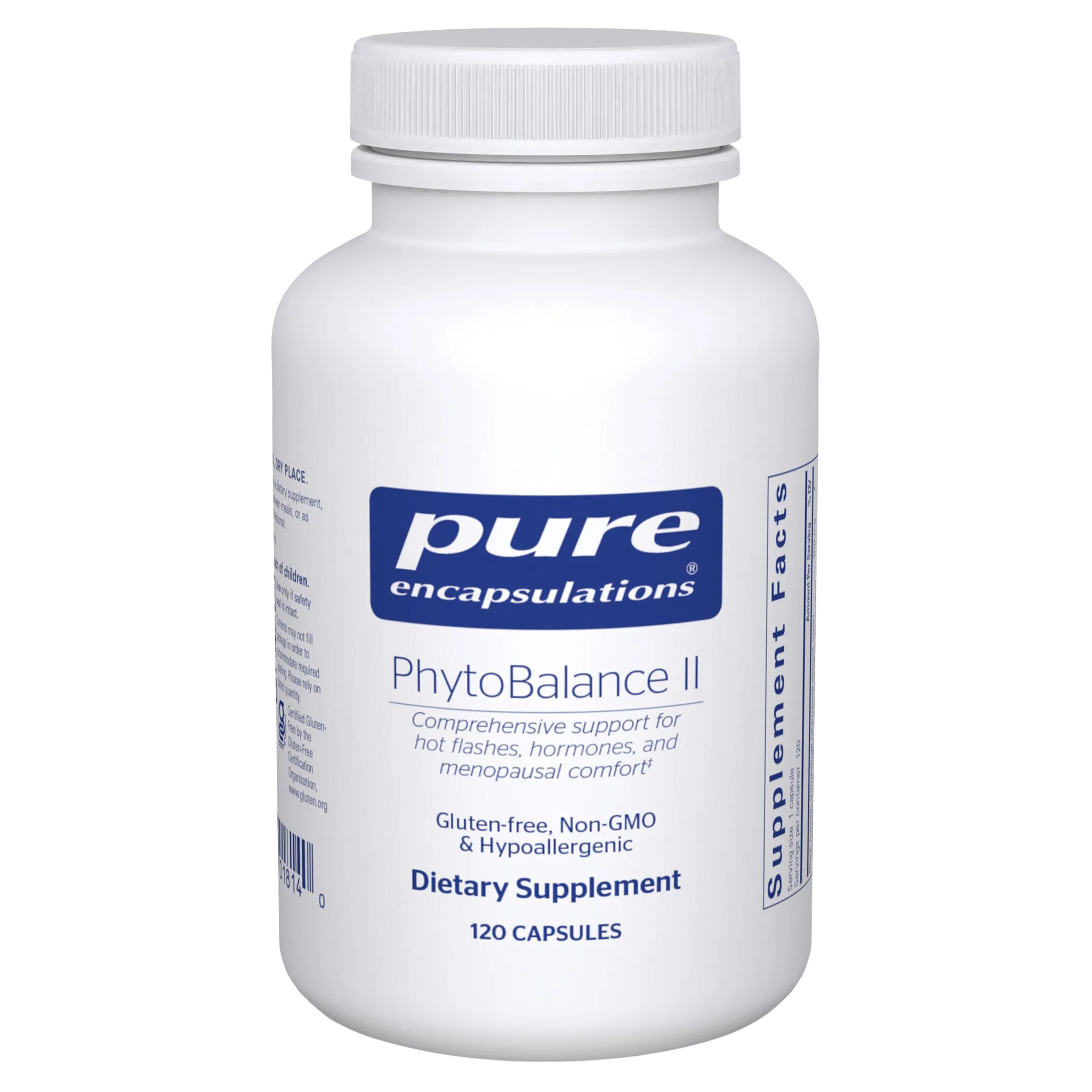
Traditional medical approaches often treat these systems in isolation, addressing hormonal imbalances with one set of tools and autonomic dysfunction with another. However, functional and integrative medicine recognizes that the endocrine system and the autonomic nervous system are intimately connected. PhytoBalance II, a comprehensive botanical formulation by Pure Encapsulations, offers a multifaceted approach to this exact intersection. While primarily designed to support menopausal comfort, its specific blend of standardized herbal extracts—including black cohosh, sage, vitex, grape seed, licorice, and motherwort—provides profound, mechanistic support for the vascular, neurological, and autonomic pathways that are so frequently disrupted in complex chronic conditions.
What is PhytoBalance II?
The Synergy of Standardized Botanical Extracts
PhytoBalance II is a professional-grade, comprehensive herbal supplement formulated by Pure Encapsulations to provide targeted support during the hormonal transitions of perimenopause and menopause. However, to view this supplement strictly through the lens of "menopause" is to underestimate its profound pharmacological potential. At its core, PhytoBalance II is a sophisticated neuroendocrine and vascular modulator. It utilizes a synergistic blend of standardized botanical extracts that interact directly with the central nervous system, the hypothalamic-pituitary-adrenal (HPA) axis, and the vascular endothelium. By standardizing these extracts, the manufacturer ensures that every capsule contains a precise, clinically relevant concentration of the active phytochemicals required to trigger biological changes at the cellular level.
The foundation of this formula relies on the strategic use of phytoestrogens. Phytoestrogens are naturally occurring plant compounds that share a striking structural similarity to 17-beta-estradiol, the primary female sex hormone. Because of this structural mimicry, these plant compounds can bind to human estrogen receptors (specifically ER-alpha and ER-beta) distributed throughout the body. However, they exhibit a much weaker estrogenic activity compared to endogenous hormones. This allows them to act as natural Selective Estrogen Receptor Modulators (SERMs). In environments where estrogen levels are drastically dropping—such as during menopause or following post-viral ovarian disruption—these phytoestrogens provide a gentle, stabilizing baseline of estrogenic signaling, helping to prevent the severe withdrawal symptoms that destabilize the autonomic nervous system.
Modulating the Hypothalamic-Pituitary Axis
Beyond simple estrogen receptor binding, the ingredients in PhytoBalance II exert powerful effects on the brain's regulatory centers. The hypothalamus acts as the body's master control room, governing temperature regulation, sleep-wake cycles, and autonomic responses. During hormonal transitions, the loss of estrogen removes a critical negative feedback loop, causing the pituitary gland to release erratic, massive spikes of Luteinizing Hormone (LH). These LH spikes are directly correlated with the sudden, inappropriate heat dissipation mechanisms known as hot flashes. The specific extracts in this formula, particularly black cohosh (Cimicifuga racemosa), contain active compounds like triterpene glycosides that cross the blood-brain barrier. Once in the brain, they modulate serotonergic and dopaminergic pathways, effectively calming the hypothalamus and suppressing these disruptive LH spikes.
This central nervous system modulation is crucial for patients dealing with complex chronic illnesses. The same hypothalamic instability that drives menopausal hot flashes is frequently implicated in the temperature dysregulation and "sympathetic storms" experienced by patients with dysautonomia and Postural Orthostatic Tachycardia Syndrome (POTS). By stabilizing the communication between the hypothalamus and the pituitary gland, this botanical blend helps restore a sense of equilibrium to an otherwise hyper-reactive nervous system. Furthermore, by addressing the root neurological triggers of vasomotor symptoms, the body can conserve the massive amounts of metabolic energy that are otherwise wasted on inappropriate sweating and shivering, thereby helping to mitigate the severe energy crashes characteristic of ME/CFS.
Vascular Support Through Proanthocyanidins
While the hormonal modulating herbs address the endocrine system, PhytoBalance II also incorporates powerful vascular support through the inclusion of grape seed extract (Vitis vinifera). This extract is heavily standardized to contain 92% polyphenols, specifically oligomeric proanthocyanidins (OPCs). These OPCs are master antioxidants and vascular tonics that play a critical role in maintaining endothelial integrity. The endothelium—the delicate inner lining of our blood vessels—is responsible for regulating blood pressure, vascular tone, and microcirculation. In both menopause and post-viral conditions like Long COVID, endothelial dysfunction is a primary driver of symptoms, leading to poor tissue perfusion, blood pooling, and systemic inflammation.
The proanthocyanidins in this formula actively combat this dysfunction by neutralizing reactive oxygen species (ROS) that damage the vascular lining. More importantly, they stimulate the enzymatic pathways responsible for producing nitric oxide, the primary signaling molecule that tells blood vessels to relax and dilate properly. By pairing these potent vascular modulators with traditional hormonal balancers, PhytoBalance II offers a truly comprehensive approach. It does not merely attempt to replace lost hormones; rather, it provides the structural and functional support necessary for the cardiovascular and nervous systems to adapt resiliently to the physiological stressors of both hormonal aging and chronic illness.
How Hormonal Fluctuations Impact Long COVID and Dysautonomia
The Estrogen Withdrawal and Autonomic Dysfunction Loop
To understand why a hormonal support supplement is so relevant to chronic illness, we must first examine the profound impact that estrogen has on the autonomic nervous system. Estrogen is not merely a reproductive hormone; it is a master regulator of cardiovascular function, neuroinflammation, and immune response. Estrogen receptors are densely packed throughout the brain, the heart, and the vascular endothelium. In a healthy body, estrogen helps maintain blood volume, promotes healthy vasodilation, and dampens the overactivity of the sympathetic (fight-or-flight) nervous system. When estrogen levels begin to fluctuate erratically and eventually plummet during perimenopause and menopause, women lose this vital regulatory protection. This loss of neuro-cardiovascular shielding leaves the body highly vulnerable to autonomic dysfunction.
For women who have developed Long COVID or dysautonomia, this estrogen withdrawal creates a devastating feedback loop. Research from Harvard Health highlights the massive symptom overlap between menopause and post-viral syndromes, noting that both conditions trigger severe brain fog, chronic insomnia, palpitations, and profound fatigue. When a patient with an already compromised autonomic nervous system enters perimenopause, the sudden drop in estrogen acts as an accelerant. The blood vessels lose their elasticity, blood volume drops, and the brain's thermoregulatory center becomes hypersensitive. This explains why many women in their 40s and 50s experience a sudden, dramatic worsening of their Long COVID symptoms, often struggling to differentiate between a viral relapse and a hormonal shift.
Menstrual Exacerbations in ME/CFS and POTS
The intersection of hormones and chronic illness is not limited to menopause; it is vividly apparent throughout the standard menstrual cycle. Patients with ME/CFS and POTS frequently report severe symptom exacerbations in the days leading up to menstruation, a phase characterized by a sharp, natural decline in estrogen and progesterone. Recent observational cohort studies involving women with ME/CFS have demonstrated a direct biochemical correlation between low levels of estradiol and significantly higher levels of debilitating fatigue and widespread pain. During this premenstrual window, the drop in estrogen reduces the body's ability to retain sodium and water, exacerbating the hypovolemia (low blood volume) that drives POTS symptoms like dizziness and tachycardia.
Furthermore, the SARS-CoV-2 virus itself has been shown to directly disrupt female reproductive health. The virus binds to ACE2 receptors, which are abundantly expressed on ovarian tissue. Clinical studies published in MDPI suggest that viral infection can alter ovarian hormone production and disrupt menstrual regularity, potentially triggering early perimenopause in some patients. This viral-induced ovarian dysfunction means that even younger women with Long COVID may experience the severe autonomic destabilization typically associated with menopausal estrogen withdrawal. Understanding what causes Long COVID at a systemic level requires acknowledging this profound endocrine disruption and the resulting neuroimmune fallout.
The Overlap of Vasomotor Symptoms and Sympathetic Storms
One of the most distressing overlaps between hormonal transition and dysautonomia is the manifestation of vasomotor symptoms—specifically, hot flashes and night sweats. In menopause, these occur because the estrogen-deprived hypothalamus falsely senses that the body is overheating, triggering a massive release of adrenaline to force the blood vessels to dilate and the sweat glands to activate. In POTS and Long COVID, patients experience remarkably similar episodes known as "sympathetic storms" or "adrenaline dumps." Due to autonomic neuropathy, the brain inappropriately triggers the sympathetic nervous system, flooding the bloodstream with norepinephrine. This results in sudden tachycardia, intense heat, flushing, and severe anxiety that perfectly mimics a severe menopausal hot flash.
Because the physiological mechanisms behind menopausal hot flashes and dysautonomic adrenaline dumps are so closely related—both involving hypothalamic misfiring and sympathetic overactivation—therapies designed to soothe the menopausal brain can offer significant relief for the chronically ill patient. When the body is constantly trapped in a state of inappropriate temperature regulation and adrenaline surging, it rapidly depletes cellular energy reserves, directly contributing to post-exertional malaise (PEM) and severe crashes. By addressing this shared pathophysiology, we can begin to untangle the complex web of symptoms and provide targeted, mechanistic relief for patients wondering how they can live with long-term COVID.
PhytoBalance II: Supporting Hormonal and Autonomic Balance
Black Cohosh and Sage: Resetting the Thermoregulatory Center
The botanical ingredients in PhytoBalance II offer highly specific, mechanistic interventions for the pathways disrupted by both hormonal decline and autonomic neuropathy. Black cohosh (Cimicifuga racemosa) is a premier botanical for resetting the brain's thermoregulatory center. Modern pharmacological research reveals that its active compounds, particularly triterpene glycosides like actein, do not simply mimic estrogen. Instead, they act directly on the central nervous system, modulating serotonergic and dopaminergic receptors in the hypothalamus. By stabilizing these neurotransmitter pathways, black cohosh effectively blocks the erratic spikes in Luteinizing Hormone (LH) that trigger vasomotor symptoms. For the dysautonomia patient, this hypothalamic stabilization translates to fewer adrenaline surges, a reduction in sudden temperature fluctuations, and a calmer baseline autonomic state.
Working synergistically with black cohosh is sage extract (Salvia officinalis), a potent botanical utilized for its profound anhidrotic (sweat-reducing) properties. In dysautonomia, the sudomotor pathways—the nerves that control the sweat glands—are frequently damaged, leading to debilitating hyperhidrosis (excessive sweating) and night sweats that disrupt restorative sleep. Sage extract contains over 160 polyphenols, including rosmarinic acid, which directly modulate muscarinic and adrenergic receptors to restrict sweat gland hyperactivity. Furthermore, sage acts as a natural inhibitor of acetylcholinesterase, the enzyme responsible for breaking down acetylcholine. By preserving acetylcholine levels in the brain, sage not only stops inappropriate sweating but also actively combats the severe cognitive impairment and memory loss—commonly referred to as "brain fog"—that plagues both menopausal women and Long COVID patients.
Grape Seed Extract: Restoring Endothelial Function and Nitric Oxide
One of the most critical components of this formula for the chronic illness population is grape seed extract, heavily standardized for oligomeric proanthocyanidins (OPCs). POTS and Long COVID are increasingly recognized as vascular diseases characterized by severe endothelial dysfunction. Landmark research in Circulation demonstrated that POTS patients suffer from a profound deficit in microvascular nitric oxide (NO), preventing their blood vessels from dilating properly to ensure adequate cerebral blood flow. The proanthocyanidins in grape seed extract directly target this deficit by activating the PI3K/Akt signaling pathway, which in turn phosphorylates and activates Endothelial Nitric Oxide Synthase (eNOS). This enzymatic activation restores the endothelium's ability to produce vital nitric oxide, promoting healthy vasodilation and improving microcirculation to the brain and extremities.
In addition to boosting NO production, grape seed proanthocyanidins are master antioxidants that protect the fragile vascular lining from the massive oxidative stress generated by chronic post-viral inflammation. They physically strengthen capillary walls by inhibiting collagenase and elastase, the enzymes that break down vascular tissue during inflammatory states. For patients dealing with the severe blood pooling in the lower extremities that characterizes POTS, this structural reinforcement improves venous tone and encourages upward blood return to the heart. By repairing the endothelium and restoring vascular elasticity, grape seed extract addresses the root cardiovascular pathophysiology that drives orthostatic intolerance and exercise-induced crashes.
Licorice and Motherwort: Modulating Blood Volume and Heart Rate
PhytoBalance II also includes two botanicals that represent a functional medicine masterclass in managing dysautonomia: licorice root (Glycyrrhiza glabra) and motherwort (Leonurus cardiaca). Licorice root contains glycyrrhizin, a compound that acts as a potent cortisol-sparing agent. It works by inhibiting the enzyme 11-beta-hydroxysteroid dehydrogenase (11-β-HSD), which normally breaks down active cortisol into inactive cortisone. By blocking this enzyme, licorice extends the half-life of cortisol in the bloodstream, triggering a state of pseudohyperaldosteronism. This forces the kidneys to retain sodium and water, effectively expanding blood plasma volume. For patients with hypovolemic POTS, this natural blood volume expansion is a crucial mechanism for preventing the steep drops in blood pressure that cause dizziness and fainting upon standing.
Conversely, motherwort acts as a profound nervine and cardiotonic, specifically targeting the hyperadrenergic aspects of dysautonomia. Motherwort contains the alkaloid leonurine, which acts as a mild, natural calcium channel modulator in heart tissue. This botanical directly calms the electrical conductivity of the heart, effectively lowering tachycardia and reducing the intensity of the heart palpitations triggered by sudden adrenaline dumps. While licorice works to raise blood volume from below, motherwort works to calm the rapid heart rate from above. Together, they provide a beautifully balanced, dual-action approach to stabilizing the erratic cardiovascular fluctuations that define POTS and autonomic neuropathy.
Vitex Agnus-Castus: Balancing Prolactin and Dopamine
Finally, the inclusion of chaste tree berry (Vitex agnus-castus) addresses the deeper neuroendocrine imbalances that exacerbate chronic fatigue and hormonal flares. Vitex does not supply the body with actual hormones; rather, its active diterpenes act as direct agonists for Dopamine D2 receptors located in the anterior pituitary gland. By mimicking dopamine, Vitex dose-dependently suppresses the excessive secretion of prolactin. Elevated prolactin—often triggered by the chronic physiological stress of living with a complex illness—can suppress ovulation, disrupt the luteal phase, and cause severe premenstrual mood destabilization.
By lowering excess prolactin and enhancing dopaminergic tone, Vitex helps rescue the corpus luteum, which indirectly boosts natural progesterone synthesis. This restoration of the estrogen-to-progesterone ratio is vital for calming the central nervous system, as progesterone metabolizes into allopregnanolone, a potent neurosteroid that interacts with GABA receptors to reduce anxiety and promote deep, restorative sleep. For patients wondering if Long COVID symptoms come and go with their cycle, stabilizing this pituitary-ovarian axis with Vitex can significantly reduce the severity of monthly symptom flares and provide a more predictable baseline of energy and mood.

Symptoms PhytoBalance II May Help Manage
Vasomotor and Temperature Regulation
Because PhytoBalance II targets the hypothalamus and the sudomotor neural pathways, it is highly effective at managing symptoms related to temperature dysregulation. These symptoms are often the most visibly disruptive aspects of both menopause and dysautonomia, rapidly draining a patient's limited energy reserves.
Hot Flashes and Flushing: Black cohosh modulates serotonergic pathways to suppress the erratic Luteinizing Hormone (LH) spikes that cause the brain to inappropriately trigger intense heat dissipation responses.
Night Sweats and Hyperhidrosis: Sage extract directly modulates muscarinic receptors and acts as a potent anhidrotic, calming overactive sweat glands and allowing for uninterrupted, restorative sleep.
Temperature Instability: By stabilizing the HPA axis, the botanical blend helps the body maintain a consistent core temperature, reducing the severe shivering and sudden heat waves characteristic of autonomic neuropathy.
Cardiovascular and Autonomic Stability
The inclusion of vascular tonics and cardiotonic herbs makes this formula uniquely suited to address the cardiovascular manifestations of POTS and Long COVID. By targeting both blood volume and vascular elasticity, it helps stabilize the orthostatic responses that cause dizziness and fatigue.
Orthostatic Intolerance and Dizziness: Licorice root inhibits the breakdown of cortisol, promoting sodium and water retention in the kidneys to naturally expand blood plasma volume, a critical intervention for hypovolemic POTS.
Tachycardia and Palpitations: Motherwort contains the alkaloid leonurine, which acts as a mild calcium channel modulator to calm the heart's electrical conductivity and reduce rapid, pounding heartbeats.
Blood Pooling and Poor Circulation: Grape seed extract provides high doses of proanthocyanidins that activate eNOS, boosting nitric oxide production to restore healthy vasodilation and repair damaged endothelial lining.
Cognitive and Emotional Well-being
Chronic illness and hormonal transitions take a massive toll on cognitive function and mental health. The neuroendocrine modulators in this formula cross the blood-brain barrier to support neurotransmitter balance and protect against neuroinflammation.
Brain Fog and Memory Loss: Sage extract inhibits acetylcholinesterase, preserving vital acetylcholine levels in the brain to improve focus, memory retention, and information processing speed.
Premenstrual and Menopausal Mood Swings: Vitex agnus-castus acts as a dopamine D2 receptor agonist, lowering excess prolactin and promoting a healthy estrogen-to-progesterone ratio to stabilize mood and reduce anxiety.
Adrenaline Dumps and Sympathetic Overdrive: By calming the hypothalamus and reducing corticotropin-releasing hormones, the formula helps dampen the severe surges of norepinephrine that cause panic-like autonomic storms.
Practical Considerations: Forms, Dosing, and Absorption
Maximizing Absorption and Bioavailability
To achieve the profound neuroendocrine and vascular benefits of botanical medicine, the active phytochemicals must be highly bioavailable and efficiently absorbed into the bloodstream. Pure Encapsulations ensures this by utilizing strictly standardized extracts in PhytoBalance II. For example, the grape seed extract is standardized to contain 92% polyphenols, guaranteeing a clinically effective dose of the proanthocyanidins required to activate endothelial nitric oxide synthase (eNOS). Similarly, the black cohosh is standardized to 2.5% triterpene glycosides, ensuring consistent modulation of the hypothalamic serotonergic pathways. This rigorous standardization means that every capsule delivers a reliable, therapeutic dose, avoiding the massive potency fluctuations commonly seen in lower-quality, whole-herb powders.
Timing plays a crucial role in the absorption of these delicate plant compounds. Pure Encapsulations recommends taking one capsule daily, specifically between meals or on an empty stomach. Taking these herbal extracts away from food prevents complex food matrices, dense dietary fibers, and heavy digestive enzymes from binding to or degrading the sensitive polyphenols and glycosides. By allowing the capsule to break down in an empty digestive tract, the active constituents can rapidly cross the intestinal barrier and enter systemic circulation, maximizing their bioavailability and ensuring they reach their target receptors in the brain and vascular endothelium efficiently.
Important Drug Interactions and Contraindications
Because PhytoBalance II utilizes highly concentrated, pharmacologically active herbs that directly modulate hormones and blood pressure, it carries several important interactions and contraindications. The inclusion of Vitex (chaste tree), which actively influences the pituitary gland and dopamine receptors, means this supplement is strictly contraindicated for individuals currently taking Hormone Replacement Therapy (HRT), oral contraceptives, or dopamine-antagonist medications. Combining Vitex with exogenous hormones can cause unpredictable fluctuations in prolactin and estrogen signaling, potentially destabilizing the very pathways the patient is trying to heal. Furthermore, the formula is strictly contraindicated for pregnant or lactating women due to its uterine-stimulating and hormone-altering properties.
Additionally, patients managing complex dysautonomia must be cautious regarding cardiovascular medications. Grape seed extract and licorice root possess mild blood-thinning properties and may interact negatively with prescription anticoagulants or antiplatelet drugs. Motherwort, acting as a mild nervine and hypotensive agent, can potentially amplify the effects of prescription beta-blockers or central nervous system depressants. Patients utilizing a polypharmacy approach to manage their Long COVID or ME/CFS symptoms must cross-reference these botanical mechanisms with their current prescriptions to avoid compounding hypotensive or sedative effects.
Monitoring Liver Function and Blood Pressure
Two specific ingredients in this formula require careful clinical monitoring: black cohosh and licorice root. While exceedingly rare, there have been documented case reports of idiosyncratic liver toxicity associated with black cohosh extracts. Consequently, Pure Encapsulations issues a strict warning that individuals with a history of liver conditions or elevated liver enzymes must consult their healthcare provider before use, and routine monitoring of liver function panels may be advised during supplementation. Patients with chronic post-viral inflammation often have sensitive hepatic pathways, making this monitoring a prudent part of any functional medicine protocol.
Finally, the profound blood-volume-expanding properties of licorice root require careful consideration of a patient's baseline blood pressure. Because the glycyrrhizin in licorice inhibits the breakdown of cortisol and promotes sodium retention, it is highly beneficial for patients with hypovolemic POTS and low blood pressure. However, for patients who suffer from hyperadrenergic POTS characterized by high blood pressure, or those with pre-existing clinical hypertension, the licorice in this formula could dangerously exacerbate their condition. Understanding your specific dysautonomia subtype and regularly monitoring your blood pressure at home is essential when introducing cortisol-sparing botanicals into your regimen.

Follow the Science: Clinical Evidence for Botanical Support
Clinical Trials on Sage and Vasomotor Symptoms
The botanical ingredients in PhytoBalance II are supported by a robust body of clinical research demonstrating their efficacy in modulating neuroendocrine and autonomic responses. A landmark open, multicenter clinical trial conducted in Switzerland by Bommer et al. (2011) provided definitive proof of sage extract's ability to control severe vasomotor symptoms. The study followed 71 menopausal women experiencing at least five hot flashes daily. After eight weeks of daily sage supplementation, the mean number of total hot flashes decreased by a staggering 64%. More impressively, the study tracked symptom severity and found that while mild flashes reduced by 46%, very severe hot flashes were eliminated entirely (a 100% reduction). This data strongly supports sage's mechanism of action in directly modulating the muscarinic receptors and sudomotor pathways responsible for inappropriate sweating and temperature dysregulation.
Grape Seed Extract and Endothelial Repair
The inclusion of grape seed extract for vascular support is backed by extensive cardiovascular research, particularly relevant to the endothelial dysfunction seen in POTS and Long COVID. A pivotal 2005 study published in Circulation by Medow et al. established that POTS patients suffer from a profound deficit in microvascular nitric oxide-dependent vasodilation, highlighting NO deficiency as a primary therapeutic target. Addressing this deficit, a 12-week randomized, double-blind, placebo-controlled trial by Odai et al. (2020) investigated the effects of high-dose grape seed proanthocyanidin extract (GSPE) on middle-aged adults. The researchers found that GSPE supplementation led to statistically significant improvements in vascular elasticity and distensibility, confirming that proanthocyanidins successfully mitigate vascular stiffness and improve the endothelial NO pathways critical for healthy autonomic blood flow regulation.
Black Cohosh and Neurotransmitter Modulation
The scientific consensus on black cohosh has evolved significantly over the past two decades, shifting from a pure "estrogen-mimicking" theory to a complex central nervous system model. Comprehensive reviews, such as those published by the American Academy of Family Physicians (AAFP), detail how the triterpene glycosides in black cohosh act as selective modulators in the hypothalamus. Across multiple clinical trials involving thousands of women utilizing standardized black cohosh extracts (like Remifemin), researchers consistently observed a significant suppression of Luteinizing Hormone (LH) spikes. This LH suppression correlates directly with a 40–50% reduction in vasomotor symptoms, nervousness, and depressive moods, underscoring the herb's potent ability to stabilize the neuroendocrine pathways that are so frequently disrupted in both menopause and post-viral dysautonomia.
The Path Forward
Integrating Botanical Support into Your Protocol
Living with the intersecting challenges of hormonal transition, Long COVID, ME/CFS, and dysautonomia is an incredibly complex and often exhausting journey. It is completely valid to feel overwhelmed when your body seems to be fighting battles on multiple fronts—neurological, vascular, and endocrine. However, understanding that these systems are deeply interconnected provides a powerful roadmap for healing. You do not have to accept debilitating hot flashes, severe adrenaline dumps, and profound brain fog as an inevitable baseline. By utilizing targeted, scientifically backed botanical interventions like PhytoBalance II, you can begin to gently modulate the HPA axis, repair the vascular endothelium, and provide your autonomic nervous system with the structural support it desperately needs to find equilibrium.
A Comprehensive Approach to Healing
It is important to remember that while powerful, supplements are just one piece of a comprehensive, multidisciplinary management strategy. Achieving true stability requires pairing these botanical tools with aggressive pacing to prevent post-exertional malaise, rigorous symptom tracking to identify your unique hormonal triggers, and ongoing collaboration with a dysautonomia-literate healthcare provider. If you are struggling to manage the overlapping symptoms of post-viral illness and hormonal changes, consider discussing this multifaceted herbal approach with your medical team. By addressing the root mechanisms of your symptoms, you can reclaim your energy and improve your daily quality of life.
Sources
Harvard Health Publishing: Menopause and long COVID: What's the connection?
PubMed Central (PMC) / MDPI: Clinical Spectrum of Long COVID: Effects on Female Reproductive Health
American Academy of Family Physicians (AAFP): Black Cohosh Review
National Library of Medicine (PMC): Black Cohosh Efficacy and Safety