Can Pantothenic Acid (Vitamin B5) Support Energy and Adrenals in Long COVID and ME/CFS?
March 5, 2026
Pantothenic AcidVitamin B5Long COVID
Share:
Disclaimer: The information provided here is for educational purposes only and is not intended as medical advice. It should not be used to diagnose, treat, cure, or prevent any medical condition. Instead, use it as a starting point for discussion with your healthcare provider. Always consult with a qualified healthcare provider before starting any new medication, supplement, device, or making changes to your health regimen.
Months or even years after a viral infection, many individuals find themselves battling a complex web of debilitating symptoms. Whether diagnosed with Long COVID, myalgic encephalomyelitis/chronic fatigue syndrome (ME/CFS), or dysautonomia, the core experience often centers around a profound, unyielding lack of cellular energy. When simple tasks trigger severe post-exertional malaise (PEM) and your stress tolerance plummets, it becomes clear that the body’s fundamental power grids and stress-response systems are compromised. Patients are frequently left searching for validating answers as to why their bodies can no longer produce the energy required for daily life or mount an appropriate response to physical and emotional stressors.
At the heart of cellular energy production and adrenal health lies a fundamental, yet often overlooked, nutrient: pantothenic acid, widely known as Vitamin B5. While it may not receive the same spotlight as other supplements, pantothenic acid is the absolute biological prerequisite for creating Coenzyme A (CoA)—the master molecule that drives the mitochondrial engines and synthesizes our stress hormones. For those navigating the complex metabolic bottlenecks of chronic invisible illnesses, understanding how pantothenic acid functions at a molecular level offers crucial insights into why fatigue persists and how targeted nutritional support might help rebuild the body's resilience from the cells up.
What is Pantothenic Acid?
Pantothenic acid, commonly known as Vitamin B5, is a water-soluble, essential nutrient required by all mammalian life. Its name is derived from the Greek word pantothen, which translates to "from everywhere," reflecting its ubiquitous presence in nearly all plant and animal-based foods. In a healthy body, pantothenic acid is absorbed through the small intestine and distributed to every cell. However, pantothenic acid itself is not biologically active in its free form. Instead, its entire mechanism of action relies on its role as the requisite precursor molecule for two critical cellular components: Coenzyme A (CoA) and Acyl Carrier Protein (ACP). Through these two molecules, pantothenic acid becomes an indispensable catalyst for the synthesis and degradation of carbohydrates, fats, and proteins, acting as the bridge between the food we eat and the cellular energy we expend.
The highest concentrations of pantothenic acid in the human body are found in tissues that demand massive amounts of energy and synthesize complex hormones, specifically the liver, kidneys, heart, brain, and adrenal glands. In these tissues, the rapid turnover of pantothenic acid is a testament to its critical role in maintaining homeostasis. Without a continuous supply of this vitamin, the body's ability to generate adenosine triphosphate (ATP)—the primary currency of cellular energy—would grind to an absolute halt. Furthermore, research from the Linus Pauling Institute highlights that beyond energy, pantothenic acid is biologically required to synthesize cholesterol, steroid hormones, and the protective myelin sheaths that insulate our nerves.
To understand the power of pantothenic acid, we must look at how it is transformed inside the cell. Once it enters the cytoplasm, pantothenic acid undergoes a highly regulated, five-step enzymatic biosynthetic pathway to form Coenzyme A. This conversion requires pantothenic acid, the amino acid cysteine, and four equivalents of cellular energy (ATP). The very first step is the most critical: pantothenic acid is phosphorylated by the enzyme pantothenate kinase (such as PANK2 in humans) using ATP to form 4'-phosphopantothenic acid. This is the primary rate-limiting step of the pathway, meaning it acts as the metabolic "valve" that controls how much Coenzyme A the cell can produce at any given time. According to research published in Nature Metabolism, this step is tightly controlled by feedback inhibition; when the cell has enough Coenzyme A, it temporarily halts the PANK2 enzyme to conserve resources.
Following this initial phosphorylation, the molecule undergoes condensation, decarboxylation, adenylation, and a final phosphorylation step to become fully functional Coenzyme A. Coenzyme A is a massive, complex molecule featuring a highly reactive sulfhydryl (thiol) group at its tail. This thiol group is the biological magic wand of the molecule. It forms high-energy "thioester" bonds with carboxylic acids, allowing Coenzyme A to capture, activate, and securely transfer acyl groups (such as acetyl, succinyl, and malonyl groups) during metabolic reactions. Essentially, Coenzyme A acts as a biological molecular shuttle, carrying reactive carbon groups to the exact enzymes that need them to build hormones or break down fuels.
The most famous and vital role of Coenzyme A is its function within the Krebs Cycle (also known as the Tricarboxylic Acid or Citric Acid Cycle). Located deep within the mitochondria—the powerhouses of our cells—the Krebs cycle is a continuous loop of chemical reactions that serves as the central engine of aerobic cellular respiration. After carbohydrates are broken down into pyruvate during glycolysis, the pyruvate dehydrogenase complex strips a carbon from pyruvate and attaches the remaining two-carbon acetate directly to Coenzyme A, creating Acetyl-CoA. Dietary fats are similarly broken down into Acetyl-CoA units via a process called beta-oxidation. Acetyl-CoA is the ultimate gateway molecule; it transports this highly reactive acetate group and "dumps" it into the Krebs cycle by combining it with oxaloacetate to form citric acid.
Once the acetate is successfully transferred, the free Coenzyme A molecule is released intact, leaving the cycle to go bind with another pyruvate or fatty acid and repeat the process. Coenzyme A makes a second critical appearance later in the cycle as Succinyl-CoA. The cleavage of the high-energy thioester bond in Succinyl-CoA provides the exact amount of free energy required to generate a molecule of Guanosine Triphosphate (GTP/ATP) directly. By continuously feeding acetate into the Krebs cycle, Acetyl-CoA allows the cycle to strip high-energy electrons from carbon molecules. These electrons are captured by coenzymes (NADH and FADH2) and carried to the mitochondrial electron transport chain, where they drive the massive production of up to 36 ATP molecules per single glucose molecule. Without pantothenic acid, this entire ATP-generating cascade collapses.
How Chronic Illness Impacts Cellular Energy and Adrenals
In complex chronic illnesses like ME/CFS, the body's ability to produce energy on demand is fundamentally broken, leading to the hallmark symptom of post-exertional malaise (PEM). Emerging metabolomic research has revealed that this energy failure is not simply a matter of being "tired," but rather a profound biochemical block at the mitochondrial level. A landmark 2018 metabolomic study published in Scientific Reports mapped the plasma metabolites of patients with ME/CFS and found a significant dysregulation in energy pathways, uniquely characterized by increased levels of pantothenic acid pooling in the blood.
This pooling of Vitamin B5 is a critical clue. It suggests that rather than a dietary deficiency, ME/CFS patients may have an impaired enzymatic ability to convert circulating pantothenic acid into intracellular Coenzyme A. When the PANK2 enzyme or subsequent biosynthetic steps are inhibited—often by chronic oxidative stress, viral persistence, or inflammatory cytokines—the cells become starved of Coenzyme A despite having plenty of raw Vitamin B5 in the bloodstream. Without sufficient Coenzyme A, the mitochondria cannot efficiently funnel carbohydrates or fats into the Krebs cycle. The body is forced to rely on inefficient, anaerobic (oxygen-independent) glycolysis, which produces very little ATP and generates excessive lactic acid, triggering the severe muscle burning, heaviness, and rapid fatigue characteristic of a PEM crash.
Long COVID shares massive clinical and biological overlap with ME/CFS, particularly regarding mitochondrial dysfunction and metabolic reprogramming. When the SARS-CoV-2 virus infects a host, it actively hijacks the cell's lipid (fat) metabolism to build its viral envelope and replicate. Because Coenzyme A is absolutely mandatory for the synthesis of fatty acids and cholesterol, the viral infection places an enormous, unnatural demand on the host's pantothenic acid and Coenzyme A reserves. This viral hijacking depletes the cellular pools of CoA, leaving the mitochondria without the necessary shuttles to maintain normal host energy production.
Furthermore, the chronic immune activation and persistent neuroinflammation seen in Long COVID generate high levels of reactive oxygen species (ROS). Recent reviews on mitochondrial reactive oxygen species highlight that this oxidative stress directly damages mitochondrial DNA and the delicate lipid membranes of the mitochondria. Because pantothenic acid is required for the synthesis of membrane phospholipids, a functional deficiency impairs the cell's ability to repair these damaged mitochondrial membranes. This creates a vicious cycle: damaged mitochondria leak more ROS, which further inhibits the enzymes needed to synthesize Coenzyme A, leading to worsening fatigue, brain fog, and systemic inflammation.
Beyond the mitochondria, chronic illness places an immense, unyielding burden on the body's stress response system, known as the Hypothalamic-Pituitary-Adrenal (HPA) axis. Conditions like dysautonomia and mast cell activation syndrome (MCAS) keep the nervous and immune systems in a constant state of "fight or flight" and hyper-reactivity. To manage this systemic stress and modulate inflammation, the adrenal glands must continuously synthesize and secrete the steroid hormone cortisol. However, the synthesis of cortisol is an energetically demanding physiological process that occurs largely within the mitochondria of adrenal cells.
All steroid hormones, including cortisol, aldosterone, and DHEA, are synthesized from a parent molecule called cholesterol. The conversion of dietary fats into cholesterol, and subsequently into the master hormone precursor pregnenolone, is entirely dependent on Coenzyme A. During periods of chronic, unrelenting illness, the rapid cellular turnover of pantothenic acid in the adrenal glands can outpace supply or enzymatic conversion rates. When CoA availability is constrained, the adrenal glands struggle to efficiently synthesize cortisol. This metabolic bottleneck can manifest as persistent neuroendocrine exhaustion—often colloquially referred to as "adrenal fatigue"—characterized by profound morning weakness, orthostatic intolerance, poor stress adaptation, and an inability to recover quickly from minor physical or emotional triggers.
Pantothenic Acid: Supporting Energy and Stress Resilience
For patients battling the profound energy deficits of Long COVID and ME/CFS, supplementing with pantothenic acid aims to force the restoration of the Coenzyme A biosynthetic pathway. By providing an abundance of the raw precursor, supplementation can help overcome the enzymatic bottlenecks caused by oxidative stress. When intracellular levels of pantothenic acid are elevated, it drives the PANK2 enzyme to increase the production of 4'-phosphopantothenic acid, ultimately leading to higher concentrations of functional Coenzyme A within the mitochondria. This process is essential for restarting the stalled engines of the Krebs cycle.
With restored levels of Coenzyme A, the mitochondria can once again efficiently form Acetyl-CoA and Succinyl-CoA. This allows the cells to transition away from inefficient, lactic-acid-producing anaerobic glycolysis and return to highly efficient aerobic respiration. By smoothly funneling carbohydrates and fatty acids into the electron transport chain, the body can dramatically increase its yield of ATP. This restoration of cellular bioenergetics is a primary therapeutic target for alleviating the crushing, leaden fatigue and reducing the severity and duration of post-exertional malaise (PEM) crashes. When the cells have the energy they need, the entire systemic burden of the illness is lightened.
In the realms of endocrinology and integrative medicine, pantothenic acid is frequently referred to as the "anti-stress vitamin" due to its localized importance in the adrenal glands. Animal studies on pantothenic acid supplementation have demonstrated that increasing B5 intake induces "adrenal hyperresponsiveness" to Adrenocorticotropic hormone (ACTH)—the signal sent by the brain telling the adrenals to make cortisol. Adrenal cells treated with pantothenic acid become significantly more sensitive and efficient at responding to this brain signal, allowing them to synthesize and secrete appropriate levels of stress hormones without becoming exhausted.
Rather than acting as a central nervous system stimulant like caffeine, which merely masks fatigue while further depleting reserves, pantothenic acid builds cellular resilience. It provides the metabolic infrastructure and raw materials (via cholesterol and pregnenolone synthesis) that allow the adrenal glands to meet the high demands of chronic illness. By ensuring the adrenals do not "run out" of Coenzyme A, pantothenic acid helps stabilize the HPA axis. This can lead to improved orthostatic tolerance in dysautonomia patients, better modulation of systemic inflammation, and a more stable, grounded energy curve throughout the day, rather than the volatile "wired and tired" fluctuations many patients experience.
The benefits of pantothenic acid extend deep into the nervous system and cellular architecture. Because Coenzyme A is required for the synthesis of membrane phospholipids, ensuring adequate B5 levels allows the body to repair the lipid bilayers of cells and mitochondria that have been damaged by viral-induced oxidative stress. Restoring mitochondrial membrane integrity is crucial for preventing the leakage of reactive oxygen species and maintaining the electrochemical gradient necessary for ATP production. This structural repair is a vital component of recovering from the cellular damage inflicted by SARS-CoV-2 and other persistent pathogens.
Furthermore, pantothenic acid plays a direct role in combating the severe cognitive dysfunction, or "brain fog," associated with neuroimmune conditions. Acetyl-CoA, derived from pantothenic acid, is the specific molecule that donates an acetyl group to choline to synthesize acetylcholine. Acetylcholine is the primary neurotransmitter of the parasympathetic nervous system and is absolutely vital for memory formation, learning, mental clarity, and autonomic regulation. By supporting the robust synthesis of acetylcholine, pantothenic acid helps clear the cognitive cobwebs, improves focus, and supports the "rest and digest" functions of the vagus nerve, which are often heavily suppressed in patients with dysautonomia and Long COVID.
Symptoms Pantothenic Acid May Help Manage
Profound Fatigue and Low Energy: By providing the mandatory precursor for Coenzyme A, pantothenic acid restarts the Krebs cycle, allowing mitochondria to efficiently convert carbohydrates and fats into high-yield ATP, directly combating cellular energy starvation.
Post-Exertional Malaise (PEM): Restoring Coenzyme A helps shift the body away from inefficient, lactic-acid-producing anaerobic glycolysis back to aerobic respiration, potentially reducing the severe muscle burning and delayed crashes associated with physical or cognitive exertion.
Brain Fog and Cognitive Dysfunction: Pantothenic acid is required to synthesize Acetyl-CoA, which donates its acetyl group to form acetylcholine—a crucial neurotransmitter for memory, focus, and mental clarity that is often depleted in neuroimmune conditions.
Stress Intolerance and "Adrenal Fatigue": As the "anti-stress vitamin," B5 is highly concentrated in the adrenal glands where it is required to synthesize cholesterol into pregnenolone and cortisol, building cellular resilience and preventing neuroendocrine exhaustion during chronic stress.
Orthostatic Intolerance (Dysautonomia): By supporting adrenal hormone synthesis (including aldosterone, which regulates blood volume) and acetylcholine production (which regulates parasympathetic vagal tone), B5 helps stabilize the autonomic nervous system's control over heart rate and blood pressure.
Slow Recovery from Illness: Pantothenic acid is essential for the synthesis of membrane phospholipids, allowing the body to repair cellular and mitochondrial membranes damaged by viral-induced oxidative stress and inflammation.
Practical Considerations: Forms, Dosing, and Absorption
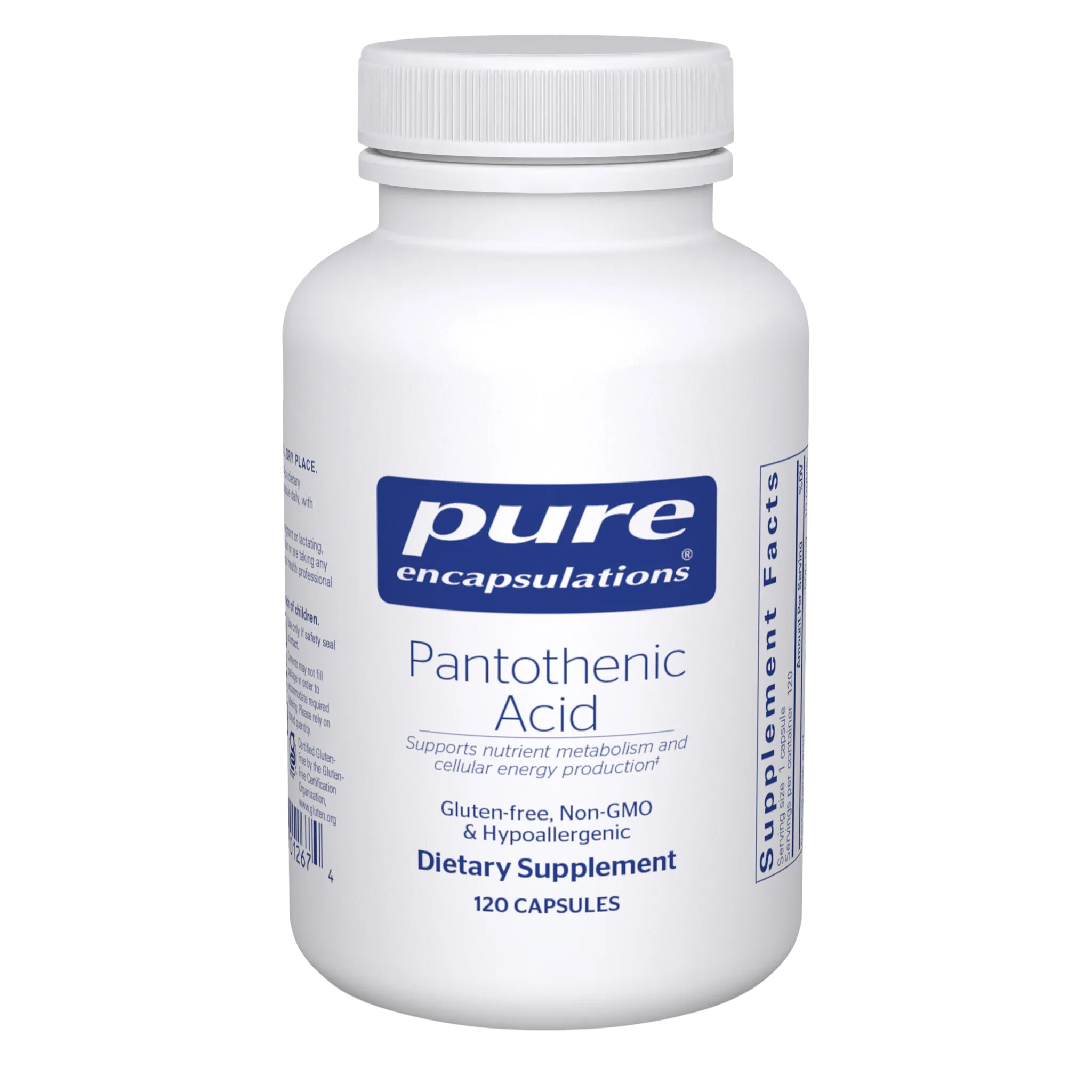
When considering supplementation, it is critical to understand that pantothenic acid exists in two distinct structural forms, or enantiomers: the D-isomer (dextrorotatory) and the L-isomer (levorotatory). According to pharmacological data on pantothenic acid, only the D-isomer (D-pantothenic acid) exhibits biological vitamin activity. It is the exclusive form that the human body's enzymes can recognize and utilize to synthesize Coenzyme A and acyl carrier proteins. The L-isomer is completely biologically inactive and may even act as an antagonist, competitively inhibiting the absorption and utilization of the active D-isomer. Therefore, high-quality supplements will specifically formulate with the D-isomer to ensure maximum clinical efficacy.
Pure D-pantothenic acid, in its isolated state, is a viscous, yellow, and highly hygroscopic oil. It is chemically unstable and easily degraded by heat, acid, and alkaline conditions, making it wholly unsuitable for commercial encapsulation. To solve this, manufacturers bind the pantothenic acid to calcium to create calcium pantothenate (specifically, D-calcium pantothenate). This calcium salt is a white, crystalline powder that is highly water-soluble, non-hygroscopic, and possesses a much longer and more stable shelf-life. When ingested, the calcium salt is rapidly hydrolyzed by intestinal enzymes back into free, active D-pantothenic acid, ready for cellular uptake.
The absorption of pantothenic acid in the human gastrointestinal tract is highly dependent on the dosage. Free pantothenic acid is absorbed in the small intestine via a saturable, sodium-dependent active transport system. Under normal dietary conditions, this active transport is highly efficient, absorbing roughly 50% of the vitamin. However, pharmacokinetic studies on calcium pantothenate indicate that at high concentrations—such as those found in therapeutic supplement doses—this active transport mechanism quickly becomes saturated. Once saturated, the vitamin must rely on passive diffusion, which significantly lowers the overall percentage of absorption. For instance, if oral intake increases 10-fold, the absorption rate may decrease to roughly 10%.
Because of this saturable absorption curve, taking massive mega-doses of pantothenic acid all at once is generally inefficient. For patients utilizing higher therapeutic doses for adrenal or mitochondrial support, it is often more effective to divide the dose throughout the day (e.g., morning and early afternoon) rather than taking it entirely in a single bolus. When taken orally, especially under fasted conditions or with a light meal, calcium pantothenate is absorbed very rapidly, with peak blood plasma concentrations typically reached within one to two hours post-dose. Because it is a water-soluble B-vitamin, it does not require dietary fat for absorption, though taking it with food can help mitigate any potential gastrointestinal upset.
Pantothenic acid boasts a remarkably high safety profile. Because the body tightly regulates its levels and readily excretes excess amounts in the urine, major regulatory bodies, including the US Food and Nutrition Board, have not established a Tolerable Upper Intake Level (UL) for Vitamin B5. In clinical settings, therapeutic doses often range from 500 mg to 1,000 mg daily. Even at massive clinical doses (upwards of 10 grams per day used in specific lipid or dermatological trials), the primary reported side effects are purely gastrointestinal—specifically transient nausea or diarrhea caused by unabsorbed vitamin drawing water into the intestines. It has no known severe drug interactions.
For optimal clinical outcomes, particularly when targeting adrenal fatigue and HPA axis dysfunction, pantothenic acid should rarely be used in isolation. It functions most effectively alongside synergistic nutrients. Vitamin C is highly concentrated in the adrenal glands and acts as a necessary co-factor for the enzymes that finalize cortisol synthesis. Magnesium helps relax the autonomic nervous system, while a full-spectrum B-complex ensures that high doses of B5 do not inadvertently deplete other critical B-vitamins (like B6 and B12) that are equally necessary for mitochondrial and neurological health. Always consult with a healthcare provider to determine the appropriate dosage and combination for your specific metabolic needs.

Follow the Science
The scientific understanding of pantothenic acid's role in chronic illness has expanded significantly through advanced metabolomic profiling. A pivotal 2018 study published in Scientific Reports utilized "MetaMapp" network analysis to map the plasma metabolites of patients with ME/CFS compared to healthy controls. The researchers discovered a profound dysregulation in the choline-carnitine pathway and significantly increased levels of circulating vitamin B5 in the ME/CFS cohort. This data provided critical evidence that ME/CFS involves a metabolic bottleneck, where the body loses its ability to efficiently convert pantothenic acid into Coenzyme A, leading to severe downstream failures in mitochondrial ATP production and fatty acid oxidation.
Further supporting the use of B-vitamins in this population, a prospective clinical trial in the Medical Science Monitor evaluated the use of a multivitamin/mineral supplement containing pantothenic acid on women with ME/CFS. Following the intervention, researchers documented statistically significant decreases in self-reported fatigue ($p=0.0009$), sleep disorders ($p=0.008$), and autonomic nervous system symptoms ($p=0.018$). While this study utilized a combination formula, it underscores the therapeutic necessity of providing robust metabolic precursors to patients suffering from post-viral energy exhaustion.
In the context of SARS-CoV-2 and Long COVID, research has highlighted both the protective and therapeutic potential of pantothenic acid pathways. A large-scale 2022 dietary study from the Yazd Health Study analyzing over 9,000 adults investigated the link between B-vitamin intake and COVID-19 risk. The researchers found that participants in the highest quartile of dietary Vitamin B5 intake had a remarkable 47% reduced risk of contracting severe COVID-19 compared to the lowest quartile, an effect attributed to B5's immune-regulating and anti-inflammatory properties.
Even more compelling is a 2023 in vitro study that explored the antiviral effects of Pantethine (the active disulfide form of pantothenic acid) against SARS-CoV-2. Researchers found that treating infected lung cells with pantethine significantly reduced the cellular expression of the viral spike and nucleocapsid proteins. Mechanistically, pantethine inhibited the infection-induced increase of TMPRSS2—a host cell enzyme that the virus uses to enter cells—and drastically reduced virus-induced inflammatory gene expression. The authors concluded that targeting the pantothenic acid/lipid pathway represents a promising therapeutic avenue for supporting patients during acute COVID-19 and managing Long COVID syndrome.
The absolute necessity of the pantothenic acid-to-CoA pathway for mitochondrial survival has been demonstrated in recent genetic models. A 2025 study published in Cell Death Discovery utilizing models of CoPAN (a genetic disorder impairing CoA synthesis) showed that decreased Coenzyme A directly degraded mitochondrial integrity. The lack of CoA led to diminished assembly of the mitochondrial electron transport chain complexes, severe ATP insufficiency, and the release of damaged mitochondrial DNA. These findings closely mirror the novel biomarkers of mitochondrial dysfunction recently identified in Long COVID patients, reinforcing the hypothesis that restoring Coenzyme A via pantothenic acid supplementation is a biologically sound strategy for repairing mitochondrial architecture in chronic illness.
The Path Forward
Living with the unpredictable, debilitating symptoms of Long COVID, ME/CFS, or dysautonomia can feel like an endless battle against an invisible enemy. When your body's energy grids are compromised and your stress-response systems are exhausted, it is entirely valid to feel overwhelmed by the daily physical toll. Understanding that these symptoms are rooted in measurable, physiological disruptions—like mitochondrial dysfunction and Coenzyme A bottlenecks—provides not only validation but also clear targets for intervention. Pantothenic acid is not a magic cure, but it is a foundational biological tool that provides your cells with the raw materials they desperately need to rebuild energy pathways, synthesize vital hormones, and repair damaged membranes.
However, true recovery and symptom management require a comprehensive, multi-layered approach. Supplements like pantothenic acid work best when integrated into a broader strategy that respects your body's current limits. This means prioritizing strict pacing to avoid triggering post-exertional malaise, utilizing symptom tracking to identify your unique energy envelope, and working alongside a medical team that understands the complexities of neuroimmune conditions. By combining targeted nutritional support with compassionate, evidence-based care, you can begin to restore your cellular resilience and improve your daily quality of life.
If you are ready to explore how targeted mitochondrial and adrenal support can fit into your management plan, we invite you to look closer at high-quality, bioavailable formulations. Always remember to consult with your healthcare provider before introducing new supplements, especially if you are managing complex chronic conditions or taking other medications.
Sources
Linus Pauling Institute: Pantothenic Acid and Coenzyme A Biosynthesis
Nature Metabolism: Coenzyme A biosynthesis: mechanisms of regulation, function and disease
Scientific Reports: Altered Metabolomics and Vitamin B5 Pooling in ME/CFS
Biomolecules: Mitochondrial Reactive Oxygen Species: A Unifying Mechanism in Long COVID
Journal of Vitamins and Minerals: The Pharmacokinetics of Orally Administered Calcium Pantothenate
Medical Science Monitor: Efficacy of a Multivitamin/Mineral Supplement in ME/CFS
Yazd Health Study: Dietary B-Vitamin Intake and COVID-19 Risk
Redox Biology: Novel biomarkers of mitochondrial dysfunction in Long COVID patients