Can P-5-P (Active Vitamin B6) Relieve Brain Fog and Fatigue in Long COVID and ME/CFS?
March 5, 2026
P-5-PVitamin B6Long COVID
Share:
Disclaimer: The information provided here is for educational purposes only and is not intended as medical advice. It should not be used to diagnose, treat, cure, or prevent any medical condition. Instead, use it as a starting point for discussion with your healthcare provider. Always consult with a qualified healthcare provider before starting any new medication, supplement, device, or making changes to your health regimen.
Months after recovering from an acute SARS-CoV-2 infection, or following a severe viral trigger that led to myalgic encephalomyelitis/chronic fatigue syndrome (ME/CFS), many patients find themselves battling a relentless combination of brain fog, profound fatigue, and autonomic dysfunction. But what exactly is happening at the cellular level that prevents the body from returning to its baseline? Recent research into post-viral syndromes highlights complex symptom profiles and varied treatment responses, while emerging biochemical models point toward severe metabolic bottlenecks—specifically, the depletion of essential coenzymes required to produce neurotransmitters, clear inflammation, and generate cellular energy. When the body is trapped in a state of chronic immune activation, it rapidly burns through its nutritional reserves, leaving critical biochemical pathways stalled and unable to function.
One of the most critical, yet frequently misunderstood, pieces of this metabolic puzzle is Vitamin B6. However, for individuals with complex chronic illnesses like Long COVID, mast cell activation syndrome (MCAS), and dysautonomia, standard over-the-counter Vitamin B6 can actually do more harm than good. The key lies in Pyridoxal 5'-phosphate (P-5-P), the biologically active form of the vitamin. By bypassing compromised liver pathways and directly fueling the enzymes responsible for serotonin synthesis and histamine degradation, P-5-P has emerged as a vital tool for supporting neurological health and energy production in chronically ill patients. Understanding how this specific coenzyme operates can provide profound insights into managing the complex, overlapping symptoms of chronic fatigue and autonomic dysregulation.
TL;DR
P-5-P is the active form of Vitamin B6, essential for energy, neurotransmitters, and histamine clearance.
Standard B6 (Pyridoxine) may cause nerve toxicity in chronic illness; P-5-P is a safer alternative.
P-5-P supplementation may help manage brain fog, fatigue, and MCAS symptoms in post-viral syndromes.
Always consult a healthcare provider to tailor dosages and cofactors like magnesium to your specific needs.
What is P-5-P (Active Vitamin B6)?
The Coenzyme Powerhouse
To understand why Pyridoxal 5'-phosphate (P-5-P) is so vital for human health, we must first look at its role as a universal biological catalyst. P-5-P, also known in the medical literature as PLP, is the metabolically active, coenzyme form of Vitamin B6. According to the Linus Pauling Institute at Oregon State University, P-5-P is one of the most versatile and essential cofactors in human biology, facilitating over 140 distinct enzymatic reactions. In fact, P-5-P-dependent enzymes account for approximately 4% of all classified enzyme activities in the human body. Unlike inactive forms of vitamins that simply circulate in the blood, a coenzyme like P-5-P physically binds to an enzyme's active site, acting as an "electron sink" that stabilizes chemical intermediates. Without P-5-P, these 140+ enzymes would remain dormant, and the biochemical reactions they govern would grind to a halt.
At the molecular level, P-5-P functions primarily as an electrophilic catalyst. In P-5-P-dependent enzymes, the coenzyme covalently binds to the enzyme's active site by forming an internal aldimine—a specific type of Schiff base linkage—with a highly conserved lysine residue. When an amino acid substrate enters this active site, its own amino group displaces the lysine, forming a new external aldimine. This unique structural configuration pulls electron density away from the alpha-carbon of the amino acid. Depending on the spatial orientation within the enzyme's active site, this allows the enzyme to efficiently catalyze a wide variety of vital reactions, including transamination, decarboxylation, and racemization. These processes are the fundamental building blocks of human metabolism, dictating how we build proteins, break down toxins, and generate energy.
The Neurotransmitter Synthesizer
Perhaps the most critical function of P-5-P in the context of chronic illness is its non-negotiable role in the development and healthy functioning of the central and peripheral nervous systems. P-5-P is the rate-limiting cofactor for the enzymes that synthesize our major neurotransmitters. For example, P-5-P is the essential cofactor for Glutamic Acid Decarboxylase (GAD), the enzyme responsible for converting the excitatory neurotransmitter glutamate into gamma-aminobutyric acid (GABA), the brain's primary inhibitory neurotransmitter. By facilitating this conversion, systematic reviews demonstrate that P-5-P prevents excitotoxicity—a state where neurons are damaged by overactivation—and regulates mood, anxiety, and the threshold for neurological overstimulation. When P-5-P levels are low, glutamate builds up while GABA plummets, leading to the severe "wired but tired" sensation frequently reported by patients with ME/CFS and Long COVID.
Furthermore, P-5-P is the mandatory cofactor for Aromatic L-amino acid decarboxylase (AADC). This specific enzyme is responsible for converting 5-hydroxytryptophan (5-HTP) into serotonin, and L-DOPA into dopamine. Serotonin is crucial for regulating sleep cycles, gut motility, and cognitive clarity, while dopamine drives motivation, motor control, and autonomic nervous system stability. Without adequate P-5-P, the body can have an abundance of raw amino acids from the diet, but it will remain entirely unable to convert them into the active neurotransmitters required to maintain neurological homeostasis. This biochemical bottleneck is a primary driver of the profound cognitive dysfunction and mood dysregulation seen in post-viral syndromes.
Energy Metabolism and Glycogen Breakdown
While frequently associated with brain health, P-5-P is equally active in cellular energy metabolism, acting as the critical bridge between protein breakdown and energy extraction. P-5-P acts as a coenzyme for glycogen phosphorylase, the enzyme that catalyzes the release of glucose-1-phosphate from stored glycogen. Interestingly, the vast majority of the P-5-P stored in the human body is actually located within muscle tissue, where it is physically bound to glycogen phosphorylase. This ensures that rapid energy is available during physical exertion. In conditions characterized by post-exertional malaise (PEM), the efficiency of this glycogen breakdown is often severely impaired, making the availability of P-5-P a crucial factor in muscular endurance.
Beyond glycogen, P-5-P is deeply involved in the Krebs cycle (also known as the TCA cycle or citric acid cycle) through its role in transamination. Enzymes like AST and ALT rely on P-5-P to strip amino groups from amino acids, leaving behind alpha-keto acids such as pyruvate and alpha-ketoglutarate. These molecules are then funneled directly into the mitochondria for adenosine triphosphate (ATP) production, or utilized in the liver for gluconeogenesis—the creation of new glucose from non-carbohydrate sources. When P-5-P is depleted, the body loses its metabolic flexibility, struggling to generate sustained ATP and leading to the crushing, cellular-level fatigue that defines conditions like ME/CFS.
How Long COVID and ME/CFS Impact B6 Pathways
Viral-Induced Serotonin Depletion
The pathophysiology of Long COVID and ME/CFS involves a complex cascade of immune dysregulation, viral persistence, and metabolic starvation that directly impacts Vitamin B6 pathways. One of the most groundbreaking discoveries regarding Long COVID brain fog comes from recent models developed by researchers at Penn Medicine. They discovered that viral persistence in the gastrointestinal tract triggers chronic interferon-driven inflammation, which severely depletes circulating serotonin levels. Because serotonin is heavily involved in vagus nerve signaling—the primary communication highway between the gut and the brain—this depletion directly causes the cognitive impairment, memory loss, and autonomic dysfunction known as brain fog.
This is where the P-5-P bottleneck becomes devastating. To restore these depleted serotonin levels, the body attempts to use the precursor 5-HTP. However, the enzyme that converts 5-HTP directly into active serotonin (AADC) is strictly dependent on P-5-P. In a chronically ill body dealing with systemic inflammation and oxidative stress, existing P-5-P stores are rapidly burned through to manage the immune response. Consequently, the conversion of 5-HTP to serotonin stalls completely. Without adequate active Vitamin B6, the body remains trapped in a state of serotonin starvation, making P-5-P depletion a central mechanism in the persistence of Long COVID neurological symptoms.
Gut Dysbiosis and Nutrient Starvation
The gastrointestinal tract plays a massive role in maintaining adequate Vitamin B6 levels, and gut dysbiosis is a hallmark feature of both Long COVID and ME/CFS. Clinical studies have consistently shown that patients with post-viral syndromes exhibit significantly decreased gut microbiota diversity. Specifically, there is a profound lack of beneficial bacterial species such as Bacteroides and Bifidobacterium. This is not just a digestive issue; it is a systemic metabolic crisis. Bacteroides are among the few bacterial species that naturally synthesize and secrete P-5-P directly into the gut lumen for human absorption.
When a viral infection or chronic inflammatory state wipes out these beneficial bacteria, the patient loses a primary endogenous source of active Vitamin B6. This creates a vicious cycle: the gut dysbiosis causes a systemic P-5-P deficiency, which in turn impairs the production of serotonin and DAO (the histamine-degrading enzyme). The lack of serotonin further slows gut motility, worsening the dysbiosis, while the lack of DAO allows histamine to build up and cause severe intestinal inflammation. Breaking this cycle often requires direct, exogenous supplementation with bioavailable P-5-P to bypass the compromised microbiome and restore enzymatic function.
The Homocysteine and Glutathione Trap
In ME/CFS and dysautonomia, the focus of Vitamin B6 research is heavily tied to the methylation cycle and the management of oxidative stress. Many patients with complex chronic illnesses possess genetic variants in the MTHFR gene, which impairs the body's ability to process folate and run the methylation cycle efficiently. This impairment frequently causes a toxic buildup of homocysteine, a highly inflammatory amino acid that damages the endothelial lining of blood vessels and exacerbates the microclotting often seen in Long COVID. P-5-P acts as a critical bypass mechanism in this scenario. Through the transsulfuration pathway, P-5-P is the mandatory cofactor required by the enzyme cystathionine beta-synthase (CBS) to safely clear excess homocysteine from the blood.
Crucially, this P-5-P-dependent pathway converts that toxic homocysteine into cysteine, which is the rate-limiting building block for glutathione—the body’s "master antioxidant." Depleted intracellular glutathione is a universal hallmark of both Long COVID and ME/CFS, leading to severe mitochondrial dysfunction and the inability to neutralize free radicals generated during physical exertion. When P-5-P levels are depleted by chronic illness, homocysteine rises, glutathione plummets, and the mitochondria are left entirely unprotected from oxidative damage. This biochemical trap is a primary driver of post-exertional malaise (PEM), making P-5-P an indispensable nutrient for mitochondrial defense.
P-5-P: Supporting Brain Fog, Energy, and Histamine Clearance
Restoring Serotonin and Dopamine Production
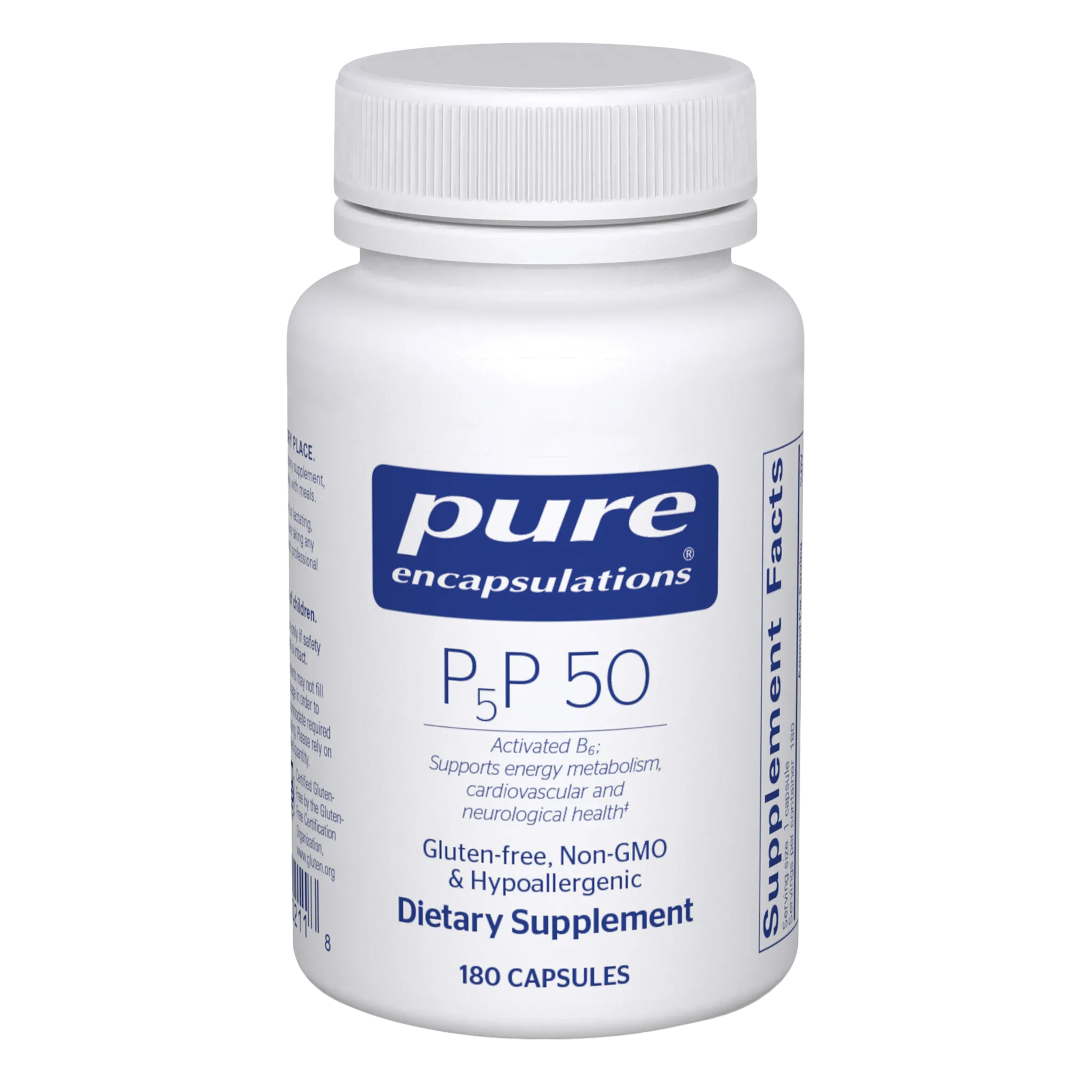
Supplementing with P-5-P 50 offers a targeted, mechanistic approach to supporting the disrupted pathways seen in chronic illness. By providing the body with the already-activated coenzyme form of Vitamin B6, patients can directly fuel the stalled enzymatic processes responsible for their most debilitating symptoms. In the context of neurological function, P-5-P supplementation directly saturates the AADC and GAD enzymes. This immediate availability of the cofactor allows the brain to resume converting dietary amino acids into serotonin, dopamine, and GABA. For patients suffering from the profound anhedonia, brain fog, and anxiety associated with Long COVID, restoring these neurotransmitter pathways is essential for improving cognitive clarity and stabilizing the autonomic nervous system.
Furthermore, because P-5-P bypasses the liver's conversion process, it is highly efficient at crossing the blood-brain barrier in its precursor form (pyridoxal) before being re-phosphorylated inside the central nervous system. This ensures that the neurons themselves have the necessary raw materials to repair damaged signaling pathways. By supporting the synthesis of GABA, P-5-P also helps to calm the hyperactive sympathetic nervous system—the "fight or flight" response—that drives the severe tachycardia and adrenaline dumps frequently experienced by patients with Postural Orthostatic Tachycardia Syndrome (POTS) and other forms of dysautonomia.
Fueling Diamine Oxidase (DAO) for MCAS Support
One of the most profound therapeutic applications of P-5-P is its role in managing Mast Cell Activation Syndrome (MCAS) and histamine intolerance, which are incredibly common comorbidities in the Long COVID and ME/CFS communities. When mast cells become hyper-responsive, they release massive amounts of histamine into the tissues and bloodstream, causing hives, migraines, gastrointestinal distress, and severe fatigue. The body relies heavily on the Diamine Oxidase (DAO) enzyme to break down and clear this histamine, particularly exogenous histamine introduced through the diet. However, DAO is a cofactor-dependent enzyme; it cannot function autonomously.
Clinical research into histamine-related disorders highlights that nutrient deficiencies contribute to DAO dysfunction, with Vitamin B6 being a recognized coenzyme required for DAO activity. When a patient supplements with P-5-P, they are directly providing the biochemical spark needed to upregulate DAO production in the intestinal mucosa. This enhances the body's ability to degrade dietary histamine before it can enter the bloodstream and trigger a systemic mast cell flare. By supporting the DAO pathway, P-5-P acts as a foundational stabilizer for patients struggling with complex food sensitivities and severe allergic-type reactions.
Shuttling Magnesium for Mitochondrial ATP
In the realm of energy production, P-5-P acts synergistically with other critical minerals, most notably magnesium. A 2023 clinical review highlighted the interdependent nature of P-5-P and magnesium in treating ME/CFS, referring to them as a crucial therapeutic pairing. Magnesium is absolutely required by the mitochondria to produce ATP, the cellular energy currency. However, magnesium has poor intracellular penetration on its own. P-5-P physically binds to magnesium and acts as an active transport mechanism, shuttling the mineral across the cell membrane and directly into the mitochondria.
Taking P-5-P concurrently with magnesium can significantly increase the cellular absorption and utilization of the mineral. Once inside the cell, this dynamic duo works together to fuel the electron transport chain, stabilize mitochondrial membranes, and facilitate the enzymatic reactions required for sustained energy output. For patients dealing with the crushing exhaustion of ME/CFS, this enhanced intracellular magnesium delivery directly combats profound muscular fatigue and helps raise the threshold for post-exertional crashes.
Symptoms P-5-P May Help Manage
Because P-5-P is involved in over 140 enzymatic reactions, its therapeutic reach is vast. For patients managing complex chronic conditions, targeted supplementation may help alleviate a wide array of interconnected symptoms. Here are the specific symptoms P-5-P may target and the mechanisms behind its potential efficacy:
Brain Fog and Cognitive Impairment: By acting as the mandatory cofactor for the AADC enzyme, P-5-P restores the brain's ability to synthesize serotonin and dopamine from dietary amino acids, improving memory, focus, and mental clarity.
Severe Fatigue and Low Energy: P-5-P binds to magnesium to shuttle it directly into the cells and mitochondria, supporting the production of ATP (cellular energy) and supporting glycogen breakdown in muscle tissue.
Histamine Intolerance and MCAS Flares: As the essential coenzyme for Diamine Oxidase (DAO), P-5-P upregulates the body's ability to degrade dietary histamine in the gut, which may help reduce hives, gastrointestinal distress, and systemic allergic responses.
Anxiety and "Wired But Tired" Sensations: P-5-P fuels Glutamic Acid Decarboxylase (GAD), the enzyme that converts excitatory glutamate into calming GABA, which may help soothe an overactive sympathetic nervous system and reduce excitotoxicity.
POTS and Autonomic Dysregulation: By supporting healthy neurotransmitter balance and protecting small unmyelinated nerve fibers from the toxicity associated with inactive B6 forms, P-5-P may help stabilize the autonomic nerves that control heart rate and blood pressure.
Poor Sleep Quality and Insomnia: Serotonin is the direct precursor to melatonin, the hormone that regulates the sleep-wake cycle. By restoring serotonin synthesis, P-5-P downstream supports natural melatonin production for more restorative sleep.
Nerve Pain and Tingling (Neuropathy): Unlike synthetic Pyridoxine HCl, which can cause nerve damage, P-5-P safely supports nerve health and myelin sheath integrity without competitively inhibiting cellular receptors.
Practical Considerations: Forms, Dosing, and The "B6 Paradox"
The Danger of Inactive Pyridoxine HCl
When considering Vitamin B6 supplementation, understanding the profound difference between the available forms is not just a matter of optimization—it is a matter of neurological safety. Most over-the-counter multivitamins, B-complexes, and energy drinks utilize Pyridoxine Hydrochloride (PN HCl), a cheap, synthetic, and inactive form of the vitamin. Historically, it was believed that the liver easily converted this synthetic form into active P-5-P. However, modern clinical data has revealed a dangerous phenomenon known as the "Vitamin B6 Paradox."
Research has found that excessive intake of inactive Pyridoxine actually blocks the cellular enzymes needed to convert it into the active P-5-P form. Because Pyridoxine competitively inhibits P-5-P utilization, it creates a functional B6 deficiency inside the nerve cells, ultimately leading to cell death. This toxicity heavily targets the dorsal root ganglion, causing Small Fiber Neuropathy (SFN)—a condition characterized by burning nerve pain and severe autonomic dysfunction. Alarmingly, recent clinical reports show that this neuropathy can occur at doses as low as 10 to 50 mg per day of Pyridoxine, leading global regulatory bodies to drastically lower the tolerable upper intake limits for synthetic B6.
Why P-5-P is the Superior Choice
Supplementing directly with Pyridoxal 5'-phosphate (P-5-P) completely bypasses this dangerous metabolic bottleneck. When you ingest P-5-P, an enzyme in the gut temporarily removes the phosphate group so the free Pyridoxal can easily cross the intestinal barrier. Once inside the bloodstream and cells, it is rapidly re-phosphorylated back into active P-5-P without requiring the rate-limiting PNPO enzyme in the liver. This means P-5-P does not flood the blood with unmetabolized, inactive Pyridoxine, thereby avoiding the competitive inhibition that causes nerve damage.
For patients with chronic illnesses like Long COVID and ME/CFS, who often have compromised liver function, widespread inflammation, or genetic mutations (like MTHFR) that impair nutrient conversion, P-5-P is clinically superior. It provides the body with the exact, biologically active molecule it needs to immediately resume enzymatic functions. Studies show that P-5-P does not cause the same nerve cell death in vitro as Pyridoxine does, making it the preferred and safer choice for long-term neurological and metabolic support in sensitive patient populations.
Dosage, Timing, and Cofactors
Pure Encapsulations P-5-P 50 provides 50 mg of activated Vitamin B6 per vegetarian capsule. For optimal absorption and utilization, it is generally recommended to take P-5-P with meals, as the presence of food does not negatively impact the absorption of the active metabolite, unlike synthetic Pyridoxine. Because P-5-P can have a mild stimulating effect on energy production and neurotransmitter synthesis, many patients prefer to take it in the morning or early afternoon to avoid any potential interference with sleep onset.
To maximize the therapeutic benefits, P-5-P should ideally be paired with its synergistic cofactors. Taking P-5-P alongside a high-quality magnesium supplement (such as magnesium glycinate or malate) ensures that both nutrients can effectively enter the cells to support ATP production. Additionally, for patients managing MCAS, ensuring adequate intake of Copper and Vitamin C alongside P-5-P provides the complete suite of building blocks required to synthesize the DAO enzyme. As always, patients should consult with their healthcare provider to determine the precise dosage and combination of supplements that best fits their individual clinical presentation and lab results.
Follow the Science
Clinical Trials in Post-Viral Fatigue
The scientific literature increasingly supports the use of active Vitamin B6 for managing the debilitating symptoms of post-viral syndromes. A highly relevant 2023 clinical study published in Infectology Magazine evaluated the efficacy of a combination therapy containing Vitamin B6 for treating post-COVID asthenia—a condition characterized by rapid fatigue, sleep disturbances, and memory loss. The researchers found that after targeted treatment, 35% of patients experienced significant improvements in memory, 40% stopped experiencing sleep problems, and 42% reported a significantly delayed onset of physical fatigue. Furthermore, objective physical endurance improved, with patients walking an average of 7% further in the standard 6-minute walk test, highlighting B6's role in restoring muscular energy metabolism.
The Penn Medicine Serotonin Discovery
The mechanistic link between Long COVID brain fog and Vitamin B6 was further solidified by groundbreaking research from Penn Medicine. Their models demonstrated that viral persistence in the gut leads to a severe depletion of circulating serotonin, which directly impairs vagus nerve signaling and cognitive function. Because P-5-P is the absolute, non-negotiable coenzyme required for the Aromatic L-amino acid decarboxylase (AADC) enzyme to convert 5-HTP into serotonin, researchers emphasize that addressing this metabolic bottleneck is critical. Without adequate P-5-P, the body cannot rebuild its serotonin stores, making active B6 supplementation a vital strategy for resolving post-COVID cognitive dysfunction.
DAO Enzyme and Histamine Research
In the realm of mast cell activation and histamine intolerance, the clinical evidence for P-5-P's efficacy is robust. A recent integrative review highlighted that clinical interventions, including DAO supplementation and addressing nutrient deficiencies, demonstrate consistent symptom relief for histamine intolerance. Because P-5-P is the mandatory cofactor for DAO synthesis, functional medicine protocols heavily rely on active B6 to restore baseline DAO production. Additional clinical studies involving patients with histamine intolerance found that supporting this enzymatic pathway resulted in over 90% of participants reporting the total resolution of at least one major gastrointestinal symptom, underscoring the power of targeted coenzyme therapy in managing MCAS symptoms.
The Path Forward
Integrating P-5-P into Your Protocol
Living with complex chronic conditions like Long COVID, ME/CFS, dysautonomia, and MCAS is an incredibly challenging and often frustrating journey. The profound fatigue, unpredictable cognitive impairment, and severe autonomic flares are not simply in your head—they are the result of measurable, physiological disruptions at the cellular level. Discovering that a critical metabolic bottleneck, such as a deficiency in active Vitamin B6, might be driving some of these symptoms offers a validating and actionable path forward. By providing your body with P-5-P, the biologically active coenzyme it desperately needs, you are directly supporting the repair of neurotransmitter pathways, enhancing mitochondrial energy production, and fueling the enzymes that clear inflammatory histamine.
Partnering with Your Healthcare Provider
While P-5-P is a powerful tool, it is most effective when integrated into a comprehensive, personalized management strategy. Supplements are one piece of the puzzle alongside pacing, nervous system regulation, dietary modifications, and expert medical care. Because every patient's biochemistry is unique, it is crucial to work closely with a healthcare provider who understands the complexities of post-viral syndromes and the critical differences between supplement forms like Pyridoxine and P-5-P. They can help you determine the optimal dosage, monitor your progress, and ensure that your protocol is safely tailored to your specific needs.