Can NOx Synergy™ Support Blood Flow and Energy in Long COVID and ME/CFS?
March 6, 2026
NOx SynergyNitric OxideLong COVID
Share:
Disclaimer: The information provided here is for educational purposes only and is not intended as medical advice. It should not be used to diagnose, treat, cure, or prevent any medical condition. Instead, use it as a starting point for discussion with your healthcare provider. Always consult with a qualified healthcare provider before starting any new medication, supplement, device, or making changes to your health regimen.
Months or even years after a viral infection, many individuals with complex chronic conditions find themselves battling a relentless array of symptoms: suffocating brain fog, limbs that feel like lead, and a heart that races simply from standing up. For patients navigating Long COVID, myalgic encephalomyelitis/chronic fatigue syndrome (ME/CFS), and dysautonomia, these symptoms are not merely the result of being "deconditioned." Instead, emerging scientific consensus points to a profound, systemic breakdown in how the body regulates blood flow and oxygen delivery. At the center of this vascular crisis is a tiny, rapidly vanishing molecule called nitric oxide.
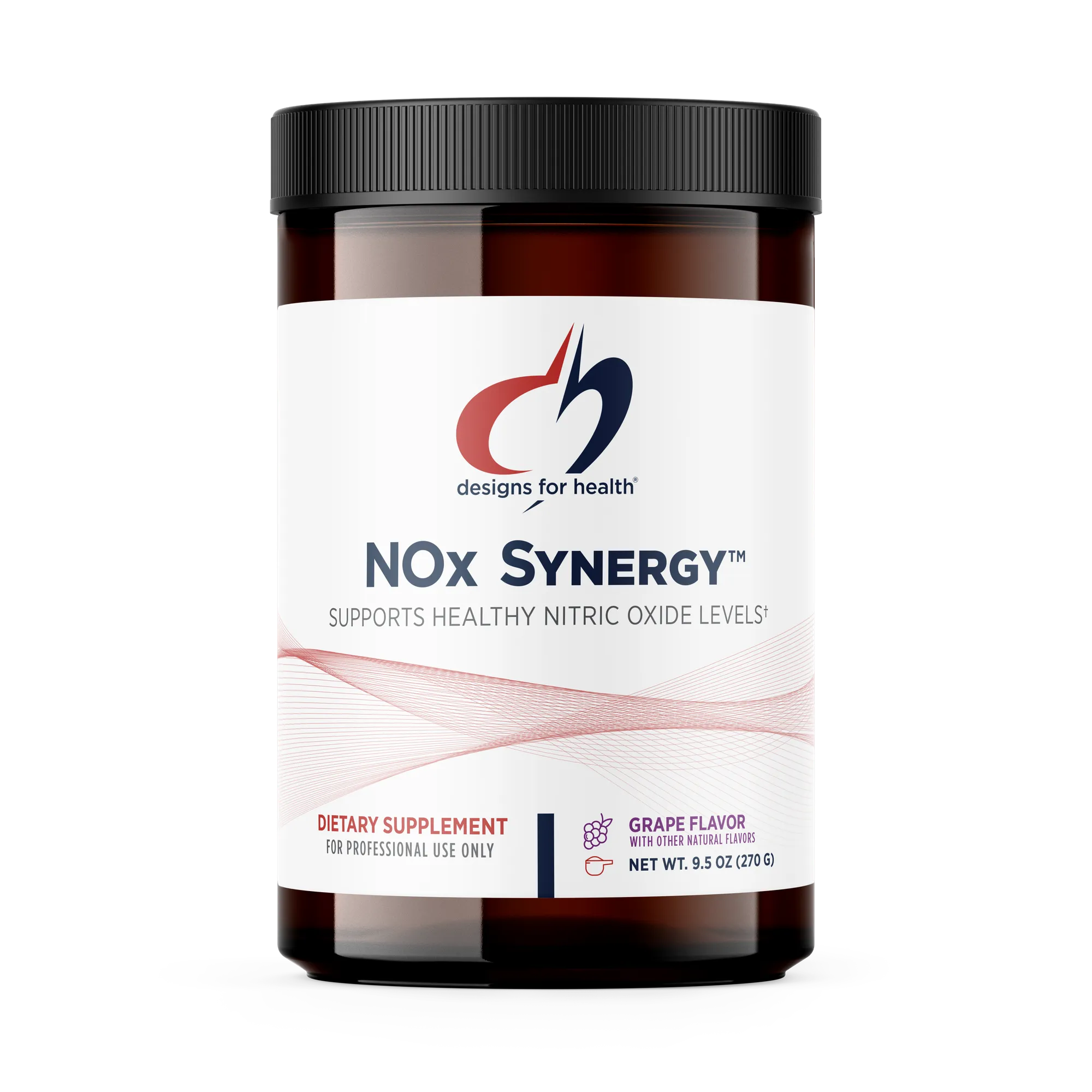
When the delicate inner lining of our blood vessels—the endothelium—becomes damaged by chronic inflammation, viral persistence, or autoimmune activity, its ability to produce nitric oxide plummets. This state of "endothelial dysfunction" leaves blood vessels constricted, inflamed, and unable to deliver vital nutrients to starving tissues. NOx Synergy™ by Designs for Health is a targeted, synergistic formula designed to address this exact mechanism. By combining direct nitric oxide precursors like L-arginine and L-citrulline with powerful enzymatic cofactors like 5-MTHF, vitamin C, and glutathione, this supplement aims to restore healthy nitric oxide metabolism, promote vasodilation, and support cardiovascular function for those fighting invisible vascular battles.
What is NOx Synergy™ and How Does Nitric Oxide Work?
The Endothelium and the Nitric Oxide Pathway
To understand how NOx Synergy™ works, we must first look at the endothelium, the ultra-thin layer of cells that lines the interior surface of every blood vessel in the human body. Far from being just a passive pipe, the endothelium is a highly active, dynamic organ that acts as the primary gatekeeper for cardiovascular health. It constantly monitors the physical shear stress of blood flowing past it and the chemical signals in the bloodstream. In a healthy body, the endothelium responds to these cues by releasing a colorless, highly reactive gas called nitric oxide (NO). Nitric oxide is the body's master vasodilator; it signals the smooth muscle cells surrounding the blood vessels to relax, allowing the vessels to widen and blood to flow freely to the brain, muscles, and organs.
The production of nitric oxide is a complex biochemical ballet orchestrated by an enzyme called endothelial nitric oxide synthase (eNOS). The eNOS enzyme takes the amino acid L-arginine and, using oxygen and a critical cofactor called tetrahydrobiopterin (BH4), converts it into L-citrulline and nitric oxide. Once released, NO diffuses rapidly into the surrounding tissues, where it activates another enzyme, guanylyl cyclase. This triggers a cascade of intracellular events that ultimately decrease calcium levels within the smooth muscle cells, causing them to relax. Because nitric oxide has a half-life of only a few seconds before it is broken down, the endothelium must constantly produce it to maintain healthy blood pressure and tissue perfusion.
Beyond its role in vasodilation, nitric oxide provides two other critical protections for the vascular system. First, it is a potent anti-thrombotic agent, meaning it prevents blood platelets from clumping together and forming unwanted microclots. Second, it acts as an anti-inflammatory signaling molecule, preventing white blood cells (leukocytes) from adhering to the vessel walls and causing localized inflammation. When the eNOS enzyme is functioning optimally, the continuous release of NO keeps the blood vessels wide, clear, and elastic, ensuring that oxygen and nutrients are efficiently delivered precisely where and when the body needs them most.
The Danger of eNOS Uncoupling
However, the eNOS enzyme is highly sensitive to oxidative stress. When the body is overwhelmed by free radicals—often due to chronic infection, inflammation, or metabolic dysfunction—the critical BH4 cofactor becomes oxidized and depleted. Without sufficient BH4, the eNOS enzyme undergoes a disastrous structural shift known as "eNOS uncoupling." Instead of using L-arginine to produce beneficial nitric oxide, the uncoupled eNOS enzyme begins to produce superoxide, a highly damaging free radical. This creates a vicious cycle: the superoxide reacts with whatever little nitric oxide is left to form peroxynitrite, an even more toxic oxidant that further damages the endothelium and depletes more BH4.
This phenomenon of eNOS uncoupling is the biochemical hallmark of endothelial dysfunction. When eNOS uncouples, the blood vessels lose their ability to dilate, leading to chronic vasoconstriction, elevated blood pressure, and a severe reduction in blood flow to the body's extremities and organs. The anti-thrombotic and anti-inflammatory protections of NO are also lost, creating an environment ripe for microvascular clotting and systemic inflammation. Research indicates that reversing eNOS uncoupling requires more than just providing the amino acid building blocks for NO; it requires a comprehensive approach that includes specific antioxidants and cofactors to stabilize the enzyme and neutralize oxidative stress.
How Chronic Illness Impacts Nitric Oxide Production
Viral Damage and Endothelialitis in Long COVID
In the context of Long COVID, the depletion of nitric oxide and the onset of severe endothelial dysfunction are central to the disease's pathophysiology. SARS-CoV-2 is not merely a respiratory virus; it is fundamentally a vascular disease. The virus gains entry into human cells by binding to ACE2 receptors, which are highly concentrated on the surface of endothelial cells. This binding triggers massive localized inflammation, a condition known as endothelialitis. The resulting cytokine storm and oxidative stress directly damage the eNOS enzyme, leading to a profound and persistent depletion of nitric oxide. Without NO to keep vessels dilated and prevent clotting, patients develop widespread microvascular injury.
This persistent lack of nitric oxide drives many of the most debilitating symptoms of Long COVID. Clinical studies utilizing Flow-Mediated Dilation (FMD)—a test that measures the blood vessels' ability to widen in response to blood flow—have shown that Long COVID patients exhibit significantly impaired FMD compared to healthy controls, persisting for months or even years post-infection. This chronic vasoconstriction starves the muscles and brain of oxygen, contributing directly to severe fatigue and cognitive impairment. Furthermore, the loss of NO's anti-thrombotic properties allows for the formation of persistent microclots, which physically block capillaries and further choke off tissue perfusion, creating a relentless cycle of hypoxia and inflammation. You can learn more about how vascular health impacts these symptoms in our guide on managing dysautonomia.
The "X-Factor" and Blood Flow in ME/CFS
Myalgic encephalomyelitis/chronic fatigue syndrome (ME/CFS) is similarly characterized by a profound breakdown in vascular homeostasis and nitric oxide signaling. A landmark 2022 study published in Vascular Pharmacology investigated why ME/CFS patients experience such severely restricted blood flow. Researchers exposed healthy human endothelial cells to the blood plasma of ME/CFS patients and found that the plasma actively suppressed the activity of the eNOS enzyme. The cells produced significantly less nitric oxide than those exposed to healthy plasma, even when stimulated with known vasodilators. The researchers concluded that an unknown "X-factor" circulating in the blood of ME/CFS patients actively damages the endothelium.
This nitric oxide deficiency perfectly explains the hallmark symptom of ME/CFS: post-exertional malaise (PEM). When a healthy person exercises, their blood vessels rapidly release NO to dilate and deliver oxygenated blood to the working muscles. In ME/CFS, this mechanism is broken. The blood vessels cannot dilate, forcing the muscles to immediately switch to anaerobic metabolism. This leads to a rapid build-up of lactic acid, profound cellular hypoxia, and the severe, delayed physical crashes characteristic of PEM. Additionally, systemic inflammation in ME/CFS triggers the overexpression of inducible nitric oxide synthase (iNOS) in immune cells, creating localized excesses of NO that react with free radicals to form toxic peroxynitrite, further driving nitrosative stress and vascular damage.
Neuronal Nitric Oxide Deficits in POTS
Postural orthostatic tachycardia syndrome (POTS) is a complex form of dysautonomia characterized by an exaggerated heart rate increase upon standing, often accompanied by severe blood pooling in the lower extremities and cerebral hypoperfusion (brain fog). While systemic conduit arteries in POTS patients often show impaired dilation due to sympathetic nervous system overactivity, microvascular issues appear specifically tied to deficient nitric oxide release. Studies utilizing laser-Doppler flowmetry have shown that in subsets of "low-flow" POTS patients, the flow-dependent release of nitric oxide is significantly reduced, leading to abnormal local blood flow regulation and the classic blue-purple discoloration of the legs (acrocyanosis).
Furthermore, nitric oxide is integral to neurovascular coupling—the mechanism that increases cerebral blood flow to active areas of the brain. Research has demonstrated that POTS patients suffer from a blunted cerebral nitric oxide response. When the brain's arterial network cannot properly dilate due to low NO bioavailability, patients experience a dramatic drop in cerebral oxygenation upon standing. This chronic deficit in cerebral blood flow is the primary physiological driver of the severe cognitive impairment and dizziness that POTS patients experience daily. For a deeper understanding of this condition, explore our comprehensive overview of Postural Orthostatic Tachycardia Syndrome (POTS).
NOx Synergy™: Supporting Vascular Health and Blood Flow
L-Citrulline and L-Arginine: The NO Precursors
NOx Synergy™ provides a robust foundation for restoring vascular health by supplying high doses of both L-arginine (1.5 g) and L-citrulline (1.5 g). L-arginine is the direct amino acid substrate that the eNOS enzyme uses to synthesize nitric oxide. However, oral L-arginine is notoriously susceptible to breakdown in the gut and liver by an enzyme called arginase before it can ever reach the systemic circulation—a phenomenon known as the "arginine paradox." This is where the inclusion of L-citrulline becomes critical. L-citrulline is a precursor amino acid that entirely bypasses this first-pass metabolism. Once absorbed into the bloodstream, the kidneys readily convert L-citrulline into L-arginine.
By combining both amino acids, NOx Synergy™ leverages a synergistic pharmacokinetic effect. The L-arginine provides an immediate, albeit short-lived, spike in plasma arginine levels, while the L-citrulline acts as a sustained-release reservoir, continuously converting into L-arginine over several hours. Clinical meta-analyses have demonstrated that this dual-action approach is vastly superior for elevating systemic nitric oxide biomarkers and improving flow-mediated dilation compared to supplementing either amino acid alone. This sustained elevation in NO precursors ensures that the eNOS enzyme has a constant supply of substrate to keep blood vessels dilated, improving oxygen delivery to tissues starved by Long COVID or ME/CFS.
Vitamin C and Folate: Rescuing eNOS from Uncoupling
Providing the building blocks for nitric oxide is useless if the eNOS enzyme is uncoupled and producing toxic superoxide instead. This is why NOx Synergy™ includes targeted doses of Vitamin C (300 mg) and Folate (170 mcg DFE as 5-MTHF). Vitamin C is a potent water-soluble antioxidant that plays a highly specific role in vascular health: it chemically stabilizes tetrahydrobiopterin (BH4). By directly reducing oxidized biopterin radicals back to active BH4, Vitamin C prevents the depletion of this essential cofactor. Studies on human endothelial cells show that Vitamin C rapidly activates eNOS and restores NO generation in a BH4-dependent manner, actively reversing eNOS uncoupling.
Folate, provided in its biologically active form (5-methyltetrahydrofolate or 5-MTHF), works synergistically with Vitamin C to rescue the eNOS enzyme. Folate upregulates dihydrofolate reductase (DHFR), the enzyme responsible for recycling inactive BH2 back into active BH4. Furthermore, 5-MTHF directly binds to the eNOS enzyme, significantly improving its structural stability and affinity for BH4. By combining Vitamin C and 5-MTHF, this formula provides a powerful, dual-pathway defense against eNOS uncoupling, ensuring that the endothelium utilizes L-arginine to produce healing nitric oxide rather than damaging oxidative free radicals. You can read more about the importance of targeted nutrients in our guide to Acerola Vitamin C and Bioflavonoids.
Glutathione and Polyphenols: Advanced Antioxidant Defense
To further protect the delicate nitric oxide pathway, NOx Synergy™ incorporates L-Glutathione (100 mg) and a specialized blend of Grape and Apple Extracts (250 mg, standardized to 95% polyphenols). Glutathione is the body's master intracellular antioxidant, and its presence is non-negotiable for eNOS function. When cellular glutathione levels drop due to chronic inflammation, the eNOS enzyme undergoes a structural deformation called S-glutathionylation. This physical alteration disrupts the enzyme's electron transfer chain, forcing it to produce superoxide even if BH4 levels are perfectly normal. Replenishing glutathione directly prevents this structural collapse, keeping the eNOS enzyme safely coupled.
The high-potency grape and apple polyphenols serve as powerful scavengers of reactive oxygen species (ROS) in the bloodstream. These specific polyphenols have been shown to upregulate the expression of the eNOS gene itself, increasing the total amount of the enzyme available in the endothelial lining. Additionally, they help protect the newly synthesized nitric oxide from being immediately degraded by circulating free radicals, effectively extending the half-life of NO in the blood. This comprehensive antioxidant shield ensures that the nitric oxide produced by the body survives long enough to reach the smooth muscle cells and trigger vital vasodilation.
Cellular Energy: Magnesium and Creatine
Finally, NOx Synergy™ addresses the profound muscular fatigue and cellular energy deficits seen in chronic illness by including Magnesium Creatine Chelate (1.5 g) and Taurine (1 g). Magnesium is an essential mineral required for over 300 enzymatic reactions, including the synthesis of ATP (cellular energy) within the mitochondria. By chelating magnesium to creatine, the formula enhances the intracellular absorption of both compounds. Creatine serves as a rapid energy reserve in muscle and brain tissue, helping to buffer the rapid depletion of ATP that occurs during the severe crashes of post-exertional malaise (PEM).
Taurine is a sulfur-containing amino acid highly concentrated in the heart and skeletal muscles. It acts as an osmolyte, regulating cellular hydration and calcium signaling, which is crucial for maintaining a steady, healthy heartbeat in patients with dysautonomia or POTS. Together, these ingredients work downstream of the nitric oxide pathway. While L-citrulline and L-arginine ensure that oxygen-rich blood reaches the tissues, the magnesium, creatine, and taurine ensure that the cells have the necessary substrates to convert that oxygen into usable energy, combating the debilitating physical exhaustion that defines Long COVID and ME/CFS.
Symptoms NOx Synergy™ May Help Manage
Because NOx Synergy™ targets the foundational mechanisms of endothelial function and cellular energy production, it may help alleviate a wide range of symptoms associated with vascular and autonomic dysfunction:
Severe Fatigue and Lethargy: By increasing nitric oxide production, the supplement helps dilate blood vessels, improving the delivery of oxygen and glucose to starving muscle tissues, which may reduce the baseline exhaustion experienced in Long COVID and ME/CFS.
Post-Exertional Malaise (PEM): The combination of L-citrulline and L-arginine supports healthy blood flow during physical or cognitive exertion, potentially delaying the onset of anaerobic metabolism and reducing the severity of lactate-driven crashes.
Brain Fog and Cognitive Impairment: Enhanced nitric oxide bioavailability supports neurovascular coupling, helping cerebral arteries dilate properly to deliver oxygen-rich blood to the brain, which may sharpen focus and alleviate cognitive fatigue.
Orthostatic Intolerance and Dizziness: By supporting healthy endothelial function and vascular tone, the formula may help the cardiovascular system better regulate blood pressure and flow when transitioning from sitting to standing, a key struggle for those with POTS.
Cold Hands and Feet (Acrocyanosis): Nitric oxide is the primary driver of peripheral vasodilation; restoring NO levels can help open up the microvasculature in the extremities, improving warmth and reducing blood pooling.
Muscle Aches and Weakness: The inclusion of magnesium creatine chelate provides direct support for ATP production and cellular energy buffering, which can help alleviate the deep muscular aches and weakness associated with mitochondrial dysfunction.
Exercise Intolerance: By supporting both the vascular delivery of oxygen and the intracellular production of ATP, the synergistic ingredients in this formula may help slowly improve a patient's threshold for physical activity without triggering severe symptom exacerbation.
Practical Considerations: Forms, Dosing, and Absorption
Bioavailability of L-Citrulline vs. L-Arginine
When considering nitric oxide supplementation, understanding the pharmacokinetics of the ingredients is crucial for maximizing therapeutic benefit. As mentioned earlier, oral L-arginine is subject to extensive first-pass metabolism. The enzyme arginase, located in the intestines and liver, rapidly breaks down L-arginine before it can reach the systemic circulation. This means that taking high doses of L-arginine alone often results in gastrointestinal distress rather than a meaningful increase in blood NO levels. However, the L-citrulline included in NOx Synergy™ completely bypasses this degradation. It is absorbed intact and transported to the kidneys, where it is steadily converted into L-arginine, providing a highly bioavailable, sustained-release mechanism for NO production.
The specific forms of the cofactors in this blend are also optimized for maximum absorption. The folate is provided as Quatrefolic® ([6S]-5-methyltetrahydrofolate, glucosamine salt). This is the biologically active, methylated form of folate. Many individuals with chronic illnesses have genetic variations in the MTHFR gene, which severely impairs their ability to convert synthetic folic acid into its active form. By providing pre-methylated 5-MTHF, the formula ensures that the folate can immediately go to work recycling BH4 and rescuing the eNOS enzyme, regardless of the patient's genetic methylation status. You can explore more about the importance of methylated nutrients in our article on Unmethylated vs. Methylated B12.
Timing and Synergistic Absorption
NOx Synergy™ is provided as a powder, which allows for rapid dissolution and absorption in the gastrointestinal tract compared to heavily compressed tablets. The suggested use is mixing 9 grams (approximately one scoop) in 8 ounces of water per day. Because amino acids like L-arginine and L-citrulline can compete with other dietary proteins for absorption transporters in the gut, it is generally recommended to take this supplement on an empty stomach, or at least 30 minutes before a meal, to maximize the uptake of the active ingredients into the bloodstream.
For patients dealing with severe fatigue or post-exertional malaise, timing the dosage strategically can be beneficial. Taking the supplement in the morning may help support cerebral blood flow and combat early-day brain fog. Alternatively, taking it prior to planned periods of cognitive or physical exertion may help pre-load the vascular system with nitric oxide precursors, potentially mitigating the severity of the subsequent energy crash. Because the formula contains a stevia blend and natural grape flavor, it is highly palatable and easy to integrate into a daily hydration routine, which is especially important for dysautonomia patients managing their fluid intake.
Safety, Contraindications, and Interactions
While the ingredients in NOx Synergy™ are generally well-tolerated, the powerful vasodilatory effects of nitric oxide require careful consideration, particularly for patients with complex autonomic disorders. Because NO relaxes blood vessels, this supplement can lower blood pressure. Patients who suffer from severe baseline hypotension (low blood pressure) or those taking prescription antihypertensive medications should consult their healthcare provider before starting this supplement, as the additive effects could lead to dizziness or fainting. Careful blood pressure monitoring is essential when introducing any NO-boosting therapy.
Additionally, L-arginine supplementation is contraindicated in patients with an active outbreak of the Herpes Simplex Virus (HSV), as the virus utilizes arginine for replication. Patients taking phosphodiesterase-5 (PDE5) inhibitors (such as sildenafil or tadalafil) for pulmonary hypertension or other conditions must exercise extreme caution, as combining these medications with nitric oxide precursors can cause a dangerous, precipitous drop in blood pressure. Always work closely with a dysautonomia-literate physician to ensure that targeted vascular support aligns safely with your comprehensive treatment plan and existing medication regimen.

Follow the Science
Flow-Mediated Dilation in Chronic Illness
The scientific literature robustly supports the connection between endothelial dysfunction, nitric oxide depletion, and the symptoms of complex chronic illnesses. Clinical studies utilizing Flow-Mediated Dilation (FMD) have provided undeniable visual and statistical evidence of this vascular breakdown. A 2023 substudy of the Norwegian RituxME trial evaluated endothelial function in ME/CFS patients and found markedly reduced FMD compared to healthy controls, with some patients showing an FMD of less than 2% (healthy individuals typically exhibit much higher dilation percentages). This confirms that the macro- and microvascular systems in these patients are failing to dilate properly in response to blood flow.
Similar findings have been documented in Long COVID cohorts. Meta-analyses of recovering COVID-19 patients show that FMD is significantly impaired, persisting up to 12 months post-infection. Cardiac PET scans have further revealed that Long COVID patients have drastically reduced myocardial flow reserve, indicating persistent microvascular damage in the heart. These clinical data points validate the patient experience: the severe fatigue, shortness of breath, and exercise intolerance are not psychological, but are rooted in a measurable, physiological inability of the blood vessels to deliver oxygenated blood due to a lack of bioavailable nitric oxide.
Clinical Trials on Amino Acid Supplementation
Therapeutic interventions targeting the nitric oxide pathway have shown significant promise in clinical trials. A post-acute interventional study in Long COVID patients demonstrated that combining L-Arginine with Vitamin C significantly improved perceived exertion and endothelial recovery. The researchers hypothesized that the Vitamin C neutralized the oxidative stress inhibiting the eNOS enzyme, allowing the L-Arginine to be successfully converted into healing nitric oxide, thereby yielding favorable effects on debilitating fatigue.
Furthermore, a landmark double-blind, randomized trial studied patients with nonobstructive coronary artery disease who received oral L-arginine supplementation. The results were dramatic: coronary blood flow in response to the vasodilator acetylcholine increased by 149 ± 20% in the L-arginine group, compared to just 6 ± 9% in the placebo group. Recent systematic reviews also confirm that L-citrulline doses between 6 to 10 grams per day consistently improve FMD and lower blood pressure in clinical populations. Together, these studies underscore the therapeutic viability of using targeted amino acids and antioxidant cofactors to rescue endothelial function and restore vital blood flow.
The Path Forward
A Comprehensive Approach to Vascular Health
Living with conditions like Long COVID, ME/CFS, and dysautonomia often feels like an uphill battle against an invisible enemy. The profound exhaustion, the unpredictable brain fog, and the inability to stand without your heart racing are exhausting realities that fundamentally alter your quality of life. It is deeply validating to understand that these symptoms are not in your head—they are the direct result of a measurable, physiological breakdown in your body's vascular system. The depletion of nitric oxide and the resulting endothelial dysfunction are real, heavily researched mechanisms that explain why your body struggles to generate energy and deliver oxygen to where it is needed most.
While there is no single miracle cure for these complex conditions, targeting the underlying mechanisms of vascular health offers a promising path forward. Supplements like NOx Synergy™ are designed to provide the specific biochemical tools your body needs to rescue the eNOS enzyme, neutralize oxidative stress, and restore the production of vital nitric oxide. By addressing the root cause of poor blood flow, you can begin to support your body's natural healing processes. However, it is crucial to remember that supplementation is just one piece of a comprehensive management strategy that must also include aggressive pacing, symptom tracking, adequate hydration, and nervous system regulation.
As you navigate your recovery journey, always work closely with a dysautonomia-literate healthcare provider to ensure that any new supplement fits safely within your broader treatment plan, especially when dealing with blood pressure regulation. If you and your medical team determine that supporting your nitric oxide pathways and endothelial health is the right next step for your unique physiology, you can Explore NOx Synergy™ to learn more about how this targeted formula can support your cardiovascular function and daily energy levels.
Sources
Decreased nitric oxide production in endothelial cells exposed to blood from ME/CFS patients
Blunted cerebral nitric oxide response in Postural Orthostatic Tachycardia Syndrome
Rapid activation of eNOS by ascorbate is linked to changes in eNOS phosphorylation
Hypoxia and Reoxygenation Induce Endothelial Nitric Oxide Synthase Uncoupling in Endothelial Cells
Oral L-arginine improves endothelium-dependent dilation in patients with coronary artery disease
Endothelial dysfunction in acute and long standing COVID-19: A prospective cohort study