Can MSM Capsules Support Joint Pain and Inflammation in Long COVID and ME/CFS?
March 5, 2026
MSM CapsulesJoint HealthLong COVID
Share:
Disclaimer: The information provided here is for educational purposes only and is not intended as medical advice. It should not be used to diagnose, treat, cure, or prevent any medical condition. Instead, use it as a starting point for discussion with your healthcare provider. Always consult with a qualified healthcare provider before starting any new medication, supplement, device, or making changes to your health regimen.
Living with complex chronic conditions like Long COVID, myalgic encephalomyelitis/chronic fatigue syndrome (ME/CFS), and mast cell activation syndrome (MCAS) often means navigating a labyrinth of unpredictable, debilitating symptoms. From profound joint pain that makes getting out of bed feel like a monumental task to systemic inflammation that fuels relentless brain fog, the daily reality of these illnesses is exhausting. Patients are frequently left searching for validating, science-backed strategies to manage their symptoms and improve their quality of life when standard medical answers fall short.
One area of emerging clinical interest in the management of chronic inflammation and musculoskeletal pain is the role of dietary sulfur. Sulfur is a fundamental building block for cellular repair, antioxidant defense, and connective tissue integrity. MSM Capsules, which provide a highly bioavailable form of organic sulfur known as methylsulfonylmethane, have garnered significant attention for their potential to support joint health, calm hyperactive immune responses, and mitigate oxidative stress. In this comprehensive guide, we will explore the intricate biochemical mechanisms of MSM, examine the clinical evidence supporting its use, and discuss how it may fit into a holistic management plan for complex chronic illness.
TL;DR
MSM is a bioavailable sulfur compound that supports joint health, antioxidant defense, and cellular repair.
It may help manage chronic inflammation and oxidative stress linked to Long COVID, ME/CFS, and MCAS.
Clinical studies suggest MSM can reduce joint pain, improve physical function, and support exercise recovery.
Always consult a healthcare provider before starting MSM, especially if you have sulfur intolerance or take blood thinners.
What is MSM (Methylsulfonylmethane)?
The Body's Natural Sulfur Donor
Methylsulfonylmethane (MSM), also known as dimethyl sulfone, is a naturally occurring, highly bioavailable organosulfur compound found in plants, animals, and the human body. At its core, MSM is composed of 34% elemental sulfur by weight, making it one of the most concentrated and efficient dietary sources of this crucial mineral. In a healthy human body, sulfur is the third most abundant mineral, playing an indispensable role in maintaining the structural integrity of connective tissues, skin, hair, and nails. Without adequate sulfur, the body cannot properly synthesize the proteins and enzymes required for daily cellular maintenance and repair.
At the molecular level, MSM acts as a vital "sulfur donor." This means it safely delivers elemental sulfur to the body's metabolic pathways, where it is utilized to synthesize essential sulfur-containing amino acids like methionine and cysteine. These amino acids are the foundational building blocks for numerous biological processes, including the cross-linking of collagen fibers that give cartilage its resilience and elasticity. Research published in the journal Nutrients highlights that the sulfur provided by MSM is seamlessly integrated into the host's serum proteins, ensuring that tissues subjected to daily wear and tear have the raw materials needed for continuous regeneration.
Furthermore, the sulfur donated by MSM is critical for the body's methylation and sulfation pathways. These biochemical cycles are responsible for everything from DNA repair to the metabolism of neurotransmitters. By ensuring a steady supply of bioavailable sulfur, MSM helps maintain the delicate balance of these pathways, which are often disrupted in states of chronic disease. This foundational support is what allows MSM to exert its wide-ranging benefits across multiple physiological systems, far beyond simple joint support.
The Antioxidant and Detoxification Connection
Beyond its structural role, the sulfur provided by MSM is absolutely critical for the body's internal antioxidant and detoxification networks. The amino acid cysteine, which relies on sulfur for its synthesis, is the rate-limiting precursor for the production of glutathione. Glutathione is widely recognized as the body's "master antioxidant," a powerful molecule that neutralizes free radicals, protects cellular organelles from oxidative damage, and facilitates the removal of metabolic waste. When the body is deficient in sulfur, glutathione production plummets, leaving cells vulnerable to oxidative stress and premature death.
MSM also plays a pivotal role in Phase II liver detoxification, specifically the sulfation pathway. During Phase II detoxification, the liver attaches a sulfur molecule to toxins, metabolic byproducts, and excess hormones to make them water-soluble so they can be safely excreted through urine or bile. While MSM is thought to supply sulfur for these processes, clinical studies have more directly demonstrated its benefits in improving joint health and reducing mild knee pain. Supporting these pathways is particularly relevant for individuals recovering from severe viral infections, where the accumulation of cellular waste can perpetuate systemic inflammation and fatigue.
Additionally, MSM directly supports the activation of the Nrf2 pathway, a critical transcription factor that binds to Antioxidant Response Elements (ARE) in the DNA. When activated, Nrf2 ramps up the endogenous production of powerful antioxidant enzymes, including Superoxide Dismutase (SOD) and Catalase. By boosting these internal defenses, MSM helps create a cellular environment that is highly resilient to the damaging effects of reactive oxygen species (ROS), thereby protecting mitochondrial function and overall cellular health.
MSM vs. Other Sulfur Compounds
It is important to distinguish MSM from other sulfur-containing compounds, as its unique chemical structure dictates its behavior in the body. MSM is a natural oxidative metabolite of dimethyl sulfoxide (DMSO), a well-known therapeutic agent. However, unlike DMSO, which has a strong, garlic-like odor and can cause skin irritation, MSM is completely odorless, highly stable, and exceptionally well-tolerated when taken orally. This makes it a far more practical and pleasant option for long-term dietary supplementation.
While MSM is naturally present in foods like fresh fruits, vegetables, grains, and raw milk, it is highly volatile and easily destroyed by heat, pasteurization, and food processing. As a result, even individuals with a healthy, balanced diet may not consume sufficient amounts of MSM to achieve therapeutic benefits. Supplementation with high-quality MSM capsules bridges this nutritional gap, providing a concentrated, reliable dose of organic sulfur that can survive the digestive process and reach the systemic circulation.
Crucially, MSM is considered "microbiome friendly" compared to other sulfur supplements. Because it is a small molecule that passively diffuses across the intestinal lining, it does not rely heavily on microbial metabolism in the gut. This means it is less likely to feed sulfate-reducing bacteria, such as Desulfovibrio, which can produce excess hydrogen sulfide gas and cause severe gastrointestinal distress in individuals with compromised microbiomes. This unique absorption profile makes MSM an attractive option for patients with sensitive digestive systems.
How Chronic Illness Impacts Joint Health and Inflammation
The Post-Viral Inflammatory Cascade in Long COVID
To understand why MSM is so relevant for chronic illness, we must first examine how conditions like Long COVID disrupt the body's natural balance. Long COVID is characterized by a prolonged, hyper-reactive immune state where the body continues to produce inflammatory signals long after the acute SARS-CoV-2 infection has cleared. This persistent inflammation is driven by a "cytokine storm" effect, where pro-inflammatory molecules like Interleukin-6 (IL-6) and Tumor Necrosis Factor-alpha (TNF-α) remain elevated, causing widespread damage to the endothelium (blood vessel linings), muscles, and joints.
This chronic inflammatory state places a massive demand on the body's antioxidant reserves. As the immune system battles perceived threats, it generates high levels of reactive oxygen species (ROS). To neutralize these free radicals, the body rapidly depletes its stores of glutathione and, consequently, its systemic sulfur levels. Research on exercise-induced oxidative stress demonstrates how physical exertion can drive muscle damage and pain, a mechanism that may share similarities with the debilitating fatigue and deep muscle aches patients experience daily. Without adequate sulfur to replenish glutathione, the body remains trapped in a vicious cycle of unchecked inflammation and cellular damage.
Furthermore, the endothelial dysfunction caused by Long COVID can lead to microvascular clotting and poor tissue perfusion. When joints and muscles do not receive adequate blood flow and oxygen, they become stiff, painful, and slow to heal. The depletion of structural sulfur further compromises the integrity of cartilage and connective tissues, exacerbating the physical pain that makes daily tasks feel insurmountable. Managing this complex cascade requires interventions that can simultaneously address inflammation, oxidative stress, and tissue repair.
Oxidative Stress and Post-Exertional Malaise (PEM) in ME/CFS
Myalgic encephalomyelitis/chronic fatigue syndrome (ME/CFS) is a complex neuroimmune disease characterized by profound, unrefreshing sleep and a hallmark symptom known as post-exertional malaise (PEM). PEM is a severe, disproportionate worsening of symptoms following even minor physical or cognitive exertion. During a PEM "crash," patients often experience intense muscle pain, flu-like symptoms, and a complete loss of energy. This phenomenon is closely linked to mitochondrial dysfunction and an inability of the cells to properly manage oxidative stress during energy production.
When a healthy person exercises, their mitochondria produce energy (ATP) alongside a manageable amount of free radicals, which are quickly neutralized by endogenous antioxidants. However, in ME/CFS, the mitochondria are often dysfunctional. Even mild exertion causes a massive leakage of reactive oxygen species, overwhelming the body's depleted antioxidant defenses. Studies evaluating exercise-induced oxidative stress have shown that this excessive free radical damage leads to the destruction of muscle cell membranes, resulting in elevated biomarkers of muscle damage like creatine kinase (CK) and malondialdehyde (MDA).
The systemic depletion of sulfur and glutathione in ME/CFS patients means that their bodies cannot recover from this exertion-induced damage. The resulting inflammation lingers for days or weeks, manifesting as the debilitating pain and fatigue characteristic of a PEM crash. Finding ways to pre-emptively bolster the body's antioxidant capacity and support rapid muscle recovery is a critical component of managing ME/CFS and improving a patient's functional baseline.
The Mast Cell and Histamine Connection (MCAS)
Mast cell activation syndrome (MCAS) is frequently comorbid with Long COVID, ME/CFS, and dysautonomia. Mast cells are key players in the immune system, responsible for releasing histamine and other inflammatory mediators in response to allergens or pathogens. In MCAS, these cells become hyper-responsive, degranulating inappropriately and flooding the body with histamine. This leads to a wide array of symptoms, including hives, gastrointestinal distress, rapid heart rate, and profound fatigue.
The connection between MCAS and sulfur metabolism is highly significant. The body relies on the sulfation pathway (which requires bioavailable sulfur) to properly metabolize and clear histamine from the bloodstream. When a patient is deficient in sulfur, or when their sulfation pathways are overwhelmed by chronic inflammation, histamine accumulates, leading to prolonged and severe allergic reactions. Clinical research on allergic rhinitis suggests that supporting these clearance pathways is essential for managing histamine overload.
Moreover, the continuous release of histamine by mast cells triggers further oxidative stress and activates the NF-κB inflammatory pathway, creating a self-perpetuating loop of immune dysfunction. The structural integrity of the mucosal linings in the gut and respiratory tract—where mast cells are highly concentrated—is also compromised when sulfur levels are low, making these tissues even more reactive to environmental triggers. Breaking this cycle requires targeted support to stabilize mast cells, clear excess histamine, and rebuild healthy mucosal barriers.
MSM Capsules: Supporting Joints, Immunity, and Cellular Repair
Dampening the NF-κB Inflammatory Pathway
One of the most profound mechanisms by which MSM supports patients with chronic illness is its ability to modulate the immune response at the genetic level. MSM does not merely mask pain; it actively inhibits the transcriptional activity of Nuclear Factor Kappa B (NF-κB). NF-κB is a master protein complex that acts as a switch for the inflammatory cascade. When activated by stress or infection, NF-κB translocates into the cell nucleus and triggers the expression of genes responsible for producing pro-inflammatory cytokines.
According to consensus research on MSM's mechanisms, MSM blocks the degradation of the inhibitor protein (IκB), effectively trapping NF-κB outside the nucleus and preventing it from turning on inflammatory genes. This action significantly reduces the systemic production of key inflammatory markers, including Interleukin-1 beta (IL-1β), Interleukin-6 (IL-6), and Tumor Necrosis Factor-alpha (TNF-α). By lowering these cytokines, MSM helps calm the hyper-reactive immune state seen in Long COVID and MCAS.
Furthermore, MSM negatively regulates the NLRP3 inflammasome, a multi-protein intracellular complex that detects cellular danger and initiates severe inflammatory responses. By suppressing this inflammasome, MSM prevents the maturation and release of highly inflammatory molecules that drive chronic joint pain and systemic fatigue. This dual action on both NF-κB and the NLRP3 inflammasome makes MSM a potent, multi-targeted anti-inflammatory agent capable of providing profound relief for complex chronic conditions.
Boosting Glutathione and Antioxidant Defenses
As discussed earlier, oxidative stress is a primary driver of tissue damage and post-exertional malaise. MSM directly combats this by acting as a crucial sulfur donor for the synthesis of glutathione. By providing the elemental sulfur needed to create cysteine, MSM ensures that the body has the raw materials required to continuously replenish its glutathione stores, even in the face of severe chronic illness or viral-induced oxidative stress.
In addition to supporting glutathione production, MSM actively downregulates the expression of enzymes that produce free radicals, specifically cyclooxygenase-2 (COX-2) and inducible nitric oxide synthase (iNOS). Clinical studies have shown that MSM significantly decreases pain and physical function impairment in osteoarthritis, which is believed to be linked to its ability to reduce inflammatory markers that cause swelling and severe pain in inflamed joints and tissues.
Simultaneously, MSM activates the Nrf2 pathway, which signals the DNA to produce more endogenous antioxidant enzymes like Superoxide Dismutase (SOD) and Catalase. This comprehensive approach—boosting internal antioxidants while simultaneously shutting down the production of free radicals—creates a powerful shield against the oxidative damage that drives ME/CFS crashes and Long COVID symptom flares. This dual mechanism is why many patients report improved recovery times and reduced muscle soreness when taking MSM.
Supporting Cartilage Repair and Connective Tissue
Beyond its immune-modulating properties, MSM is fundamentally a structural supplement. The sulfur it provides is essential for the formation of glycosaminoglycans (GAGs), which are long chains of complex carbohydrates that make up the structural matrix of cartilage, tendons, and ligaments. GAGs act like sponges, holding water within the joint space to provide lubrication and shock absorption. Without adequate sulfur, this matrix degrades, leading to the bone-on-bone friction and severe pain characteristic of osteoarthritis.
MSM also facilitates the formation of disulfide bonds, which are critical for the cross-linking of collagen and keratin fibers. These strong chemical bonds give connective tissues their tensile strength and elasticity. In patients with chronic illness, where systemic inflammation constantly breaks down tissues, providing a steady supply of bioavailable sulfur ensures that the body can continuously repair and rebuild damaged cartilage, skin, and blood vessels.
Finally, research published in Osteoarthritis and Cartilage systematically reviewed clinical trials and found evidence that MSM may help improve osteoarthritis symptoms. By supporting joint health and potentially reducing localized inflammatory cytokines, MSM is thought to help protect existing cartilage. This protective effect, combined with its ability to support tissue repair, makes MSM a valuable tool for maintaining joint health and physical mobility in the face of chronic disease.
Symptoms MSM May Help Manage
Musculoskeletal and Physical Symptoms
Based on its mechanisms of action and clinical trial data, MSM may offer targeted support for several debilitating symptoms associated with chronic illness. By addressing the root causes of inflammation and oxidative stress, it provides systemic relief rather than just localized pain masking.
Severe Joint Pain and Stiffness: By providing the sulfur needed for cartilage repair and inhibiting the inflammatory NF-κB pathway, MSM helps reduce the swelling and friction that cause deep joint pain, particularly in the knees and hips.
Muscle Aches and Soreness: MSM lowers the expression of COX-2 and iNOS, reducing the localized production of pain-causing prostaglandins in muscle tissues, which is highly beneficial for the widespread myalgia seen in ME/CFS.
Post-Exertional Malaise (PEM): By boosting glutathione and activating the Nrf2 antioxidant pathway, MSM helps neutralize the massive leakage of reactive oxygen species that occurs during exertion, potentially shortening the duration and severity of a PEM crash.
Immune and Respiratory Symptoms
The systemic anti-inflammatory properties of MSM also extend to the immune system and respiratory tract, making it a valuable tool for managing symptoms related to MCAS and post-viral immune dysfunction.
Allergic Rhinitis and Nasal Congestion: MSM supports the body's sulfation pathways, aiding in the clearance of excess histamine, while simultaneously reducing localized mucosal inflammation to improve nasal breathing and reduce sneezing.
Brain Fog and Cognitive Fatigue: By rapidly crossing the blood-brain barrier and reducing systemic inflammatory cytokines (like IL-6 and TNF-α) that drive neuroinflammation, MSM may help clear the cognitive clouding associated with Long COVID.
Hair, Skin, and Nail Issues: The elemental sulfur provided by MSM is essential for the cross-linking of keratin and collagen, helping to restore the structural integrity of skin and hair that often becomes brittle or thin during prolonged chronic illness.
Practical Considerations: Forms, Dosing, and Absorption
Bioavailability and Pharmacokinetics
One of the most impressive aspects of MSM is its exceptional bioavailability. Unlike many supplements that struggle to survive the digestive tract, MSM is rapidly and almost completely absorbed in the small intestine via a passive, carrier-independent process. A 2018 human pharmacokinetic study demonstrated that oral MSM reaches peak blood concentrations (Tmax) very quickly—typically within 68 to 115 minutes, depending on the dose. This rapid absorption means that patients can often feel the systemic benefits relatively soon after ingestion.
Once absorbed, MSM is distributed uniformly throughout the body's soft tissues. Because of its low molecular weight and high aqueous solubility, it easily crosses the blood-brain barrier. Magnetic Resonance Spectroscopy (MRS) studies have shown that MSM can be detected in human brain tissue just 10 minutes after oral intake. This rapid central nervous system penetration is crucial for its potential to mitigate neuroinflammation and brain fog in Long COVID and ME/CFS patients.
MSM is also highly safe because it does not accumulate to toxic levels in the body. It has a systemic half-life of approximately 12 hours in the bloodstream and is almost exclusively excreted through the kidneys. In clinical studies, over 85% of an administered dose is safely eliminated in the urine within a few days. This predictable pharmacokinetic profile allows for consistent, daily dosing without the risk of dangerous buildup.
Optimal Dosing and Synergistic Nutrients
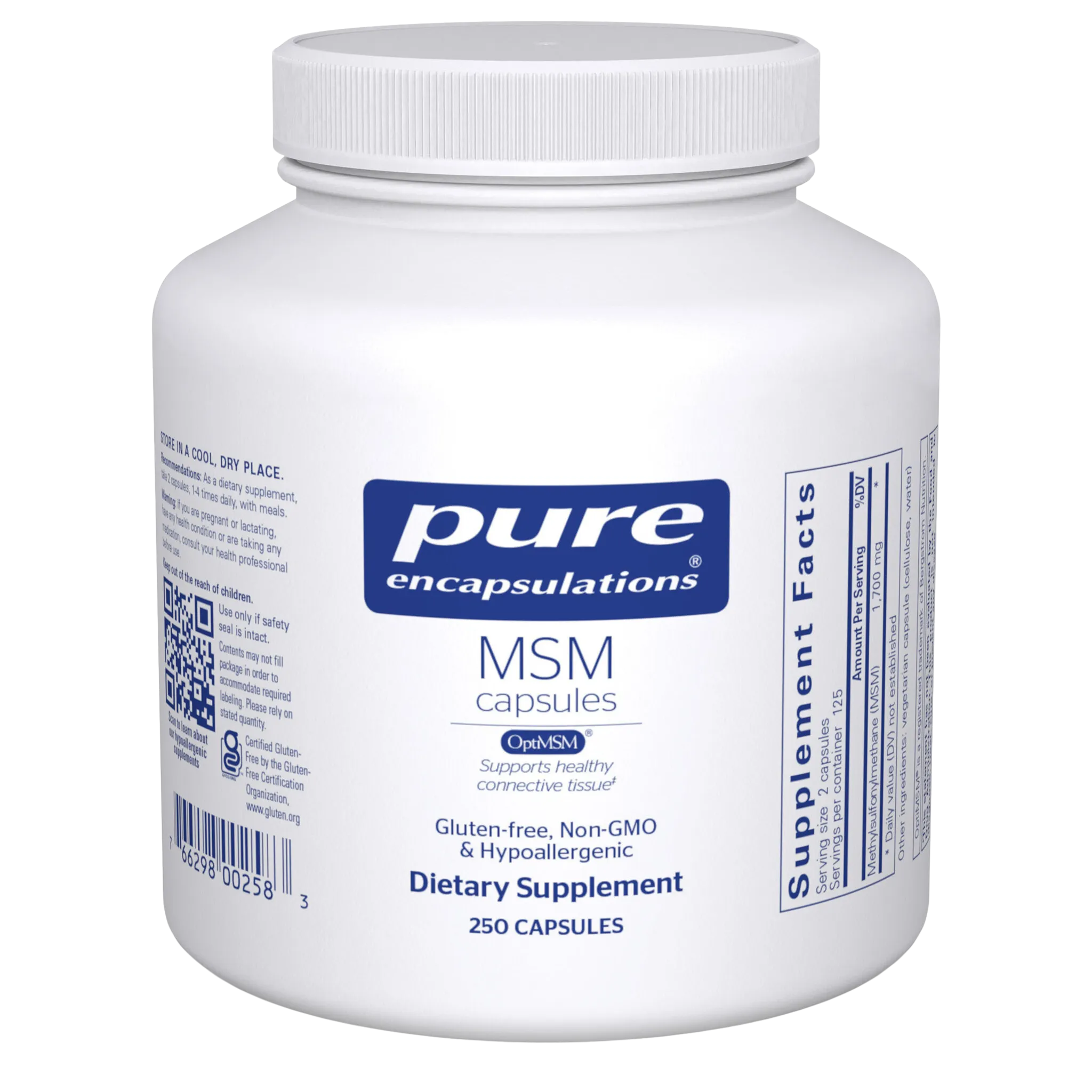
In clinical trials evaluating joint pain and exercise recovery, standard therapeutic dosages of MSM typically range from 1,500 mg to 6,000 mg per day. Because of its 12-hour half-life, it is generally recommended to split the total daily amount into two or three smaller doses taken throughout the day. For example, a patient might take two 1,700 mg capsules daily (one in the morning and one in the afternoon) to maintain steady blood levels of the compound.
To maximize absorption and minimize the risk of mild gastrointestinal upset, it is best to take MSM capsules with meals. Additionally, clinical nutritionists strongly advocate pairing MSM with Vitamin C. Vitamin C acts synergistically with MSM; both are absolutely essential for the synthesis of collagen and the repair of connective tissues. Vitamin C also provides its own potent antioxidant and antihistamine properties, creating a powerful combination for managing MCAS and joint degradation.
When starting MSM, a "start low and go slow" approach is highly recommended. Introducing a high dose too quickly can occasionally cause mild detoxification symptoms or digestive discomfort. Beginning with a single capsule and gradually titrating up over a few weeks allows the body to adjust to the increased sulfur availability and optimize its metabolic pathways without overwhelming the system.
Safety, Side Effects, and The "Sulfur Paradox"
The FDA officially recognizes MSM as Generally Recognized As Safe (GRAS), and extensive toxicological studies confirm it has a massive safety buffer. Most individuals tolerate MSM exceptionally well, with side effects being rare and typically limited to mild gastrointestinal issues like bloating or nausea. Clinical consensus generally indicates that MSM has a very low risk of interacting with most prescription medications. However, caution is advised for patients on blood thinners (like warfarin), as high doses of joint supplements may occasionally elevate bleeding risks.
Despite its safety, there is an important caveat for the chronic illness community known as the "sulfur paradox." While MSM is incredibly beneficial for clearing histamine and reducing inflammation, a specific subset of patients may experience severe adverse reactions. Individuals with genetic mutations in the Cystathionine Beta-Synthase (CBS) gene or those with impaired SULT enzymes may have roadblocks in their transsulfuration pathways. For these patients, taking high doses of sulfur can lead to an excess production of ammonia and glutamate, triggering a sudden spike in histamine and causing symptoms like flushing, brain fog, and anxiety.
If you have a known intolerance to sulfur-rich foods (like garlic, onions, or cruciferous vegetables) or have experienced severe reactions to other sulfur-based supplements, you should approach MSM with extreme caution. Working with a healthcare provider to address these genetic roadblocks using cofactors like molybdenum or vitamin B6 may be necessary before safely introducing MSM into your regimen. Always consult your medical team before starting any new supplement, especially if you have complex conditions like MCAS.

Follow the Science
Clinical Trials on Osteoarthritis and Joint Pain
The efficacy of MSM in treating joint pain and osteoarthritis is supported by a robust body of double-blind, placebo-controlled clinical trials. One of the most frequently cited studies is the 2004 trial by Usha and Naidu, which evaluated 118 patients with mild to moderate knee osteoarthritis. Patients were given either 1.5g of MSM, 1.5g of glucosamine, a combination of both, or a placebo for 12 weeks. The results were striking: patients taking MSM alone experienced a significant 33% reduction in pain scores. Furthermore, the combination of MSM and glucosamine yielded the most profound improvements in both pain reduction and functional joint mobility.
Another landmark pilot trial conducted by Kim et al. in 2006 investigated the effects of a higher dose (6g/day) of MSM on 50 men and women with osteoarthritis knee pain over 12 weeks. The MSM group showed a significant decrease in the Western Ontario and McMaster University Osteoarthritis Index (WOMAC) pain score and physical function impairment compared to the placebo. The study also noted improvements in performing activities of daily living, confirming MSM's role in supporting joint health and physical function.
More recently, a 2023 double-blind, placebo-controlled trial published in Nutrients evaluated healthy participants experiencing mild knee pain. After 12 weeks, the participants taking MSM showed significantly improved Japanese Knee Osteoarthritis Measure (JKOM) total scores. The supplement effectively improved morning stiffness, pain while standing, and overall systemic health conditions, reinforcing its utility not just for severe osteoarthritis, but for general joint maintenance and quality of life.
Exercise Recovery as a Proxy for PEM
Because direct clinical trials on ME/CFS and Long COVID are still emerging, researchers often look to sports medicine studies evaluating extreme exercise recovery to understand how supplements might mitigate the severe muscle damage and oxidative stress seen in post-exertional malaise (PEM). A highly relevant 2017 double-blind trial by Withee et al. evaluated 22 healthy runners preparing for a half-marathon. The treatment group took 3.0 grams of MSM daily for three weeks prior to the race. Post-race analysis revealed that MSM supplementation attenuated muscle and joint pain at clinically significant levels compared to the placebo, demonstrating its ability to protect against exertion-induced oxidative stress.
Similarly, a 2012 pilot study by Kalman et al. subjected moderately trained men to exhaustive knee extension exercises to induce muscular failure. Participants taking 3.0 g/day of MSM for 30 days showed a significant increase in their total antioxidant capacity and a marked decrease in muscle soreness and fatigue. These findings suggest that MSM rapidly bolsters the body's ability to clear the inflammatory debris generated by physical exertion, a mechanism that is highly applicable to patients trying to raise their functional baseline without triggering a PEM crash.
Furthermore, a recent 2021 study investigated the genomic impact of lower doses of MSM (0.5g to 1.0g/day) on runners. Blood samples taken post-run showed that MSM significantly altered the expression of 29 specific immune-response mRNAs. Notably, it decreased the expression of pro-inflammatory receptors, indicating that MSM helps resolve sterile inflammation and speeds up macrophage-driven muscle recovery at the cellular level.
Emerging Data on Allergic Rhinitis and Histamine
Beyond joint and muscle health, MSM has shown remarkable efficacy in managing allergic responses, making it highly relevant for patients dealing with MCAS and histamine intolerance. A multicenter, open-label trial by Barrager et al. (2002) observed 50 subjects suffering from seasonal allergic rhinitis. Participants consumed 2.6 grams of MSM daily for 30 days. By day 7, upper respiratory symptoms like nasal obstruction and sneezing were significantly reduced. Interestingly, plasma histamine levels did not change significantly, suggesting that MSM mitigates the downstream inflammatory cascade of histamine rather than just blocking its initial release.
This was further supported by a 2018 randomized, double-blind study by Hewlings et al., which evaluated healthy participants exposed to a standardized allergen challenge. The study found that daily consumption of 3g of MSM for 14 days was highly effective, decreasing all measured visual analog scale (VAS) nasal symptoms by over 53%. It also objectively improved nasal breathing, yielding a significant increase in Peak Nasal Inspiratory Flow (PNIF).
Finally, animal models have provided fascinating mechanistic insights into MSM's anti-histamine properties. In one study, researchers injected mice intradermally with histamine to provoke severe scratching behavior and vascular permeability—classic mast cell responses. The administration of MSM significantly inhibited this scratching behavior, demonstrating a direct, observable anti-inflammatory action at the dermal level that helps protect tissues from the damaging effects of histamine overload.
The Path Forward
Integrating MSM into Your Management Strategy
Living with the unpredictable symptoms of Long COVID, ME/CFS, dysautonomia, and MCAS requires immense resilience. It is entirely valid to feel frustrated when chronic joint pain, relentless fatigue, and systemic inflammation limit your ability to engage in daily life. While there are no miracle cures for these complex conditions, targeted nutritional support can play a vital role in improving your quality of life. By providing the essential sulfur needed to lower oxidative stress, dampen the NF-κB inflammatory pathway, and support tissue repair, MSM offers a scientifically grounded tool to help stabilize your symptoms.
However, supplements are most effective when integrated into a comprehensive, holistic management plan. MSM should be used alongside essential lifestyle strategies such as strict pacing to manage post-exertional malaise (PEM), careful symptom tracking, and dietary adjustments to support understanding mast cell activation syndrome (MCAS). By combining these approaches, you can create a more stable foundation for your body to heal and recover, helping you maintain your independence with chronic illness even during challenging times like surviving the holidays with a chronic illness.
A Collaborative Approach to Care
Because complex chronic illnesses involve highly individualized biochemistry—especially concerning sulfur metabolism and genetic mutations like CBS—it is crucial to approach supplementation collaboratively. Always consult with a knowledgeable healthcare provider before adding high-dose MSM to your regimen, particularly if you are taking blood thinners or have a history of severe sulfur intolerance. A medical professional can help you determine the optimal dosage, monitor for potential interactions, and ensure that your treatment plan is safely tailored to your unique physiological needs.