Can MotilPro Support Gut Motility for Long COVID and Dysautonomia Patients?
March 5, 2026
MotilProLong COVIDDysautonomia
Share:
Disclaimer: The information provided here is for educational purposes only and is not intended as medical advice. It should not be used to diagnose, treat, cure, or prevent any medical condition. Instead, use it as a starting point for discussion with your healthcare provider. Always consult with a qualified healthcare provider before starting any new medication, supplement, device, or making changes to your health regimen.
For many individuals living with complex chronic illnesses like Long COVID, myalgic encephalomyelitis/chronic fatigue syndrome (ME/CFS), and dysautonomia, gastrointestinal symptoms are among the most debilitating and difficult to manage. Patients frequently describe a profound inability to digest food normally, experiencing severe nausea, early satiety, chronic constipation, and painful bloating. These are not simply standard digestive issues; they are often the downstream result of profound neurological dysfunction, specifically involving the vagus nerve and the enteric nervous system. When the body's autonomic nervous system is stuck in a chronic state of "fight or flight," the essential "rest and digest" functions are effectively paralyzed, leaving patients struggling to maintain basic nutrition and hydration.
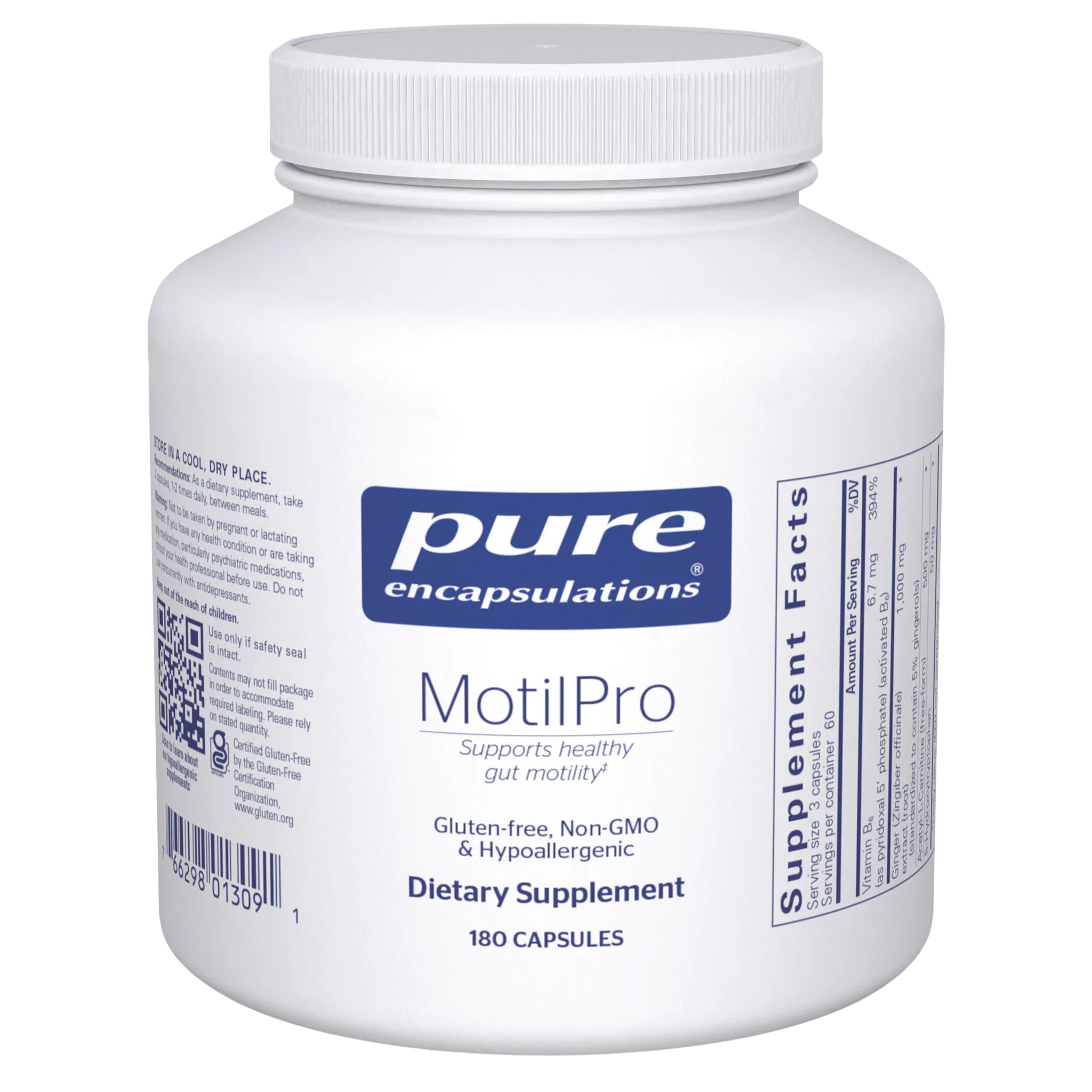
Finding targeted support for these neurologically driven gastrointestinal issues requires looking beyond standard antacids or laxatives. This is where specialized prokinetic formulas like MotilPro come into play. Designed to target the specific neurotransmitter pathways that govern gut motility, MotilPro combines 5-hydroxytryptophan (5-HTP), ginger extract, acetyl-l-carnitine, and activated vitamin B6 to support the intricate signaling between the brain and the gut. By focusing on both serotonergic and cholinergic neurotransmission, this unique formulation aims to restore the rhythmic muscle contractions necessary for healthy digestion. In this comprehensive guide, we will explore the precise mechanisms behind MotilPro, how chronic illness disrupts gut motility, and the clinical science supporting its key ingredients.
What is MotilPro?
The Enteric Nervous System and the "Second Brain"
To understand how a supplement like MotilPro functions, it is essential to first understand the profound complexity of the human digestive tract. The gut is governed by its own highly sophisticated neural network known as the enteric nervous system (ENS). Often referred to by researchers as the body's "second brain," the ENS contains over 500 million neurons—more than the spinal cord—and operates with a remarkable degree of independence from the central nervous system. This vast network of nerve fibers is embedded directly into the lining of the gastrointestinal system, stretching all the way from the esophagus to the rectum. The ENS is responsible for orchestrating the incredibly complex, synchronized muscle contractions required to break down food, absorb nutrients, and expel waste.
Because the ENS is a true nervous system, it relies entirely on chemical messengers, known as neurotransmitters, to communicate and execute its functions. Just as neurotransmitters in the brain regulate mood, memory, and cognition, neurotransmitters in the gut regulate motility, secretion, and blood flow. When these chemical signals are balanced and firing correctly, digestion is a seamless, unconscious process. However, when these signaling pathways are disrupted by viral infections, chronic inflammation, or autonomic dysfunction, the entire digestive assembly line grinds to a halt. MotilPro is specifically engineered to supply the raw materials and cofactors necessary to rebuild and support these critical neurotransmitter pathways, focusing primarily on serotonin and acetylcholine.
Serotonergic Signaling in the Gut
While serotonin is most famous for its role as a "feel-good" neurotransmitter in the brain, this reputation drastically overshadows its primary physiological function. Astonishingly, approximately 90 to 95 percent of the body's total serotonin is produced, stored, and utilized entirely within the gastrointestinal tract. Specialized cells lining the gut epithelium, known as enterochromaffin (EC) cells, are the primary factories for this gut-derived serotonin. In the enteric nervous system, serotonin acts as the master regulator of motility. When food enters the digestive tract, EC cells release serotonin, which then binds to specific receptors—most notably the 5-HT4 receptors—located on the nerve terminals of the ENS. This binding action triggers the peristaltic reflex, the coordinated wave of muscle contraction and relaxation that propels food downward.
MotilPro supports this vital pathway by providing a direct precursor to serotonin: 5-hydroxytryptophan (5-HTP). Unlike the amino acid L-tryptophan, which must undergo a complex rate-limiting conversion process, 5-HTP is readily absorbed by the enterochromaffin cells. Once inside, it requires a specific enzymatic cofactor to be converted into active serotonin. This is why MotilPro includes Vitamin B6 in its activated form, pyridoxal 5'-phosphate (P5P). The P5P acts as the essential catalyst for the decarboxylation of 5-HTP, ensuring that the precursor is efficiently transformed into the serotonin needed to stimulate the 5-HT4 receptors and initiate healthy gut contractions. Without adequate localized serotonin, the gut simply lacks the chemical signal required to move food forward.
Cholinergic Function and the Vagus Nerve
The second major pillar of gastrointestinal motility is cholinergic signaling, which is driven by the neurotransmitter acetylcholine. While the enteric nervous system can operate independently, it is heavily modulated and directed by the central nervous system via the vagus nerve. The vagus nerve is the primary conduit of the parasympathetic nervous system, responsible for the body's "rest and digest" state. When the vagus nerve fires, it releases massive amounts of acetylcholine into the gut, signaling the stomach to churn, the gallbladder to release bile, and the intestines to contract. This cholinergic transmission is the biological opposite of the sympathetic "fight or flight" response, which uses adrenaline to halt digestion during times of acute stress.
To support this crucial parasympathetic pathway, MotilPro includes Acetyl-L-Carnitine (ALCAR). ALCAR is a highly bioavailable, acetylated form of the amino acid carnitine that easily crosses cellular membranes and the blood-brain barrier. In the context of gut health, ALCAR serves a dual purpose. First, it acts as a powerful neuroprotective agent, supporting the overall health and structural integrity of autonomic neurons. Second, and most importantly for motility, it donates its acetyl group to choline, directly facilitating the synthesis of acetylcholine. By ensuring an abundant supply of acetylcholine, ALCAR helps maintain strong vagal tone and robust cholinergic signaling, providing the necessary excitatory signals to keep the digestive muscles active and coordinated.
How Dysautonomia and Long COVID Impact Gut Motility
Vagus Nerve Dysfunction (VND) and Viral Damage
To understand why supplements like MotilPro are so frequently utilized in the chronic illness community, we must examine how conditions like Long COVID and dysautonomia physically damage the digestive system. The unifying factor connecting these complex syndromes to severe digestive failure is Vagus Nerve Dysfunction (VND). When an individual contracts a virus like SARS-CoV-2, the pathogen does not solely affect the respiratory system; it can directly infiltrate the nervous system or trigger a massive, localized neuro-immune response. This post-viral inflammation can physically damage the vagus nerve, stripping away its protective myelin sheath or altering its structural integrity. Without a healthy vagus nerve, the brain loses its ability to send parasympathetic "digest" signals to the gut, leaving the patient trapped in a hyperadrenergic, sympathetic state.
The clinical evidence for this phenomenon is striking. A landmark pilot study presented at the 2022 European Congress of Clinical Microbiology and Infectious Diseases (ECCMID) investigated the vagus nerve's role in Long COVID. The researchers found that out of a cohort of 348 Long COVID patients, a staggering 66 percent exhibited clear clinical symptoms of Vagus Nerve Dysfunction. Even more concerning, detailed ultrasound evaluations revealed that 27 percent of these patients had visible, structural alterations to their vagus nerve in the neck, including abnormal thickening and increased echogenicity indicative of chronic inflammation. This structural damage perfectly explains the high prevalence of gastrointestinal symptoms seen with Long COVID, as the physical hardware required for digestion has been compromised.
Gastroparesis and the Migrating Motor Complex
When vagal signaling fails, one of the most immediate and debilitating consequences is gastroparesis, which translates literally to "stomach paralysis." In a healthy individual, the vagus nerve commands the stomach to vigorously churn and grind food into a liquid state before emptying it into the small intestine. In a patient with dysautonomia or severe Long COVID, this process slows to a crawl. Food sits stagnant in the stomach for hours or even days, fermenting and causing severe nausea, cyclical vomiting, debilitating bloating, and early satiety—the sensation of feeling completely full after only a few bites. Because this is a neurological signaling issue rather than a physical blockage, standard digestive enzymes or antacids offer little to no relief.
Beyond the stomach, vagus nerve dysfunction also paralyzes the Migrating Motor Complex (MMC). The MMC is a specialized pattern of electromechanical activity that sweeps through the stomach and small intestine during periods of fasting, typically every 90 to 120 minutes. Think of the MMC as the gut's internal street sweeper; its powerful waves of contraction clear out undigested food, cellular debris, and excess bacteria, pushing them down into the colon. When the MMC is sluggish or absent due to autonomic failure, bacteria from the large intestine can easily migrate upward and colonize the small intestine, leading to Small Intestinal Bacterial Overgrowth (SIBO). Prominent motility specialists, such as Dr. Linda Nguyen at Stanford University, have noted that roughly 25 percent of patients with Postural Orthostatic Tachycardia Syndrome (POTS) suffer from abnormally slow transit in the small bowel, making SIBO a frequent and miserable comorbidity.
The Neuro-Immune Cycle in ME/CFS
The relationship between autonomic dysfunction and gut motility is also deeply relevant to myalgic encephalomyelitis/chronic fatigue syndrome (ME/CFS). Many researchers believe that Long COVID can trigger ME/CFS through similar neuro-immune mechanisms. The Van Elzakker hypothesis, proposed by Dr. Michael Van Elzakker of Harvard Medical School, suggests that localized, persistent viral infections in or around the vagus nerve trigger a constant, localized immune response. The immune cells surrounding the nerve continuously release pro-inflammatory cytokines, which signal the brain to maintain a state of severe, flu-like sickness behavior, profound fatigue, and autonomic shutdown.
In this state of chronic neuro-inflammation, the enteric nervous system is essentially starved of the cholinergic and serotonergic signals it needs to function. The gut becomes increasingly permeable (leaky gut), allowing bacterial endotoxins to enter the bloodstream, which further fuels systemic inflammation and microglial activation in the brain. This creates a vicious, self-perpetuating cycle: neuro-inflammation halts gut motility, halted motility breeds bacterial overgrowth and systemic toxicity, and that toxicity further inflames the nervous system. Breaking this cycle requires targeted interventions that can manually stimulate the enteric nervous system and restore the flow of prokinetic neurotransmitters, which is the precise clinical target of MotilPro.
MotilPro: Supporting Healthy Gastrointestinal Function
5-HTP and the Peristaltic Reflex
MotilPro addresses the profound motility disruptions seen in chronic illness by directly supplying the raw materials needed to force the enteric nervous system back online. The inclusion of 5-hydroxytryptophan (5-HTP) is a highly targeted strategy to restore the peristaltic reflex. When vagal tone is low, the gut's natural production and release of serotonin often become blunted. By introducing exogenous 5-HTP, which is rapidly absorbed by the enterochromaffin cells and converted to serotonin via the P5P cofactor, MotilPro artificially boosts the localized serotonin pool. This flood of serotonin binds aggressively to the 5-HT4 receptors on the enteric neurons, sending a powerful, undeniable signal to the smooth muscle layers to begin contracting.
Furthermore, recent microbiological research has uncovered a fascinating secondary mechanism by which 5-HTP stimulates motility. A 2021 study published in PLoS Biology demonstrated that specific strains of gut bacteria can metabolize orally administered 5-HTP into a novel molecule called 5-hydroxyindole (5-HI). In animal models, researchers discovered that 5-HI acts as an incredibly potent stimulant of gut motility. It directly activates L-type calcium channels on colonic smooth muscle cells, triggering robust contractions and significantly accelerating the total gut transit time. This suggests that 5-HTP supplementation works both through direct human receptor activation and through synergistic microbial metabolism, providing a multi-pronged approach to overcoming intestinal paralysis.
Ginger's Dual Action on Gastric Emptying
While 5-HTP focuses heavily on the intestines, the ginger extract in MotilPro is specifically calibrated to address the stomach, making it a critical component for patients suffering from gastroparesis and severe nausea. MotilPro utilizes a highly concentrated ginger root extract standardized to contain 5% gingerols, the active pharmacological compounds in the plant. Gingerols act as potent, natural prokinetics through a sophisticated dual-action mechanism on the serotonergic system. First, much like 5-HTP, gingerols act as agonists at the 5-HT4 receptors, providing additional stimulatory signals to encourage the stomach muscles to churn and empty their contents into the duodenum.
Simultaneously, gingerols act as powerful antagonists (blockers) at the 5-HT3 receptors. The 5-HT3 receptors are located both in the enteric nervous system and in the brain stem's vomiting center. When these receptors are activated by inflammation or toxins, they trigger severe nausea and the physical act of vomiting. By binding to and blocking these 5-HT3 receptors, ginger effectively silences the nausea signals traveling along the gut-brain axis. This dual action—stimulating the 5-HT4 receptors to accelerate gastric emptying while blocking the 5-HT3 receptors to suppress nausea—makes highly concentrated ginger one of the most effective natural interventions for upper gastrointestinal dysmotility and post-viral stomach paralysis.
Acetyl-L-Carnitine for Neuronal Repair
The final piece of the MotilPro mechanism is Acetyl-L-Carnitine (ALCAR), which bridges the gap between immediate symptom relief and long-term neurological repair. While 5-HTP and ginger provide the immediate chemical signals required for muscle contraction, ALCAR works to heal the underlying "hardware" of the enteric nervous system. Chronic inflammation, such as that seen in Long COVID and ME/CFS, causes significant oxidative stress and damage to the enteric glia—the support cells that protect and nourish the gut's neurons. When these glial cells become reactive and inflamed (enteric gliosis), the entire neural network becomes hypersensitive and dysfunctional, leading to severe visceral pain and altered motility.
ALCAR combats this damage through its potent neurotrophic properties. Research suggests ALCAR can enhance cholinergic signaling, which exhibits significant antinociceptive (pain-blocking) effects, and support enteric neurons against inflammatory insults. By donating acetyl groups for the continuous synthesis of acetylcholine and providing direct antioxidant protection to the nerve fibers, ALCAR helps to slowly rebuild the structural integrity of the gut-brain axis, supporting a gradual return to healthy, autonomic regulation of digestion.

Symptoms MotilPro May Help Manage
Upper Gastrointestinal Symptoms
Because MotilPro targets the entire length of the gastrointestinal tract through systemic neurotransmitter modulation, it can help manage a wide spectrum of debilitating symptoms. In the upper GI tract, the combination of gingerols and serotonergic stimulation is particularly effective for symptoms associated with delayed gastric emptying. Patients dealing with post-viral gastroparesis or autonomic stomach paralysis often find relief from the following:
Severe Nausea and Vomiting: By blocking the 5-HT3 receptors in the enteric nervous system and the brain stem, the standardized ginger extract helps suppress the neurological triggers for cyclical nausea.
Early Satiety: By stimulating the 5-HT4 receptors, MotilPro encourages the stomach to relax and accommodate food properly, reducing the sensation of feeling painfully full after only a few bites.
Acid Reflux and GERD: Accelerating gastric emptying prevents food from sitting stagnant and fermenting in the stomach, which drastically reduces the upward pressure that forces stomach acid into the esophagus.
Lower Gastrointestinal Symptoms
In the lower GI tract, the robust cholinergic and serotonergic signaling provided by 5-HTP and Acetyl-L-Carnitine helps to re-establish the rhythmic, sweeping contractions of the intestines. This is crucial for patients trapped in the vicious cycle of sluggish motility and bacterial overgrowth. MotilPro is frequently utilized by functional medicine practitioners to manage:
Chronic Constipation: By artificially boosting localized serotonin levels, MotilPro triggers the peristaltic reflex arc, forcing the colonic smooth muscles to contract and move waste through the system.
Severe Bloating and Distension: By keeping the digestive tract moving, the formula prevents the stagnation and fermentation of food that produces painful, trapped intestinal gas.
SIBO Relapse Prevention: By stimulating the Migrating Motor Complex (MMC) during fasting states, MotilPro acts as an internal street sweeper, clearing out debris and preventing bacteria from migrating from the colon back into the small intestine.
Systemic Autonomic Symptoms
Because the gut and the brain are inextricably linked via the vagus nerve, improving enteric nervous system function often yields systemic benefits. When the gut is paralyzed and inflamed, it sends constant distress signals to the brain, exacerbating autonomic dysfunction. By supporting cholinergic signaling and reducing enteric inflammation, MotilPro may help manage broader neuro-immune symptoms:
Visceral Hypersensitivity: Acetyl-L-Carnitine's ability to reduce enteric gliosis and protect nerve fibers can help lower the threshold for visceral pain, making digestion a less painful process overall.
Vagal Tone Support: By providing the raw materials for acetylcholine synthesis, the formula supports the overall health and signaling capacity of the parasympathetic nervous system.
Gut-Brain Axis Brain Fog: By preventing the stagnation of food and subsequent bacterial endotoxemia (leaky gut), improving motility can reduce the systemic inflammatory burden that contributes to neuro-immune brain fog.
Practical Considerations: Forms, Dosing, and Absorption
Optimal Timing and the Fasting State
To maximize the efficacy of a prokinetic supplement like MotilPro, the timing of administration is just as critical as the ingredients themselves. Because one of the primary goals of this formula is to stimulate the Migrating Motor Complex (MMC) and prevent bacterial overgrowth, it must be taken in a way that aligns with the body's natural physiological rhythms. The MMC is uniquely designed to operate only during fasting states; the moment you consume caloric food, the sweeping waves of the MMC immediately halt to allow for digestion and absorption. Therefore, taking a prokinetic with a heavy meal completely negates its ability to clean the small intestine.
Clinical practitioners generally recommend taking MotilPro strictly between meals or immediately before bed on an empty stomach. A common dosing strategy for managing chronic motility issues or preventing SIBO relapse is to take three capsules at least two hours after dinner, right before sleep. This allows the 5-HTP, ginger, and acetyl-l-carnitine to flood the enteric nervous system during the longest fasting window of the day, ensuring that the MMC can sweep the small intestine continuously throughout the night. For more severe cases of gastroparesis, practitioners may recommend taking an additional dose upon waking, waiting at least an hour before consuming breakfast.
Bioavailability and Synergistic Ingredients
The specific forms of the ingredients in MotilPro are carefully selected to ensure maximum bioavailability, particularly for patients with compromised digestion. The inclusion of Vitamin B6 as pyridoxal 5'-phosphate (P5P) is a prime example. Standard Vitamin B6 (pyridoxine) must be processed and converted by the liver into its active P5P form before the body can use it. In patients with chronic illness, liver function and enzymatic conversions are often sluggish. By providing B6 already in its activated P5P state, MotilPro ensures that the 5-HTP has the immediate enzymatic support it needs to decarboxylate into serotonin directly within the gut lining, bypassing the need for hepatic conversion.
Similarly, the ginger extract is highly concentrated and standardized to contain 5% gingerols. This standardization is crucial because the concentration of active compounds in raw ginger root varies wildly depending on where and how it was grown. By guaranteeing a specific percentage of gingerols, the formula ensures a consistent, clinical-grade blockade of the 5-HT3 receptors. The Acetyl-L-Carnitine is provided in a free-form state, which allows it to easily cross cellular membranes and the blood-brain barrier without requiring extensive digestive breakdown, making it rapidly available for acetylcholine synthesis.
Critical Safety Warnings and Interactions
While MotilPro utilizes natural compounds, its profound effect on neurotransmitter levels necessitates strict safety precautions. This is critically important: Because MotilPro contains 5-HTP, which directly and rapidly increases serotonin levels in the body, it is strictly contraindicated for individuals taking Selective Serotonin Reuptake Inhibitors (SSRIs), Serotonin-Norepinephrine Reuptake Inhibitors (SNRIs), Monoamine Oxidase Inhibitors (MAOIs), or any other psychiatric medications that alter serotonin metabolism. Taking 5-HTP concurrently with these drugs used for COVID long haulers can lead to a rare but life-threatening condition known as Serotonin Syndrome, characterized by high fever, severe agitation, muscle rigidity, and seizures.
Additionally, the high dosage of ginger extract (1,000 mg per serving) can act as a mild natural anticoagulant, meaning it can slow down blood clotting. Patients who are actively taking prescription blood thinners (such as Warfarin or Eliquis), or those with bleeding disorders, must consult their healthcare provider before using this supplement to avoid the risk of excessive bleeding. Finally, some sensitive individuals may experience mild gastrointestinal upset, such as diarrhea or cramping, when first introducing 5-HTP, simply because the gut is rapidly waking up from a paralyzed state. It is always recommended to start with a lower dose and slowly titrate upward under the guidance of a functional medicine doctor or gastroenterologist.

Follow the Science
Clinical Trials on Ginger and Gastric Emptying
The use of ginger as a potent prokinetic is supported by robust, modern clinical trials utilizing advanced ultrasound technology to measure the exact speed of digestion. A landmark 2008 randomized, double-blind trial published in the European Journal of Gastroenterology & Hepatology evaluated the effects of ginger on 24 healthy volunteers. The participants ingested either 1,200 mg of ginger capsules or a placebo after an 8-hour fast, followed by a standardized liquid meal. The results were highly significant: the gastric half-emptying time (the time it takes for exactly half the food to leave the stomach) was drastically accelerated, clocking in at 13.1 ± 1.1 minutes for the ginger group compared to a sluggish 26.7 ± 3.1 minutes for the placebo group. Furthermore, the frequency of powerful antral contractions was significantly greater in the ginger group, proving its direct stimulatory effect on the stomach muscles.
These findings were further validated in a clinical population by a 2011 randomized trial published in the World Journal of Gastroenterology. This study tested ginger on patients suffering from functional dyspepsia, a condition characterized by abnormally delayed gastric emptying and chronic upper GI pain. Consistent with previous data, gastric emptying was significantly more rapid after ginger ingestion, with a median half-emptying time of 12.3 minutes compared to 16.1 minutes for the placebo. While short-term symptom relief varied among participants, the objective ultrasound data definitively proved that concentrated gingerols possess the pharmacological capability to force a paralyzed stomach to empty its contents at an accelerated rate.
Research on 5-HTP and Enteric Signaling
The scientific understanding of 5-HTP's role in gut motility has expanded significantly in recent years, moving beyond simple receptor activation to include complex microbiome interactions. A fascinating 2021 study published in PLoS Biology explored how gut bacteria metabolize orally administered 5-HTP. The researchers discovered that specific microbial strains convert 5-HTP into a molecule called 5-hydroxyindole (5-HI). When tested in animal models, 5-HI acted as an incredibly potent stimulant of gut motility. It directly activated L-type calcium channels on colonic smooth muscle cells, triggering robust contractions and significantly accelerating the total gut transit time. This research highlights that the 5-HTP in MotilPro likely works through a dual mechanism: direct conversion to serotonin for 5-HT4 receptor activation, and microbial conversion to 5-HI for direct smooth muscle stimulation.
Acetyl-L-Carnitine in Neuropathy and Visceral Pain
The neuroprotective and regenerative properties of Acetyl-L-Carnitine (ALCAR) have been extensively documented in the context of peripheral neuropathies, and this research is now being applied to the enteric nervous system. Preclinical research suggests ALCAR can enhance cholinergic signaling, producing significant antinociceptive (pain-blocking) effects. It may also reduce enteric gliosis—the inflammatory activation of the gut's support cells—and protect the fragile enteric neurons from inflammatory insults. This data strongly supports the clinical rationale for using ALCAR to repair the underlying neurological damage that drives chronic motility disorders in post-viral syndromes.
The Path Forward
Validating the Complexity of Gut-Brain Disorders
Living with severe gastrointestinal dysmotility is an incredibly isolating and exhausting experience. When your body loses the basic ability to digest food, it impacts every single aspect of your life, from your energy levels to your social interactions. If you are struggling with gastroparesis, severe bloating, or chronic nausea as a result of Long COVID, ME/CFS, or dysautonomia, it is crucial to understand that these symptoms are not "all in your head," nor are they simply the result of a poor diet. They are the physical manifestations of profound neurological and autonomic dysfunction. Validating this reality is the first step toward finding effective management strategies. Understanding how you can live with long-term COVID means recognizing that your gut needs specialized, neurological support to function properly again.
A Comprehensive Approach to Motility
While targeted prokinetic supplements like MotilPro can be incredibly powerful tools for restoring serotonergic and cholinergic signaling, they are most effective when integrated into a comprehensive, multi-disciplinary management plan. Rebuilding the gut-brain axis requires a holistic approach. This may include dietary modifications, such as eating smaller, more frequent meals that are lower in fat and fiber to reduce the mechanical burden on a paralyzed stomach. It may also involve the use of non-invasive Vagus Nerve Stimulation (VNS) devices to manually increase parasympathetic tone, or the careful application of prescription neuromodulators under the guidance of a motility specialist. Pacing your physical and cognitive exertion is also vital, as pushing through crashes only further depletes the autonomic nervous system.
Next Steps in Your Management Plan
If you are battling the complex, overlapping symptoms of chronic illness and suspect that vagus nerve dysfunction is driving your gastrointestinal distress, targeted nutritional support may help you regain ground. By providing the essential precursors for serotonin and acetylcholine, alongside the powerful prokinetic effects of concentrated ginger, MotilPro offers a science-backed approach to waking up a sluggish digestive tract. Always remember to consult with your primary care physician or a functional medicine specialist before introducing new supplements, especially to ensure there are no interactions with your current medications. With patience, targeted support, and comprehensive care, it is possible to improve your motility and reclaim your quality of life.