Can L-Lysine Support Immune Health and Viral Suppression in Long COVID and ME/CFS?
March 6, 2026
L-LysineLong COVIDME/CFS
Share:
Disclaimer: The information provided here is for educational purposes only and is not intended as medical advice. It should not be used to diagnose, treat, cure, or prevent any medical condition. Instead, use it as a starting point for discussion with your healthcare provider. Always consult with a qualified healthcare provider before starting any new medication, supplement, device, or making changes to your health regimen.
Living with complex chronic conditions like Long COVID, myalgic encephalomyelitis/chronic fatigue syndrome (ME/CFS), mast cell activation syndrome (MCAS), and dysautonomia often feels like navigating a labyrinth without a map. You might experience periods of relative stability, only to be suddenly derailed by a severe "crash," a resurgence of debilitating fatigue, or a flare-up of seemingly random symptoms like sore throats, swollen lymph nodes, and profound joint pain. For many patients, these unpredictable symptom flares are not just random fluctuations; they are the physiological echoes of latent viral reactivation, widespread connective tissue dysfunction, and chronic immune exhaustion. When your immune system is locked in a perpetual battle and your structural tissues are compromised, your body rapidly burns through its foundational nutritional reserves, leaving you depleted at a cellular level.
This is where targeted amino acid therapy comes into the clinical spotlight. L-Lysine, an essential amino acid that your body cannot produce on its own, has emerged as a critical tool in functional and integrative medicine for managing these exact mechanisms. Far more than just a simple building block for dietary protein, L-Lysine acts as a potent biochemical modulator. It plays an indispensable role in synthesizing the collagen that stabilizes hypermobile joints, facilitating the calcium absorption required for bone density, and, perhaps most importantly, orchestrating a targeted defense against the reactivation of dormant viruses like the Epstein-Barr Virus (EBV). In this comprehensive guide, we will explore the intricate molecular biology of L-Lysine, examining how it supports immune health, cellular repair, and structural integrity for those navigating the complexities of chronic illness.
What is L-Lysine?
The Essential Amino Acid Paradigm
Amino acids are frequently referred to as the building blocks of life, and among them, L-Lysine holds a uniquely critical position. As an "essential" alpha-amino acid, the human body lacks the enzymatic machinery required to synthesize L-Lysine from other compounds, meaning it must be entirely sourced through diet or strategic supplementation. At a molecular level, L-Lysine is highly amphipathic, featuring a positively charged, hydrophilic (water-loving) amino group at one end and a hydrophobic (water-repelling) carbon tail at the other. This unique dual-natured chemical structure allows L-Lysine to interact dynamically within the body, binding to and stabilizing complex protein structures through a combination of hydrogen bonds and hydrophobic interactions. Without a constant and adequate supply of this essential nutrient, the body's ability to repair damaged tissues and mount an effective immune response is severely compromised.
Beyond its structural role, L-Lysine serves as a vital metabolic precursor for several life-sustaining biochemical pathways. For instance, L-Lysine is the foundational raw material used by the body to synthesize carnitine, an amino acid derivative that acts as a shuttle bus within your cells. Carnitine is responsible for transporting long-chain fatty acids across the inner mitochondrial membrane, where they undergo beta-oxidation to produce adenosine triphosphate (ATP), the primary energy currency of the cell. Without adequate L-Lysine, carnitine production falters, leading to impaired mitochondrial energy output—a biochemical bottleneck that can manifest as profound, cellular-level fatigue. Furthermore, L-Lysine acts as a partial antagonist at specific serotonin receptors in the central nervous system, a mechanism that can help modulate the body's physiological stress response and lower circulating cortisol levels.
The Biochemistry of Collagen Cross-Linking
One of L-Lysine's most critical physiological functions is its indispensable role in the synthesis and stabilization of collagen. Collagen is the most abundant protein in the human body, serving as the primary structural framework for skin, bones, tendons, ligaments, and the endothelial lining of blood vessels. However, raw collagen peptides are inherently weak and prone to unraveling. For collagen fibers to achieve their legendary tensile strength and elasticity, they must undergo a complex biochemical maturation process known as covalent cross-linking, a process entirely dependent on the presence of L-Lysine. This structural integrity is what allows our joints to bear weight and our blood vessels to withstand the sheer force of circulating blood.
Within the precursor collagen molecules, specific L-Lysine residues must be chemically altered through a process called hydroxylation. This reaction is catalyzed by a specialized enzyme known as lysyl hydroxylase, which strictly requires Vitamin C as a crucial cofactor to function. Once the L-Lysine is converted into hydroxylysine, these newly formed molecules act like biochemical molecular glue. They bind together to create strong covalent cross-links between the three helical polypeptide chains that make up a collagen fiber. These cross-links function much like the rungs on a ladder or the steel rebar within concrete, preventing the collagen fibers from sliding past one another under physical stress. Research demonstrates that without adequate L-Lysine, this cross-linking process fails, resulting in a fragile, disorganized collagen matrix that contributes to joint instability, poor wound healing, and compromised vascular integrity.
Calcium Homeostasis and Renal Retention
In addition to its structural duties, L-Lysine is heavily implicated in the delicate balance of calcium homeostasis, playing a dual role in both drawing calcium into the body and preventing its premature excretion. Calcium is, of course, vital for maintaining bone mineral density, but it is also an essential electrolyte required for proper nerve transmission, muscle contraction, and autonomic nervous system signaling. L-Lysine actively enhances the intestinal absorption of dietary calcium, ensuring that the minerals you consume actually make it across the gut lining and into systemic circulation. This is particularly important for patients with chronic gastrointestinal issues or malabsorption syndromes, where nutrient uptake is often severely impaired.
Simultaneously, L-Lysine exerts a profound protective effect within the kidneys. As blood is filtered through the renal system, L-Lysine binds to negatively charged proximal tubular cells. This binding action competitively inhibits the tubular reabsorption of other positively charged proteins and significantly blunts the renal excretion of calcium. In simpler terms, L-Lysine acts as a molecular gatekeeper, preventing valuable calcium from being flushed out of the body in your urine. A foundational clinical study on calcium metabolism demonstrated that when subjects were administered an oral calcium load alongside L-Lysine, they exhibited a significantly blunted "calciuric response," meaning they retained far more calcium compared to the control group. This dual mechanism makes L-Lysine a critical nutrient for preserving bone health, particularly for patients who may be bedbound or experiencing reduced physical activity due to chronic illness.
How Chronic Illness Impacts Connective Tissue and Immunity
The Viral Reactivation Cycle in Long COVID and ME/CFS
To understand why L-Lysine is so relevant to chronic illness, we must examine the pathophysiology of viral reactivation. Increasing evidence suggests that Long COVID and ME/CFS are frequently driven by the reactivation of dormant viruses—most notably the Epstein-Barr Virus (EBV), a member of the herpesvirus family. When a healthy individual is initially infected with EBV, the immune system eventually forces the virus into a latent, dormant state, where it hides quietly within memory B-cells. However, when the body experiences a massive immunological shock—such as a severe SARS-CoV-2 infection—the immune system's surveillance mechanisms can fail. This phenomenon is often referred to as an acquired immunodeficiency, allowing these dormant viruses to wake up and begin replicating once again. You can learn more about the origins of these post-viral cascades in our guide on What Causes Long COVID?.
A comprehensive 2023 review on EBV acquired immunodeficiency in ME/CFS proposes a unifying model in which latent EBV reactivation produces a CD4 T-cell immunodeficiency. This permits the formation of chronic innate inflammation, eventual immune exhaustion, and the generation of autoantibodies. When EBV reactivates, it enters the lytic cycle, actively hijacking the host's cellular machinery to synthesize new viral capsids and replicate its DNA. This process is highly metabolically demanding and heavily reliant on specific amino acids circulating in the patient's bloodstream. The continuous, low-grade viral replication drives a perpetual state of neuro-inflammation, which manifests clinically as the severe brain fog, unrefreshing sleep, and post-exertional malaise (PEM) that define ME/CFS and Long COVID.
The Connective Tissue Connection in Dysautonomia
Another major piece of the chronic illness puzzle is the profound overlap between dysautonomia, specifically Postural Orthostatic Tachycardia Syndrome (POTS), and connective tissue disorders like hypermobile Ehlers-Danlos Syndrome (hEDS). Dysautonomia is characterized by a dysfunction of the autonomic nervous system, leading to abnormal heart rates and blood pressure fluctuations upon standing. In patients with hypermobility, the underlying cause of this autonomic dysfunction is often structural. Because their collagen is genetically faulty or poorly cross-linked, their blood vessels are overly stretchy and compliant. When they stand up, these lax blood vessels fail to constrict properly, allowing blood to pool in the lower extremities and depriving the brain of adequate oxygen.
The connection between L-Lysine and connective tissue fragility is most explicitly seen in rare genetic variants, such as Kyphoscoliotic EDS (EDS Type VI). According to genetic data from MedlinePlus, this condition is caused by a mutation in the PLOD1 gene, which provides instructions for making the lysyl hydroxylase enzyme. Without this enzyme, L-Lysine cannot be converted into hydroxylysine, and collagen cross-links completely fail to form. While most patients with hEDS or Long COVID do not have this specific severe mutation, the biological principle remains the same: any depletion in L-Lysine or impairment in its hydroxylation pathway directly compromises the tensile strength of the vascular walls and joint capsules, exacerbating the symptoms of dysautonomia and widespread joint pain.
The Toll of Chronic Immune Activation
When the body is trapped in a cycle of chronic inflammation—whether from viral reactivation, mast cell degranulation, or autoimmune processes—it rapidly burns through its nutritional reserves. The biological cost of maintaining a heightened immune response is staggering. Animal models and immunological studies have quantified that upregulating both the innate and adaptive immune systems requires up to 10% of the body's total dietary L-Lysine intake. The immune system uses this amino acid to rapidly synthesize acute-phase proteins, cytokines, and clonal expansions of white blood cells. If the dietary intake or absorption of L-Lysine cannot keep up with this massive metabolic demand, the patient enters a state of localized amino acid depletion.
This depletion creates a vicious cycle. As L-Lysine levels drop, the body's ability to produce neutralizing antibodies against reactivated viruses diminishes, allowing the viral load to increase further. Simultaneously, the lack of available L-Lysine means that structural repairs to tissues damaged by inflammation are put on hold, leading to deteriorating joint health, thinning hair, and fragile skin. This interconnected web of immune dysregulation and nutritional depletion is a hallmark of complex chronic illness. To explore how these inflammatory loops affect the body on a systemic level, read our in-depth article on Autoimmunity and Immune Dysregulation in Long COVID.
L-Lysine: Supporting Immune Function and Cellular Repair
The Arginine-Lysine Competitive Antagonism
The most clinically significant mechanism by which L-Lysine supports patients with Long COVID and ME/CFS is through its potent antiviral properties, specifically its ability to suppress herpesviruses like EBV and Herpes Simplex Virus (HSV). To understand this mechanism, we must look at how viruses build themselves. Viruses in the herpes family are entirely dependent on the amino acid L-arginine to synthesize their viral proteins, construct their protective capsids, and replicate their DNA. Without a constant supply of L-arginine, the virus cannot maintain its lytic cycle and is forced back into a state of dormancy.
L-Lysine and L-arginine are chemical "twin brothers" that share the exact same cellular transport pathways, specifically the cationic amino acid transporter (CAT-1). Because they use the same doorway to enter cells, they are in constant competition. By supplementing with high, therapeutic doses of L-Lysine, patients can intentionally flood their bloodstream, competitively inhibiting the absorption and cellular uptake of L-arginine. A 2022 narrative literature review in the British Journal of Clinical Pharmacology concluded that altering the host's nutritional status to raise the lysine-to-arginine ratio effectively disrupts viral adhesion and protein production. When the virus attempts to build new particles, it mistakenly incorporates L-Lysine into its structure instead of arginine, creating defective, non-functional viral clones that immediately degrade, effectively halting the reactivation flare.
Restoring the Collagen Matrix and Tissue Integrity
Beyond viral suppression, L-Lysine supplementation provides the essential raw materials needed to repair the structural damage caused by chronic illness. For patients with hypermobility spectrum disorders or dysautonomia, providing the body with an abundance of L-Lysine (often paired with Vitamin C) ensures that the lysyl hydroxylase enzyme has the substrates it needs to maximize collagen cross-linking. While supplementation cannot rewrite faulty genetic codes in conditions like hEDS, clinical anecdotes and integrative protocols suggest that optimizing L-Lysine levels can significantly improve baseline tissue resilience, reducing the frequency of micro-tears in joint capsules and promoting faster recovery from physical exertion.
Furthermore, L-Lysine's role in tissue repair extends to the mucous membranes and vascular endothelium. In conditions like Mast Cell Activation Syndrome (MCAS), chronic histamine release causes profound inflammation and increased permeability of the blood vessels and gut lining. By supporting the synthesis of strong, cross-linked collagen, L-Lysine helps reinforce these barrier tissues, potentially reducing the systemic leakage of inflammatory mediators. For more information on managing the widespread tissue inflammation associated with mast cell degranulation, explore our comprehensive guide on Ketotifen: Unveiling Relief for the Hidden Battles of MCAS, Long COVID, ME/CFS, and Dysautonomia.
Modulating the Immune Response and Antibody Production
L-Lysine is not merely a passive building block; it actively participates in the orchestration of the adaptive immune system. It is a fundamental requirement for the synthesis of immunoglobulins, the specialized antibodies (such as IgG, IgA, and IgM) that the immune system uses to identify and neutralize foreign pathogens. When a patient is fighting a chronic, low-grade infection or navigating the aftermath of a severe viral insult like SARS-CoV-2, robust antibody production is essential for clearing residual viral debris and preventing secondary infections. By ensuring L-Lysine sufficiency, patients provide their B-cells with the necessary components to manufacture these critical defense molecules.
Additionally, emerging research indicates that L-Lysine possesses direct immunomodulatory properties that can help calm an overactive immune system. Research using a murine model of autoimmune hepatitis found that daily L-Lysine supplementation successfully attenuated immune-mediated tissue injury by decreasing the expression of pro-inflammatory cytokines, including TNF-α, IL-6, and IL-1β. It also curbed the overactive infiltration of CD4+ and CD8+ T lymphocytes into the affected tissues. For patients with Long COVID and ME/CFS, who are often trapped in a state of chronic, systemic hyper-inflammation, this ability to downregulate pro-inflammatory cytokine cascades while simultaneously supporting targeted antiviral defenses makes L-Lysine a highly valuable therapeutic agent.
Symptoms L-Lysine May Help Manage
Targeted Symptom Relief
Because L-Lysine operates at the foundational level of protein synthesis, viral suppression, and immune modulation, its clinical benefits can be felt across multiple physiological systems. For patients managing the complex, overlapping symptoms of Long COVID, ME/CFS, and dysautonomia, targeted L-Lysine supplementation may help alleviate several debilitating issues. Below is a breakdown of the specific symptoms L-Lysine targets and the mechanisms behind its efficacy:
Frequent Viral Flares and Sore Throats: By competitively inhibiting arginine uptake, L-Lysine starves reactivated herpesviruses (like EBV and HSV), reducing the frequency of swollen lymph nodes, chronic sore throats, and low-grade fevers associated with viral flares.
Joint Instability and Slow Wound Healing: As a mandatory precursor for collagen cross-linking, L-Lysine provides the structural glue needed to stabilize hypermobile joints, reduce skin tearing, and accelerate the healing of micro-injuries in connective tissues.
Brain Fog and Neuro-immune Fatigue: By suppressing latent viral replication, L-Lysine helps lower the systemic production of pro-inflammatory cytokines and neurotoxins, which are primary drivers of the severe cognitive dysfunction and brain fog seen in ME/CFS.
Hair Loss and Brittle Nails: L-Lysine significantly enhances the intestinal absorption of vital minerals, including calcium and iron. Correcting underlying iron malabsorption helps combat the telogen effluvium (hair loss) frequently experienced by patients with chronic post-viral illness.
Gum and Lip Tissue Lesions: L-Lysine is highly effective at maintaining the integrity of mucous membranes and is clinically proven to reduce the frequency, duration, and severity of cold sores and oral lesions caused by the Herpes Simplex Virus.
Practical Considerations: Forms, Dosing, and Absorption
Understanding L-Lysine Monohydrochloride
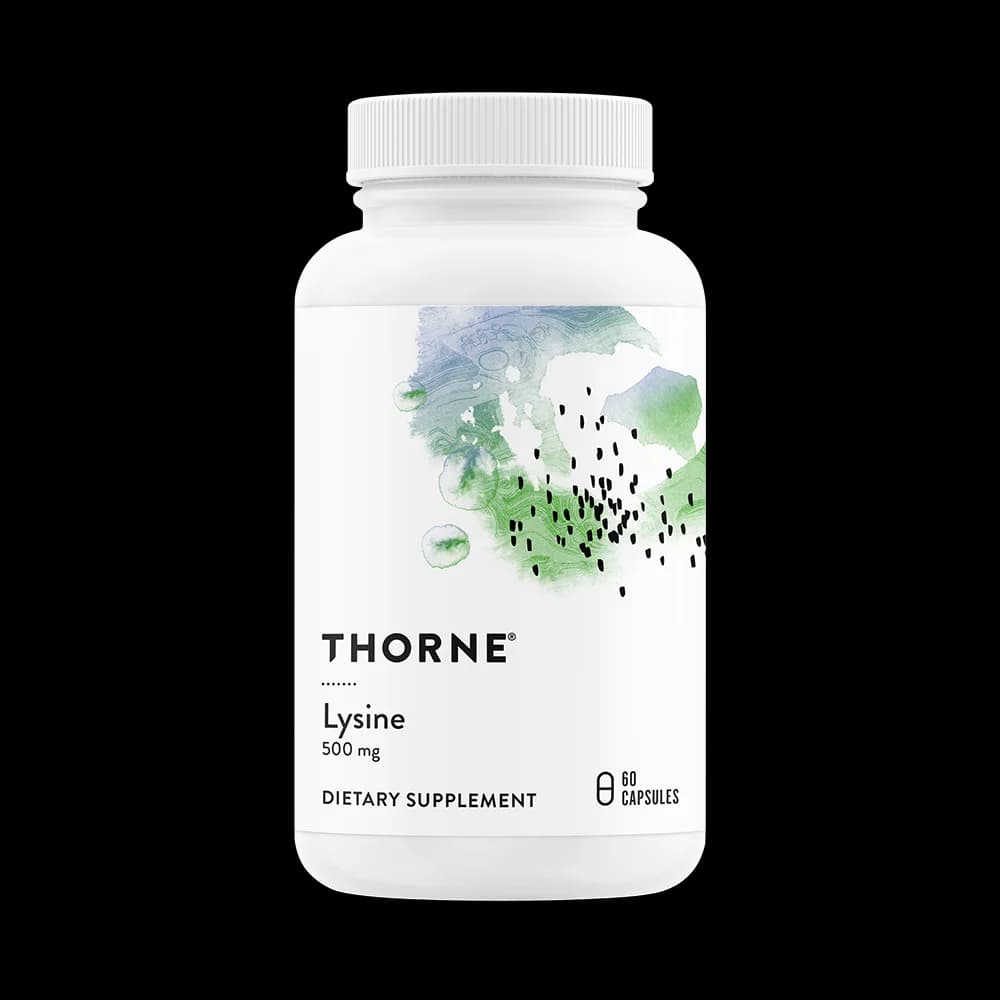
When selecting an amino acid supplement, the specific chemical form dictates its stability, purity, and how effectively your body can utilize it. Pure L-Lysine in its free-base form is highly hygroscopic, meaning it rapidly absorbs moisture from the air, making it unstable and difficult to manufacture into reliable dosages. To solve this, high-quality supplements, such as Thorne's L-Lysine, utilize L-Lysine Monohydrochloride (HCl). In this form, the L-Lysine molecule is bound to a hydrochloric acid salt, which perfectly stabilizes the amino acid for long-term storage and precise dosing without altering its biological efficacy.
Once an L-Lysine HCl capsule is swallowed and enters the highly acidic environment of the human stomach, the salt bond effortlessly dissociates. The hydrochloric acid simply blends into your natural gastric juices, leaving behind the pure, free-form L-Lysine ready for immediate absorption. According to foundational biological assays, the true digestibility and cellular bioavailability of crystalline L-Lysine HCl is virtually 100%. This ensures that every milligram you consume is actively delivered to your bloodstream, providing reliable and potent support for immune function and collagen synthesis.
Bioavailability and Absorption Dynamics
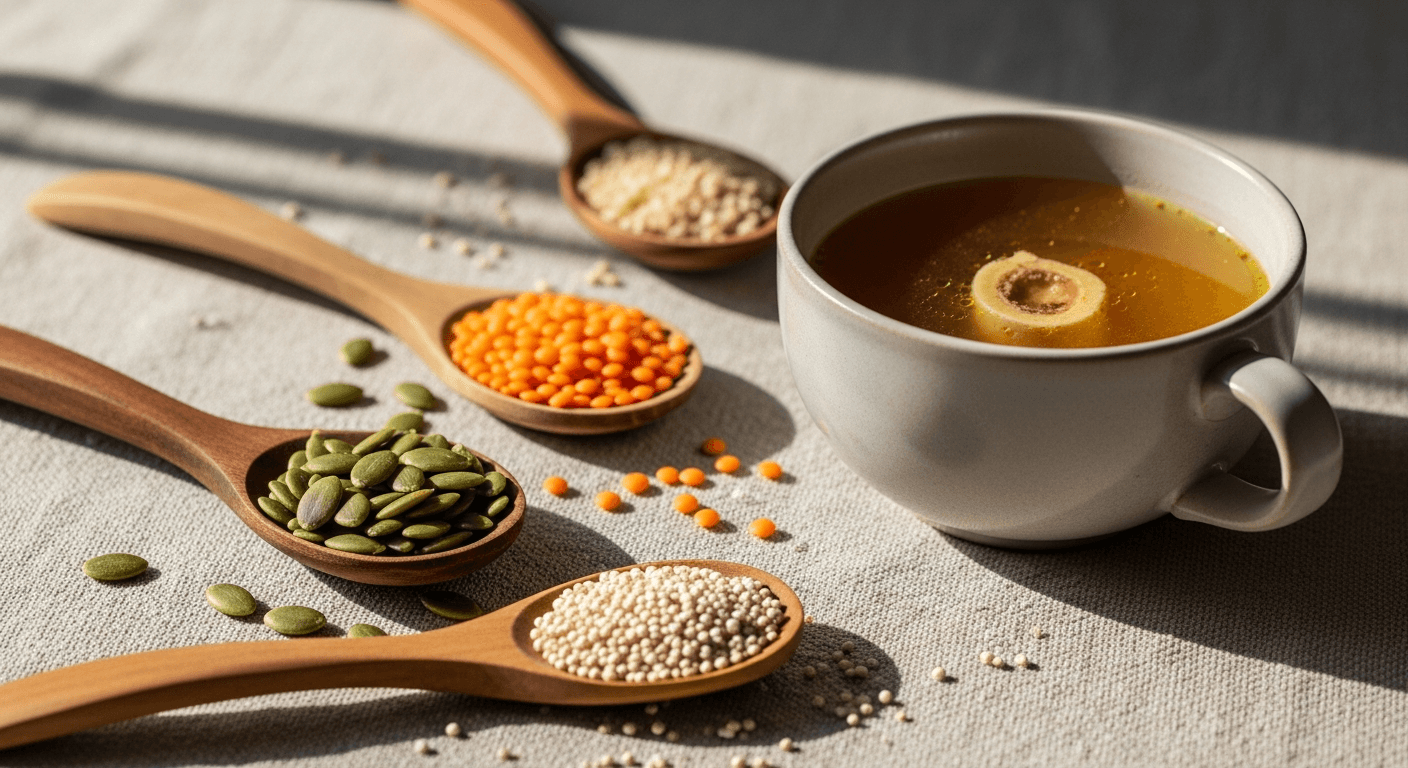
The absorption dynamics of L-Lysine are highly efficient but require strategic timing for optimal clinical results. L-Lysine is rapidly absorbed in the small intestine via specific active amino acid transporters and is shuttled directly to the liver via portal circulation. When taken as an isolated, free-form supplement, L-Lysine appears in the bloodstream significantly faster than when it is digested from intact dietary proteins (like meat or legumes), because it bypasses the lengthy enzymatic breakdown of complex peptide bonds. This rapid absorption allows patients to quickly achieve the high serum concentrations required to competitively inhibit arginine and suppress viral replication.
However, because L-Lysine shares intestinal transport pathways with other amino acids, it is highly recommended to take the supplement away from food, ideally on an empty stomach or between meals. Taking it alongside a heavy, protein-rich meal forces the L-Lysine to compete with other dietary amino acids for absorption, which can blunt the therapeutic spike in blood serum levels. Additionally, pairing L-Lysine with a high-quality Vitamin C supplement can synergistically enhance its efficacy, as Vitamin C is the mandatory cofactor required by the lysyl hydroxylase enzyme to convert L-Lysine into the cross-linking hydroxylysine used in collagen repair.
Dosing Strategies and Safety Profile
The clinical dosing of L-Lysine varies significantly depending on the therapeutic goal. For general immune support and collagen maintenance, standard doses range from 500 mg to 1,000 mg daily. However, for active viral suppression—such as managing an EBV flare in ME/CFS or an acute HSV outbreak—clinical protocols frequently utilize much higher doses, ranging from 1,000 mg to 3,000 mg per day, often divided into multiple smaller doses to maintain consistent blood serum levels. It is important to note that taking under 1,000 mg daily is generally considered ineffective for halting active viral replication, as it does not sufficiently alter the arginine-to-lysine ratio.
L-Lysine boasts an excellent safety profile. A comprehensive systematic review of clinical trials established the No-Observed-Adverse-Effect Level (NOAEL) for healthy humans at a massive 6.0 grams (6,000 mg) per day. Toxicity is exceedingly rare because excess L-Lysine is efficiently excreted by the kidneys. However, high-dose L-Lysine therapy (over 3,000 mg/day) is typically utilized as a targeted intervention during active flares, rather than a permanent, lifelong daily regimen. Chronically starving the body of arginine for years on end can potentially impact cardiovascular health, as arginine is required for the production of nitric oxide, a molecule that dilates blood vessels. Patients who are pregnant, nursing, or have severe renal impairment should consult their healthcare provider before initiating high-dose amino acid therapy.

Follow the Science
Clinical Trials on Viral Suppression
The scientific literature supporting L-Lysine's role in viral suppression and immune modulation is robust and spans several decades. The foundational benchmark for L-Lysine therapy was established by a double-blind, placebo-controlled multicenter trial by Griffith et al., which tested the efficacy of L-Lysine on herpesvirus outbreaks. In this rigorous study, the treatment group received 1,000 mg of L-Lysine three times a day (3,000 mg total daily) for six months. The results were definitive: the L-Lysine group experienced significantly fewer viral infections, drastically reduced symptom severity, and substantially faster healing times compared to the placebo group, proving the clinical viability of the arginine-antagonism mechanism.
More recently, researchers have begun applying these virological principles to the chronic fatigue and immune exhaustion seen in post-viral syndromes. A 2022 pilot observational case-control study published in MDPI assessed a multicomponent nutritional intervention containing 900 mg of L-Lysine in COVID-19 survivors suffering from chronic fatigue. The study found that patients receiving the lysine-rich intervention showed significant improvements in physical performance and fatigue reduction compared to the control group. Furthermore, cutting-edge preprint research on ME/CFS and Long COVID has demonstrated that these patients exhibit heightened EBV and HSV-1 reactivation, which directly disrupts mitochondrial dynamics and induces cellular damage, underscoring the urgent need for targeted antiviral amino acid therapies like L-Lysine.
Research on Connective Tissue and Bone Health
Beyond virology, L-Lysine's impact on structural integrity and mineral absorption is well-documented in clinical literature. A foundational study on calcium metabolism in humans investigated the acute effects of an oral calcium load administered with or without L-Lysine in osteoporotic women. The researchers discovered that the subjects given L-Lysine exhibited a significantly blunted calciuric response, meaning the amino acid successfully inhibited the kidneys from flushing calcium out in the urine. This dual action of boosting intestinal absorption while preventing renal loss makes L-Lysine a powerful adjunct therapy for maintaining bone density, particularly for patients whose physical activity is limited by profound post-exertional malaise.
In the realm of connective tissue disorders, genetic studies have definitively linked L-Lysine processing to collagen stability. Research on the PLOD1 gene mutation in Kyphoscoliotic EDS proved that a total failure to hydroxylate L-Lysine results in a complete absence of collagen cross-links, leading to severe hypermobility and tissue fragility. While most patients do not have this extreme mutation, the data clearly illustrates that L-Lysine is the non-negotiable biochemical linchpin for structural integrity. Understanding these deep physiological connections is vital for patients trying to untangle the web of overlapping conditions; you can explore these complex relationships further in our article, Can Long COVID Trigger ME/CFS? Unraveling the Connection.
The Path Forward
A Comprehensive Approach to Healing
Navigating the daily realities of Long COVID, ME/CFS, and dysautonomia is an exhausting and often isolating experience. When your body is constantly fighting invisible battles against reactivated viruses, compromised connective tissue, and autonomic dysfunction, it is entirely valid to feel overwhelmed by the sheer complexity of your symptoms. It is crucial to remember that these conditions are rooted in profound, measurable physiological disruptions—not in anxiety or deconditioning. By understanding the biochemical mechanisms driving your symptoms, such as the arginine-dependent viral replication cycle or the mechanics of collagen cross-linking, you empower yourself to make targeted, science-backed decisions about your health. If you are currently seeking medical validation and comprehensive testing, our guide on How Does a Doctor Diagnose Long COVID? can help you navigate the clinical landscape.
While L-Lysine is a remarkably powerful tool for suppressing viral flares, supporting immune function, and providing the raw materials for tissue repair, it is not a standalone cure. True management of complex chronic illness requires a comprehensive, multi-disciplinary approach. Targeted amino acid supplementation must be integrated with strict energy pacing to prevent post-exertional malaise, nervous system regulation techniques to calm dysautonomia, and, when appropriate, prescription medications to manage severe immune dysregulation. L-Lysine serves as a vital foundational pillar in this broader strategy, helping to stabilize your cellular biology so that other interventions can take hold.
Consult Your Care Team
Because every patient's biochemical makeup and viral load are unique, it is essential to approach supplementation with care and precision. Before adding high-dose L-Lysine to your daily regimen, especially if you are pregnant, nursing, or managing severe renal or cardiovascular conditions, please consult with a healthcare provider who is literate in complex chronic illnesses. They can help you determine the optimal dosage, monitor your progress, and ensure that L-Lysine synergizes safely with your existing treatment protocol.