Can Lutein Alleviate Brain Fog and Vision Changes in Long COVID?
March 5, 2026
LuteinLong COVIDBrain Fog
Share:
Disclaimer: The information provided here is for educational purposes only and is not intended as medical advice. It should not be used to diagnose, treat, cure, or prevent any medical condition. Instead, use it as a starting point for discussion with your healthcare provider. Always consult with a qualified healthcare provider before starting any new medication, supplement, device, or making changes to your health regimen.
Months after recovering from an initial SARS-CoV-2 infection, many people find themselves fighting a confusing array of debilitating symptoms. Among the most frustrating of these are visual disturbances, such as light sensitivity and blurry vision, coupled with the profound cognitive impairment commonly referred to as brain fog. When a standard medical appointment offers few answers, it is easy to feel overwhelmed by the sheer complexity of these invisible symptoms. However, emerging research is shedding light on how post-viral inflammation affects the delicate tissues of our eyes and brain, and how targeted nutritional support might offer a path toward relief.
One such nutrient gaining significant attention in the chronic illness community is Lutein. While traditionally celebrated as a foundational supplement for age-related eye health, recent clinical data reveals that this powerful plant pigment does much more than protect our vision. By crossing the blood-brain barrier and neutralizing the specific types of oxidative stress triggered by conditions like Long COVID, myalgic encephalomyelitis/chronic fatigue syndrome (ME/CFS), and dysautonomia, lutein is proving to be a potent neuroprotective agent. In this article, we will explore the deep biochemical mechanisms of lutein, how it combats neuroinflammation, and why it may be a crucial tool for managing both visual and cognitive symptoms in complex chronic illnesses.
What is Lutein?
The Body's Natural Light Filter
Lutein is a naturally occurring xanthophyll carotenoid, a type of organic pigment synthesized by plants and found abundantly in dark green leafy vegetables like spinach, kale, and Swiss chard. In the human body, lutein exhibits a highly specific and fascinating tissue distribution. Unlike many other nutrients that circulate evenly throughout the bloodstream, lutein actively crosses the blood-retina barrier to accumulate at extraordinarily high concentrations in the macula. The macula is the small, central region of the retina responsible for sharp, detailed, central vision. Here, lutein, alongside its stereoisomers zeaxanthin and meso-zeaxanthin, forms what is known as the macular pigment (MP).
The accumulation of lutein in this delicate tissue is not accidental; it is facilitated by its binding to specific retinal proteins, such as StARD3 and the membrane-associated human retinal lutein-binding protein (HR-LBP). Once anchored within the lipid bilayer of the retinal cell membranes, lutein acts as an internal, pre-receptoral filter. It specifically absorbs high-energy, short-wavelength blue light (400–500 nm) before this light can penetrate and damage the highly sensitive photoreceptor outer segments. Because blue light requires roughly 100 times less energy to cause phototoxic damage compared to longer wavelengths, lutein's ability to absorb up to 90% of this harmful radiation drastically reduces light-induced photochemical damage in the retina.
A Master Antioxidant in the Brain and Eyes
Beyond its mechanical role as a light filter, lutein is a profound non-enzymatic antioxidant. The retina and the brain are highly susceptible to oxidative stress due to their immense oxygen consumption, high lipid content, and, in the case of the eyes, continuous light exposure. Lutein's robust protective capabilities are driven by its unique molecular structure, which features conjugated double bonds and hydroxyl groups. This structure allows it to actively quench singlet oxygen and scavenge reactive oxygen species (ROS), such as superoxide radicals, neutralizing them by safely donating electrons.
By directly scavenging these destructive free radicals, lutein prevents the lipid peroxidation of delicate cellular membranes. Lipid peroxidation is a dangerous chain reaction where free radicals steal electrons from the lipids in cell membranes, leading to cellular apoptosis (programmed cell death) and mitochondrial dysfunction. In the brain, where lutein accounts for 66% to 77% of the total carotenoid content, this antioxidant action is crucial for maintaining neuroplasticity and protecting neurons from the daily wear and tear of metabolic processes.
The Free-Form Advantage
In nature, lutein exists in two primary forms: unesterified (free) lutein and lutein esters, where the lutein molecule is chemically attached to fatty acids. The human body can only utilize the free form of lutein. When we consume lutein esters, our digestive system must deploy specific enzymes to cleave the fatty acids off the molecule before it can be absorbed into the bloodstream. This enzymatic conversion process is often inefficient, meaning a significant portion of the ingested lutein may pass through the digestive tract unabsorbed.
Premium supplements, such as those utilizing FloraGLO® lutein, provide the nutrient in its unesterified, free form. This means it is structurally identical to the lutein found naturally in spinach and other leafy greens, allowing it to bypass the need for enzymatic cleavage. As a result, free-form lutein offers superior bioavailability, ensuring that a higher percentage of the active compound reaches the systemic circulation to exert its protective effects on the eyes and the central nervous system.
How Long COVID and Chronic Illness Impact the Eyes and Brain
The Spike Protein and Neuroinflammation
To understand why lutein is becoming a focal point in chronic illness recovery, we must first examine how conditions like Long COVID and myalgic encephalomyelitis/chronic fatigue syndrome (ME/CFS) damage the body. A hallmark of Long COVID is severe, unyielding neuroinflammation. Research indicates that the SARS-CoV-2 spike protein can cross the blood-brain barrier, triggering the brain’s resident immune cells, known as microglia, into a state of chronic activation. Once activated, these microglia release a storm of inflammatory cytokines, leading to the cognitive dysfunction, memory lapses, and mental exhaustion commonly described as brain fog. If you are wondering What Causes Long COVID?, this persistent immune dysregulation is a primary culprit.
This neuroinflammatory cascade is heavily driven by the activation of specific genetic pathways, most notably the nuclear factor-kappa B (NF-κB) and AP-1 signaling pathways. NF-κB acts as a "master switch" for inflammation in the body. When the spike protein or chronic viral persistence flips this switch, the body produces high levels of pro-inflammatory genes like iNOS2 and COX-2. This continuous inflammatory signaling not only impairs neural communication but also degrades the delicate endothelial cells lining our blood vessels, contributing to the vascular issues seen in dysautonomia and postural orthostatic tachycardia syndrome (POTS).
Oxidative and Nitrosative Stress in ME/CFS
In ME/CFS and Long COVID, patients suffer from a severe "redox imbalance," meaning there is a massive overproduction of free radicals compared to the body's natural antioxidant defenses. Specifically, these conditions are characterized by extreme levels of Reactive Oxygen Species (ROS) and Reactive Nitrogen Species (RNS). A 2024 comprehensive review highlighted that the blood of ME/CFS patients features abnormally high levels of nitric oxide (NO), indicating severe nitrosative stress. This toxic environment directly damages the mitochondria, the energy-producing powerhouses of our cells.
When mitochondria are damaged by nitrosative stress, they cannot produce adequate adenosine triphosphate (ATP), leading to cellular energy failure. This is the biochemical root of post-exertional malaise (PEM), where even minor physical or cognitive exertion leads to a debilitating "crash." The systemic oxidative stress also depletes the body's natural stores of protective carotenoids, leaving tissues like the brain and the retina vulnerable to further damage. For patients navigating these complex symptoms, understanding How Can You Live with Long-Term COVID often involves finding ways to restore this critical redox balance.
Visual Dysfunction and Autonomic Overload
The eyes are essentially an extension of the brain, and they are deeply impacted by the autonomic nervous system dysfunction seen in POTS and dysautonomia. Many patients report new-onset visual symptoms, such as blurry vision, difficulty focusing, light sensitivity (photophobia), and visual snow. These symptoms occur because the autonomic nervous system, which controls pupil dilation and the focusing muscles of the lens, is locked in a state of sympathetic "fight or flight" overload.
Furthermore, the chronic inflammation and microvascular damage associated with Long COVID can compromise the blood-retina barrier. This allows inflammatory cytokines to infiltrate the delicate macular tissues, accelerating oxidative damage and degrading the protective macular pigment. As this pigment thins, the eyes lose their natural ability to filter out harsh light and neutralize free radicals, exacerbating light sensitivity and visual fatigue. This interconnected web of neuroinflammation, mitochondrial dysfunction, and oxidative stress highlights the need for targeted therapies that can cross into these protected tissues.
Lutein: Supporting Vision and Cognitive Function
Rebuilding the Macular Pigment
Lutein supplementation directly addresses the visual vulnerabilities caused by chronic illness by physically rebuilding the macular pigment. Clinical studies measure the concentration of lutein in the macula using a biomarker called Macular Pigment Optical Density (MPOD). A higher MPOD indicates a thicker, more robust protective shield over the photoreceptors. By providing a highly bioavailable source of free-form lutein, supplementation actively increases MPOD, which translates to tangible improvements in visual function.
This thickening of the macular pigment enhances contrast sensitivity, improves glare recovery time, and reduces photophobia. For patients with dysautonomia who struggle with harsh lighting or screen time triggering symptoms, restoring this internal light filter is crucial. Clinical trials have demonstrated that lutein supplementation significantly increases MPOD, directly correlating with enhanced visual acuity and a reduction in light-induced photochemical damage. By absorbing high-energy blue light, lutein prevents the excitation of retinal molecules that would otherwise generate destructive singlet oxygen.
Quenching Free Radicals and Nitrosative Stress
Beyond the eyes, lutein acts as a systemic biological buffer against the severe oxidative and nitrosative stress seen in Long COVID and ME/CFS. Because it is highly lipophilic (fat-soluble), lutein easily crosses the blood-brain barrier and integrates into the lipid membranes of neurons and mitochondria. Here, it serves as a frontline defender, intercepting and neutralizing Reactive Oxygen Species (ROS) and Reactive Nitrogen Species (RNS) before they can cause lipid peroxidation.
By scavenging excessive nitric oxide, lutein helps relieve the nitrosative stress that paralyzes mitochondrial function in ME/CFS. This protective action preserves the integrity of the mitochondrial electron transport chain, allowing cells to resume normal ATP production. Some research suggests that patients suffering from chronic fatigue who supplemented with lutein experienced a reduction in fatigue scores, coupled with lower levels of C-reactive protein (CRP) and higher cellular ATP levels. This suggests that lutein not only protects cells but actively supports the restoration of cellular energy.
Silencing Neuroinflammation and Boosting BDNF
Perhaps lutein's most profound mechanism of action for chronic illness patients is its ability to silence neuroinflammation at the genetic level. Lutein has been shown to inhibit the NF-κB and p38 MAPK signaling pathways. By blocking these inflammatory "master switches," lutein prevents the microglia in the brain from releasing the cytokines that cause brain fog and neural exhaustion. This anti-inflammatory action is vital for patients wondering Are You Contagious with Long COVID? — while you are not contagious, your immune system remains locked in a self-perpetuating inflammatory loop that lutein can help break.
Furthermore, lutein actively promotes neuroplasticity by increasing levels of Brain-Derived Neurotrophic Factor (BDNF). BDNF is a crucial protein that supports the survival of existing neurons and encourages the growth of new synapses. In a randomized, double-blind trial of healthy adults, lutein supplementation led to a profound increase in BDNF, which translated directly to better performance on tests of memory, attention, and cognitive processing speed. By simultaneously lowering inflammation and boosting BDNF, lutein provides a comprehensive therapeutic approach to resolving post-viral brain fog.

Symptoms Lutein May Help Manage
Targeted Symptom Relief
Based on its mechanisms of action, lutein supplementation may help manage several debilitating symptoms associated with complex chronic conditions:
Brain Fog and Cognitive Impairment: By inhibiting the NF-κB inflammatory pathway and increasing Brain-Derived Neurotrophic Factor (BDNF), lutein reduces neuroinflammation and supports the neural connectivity required for clear thinking, memory recall, and focus.
Light Sensitivity (Photophobia): Lutein physically thickens the macular pigment, acting as an internal pair of sunglasses that absorbs harsh, high-energy blue light before it can overstimulate the retina and trigger autonomic nervous system flares.
Visual Fatigue and Blurry Vision: By neutralizing oxidative stress in the delicate tissues of the eye, lutein protects the photoreceptors and improves contrast sensitivity, making it easier to read, use screens, and focus without rapid eye strain.
Post-Exertional Malaise (PEM) and Fatigue: Lutein scavenges the excess nitric oxide (nitrosative stress) that damages mitochondria in ME/CFS. By protecting the mitochondrial electron transport chain, it helps restore cellular ATP production and raises the threshold for physical and mental crashes.
Autonomic Nervous System Dysregulation: By reducing systemic oxidative stress and neuroinflammation in the brainstem and prefrontal cortex, lutein helps calm the sympathetic "fight or flight" overdrive commonly seen in POTS and dysautonomia.
Systemic Inflammation: Lutein acts as a potent antioxidant that lowers circulating levels of pro-inflammatory cytokines, such as interleukin-1β and C-reactive protein (CRP), helping to break the cycle of chronic immune activation.
Practical Considerations: Forms, Dosing, and Absorption
The Importance of Dietary Fat
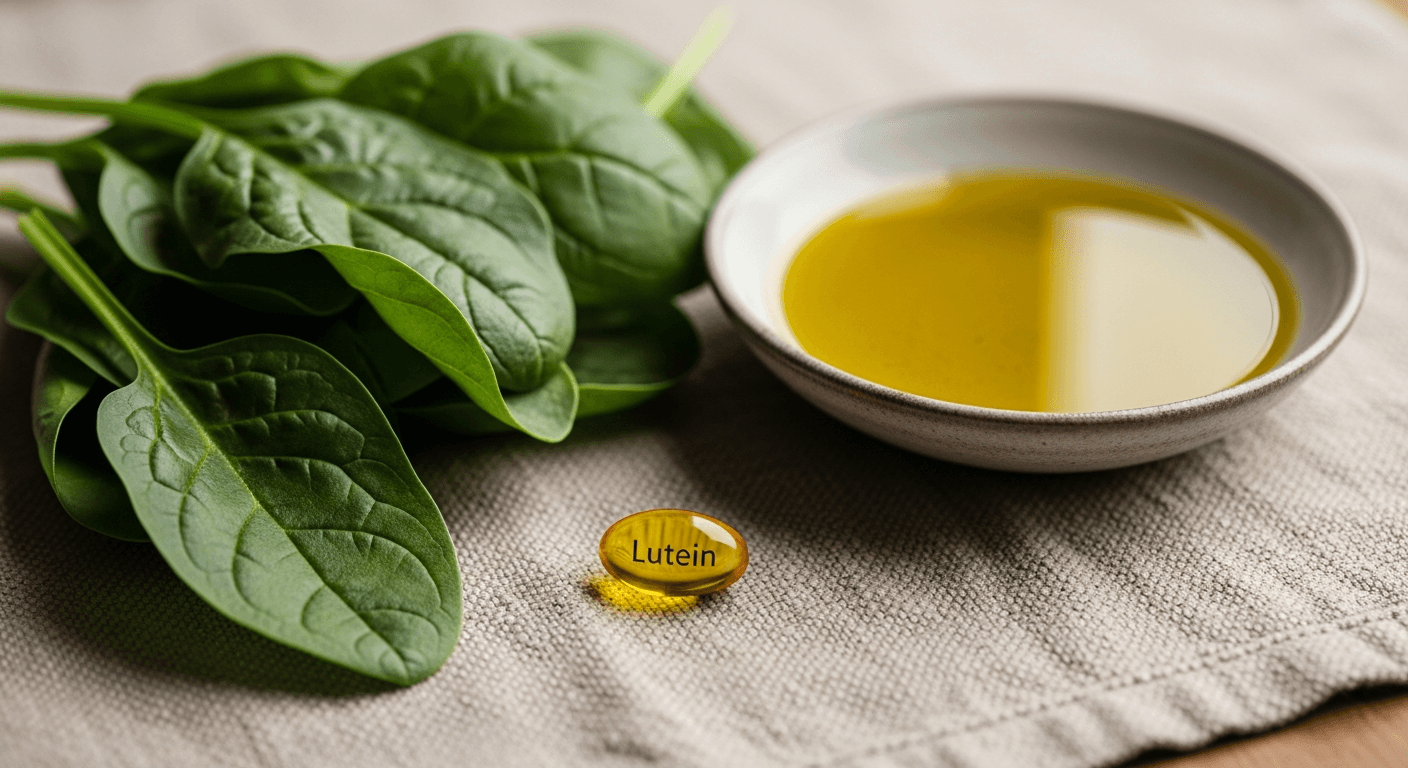
When it comes to lutein supplementation, bioavailability is everything. Because lutein is a highly lipophilic (fat-soluble) carotenoid, it cannot be efficiently absorbed by the human body on its own. In the gastrointestinal tract, dietary fats stimulate the release of bile acids, which package lutein into tiny lipid clusters called micelles. These micelles are essential for transporting lutein across the intestinal lining and into the bloodstream. Taking a dry lutein capsule on an empty stomach will result in almost zero absorption, rendering the supplement ineffective.
To maximize absorption, lutein must be taken with a meal containing healthy fats. However, research indicates that the type of fat matters significantly. Studies have shown that consuming lutein with Extra Virgin Olive Oil (EVOO) or formulations containing mono- and diglycerides drastically improves its bioavailability. The high oleic acid content in EVOO ensures that lutein is maximally absorbed into the bloodstream and successfully transported to target tissues like the brain and the retina.
FloraGLO and Free-Form Bioavailability
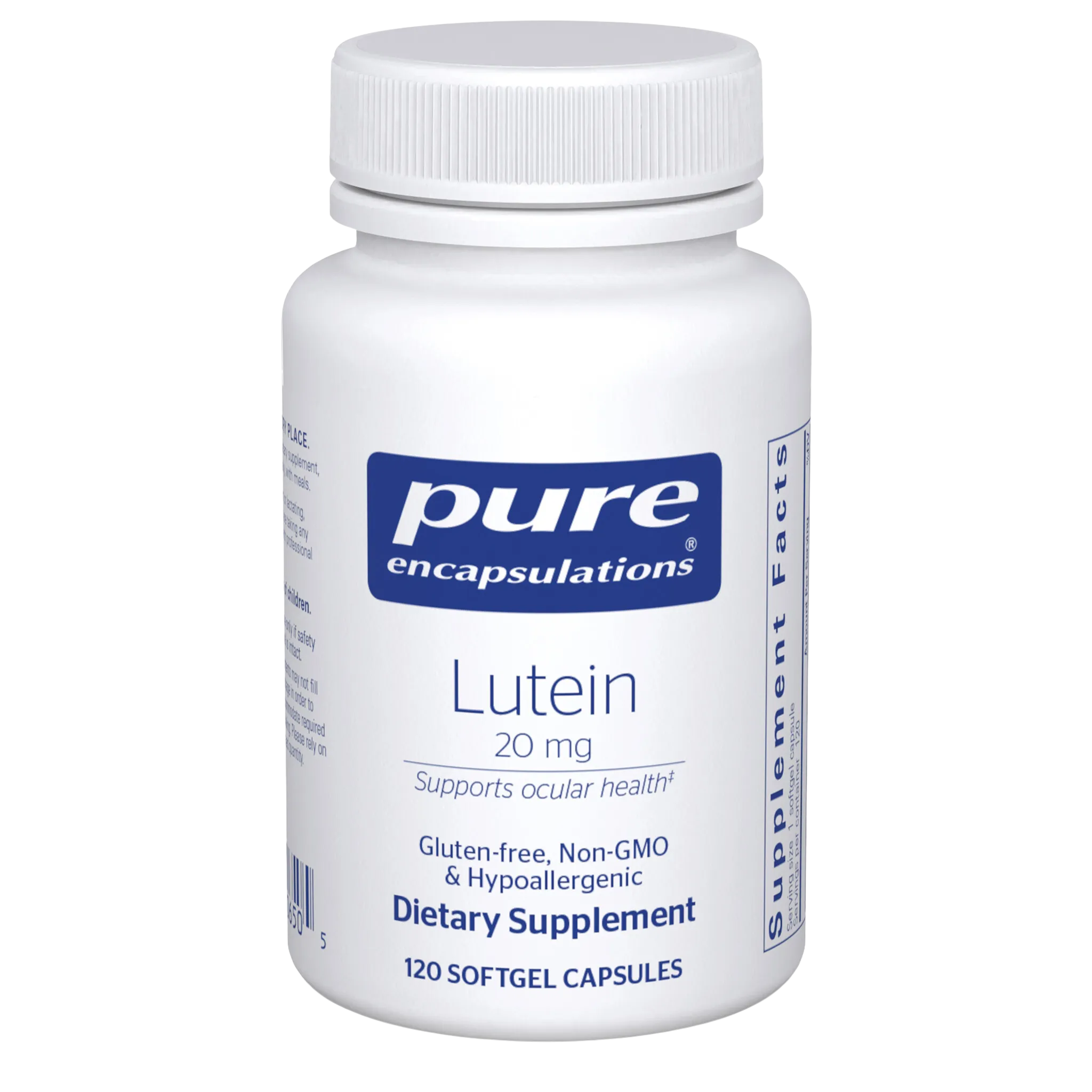
Not all lutein supplements are created equal. The physical formulation of the supplement heavily impacts whether it will successfully reach the bloodstream. Pure Encapsulations utilizes FloraGLO® lutein, which is an unesterified (free-form) lutein derived from marigold flowers. Because it is free-form, it skips the inefficient enzymatic cleavage process required by lutein esters, allowing for rapid and direct absorption.
Furthermore, FloraGLO is often microencapsulated using specialized matrices that protect the lutein from degrading in the harsh acidic environment of the stomach. Clinical crossover studies have demonstrated that these advanced starch-matrix formulations can increase total plasma lutein absorption by up to 126% compared to standard alginate-matrix competitor brands. This ensures that the therapeutic dose actually reaches the systemic circulation to exert its neuroprotective effects.
Dosing, Timing, and Interactions
For general eye health, dietary guidelines suggest 6 mg to 10 mg of lutein daily. However, for targeting the severe oxidative stress and neuroinflammation seen in Long COVID and ME/CFS, clinical trials often utilize therapeutic dosages of 10 mg to 20 mg per day. It is highly recommended to take lutein alongside its sister carotenoid, zeaxanthin (typically 2 mg), as they work synergistically to protect cellular membranes. If you are tracking your symptoms to understand Do Long COVID Symptoms Come and Go?, you may notice that consistent daily supplementation over 3 to 6 months is required to see significant shifts in MPOD and cognitive function.
Lutein is generally recognized as safe (GRAS) by the FDA and has very few drug interactions. However, patients taking fat-blocking medications (like Orlistat) will experience reduced lutein absorption. Additionally, high doses of beta-carotene competitively inhibit the absorption of lutein in the digestive tract, so it is best to avoid taking high-dose beta-carotene supplements at the exact same time as lutein. As always, consult your healthcare provider before starting any new supplement, especially if you have impaired fat metabolism or liver conditions.
Follow the Science
The Landmark AREDS2 Trial
The clinical efficacy of lutein for eye health is backed by some of the most rigorous studies in modern ophthalmology. The most famous of these is the Age-Related Eye Disease Study 2 (AREDS2), a massive 5-year clinical trial conducted by the National Institutes of Health (NIH) involving over 4,000 participants. The study aimed to evaluate the optimal nutritional formula to slow the progression of age-related macular degeneration (AMD).
The AREDS2 trial definitively proved that a daily dose of 10 mg of lutein combined with 2 mg of zeaxanthin was highly effective at reducing the risk of progression to advanced AMD by 18%, and reducing the risk of developing neovascular (wet) AMD by 22%. Furthermore, the trial established lutein as a safer and more effective alternative to beta-carotene, which was removed from the protocol due to safety concerns. This landmark study cemented lutein's role as a foundational therapeutic for protecting the retina from oxidative damage.
Increasing Macular Pigment Optical Density (MPOD)
Beyond preventing disease progression, lutein has been shown to actively improve visual function by increasing Macular Pigment Optical Density (MPOD). The LISA (Lutein Intervention Study Austria) was a randomized, double-blind, placebo-controlled trial involving 126 patients. It evaluated the effects of lutein supplementation over a 6-month period.
The results were striking: patients receiving lutein exhibited a highly significant 27.9% increase in MPOD, compared to a negligible 0.7% change in the placebo group. This measurable thickening of the macular pigment was directly correlated with clinical improvements in visual acuity, contrast sensitivity, and macular function. These findings confirm that lutein supplementation physically rebuilds the eye's natural defenses against phototoxic light.
Emerging Data on Cognitive Function and Long COVID
While lutein's role in vision is well-established, its application for cognitive function and post-viral syndromes is a rapidly expanding frontier. A comprehensive 2024 F1000Research review detailed the precise clinical rationale for using dietary lutein to treat Long COVID and vaccine-injury syndromes. The researchers highlighted lutein's unique ability to downregulate Toll-like receptor 4 (TLR4) signaling and inhibit the NF-κB pathways activated by the SARS-CoV-2 spike protein.
In the realm of cognitive function, a randomized, placebo-controlled trial involving 90 middle-aged adults suffering from mild cognitive complaints ("brain fog") tested a daily regimen of 10 mg of lutein and 2 mg of zeaxanthin. Over 6 months, the supplemented group showed statistically significant improvements in learning and memory recall compared to the placebo group. These studies validate what many functional medicine practitioners are observing clinically: by lowering neuroinflammation and oxidative stress, lutein can help restore cognitive clarity in patients battling complex chronic illnesses.
The Path Forward
A Comprehensive Approach to Recovery
Living with conditions like Long COVID, ME/CFS, and dysautonomia is an exhausting journey. The invisible nature of symptoms like brain fog, crushing fatigue, and visual disturbances can make it difficult to explain your reality to others, and even harder to find effective treatments. If you are navigating the complexities of What Are the Symptoms of Long COVID?, it is important to validate your experience: these symptoms are rooted in real, measurable physiological dysfunction, driven by neuroinflammation and oxidative stress.
While there is no single miracle cure for these complex conditions, targeted nutritional support like lutein offers a scientifically grounded way to address the underlying cellular damage. By rebuilding your body's natural antioxidant defenses, protecting your mitochondria, and silencing inflammatory pathways in the brain, lutein can be a powerful ally in your recovery toolkit. However, it is crucial to remember that supplements work best as part of a comprehensive management strategy that includes aggressive pacing, symptom tracking, nervous system regulation, and expert medical care.
Consult Your Healthcare Provider
As you explore new ways to support your cognitive and visual health, we encourage you to discuss lutein with your medical team. Because every patient's biochemistry is unique, a knowledgeable provider can help you determine the optimal dosage, ensure there are no interactions with your current medications, and guide you on the best ways to maximize absorption through dietary fats. Recovery is not a linear path, but by addressing the root causes of cellular stress, you can take meaningful steps toward improving your quality of life.