Can L-Theanine Clear Brain Fog and Calm the Nervous System in Long COVID and ME/CFS?
March 5, 2026
L-TheanineLong COVIDME/CFS
Share:
Disclaimer: The information provided here is for educational purposes only and is not intended as medical advice. It should not be used to diagnose, treat, cure, or prevent any medical condition. Instead, use it as a starting point for discussion with your healthcare provider. Always consult with a qualified healthcare provider before starting any new medication, supplement, device, or making changes to your health regimen.
Months or even years after recovering from an initial viral infection, many people find themselves fighting a daily battle against debilitating symptoms. The profound exhaustion, the racing heart upon standing, and the thick, suffocating "brain fog" are hallmarks of complex chronic conditions like Long COVID, myalgic encephalomyelitis/chronic fatigue syndrome (ME/CFS), and dysautonomia. When your nervous system feels like it is constantly locked in a state of hyper-arousal, finding safe, effective ways to restore autonomic balance and cognitive clarity becomes the ultimate priority.
In the search for targeted symptom management, functional medicine has increasingly turned to a unique amino acid derived from green tea: L-theanine. Known for its remarkable ability to promote "wakeful relaxation" without causing drowsiness, L-theanine offers a multifaceted approach to healing. By directly modulating neurotransmitters, dampening neuroinflammation, and stabilizing hyperactive mast cells, this powerful compound addresses the root pathophysiological drivers of post-viral syndromes. In this comprehensive guide, we will explore the intricate biochemistry of L-theanine and how it can support patients navigating the complexities of Long COVID, ME/CFS, POTS, and MCAS.
TL;DR
L-theanine is a green tea-derived amino acid that promotes wakeful relaxation without causing drowsiness.
It supports cognitive clarity by balancing neurotransmitters and reducing neuroinflammation associated with brain fog.
Research suggests it acts as a mast cell stabilizer, helping manage histamine and MCAS symptoms.
L-theanine may help calm the sympathetic nervous system, offering potential support for dysautonomia and POTS.
What is L-Theanine?
L-theanine (γ-glutamylethylamide) is a unique, non-proteinogenic amino acid found almost exclusively in the leaves of the Camellia sinensis plant, which is the source of green and black tea. For centuries, green tea has been revered in traditional medicine for its ability to induce a state of calm, focused alertness—a paradox considering the beverage naturally contains caffeine. Modern nutritional neuroscience eventually discovered that L-theanine is the biologically active constituent responsible for this unique "wakeful relaxation." Unlike traditional pharmaceutical sedatives that depress the central nervous system and cause heavy drowsiness, L-theanine modulates brain waves to promote tranquility while maintaining sharp mental acuity.
At a molecular level, L-theanine is structurally remarkably similar to L-glutamate and L-glutamine, which are the primary excitatory neurotransmitters in the human brain. This structural mimicry is the foundational key to its profound effects on human neurochemistry. Because it looks so much like glutamate, L-theanine can interact directly with the brain's complex receptor networks, binding to sites that would normally trigger neurological excitation. In a healthy body, this amino acid acts as a neurochemical buffer, smoothing out the spikes and crashes of daily stress and keeping the mind in a state of balanced homeostasis.
Beyond its role in relaxation, L-theanine is also a powerful supporter of healthy cellular function and systemic antioxidant defense. It plays a crucial role in the generation of glutathione, the body's master antioxidant, which protects delicate cellular structures from oxidative stress and free radical damage. By bolstering the body's intrinsic antioxidant defenses, L-theanine helps maintain the integrity of cellular membranes and supports overall metabolic health. This makes it not just a tool for mood management, but a foundational nutrient for systemic well-being and cellular resilience.
For any neurological supplement to be effective, it must first successfully navigate the blood-brain barrier (BBB), a highly selective, semipermeable endothelial border that protects the brain from circulating toxins. L-theanine is highly water-soluble and is rapidly absorbed in the small intestine via sodium-coupled co-transporters. Once in the bloodstream, it utilizes the large neutral amino acid (leucine-preferring) transport system to cross the BBB. This efficient, dose-dependent transport mechanism allows L-theanine to enter the brain swiftly and begin altering neurochemistry without requiring massive oral doses.
Clinical pharmacokinetic studies demonstrate that the lag time between oral ingestion of L-theanine and its absorption into the bloodstream is incredibly short, often measuring just 10 to 20 minutes. L-theanine typically reaches its maximum concentration in the blood (Tmax) within 30 to 50 minutes post-ingestion. This rapid onset of action makes it an excellent, fast-acting option for addressing acute moments of stress, sudden cognitive fatigue, or autonomic adrenaline dumps. Once inside the brain, it goes to work immediately, modulating the delicate balance of excitatory and inhibitory neurotransmitter pathways.
The elimination half-life of L-theanine is relatively short, recorded at approximately 65 minutes in human trials, meaning it is processed and eliminated from the body quite efficiently. It is rapidly hydrolyzed, or broken down, by the liver and kidneys into glutamic acid and ethylamine. Because the parent compound is completely cleared from blood plasma within 8 to 24 hours, it does not bioaccumulate or build up to toxic levels in the system over time. This rapid clearance profile contributes to its exceptionally high safety margin and makes it highly suitable for daily, or even multi-dose, supplementation protocols.
The true therapeutic magic of L-theanine lies in its dual-action ability to simultaneously calm excitatory pathways and stimulate inhibitory pathways. Glutamate is the central nervous system's main excitatory neurotransmitter, acting as the brain's "gas pedal." Because L-theanine is a structural analog of glutamate, it competitively binds to ionotropic glutamate receptors, specifically the AMPA, Kainate, and NMDA receptors. By occupying these receptors, L-theanine mildly blocks excitatory stimuli, preventing the brain from becoming overstimulated and protecting neurons from excitotoxicity without shutting down normal cognitive function.
While it is gently pressing the brakes on glutamate, L-theanine is also actively pressing the accelerator on the brain's calming mechanisms. It acts as a powerful agonist for gamma-aminobutyric acid (GABA), the primary inhibitory neurotransmitter responsible for relaxation, emotional regulation, and sleep architecture. L-theanine significantly increases extracellular levels of GABA in the brain. This elevation in GABA acts as a neurochemical traffic controller, facilitating a profound sense of physical and mental calm and rapidly dampening the physiological stress response.
The downstream effects of this GABAergic modulation are equally impressive and clinically relevant. By raising GABA levels, L-theanine subsequently triggers the release of key mood-regulating monoamines, including dopamine and serotonin, in critical brain regions like the prefrontal cortex and the hippocampus. This cascade of positive neurotransmitters not only improves mood and emotional resilience but also actively lowers the secretion of stress hormones like cortisol. The net result is a beautifully orchestrated symphony of neurochemical balance that fosters relaxed, focused clarity.
How Chronic Illness Impacts the Nervous System and Brain
In complex chronic conditions like Long COVID and myalgic encephalomyelitis/chronic fatigue syndrome (ME/CFS), the brain's delicate neurochemical balance is severely disrupted. One of the primary drivers of this disruption is chronic neuroinflammation. Following a viral infection, the immune system can become locked in a state of perpetual hyper-reactivity. The brain's resident immune cells, known as microglia, remain chronically activated, constantly releasing neurotoxic substances and inflammatory cytokines like TNF-α and IL-1β into the central nervous system.
This persistent microglial activation wreaks havoc on neural connectivity and severely impairs neurogenesis, particularly in the hippocampus, the brain's primary memory center. The result is the debilitating cognitive dysfunction commonly referred to as "brain fog." Patients often describe this as wading through mental molasses, struggling with word retrieval, short-term memory loss, and a profound inability to concentrate. To understand more about the underlying mechanisms of this phenomenon, you can read our detailed guide on What Is “Brain Fog” and Cognitive Dysfunction in Long COVID?.
Furthermore, advanced neuroimaging studies have revealed an abnormally high density of AMPA receptors in the brains of Long COVID patients. When these receptors are over-activated by excess glutamate—a common consequence of systemic inflammation—it leads to a state of excitatory neurotoxicity. The brain is essentially stuck in overdrive, burning out its own circuitry. This excitotoxicity not only deepens cognitive impairment but also contributes to the severe sensory overload and post-exertional malaise (PEM) that define ME/CFS crashes.
The autonomic nervous system (ANS) controls our body's automatic, unconscious functions, such as heart rate, blood pressure regulation, and digestion. It is divided into the sympathetic ("fight or flight") and parasympathetic ("rest and digest") branches. In patients with dysautonomia, particularly Postural Orthostatic Tachycardia Syndrome (POTS), this system is thrown entirely out of balance. The sympathetic nervous system becomes chronically hyperactive, treating simple actions like standing up or digesting food as life-threatening emergencies.
This sympathetic overactivation triggers massive, inappropriate releases of stress hormones, including adrenaline and norepinephrine. For a POTS patient, simply changing posture can result in a skyrocketing heart rate, palpitations, tremors, and a profound sense of panic or anxiety—often referred to in the patient community as an "adrenaline dump." The body is trapped in a perpetual state of hyper-arousal, which is incredibly draining and contributes significantly to the profound fatigue seen in these conditions. If you are struggling with these overlapping symptoms, exploring Brain Fog, Fast Heart Rate, and Fatigue. Is Pyridostigmine Right for You? may provide additional context.
This chronic sympathetic dominance also severely impairs the body's ability to rest, repair, and regenerate. When the "fight or flight" system is constantly engaged, the parasympathetic "rest and digest" system is heavily suppressed. This leads to unrefreshing sleep, severe insomnia, and gastrointestinal motility issues. The nervous system loses its flexibility, unable to smoothly transition between states of arousal and relaxation, leaving the patient exhausted, wired, and deeply depleted at a cellular level.
Another critical piece of the chronic illness puzzle is mast cell activation syndrome (MCAS). Mast cells are the sentinels of the immune system, packed with inflammatory mediators like histamine, heparin, and various cytokines. In a healthy body, they release these chemicals in measured doses to fight off pathogens or heal injuries. However, in MCAS, these cells become highly unstable and overly sensitive, inappropriately degranulating and flooding the body with histamine in response to benign triggers like food, temperature changes, or even emotional stress.
This systemic histamine overload has profound, often overlooked neurological consequences. Histamine is not just an allergy molecule; it acts as a potent excitatory neurotransmitter in the brain. High levels of circulating histamine can cross the blood-brain barrier and trigger the massive release of glutamate. This creates a toxic, excitotoxic environment in the central nervous system, leading to severe anxiety, hyper-arousal, irritability, and the notorious "3 AM wake-up" insomnia that plagues so many MCAS patients.
The relationship between mast cells, histamine, and the nervous system is a bidirectional vicious cycle. Excess histamine stimulates the sympathetic nervous system, increasing heart rate and driving anxiety. In turn, the stress hormones released by the sympathetic nervous system (like corticotropin-releasing hormone) directly trigger mast cells to degranulate and release even more histamine. Breaking this devastating cycle requires targeted interventions that can simultaneously stabilize the immune response and calm the neurological hyper-arousal.
L-Theanine: Supporting Cognitive Clarity and Autonomic Balance
L-theanine offers a targeted, mechanistic approach to dismantling the vicious cycles of neuroinflammation and excitotoxicity. Because it acts as an antagonist at the AMPA, Kainate, and NMDA receptors, L-theanine directly blocks the binding of excess glutamate. By capping these receptors, it acts as a neuroprotective shield, preventing the excitatory neurotoxicity that drives brain fog and neural burnout in Long COVID and ME/CFS. It essentially turns down the volume on the brain's blaring "gas pedal," allowing overstimulated neurons to rest and recover.
Beyond receptor antagonism, L-theanine actively combats neuroinflammation at the cellular level. Research published in MDPI demonstrates that L-theanine suppresses the activation of microglia, the brain's primary immune cells. By keeping microglia in a resting state, L-theanine significantly reduces the release of pro-inflammatory cytokines like TNF-α and IL-1β. This cooling of brain inflammation helps restore neural connectivity and protects the hippocampus, directly supporting memory retrieval and cognitive clarity.
Furthermore, L-theanine inhibits the nuclear transcriptional activation of NF-κB, a master protein complex that controls the production of inflammatory cytokines throughout the entire body. By suppressing NF-κB, L-theanine provides a systemic anti-inflammatory effect, mitigating the widespread oxidative stress that characterizes post-viral syndromes. For more information on combating systemic oxidative stress, consider reading Can Açai and Pomegranate Extracts Combat Oxidative Stress in Long COVID and ME/CFS?.
One of the most unique and clinically validated benefits of L-theanine is its ability to alter the brain's electrical output. By lowering excitatory glutamate activity and heightening inhibitory GABA activity, L-theanine strongly stimulates the generation of Alpha brain waves (8–13 Hz). Alpha waves are the electrical signature of a state of "wakeful relaxation"—the exact brain state achieved during deep meditation, daydreaming, or creative flow.
For patients with Long COVID and ME/CFS, achieving this specific brain state is profoundly therapeutic. Traditional stimulants used to combat fatigue (like prescription amphetamines or high-dose caffeine) often trigger beta waves, which are associated with high alertness but also anxiety and stress. This can easily lead to post-exertional malaise (PEM) or a severe "crash." L-theanine provides a completely different pathway to alertness. By boosting alpha waves, it improves mental focus, memory, and attention without the jittery side effects or the subsequent energy crash.
Clinical EEG studies have consistently shown that L-theanine increases alpha wave power within 45 to 105 minutes of ingestion, particularly in the occipital and parietal regions of the brain. Interestingly, research indicates that this effect is most pronounced in individuals who are currently experiencing high levels of baseline anxiety or stress. This makes L-theanine an exceptionally targeted tool for patients whose nervous systems are locked in a state of chronic hyper-arousal and who desperately need cognitive relief.
In the realm of immunology, L-theanine is rapidly emerging as a potent natural mast cell stabilizer. A landmark study published in the journal Amino Acids investigated its role in allergic responses and found that theanine successfully inhibited systemic anaphylactic shock and tissue swelling in animal models. It achieves this by physically stabilizing the mast cell membrane and suppressing the activation of caspase-1, preventing the cell from rupturing and degranulating in response to environmental or internal triggers.
When mast cells are stabilized by L-theanine, there is a direct, dose-dependent decrease in the release of histamine into the bloodstream. Furthermore, L-theanine actively represses the secretion of allergy-driving cytokines, including TNF-α, IL-1β, IL-6, and IL-8, by attenuating the generation of reactive oxygen species. This makes it a highly valuable adjunct therapy for managing the unpredictable, systemic flare-ups associated with Mast Cell Activation Syndrome (MCAS) and generalized histamine intolerance.
Crucially, L-theanine also addresses the neurological fallout of histamine intolerance. Because histamine triggers massive glutamate release in the brain, MCAS patients often suffer from severe anxiety and insomnia. By acting as a glutamate antagonist, L-theanine physically blocks the excitotoxic cascade caused by systemic histamine overloads. It mitigates the psychological stress of MCAS without causing the heavy drowsiness associated with first-generation pharmaceutical antihistamines, allowing patients to remain functional, calm, and clear-headed.
For patients battling dysautonomia and POTS, L-theanine acts as a natural "autonomic depressant," gently guiding the nervous system out of "fight or flight" and back into "rest and digest." By enhancing GABA and blocking glutamate, L-theanine directly dampens the overactivity of the sympathetic nervous system. This is particularly beneficial for those with hyperadrenergic POTS, who suffer from excessive norepinephrine release and severe tachycardia upon standing.
A double-blind, randomized controlled trial demonstrated that L-theanine intake resulted in a statistically significant reduction in heart rate and salivary immunoglobulin A (a physiological stress marker) during acute mental stress. Heart rate variability (HRV) analysis confirmed that these reductions were directly attributable to an attenuation of sympathetic nervous activation. By buffering the effects of circulating stress hormones, L-theanine may help reduce the dramatic spikes in heart rate and blood pressure variability that characterize POTS episodes.
Additionally, many POTS patients rely on caffeine to constrict blood vessels and improve cerebral blood flow, but struggle with caffeine-induced tachycardia and jitters. L-theanine is famous for its synergistic relationship with caffeine. When taken together, L-theanine smooths out the cardiovascular spikes of caffeine, allowing patients to reap the cognitive and vasoconstrictive benefits without the severe heart rate penalty. To explore other pharmacological ways to manage cognitive symptoms, read Lifting Brain Fog with Guanfacine.
Symptoms L-Theanine May Help Manage
The neuroprotective and neurotransmitter-modulating properties of L-theanine make it uniquely suited to address the cognitive and psychological burdens of chronic illness. By balancing glutamate and GABA, it directly targets the mechanisms driving mental fatigue and emotional dysregulation.
Brain Fog and Poor Concentration: By antagonizing AMPA receptors and reducing microglial neuroinflammation, L-theanine clears the "mental molasses," improving word retrieval, focus, and executive function without acting as a harsh stimulant.
Anxiety and Hyper-arousal: By boosting GABA, serotonin, and dopamine, it calms the central nervous system, reducing the constant feeling of being "wired and tired" that plagues ME/CFS patients.
Unrefreshing Sleep and Insomnia: By lowering cortisol and promoting relaxation without sedation, L-theanine helps initiate sleep and may help reduce the "3 AM wake-up" caused by nocturnal histamine dumps.
Sensory Overload: By dampening excitatory glutamate signaling, it reduces the brain's hypersensitivity to light, sound, and environmental stimuli, which is a common trigger for post-exertional crashes.
Beyond the brain, L-theanine's influence extends to the autonomic nervous system and the immune response, offering systemic relief for dysautonomia and MCAS patients. To understand more about the psychological toll of these symptoms, see our post on Long COVID and Mental Health.
Tachycardia and Palpitations: By dampening sympathetic nervous system activation, it helps lower resting heart rate and reduces the severity of adrenaline dumps in hyperadrenergic POTS.
Histamine Intolerance Reactions: By acting as a mast cell stabilizer, it reduces the systemic release of histamine, mitigating allergic-type reactions, flushing, and tissue swelling.
Caffeine Sensitivity: It moderates the central nervous system effects of caffeine, helping to reduce the jitters and heart rate spikes that often accompany caffeine consumption in dysautonomia patients.
Premenstrual Mood Fluctuations: Preliminary research suggests L-theanine supports healthy mood regulation during the premenstrual phase by balancing monoamine neurotransmitters and reducing physiological stress markers.
Practical Considerations: Forms, Dosing, and Absorption
When selecting an L-theanine supplement, the manufacturing process is absolutely critical to its clinical efficacy. Generic "L-theanine" is often produced via cheap chemical synthesis, a process that inadvertently yields a racemic mixture of both the L-isomer (L-theanine) and the D-isomer (D-theanine). D-theanine is functionally inactive for relaxation and, worse, actively competes with L-theanine for absorption in the gut and at the blood-brain barrier, significantly dampening the supplement's overall effectiveness.
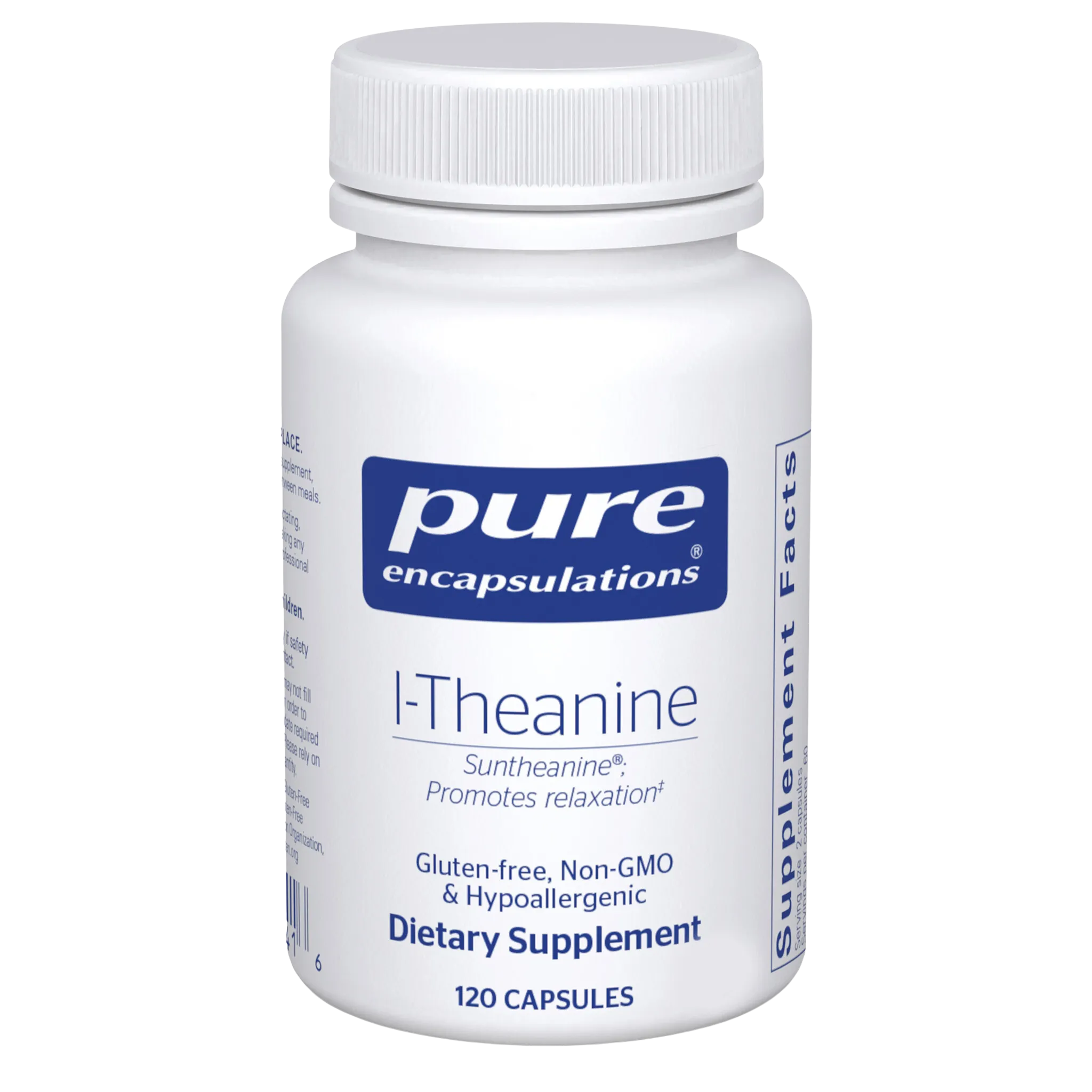
Suntheanine®, the form used in Pure Encapsulations' formula, is a patented, branded formulation manufactured via a proprietary enzymatic fermentation process utilizing the enzyme glutaminase. This biosynthesis perfectly mimics how green tea leaves naturally produce theanine, guaranteeing a 100% pure L-isomer product entirely free of the competing D-isomer. Clinical pharmacokinetic studies have proven that Suntheanine acts identically to natural tea-derived theanine, ensuring maximum theoretical bioavailability and clinical efficacy.
For patients with MCAS or histamine intolerance, taking a pure L-theanine supplement like Suntheanine is vastly preferable to drinking green tea. Green tea is fermented, contains high levels of oxalates, and acts as a mild DAO (Diamine Oxidase) inhibitor, which can cause systemic histamine levels to skyrocket. An isolated, pure L-theanine capsule bypasses these dietary histamine triggers entirely while delivering the full, concentrated therapeutic dose needed for mast cell stabilization.
The bioavailability of pure L-theanine is considered moderate to high, estimated at approximately 65% to 74% in human models. It is highly water-soluble and does not need to be taken with dietary fat for absorption. In fact, it is generally recommended to take L-theanine between meals to prevent it from competing for intestinal absorption with other amino acids (like leucine, isoleucine, and valine) that are present in dietary protein.
Because L-theanine has a rapid onset of action—reaching peak plasma concentration in just 30 to 50 minutes—timing your doses can be highly strategic. For acute stress, brain fog, or POTS adrenaline dumps, taking a dose as needed can provide swift relief. For sleep support, taking it 1 to 2 hours before bed allows the GABAergic effects to peak just as you are trying to fall asleep. The standard dosage ranges from 100 mg to 400 mg per day, though some clinical protocols for severe neuroinflammation utilize higher doses under strict medical supervision.
The elimination half-life of L-theanine is relatively short, approximately 65 minutes. Because it is completely cleared from blood plasma within 8 to 24 hours, it must be taken consistently to maintain its neuro-calming effects. Many patients find success by splitting their total daily dose into two or three smaller doses (e.g., morning, afternoon, and night) to provide a steady, continuous stream of autonomic and immunological support throughout the day.
L-theanine is generally recognized as safe (GRAS) and has a long, well-documented history of safe consumption. It does not cause physical dependence, withdrawal symptoms, or the heavy sedation associated with pharmaceutical anxiolytics like benzodiazepines. However, because it actively lowers blood pressure and promotes mild vasodilation (relaxing of the blood vessels), it can interact with antihypertensive medications, potentially causing blood pressure to drop too low.
This vasodilatory effect requires special consideration for patients with hypovolemic POTS (caused by chronically low blood volume). In hypovolemia, the body intentionally spikes the heart rate and triggers the sympathetic nervous system as a necessary compensatory mechanism to keep blood flowing upward to the brain. Taking L-theanine could inadvertently relax the blood vessels too much, exacerbating orthostatic intolerance and dizziness. Patients with hyperadrenergic POTS, however, typically tolerate and benefit from it immensely.
Finally, while L-theanine is a proven mast cell stabilizer, it is originally derived from green tea. Extremely sensitive MCAS patients should always start with a very low dose to ensure they do not have a rare hypersensitivity to the amino acid itself or the vegetarian capsule ingredients. Always consult with your healthcare provider before adding new supplements to your regimen, especially if you are taking medications for blood pressure, anxiety, or depression.
Follow the Science
The clinical efficacy of L-theanine is supported by a robust body of scientific literature, particularly regarding its impact on stress and brain wave modulation. A pivotal randomized, placebo-controlled trial published in Nutrients administered 200 mg/day of L-theanine to healthy adults for four weeks. The study found significant decreases in State-Trait Anxiety scores and Pittsburgh Sleep Quality Index (PSQI) scores, indicating reduced stress and improved sleep latency. Furthermore, the L-theanine group demonstrated significant improvements in cognitive executive function and verbal fluency.
The ability of L-theanine to generate relaxing alpha brain waves is equally well-documented. A study assessing the impact of 50 mg of L-theanine utilized EEG recordings to track brain electrical activity. The researchers observed a clear, statistically significant increase in alpha wave power across 45 to 105 minutes post-intake. Notably, subjects with the highest baseline anxiety exhibited the greatest emission intensity of alpha waves, suggesting L-theanine is most effective when the nervous system is actively under stress.
In the context of autonomic regulation, a double-blind trial published in Biological Psychology subjected participants to acute mental stressors. The researchers found that L-theanine intake resulted in a statistically significant reduction in heart rate and salivary immunoglobulin A. Heart rate variability (HRV) analysis confirmed that these physiological changes were directly driven by an attenuation of sympathetic nervous system activation, providing a clear mechanism for its utility in dysautonomia.
L-theanine's role as an immunological agent is gaining significant traction in functional medicine. A landmark study published in Amino Acids definitively identified theanine as a candidate for the pharmacological stabilization of mast cells. The researchers demonstrated that theanine dose-dependently decreased histamine release and actively repressed the secretion of pro-inflammatory cytokines like TNF-α and IL-1β by suppressing the NF-κB pathway.
Further research has highlighted its potential in combating post-viral neuroinflammation. A recent study published in MDPI investigated L-theanine's ability to protect against subchronic neuroinflammation induced by lipopolysaccharide (LPS). The findings revealed that L-theanine significantly reduced C-reactive protein (CRP) in the blood and lowered pro-inflammatory cytokines specifically in the hippocampus, effectively mitigating cognitive and memory decline in the animal models.
While large-scale, double-blind pharmaceutical trials specifically testing L-theanine for Long COVID and ME/CFS are still needed, the existing mechanistic data is highly compelling. By targeting the exact pathophysiological drivers of these conditions—microglial activation, AMPA receptor excitotoxicity, and sympathetic over-arousal—L-theanine presents a scientifically grounded, low-risk intervention for complex chronic illness. To learn more about how amino acids support recovery, read Can Free-Form Amino Acids Support Energy and Brain Fog in Long COVID and ME/CFS?.
The Path Forward
Living with Long COVID, ME/CFS, dysautonomia, or MCAS is a daily exercise in navigating unpredictable and often debilitating symptoms. When your nervous system feels like it is constantly working against you, finding safe, effective tools to restore balance is paramount. L-theanine offers a uniquely gentle approach to symptom management. Rather than forcing the body into submission with heavy sedatives or harsh stimulants, it works synergistically with your neurochemistry to promote a state of calm, focused equilibrium.
It is important to remember that while L-theanine is a powerful supplement, it is not a cure-all. Complex chronic illnesses require comprehensive, multi-disciplinary management strategies. L-theanine should be viewed as one valuable piece of a larger puzzle that includes aggressive pacing, strict symptom tracking, dietary modifications, and targeted medical care. By stabilizing your mast cells and calming your sympathetic nervous system, L-theanine can help widen your "energy envelope," giving you more resilience to handle the challenges of daily life.
Validation is a crucial part of the healing journey. The brain fog, the racing heart, and the profound exhaustion you experience are not in your head—they are rooted in measurable, physiological dysfunctions like neuroinflammation and autonomic hyper-arousal. By understanding the science behind these symptoms, you can make empowered, informed decisions about your treatment protocol and advocate for the care you deserve.
If you are struggling with cognitive dysfunction, chronic stress, or autonomic instability, L-theanine may be a highly beneficial addition to your daily routine. Pure Encapsulations' formula utilizes Suntheanine, ensuring you receive a clinically studied, 100% pure L-isomer product for maximum bioavailability and efficacy.
As always, we strongly recommend consulting with your primary healthcare provider or a functional medicine specialist before introducing any new supplement into your regimen. They can help you determine the optimal dosage for your specific needs and ensure it does not interact with any of your current medications, particularly if you are managing blood pressure irregularities or taking prescription anxiolytics.
Ready to explore how this unique amino acid can support your cognitive clarity and autonomic balance?