Can Grape Seed Extract Support Vascular Health in Long COVID and MCAS?
March 5, 2026
Grape Seed ExtractLong COVIDEndothelial Dysfunction
Share:
Disclaimer: The information provided here is for educational purposes only and is not intended as medical advice. It should not be used to diagnose, treat, cure, or prevent any medical condition. Instead, use it as a starting point for discussion with your healthcare provider. Always consult with a qualified healthcare provider before starting any new medication, supplement, device, or making changes to your health regimen.
In the wake of the COVID-19 pandemic, a complex web of chronic conditions has emerged, leaving millions of patients grappling with debilitating symptoms that seemingly affect every system in the body. For individuals living with Long COVID, myalgic encephalomyelitis/chronic fatigue syndrome (ME/CFS), dysautonomia, and mast cell activation syndrome (MCAS), the search for effective, science-backed management strategies can feel overwhelming. Patients frequently describe a profound sense of exhaustion, unpredictable heart rates, cognitive impairment, and systemic allergic reactions that fundamentally alter their quality of life. At the core of many of these overlapping conditions lies a hidden battle: severe dysfunction within the vascular endothelium and a hyperactive immune response.
As researchers dive deeper into the pathophysiology of these invisible illnesses, they are increasingly focusing on natural compounds that can target these root mechanisms. One such compound that has garnered significant attention in recent clinical literature is Grape Seed Extract, often referred to as Grape Pip. Derived from the seeds of Vitis vinifera, this potent botanical extract is densely packed with specialized polyphenols that exert profound effects on blood vessel integrity, oxidative stress, and mast cell stability. In this comprehensive guide, we will explore the intricate biochemical mechanisms of Grape Pip, how it supports the body at a cellular level, and why it has become a cornerstone supplement for many patients navigating the complexities of post-viral syndromes and chronic inflammatory conditions.
TL;DR
Grape Seed Extract (Grape Pip) is rich in OPCs, which support vascular health and combat oxidative stress.
It may help manage Long COVID and dysautonomia symptoms by promoting healthy blood flow and endothelial function.
Research suggests Grape Pip acts as a natural mast cell stabilizer, potentially easing MCAS and histamine issues.
For best results, consistent daily dosing in divided amounts is recommended to maintain active polyphenol levels.
What is Grape Pip (Grape Seed Extract)?
Grape Pip, or grape seed extract (GSE), is a highly concentrated natural derivative obtained primarily from the seeds of red wine grapes (Vitis vinifera). While humans have consumed grapes for millennia, the seeds contain a unique and incredibly dense matrix of bioactive phenolic compounds that are often discarded. Over the last several decades, advanced extraction techniques have allowed scientists to isolate these specific compounds, revealing a botanical supplement with extraordinary supportive potential. In a healthy body, the compounds found in grape seeds act as systemic protectors, helping defend cells against environmental stressors, maintaining the structural integrity of blood vessels, and regulating the inflammatory response. The true power of Grape Pip lies not just in its general nutritional value, but in its highly specific molecular interactions within the human cardiovascular and immune systems.
The Power of Oligomeric Proanthocyanidins (OPCs)
The primary active constituents within Grape Pip are a class of bioflavonoids known as Oligomeric Proanthocyanidins (OPCs). Proanthocyanidins are complex polymers made up of smaller polyhydroxy flavan-3-ol units, specifically catechin, epicatechin, and gallic acid. When these units bind together in small chains (dimers and trimers), they form OPCs, which are highly bioavailable and capable of crossing cellular membranes to exert their effects directly inside the cell. Research published in the Alternative Medicine Review highlights that OPCs are among the most potent natural compounds ever discovered for human health. They are uniquely equipped to interact with the vascular endothelium—the delicate, single-cell layer lining our blood vessels—where they help maintain structural elasticity and promote healthy blood flow.
Beyond their structural role, OPCs are deeply involved in cellular signaling. They have been shown to interact directly with cellular receptors, including the insulin receptor. By inducing the autophosphorylation of the insulin receptor, OPCs activate the PI3K-AKT and MAPK signaling pathways, which stimulate GLUT4-mediated cellular glucose uptake. This insulin-mimetic effect is crucial for maintaining metabolic homeostasis, a topic explored further in our discussion on diabetes and Long COVID. Furthermore, OPCs act as powerful prebiotics in the gut, promoting the growth of beneficial hydrogen sulfide-producing bacteria that upregulate the host's endogenous Nrf2 antioxidant pathways.
The Antioxidant Superiority of Grape Seed Polyphenols
At the molecular level, the human body is constantly balancing the production of reactive oxygen species (ROS)—unstable molecules generated during normal cellular metabolism—with antioxidant defenses. When ROS outnumber antioxidants, the result is oxidative stress, a destructive process that damages cellular DNA, lipids, and proteins. The polyphenols in Grape Pip are exceptional electron donors, meaning they can rapidly neutralize these dangerous free radicals before they cause cellular damage. Clinical evaluations of grape seed extract have demonstrated that the antioxidant capacity of OPCs is roughly four times greater than Vitamin C and twice as potent as Vitamin E. This massive free radical scavenging capacity makes Grape Pip an unparalleled shield against systemic oxidative stress.
What makes Grape Pip particularly fascinating is its synergistic relationship with other endogenous antioxidants. OPCs do not just neutralize free radicals directly; they also help regenerate oxidized Vitamin C and Vitamin E within the body, effectively recycling these crucial nutrients so they can continue to protect the cell. This recycling mechanism is vital for maintaining the integrity of lipid membranes, particularly in the brain and cardiovascular system, where oxidative damage can lead to rapid functional decline. By maintaining a robust antioxidant shield, Grape Pip ensures that cellular mitochondria can produce energy efficiently without being damaged by their own metabolic exhaust.
Enzymatic Modulation and Cellular Defense
In addition to their antioxidant prowess, the polyphenols in Grape Pip act as precise modulators of key enzymatic processes. In a healthy vascular system, enzymes like collagenase, elastase, and hyaluronidase are responsible for breaking down old connective tissue so it can be replaced. However, when these enzymes become overactive due to inflammation, they can degrade the structural integrity of blood vessels, leading to increased vascular permeability (leakiness). Grape Pip polyphenols naturally inhibit the excessive activity of these enzymes, preserving the collagen and elastin matrix that keeps blood vessels strong and flexible. This enzymatic regulation is a fundamental reason why Grape Pip is widely utilized to support vascular endothelial integrity.
Furthermore, Grape Pip exerts significant influence over neurological and inflammatory enzymes. Recent mechanistic studies have shown that OPCs can act as mild, natural inhibitors of Monoamine Oxidase A (MAO-A), an enzyme that breaks down neurotransmitters like serotonin and norepinephrine. By gently inhibiting MAO-A, Grape Pip may help sustain neurotransmitter levels, offering subtle mood-modulating and cognitive benefits. Simultaneously, OPCs suppress the NF-κB signaling pathway, which is the master switch for inflammation in the body. By halting NF-κB activation, Grape Pip helps suppress the downstream formation of potent pro-inflammatory cytokines like interleukin-1 beta (IL-1β) and tumor necrosis factor-alpha (TNF-α), keeping systemic inflammation in check.
How Chronic Illness Impacts the Vascular System
To understand why Grape Pip is so relevant for patients with complex chronic illnesses, we must first examine how these conditions physically alter the body's internal environment. Conditions like Long COVID, ME/CFS, dysautonomia, and MCAS are not merely "fatigue" disorders; they are profound, systemic disruptions of vascular, immunological, and autonomic homeostasis. When a patient asks, "What Causes Long COVID?", the answer often points directly to the persistent damage inflicted upon the vascular endothelium and the resulting cascade of immune dysregulation. These interconnected pathologies create a vicious cycle of oxygen deprivation, chronic inflammation, and cellular exhaustion that drives the most debilitating symptoms.
Endothelial Dysfunction in Long COVID
The vascular endothelium is the inner lining of all blood vessels, responsible for regulating blood flow, controlling coagulation, and managing the passage of immune cells into tissues. SARS-CoV-2, the virus responsible for COVID-19, directly targets this lining by binding to ACE2 receptors, which are highly concentrated on endothelial cells. This viral invasion triggers severe, localized inflammation known as endotheliitis. Current medical literature confirms that Long COVID is fundamentally a vascular disease driven by this chronic endothelial damage. When the endothelium is damaged, it loses its ability to produce adequate amounts of Nitric Oxide (NO), a crucial signaling molecule required for blood vessels to dilate. Without sufficient NO, blood vessels remain constricted, severely limiting the delivery of oxygen and nutrients to muscles and the brain.
This lack of oxygen delivery, known as tissue hypoxia, is a primary driver of the profound exhaustion and post-exertional malaise (PEM) seen in Long COVID and ME/CFS. When cells are starved of oxygen, their mitochondria cannot produce adenosine triphosphate (ATP) efficiently, forcing the body to rely on anaerobic metabolism. This inefficient energy production leads to a rapid buildup of lactic acid and cellular debris, resulting in the debilitating "crashes" patients experience after minimal exertion. Understanding this vascular-metabolic link is essential for unraveling how Long COVID triggers ME/CFS and why traditional exercise therapy is often harmful for these patients.
The RAGE Pathway and Microclot Formation
Another devastating consequence of endothelial dysfunction is the disruption of the body's natural blood-clotting mechanisms. In a healthy state, the endothelium secretes factors that prevent platelets from sticking together unnecessarily. However, in Long COVID, chronic inflammation provides a continuous trigger for hypercoagulation via the RAGE (Receptor for Advanced Glycation End Products) pathway. When the RAGE pathway is activated on the surface of damaged endothelial cells, it induces the expression of tissue factor, which initiates the coagulation cascade. This leads to the formation of fibrinal amyloid "microclots"—tiny, resistant blood clots that physically block the microscopic capillaries responsible for oxygen exchange.
These microclots are incredibly difficult for the body's natural fibrinolytic system to break down. As they accumulate in the microvasculature, they further exacerbate tissue hypoxia and drive a continuous loop of localized inflammation. This microvascular blockage is heavily implicated in the cognitive impairment (brain fog) and muscle pain that plague Long COVID patients. The presence of these microclots also places immense strain on the cardiovascular system, contributing to the erratic heart rates and blood pressure fluctuations characteristic of POTS and dysautonomia, conditions that complicate how a doctor diagnoses Long COVID.
Mast Cell Activation and Histamine Overload
Running parallel to this vascular damage is profound immune dysregulation, most notably in the form of Mast Cell Activation Syndrome (MCAS). Mast cells are the sentinels of the immune system, stationed near blood vessels and nerve endings. In response to viral fragments, persistent spike proteins, or systemic oxidative stress, these mast cells become hyper-sensitized. Instead of responding proportionately to threats, they begin to inappropriately degranulate, dumping massive quantities of chemical mediators—including histamine, heparin, and inflammatory cytokines—into the surrounding tissues. This constant barrage of histamine causes blood vessels to become overly permeable, leading to fluid leakage, tissue swelling, and a host of systemic allergic symptoms.
The relationship between endothelial dysfunction and MCAS is deeply intertwined. The cytokines released by hyperactive mast cells directly damage the endothelium, while the oxidative stress generated by the damaged endothelium further triggers mast cell degranulation. This creates a self-sustaining loop of inflammation that keeps the patient locked in a state of chronic illness. Research into allergic inflammation shows that breaking this cycle requires interventions that can simultaneously calm the mast cells, neutralize the oxidative stress, and repair the vascular lining—a multi-targeted approach where Grape Pip excels.
Grape Pip: Supporting Vascular Integrity and Mast Cell Stability
Given the complex, multi-system nature of Long COVID, ME/CFS, and MCAS, single-target therapies often fall short. Patients require interventions that can address the interconnected web of vascular damage, oxidative stress, and immune hyper-reactivity simultaneously. This is where Grape Pip (Grape Seed Extract) demonstrates its profound clinical value. By leveraging its dense concentration of OPCs, tannins, and polyphenols, Grape Pip acts as a pleiotropic agent—meaning it produces multiple beneficial effects across different physiological pathways. From restoring vital blood flow to directly stabilizing erratic immune cells, Grape Pip offers a comprehensive approach to supporting the body's recovery from chronic inflammatory states.
Restoring Nitric Oxide and Endothelial Function
One of the most critical mechanisms by which Grape Pip supports Long COVID and dysautonomia recovery is through the restoration of endothelial function and Nitric Oxide (NO) bioavailability. As previously discussed, viral damage depletes NO, leading to chronic vasoconstriction and tissue hypoxia. Grape Pip helps counteract this by supporting the activation of endothelial nitric oxide synthase (eNOS), the enzyme responsible for producing NO in the blood vessels. Clinical studies measuring Flow-Mediated Dilation (FMD) have suggested that chronic supplementation with Grape Seed Extract significantly increases brachial artery diameter, confirming its ability to induce meaningful vasodilation.
By restoring NO levels, Grape Pip helps reopen restricted microcapillaries, allowing oxygen-rich blood to finally reach starved muscle tissues and neurons. This improved microcirculation is essential for alleviating the crushing fatigue and cognitive brain fog associated with Long COVID. Furthermore, by improving overall vascular compliance (the ability of blood vessels to expand and contract smoothly), Grape Pip helps stabilize the erratic blood pressure fluctuations often seen in POTS and dysautonomia patients, providing much-needed cardiovascular support.
Stabilizing Mast Cells and Reducing Histamine
For patients battling MCAS, Grape Pip serves as a potent, natural mast cell stabilizer. When mast cells are exposed to triggers, they rely on an influx of calcium (Ca2+) ions to initiate the degranulation process that releases histamine. In vitro pharmacological studies have demonstrated that the OPCs in Grape Pip actively inhibit this calcium uptake, helping to retain the histamine inside the cell. Additionally, Grape Pip elevates intracellular levels of cyclic AMP (cAMP), a signaling molecule that strongly suppresses the degranulation pathway.
Beyond helping to mitigate the immediate release of histamine, Grape Pip also modulates the mast cell's long-term sensitivity. Allergic responses are heavily mediated by Immunoglobulin E (IgE) binding to high-affinity receptors (FcεRI) on the surface of mast cells. Research indicates that Grape Pip reversibly inhibits the expression of these FcεRI receptors, making the mast cells less reactive to environmental triggers over time. By simultaneously blocking calcium influx, raising cAMP, and downregulating IgE receptors, Grape Pip supports a comprehensive defense against the systemic histamine storms that drive MCAS symptoms.
Inhibiting the Coagulation Cascade and Microclots
Addressing the persistent microclots found in Long COVID requires interrupting the inflammatory signals that tell the body to constantly coagulate blood. Grape Pip supports this by helping to downregulate the RAGE pathway on the endothelial surface. By suppressing RAGE activation, Grape Pip halts the expression of tissue factor, helping to modulate the coagulation cascade at its source. This anti-thrombotic effect is complemented by Grape Pip's ability to inhibit cyclooxygenase (COX) and lipoxygenase (LOX) enzymes, which reduces platelet aggregation and lipid oxidation.
While Grape Pip is not a replacement for prescription anticoagulants, its natural ability to calm the endothelial lining and gently reduce platelet stickiness makes it a valuable adjunctive tool for managing the hypercoagulable state of Long COVID. By helping to mitigate the continuous formation of new microclots, Grape Pip allows the body's natural fibrinolytic enzymes to slowly clear the existing blockages, gradually restoring healthy microvascular perfusion.
Direct Antiviral Properties and Immune Modulation
Perhaps the most groundbreaking mechanism of Grape Pip is its direct antiviral capability. A recent patent application demonstrated that the natural tannins found in Grape Seed Extract, specifically punicalagin and OPCs, act as potent inhibitors of SARS-CoV-2 cellular entry. These compounds dually inhibit TMPRSS2 (the host enzyme the virus uses to enter cells) and Mpro/3CLpro (the viral protease required for replication). Human serum collected from subjects taking oral Grape Seed Extract exhibited strong suppressive activity against multiple variants of the virus, suggesting that Grape Pip may not only help support recovery from past viral impacts but also support ongoing immune defense against viral persistence and reactivation.

Symptoms Grape Seed Extract May Help Manage
Because Grape Pip targets foundational mechanisms like endothelial health, oxidative stress, and mast cell stability, it can help manage a wide array of symptoms associated with complex chronic illnesses. Here is a breakdown of the specific symptoms Grape Pip may help alleviate and the mechanisms behind its efficacy:
Cardiovascular and Dysautonomia Symptoms
Rapid Heart Rate and Palpitations (POTS): By improving endothelial nitric oxide production and enhancing vascular compliance, Grape Pip helps stabilize blood pressure, reducing the compensatory tachycardic responses often seen in dysautonomia.
Cold Hands and Feet (Poor Perfusion): The vasodilatory effects of OPCs help reopen restricted microcapillaries, restoring warm, oxygen-rich blood flow to the extremities.
Exercise Intolerance and PEM: By mitigating microclot formation and improving oxygen delivery to muscle tissues, Grape Pip supports more efficient mitochondrial ATP production, helping to raise the threshold for post-exertional malaise.
MCAS and Allergic-Type Reactions
Skin Flushing, Hives, and Itching: By inhibiting calcium influx in mast cells and helping to mitigate degranulation, Grape Pip directly reduces the release of histamine that causes these acute dermatological symptoms.
Gastrointestinal Distress (Bloating, Diarrhea): Grape Pip's prebiotic effects help restore the gut microbiome, while its mast cell-stabilizing properties calm the localized histamine reactions in the gut lining that drive food sensitivities.
Unpredictable Food and Environmental Sensitivities: By downregulating the expression of IgE (FcεRI) receptors on mast cells, Grape Pip helps lower the immune system's overall hyper-reactivity to everyday triggers.
Cognitive and Systemic Symptoms
Brain Fog and Cognitive Impairment: Grape Pip's ability to cross the blood-brain barrier (with repeated dosing) allows its potent antioxidants to neutralize neuroinflammation, while improved microcirculation ensures the brain receives adequate oxygen.
Systemic Joint and Muscle Pain: By suppressing the NF-κB inflammatory pathway and reducing the production of pro-inflammatory cytokines (like TNF-α and IL-6), Grape Pip helps lower the systemic inflammation responsible for widespread body pain.
Chronic Fatigue: By protecting cellular mitochondria from oxidative damage and recycling vital antioxidants like Vitamin C and E, Grape Pip ensures the body's energy-producing factories can function without being destroyed by their own metabolic exhaust.
Practical Considerations: Forms, Dosing, and Absorption
While the clinical benefits of Grape Pip are profound, achieving these results requires a nuanced understanding of how the supplement is absorbed and metabolized by the body. The pharmacokinetics of Grape Seed Extract are complex, primarily because the active compounds (proanthocyanidins) vary significantly in size and molecular weight. Understanding these dynamics is crucial for optimizing your dosing strategy and ensuring the supplement reaches the target tissues effectively.
Understanding Pharmacokinetics and Bioavailability
The systemic bioavailability of unmodified Grape Seed Extract is generally considered moderate and is highly dependent on the size of the molecules. Smaller monomers (like catechin and epicatechin) and small oligomers (dimers and trimers) are easily absorbed through the mucosal lining of the small intestine, entering the bloodstream to exert immediate systemic effects. However, larger polymeric proanthocyanidins are structurally too large to pass through the intestinal wall intact. Instead of being wasted, these larger molecules travel to the colon, where the gut microbiota ferments them into smaller, absorbable secondary metabolites (like valerolactones). This dual-action absorption means Grape Pip provides both rapid systemic benefits and delayed, microbiome-mediated anti-inflammatory effects.
Clinical studies in humans have shown that Grape Seed Extract can support cardiovascular and liver health in patients with metabolic conditions. Additionally, pharmacokinetic research indicates that the active polyphenols in Grape Pip reach their maximum concentration in the blood ($T_{max}$) relatively quickly, typically between 1.5 and 2.5 hours after oral ingestion. However, the elimination half-life ($t_{1/2}$) of these compounds is relatively short, generally ranging from 2 to 5 hours. Because the body metabolizes and clears these polyphenols quickly, a single massive dose of Grape Pip is less effective than smaller, divided doses taken throughout the day.
Optimal Dosing Strategies and Timing
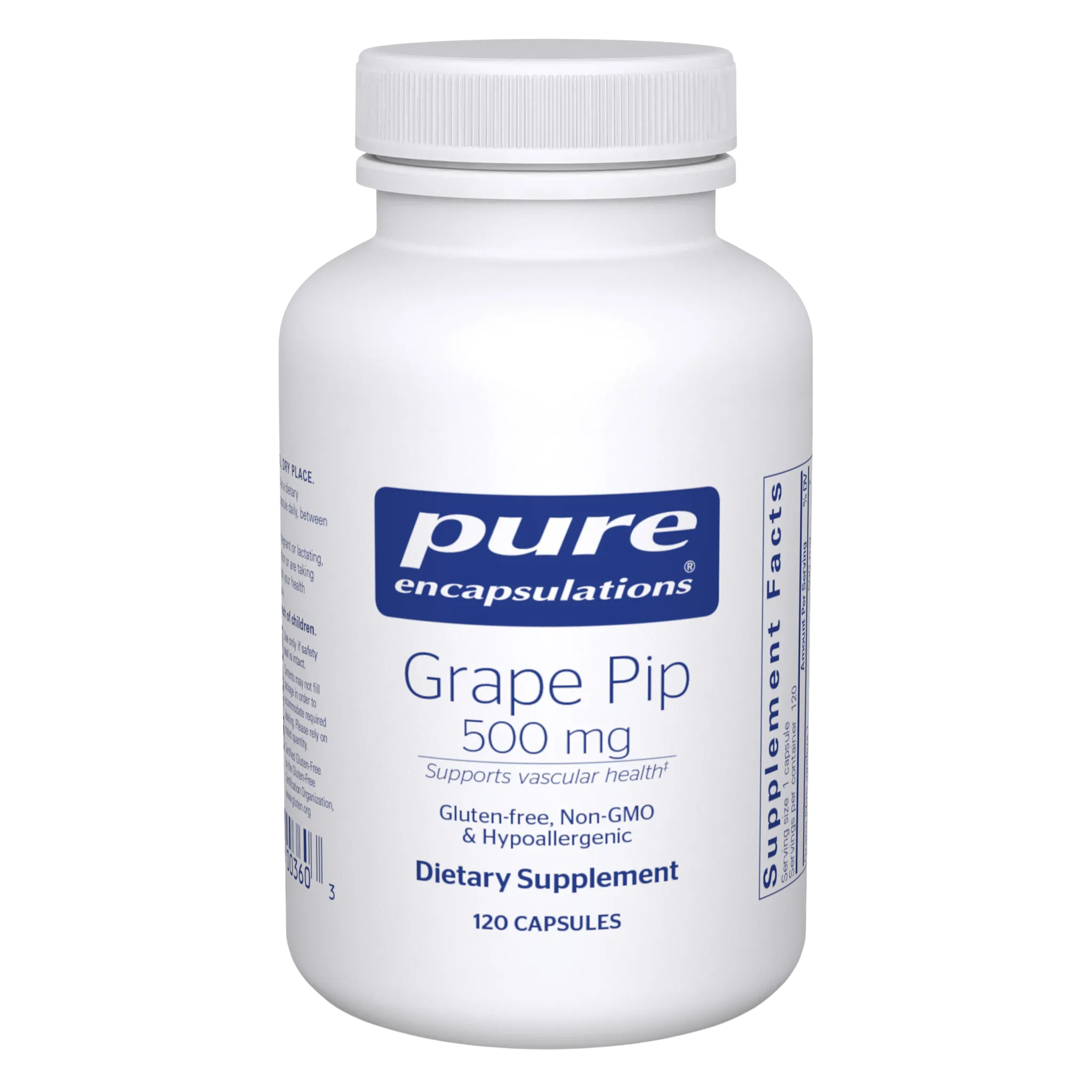
For general antioxidant support and vascular maintenance, clinical trials typically utilize dosages ranging from 150 mg to 300 mg daily. However, for targeted therapeutic interventions—such as managing the severe endothelial dysfunction of Long COVID or the intense histamine storms of MCAS—studies often employ higher doses ranging from 300 mg to 600 mg daily. Pure Encapsulations Grape Pip provides a robust 500 mg dose standardized to 92% polyphenols, ensuring a highly concentrated delivery of active OPCs. Because of its short half-life, patients often find optimal results by splitting their daily intake (e.g., taking one capsule in the morning and another in the afternoon) to maintain steady plasma levels of the active compounds.
Timing and consistency are also critical factors. Research on repeated daily dosing indicates that chronic administration of Grape Seed Extract significantly alters its absorption mechanics. Taking the supplement consistently for 10 or more days drastically increases the overall bioavailability (Area Under the Curve) of the active catechins, allowing them to accumulate in tissues and even cross the blood-brain barrier. Therefore, Grape Pip should be viewed as a long-term foundational support rather than a quick-fix symptom reliever. It is generally recommended to take Grape Pip between meals to maximize the absorption of the polyphenols without competition from dietary proteins and fibers.
Safety, Tolerability, and Potential Interactions
Grape Seed Extract is widely recognized for its exceptional safety profile. Human toxicity trials have evaluated oral doses up to 2,500 mg per day for four weeks and found the supplement to be completely safe and well-tolerated, with no adverse physiological changes other than a mild, temporary decrease in serum iron levels. This indicates that very high doses of Grape Pip may slightly inhibit iron absorption, so individuals with severe anemia should monitor their iron levels or take the supplement away from iron-rich meals.
However, because Grape Pip is highly effective at improving blood flow, inducing vasodilation, and reducing platelet aggregation, it acts as a mild natural blood thinner. Individuals taking prescription anticoagulant medications (like Warfarin or Eliquis) or prescribed antihypertensive drugs should consult their healthcare provider before initiating Grape Pip, as it may amplify the effects of these medications. Additionally, very high doses of polyphenols can theoretically slow down certain liver enzymes (like CYP3A4), which could alter the clearance rate of other medications. Always discuss new supplements with your medical team to ensure they fit safely into your comprehensive care plan.
Follow the Science: Clinical Evidence for Grape Seed Extract
The therapeutic claims surrounding Grape Seed Extract are not merely anecdotal; they are backed by a robust and rapidly expanding body of clinical literature. Over the past few years, researchers have conducted numerous rigorous trials to quantify the exact impact of Grape Pip's polyphenols on cardiovascular health, viral interaction, and immune stability. Understanding this clinical data provides crucial validation for patients seeking evidence-based tools to manage their chronic conditions.
Cardiovascular Trials and Blood Pressure Reduction
Recent clinical trials published in 2023 and 2024 have significantly reinforced the cardiovascular benefits of Grape Seed Extract. A 2024 randomized, double-blind, placebo-controlled trial involving 50 participants with metabolic dysfunction evaluated the effects of 520 mg of GSE daily for 8 weeks. The results were striking: the GSE group experienced a massive reduction in systolic blood pressure by 14.80 mmHg and diastolic blood pressure by 14.40 mmHg compared to the placebo group. They also saw significant improvements in LDL cholesterol and liver enzymes. These findings align with broader meta-analyses of 16 different clinical trials involving over 800 patients, which consistently show that Grape Seed Extract significantly lowers blood pressure and improves overall cardiovascular metrics, particularly in individuals with underlying metabolic or vascular stress.
Landmark Studies on Viral Entry and Endothelial Repair
In the context of Long COVID, the research surrounding Grape Seed Extract has produced some of the most exciting findings in botanical medicine. A recent patent application investigated the direct antiviral properties of GSE tannins. Researchers administered oral GSE capsules to healthy human subjects and then exposed their blood serum to various strains of SARS-CoV-2. The serum from the GSE-supplemented subjects exhibited profound suppressive activity against viral cellular entry, proving that the active compounds in Grape Pip are absorbed into the bloodstream in concentrations high enough to actively block viral mechanisms.
Furthermore, research published in the International Journal of Environmental Research and Public Health has directly quantified Grape Pip's ability to repair the endothelium. Using Flow-Mediated Dilation (FMD) testing, researchers found that chronic supplementation with GSE significantly increased brachial artery diameter from a baseline of 14.4% to 17.6%. This quantified vasodilation confirms that Grape Pip directly improves endothelial function by increasing Nitric Oxide bioavailability, directly addressing the core pathology of Long COVID and post-viral dysautonomia.
In Vitro Evidence for Mast Cell Stabilization
The evidence supporting Grape Pip for MCAS is equally compelling, heavily rooted in precise pharmacological modeling. Pivotal in vitro studies on RBL-2H3 mast cells have demonstrated that pretreating mast cells with GSE concentrations of 20–100 μg/ml significantly reduces the IgE-antigen mediated release of histamine and β-hexosaminidase. Furthermore, animal research exploring inflammatory markers in rat models shows that GSE significantly lowers serum concentrations of potent pro-inflammatory cytokines, including TNF-α, IL-1, and IL-6, while inhibiting the COX and LOX enzymes responsible for producing leukotrienes. While large-scale human trials specifically for MCAS are still needed, this robust cellular data explains exactly why so many patients experience profound relief from their histamine-driven symptoms when integrating Grape Pip into their protocols.
The Path Forward
Navigating life with Long COVID, ME/CFS, dysautonomia, or MCAS is an incredibly complex and often frustrating journey. When you are dealing with symptoms that fluctuate unpredictably and affect multiple organ systems, it is easy to feel overwhelmed by the sheer volume of potential treatments. It is important to validate the reality of your experience: these are profound, physiological conditions driven by measurable disruptions in your vascular and immune systems. You are not imagining the fatigue, the brain fog, or the allergic flares. Understanding the underlying mechanisms—like endothelial dysfunction and mast cell hyper-reactivity—is the first empowering step toward reclaiming your health.
Integrating Grape Pip into Your Protocol
Grape Pip (Grape Seed Extract) represents a highly targeted, scientifically validated tool for addressing these specific root causes. By providing potent antioxidant defense, restoring vital Nitric Oxide production, and stabilizing erratic mast cells, Grape Pip offers a multi-faceted approach to healing the vascular endothelium and calming the immune system. However, it is crucial to remember that no single supplement is a miracle cure for complex chronic illness. True recovery requires patience, consistency, and a comprehensive management strategy.
A Holistic Approach to Chronic Illness Management
Grape Pip works best when integrated into a broader, holistic protocol. This includes rigorous pacing to manage your energy envelope and prevent post-exertional malaise, identifying and avoiding specific histamine triggers, and working closely with a medical team that understands the nuances of post-viral syndromes. If you are wondering how long Long COVID lasts or seeking advanced therapeutic options like Metformin for Long COVID, partnering with knowledgeable healthcare providers is essential. Always consult your doctor before adding new supplements to your regimen, especially if you are taking blood thinners or blood pressure medications. With the right tools, scientific understanding, and compassionate care, managing these complex conditions and improving your quality of life is entirely possible.
Sources
Alternative Medicine Review: Oligomeric Proanthocyanidins - OPCs
NRC Publications Archive: Natural products for allergic inflammation
ResearchGate: Anti-allergic activity of grapeseed extract on mast cells
Patent Application: Procyanidins for Endothelial Dysfunction
PubMed Central: Mast cells and pro-inflammatory cytokines roles in assessment of grape seeds extract