Can Glucosamine, MSM, and Curcumin Relieve Joint Pain in Long COVID and ME/CFS?
March 5, 2026
Glucosamine SulfateMSMJoint Pain
Share:
Disclaimer: The information provided here is for educational purposes only and is not intended as medical advice. It should not be used to diagnose, treat, cure, or prevent any medical condition. Instead, use it as a starting point for discussion with your healthcare provider. Always consult with a qualified healthcare provider before starting any new medication, supplement, device, or making changes to your health regimen.
Months or even years after an initial viral infection, many individuals with complex chronic conditions find themselves battling a symptom they never anticipated: relentless, widespread joint and muscle pain. For those living with Long COVID, myalgic encephalomyelitis/chronic fatigue syndrome (ME/CFS), and dysautonomia, this musculoskeletal pain is rarely just a product of "getting older" or "deconditioning." Instead, it is a profound physiological consequence of systemic inflammation, immune dysregulation, and cellular metabolic failure. When your body is trapped in a continuous state of immune hyperactivation, the joints and connective tissues often become collateral damage, leaving patients searching for validating answers and effective management strategies.
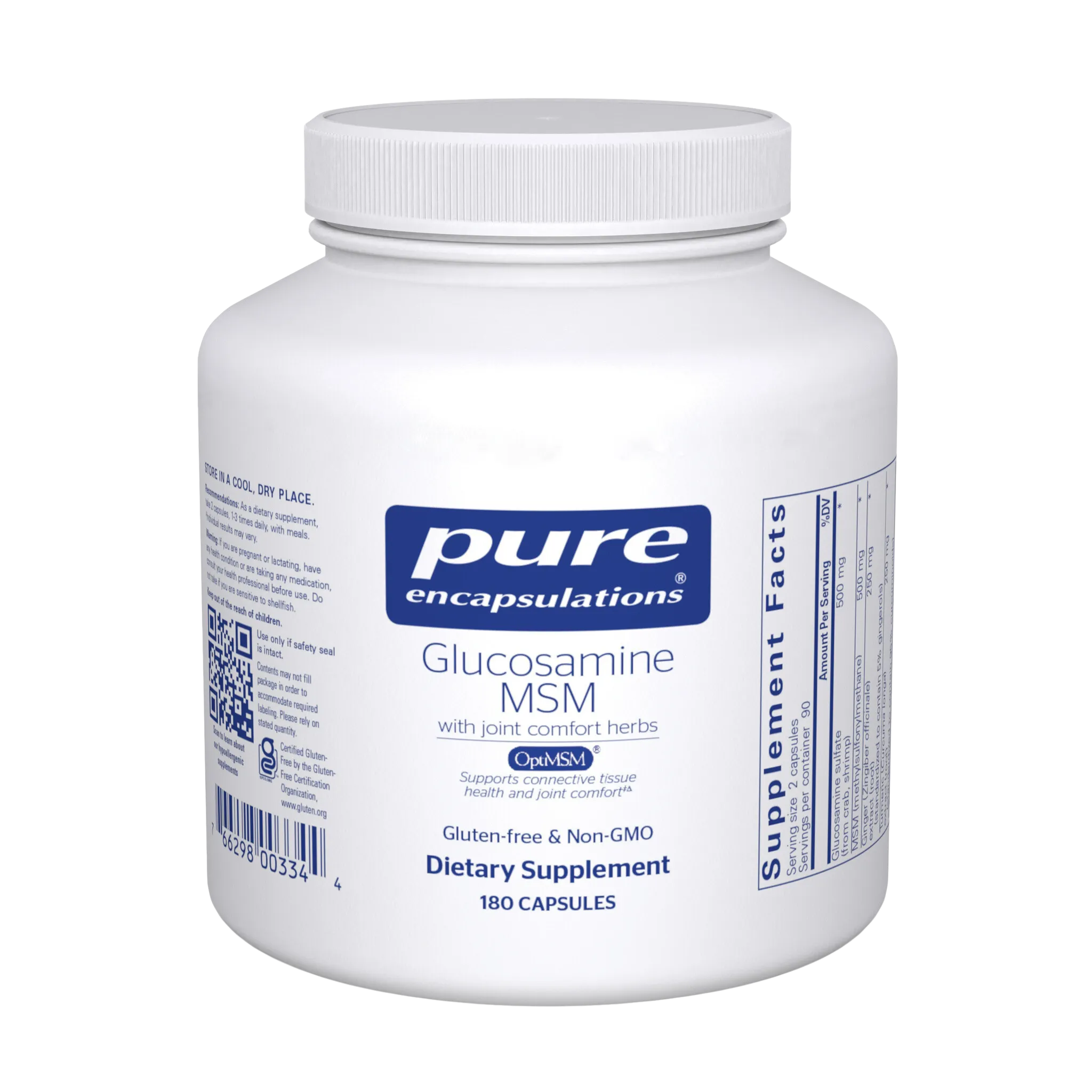
In the pursuit of joint comfort and mobility, many patients turn to targeted nutritional support. Glucosamine/MSM with Joint Comfort Herbs by Pure Encapsulations combines four extensively researched compounds: glucosamine sulfate, methylsulfonylmethane (MSM), curcumin, and ginger extract. But how exactly do these ingredients work beyond basic joint support? By diving into the molecular mechanisms of these compounds, we can better understand how they provide the structural building blocks for cartilage repair while simultaneously downregulating the inflammatory pathways that drive chronic pain in conditions like Long COVID and ME/CFS.
TL;DR
Joint and muscle pain in Long COVID and ME/CFS is driven by systemic inflammation and metabolic dysfunction.
Glucosamine and MSM provide structural support for cartilage, though clinical evidence for osteoarthritis remains mixed.
Curcumin and ginger may help modulate inflammatory pathways and provide antioxidant defense.
Always consult your healthcare provider before starting supplements to avoid potential drug interactions.
What is Glucosamine/MSM with Joint Comfort Herbs?
The Structural Foundations: Glucosamine and MSM
To understand how this targeted supplement works, we must first look at the natural functions of its core ingredients within a healthy body. Glucosamine sulfate is a naturally occurring amino sugar that serves as a fundamental building block for joint tissues. At the cellular level, glucosamine acts as a direct structural precursor for the biosynthesis of glycosaminoglycans (GAGs), hyaluronic acid, and proteoglycans. These complex molecules weave together to form the extracellular matrix of cartilage, providing the shock-absorbing cushioning between our bones. The "sulfate" component is clinically crucial; it provides the sulfate ions required for proteoglycan sulfation, a biochemical process that gives cartilage its viscoelasticity and resistance to enzymatic breakdown, as detailed in pharmacological reviews. Without adequate sulfate, the cartilage matrix becomes brittle and highly susceptible to the physical wear and tear of daily movement.
Complementing glucosamine is methylsulfonylmethane (MSM), a highly bioavailable organosulfur compound naturally found in plants and animals. Composed of 34% elemental sulfur, MSM provides the necessary methyl groups and bioavailable sulfur required for the synthesis and cross-linking of collagen and keratin. Beyond its structural role, MSM acts as a potent modulator of oxidative stress. It increases the body's natural production of glutathione, our master intracellular antioxidant, and boosts the activity of key antioxidant enzymes like superoxide dismutase (SOD) and catalase. By neutralizing reactive oxygen species (ROS), MSM may help protect delicate chondrocytes (cartilage cells) from oxidative destruction, creating a safer environment for tissue maintenance, according to mechanistic studies. This dual action of structural support and antioxidant defense makes MSM a cornerstone of comprehensive joint therapy.
Nature's Modulators: Curcumin and Ginger
The herbal components of this formula, curcumin (from turmeric extract) and ginger extract, belong to the Zingiberaceae botanical family and have been utilized for centuries to manage systemic inflammation. Curcumin, the primary bioactive polyphenol in turmeric, operates at the genetic level by inhibiting Nuclear Factor kappa B (NF-κB). NF-κB is a master transcription factor that, when activated, enters the cell nucleus and triggers the expression of pro-inflammatory cytokines like TNF-α and IL-6. By blocking this pathway, curcumin may help stop the inflammatory cascade at its source, helping to manage the localized swelling and pain that characterize inflamed joints, as outlined in immunological research. Furthermore, curcumin stimulates the biosynthesis of type II collagen, actively promoting cartilage elasticity alongside its anti-inflammatory duties.
Similarly, ginger extract contains powerful phenolic compounds known as gingerols and shogaols. These bioactive molecules specifically target and inhibit the cyclooxygenase-2 (COX-2) and lipoxygenase (LOX) enzymatic pathways. In a healthy inflammatory response, these enzymes synthesize prostaglandins and leukotrienes, which are lipid mediators that signal pain and swelling to the brain. By suppressing these specific pathways, ginger acts as a natural modulator of pain signaling. Furthermore, histological analyses show that ginger helps reduce synovial hyperplasia—the abnormal, painful thickening of the joint lining—while minimizing the infiltration of inflammatory macrophages into the synovial fluid. Together, these four ingredients provide a comprehensive approach to joint health, addressing both structural integrity and inflammatory balance at multiple cellular checkpoints.
How Long COVID and ME/CFS Impact Joint and Muscle Health
Microvascular Hypoperfusion and Muscle Starvation
In complex chronic illnesses like Long COVID and ME/CFS, joint and muscle pain is driven by profound systemic dysfunction rather than simple wear-and-tear. Recent landmark research into the pathophysiology of these conditions has revealed that the pain is heavily rooted in microvascular hypoperfusion—a severe lack of adequate blood flow to the tissues. While microvascular issues are often discussed in chronic illness, the cited study actually evaluates the association between serum albumin levels at admission and clinical outcomes in pediatric intensive care units. In the context of chronic illness, the tiny blood vessels responsible for delivering oxygen to the muscles and joints are thought to be physically diminished, actively starving the tissues of the oxygen required for normal aerobic metabolism. This starvation is a primary driver of the deep, unrelenting ache that patients experience daily.
When tissues are deprived of oxygen, they are forced into anaerobic metabolism, which generates excessive protons and creates a highly acidic local environment. This metabolic shift leads to a massive intracellular sodium overload within the muscle fibers, which subsequently triggers a secondary calcium overload. This excess calcium physically damages the mitochondria—the energy-producing powerhouses of the cells—leading to tissue necrosis and severe, widespread myalgia (muscle pain) and arthralgia (joint pain). This cellular metabolic failure explains why patients experience such profound physical heaviness and aching that does not resolve with standard rest, and why pushing through the pain only exacerbates the underlying mitochondrial damage.
Immune Hyperactivation and Central Sensitization
Compounding this metabolic crisis is the issue of persistent immune hyperactivation. In the broader context of immune research, studies have explored diverse immunomodulatory mechanisms, such as the discovery of Ll-CATH, a novel cathelicidin from the Chong'an Moustache Toad. In Long COVID, viral persistence continuously triggers the immune system, causing localized production of pro-inflammatory cytokines directly within the musculoskeletal tissues. Furthermore, muscle biopsies have revealed the direct infiltration of T-cells and macrophages into the muscle tissue itself, indicating an ongoing, localized immune battle that degrades healthy connective tissue and cartilage. This constant immune surveillance prevents the tissues from ever entering a true state of rest and repair.
This relentless peripheral inflammation eventually impacts the central nervous system, leading to a phenomenon known as central sensitization. Systemic inflammation triggers the activation of microglial cells in the brain and spinal cord, creating neuroinflammation. As a result, the central nervous system becomes hyper-reactive, amplifying normal sensory inputs into severe, nociplastic pain. This neuroinflammatory cascade explains why the joint and muscle pain in ME/CFS and Long COVID often mimics fibromyalgia, presenting as widespread, migrating, and highly sensitive to even minor physical exertion—a hallmark of post-exertional malaise (PEM). The pain is not just in the joints; it is amplified by a nervous system that is stuck in a state of high alert.
Glucosamine, MSM, and Herbs: Supporting Joint Health and Inflammation
Rebuilding the Cartilage Matrix
When the body is locked in the chronic inflammatory cycles of Long COVID or ME/CFS, joint cartilage degrades faster than it can be repaired. Supplementing with glucosamine sulfate and MSM provides the exact biochemical substrates needed to shift the balance from catabolism (breakdown) back to anabolism (building). Glucosamine stimulates synoviocytes—the cells lining the joint capsule—to secrete hyaluronic acid into the synovial fluid. This drastically enhances joint lubrication, reducing the physical friction that exacerbates pain during movement. While in vitro studies suggest glucosamine provides structural precursors, clinical osteoarthritis reviews note that literature to date has not proven glucosamine sulfate supplements to slow disease progression or effectively decrease osteoarthritis-associated pain, with randomized control studies showing conflicting results.
MSM acts synergistically with glucosamine by acting as a critical sulfur donor. The structural integrity of cartilage relies heavily on disulfide bonds, which give connective tissues their tensile strength and elasticity. By supplying highly bioavailable elemental sulfur, MSM ensures that the newly synthesized collagen and proteoglycans are properly cross-linked and structurally sound. Furthermore, MSM helps clear metabolic waste products from the joint capsule, which enhances the cellular absorption of glucosamine, making the combination far more effective than either ingredient alone. This synergy is vital for patients whose natural repair mechanisms are compromised by chronic illness.
Halting the Inflammatory Cascade
While glucosamine and MSM rebuild the joint, curcumin and ginger extract work aggressively to halt the inflammatory enzymes that are actively destroying it. In conditions like Long COVID, macrophages in the joint tissue release matrix metalloproteinases (MMPs), destructive enzymes that literally digest cartilage. Curcumin may help suppress the expression of MMP-1, MMP-3, and MMP-13, acting as a chemical shield for the joint matrix. Simultaneously, curcumin's profound inhibition of the NF-κB pathway downregulates the systemic cytokine storm, reducing the levels of TNF-α and IL-6 circulating in the bloodstream, which clinical data shows are directly correlated with pain severity in chronic illness.
Ginger complements this by targeting the lipid mediators of inflammation. The gingerols in the extract may help inhibit the COX-2 and LOX pathways, helping to prevent the synthesis of pain-inducing prostaglandins. Interestingly, recent pharmacological studies have revealed that combining curcumin and ginger creates a profound synergistic effect. The combination deeply downregulates the TLR4/TRAF6/MAPK signaling pathway, which is the primary trigger for immune responses to cellular damage. By suppressing this pathway, the botanical duo may help quiet the localized immune hyperactivation in the joints, providing significant analgesic relief without the gastrointestinal damage often associated with pharmaceutical NSAIDs. This makes the combination incredibly valuable for long-term symptom management.
Antioxidant Defense and Free Radical Scavenging
Finally, this formula provides robust antioxidant support to combat the mitochondrial dysfunction seen in ME/CFS and Long COVID. Chronic joint inflammation produces massive amounts of reactive oxygen species (ROS), which cause oxidative stress and further damage cellular DNA and mitochondria. Curcumin activates the Nrf2 (nuclear factor erythroid 2-related factor 2) pathway, a genetic switch that boosts the production of endogenous antioxidant proteins like heme oxygenase-1 (HO-1). This creates a cellular shield that scavenges free radicals within the synovial fluid, helping to protect the joint from further oxidative degradation.
Concurrently, MSM increases the body's natural glutathione levels, the most critical antioxidant for protecting mitochondrial function. By neutralizing the oxidative stress generated by anaerobic metabolism and immune cell infiltration, MSM and curcumin help protect the delicate microvasculature of the muscles and joints. This multi-targeted approach—rebuilding structure, halting inflammation, and neutralizing oxidative damage—makes this combination particularly suited for the complex pathophysiology of chronic musculoskeletal pain. By addressing the root causes of tissue damage, this supplement offers a comprehensive strategy for joint preservation.

Symptoms This Supplement May Help Manage
Targeting Structural and Inflammatory Symptoms
The combination of glucosamine, MSM, curcumin, and ginger offers a multi-faceted approach to managing the complex musculoskeletal symptoms associated with chronic illness. By addressing both the structural degradation of cartilage and the systemic inflammatory pathways, this supplement targets several debilitating symptoms simultaneously.
Widespread Joint Pain (Arthralgia): Glucosamine sulfate provides the structural building blocks to repair degraded cartilage, while curcumin and ginger may help inhibit the COX-2 and LOX enzymes, helping to reduce the localized pain signaling and swelling in the joints.
Morning Stiffness and Immobility: By stimulating the production of hyaluronic acid in the synovial fluid, glucosamine enhances joint lubrication, which can help reduce the severe stiffness many patients experience upon waking.
Muscle Aches and Myalgia: MSM is highly effective at reducing oxidative stress and clearing metabolic waste from tissues, which may help alleviate the deep muscle aching caused by microvascular hypoperfusion and anaerobic metabolism.
Systemic Inflammation: Curcumin's ability to inhibit the NF-κB pathway helps downregulate the systemic production of pro-inflammatory cytokines (like IL-6 and TNF-α), addressing the immune hyperactivation seen in Long COVID and MCAS.
PEM-Related Musculoskeletal Crashes: The robust antioxidant support from MSM (glutathione boosting) and curcumin (Nrf2 activation) helps protect muscle mitochondria from the severe oxidative damage that occurs when patients push past their energy envelope during post-exertional malaise.
Practical Considerations: Forms, Dosing, and Absorption
Bioavailability and Optimal Forms
When selecting joint support supplements, the specific chemical forms of the ingredients dictate their clinical efficacy. This formula utilizes glucosamine sulfate rather than glucosamine hydrochloride (HCl). While HCl yields slightly more glucosamine by weight, clinical meta-analyses consistently show that the sulfate form is vastly superior. The sulfate moiety is actively utilized by cartilage cells to construct and repair their matrix, and pharmacokinetic studies confirm that glucosamine sulfate achieves higher synovial-fluid exposure. MSM, on the other hand, is a highly stable, water-soluble molecule with rapid and efficient absorption kinetics. It reaches peak blood concentration in under an hour and boasts a robust systemic half-life of over 12 hours, allowing for sustained tissue delivery.
Curcumin is notoriously difficult for the body to absorb due to its hydrophobic (water-insoluble) nature and rapid metabolism in the liver. Unformulated curcumin has an oral bioavailability of less than 1%. However, combining it with other compounds, or taking it alongside dietary fats, can significantly enhance its absorption. The ginger extract in this formula not only provides its own anti-inflammatory benefits but also contains compounds that may help modulate the metabolic pathways in the liver, potentially supporting the systemic retention of curcuminoids. This thoughtful combination ensures that the active ingredients reach the systemic circulation where they are needed most.
Timing and Dietary Considerations
To maximize the absorption of the fat-soluble curcuminoids and gingerols, this supplement should ideally be taken with a meal that contains healthy fats (such as avocado, olive oil, or nuts). Taking it with food also serves a secondary purpose: it significantly reduces the likelihood of mild gastrointestinal discomfort, which is the most commonly reported side effect of glucosamine sulfate. Because glucosamine has a long 15-hour half-life and works cumulatively by slowly incorporating into cartilage over 4 to 12 weeks, daily consistency is vastly more important than the specific time of day you take it. The suggested use is 2 capsules, 1 to 3 times daily with meals, allowing patients to titrate their dosage based on symptom severity and gastrointestinal tolerance.
Safety, Allergies, and Drug Interactions
While generally well-tolerated, there are critical safety considerations for this specific combination of ingredients. Most importantly, the glucosamine sulfate in this formula is derived from crab and shrimp exoskeletons. It is strictly contraindicated for individuals with a shellfish allergy. Additionally, both curcumin and ginger possess natural anti-platelet properties, meaning they act as mild blood thinners. Patients taking prescription anticoagulants (like warfarin or Plavix), or high doses of NSAIDs, should consult their healthcare provider, as combining these can increase the risk of bruising or bleeding, according to drug interaction data, which also notes that glucosamine has shown mixed findings regarding efficacy in large comparative trials. It is crucial to manage these interactions carefully to avoid serious complications.
Furthermore, curcumin stimulates bile secretion, which can worsen conditions like gallstones or bile duct obstruction. Ginger and curcumin can also naturally lower blood sugar and blood pressure; therefore, patients on antidiabetic medications or antihypertensives should monitor their vitals closely to prevent hypoglycemia or hypotension. Always discuss new supplements with your medical team, especially if you are managing complex conditions like dysautonomia or taking immunosuppressants, as botanical extracts can influence the CYP3A4 liver enzymes responsible for metabolizing many prescription drugs. Your provider can help you determine the safest way to integrate this supplement into your existing regimen.

Follow the Science
Clinical Trials on Glucosamine and MSM
The efficacy of combining glucosamine and MSM is supported by robust clinical data, particularly in the realm of osteoarthritis and joint degradation. A pivotal 2006 double-blind, randomized controlled trial published in Osteoarthritis and Cartilage evaluated patients taking MSM daily for 12 weeks. The results demonstrated a clinically significant reduction in pain and improvement in physical function compared to a placebo, confirming its systemic anti-inflammatory capability. Building on this, a 2009 comparative study in Clinical Rheumatology focused on the synergistic effects of combining glucosamine and MSM. The patients receiving the combined therapy demonstrated a significantly faster and greater reduction in pain and improvement in joint mobility compared to those taking single ingredients.
More recently, a 2024 network meta-analysis of 30 randomized controlled trials involving over 5,200 patients evaluated various joint treatments. It found that the specific combination of glucosamine and MSM significantly met the minimum clinically important difference (MCID) for overall pain reduction compared to a placebo. This extensive data underscores that while glucosamine provides the structural materials for repair, the addition of MSM is critical for neutralizing the oxidative stress that would otherwise destroy the newly formed cartilage matrix. The clinical consensus strongly supports the use of these compounds in tandem for optimal joint health.
The Synergistic Power of Curcumin and Ginger
The botanical components of this formula are equally well-supported by modern pharmacological research. Multiple meta-analyses have concluded that curcumin is highly effective in relieving joint pain, improving function, and reducing the need for rescue analgesics, often performing comparably to standard NSAIDs but with a significantly lower risk of gastrointestinal side effects. Similarly, clinical trials show that daily ginger extract over three months significantly decreases the production of pro-inflammatory cytokines and improves mobility in patients with joint inflammation. These findings highlight the potent therapeutic potential of these ancient botanicals when applied in clinical settings.
Perhaps the most compelling evidence lies in the synergy between these two botanicals. In a recent animal model of human rheumatoid arthritis, a mixture of ginger and turmeric was found to be notably more effective than the standard NSAID indomethacin. The combination not only helped alleviate joint destruction but also helped protect against extra-articular complications like systemic inflammation. By targeting multiple inflammatory pathways simultaneously—NF-κB, COX-2, LOX, and the TLR4/TRAF6/MAPK axis—this botanical duo offers a scientifically validated approach to managing the complex, multi-system inflammation seen in chronic illnesses. This synergy is what makes the combination so uniquely suited for patients dealing with profound immune dysregulation.
The Path Forward
Validating Your Experience
Living with the unpredictable, widespread joint and muscle pain of Long COVID, ME/CFS, or dysautonomia can be incredibly isolating. It is vital to remember that your pain is real, physiologically grounded, and not simply a result of deconditioning. The microvascular changes, mitochondrial damage, and persistent immune hyperactivation are observable, measurable phenomena that validate the severity of your symptoms. While there is no single miracle cure for these complex conditions, targeted nutritional support can be a powerful tool in your management arsenal. By providing the structural building blocks for cartilage repair and aggressively downregulating inflammatory pathways, supplements like Glucosamine/MSM with Joint Comfort Herbs can help improve your daily quality of life.
Integrating Supplements into a Comprehensive Plan
Remember that supplementation is most effective when integrated into a comprehensive care plan. Pacing to avoid post-exertional crashes, tracking your symptoms, and working closely with a knowledgeable healthcare provider are essential steps. If you are navigating the challenges of daily life with chronic pain, you might also find helpful strategies in our guides on How to Maintain Your Independence with Chronic Illness and 5 Tips for Surviving the Holidays with a Chronic Illness. Always consult your medical team before introducing new supplements, especially to review potential drug interactions or allergies. Managing chronic illness is a marathon, not a sprint, and finding the right combination of supportive therapies is key to regaining your quality of life.
Sources
Pharmacokinetics and mechanisms of action of Glucosamine Sulfate
Methylsulfonylmethane: Applications and Safety of a Novel Dietary Supplement
Ginger and its bioactive compounds in inflammatory joint diseases
Key Pathophysiological Role of Skeletal Muscle Disturbance in Post COVID and ME/CFS
Skeletal muscle alteration in Long COVID and ME/CFS (Prof. Rob Wust)
Epidemiology, Symptoms and Pathophysiology of Long Covid Complications
Synergistic Anti-Inflammatory Effects of Curcumin and Ginger