March 5, 2026

Disclaimer: The information provided here is for educational purposes only and is not intended as medical advice. It should not be used to diagnose, treat, cure, or prevent any medical condition. Instead, use it as a starting point for discussion with your healthcare provider. Always consult with a qualified healthcare provider before starting any new medication, supplement, device, or making changes to your health regimen.
Living with complex chronic conditions like Long COVID, myalgic encephalomyelitis/chronic fatigue syndrome (ME/CFS), dysautonomia, and mast cell activation syndrome (MCAS) often means navigating a labyrinth of invisible but profoundly debilitating symptoms. Among the most pervasive and exhausting of these symptoms is severe, unyielding joint pain and connective tissue discomfort. For many patients, this arthralgia is not simply the result of standard mechanical wear and tear or aging; rather, it is a complex structural and inflammatory issue driven by underlying joint hypermobility, aberrant mast cell degranulation, and relentless systemic cytokine storms. When every movement is accompanied by deep tissue aching and stiffness, it can severely limit mobility, drain your already depleted energy reserves, and exacerbate post-exertional malaise (PEM).
When your joints ache constantly and your connective tissues feel fragile, finding targeted, science-backed physiological support is crucial for maintaining your daily function and overall quality of life. The combination of Glucosamine, Chondroitin, and MSM (methylsulfonylmethane) has long been recognized and extensively utilized as one of the most widely researched dietary supplement regimens for managing joint pathology and osteoarthritis. But how exactly do these three distinct compounds work together synergistically at the cellular level, and why are their specific mechanisms of action particularly relevant for the unique pathophysiology of infection-associated chronic illnesses and connective tissue disorders? Let's deeply explore the underlying biochemistry, the latest clinical evidence, and how this powerful structural trio can help rebuild, hydrate, and protect your joints.
To understand how this supplement combination works, we must first examine the natural architecture of healthy joints. The ends of our bones are capped with articular cartilage, a smooth, highly specialized connective tissue that provides a frictionless surface for joint movement and acts as a crucial shock absorber. Unlike most tissues in the human body, cartilage is avascular, meaning it lacks a direct blood supply. Instead, it relies entirely on the diffusion of nutrients from the surrounding synovial fluid. The structural integrity of this cartilage is maintained by specialized cells called chondrocytes, which continuously synthesize and remodel the extracellular matrix (ECM)—a dense, complex network composed primarily of water, collagen fibers, and large molecules known as proteoglycans.
Glucosamine is an endogenous, naturally occurring amino sugar that serves as a fundamental biochemical precursor in the human body. At the cellular level, glucosamine is strictly required for the synthesis of glycosylated proteins and lipids. More importantly for joint health, it acts as the primary, rate-limiting building block for the production of glycosaminoglycans (GAGs) and hyaluronic acid. These GAGs are long, unbranched polysaccharides that attach to core proteins to form the massive proteoglycan structures within the cartilage matrix. By providing an abundant supply of this essential raw material, glucosamine actively stimulates chondrocytes to upregulate their anabolic (building) processes, driving the continuous regeneration of the extracellular matrix.
Chondroitin sulfate, on the other hand, is a major, naturally occurring glycosaminoglycan found directly embedded within the cartilage matrix itself. The defining biochemical characteristic of chondroitin molecules is their highly negative electrical charge. Because like charges repel each other, the chondroitin chains fan out, creating massive microscopic spaces within the proteoglycan structure. This negative charge acts as a powerful molecular magnet, attracting and tightly binding large volumes of water into the cartilage matrix. This intense hydration is absolutely critical; it is the trapped water that provides cartilage with its unique elasticity, resilience, and ability to absorb immense mechanical compressive forces during physical movement without rupturing.
The third component of this triad is Methylsulfonylmethane (MSM), a naturally occurring, highly bioavailable organic sulfur compound. Sulfur is the third most abundant mineral in the human body and is an absolute biological necessity for the maintenance of healthy connective tissues. Despite its critical importance, sulfur depletion is common, particularly in states of chronic illness, high oxidative stress, or prolonged systemic inflammation, where the body's metabolic demands rapidly outpace dietary intake. MSM serves as a highly efficient, direct donor of this essential organic sulfur, delivering it precisely where it is needed most within the musculoskeletal system.
At the molecular level, the sulfur provided by MSM is strictly required for the proper synthesis and structural cross-linking of collagen, the primary structural protein that forms the scaffolding of all connective tissues, including cartilage, tendons, and ligaments. Sulfur atoms form strong, covalent disulfide bonds between adjacent collagen peptides. These disulfide bridges are what give the collagen network its immense tensile strength, structural integrity, and flexibility. Without adequate sulfur, the newly synthesized collagen fibers remain weak, disorganized, and highly susceptible to mechanical tearing and enzymatic degradation, leading to progressive joint instability and chronic pain.
Beyond its purely structural role, the sulfur donated by MSM is also a critical component of the transsulfuration pathway, a vital biochemical cascade responsible for synthesizing glutathione. Glutathione is widely recognized as the body's master intracellular antioxidant, playing an indispensable role in neutralizing reactive oxygen species (ROS) and mitigating cellular damage. By directly feeding this pathway, MSM ensures that chondrocytes and surrounding joint tissues maintain robust antioxidant defenses, protecting the fragile cartilage matrix from the destructive effects of chronic oxidative stress and systemic inflammation.
While each of these three compounds offers significant individual benefits, their true therapeutic power lies in their profound biological synergy. When combined, they offer a comprehensive, multi-targeted approach to joint pathology that addresses both the structural and inflammatory components of cartilage degradation. Glucosamine provides the essential raw materials needed to actively build and repair the structural matrix. Chondroitin sulfate ensures that this newly formed matrix retains adequate water, staying properly hydrated, lubricated, and capable of absorbing mechanical shock. Finally, MSM cross-links these newly built structural proteins to ensure long-term stability, while simultaneously neutralizing the local inflammation and oxidative stress that threaten to break the matrix down.
This highly coordinated, three-pronged mechanism of action is precisely why the combination of Glucosamine, Chondroitin, and MSM is considered the gold standard in integrative joint support. Rather than merely masking the sensation of pain like traditional non-steroidal anti-inflammatory drugs (NSAIDs), this synergistic trio works at the fundamental cellular level to alter the actual trajectory of joint health. By simultaneously promoting anabolic tissue regeneration and inhibiting catabolic tissue destruction, it helps to restore the delicate physiological balance required for long-term joint comfort, mobility, and resilience.
For patients navigating complex chronic illnesses, joint pain is rarely a simple matter of aging or overuse. There is a highly documented, newly recognized clinical disease cluster linking Postural Orthostatic Tachycardia Syndrome (POTS), Mast Cell Activation Syndrome (MCAS), and connective tissue disorders, most notably Ehlers-Danlos Syndrome (EDS) and Hypermobility Spectrum Disorders (HSD). In these hypermobile conditions, genetic variations lead to the production of faulty, fragile collagen. Because collagen is the primary structural scaffolding of the body, this results in a weak, overly stretchy extracellular matrix (ECM). This structural laxity causes profound joint hypermobility, frequent subluxations (partial dislocations), and continuous micro-traumas to the joint capsule during normal daily activities.
This chronic mechanical instability places an immense, unnatural burden on the articular cartilage. As the joints move outside of their normal, stable range of motion, the cartilage is subjected to uneven, sheer forces that rapidly accelerate mechanical wear and tear. Furthermore, the surrounding muscles and ligaments must remain in a state of constant, exhausting tension in a desperate attempt to stabilize the loose joints. This continuous overcompensation not only drives severe, widespread musculoskeletal pain and chronic fatigue but also accelerates the localized degradation of the cartilage matrix, leading to early-onset osteoarthritis and relentless joint discomfort.
The structural laxity seen in hypermobility disorders does not just cause mechanical damage; it also acts as a profound trigger for immunological dysfunction, specifically involving mast cells. Mast cells are immune system sentinels that reside extensively throughout the body's connective tissues, physically adhering to the extracellular matrix. In a healthy body, this stable ECM environment keeps mast cells calm and regulated. However, when the structural integrity of the ECM is compromised and overly stretchy, the constant abnormal movement mechanically irritates the resident mast cells, triggering them to activate and degranulate inappropriately—a hallmark of Mast Cell Activation Syndrome (MCAS).
When these hyper-reactive mast cells degranulate within the joint space, they release a massive storm of potent chemical mediators. The most abundant and destructive of these mediators is an enzyme called tryptase. Recent groundbreaking research has revealed that mast cell tryptase acts like molecular scissors, actively digesting the connective tissue matrix. Tryptase rapidly degrades the cartilage-derived aggrecan proteoglycans and activates Matrix Metalloproteinases (MMPs), specifically proMMP-9, which aggressively chops up the surrounding collagen network. This creates a vicious, self-perpetuating cycle: faulty collagen irritates mast cells, mast cells release tryptase, and tryptase further destroys the already fragile collagen, driving severe localized joint pain and synovitis (inflammation of the joint lining).
Beyond mechanical instability and mast cell hyper-reactivity, systemic inflammation plays a massive role in the joint pain experienced by patients with post-viral syndromes like Long COVID and ME/CFS. In these conditions, viral persistence, immune exhaustion, or lingering autoimmune responses lead to a chronic, unresolved state of systemic inflammation. The immune system remains locked in a hyper-vigilant state, continuously pumping out high levels of pro-inflammatory cytokines, most notably Interleukin-6 (IL-6), Tumor Necrosis Factor-alpha (TNF-α), and Interleukin-1 beta (IL-1β). These circulating cytokines easily infiltrate the synovial fluid of the joints, triggering widespread arthralgia (joint pain) and myalgia (muscle pain).
Once inside the joint space, these inflammatory cytokines bind to receptors on the chondrocytes, forcing them to abandon their normal, healthy matrix-building activities. Instead, the chondrocytes are hijacked and forced to produce massive amounts of cartilage-degrading enzymes, including MMPs and aggrecanases. Furthermore, this chronic inflammatory state generates immense amounts of reactive oxygen species (ROS), leading to severe localized oxidative stress. This oxidative stress rapidly depletes the joint's local reserves of glutathione, leaving the chondrocytes highly vulnerable to free radical damage, mitochondrial dysfunction, and eventual cell death, entirely halting the joint's ability to repair itself.
For patients suffering from the connective tissue degradation associated with EDS, MCAS, or chronic systemic inflammation, targeted nutritional intervention is essential to halt the damage and stimulate repair. Glucosamine serves as the foundational intervention in this process. By flooding the local joint environment with an abundance of this critical amino sugar, glucosamine actively overrides the inflammatory signals and stimulates the chondrocytes to shift back into an anabolic, regenerative state. In vitro studies have clearly demonstrated that glucosamine supplementation directly drives chondrocytes to upregulate the synthesis of both aggrecan and Type II collagen, the two most critical structural components of the extracellular matrix.
Simultaneously, chondroitin sulfate works to ensure that this newly synthesized matrix is highly functional and capable of withstanding mechanical stress. As the chondrocytes rebuild the proteoglycan structures, the heavily negatively charged chondroitin molecules restore the osmotic pressure within the joint space. This acts as a powerful molecular sponge, pulling in and trapping massive amounts of water and essential nutrients from the synovial fluid. This intense rehydration process is vital; it restores the cartilage's physical thickness, elasticity, and shock-absorbing capabilities, which are often severely compromised in hypermobile patients who subject their joints to constant, abnormal sheer forces.
Rebuilding the matrix is only half the battle; to achieve lasting joint comfort, the relentless inflammatory cascade driving the destruction must be stopped. This is where MSM demonstrates its profound therapeutic value. Methylsulfonylmethane exerts its primary anti-inflammatory effects through the direct inhibition of Nuclear Factor-kappa B (NF-κB), a master protein complex that controls the transcription of DNA and the production of inflammatory cytokines. By actively preventing the p65 subunit of NF-κB from translocating into the cell nucleus, MSM effectively silences the genetic expression of highly inflammatory cytokines, specifically halting the production of IL-6 and TNF-α at their source.
While MSM suppresses the systemic cytokine storm, glucosamine acts locally to protect the cartilage from enzymatic digestion. Glucosamine has been shown to actively block the expression and activity of Matrix Metalloproteinases (MMPs), phospholipase A2, and aggrecanases within the synovial fluid. By neutralizing these destructive enzymes—the very "molecular scissors" activated by mast cell tryptase and inflammatory cytokines—glucosamine effectively halts the catabolic breakdown of the cartilage matrix. Together, MSM and glucosamine create a powerful, localized anti-inflammatory shield that allows the joint tissues the necessary peace and metabolic bandwidth to finally heal.
Chronic illness, particularly ME/CFS and Long COVID, is characterized by profound, systemic oxidative stress that rapidly exhausts the body's antioxidant reserves. MSM plays a critical role in reversing this dangerous depletion. As a highly bioavailable organic sulfur donor, MSM feeds directly into the transsulfuration pathway, providing the essential sulfur atom required to synthesize cysteine. Cysteine availability is the strict rate-limiting factor in the cellular production of glutathione, the body's master intracellular antioxidant. By ensuring a steady supply of sulfur, MSM allows the body to continuously regenerate its glutathione stores, even in the face of severe, chronic immune activation.
This robust boost in glutathione production is incredibly protective for the fragile joint environment. Glutathione actively neutralizes the reactive oxygen species (ROS) generated by chronic inflammation, significantly reducing markers of oxidative tissue damage such as malondialdehyde (MDA) and protein carbonyls. Furthermore, glucosamine complements this antioxidant action by significantly reducing inducible nitric oxide synthase (iNOS) activity, thereby preventing toxic accumulations of nitric oxide that can trigger chondrocyte apoptosis (programmed cell death). This combined antioxidant defense is particularly crucial for mitigating the severe muscle and joint pain associated with post-exertional malaise (PEM) following physical exertion.
For patients dealing with the complex intersection of MCAS and hypermobility, this supplement trio offers a vital, indirect mechanism for mast cell stabilization. Because mast cells are physically anchored to the extracellular matrix, their stability is entirely dependent on the structural integrity of that matrix. By providing the raw materials (glucosamine and chondroitin) to rebuild the collagen network, and the sulfur (MSM) required to securely cross-link those fibers, this combination helps to reduce the mechanical laxity and abnormal stretching that constantly irritates resident mast cells. A stronger, tighter, more resilient connective tissue matrix translates directly to a calmer, less reactive mast cell population.
Furthermore, by profoundly lowering the overall inflammatory burden and suppressing the levels of circulating cytokines (IL-6, TNF-α) within the joint space, MSM helps to raise the activation threshold for mast cell degranulation. In a highly inflamed, oxidative environment, mast cells become hyper-sensitized and will degranulate at the slightest provocation. By utilizing MSM to restore a calm, antioxidant-rich, and structurally sound local environment, the vicious cycle of mast cell-driven cartilage degradation and localized joint pain can finally be interrupted, providing significant relief for patients with complex connective tissue disorders.
Chronic Joint Pain (Arthralgia): By profoundly inhibiting the NF-κB inflammatory pathway and halting the production of pain-inducing cytokines like IL-6 and TNF-α, MSM helps to calm the systemic inflammation that drives deep, relentless joint aching in Long COVID and ME/CFS. Additionally, MSM is thought to have a direct analgesic effect by blocking the transmission of pain stimuli along the unmyelinated C-fibers of the autonomic nervous system.
Joint Stiffness and Decreased Mobility: Chondroitin sulfate acts as a powerful molecular magnet, drawing massive amounts of water into the cartilage matrix. This intense hydration restores the osmotic pressure and lubrication within the synovial fluid, significantly reducing morning stiffness, improving joint glide, and expanding the pain-free range of motion.
Connective Tissue Laxity and Instability: For patients with hypermobility disorders like EDS, MSM provides the essential organic sulfur required to form strong disulfide bonds. These bonds cross-link newly synthesized collagen fibers, increasing the tensile strength, structural integrity, and stability of the extracellular matrix, thereby reducing the mechanical irritation that triggers mast cell degranulation.
Post-Exertional Muscle and Joint Aches (PEM): Physical exertion triggers spikes in oxidative stress and systemic inflammation, which are severely exaggerated in ME/CFS. By donating sulfur to synthesize glutathione (the master antioxidant), MSM rapidly neutralizes exercise-induced free radicals, reduces markers of oxidative tissue damage, and speeds the clearance of metabolic waste, helping to mitigate the severity of post-exertional crashes.
Cartilage Degradation and Early Osteoarthritis: Glucosamine provides the direct, rate-limiting biochemical building blocks (glycosaminoglycans) required for chondrocytes to actively regenerate the cartilage matrix. Simultaneously, it blocks the destructive Matrix Metalloproteinases (MMPs) released by hyperactive mast cells, halting the enzymatic digestion of the joint space and preserving long-term structural integrity.
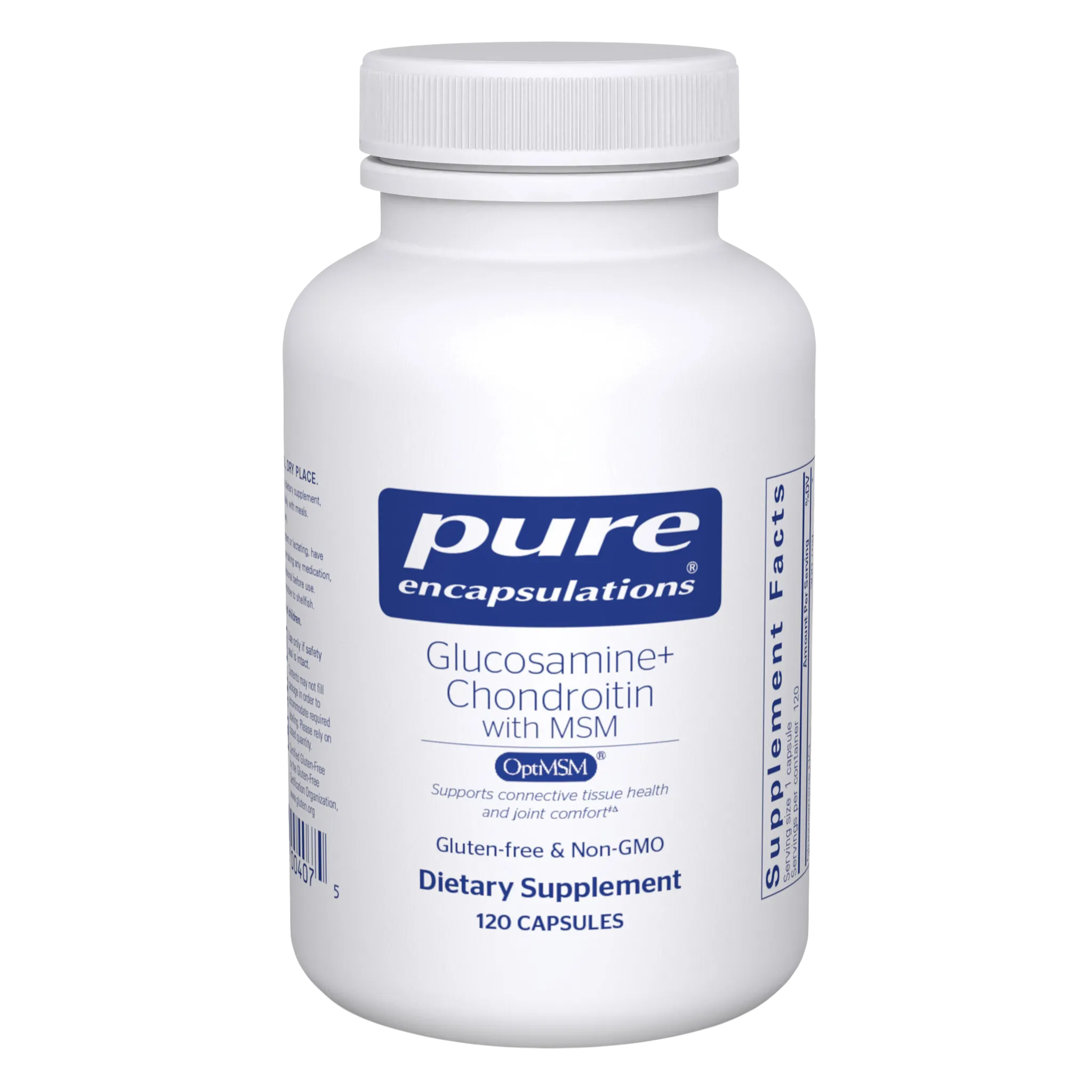
When selecting a joint support supplement, understanding the specific forms, sourcing, and bioavailability of the active ingredients is paramount for both efficacy and safety. This specific Pure Encapsulations formula utilizes Glucosamine HCl (Hydrochloride) rather than the more common Glucosamine Sulfate. This is a crucial distinction; Glucosamine HCl is a significantly more concentrated form of the molecule. Because it lacks the bulky sulfate group, it yields a much higher percentage of active, bioavailable glucosamine per gram, making it highly efficient at delivering the necessary building blocks directly to the chondrocytes. The formula also includes high-quality Chondroitin sulfate sourced from bovine cartilage, and pure, highly bioavailable MSM (methylsulfonylmethane) to provide the necessary organic sulfur.
CRITICAL SAFETY WARNING: It is absolutely vital to note the sourcing of the glucosamine in this specific product. The Glucosamine HCl utilized here is derived directly from the exoskeletons of crustaceans, specifically crab and shrimp. Therefore, this supplement is strictly contraindicated for any individual with a known shellfish allergy or severe crustacean hypersensitivity. For patients with Mast Cell Activation Syndrome (MCAS) who have a history of anaphylactic or severe allergic reactions to shellfish, taking this product could trigger a dangerous, systemic mast cell degranulation event. Always verify the allergen warnings on any glucosamine product before consumption.
Achieving meaningful clinical results with joint supplements relies heavily on reaching and maintaining the correct therapeutic threshold. Based on extensive clinical trial data and network meta-analyses, the standard, highly effective daily clinical dosages are typically 1,500 mg of Glucosamine, 800 to 1,200 mg of Chondroitin Sulfate, and 1,000 to 3,000 mg of MSM. This specific Pure Encapsulations product is formulated to meet these exact therapeutic targets when taken as directed. The suggested use is one capsule, three times daily with meals. This divided dosing schedule ensures a steady, continuous supply of these critical building blocks and anti-inflammatory compounds circulating within the bloodstream throughout the day, maximizing their uptake into the avascular joint spaces.
It is also crucial to manage expectations regarding the pharmacokinetics and timeline of efficacy. Unlike pharmaceutical NSAIDs or corticosteroids, which forcefully and immediately suppress pain pathways, Glucosamine, Chondroitin, and MSM work by fundamentally altering the structural and inflammatory environment of the joint at the cellular level. This biological remodeling process takes significant time. Clinical researchers consistently emphasize that it generally takes 8 to 12 weeks of continuous, uninterrupted daily supplementation for the active ingredients to accumulate sufficiently in the plasma and synovial tissues to produce noticeable, lasting symptom relief and structural benefits. Consistency is the key to success with this regimen.
To maximize absorption and minimize potential side effects, it is highly recommended to take these capsules alongside meals. Because MSM is a potent, sulfur-containing compound, taking it on a completely empty stomach can occasionally cause mild gastrointestinal upset, nausea, or bloating in sensitive individuals. Taking the supplement with food not only buffers the stomach lining but also stimulates the release of digestive enzymes and bile, which can help facilitate the optimal breakdown and intestinal absorption of the large chondroitin sulfate molecules. Ensure you are also drinking adequate water throughout the day, as chondroitin relies on available hydration to effectively plump and lubricate the cartilage matrix.
Finally, while this combination is generally considered exceptionally safe and well-tolerated, there are potential drug interactions to be aware of, particularly for patients managing complex chronic illnesses with multiple prescription medications. Chondroitin sulfate shares a mild structural biochemical similarity to heparin, a common anticoagulant. Because of this, high doses of chondroitin could theoretically amplify the effects of blood-thinning medications like warfarin (Coumadin), potentially increasing the risk of bruising or bleeding. As always, it is imperative to consult with your primary healthcare provider or specialist before introducing any new supplement into your regimen to ensure it is safe and appropriate for your unique medical profile.
The combination of Glucosamine, Chondroitin, and MSM is supported by a robust and continually expanding body of clinical literature, particularly regarding its ability to halt the structural degradation of cartilage. One of the most significant pieces of evidence comes from the LEGS (Long-term Efficacy of Glucosamine and Chondroitin Sulfate) study. This was a massive, 2-year, double-blind, randomized, placebo-controlled trial involving 605 participants designed to evaluate the long-term structural impact of daily supplementation with 1500 mg of glucosamine and 800 mg of chondroitin. The rigorous design and length of this study provided highly reliable, longitudinal data on joint preservation.
The findings of the LEGS study were highly significant for patients concerned with progressive joint destruction. After adjusting for variables such as Body Mass Index (BMI) and baseline disease severity, the researchers found that the group receiving the combination therapy demonstrated a statistically significant reduction in Joint Space Narrowing (JSN). Specifically, the combination group showed a mean difference of 0.10 mm in joint space preservation compared to the placebo over the 2-year period ($p=0.046$). This provided concrete, radiographic evidence that this specific combination does not just mask pain, but actively slows the structural, physical progression of cartilage loss and osteoarthritis, a vital benefit for hypermobile patients prone to early joint wear.
While structural preservation is crucial, immediate functional improvement and pain relief are often the primary goals for patients. A pivotal double-blind, randomized controlled trial specifically investigated the added benefit of MSM by comparing a Glucosamine + Chondroitin (GC) group against a Triple Combination Glucosamine + Chondroitin + MSM (GCM) group in 147 patients with symptomatic knee osteoarthritis. The researchers utilized the highly validated WOMAC (Western Ontario and McMaster Universities Arthritis Index) and VAS (Visual Analogue Scale) scoring systems to rigorously quantify changes in physical function, joint stiffness, and overall pain levels over a 12-week period.
The results clearly highlighted the profound synergistic power of adding MSM to the regimen. The GCM (Triple Combination) group demonstrated significantly superior clinical outcomes compared to both the placebo and the GC-only group. WOMAC scores for physical function and morning stiffness were significantly improved by weeks 4 and 12 ($p=0.01$), and VAS pain scores plummeted significantly by weeks 8 and 12 ($p<0.001$). Furthermore, a recent 2025 Phase I Pilot Study evaluating this exact nutraceutical combination in older adults with various musculoskeletal pain syndromes reported that 60% of participants experienced significant, quantifiable relief in sciatic, waist, and back pain, alongside a notable reduction in erythrocyte sedimentation rates (ESR), a key systemic blood marker for chronic inflammation.
For patients with ME/CFS and Long COVID, the ability to recover from physical exertion without triggering a severe inflammatory crash (PEM) is paramount. Exercise science provides excellent proxy data for understanding how MSM modulates this post-exertional oxidative stress. A highly relevant 2012 pilot study by Kalman et al. evaluated healthy men taking 3.0 grams of MSM daily for 30 days prior to engaging in grueling, muscle-damaging exhaustive exercise. The researchers meticulously tracked markers of fatigue, systemic inflammation, and cellular oxidative damage in the hours and days following the physical exertion.
The protective effects of MSM were striking. Following the exhaustive exercise, the participants taking MSM experienced a quantifiable, statistically significant reduction in perceived fatigue. More importantly, blood analysis revealed a significant increase in Trolox Equivalent Antioxidant Capacity (TEAC) ($p=0.035$) and a significant decrease in homocysteine levels ($p=0.007$). Other similar trials have shown that pre-loading with MSM significantly decreases specific oxidative stress markers like malondialdehyde (MDA) and protein carbonyls (PC) while boosting the ratio of reduced glutathione. For the chronic illness community, this data strongly suggests that MSM can effectively buffer the body against the severe, prolonged spikes in oxidative stress and systemic inflammation that drive debilitating post-exertional malaise.
Living with the relentless, deep-tissue aching associated with hypermobility, systemic inflammation, and mast cell dysfunction is an incredibly heavy burden to carry. It is vital to validate that the severe joint pain, stiffness, and connective tissue fragility you experience are not "just in your head" or simply a normal part of aging. They are the direct, physiological result of complex biochemical processes—from faulty collagen scaffolding and mast cell-driven enzymatic destruction to the relentless cytokine storms characteristic of Long COVID and ME/CFS. Acknowledging the profound reality of this structural and inflammatory damage is the first, crucial step toward finding effective, targeted management strategies that respect your body's unique limitations and metabolic needs.
While the combination of Glucosamine, Chondroitin, and MSM offers a powerful, scientifically validated tool for rebuilding the extracellular matrix and halting localized inflammation, it is important to remember that no single supplement is a cure-all for complex chronic conditions. True symptom management requires a comprehensive, multi-disciplinary approach. This includes meticulous energy pacing to avoid triggering post-exertional malaise, specialized physical therapy designed specifically for hypermobile bodies (to safely strengthen the muscles surrounding lax joints without causing further micro-tears), and working with specialists to identify and stabilize hyper-reactive mast cells using targeted medications like Ketotifen or Cromolyn Sodium.
Navigating this multifaceted approach can be overwhelming, especially when dealing with severe fatigue and brain fog. We encourage you to explore our other resources for practical, day-to-day management strategies, such as our guide on maintaining your independence with chronic illness, or our practical advice for surviving the holidays with a chronic illness. Building a sustainable, personalized toolkit of both physiological supports and lifestyle adaptations is the most effective way to reclaim your mobility, expand your energy envelope, and improve your overall quality of life.
If you are struggling with chronic joint pain, early-onset cartilage degradation, or the widespread connective tissue discomfort associated with EDS, Long COVID, or ME/CFS, this synergistic trio may provide the foundational structural support your body desperately needs. We strongly encourage you to discuss Glucosamine Chondroitin with MSM with your primary healthcare provider or specialist to determine if it is a safe and appropriate addition to your personalized treatment protocol, particularly if you are managing multiple prescriptions or have a history of severe allergies.