Can Glucosamine and Chondroitin Support Joint Health and Calm Inflammation in Long COVID and ME/CFS?
March 6, 2026
Glucosamine & ChondroitinLong COVIDME/CFS
Share:
Disclaimer: The information provided here is for educational purposes only and is not intended as medical advice. It should not be used to diagnose, treat, cure, or prevent any medical condition. Instead, use it as a starting point for discussion with your healthcare provider. Always consult with a qualified healthcare provider before starting any new medication, supplement, device, or making changes to your health regimen.
Living with a complex chronic illness often feels like fighting a war on multiple fronts. For individuals navigating the unpredictable waters of Long COVID, myalgic encephalomyelitis/chronic fatigue syndrome (ME/CFS), dysautonomia, and mast cell activation syndrome (MCAS), the daily reality frequently includes profound, widespread musculoskeletal pain. This isn't just the standard "wear and tear" that comes with aging; it is a deep, systemic ache born from chronic inflammation, connective tissue laxity, and immune dysregulation. When your joints constantly ache and your connective tissues fail to provide stable support, the physical toll drains your already limited energy reserves, making even simple daily tasks feel like monumental hurdles.
In the search for validating, science-backed management strategies, many patients and healthcare providers are looking beyond basic pain relievers to compounds that address the root cellular mechanisms of joint degradation and inflammation. Emerging immunological research reveals that these compounds are far more than just structural "filler" for the joints. They act as potent cellular signaling modulators that can suppress inflammatory pathways, stabilize hyper-reactive mast cells, and provide the essential building blocks needed to support connective tissue integrity in hypermobile bodies. In this comprehensive guide, we will explore the intricate biochemistry of glucosamine and chondroitin, and how they may offer targeted support for the complex web of symptoms seen in Long COVID, ME/CFS, and related conditions.
TL;DR
Glucosamine and chondroitin may support joint health and reduce inflammation in complex chronic conditions.
These compounds act as cellular modulators that may help stabilize mast cells and lower histamine.
Consistent, long-term supplementation is necessary to achieve optimal bioavailability and structural support.
Always consult your healthcare provider before starting, especially if managing severe allergies or taking blood thinners.
What are Glucosamine and Chondroitin?
The Biochemical Building Blocks of Cartilage and Connective Tissue
To understand the role of glucosamine and chondroitin, we must first look at the microscopic architecture of our joints and connective tissues. In a healthy body, joints are cushioned by articular cartilage, a firm, rubbery tissue that covers the ends of bones. This cartilage is primarily composed of an extracellular matrix (ECM) made up of water, collagen fibers, and complex molecules called proteoglycans. Glucosamine is a naturally occurring amino sugar that serves as a fundamental biochemical precursor for the synthesis of these vital structural components. Specifically, glucosamine is required to produce glycosaminoglycans (GAGs), which are long, unbranched chains of complex carbohydrates that form the core of the cartilage matrix. Without adequate glucosamine, the body simply cannot manufacture the raw materials necessary to maintain or repair joint tissue.
Chondroitin, most commonly found in the body as chondroitin sulfate, is itself a specific type of glycosaminoglycan. It is a massive, complex macromolecule that binds to proteins to form the proteoglycans within the extracellular matrix. One of the most critical functions of chondroitin sulfate is its remarkable ability to attract and retain water within the cartilage structure. This hydration is what gives healthy cartilage its spongy, elastic quality, allowing it to act as a highly effective shock absorber during physical movement. By maintaining the osmotic pressure within the joint capsule, chondroitin ensures that the cartilage can compress and rebound, protecting the underlying bone from damaging friction and mechanical stress. Together, glucosamine and chondroitin work synergistically to provide the structural scaffolding and the hydraulic cushioning required for fluid, pain-free mobility.
Beyond Structure: Active Cellular Signaling Modulators
For decades, the medical community viewed glucosamine and chondroitin purely as structural building blocks—assuming that supplementing them simply provided the body with extra "bricks" to rebuild damaged cartilage. However, modern pharmacological research has profoundly shifted this paradigm. We now know that these compounds are highly active cellular signaling modulators that exert direct influence over how our cells respond to stress and inflammation. When introduced into the joint space, glucosamine and chondroitin interact with specific receptors on the surface of chondrocytes (the specialized cells that produce and maintain the cartilage matrix). This interaction triggers a cascade of intracellular signals that actively alter the genetic expression of the cell, shifting it away from a state of destruction and toward a state of repair.
One of the most fascinating discoveries is the epigenetic modulation capabilities of these compounds. Research has shown that in environments characterized by chronic inflammation, specific genes responsible for producing inflammatory cytokines become abnormally active due to changes in DNA methylation. Glucosamine has been observed to alleviate this disease-associated demethylation, functionally "silencing" the over-expression of inflammatory genes like IL-1β at the epigenetic level. This means that glucosamine and chondroitin are not just patching up the damage; they are actively reprogramming the cellular environment to stop the inflammatory cascade at its genetic source. This dual action—providing structural raw materials while simultaneously acting as a molecular brake on inflammation—makes them uniquely suited for addressing complex, systemic joint issues.
The Systemic Distribution of Glycosaminoglycans (GAGs)
While we primarily associate glycosaminoglycans (GAGs) like chondroitin sulfate with joint cartilage, their biological importance extends far beyond the musculoskeletal system. GAGs are ubiquitous throughout the human body, playing critical roles in the structural integrity and function of virtually every organ system. They are essential components of the endothelial glycocalyx, a protective layer that lines the inside of our blood vessels and regulates vascular permeability and blood clotting. In the gastrointestinal tract, GAGs help form the protective mucosal barrier that may help reduce intestinal permeability (often referred to as "leaky gut"). This systemic distribution highlights why a depletion or dysfunction in GAG synthesis can have such wide-ranging, multisystemic consequences.
Furthermore, specific types of chondroitin sulfate are intimately involved in the immune system, particularly within mast cells. Mast cells, which are central players in allergic responses and systemic inflammation, actually synthesize and store a specific variant called chondroitin sulfate E proteoglycan within their secretory granules. This variant is packaged right alongside histamine and other inflammatory mediators. As we will explore later, the presence of these GAGs within the immune system suggests that supplementing with glucosamine and chondroitin may have profound implications for immune modulation and mast cell stabilization, offering therapeutic potential that reaches far beyond simple joint pain relief.
How Complex Chronic Illness Impacts Connective Tissue and Joints
Long COVID, ME/CFS, and the Systemic Inflammatory Cascade
In complex chronic illnesses like Long COVID and myalgic encephalomyelitis/chronic fatigue syndrome (ME/CFS), the body is often locked in a state of chronic, unresolved inflammation. Following an initial viral infection—such as SARS-CoV-2 or Epstein-Barr Virus (EBV)—the immune system may fail to return to its baseline resting state. Recent internal research has identified pronounced CD8 T-cell dysfunction in both ME/CFS and Long COVID, indicating a persistent, systemic immune dysregulation. This ongoing immune battle results in a continuous release of pro-inflammatory cytokines, including Interleukin-1 beta (IL-1β) and Tumor Necrosis Factor-alpha (TNF-α). These circulating cytokines do not remain confined to the bloodstream; they infiltrate the synovial fluid of the joints, triggering a massive inflammatory cascade that degrades cartilage and causes the severe, widespread myalgia and arthralgia frequently reported by patients.
This systemic inflammatory burden creates a vicious cycle of tissue destruction and fatigue. When pro-inflammatory cytokines bind to receptors on joint cells, they trigger the release of enzymes that physically chew up the cartilage matrix. As the cartilage breaks down, it releases fragments into the joint space, which the immune system recognizes as foreign debris, thereby triggering even more inflammation. For patients with Long COVID and ME/CFS, this constant, low-grade joint and muscle pain acts as a massive energy drain. The body is forced to expend its already depleted mitochondrial energy reserves on fighting this localized inflammation and attempting to repair the ongoing tissue damage, leaving very little energy for daily cognitive and physical functioning. This continuous drain significantly contributes to the debilitating symptom of post-exertional malaise (PEM), where even minor physical activity exacerbates pain and fatigue.
The Hypermobility Connection: hEDS and Dysautonomia
There is a striking and highly clinically relevant overlap between ME/CFS, Long COVID, and hypermobility spectrum disorders, particularly hypermobile Ehlers-Danlos Syndrome (hEDS). In hypermobile individuals, genetic variations result in the production of faulty, overly elastic collagen. Because collagen is the primary structural protein in ligaments and tendons, these connective tissues fail to provide adequate support to the joints. This inherent laxity leads to frequent joint subluxations (partial dislocations), hyper-extensions, and continuous micro-traumas during normal daily movement. Over time, this constant mechanical instability causes accelerated wear-and-tear on the articular cartilage, frequently leading to early-onset osteoarthritis and chronic, severe osteoarticular pain. The joints are essentially working overtime, without the proper structural scaffolding, leading to rapid degradation of the protective glycosaminoglycan (GAG) layers.
This chronic musculoskeletal pain is not just a localized issue; it has profound systemic implications, particularly for the autonomic nervous system. The constant nociceptive (pain) signaling from unstable, inflamed joints acts as a relentless stressor on the central nervous system. This chronic stress can trigger or severely exacerbate dysautonomia, including Postural Orthostatic Tachycardia Syndrome (POTS). When the body is in constant pain, the sympathetic nervous system (the "fight or flight" response) remains hyper-activated, making it incredibly difficult for the autonomic nervous system to regulate heart rate, blood pressure, and digestion. Therefore, addressing the structural integrity of the joints and reducing connective tissue pain is a critical, foundational step in calming the autonomic nervous system and managing dysautonomia flares.
Mast Cell Activation Syndrome (MCAS) and Tissue Degradation
Mast cell activation syndrome (MCAS) frequently forms a clinical "trifecta" alongside dysautonomia and hypermobility. Mast cells are specialized immune cells stationed at the boundaries of our body—in the skin, gut lining, respiratory tract, and connective tissues—acting as sentinels against pathogens and injury. In MCAS, these cells become hyper-reactive, inappropriately degranulating and releasing massive amounts of inflammatory mediators, including histamine, leukotrienes, and proteases, in response to benign triggers. When mast cells within or near the joint capsule degranulate, the released proteases directly attack and degrade the extracellular matrix of the cartilage, stripping away the protective chondroitin sulfate and hyaluronic acid.
This creates a devastating feedback loop for patients with connective tissue disorders. The structural breakdown of faulty collagen in hypermobile joints releases tissue fragments that act as "damage-associated molecular patterns" (DAMPs). These DAMPs are recognized by local mast cells, triggering further degranulation and histamine release. The resulting localized allergic and inflammatory response causes tissue swelling, further destabilizing the joint, which in turn causes more micro-trauma and more mast cell activation. Breaking this cycle requires interventions that can simultaneously support the structural regeneration of the connective tissue while actively stabilizing the mast cell membrane to help reduce the inappropriate release of histamine and destructive enzymes.
Glucosamine and Chondroitin: Supporting Structural Integrity and Calming Inflammation
Inhibiting the NF-κB and p38 MAPK Inflammatory Pathways
NF-κB is often referred to as the "master regulator" of inflammation. In a healthy, resting cell, NF-κB is held inactive in the cytoplasm by an inhibitory protein called IκBα. However, when a joint cell is exposed to stress or pro-inflammatory cytokines (like those circulating in Long COVID or ME/CFS), IκBα is degraded, allowing NF-κB to translocate into the cell nucleus. Once inside the nucleus, it binds to the DNA and triggers the massive transcription of inflammatory genes. Clinical studies have demonstrated that glucosamine sulfate actively preserves IκBα in the cytoplasm, effectively blocking NF-κB from entering the nucleus and shutting down the inflammatory cascade before it can even begin.
In addition to the NF-κB pathway, these compounds also dampen the p38 Mitogen-Activated Protein Kinase (MAPK) pathway. The MAPK cascade is an intracellular signaling route that responds heavily to cellular stress and the mechanical overload frequently seen in hypermobile, unstable joints. When activated, p38 MAPK triggers the release of additional inflammatory cytokines like IL-6 and IL-8. By reducing the phosphorylation (activation) of p38 MAPK, glucosamine and chondroitin provide a secondary layer of inflammatory suppression. Furthermore, this dual-pathway inhibition drastically downregulates the synthesis of the Cyclooxygenase-2 (COX-2) enzyme, which directly reduces the production of Prostaglandin E2 (PGE2)—a primary lipid mediator responsible for the intense joint swelling, heat, and pain experienced during an inflammatory flare.
Suppressing Cartilage-Degrading Enzymes and Oxidative Stress
When a joint is inflamed, the local cells begin secreting enzymes that actively destroy the cartilage matrix. The two primary culprits are Matrix Metalloproteinases (MMPs), which cleave and destroy the type II collagen network, and aggrecanases (such as ADAMTS), which specifically target and degrade the water-holding proteoglycans. By halting the production and activity of MMPs and aggrecanases, these supplements effectively shift the localized joint environment from a "catabolic" state (where tissue is actively being broken down) to an "anabolic" state (where tissue can be repaired and rebuilt). This enzymatic suppression is crucial for preserving the remaining cartilage in hypermobile patients who are prone to premature osteoarthritis.
Furthermore, chronic joint inflammation generates high levels of Reactive Oxygen Species (ROS), creating severe oxidative stress that damages cellular DNA, proteins, and lipids. High levels of oxidative stress also trigger the expression of Inducible Nitric Oxide Synthase (iNOS), leading to an accumulation of Nitric Oxide (NO) that causes chondrocyte apoptosis (cell death). Glucosamine and chondroitin exhibit direct antioxidant actions that neutralize these free radicals. Clinical biomarker studies have shown that supplementing with these compounds improves the cellular redox status, evidenced by higher activity of Superoxide Dismutase (SOD)—a highly protective antioxidant enzyme—and lower levels of Malondialdehyde (MDA), a primary marker of oxidative lipid damage. By reducing oxidative stress, these nutrients protect the cartilage cells from premature death.
Mast Cell Stabilization and Histamine Reduction
One of the most exciting emerging applications for glucosamine and chondroitin is their role in immunology and mast cell stabilization. Leading mast cell researchers have discovered that chondroitin sulfate acts as the body's natural molecular brake for mast cells. Because mast cells naturally synthesize and store chondroitin sulfate E proteoglycan alongside histamine, the presence of exogenous (supplemental) chondroitin in the extracellular space acts as an auto-inhibitory feedback loop. When the mast cell detects high levels of chondroitin in its surrounding environment, it receives a biological signal to halt the degranulation process. In-vitro studies have shown that chondroitin sulfate can achieve a dose-dependent inhibition of histamine release, sometimes proving more potent and longer-lasting than standard pharmaceutical mast cell stabilizers.
Glucosamine also plays a direct role in helping to reduce mast cell degranulation by interfering with the cell's internal signaling mechanisms. For a mast cell to release its inflammatory contents, it requires a rapid influx of intracellular calcium. Studies have demonstrated that glucosamine actively suppresses this intracellular calcium mobilization, effectively blocking the physical mechanism of degranulation. Furthermore, glucosamine has been shown to significantly suppress the antigen-induced up-regulation of pro-inflammatory cytokines, specifically TNF-α and IL-6, within the mast cell. For patients with Mast Cell Activation Syndrome (MCAS), providing these natural stabilizing compounds may help lower the systemic histamine burden and reduce the frequency and severity of multisystemic allergic flares.
Supporting Connective Tissue Regeneration in Hypermobility
For individuals with hypermobile Ehlers-Danlos Syndrome (hEDS) or generalized joint hypermobility, the body is in a constant battle to repair the micro-traumas inflicted upon unstable joints. While supplements cannot alter the genetic coding that produces faulty collagen, they can flood the body with the raw materials needed to rapidly patch and repair the damaged extracellular matrix. By providing an abundance of glucosamine, the body is better equipped to synthesize the glycosaminoglycans (GAGs) required to maintain the structural integrity of the cartilage, ligaments, and tendons. This foundational support is a core concept behind patient-led nutritional regimens, such as the Cusack Protocol, which utilize these compounds to help restore connective tissue resilience.
The therapeutic goal of supplementing with glucosamine and chondroitin in hypermobility is to increase the density and hydration of the articular cartilage, thereby providing a thicker, more robust cushion for the unstable joint. By enhancing the shock-absorbing properties of the joint capsule, the mechanical stress placed on the faulty ligaments is reduced. Over time, this structural support can help decrease the frequency of painful subluxations and micro-tears. By mitigating this constant source of nociceptive pain and structural damage, patients may experience a reduction in the reflexive autonomic nervous system dysregulation (dysautonomia) that is so frequently triggered by severe, chronic musculoskeletal pain.

Symptoms Glucosamine and Chondroitin May Help Manage
Targeting the Multisystemic Impact of Chronic Illness
By addressing inflammation at the cellular level and providing the necessary building blocks for tissue repair, glucosamine and chondroitin offer targeted support for several debilitating symptoms associated with complex chronic conditions:
Joint Pain and Musculoskeletal Aches: By inhibiting the NF-κB inflammatory pathway and suppressing the production of pain-inducing molecules like Prostaglandin E2 (PGE2), these supplements help alleviate the deep, aching joint pain frequently experienced in Long COVID, ME/CFS, and hypermobility spectrum disorders.
Inflammation-Driven Fatigue and PEM: Chronic, unresolved joint inflammation acts as a massive drain on the body's mitochondrial energy reserves. By shifting the joint environment from a catabolic (destructive) state to an anabolic (repair) state, the systemic inflammatory burden is reduced, which may help conserve energy and mitigate the severity of post-exertional malaise (PEM).
Connective Tissue Laxity and Instability: For individuals with hEDS or generalized hypermobility, supplying the body with abundant glucosamine supports the continuous synthesis of glycosaminoglycans (GAGs). This helps maintain the hydration, elasticity, and shock-absorbing properties of the cartilage, potentially reducing the frequency of painful subluxations and micro-traumas.
Histamine Reactivity and Mast Cell Flares: Through their ability to block intracellular calcium mobilization and mimic the body's natural auto-inhibitory feedback loops, these compounds act as potent mast cell stabilizers. This can help reduce the inappropriate release of histamine and inflammatory cytokines, offering support for patients managing Mast Cell Activation Syndrome (MCAS).
Autonomic Nervous System Dysregulation: Chronic, severe musculoskeletal pain is a major trigger for sympathetic nervous system hyper-activation. By protecting joint integrity and reducing nociceptive pain signaling, these supplements help remove a significant physiological stressor, thereby supporting the management of dysautonomia and POTS flares.
Practical Considerations: Forms, Dosing, and Bioavailability
Understanding Absorption and Pharmacokinetics
Understanding the pharmacokinetics of glucosamine is crucial for setting realistic expectations. Glucosamine is a relatively small molecule and is highly absorbed in the gastrointestinal tract, with absorption rates reportedly reaching up to 90%. However, it undergoes a significant "first-pass" metabolism in the liver. This means the liver metabolizes a large portion of the glucosamine before it can reach the general bloodstream, reducing its absolute systemic bioavailability to between 12% and 44%. Despite this first-pass effect, pharmacokinetic studies demonstrate that the glucosamine that does reach the bloodstream successfully diffuses into the synovial fluid and becomes persistently incorporated into the articular joint cartilage.
Chondroitin sulfate, on the other hand, is a massive macromolecule, which historically led researchers to question its oral bioavailability. Modern studies have clarified that while small amounts of chondroitin cross the intestinal tract intact, the majority is partially depolymerized (broken down) into smaller disaccharides before absorption. Because of its large size, standard oral chondroitin sulfate has a relatively low absolute bioavailability, typically ranging from 5% to 15%. However, chondroitin exhibits a unique pharmacokinetic trait: it accumulates in the blood plasma with multiple, daily dosings. While a single dose yields low bioavailability, consistent daily dosing over several weeks can increase relative bioavailability to over 200% of the initial baseline, highlighting the absolute necessity of long-term, consistent supplementation for clinical efficacy.
Glucosamine Sulfate vs. Hydrochloride (HCl) and Chondroitin Forms
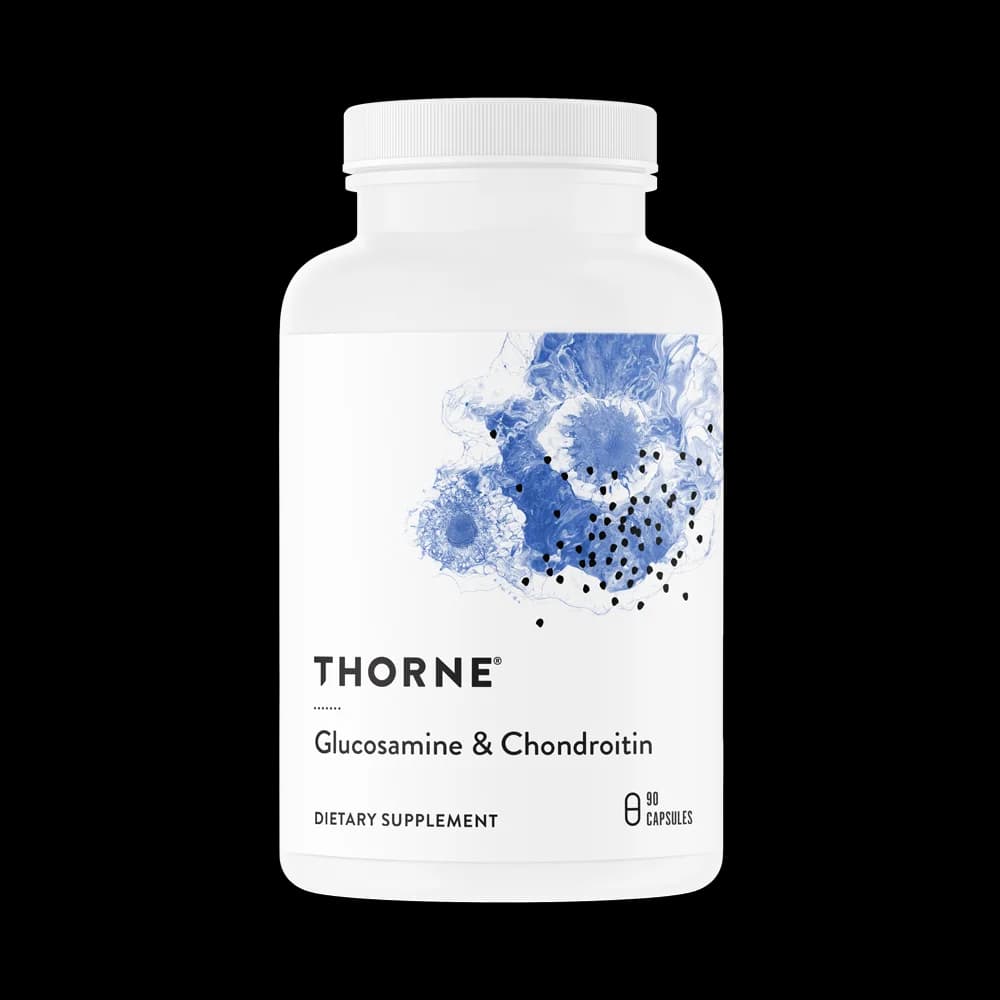
Glucosamine is commercially available in two primary forms: Glucosamine Sulfate and Glucosamine Hydrochloride (HCl). Glucosamine Sulfate is the most extensively studied form, particularly in large-scale European clinical trials. Because the sulfate form degrades easily, manufacturers must stabilize it using mineral salts, usually sodium chloride or potassium chloride. Thorne's Glucosamine & Chondroitin utilizes this well-researched Glucosamine Sulfate form (stabilized with a potassium chloride complex). Glucosamine HCl, conversely, is more concentrated and naturally stable, not requiring added salts. While some organizations favor the sulfate form due to the volume of historical data, pharmacokinetic research shows that both forms are rapidly split in the stomach into free glucosamine, meaning there is likely little physiological difference in the body's ability to absorb the active compound.
Chondroitin is also available in different molecular weights. Standard chondroitin sulfate is typically derived from bovine (cow), porcine (pig), or marine (shark) cartilage, and its molecular weight is massive. Advanced manufacturing techniques can degrade chondroitin into Low Molecular Weight (LMW) Chondroitin. This massive reduction in size yields vastly superior bioavailability and allows for better tissue permeability. When selecting a supplement, it is important to look for high-quality, standardized extracts that ensure the purity and molecular viability of the chondroitin sulfate, as lower-quality supplements often fail to absorb effectively due to excessively large molecular structures.
Sourcing, Allergens, and Critical MCAS Precautions
For patients with Mast Cell Activation Syndrome (MCAS) or severe allergies, the sourcing of these supplements is a critical safety consideration. Standard glucosamine sulfate—including the ingredient used in Thorne's Glucosamine & Chondroitin product—is derived from the exoskeletons of shellfish, specifically crab and shrimp. Because shellfish is a highly common and potent mast cell trigger, individuals with a history of hypersensitivity or severe shellfish allergies must strictly avoid these formulations to prevent anaphylaxis or severe histamine flares. Patients with these specific allergies should seek out vegan or plant-based Glucosamine HCl, which is typically synthesized via the fermentation of corn or fungi.
Additionally, the chondroitin sulfate used in many high-quality supplements, including Thorne's, is derived from bovine (cow) cartilage. Patients who have been diagnosed with Alpha-Gal Syndrome—a tick-borne allergy to mammalian meat and byproducts that is increasingly recognized in the chronic illness community—must avoid bovine-derived chondroitin and seek marine or synthetic alternatives. Finally, patients dealing with Small Intestinal Bacterial Overgrowth (SIBO), particularly the hydrogen sulfide variant, should monitor their symptoms closely when taking the sulfate forms of these supplements, as the overgrown gut bacteria can sometimes ferment the sulfur, leading to increased gastrointestinal distress.
Potential Drug Interactions and Optimal Timing
Because glucosamine and chondroitin are biologically active cellular modulators, they can interact with several common medications. The most critical interaction is with the anticoagulant medication Warfarin (Coumadin). Taking glucosamine, with or without chondroitin, can heavily amplify the blood-thinning effects of Warfarin, significantly increasing the patient's risk of severe, uncontrolled bleeding and bruising; they should generally not be taken together. Furthermore, because glucosamine is an amino sugar, it can influence glucose metabolism and potentially increase blood sugar levels, which may counteract the efficacy of certain diabetes medications. Patients with diabetes or insulin resistance should closely monitor their blood glucose levels when initiating supplementation.
For optimal absorption and efficacy, the suggested use for Thorne's Glucosamine & Chondroitin is to take 1 capsule three times daily, or as recommended by a healthcare practitioner. Dividing the dose throughout the day helps maintain steady plasma levels of the active compounds, which is particularly important for chondroitin, given its cumulative pharmacokinetic profile. Because these supplements work by gradually rebuilding tissue and shifting genetic cellular expression, they are not quick-fix pain relievers. Clinical trials consistently indicate that patients must take these supplements daily for a minimum of 8 to 12 weeks before noticing statistically significant improvements in joint stiffness, pain reduction, and overall mobility.

Follow the Science: Clinical Evidence and Research
The GAIT Trial and Biomarker Studies on Systemic Inflammation
The landmark Glucosamine/Chondroitin Arthritis Intervention Trial (GAIT), sponsored by the National Institutes of Health (NIH), was one of the largest and most rigorous studies conducted on these supplements. While the initial results showed mixed efficacy for mild pain, the trial demonstrated that the combination of glucosamine and chondroitin was highly effective for patients suffering from moderate-to-severe joint pain, significantly outperforming the placebo. Subsequent meta-analyses of over 2,000 studies have reinforced these findings, concluding that long-term supplementation successfully reduces joint space narrowing, decreases joint stiffness, and improves overall functional mobility in osteoarticular conditions.
Beyond localized joint pain, large-scale biomarker studies have validated the systemic anti-inflammatory properties of these compounds. The VITamins and Lifestyle (VITAL) biomarker cohort study evaluated systemic inflammation in human users over an extended period. The researchers found that individuals who regularly took glucosamine and chondroitin had a remarkable 28% lower level of high-sensitivity C-Reactive Protein (hsCRP)—a major systemic marker of inflammation—compared to non-users. Furthermore, users exhibited a 24% lower level of PGE-M, a major urinary metabolite of the pain-inducing Prostaglandin E2. These significant biomarker reductions prove that the anti-inflammatory cellular mechanisms observed in petri dishes successfully translate to systemic, whole-body anti-inflammatory effects in human patients.
Emerging Data on Mast Cells and Immunology
The intersection of joint supplements and immunology is a rapidly expanding field of research. A pivotal 2010 study published in Life Sciences by researchers at Kyoto University investigated the direct effects of glucosamine on mast cell-mediated inflammation. The researchers demonstrated that glucosamine successfully suppressed the activation of mast cells by directly blocking intracellular calcium mobilization. Furthermore, the study showed that glucosamine significantly suppressed the antigen-induced up-regulation of pro-inflammatory cytokines, specifically reducing TNF-α and IL-6 mRNAs by more than 60%. When administered to mice exposed to an allergen, glucosamine significantly reduced tissue swelling and lowered the concentrations of histamine in both blood plasma and tissues.
This data is strongly supported by the work of leading mast cell researchers, such as Dr. Theoharis C. Theoharides, who identified that chondroitin sulfate acts as an auto-inhibitory feedback mechanism for mast cells. In-vitro studies on connective tissue mast cells showed that chondroitin sulfate exhibited a dose-dependent inhibitory effect on histamine release, achieving a maximum histamine inhibition of 76.5% at optimal concentrations. These immunological findings provide a robust scientific foundation for why patients with Mast Cell Activation Syndrome (MCAS) and hypermobility frequently report systemic symptom relief when utilizing these structural supplements.
The Intersection of Long COVID, ME/CFS, and Neuroinflammation
Recent internal research papers and comprehensive reviews have begun to synthesize the complex pathophysiology shared by Long COVID and ME/CFS. These reviews propose a model in which genetic susceptibility and environmental stressors (like viral infections) drive a failure to resolve acute immune responses, leading to chronic systemic inflammation, microglial activation (neuroinflammation), and blood-brain barrier permeability. The resulting chronic pain and fatigue are driven by this relentless inflammatory cascade. By utilizing compounds like glucosamine and chondroitin to inhibit the NF-κB pathway and lower systemic markers like hsCRP, we can potentially reduce the peripheral inflammatory burden.
Reducing this peripheral inflammation is critical because circulating cytokines can cross the blood-brain barrier and sustain neuroinflammation. Furthermore, studies identifying CD8 T-cell dysfunction in both ME/CFS and Long COVID highlight the profound immune exhaustion present in these patients. While glucosamine and chondroitin are not direct antiviral agents, their ability to protect connective tissue integrity, lower oxidative stress, and stabilize hyper-reactive immune cells (like mast cells) provides essential foundational support. By lowering the overall systemic stress and inflammatory load, these supplements may help create a more favorable biological environment for the exhausted immune system to begin recovering and regulating itself.
The Path Forward: Integrating Joint Support into Your Protocol
Validating the Reality of Chronic Musculoskeletal Pain
Living with the invisible, unpredictable symptoms of complex chronic illness is an exhausting journey. When your joints constantly ache, your connective tissues feel unstable, and your body is locked in a state of chronic inflammation, it is entirely normal to feel overwhelmed and frustrated. The musculoskeletal pain experienced in Long COVID, ME/CFS, dysautonomia, and hypermobility is real, it is deeply rooted in complex cellular biology, and it is not simply "in your head" or a normal part of aging. Validating the profound impact this pain has on your daily cognitive and physical energy reserves is the first and most important step in reclaiming your quality of life. You are navigating a highly complex physiological landscape, and your symptoms require compassionate, science-backed management strategies.
A Comprehensive Approach to Management
It is important to remember that supplementation is not a standalone cure. Managing complex conditions requires a comprehensive, multi-faceted approach. Supplements are most effective when utilized as one piece of a broader puzzle that includes rigorous symptom tracking, aggressive pacing to manage your energy envelope, and nervous system regulation techniques. By combining the structural and anti-inflammatory support of these nutrients with daily lifestyle modifications, you can build a more resilient foundation for your body. If you are navigating the complexities of daily life with these symptoms, exploring resources on maintaining your independence with chronic illness can provide practical, actionable strategies to complement your nutritional protocol.
Taking the Next Step
If you are struggling with chronic joint pain, connective tissue laxity, or systemic inflammation related to Long COVID, ME/CFS, or MCAS, providing your body with the foundational building blocks it needs to repair and stabilize may be a valuable addition to your management toolkit. Always consult with your healthcare provider before introducing new supplements, especially if you are taking medications like blood thinners or managing severe allergies. By taking a proactive, clinically grounded approach to your joint health, you can help calm the inflammatory cascade and support your body's natural healing processes.