Can Lutein and Zeaxanthin Support Vision and Brain Fog in Long COVID and Dysautonomia?
March 5, 2026
Vision HealthLong COVIDDysautonomia
Share:
Disclaimer: The information provided here is for educational purposes only and is not intended as medical advice. It should not be used to diagnose, treat, cure, or prevent any medical condition. Instead, use it as a starting point for discussion with your healthcare provider. Always consult with a qualified healthcare provider before starting any new medication, supplement, device, or making changes to your health regimen.
In the wake of a viral infection, many patients expect a linear path to recovery, only to find themselves navigating a labyrinth of unpredictable, systemic symptoms. For individuals living with Long COVID, Myalgic Encephalomyelitis/Chronic Fatigue Syndrome (ME/CFS), and dysautonomia, the daily reality often involves debilitating fatigue, cognitive dysfunction, and a surprising array of visual disturbances. Patients frequently report sudden light sensitivity, blurry vision, visual snow, and dry eyes, leaving them frustrated and searching for answers when standard eye exams return "normal" results. These visual symptoms are not isolated incidents; they are deeply connected to the systemic neuroinflammation and autonomic nervous system dysfunction that drive these complex chronic conditions.
One area of emerging research focuses on the profound impact of oxidative stress on both the central nervous system and the delicate tissues of the eyes. The retina, which has an incredibly high demand for oxygen and energy, is particularly vulnerable to the cellular damage caused by post-viral inflammation. To combat this, researchers and functional medicine practitioners are turning to targeted, clinically validated antioxidant therapies originally designed to protect aging eyes. By understanding how specific nutrients like lutein, zeaxanthin, vitamin C, vitamin E, and copper interact at the cellular level, patients can better support their mitochondrial function, protect their vision, and manage the overlapping symptoms of Long COVID and dysautonomia.
TL;DR
Long COVID and ME/CFS can cause visual issues like light sensitivity due to systemic oxidative stress.
EyeProtect Basics provides targeted antioxidants like lutein and zeaxanthin to support ocular and cellular health.
The zinc-free formula helps avoid copper depletion, supporting mitochondrial energy production and reducing fatigue.
Take fat-soluble supplements with healthy dietary fats to maximize absorption and therapeutic benefits.
What is EyeProtect Basics (Without Zinc)?
The Anatomy of the AREDS2 Formula
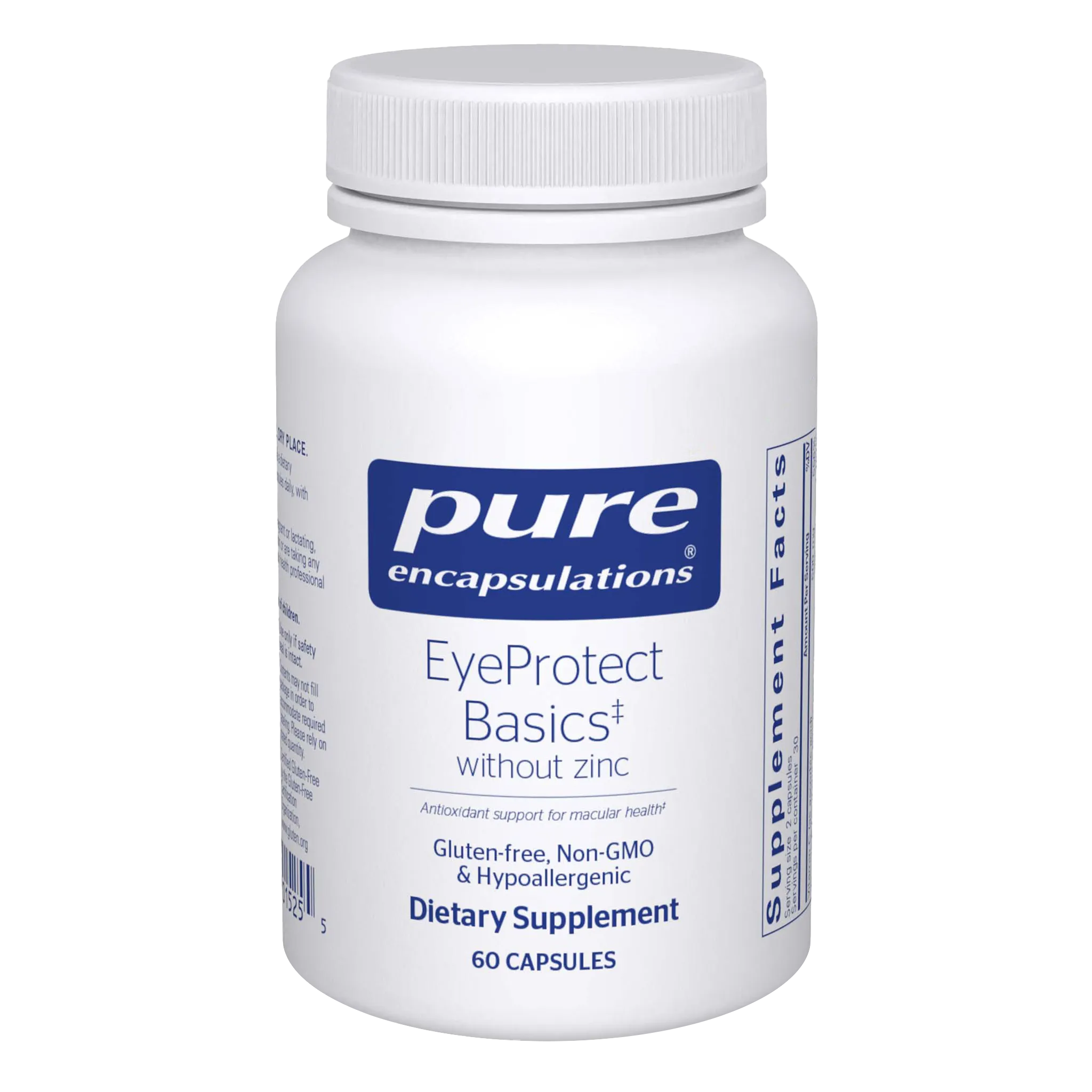
EyeProtect Basics (without zinc) by Pure Encapsulations is a specialized dietary supplement formulated to support healthy vision and maintain the structural integrity of the eye. The foundation of this formula is based on the landmark Age-Related Eye Disease Study 2 (AREDS2), a massive clinical trial funded by the National Institutes of Health. This specific formulation provides clinically researched levels of key antioxidants—vitamin C, vitamin E, lutein, zeaxanthin, and copper—that work synergistically to neutralize free radicals and protect ocular tissues. Unlike standard multivitamins, this targeted blend is designed to cross the blood-retina barrier and accumulate directly in the macula, the central portion of the retina responsible for sharp, detailed vision.
At the molecular level, the ingredients in this formula act as a robust defense system against reactive oxygen species (ROS), which are unstable molecules that can damage cellular DNA, proteins, and lipid membranes. The retina is constantly exposed to high-energy light waves and has a rapid metabolic rate, making it a prime target for oxidative damage. By supplying the body with a concentrated dose of exogenous antioxidants, this supplement helps restore the delicate balance between free radical production and the body's natural scavenging capabilities. This redox balance is not only crucial for supporting macular health but is also increasingly recognized as vital for supporting systemic cellular health in the face of chronic, post-viral inflammation.
The Synergistic Power of Lutein and Zeaxanthin
The standout ingredients in this formula are lutein (10 mg) and zeaxanthin (2 mg), which belong to a class of oxygenated carotenoids known as xanthophylls. In a healthy human body, these compounds are not synthesized internally; they must be acquired through diet, primarily from dark leafy greens and brightly colored vegetables. Once ingested, lutein and zeaxanthin are transported through the bloodstream and selectively deposited into the macula and the brain. In the eyes, they form the macular pigment, a dense yellow filter that physically absorbs up to 90% of harmful, high-energy blue and ultraviolet light before it can reach the sensitive photoreceptor cells (rods and cones).
Beyond their role as "internal sunglasses," lutein and zeaxanthin are potent biochemical scavengers. They embed themselves into the lipid bilayers of cellular membranes, where they intercept free radicals and halt the destructive chain reaction of lipid peroxidation. Recent clinical reviews published in F1000Research have highlighted that these carotenoids also possess profound anti-inflammatory properties. They actively suppress specific inflammatory transcription pathways, such as nuclear factor kappa B (NF-κB) and activated protein 1 (AP-1), which are frequently upregulated in chronic immune conditions. By dampening these pathways, lutein and zeaxanthin help protect both the optic nerve and the central nervous system from ongoing neuroinflammation.
Why Choose a Formula Without Zinc?
Standard AREDS2 vision formulas typically include high doses of zinc, an essential mineral that supports immune function and retinal health. However, taking high levels of zinc over an extended period can inadvertently trigger a secondary copper deficiency. Zinc and copper compete for the same absorption pathways in the intestinal tract, specifically binding to a protein called metallothionein. When zinc levels are excessively high, metallothionein traps copper in the intestinal cells, preventing it from entering the bloodstream and eventually causing it to be excreted from the body. This "zinc trap" can severely compromise the body's antioxidant defenses and energy production pathways.
Pure Encapsulations specifically designed this "without zinc" version for individuals who are already obtaining adequate zinc from other dietary sources, daily multivitamins, or targeted immune protocols. Many patients managing complex chronic illnesses take separate zinc supplements to support their immune system; adding a standard vision formula on top of that could push their zinc intake past the tolerable upper limit, risking toxicity and severe copper depletion. By removing the zinc but retaining 2 mg of highly bioavailable copper glycinate, this formula allows patients to safely support their ocular and mitochondrial health without disrupting their delicate trace mineral balance.
How Long COVID and Dysautonomia Impact Vision and Cellular Health
The Vicious Cycle of Oxidative Stress
To understand how chronic illnesses impact vision and cellular health, we must first examine the underlying pathophysiology of Long COVID and Myalgic Encephalomyelitis/Chronic Fatigue Syndrome (ME/CFS). A central, unifying mechanism in both of these conditions is severe, unremitting oxidative stress. When the body is exposed to a viral trigger like SARS-CoV-2 or the Epstein-Barr Virus (EBV), the immune system launches a massive inflammatory response, generating high levels of reactive oxygen species (ROS) to destroy the pathogen. In a healthy recovery, antioxidant systems quickly neutralize these ROS once the threat is cleared. However, in Long COVID and ME/CFS, this inflammatory switch remains stuck in the "on" position, leading to a perpetual state of cellular damage.
A landmark 2024 multi-omics study published in PNAS directly measured the bioenergetics of blood cells in ME/CFS and Long COVID patients, revealing massive aberrations in ROS clearance pathways. The researchers found that both ME/CFS and Long COVID patients exhibited signs of elevated oxidative stress, particularly in the memory subset, including elevated glutathione and decreased mitochondrial superoxide dismutase levels. This unchecked oxidative stress directly damages the inner mitochondrial membrane, impairing the electron transport chain and halting the production of adenosine triphosphate (ATP), the body's primary energy currency. As the damaged mitochondria struggle to produce energy, they leak even more free radicals, trapping the patient in a vicious cycle of oxidative stress that manifests as debilitating fatigue and post-exertional malaise (PEM).
Autonomic Dysfunction and the Eyes
The impact of this systemic dysfunction extends heavily into the visual system, particularly for patients suffering from dysautonomia and Postural Orthostatic Tachycardia Syndrome (POTS). The autonomic nervous system (ANS) controls all of the body's involuntary functions, including heart rate, blood pressure, digestion, and crucial ocular mechanisms like pupil dilation and tear production. In POTS, the ANS is frequently stuck in a state of sympathetic overdrive—a constant "fight or flight" response. This neurological dysregulation can cause the pupils to remain abnormally dilated, failing to constrict properly in bright environments. As a result, excessive amounts of high-energy light flood the retina, causing severe light sensitivity (photophobia) and accelerating oxidative damage to the macular tissues.
Furthermore, autonomic neuropathy frequently impairs the function of the lacrimal glands, leading to a high prevalence of Dry Eye Disease (DED) among Long COVID and POTS patients. Without a healthy, stable tear film, the surface of the eye becomes inflamed, causing blurry vision, burning sensations, and difficulty focusing on screens or printed text. This visual strain feeds back into the central nervous system, exacerbating the profound cognitive fatigue and "brain fog" that patients already battle daily. If you are struggling to understand the symptoms of Long COVID, recognizing this connection between the autonomic nervous system and visual disturbances is a critical piece of the puzzle.
Microclots and Retinal Blood Flow
Another critical factor in post-viral visual dysfunction is the presence of persistent microthrombi, or microscopic blood clots. Research has shown that the SARS-CoV-2 spike protein can induce severe endothelial dysfunction, damaging the delicate inner lining of blood vessels throughout the body. This damage triggers the formation of fibrin amyloid microclots that are highly resistant to the body's natural breakdown processes. These microclots can easily become lodged in the tiny, intricate capillary networks that supply blood and oxygen to the retina and the optic nerve.
When blood flow to the retina is restricted by these microclots, the ocular tissues experience localized hypoxia (oxygen starvation). This hypoxic state triggers the release of inflammatory cytokines and further increases the production of destructive superoxide radicals. Over time, this chronic vascular stress can lead to the degradation of retinal nerve fibers, contributing to symptoms like visual snow, phosphenes (seeing flashes of light), and a general decline in visual acuity. Addressing this complex web of oxidative stress, autonomic neuropathy, and vascular dysfunction requires a targeted approach that supports cellular resilience from the inside out.
EyeProtect Basics: Supporting Vision, Mitochondria, and Neuroinflammation
Neutralizing the Spike Protein and NF-κB Pathways
Supplementing with the targeted antioxidants in EyeProtect Basics offers a multi-faceted approach to supporting cellular pathways disrupted by chronic illness. At the forefront of this defense are lutein and zeaxanthin. Recent in silico and clinical modeling studies suggest that these powerful carotenoids can directly intervene in the inflammatory cascades triggered by the SARS-CoV-2 spike protein. The spike protein is known to activate Toll-like receptor 4 (TLR4), which in turn triggers the MyD88 signaling pathway and upregulates nuclear factor kappa B (NF-κB). This pathway is a primary driver of the "cytokine storm" and the persistent neuroinflammation seen in Long COVID patients.
Lutein exerts profound anti-inflammatory activity by physically blocking the activation of these transcription factors. By suppressing NF-κB and activated protein 1 (AP-1), lutein helps to quiet the overactive immune response, reducing the systemic production of inflammatory cytokines. Furthermore, because lutein and zeaxanthin are highly lipophilic (fat-soluble), they easily cross the blood-brain barrier. Once inside the central nervous system, they accumulate in brain tissue, where they scavenge mitochondrial reactive oxygen species (mtROS) and protect delicate neurons from oxidative degradation. This mechanism is why these macular carotenoids are increasingly utilized by functional medicine practitioners to help manage the severe brain fog and cognitive deficits associated with neuro-immune conditions.
Restoring the Electron Transport Chain with Copper
The inclusion of copper (as copper glycinate) in this formula is not merely a structural requirement for the AREDS2 protocol; it is a vital intervention for mitochondrial energy production. Copper is an absolute, non-negotiable cofactor for Cytochrome C Oxidase (Complex IV), the final and most critical enzyme in the mitochondrial electron transport chain. During the process of cellular respiration, electrons flow through four protein complexes to eventually generate ATP. If the body is deficient in bioavailable copper—a common occurrence in post-viral states or due to excessive zinc supplementation—Complex IV cannot function. This creates a severe bottleneck in energy production, directly contributing to the profound, crushing fatigue and post-exertional malaise experienced by ME/CFS patients.
In addition to energy production, copper is the essential central cofactor for Superoxide Dismutase (Cu/Zn-SOD), one of the body's most powerful endogenous antioxidant enzymes. SOD acts as the first line of defense against cellular damage by intercepting highly destructive superoxide radicals and converting them into less toxic molecules. Immunological mapping of ME/CFS patients has explicitly identified disturbances in these copper-dependent antioxidant pathways, which allow oxidative stress to run rampant. By replenishing copper levels with a highly absorbable glycinate form, the body can synthesize functional SOD, actively dismantling the superoxide radicals that drive systemic neuroinflammation and tissue injury.
The Vitamin C and E Recycling System
The formula is rounded out by the inclusion of vitamin C (500 mg) and vitamin E (268 mg), which operate together in an elegant, synergistic recycling system. Vitamin E, in the form of d-alpha tocopherol, is a fat-soluble antioxidant that embeds itself directly into the lipid bilayers of cellular and mitochondrial membranes. Its primary job is to physically intercept free radicals before they can cause lipid peroxidation—the exact type of membrane damage heavily observed in the blood cells of Long COVID patients. However, once vitamin E neutralizes a free radical, it becomes oxidized and loses its antioxidant capacity, essentially becoming a weak free radical itself.
This is where high-dose vitamin C (ascorbic acid) becomes critical. As a water-soluble antioxidant, vitamin C circulates in the aqueous environments inside and outside the cell. It actively donates an electron to the oxidized vitamin E, regenerating it back to its active, protective state. This constant recycling mechanism ensures that the cellular membranes remain shielded from ongoing oxidative assaults. Furthermore, vitamin C is essential for repairing the endothelial lining of blood vessels and supporting the immune system's ability to clear viral debris. Together, this matrix of lutein, zeaxanthin, copper, and vitamins C and E provides a comprehensive shield against the systemic redox imbalance that characterizes complex chronic illnesses.

Symptoms EyeProtect Basics May Help Manage
Targeted Symptom Relief Through Antioxidant Support
While EyeProtect Basics is primarily formulated to support long-term macular health, the systemic mechanisms of its ingredients offer potential relief for a variety of symptoms associated with complex chronic illnesses. By addressing the root causes of oxidative stress, mitochondrial dysfunction, and neuroinflammation, this targeted antioxidant matrix may help manage several debilitating daily challenges.
Light Sensitivity (Photophobia): For patients with dysautonomia and POTS whose pupils struggle to constrict, lutein and zeaxanthin act as "internal sunglasses." They physically accumulate in the macula and absorb excess, high-energy blue and ultraviolet light, reducing the painful glare and strain associated with bright environments and prolonged screen time.
Visual Snow and Blurry Vision: By neutralizing the superoxide radicals that damage the delicate endothelial cells of the retina, vitamins C and E help protect the optic nerve and retinal capillaries from oxidative degradation. This vascular support can improve blood flow to the eyes, potentially alleviating the severity of visual snow, phosphenes, and difficulty focusing.
Brain Fog and Cognitive Fatigue: Because lutein and zeaxanthin are highly lipophilic, they cross the blood-brain barrier and accumulate in the central nervous system. By suppressing inflammatory pathways like NF-κB and protecting neurons from lipid peroxidation, these carotenoids support improved cognitive function, memory recall, and mental clarity in patients battling post-viral neuroinflammation.
Post-Exertional Malaise (PEM) and Severe Fatigue: The inclusion of highly bioavailable copper glycinate provides the essential cofactor needed for Cytochrome C Oxidase (Complex IV) in the electron transport chain. By unblocking this mitochondrial bottleneck, the body can more efficiently produce ATP (cellular energy), potentially raising the patient's baseline energy envelope and reducing the severity of crashes.
Histamine Intolerance and MCAS Symptoms: Copper is also the central cofactor for Diamine Oxidase (DAO), the primary enzyme responsible for breaking down dietary histamine in the gut. By helping avoid a secondary copper deficiency, this formula indirectly supports DAO production, which may help manage the allergic and neuro-inflammatory symptoms frequently seen in patients with overlapping Mast Cell Activation Syndrome (MCAS).
Practical Considerations: Forms, Dosing, and Absorption
Maximizing Bioavailability with Dietary Fats
When incorporating a supplement like EyeProtect Basics into your daily routine, understanding the pharmacokinetics and absorption requirements of its ingredients is crucial for achieving therapeutic benefits. The primary active compounds—lutein, zeaxanthin, and vitamin E—are highly lipophilic, meaning they are fat-soluble. If taken on an empty stomach or with a completely fat-free meal, the digestive system will struggle to absorb these nutrients, and they will largely pass through the gastrointestinal tract unutilized. To maximize bioavailability, it is essential to take this supplement alongside a meal that contains healthy dietary fats.
Recent clinical guidelines, including protocols specifically designed for Long COVID recovery, emphasize the importance of carrier lipids for macular carotenoids. Taking the capsules with foods rich in omega-3 fatty acids or monounsaturated fats—such as avocados, nuts, fatty fish, or a spoonful of Extra Virgin Olive Oil (EVOO)—can significantly enhance intestinal absorption. The high oleic acid content in EVOO, in particular, has been shown to prevent the degradation of lutein in the acidic environment of the stomach, ensuring that a higher concentration of the intact antioxidant reaches the bloodstream and eventually crosses the blood-brain and blood-retina barriers.
Clinically Researched Forms: FloraGLO and OPTISHARP
Not all supplement ingredients are created equal, and the specific forms utilized in EyeProtect Basics are chosen for their clinical validation and superior absorption profiles. The formula utilizes FloraGLO® lutein, which is extracted from marigold flowers. FloraGLO is the most clinically researched lutein brand worldwide and was the exact form chosen by the National Eye Institute for the landmark AREDS2 clinical trials. It is provided in a free-form state, which is identical to the lutein naturally found in dietary greens, allowing for immediate recognition and uptake by the body's cellular receptors.
Similarly, the zeaxanthin in this formula is provided as OPTISHARP™, a highly purified, synthetic form that perfectly mimics the molecular structure of naturally occurring dietary zeaxanthin. The combination of these specific, patented forms ensures that patients are receiving the exact therapeutic ratios (10 mg of lutein to 2 mg of zeaxanthin) proven to increase macular pigment optical density. Furthermore, the copper is provided as copper glycinate, a chelated form where the mineral is bound to the amino acid glycine. This chelation allows the copper to bypass certain competitive absorption barriers in the gut, making it highly bioavailable and significantly gentler on the stomach compared to standard copper sulfate.
Safety, Timing, and Potential Interactions
While the ingredients in EyeProtect Basics are generally recognized as safe and well-tolerated, there are important practical considerations and potential interactions to keep in mind. The formula contains a substantial dose of vitamin E (268 mg / 400 IU). Because vitamin E has mild blood-thinning properties, individuals taking prescription anticoagulants (such as warfarin or Eliquis) or antiplatelet medications should consult their healthcare provider before starting this supplement, as it may increase the risk of bleeding or bruising. Additionally, patients scheduled for surgery are typically advised to pause high-dose vitamin E supplementation two weeks prior to the procedure.
Timing and consistency are also key factors in experiencing the benefits of this formula. Because macular carotenoids must build up gradually in the tissues of the retina and the brain, it typically takes several weeks to months of consistent daily supplementation before patients notice significant improvements in visual acuity, light sensitivity, or cognitive clarity. It is recommended to take the two capsules together with your largest meal of the day to ensure optimal fat-soluble absorption. As always, patients managing complex conditions like Long COVID or ME/CFS should introduce new supplements one at a time, carefully tracking their symptoms to monitor for any individual sensitivities or changes in their baseline health.

Follow the Science
The Landmark AREDS2 Clinical Trial
The scientific foundation for the specific combination of nutrients in EyeProtect Basics is rooted in one of the most comprehensive ophthalmological studies ever conducted: the Age-Related Eye Disease Study 2 (AREDS2). Sponsored by the National Eye Institute (part of the NIH), this massive, multi-center clinical trial followed over 3,600 participants for five years to evaluate the efficacy of specific antioxidants in reducing the risk of progression to advanced macular degeneration. The study rigorously tested various combinations of vitamins and minerals to determine the optimal therapeutic matrix for ocular health.
The results of the AREDS2 trial were definitive and reshaped global guidelines for vision care. The researchers concluded that a daily regimen containing 10 mg of lutein, 2 mg of zeaxanthin, vitamin C, vitamin E, zinc, and copper significantly reduced the risk of progressing to advanced macular degeneration by approximately 25%. Crucially, the study demonstrated that lutein and zeaxanthin were highly effective and far safer alternatives to beta-carotene, which had been linked to increased lung cancer risks in smokers in earlier studies. This clinical validation is why the 10:2 ratio of lutein to zeaxanthin remains the gold standard for protecting the retina from severe oxidative decay.
Emerging Research on Carotenoids and Long COVID
While originally studied for aging eyes, these powerful antioxidants are now at the forefront of research into post-viral syndromes. A pivotal 2024 clinical review published in F1000Research established a strong clinical rationale for utilizing high-dose dietary lutein in the management of Long COVID and spike-protein-induced injury syndromes. The researchers detailed how the SARS-CoV-2 spike protein actively triggers the TLR4/MyD88 signaling pathway, leading to a persistent, destructive inflammatory cascade. Through extensive literature review and molecular modeling, the authors demonstrated that lutein acts as a potent inhibitor of this exact pathway, actively suppressing the NF-κB transcription factors that drive systemic neuroinflammation.
Furthermore, the review highlighted the importance of lutein's ability to cross the blood-brain barrier. By scavenging mitochondrial reactive oxygen species directly within the central nervous system, lutein and zeaxanthin offer a targeted approach to mitigating the severe cognitive deficits, memory loss, and "brain fog" that plague Long COVID patients. The researchers specifically noted that these natural compounds provide a high-safety, low-toxicity intervention capable of addressing the complex nitrosative stress and cellular damage caused by persistent viral remnants.
Oxidative Stress Biomarkers in ME/CFS
The broader scientific community is increasingly recognizing that the oxidative stress driving these visual and cognitive symptoms is a measurable, physiological reality. A 2024 multi-omics study published in PNAS provided concrete evidence of this by analyzing the peripheral blood lymphocytes of healthy controls alongside ME/CFS and Long COVID patients. The study utilized advanced flow cytometry and mass spectrometry to reveal profound aberrations in the patients' reactive oxygen species (ROS) clearance pathways.
The researchers documented significant decreases in mitochondrial superoxide dismutase (SOD) protein levels and elevated lipid oxidative damage across both patient cohorts. This data directly supports the therapeutic use of the ingredients found in EyeProtect Basics. By supplying the body with exogenous vitamin E to halt lipid peroxidation, vitamin C to recycle antioxidant defenses, and copper to serve as the mandatory cofactor for SOD production, this supplement directly targets the specific biochemical deficits identified in these groundbreaking studies. As researchers continue to explore what drugs and therapies are used for COVID long haulers, targeted antioxidant support remains a foundational pillar of functional recovery protocols.
The Path Forward
Integrating Antioxidants into Your Protocol
Navigating the daily realities of a complex chronic illness can feel overwhelming, especially when unpredictable symptoms like visual disturbances and severe brain fog disrupt your quality of life. It is entirely valid to feel frustrated when standard medical tests fail to capture the profound physiological dysfunction you are experiencing. However, understanding the underlying mechanisms of oxidative stress and neuroinflammation provides a clear, actionable path forward. By incorporating clinically validated, targeted antioxidants into your daily routine, you are taking a proactive step toward supporting your cellular resilience, protecting your mitochondrial function, and defending your central nervous system from ongoing post-viral damage.
Remember that supplements are most effective when utilized as part of a comprehensive, holistic management strategy. EyeProtect Basics should be integrated alongside essential lifestyle modifications, such as aggressive pacing to help manage post-exertional malaise, diligent symptom tracking, and prioritizing restorative rest. Because healing from conditions like Long COVID and ME/CFS is a marathon rather than a sprint, it is important to be patient and consistent with your interventions, allowing time for these fat-soluble nutrients to build up in your ocular and brain tissues.
A Validating Approach to Complex Chronic Illness
At RTHM, we understand that living with long-term COVID requires a nuanced, deeply personalized approach to care. We recognize that your symptoms are real, biologically driven, and deserving of compassionate, science-backed solutions. If you are struggling with light sensitivity, visual snow, cognitive fatigue, or the systemic effects of dysautonomia, supporting your body's antioxidant defenses is a vital component of your recovery journey. Always consult with your primary healthcare provider or a specialist before beginning any new supplement regimen, especially to ensure it aligns safely with your current medications and trace mineral balances.