Can Evening Primrose Oil Support Inflammatory Balance in Long COVID and ME/CFS?
March 5, 2026
Evening Primrose OilLong COVIDME/CFS
Share:
Disclaimer: The information provided here is for educational purposes only and is not intended as medical advice. It should not be used to diagnose, treat, cure, or prevent any medical condition. Instead, use it as a starting point for discussion with your healthcare provider. Always consult with a qualified healthcare provider before starting any new medication, supplement, device, or making changes to your health regimen.
Months or even years after a viral infection, many patients find themselves trapped in a cycle of debilitating symptoms—crushing fatigue, unpredictable heart rates, cognitive dysfunction, and severe skin or allergic flares. If you are living with Long COVID, myalgic encephalomyelitis/chronic fatigue syndrome (ME/CFS), dysautonomia, or mast cell activation syndrome (MCAS), you know firsthand how frustrating it is when your body's inflammatory and metabolic systems seem stuck in overdrive. What allows some people to recover from an immune challenge while others develop complex, chronic illnesses? Emerging research points toward profound disruptions in cellular metabolism, specifically how our bodies process essential fatty acids and manage oxidative stress.
In the search for validating, science-backed management strategies, one botanical compound has garnered significant attention in both functional medicine and clinical research: Evening Primrose Oil (E.P.O.). Far from being just a traditional remedy for skin health or premenstrual comfort, E.P.O. provides a highly specific, biologically active compound called gamma-linolenic acid (GLA). This essential fatty acid acts as a molecular key, unlocking the body's ability to bypass damaged metabolic pathways, restore anti-inflammatory signaling, and protect cells from oxidative damage. In this comprehensive guide, we will explore the deep biochemistry of E.P.O., how it intersects with the pathophysiology of complex chronic conditions, and how it may help support your journey toward improved quality of life.
TL;DR
E.P.O. provides GLA, an essential fatty acid that supports anti-inflammatory pathways and cellular repair.
It may help manage symptoms of complex chronic conditions, though clinical evidence remains mixed.
Always consult a healthcare provider before starting E.P.O., especially if taking blood thinners or managing MCAS.
What is Evening Primrose Oil?
Evening Primrose Oil (E.P.O.) is a natural extract cold-pressed from the seeds of the evening primrose plant (Oenothera biennis). While it has been utilized for centuries in traditional medicine, modern clinical science values E.P.O. primarily as a potent delivery system for essential polyunsaturated fatty acids (PUFAs). The oil is composed of approximately 70% linoleic acid (LA), but its true therapeutic power lies in its concentration of gamma-linolenic acid (GLA), which typically makes up 8% to 10% of a high-quality, cold-pressed extract.
GLA is an omega-6 essential fatty acid. In the realm of nutrition, omega-6 fatty acids are sometimes broadly—and incorrectly—labeled as purely pro-inflammatory. However, the biochemistry of GLA is entirely unique. Unlike other omega-6s that drive inflammation, GLA is a conditionally essential nutrient that serves as the direct precursor to some of the body's most powerful anti-inflammatory and immunoregulatory molecules. To understand how E.P.O. works, we must look at the specific enzymatic pathways that convert dietary fats into cellular signals.
In a perfectly healthy human body, GLA is naturally synthesized from dietary linoleic acid (found in nuts, seeds, and standard diets) via a specific liver enzyme called delta-6-desaturase (D6D). However, this conversion step is notoriously slow and acts as the rate-limiting bottleneck in the entire omega-6 metabolic pathway. More importantly, the activity of the D6D enzyme is highly fragile and frequently impaired by common modern stressors.
Research indicates that the D6D enzyme is suppressed by aging, chronic stress, viral infections, elevated blood sugar, and nutritional deficiencies in cofactors like zinc, magnesium, and vitamin B6. When this enzyme is impaired, the body cannot produce enough endogenous GLA, leading to a cascade of inflammatory consequences. By supplementing with cold-pressed E.P.O., you provide the body with preformed GLA. While it is used as a rich source of omega-6 essential fatty acids to bypass this bottleneck, major clinical reviews note that evidence remains insufficient for many clinical indications, and it may not be effective for everyone.
Once absorbed into the bloodstream, the GLA from E.P.O. is rapidly elongated by the enzyme elongase into dihomo-gamma-linolenic acid (DGLA). DGLA is then incorporated directly into the phospholipid bilayer of your cell membranes. From here, it plays a critical role in eicosanoid metabolism. Eicosanoids are highly active, hormone-like signaling molecules—such as prostaglandins and leukotrienes—that dictate whether a cell promotes or resolves inflammation.
When mobilized from the cell membrane, DGLA is metabolized by cyclooxygenase (COX) enzymes into Prostaglandin E1 (PGE1). PGE1 is a highly potent anti-inflammatory, vasodilatory, and anti-thrombotic mediator. It binds to specific receptors on the surface of immune and vascular cells, elevating intracellular cyclic AMP (cAMP). This process actively suppresses the release of inflammatory cytokines, relaxes smooth muscle tissue in blood vessels, and prevents abnormal blood clotting. By supplying abundant GLA, E.P.O. ensures that the body has the raw materials necessary to maintain a steady, protective supply of PGE1.
How Chronic Illness Impacts Lipid Metabolism and Inflammation
To understand why E.P.O. is relevant to complex chronic illness, we must examine how these conditions physically alter the body's metabolic pathways. In conditions like Long COVID and myalgic encephalomyelitis/chronic fatigue syndrome (ME/CFS), the body is not merely "tired"—it is experiencing profound cellular dysfunction. Recent research into Long COVID has identified sustained mitochondrial dysfunction and severe disruptions in lipid metabolism as unifying mechanisms of the disease.
When the SARS-CoV-2 virus infects the body, it actively alters specific cellular enzymes, including suppressing the desaturase enzymes required for fatty acid conversion. This viral hijacking creates a severe block in lipid metabolism, leading to a massive overproduction of pro-inflammatory arachidonic acid and a dangerous depletion of anti-inflammatory DGLA and PGE1. This metabolic roadblock contributes to the crushing fatigue, post-exertional malaise (PEM), and systemic inflammation seen in both Long COVID and ME/CFS. If you are wondering what causes Long COVID, this virus-induced metabolic reprogramming is a major piece of the puzzle.
Dysautonomia, including postural orthostatic tachycardia syndrome (POTS), frequently co-occurs with post-viral syndromes. It is characterized by a dysfunction of the autonomic nervous system, leading to unpredictable heart rates, blood pooling, and dizziness. Many patients with dysautonomia also suffer from small fiber neuropathy—damage to the peripheral nerves that causes burning pain, numbness, and tingling in the extremities. This nerve damage is exacerbated by the oxidative stress and poor microcirculation caused by the depletion of vasodilatory prostaglandins like PGE1.
Furthermore, dysautonomia disproportionately affects females, and many patients experience severe symptom exacerbations during specific phases of their menstrual cycle. These cyclical crashes are driven by fluctuations in estrogen and progesterone, which directly interact with the body's prostaglandin pathways. When the body lacks sufficient GLA to produce stabilizing PGE1, these hormonal shifts can trigger massive autonomic instability, making premenstrual comfort impossible and drastically reducing functional capacity.
Mast cell activation syndrome (MCAS) is a condition where the body's mast cells become hyper-responsive, inappropriately releasing cascades of inflammatory mediators—including histamine, leukotrienes, and cytokines—in response to minor triggers. This constant degranulation keeps the body in a state of perpetual allergic reactivity and systemic inflammation.
In a healthy system, anti-inflammatory eicosanoids help keep mast cells stable. However, in MCAS, the enzymatic pathways are often skewed toward the 5-lipoxygenase (5-LOX) pathway, which converts arachidonic acid into Leukotriene B4 (LTB4), a highly aggressive pro-inflammatory compound that further agitates mast cells. The depletion of protective DGLA means the body lacks the biochemical "brakes" needed to stop this runaway inflammatory train, leading to severe, multi-system symptom flares.
E.P.O.: Supporting Cellular Repair and Inflammatory Balance
Supplementing with the GLA found in Evening Primrose Oil offers a targeted, mechanistic approach to correcting the metabolic dysfunctions seen in complex chronic illnesses. By bypassing the damaged delta-6-desaturase enzyme, E.P.O. directly supplies the cellular membranes with DGLA. This creates a profound shift in the body's eicosanoid balance.
DGLA aggressively competes with pro-inflammatory arachidonic acid for access to the COX and LOX enzymes. By monopolizing these enzymes, DGLA actively reduces the body's synthesis of inflammatory Series-2 prostaglandins and Series-4 leukotrienes. Instead, it forces the enzymes to produce soothing Prostaglandin E1 (PGE1) and 15-HETrE (15-hydroxyeicosatrienoic acid). 15-HETrE is a powerful, direct inhibitor of the 5-LOX enzyme, effectively putting the brakes on the production of mast-cell-agitating leukotrienes. This mechanism is why functional medicine practitioners often utilize E.P.O. to help stabilize hyperactive immune responses and promote a healthy inflammatory response.
Beyond its role in eicosanoid metabolism, E.P.O. provides robust oxidative protection by directly interacting with the body's master antioxidant network: the glutathione system. In chronic illnesses like Long COVID, excessive reactive oxygen species (ROS) attack the lipids in cell membranes, causing lipid peroxidation and severe cellular damage.
Clinical research demonstrates that E.P.O. administration physically alters lipid metabolism and halts lipid peroxidation by stimulating the activity of two specific protective enzymes: glutathione reductase and glutathione S-transferase. Glutathione reductase is crucial for recycling oxidized, "used up" glutathione back into its active, antioxidant-ready state. By upregulating these enzymes, the GLA in E.P.O. enhances the body's natural ability to clear cellular debris, protect mitochondrial membranes from free radical damage, and support healthy lipid metabolism. This is particularly vital for protecting the delicate endothelial cells lining the blood vessels, thereby promoting cardiovascular function in women and men alike.
E.P.O. also plays a fascinating role in modulating the immune system's cytokine profile, particularly concerning skin health and allergic reactivity. In conditions characterized by chronic skin inflammation, such as atopic dermatitis or eczema, there is frequently an immunological imbalance between Th1 and Th2 immune cells. This imbalance suppresses the production of IFN-gamma (Interferon-gamma), a crucial immunoregulatory cytokine, while driving up allergic Immunoglobulin E (IgE).
Clinical trials have reported that the GLA from E.P.O. supports healthy skin through a direct modulation of this pathway. By restoring DGLA levels, E.P.O. successfully upregulates IFN-gamma back to healthy baseline levels while simultaneously decreasing serum IgE. This dual biochemical and immunological action helps repair the skin's moisture barrier, reduces transepidermal water loss, and alleviates the severe dryness and scaling often seen in patients with chronic inflammatory conditions.
Symptoms Evening Primrose Oil May Help Manage
Because Evening Primrose Oil acts at the foundational level of lipid metabolism and cellular signaling, it can influence a wide array of systemic symptoms. While it is not a cure for complex chronic illnesses, clinical data and patient reports suggest it may help manage the following symptoms:
Severe Fatigue and Brain Fog: By bypassing viral-induced metabolic blocks and restoring lipid metabolism, E.P.O. provides the necessary precursors for cellular membrane repair, potentially improving mitochondrial efficiency and cognitive clarity in ME/CFS and Long COVID.
Cyclical Dysautonomia Flares: The GLA in E.P.O. supports the production of PGE1, which helps regulate hormonal fluctuations. While some patients report it helps blunt the severity of orthostatic symptom crashes, clinical reviews suggest it is likely ineffective for general premenstrual syndrome.
Small Fiber Neuropathy Pain: By improving microcirculation and reducing oxidative damage to peripheral nerves via the glutathione system, E.P.O. may help alleviate the burning, numbness, and tingling associated with dysautonomia-related neuropathy.
Skin Inflammation and Dryness: Through the modulation of IFN-gamma, E.P.O. may support the look and feel of healthy skin for some individuals, though large reviews suggest it may not provide clinically significant improvement for all patients with atopic dermatitis.
Cardiovascular Instability: By promoting glutathione reductase and transferase activities, E.P.O. protects endothelial cells from lipid peroxidation, supporting healthy blood vessel dilation and overall cardiovascular function.
If you are navigating the unpredictable nature of these symptoms, you might be wondering do Long COVID symptoms come and go? The answer is yes, and stabilizing your cellular membranes with targeted essential fatty acids is one strategy to help smooth out those turbulent flares.
Practical Considerations: Forms, Dosing, and Absorption
When incorporating Evening Primrose Oil into your protocol, understanding its pharmacokinetics—how the body absorbs and utilizes it—is crucial for setting realistic expectations. The GLA in E.P.O. is highly bioavailable, but it does not act like an immediate painkiller or stimulant. Instead, it must be incorporated into your cellular membranes over time.
Pharmacokinetic trials indicate that fasting plasma GLA levels generally plateau within seven days of consistent, daily administration. This means it takes about a week to achieve a therapeutic steady state in the blood, and often several weeks to months to see significant clinical improvements in symptoms like neuropathy or skin health. Interestingly, the absorption timeline ($T_{max}$) has been shown to be slightly faster when the supplement is taken in the evening compared to the morning. To maximize absorption, it is highly recommended to take E.P.O. with a meal containing healthy fats, which stimulates the release of bile acids necessary for optimal lipid assimilation.
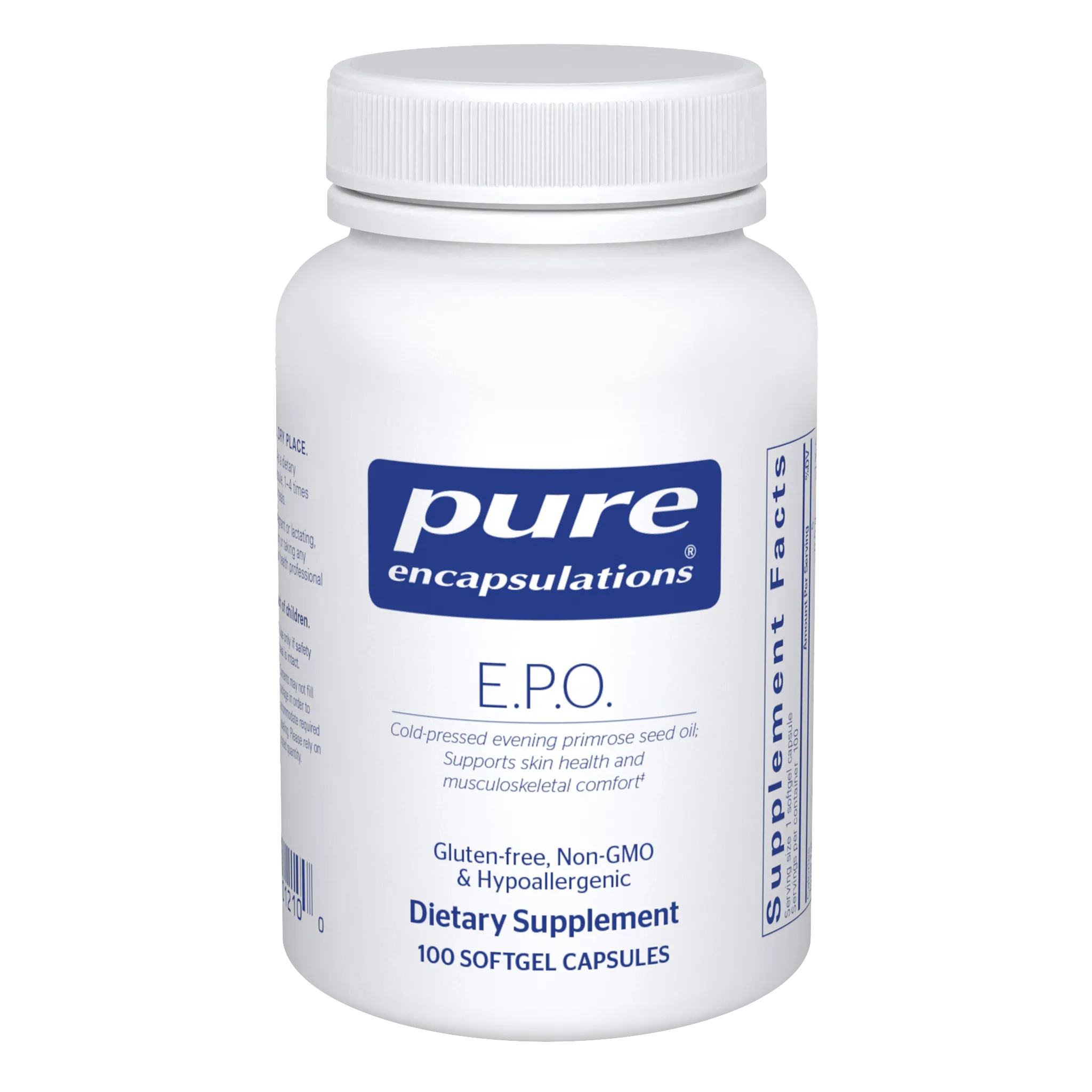
Because E.P.O. is used for a variety of physiological functions, dosing varies significantly based on the clinical target. The pure encapsulations E.P.O. provides 500 mg of cold-pressed oil per capsule, standardized to contain 9% GLA (yielding 45 mg of pure GLA per capsule). The suggested use is 1 capsule, 1-4 times daily, with or between meals.
In clinical literature, higher doses are often utilized for severe chronic conditions. For example, trials evaluating diabetic neuropathy and joint inflammation have frequently utilized doses ranging from 3 to 6 grams of E.P.O. daily (yielding roughly 270 to 540 mg of pure GLA) divided into multiple doses throughout the day. For supporting premenstrual comfort and skin health, lower consistent doses of 1 to 3 grams daily are often sufficient. Always work with your healthcare provider to determine the precise dosage that aligns with your specific metabolic needs and symptom severity.
Evening Primrose Oil is generally well-tolerated, with a strong safety profile for long-term use. When side effects do occur, they are typically mild and gastrointestinal in nature, such as mild nausea, bloating, or loose stools. These can often be mitigated by taking the supplement with food and slowly titrating the dose upward.
However, there are critical drug interactions to be aware of. Because PGE1 has natural anti-thrombotic properties, E.P.O. acts as a mild blood thinner. It should be used with extreme caution if you are taking prescription anticoagulants or antiplatelet medications (like warfarin or clopidogrel), as the combination can increase the risk of bruising and bleeding. Additionally, E.P.O. should be discontinued at least two weeks prior to any scheduled surgery.
For patients with MCAS, E.P.O. requires a highly cautious approach. While the GLA is theoretically beneficial for suppressing leukotrienes, introducing new plant-based oils can sometimes act as a trigger, causing paradoxical histamine reactions (flushing, hives, dizziness) in highly sensitive individuals. If you have MCAS, it is advisable to introduce E.P.O. very slowly, ideally under the guidance of a practitioner and alongside your standard mast cell stabilizers. Lastly, individuals with a history of epilepsy or those taking phenothiazine medications should consult their neurologist before using E.P.O., as historically, it has been associated with a potential lowering of the seizure threshold.
Follow the Science
The scientific exploration of essential fatty acids in post-viral syndromes has a long and complex history. One of the foundational studies in this area was the 1990 Behan trial, a double-blind, placebo-controlled study investigating patients with post-viral fatigue syndrome (now recognized under the ME/CFS umbrella). Patients were given a combination of Evening Primrose Oil (GLA) and Fish Oil (EPA) for three months. Remarkably, 85% of the patients receiving the essential fatty acid treatment showed significant improvement in their symptoms, compared to just 17% of the placebo group.
While subsequent trials have shown mixed results—highlighting the extreme heterogeneity of ME/CFS patients—the underlying theory remains robust. By bypassing damaged metabolic pathways, E.P.O. provides a theoretical framework for restoring cellular energy. If you are exploring what drugs are used for COVID long haulers, it is important to note that integrative protocols frequently combine E.P.O. with omega-3s to safely block the conversion of DGLA into inflammatory arachidonic acid, maximizing the therapeutic benefit for post-viral recovery.
The evidence supporting E.P.O. for skin health and immunological modulation is particularly strong. A pivotal randomized, placebo-controlled trial published in 2008 monitored the efficacy of E.P.O. on patients with severe atopic dermatitis over five months. The results were striking: 96% of the patients in the E.P.O. group showed significant clinical improvement in erythema, oozing, scaling, and dryness, compared to only 32% in the placebo group.
Furthermore, mechanistic studies, such as the Yoon et al. trial, have confirmed exactly how this healing occurs. Blood serum analysis of patients taking E.P.O. revealed that their depleted IFN-gamma levels were significantly increased (P < 0.01), restoring them to match those of healthy control groups, while serum IgE levels significantly decreased. This proves that E.P.O. does not just mask skin symptoms; it fundamentally repairs the underlying immunological miscommunications.
The role of E.P.O. in oxidative protection is backed by rigorous biochemical research. In animal models designed to simulate severe hyperlipidemia and oxidative stress, E.P.O. supplementation was shown to reduce tissue lipid peroxidation by up to 61% in the liver and 42% in the heart. More importantly, it massively increased total cellular glutathione levels—up to 200% in blood platelets—by increasing the activities of glutathione reductase and glutathione transferase.
Recent research published in Biomolecules (2022) further demonstrated GLA's profound protective capabilities. In models exposed to lethal ionizing radiation, GLA treatment restored altered levels of cytokines and pushed systemic glutathione, catalase, and superoxide dismutase back to near-normal baseline levels, drastically improving survival rates. This deep cellular protection is why E.P.O. is considered a vital tool for promoting healthy cardiovascular function and protecting endothelial integrity in patients battling chronic, systemic inflammation.
The Path Forward
Living with a complex chronic illness like Long COVID, ME/CFS, or dysautonomia often feels like navigating a maze without a map. When your body's foundational metabolic and inflammatory pathways are disrupted, it can seem impossible to regain your footing. However, understanding the deep biochemistry of your symptoms is the first step toward reclaiming your health. By targeting the delta-6-desaturase bottleneck and supporting your body's eicosanoid metabolism, Evening Primrose Oil offers a scientifically grounded method for supporting cellular repair from the inside out.
It is vital to remember that no single supplement is a magic cure. E.P.O. is most effective when utilized as one piece of a comprehensive, personalized management strategy. This includes aggressive pacing to manage post-exertional malaise, meticulous symptom tracking, dietary modifications, and working closely with a medical team that understands the nuances of neuroimmune conditions. If you are struggling to understand your diagnosis, learning how a doctor diagnoses Long COVID can help you advocate for the comprehensive testing and care you deserve.
At RTHM, we validate the reality of your symptoms and the profound impact they have on your daily life. We believe in utilizing targeted, high-quality, cold-pressed formulations to ensure you receive the maximum therapeutic benefit without unnecessary solvents or fillers. Always consult with your primary care physician or a dysautonomia-literate specialist before adding new supplements to your regimen, especially to navigate potential drug interactions and ensure the dosage is tailored to your unique biology.
Sources
American Academy of Family Physicians (AAFP): Evening Primrose Oil Pharmacology
Biomolecules 2022: Gamma-Linolenic Acid (GLA) Protects against Ionizing Radiation-Induced Damage
Drugs.com: Evening Primrose Oil Uses, Benefits & Pharmacokinetics
MDPI: Mitochondrial Reactive Oxygen Species: A Unifying Mechanism in Long COVID
PubMed: Antioxidant potential of evening primrose oil administration in hyperlipemic rabbits (source URL incorrect)