Can Relora and Active B Vitamins Support the HPA Axis in Long COVID and ME/CFS?
March 6, 2026
Craving and Stress SupportReloraLong COVID
Share:
Disclaimer: The information provided here is for educational purposes only and is not intended as medical advice. It should not be used to diagnose, treat, cure, or prevent any medical condition. Instead, use it as a starting point for discussion with your healthcare provider. Always consult with a qualified healthcare provider before starting any new medication, supplement, device, or making changes to your health regimen.
Living with a complex chronic illness often feels like being trapped in a body that is constantly sounding a false alarm. For individuals navigating the unpredictable waters of Long COVID, myalgic encephalomyelitis/chronic fatigue syndrome (ME/CFS), and dysautonomia, the nervous system can become locked in a perpetual state of "fight or flight." This chronic hyperarousal doesn't just cause feelings of anxiety; it fundamentally alters how the body produces energy, regulates hormones, and manages metabolism. Over time, this relentless biological stress can lead to profound exhaustion, disrupted sleep, and changes in eating habits as the body desperately searches for quick sources of energy to sustain itself.
When the body's primary stress response system—the Hypothalamic-Pituitary-Adrenal (HPA) axis—becomes dysregulated, standard approaches to rest and recovery are rarely enough. Patients often find themselves caught in a vicious cycle: physiological stress depletes essential nutrients, and the lack of those nutrients further impairs the body's ability to handle stress. This is where targeted nutritional interventions come into play. By supplying the specific botanical compounds and active cellular cofactors needed to calm the nervous system and rebuild depleted neurotransmitters, we can begin to gently coax the body out of its chronic stress response and back toward a state of restorative balance.
What is Craving and Stress Support?
The Power of Relora and Botanical Medicine
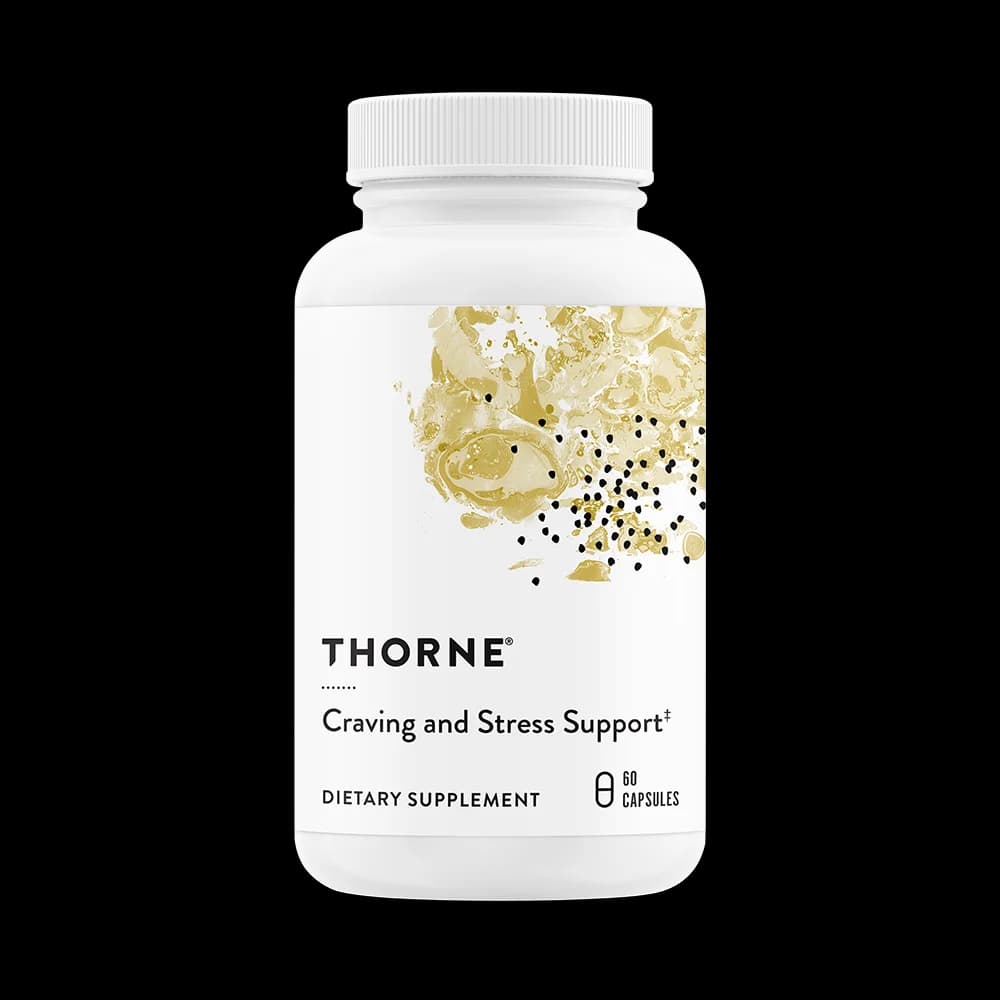
Thorne's Craving and Stress Support is fundamentally built around a patented, proprietary botanical blend known as Relora®. This blend combines the bark extracts of two plants that have been utilized for centuries in Traditional Chinese Medicine: Magnolia officinalis (Magnolia bark) and Phellodendron amurense (Amur cork tree). In a healthy body, the active compounds within these plants work synergistically to modulate the central nervous system and the endocrine system. The primary bioactive molecules in Magnolia bark are honokiol and magnolol, which are highly lipophilic (fat-soluble) polyphenols. Because of their fat-soluble nature, these molecules can easily cross the blood-brain barrier to interact directly with the brain's neurochemical receptors, specifically targeting the pathways that govern relaxation and stress perception.
Meanwhile, Phellodendron amurense contains powerful bioactive alkaloids, most notably berberine. In the context of metabolic health, berberine is widely recognized for its ability to support healthy blood sugar levels and modulate inflammation. However, when combined with Magnolia bark in the Relora blend, its primary function is to help regulate the adrenal glands. Together, these botanicals act as adaptogens—substances that increase the body's resistance to stress and help it maintain physiological homeostasis. Rather than acting as central nervous system depressants that force the body into a state of chemical sedation, these compounds work to naturally down-regulate the overproduction of stress hormones, promoting a state of calm alertness.
The Crucial Role of Active B Vitamins
The second pillar of this formulation is a comprehensive suite of active B vitamins, including Thiamin (B1), Riboflavin 5'-Phosphate (B2), Niacinamide (B3), Pyridoxal 5'-Phosphate (B6), Methylcobalamin (B12), and 5-methyltetrahydrofolate (Folate/5-MTHF). In a healthy metabolism, B vitamins act as essential coenzymes—molecular "spark plugs" that drive hundreds of vital enzymatic reactions. They are required for everything from synthesizing DNA and producing cellular energy (ATP) in the mitochondria to creating the neurotransmitters that regulate our mood and cognitive function. However, standard B vitamins found in food or basic supplements are biologically inactive; they must undergo complex biochemical conversions in the liver and gut before the cells can actually use them.
This conversion process is where many individuals, particularly those with chronic illnesses, run into significant roadblocks. Genetic variations, such as the highly prevalent MTHFR gene mutation, can severely impair the body's ability to convert standard folic acid into its usable form. Furthermore, the chronic inflammation and gut dysbiosis frequently seen in post-viral conditions can hinder the phosphorylation of vitamins like B6 and B2. By providing these vitamins in their pre-converted, "active" forms—such as substituting standard pyridoxine with Pyridoxal 5'-Phosphate (P5P)—this supplement bypasses these metabolic bottlenecks. This ensures that the nervous system and adrenal glands have immediate access to the raw materials they need to synthesize calming neurotransmitters and manage the biological toll of chronic stress.
How Chronic Illness Impacts the HPA Axis
The Hypocortisolism Paradox in Post-Viral Illness
To understand how chronic illness impacts the body's stress response, we must first look at the Hypothalamic-Pituitary-Adrenal (HPA) axis. This complex network is the body's primary command center for managing stress. When you encounter a physical or emotional threat, the hypothalamus in the brain releases corticotropin-releasing hormone (CRH), which signals the pituitary gland to release adrenocorticotropic hormone (ACTH). ACTH travels through the bloodstream to the adrenal glands, prompting them to release cortisol, the body's master stress hormone. Cortisol is essential for survival; it mobilizes glucose for immediate energy, increases cardiovascular tone, and acts as a powerful brake on the immune system to prevent runaway inflammation. In a healthy scenario, once the threat has passed, cortisol levels drop, and the body returns to a parasympathetic "rest and digest" state.
However, in complex chronic conditions like Long COVID and ME/CFS, this elegant system becomes profoundly dysregulated. During the acute phase of a severe viral infection, the HPA axis pumps out massive amounts of cortisol in a desperate attempt to suppress the life-threatening inflammatory cytokine storm. But as the illness drags on for months or years, the system begins to fail. Recent landmark studies on Long COVID have revealed a fascinating paradox: rather than having chronically high cortisol, many patients exhibit significant hypocortisolism—abnormally low resting cortisol levels. This precisely mirrors decades of research into ME/CFS, where mild hypocortisolism and neuroendocrine dysfunction are among the most consistent biological abnormalities found.
The "Adrenal Burnout" Negative Feedback Loop
This state of low cortisol is not simply a matter of the adrenal glands "running out" of hormones. Instead, it is often a central dysfunction originating in the brain. Prolonged exposure to high cortisol early in the illness causes the brain's glucocorticoid receptors to upregulate and desensitize. This creates a hypersensitive negative feedback loop that eventually suppresses cortisol production entirely, a phenomenon sometimes colloquially referred to as "adrenal burnout." Furthermore, researchers hypothesize that direct viral damage to the pituitary gland or ongoing neuroinflammation can physically impair the HPA axis's ability to send proper signaling hormones. Without adequate cortisol, the immune system loses its regulatory brake, allowing pro-inflammatory cytokines to run rampant and cause widespread tissue inflammation.
The downstream effects of this HPA axis dysfunction explain many of the most debilitating symptoms patients experience. Cortisol normally follows a diurnal circadian rhythm, peaking in the morning to provide waking energy and dropping at night to allow for sleep. In patients with Long COVID and ME/CFS, this curve is often flattened. The lack of a morning cortisol surge deprives them of essential metabolic energy, contributing to profound, unrefreshing fatigue and making it incredibly difficult to live with long-term COVID. Meanwhile, the physiological stress of living with chronic pain and autonomic dysfunction continuously depletes the body's reserves of B vitamins, further crippling the nervous system's ability to repair itself and synthesize the neurotransmitters needed to regulate mood and appetite.
Craving and Stress Support: Supporting the Stress Response
Modulating the GABA Receptor with Honokiol
Thorne's Craving and Stress Support intervenes in this cycle of HPA axis dysfunction through several distinct, targeted mechanisms. The most profound mechanism involves the interaction between the Magnolia bark extracts (honokiol and magnolol) and the brain's gamma-aminobutyric acid (GABA) receptors. GABA is the primary inhibitory neurotransmitter in the central nervous system; its job is to reduce neuronal excitability and promote a state of calm. Pharmacological research demonstrates that honokiol and magnolol act as positive allosteric modulators (PAMs) of the $GABA_A$ receptor. This means they do not bind to the primary GABA site, but rather to a secondary allosteric site, which changes the receptor's shape and makes it significantly more sensitive to the body's naturally occurring GABA.
By enhancing the receptor's response to GABA, these botanical compounds increase the influx of negatively charged chloride ions into the neurons. This hyperpolarizes the neurons, making them less likely to fire, effectively shutting down the overactive neural signaling associated with chronic hyperarousal and anxiety. Crucially, unlike prescription benzodiazepines (which also target GABA receptors but often cause severe sedation and motor impairment), honokiol shows remarkably high efficacy at extra-synaptic $GABA_A$ receptors. These specific receptors are responsible for "tonic inhibition"—a continuous, background level of neurological calming. This unique binding profile allows Relora to alleviate anxiety and physical tension without causing the heavy drowsiness or cognitive deficits associated with pharmaceutical sedatives.
Rebuilding Neurotransmitters with Active B Vitamins
While Relora helps calm the immediate neurological hyperarousal, the active B vitamins in this formulation work to rebuild the depleted metabolic pathways that sustain long-term nervous system health. Pyridoxal 5'-Phosphate (active B6) is a mandatory coenzyme for over 100 enzymatic reactions, including the synthesis of key neurotransmitters like serotonin, dopamine, and GABA itself. In patients with post-viral dysautonomia and Long COVID symptoms, the intense metabolic demand of chronic oxidative stress drastically increases the utilization of these vitamins, functionally draining the body's stores. By supplying pre-phosphorylated P5P, the supplement ensures the brain has the exact molecular building blocks required to manufacture the neurotransmitters that regulate mood, sleep cycles, and autonomic nervous system signaling.
Breaking the Homocysteine and Brain Fog Link
Furthermore, the inclusion of 5-methyltetrahydrofolate (5-MTHF) and Methylcobalamin (active B12) directly targets the methylation cycle, a biochemical pathway frequently impaired in chronic illness. A compromised folate cycle—often exacerbated by the MTHFR genetic mutation—leads to elevated levels of homocysteine, a neurotoxic and pro-thrombotic amino acid. High homocysteine can cross into the brain, triggering profound neuroinflammation and the severe cognitive dysfunction commonly referred to as "brain fog." By providing fully methylated folate and B12, this supplement bypasses genetic roadblocks, allowing the body to efficiently clear neurotoxic homocysteine, support myelin sheath repair around damaged nerves, and unblock stalled mitochondrial pathways to improve cellular ATP production.

Symptoms Craving and Stress Support May Help Manage
Targeted Symptom Relief
By modulating the HPA axis, enhancing GABA receptor sensitivity, and supplying critical metabolic cofactors, the combination of Relora and active B vitamins can help manage a variety of complex symptoms associated with chronic stress and post-viral illness:
Stress-Related Eating and Weight Gain: Chronically dysregulated cortisol signals the body to replenish energy by craving high-calorie, carbohydrate-dense foods. By promoting a balanced cortisol rhythm, Relora helps blunt the biological trigger for emotional overeating and late-night food cravings, supporting healthy weight management efforts even during periods of high stress.
Unrefreshing Sleep and Insomnia: Because honokiol and magnolol act on extra-synaptic GABA receptors, they help calm the central nervous system's hyperarousal. This can shorten sleep latency (the time it takes to fall asleep) and improve the duration of restorative sleep phases without causing next-day grogginess or chemical sedation.
Brain Fog and Cognitive Dysfunction: The active forms of B12 (Methylcobalamin) and Folate (5-MTHF) are crucial for breaking down neurotoxic homocysteine and supporting the synthesis of myelin, the protective coating around nerves. This helps reduce neuroinflammation and supports clearer cognitive function and focus.
Mild Anxiety and Nervous Tension: By acting as positive allosteric modulators of the $GABA_A$ receptor, the botanical extracts in Relora increase the brain's natural calming signals, significantly reducing feelings of transitory anxiety, irritability, and physical tension.
Post-Exertional Malaise (PEM) and Fatigue: Active B vitamins, particularly Riboflavin 5'-Phosphate and Pyridoxal 5'-Phosphate, are essential coenzymes for mitochondrial ATP production. By unblocking these stalled energy pathways, the supplement helps raise the cellular energy envelope, potentially reducing the severity of fatigue crashes after minor exertion.
Autonomic Nervous System Dysregulation: B vitamins act as a bridge between the endocrine and nervous systems. By supporting the synthesis of monoamine neurotransmitters (like serotonin and dopamine), they help the autonomic nervous system shift out of a chronic "fight-or-flight" sympathetic state and into a restorative parasympathetic state.
Practical Considerations: Forms, Dosing, and Absorption
Why "Active" Forms Matter
When incorporating Thorne's Craving and Stress Support into a chronic illness management plan, understanding the bioavailability and specific forms of the ingredients is crucial. The defining feature of this supplement is its use of pre-converted, "active" B vitamins. For example, standard folic acid is a synthetic compound that requires the enzyme methylenetetrahydrofolate reductase (MTHFR) to be converted into its usable form. Because up to 40% of the population has a genetic polymorphism that impairs this enzyme, standard folic acid often builds up in the bloodstream unmetabolized. This supplement utilizes 5-methyltetrahydrofolate (5-MTHF), the fully active, methylated form of folate that bypasses this genetic bottleneck entirely, ensuring immediate cellular absorption and utilization.
Similarly, the supplement uses Pyridoxal 5'-Phosphate (P5P) instead of standard pyridoxine hydrochloride for Vitamin B6, and Riboflavin 5'-Phosphate instead of standard riboflavin for Vitamin B2. These phosphorylated forms do not require processing by a sluggish or inflamed liver, making them highly bioavailable for patients dealing with the metabolic consequences of Long COVID or ME/CFS. The Relora botanical blend is also standardized to ensure a consistent, clinically relevant dose of the active polyphenols honokiol and magnolol in every capsule, providing reliable modulation of the HPA axis.
Dosing, Timing, and Potential Interactions
The suggested use for Craving and Stress Support is to take two capsules daily, or as recommended by a healthcare practitioner. Because the goal of this supplement is to promote a balanced circadian cortisol rhythm and manage stress-induced eating, many patients find it beneficial to split the dose, taking one capsule in the morning to support daytime metabolic function and one capsule in the late afternoon or early evening to blunt evening cortisol spikes and prepare the nervous system for restful sleep. The botanical extracts are generally well-tolerated on an empty stomach, but taking the capsules with a small amount of healthy fat may slightly enhance the absorption of the lipophilic (fat-soluble) compounds in the Magnolia bark.
While Relora and active B vitamins have a highly favorable safety profile, there are important contraindications to consider. Because honokiol and magnolol directly potentiate the GABA receptor, they can have a synergistic, compounding effect if taken alongside prescription central nervous system depressants. Patients should exercise extreme caution or avoid combining this supplement with heavy sedatives, barbiturates, or benzodiazepines, as this could lead to excessive drowsiness or motor impairment. Additionally, 5-MTHF supplementation is contraindicated concurrent with methotrexate cancer therapy, as it can interfere with the drug's anti-neoplastic activity (though it is generally safe for those taking methotrexate for rheumatoid arthritis). As always, pregnant or nursing individuals should not use this product, and you should consult your healthcare provider before introducing new supplements, especially when managing complex post-viral conditions.

Follow the Science
Clinical Trials on Relora and Cortisol
The efficacy of the Relora botanical blend in modulating the HPA axis and managing stress has been validated in several peer-reviewed human clinical trials. The most highly cited study, published in the Journal of the International Society of Sports Nutrition in 2013, evaluated the impact of Relora on cortisol and psychological mood states in 56 moderately stressed adults. In this randomized, placebo-controlled trial, participants took Relora or a placebo daily for four weeks. The results were highly significant: salivary cortisol exposure was 18% lower in the Relora group compared to the placebo group. Furthermore, the Relora group demonstrated massive improvements across multiple Profile of Mood States (POMS) parameters, including a 42% decrease in anger, a 31% decrease in fatigue, a 27% decrease in confusion, and an 18% increase in overall vigor and energy.
Another critical piece of evidence comes from a 2008 pilot study published in the Nutrition Journal, which focused on healthy, overweight women who self-reported eating more in response to stress. Over the 6-week double-blind, placebo-controlled trial, participants taking 250 mg of Relora three times daily experienced a statistically significant reduction in temporary, transitory anxiety compared to the placebo group. While this specific short-term pilot did not show massive baseline cortisol drops, a related 2006 study on weight management found that 75% of women taking a placebo gained weight during stressful periods, whereas only 37% of the Relora group gained weight, indicating the botanical blend's effectiveness in mitigating stress-induced eating behaviors.
B Vitamins and Post-Viral Fatigue
The scientific consensus regarding the necessity of active B vitamins in chronic illness is also rapidly expanding. A comprehensive 2025 systematic review and meta-analysis assessing B-complex vitamins for ME/CFS and chronic fatigue revealed a statistically significant reduction in overall fatigue severity among supplemented patients. The researchers concluded that active B vitamins safely restore cellular redox balance and optimize methylation potential, which is frequently impaired in these patient populations. Additionally, research mapping the origins of Long COVID outlines how persistent viral antigens cause ongoing immune hyperactivation, highlighting that the intense metabolic demand of chronic oxidative stress drastically increases the utilization of methyl groups, functionally draining the body's stores of B12, B6, and folate. This underscores the clinical necessity of targeted, highly bioavailable supplementation to halt post-viral decline.
The Path Forward
Reclaiming Your Baseline
Living with a dysregulated nervous system and an unpredictable HPA axis is an exhausting, invisible battle. When your body is constantly locked in a state of biological hyperarousal, even the simplest daily tasks can feel insurmountable, and the resulting fatigue and cognitive dysfunction are profoundly validating signs of a system under immense physiological strain. It is important to remember that these symptoms are not in your head; they are the result of complex, measurable disruptions in your neuroendocrine pathways and cellular metabolism. While there is no single miracle cure for conditions like Long COVID or ME/CFS, targeted interventions that address these root dysfunctions can make a meaningful difference in your quality of life.
A Comprehensive Approach
Thorne's Craving and Stress Support offers a scientifically grounded tool to help gently coax your nervous system out of its chronic "fight or flight" state. By providing the botanical modulators needed to balance cortisol and the active B vitamins required to rebuild depleted neurotransmitters, this supplement addresses the biological toll of chronic stress from multiple angles. However, supplements are most effective when integrated into a comprehensive management strategy. Combining targeted nutritional support with aggressive pacing, heart rate monitoring, and nervous system regulation techniques can help you slowly expand your energy envelope and reclaim your baseline. Always consult with your healthcare provider to ensure this approach aligns with your specific medical needs and explore what drugs are used for COVID long haulers in conjunction with natural therapies.
Sources
Talbott, S. M., et al. (2013). Effect of Magnolia officinalis and Phellodendron amurense (Relora®) on cortisol and psychological mood state in moderately stressed subjects. Journal of the International Society of Sports Nutrition, 10(1), 37.
Kalman, D. S., et al. (2008). Effect of a proprietary Magnolia and Phellodendron extract on stress levels in healthy women: a pilot, double-blind, placebo-controlled clinical trial. Nutrition Journal, 7, 11.
Garrison, R., & Chambliss, W. G. (2006). Effect of a proprietary Magnolia and Phellodendron extract on weight management: a pilot, double-blind, placebo-controlled clinical trial. Alternative Therapies in Health and Medicine, 12(1), 50-54.
Alexeev, M., et al. (2012). The natural products magnolol and honokiol are positive allosteric modulators of both synaptic and extra-synaptic GABAA receptors. Neuropharmacology, 62(8), 2507-2514.
Klein, J., et al. (2023). Distinguishing features of long COVID identified through immune profiling. Nature, 615(7951), 283-289.
Tate, W., et al. (2023). Towards a Better Understanding of the Complexities of Myalgic Encephalomyelitis/Chronic Fatigue Syndrome and Long COVID. International Journal of Molecular Sciences, 24(6), 5124.
Proal, A. D., et al. (2024). Mechanisms of long COVID and the path toward therapeutics. Cell, 187(11), 269-290.
Frontiers in Neurology. (2024). Research progress in the treatment of chronic fatigue syndrome through interventions targeting the hypothalamus-pituitary-adrenal axis.
Frontiers in Immunology. (2024). Salivary cortisol in long COVID: a marker of broader stress system and circadian rhythm dysregulation.
Bansal, A. S., et al. (2023). Myalgic Encephalomyelitis/Chronic Fatigue Syndrome (Me/Cfs): The Biology of a Neglected Disease. SSRN Electronic Journal.