Can Core Support Enhance Liver Detoxification in Long COVID and ME/CFS?
March 6, 2026
Core SupportLiver DetoxificationLong COVID
Share:
Disclaimer: The information provided here is for educational purposes only and is not intended as medical advice. It should not be used to diagnose, treat, cure, or prevent any medical condition. Instead, use it as a starting point for discussion with your healthcare provider. Always consult with a qualified healthcare provider before starting any new medication, supplement, device, or making changes to your health regimen.
Months or even years after recovering from an initial viral infection, many individuals find themselves battling a bewildering array of debilitating symptoms—from profound brain fog and crushing fatigue to sudden, severe chemical sensitivities. This complex reality is the hallmark of conditions like Long COVID, myalgic encephalomyelitis/chronic fatigue syndrome (ME/CFS), and mast cell activation syndrome (MCAS). Patients often describe feeling "toxic" or "poisoned" in their own bodies, a sensation that is frequently dismissed by standard medical evaluations. However, emerging clinical research suggests that this feeling is not merely psychological; it is often rooted in a very real, physiological breakdown of the body's cellular detoxification systems.
When the body is subjected to the relentless oxidative stress of a chronic post-viral illness, the liver—the primary organ responsible for neutralizing and eliminating toxins—can become overwhelmed and depleted of its essential resources. This creates a dangerous bottleneck where inflammatory metabolic waste and environmental chemicals accumulate in the bloodstream, perpetuating a vicious cycle of neuroinflammation and immune dysregulation. Addressing this bottleneck requires more than just a standard diet; it requires targeted, clinical-grade nutritional support. Core Support, a specialized formulation by Ortho Molecular Products, is designed to provide the exact biochemical substrates the liver needs to restart its stalled detoxification machinery. In this comprehensive guide, we will explore the intricate science of metabolic detoxification, how chronic illness disrupts these pathways, and how the specific amino acids and phytonutrients in Core Support may help restore cellular resilience.
TL;DR
Chronic post-viral illnesses can overwhelm the liver's natural detoxification pathways, leading to systemic inflammation.
Core Support provides targeted amino acids and phytonutrients that may help restore cellular detoxification.
Ingredients like NAC and specialized fiber blends support the neutralization and elimination of metabolic waste.
Always consult a healthcare provider before starting new supplements, especially if you have chemical sensitivities.
What is Core Support?
The Anatomy of Metabolic Detoxification
The human body is constantly exposed to a massive and relentless barrage of endogenous metabolic waste and exogenous environmental chemicals. The Centers for Disease Control and Prevention (CDC) estimates that more than 100,000 synthetic chemicals are currently used by Americans in daily life, with approximately 1,000 new chemicals introduced into the environment annually. Evidence from studies on methylmercury toxicity in astrocytes suggests that specific toxic exposures can impact Nrf2-dependent detoxification pathways. In a healthy, resilient body, the liver acts as the primary hub for metabolic detoxification, managing the clearance of pharmaceutical drugs, environmental xenobiotics, heavy metals, and natural cellular byproducts. This is not a passive, mechanical filtering process like a sieve; rather, it is a highly coordinated, energy-dependent biochemical sequence that physically alters toxic molecules at the molecular level so they can be safely excreted. When this intricate system functions optimally, we remain resilient against the chemical burdens of modern life. However, when the system is overwhelmed by infection or under-resourced due to poor nutrition, toxins can accumulate, leading to widespread cellular dysfunction.
Hepatic (liver) detoxification is traditionally divided into three distinct but deeply interconnected phases, each relying on specific enzymes and nutrient cofactors. Phase I, known as the activation phase, utilizes a massive family of enzymes called Cytochrome P450 (CYP450). These enzymes use oxygen to oxidize lipophilic (fat-soluble) toxins, making them slightly more water-soluble so they can be processed further. Unfortunately, this necessary process often creates highly reactive intermediate metabolites—free radicals that are actually more dangerous, unstable, and tissue-damaging than the original toxin itself. To prevent these volatile intermediates from destroying the delicate liver tissue, they must be immediately captured and processed by Phase II, the conjugation phase. During Phase II, the liver uses specific transferase enzymes to attach (conjugate) bulky, water-soluble molecules—like glutathione, sulfate, or glycine—to the reactive intermediates, permanently neutralizing their threat. Finally, Phase III, the elimination phase, utilizes active ATP-dependent efflux pumps to push these newly conjugated, water-soluble toxins out of the liver cells and into the bile or bloodstream for final excretion via the bowels or kidneys.
The Role of Core Support in the Detoxification Matrix
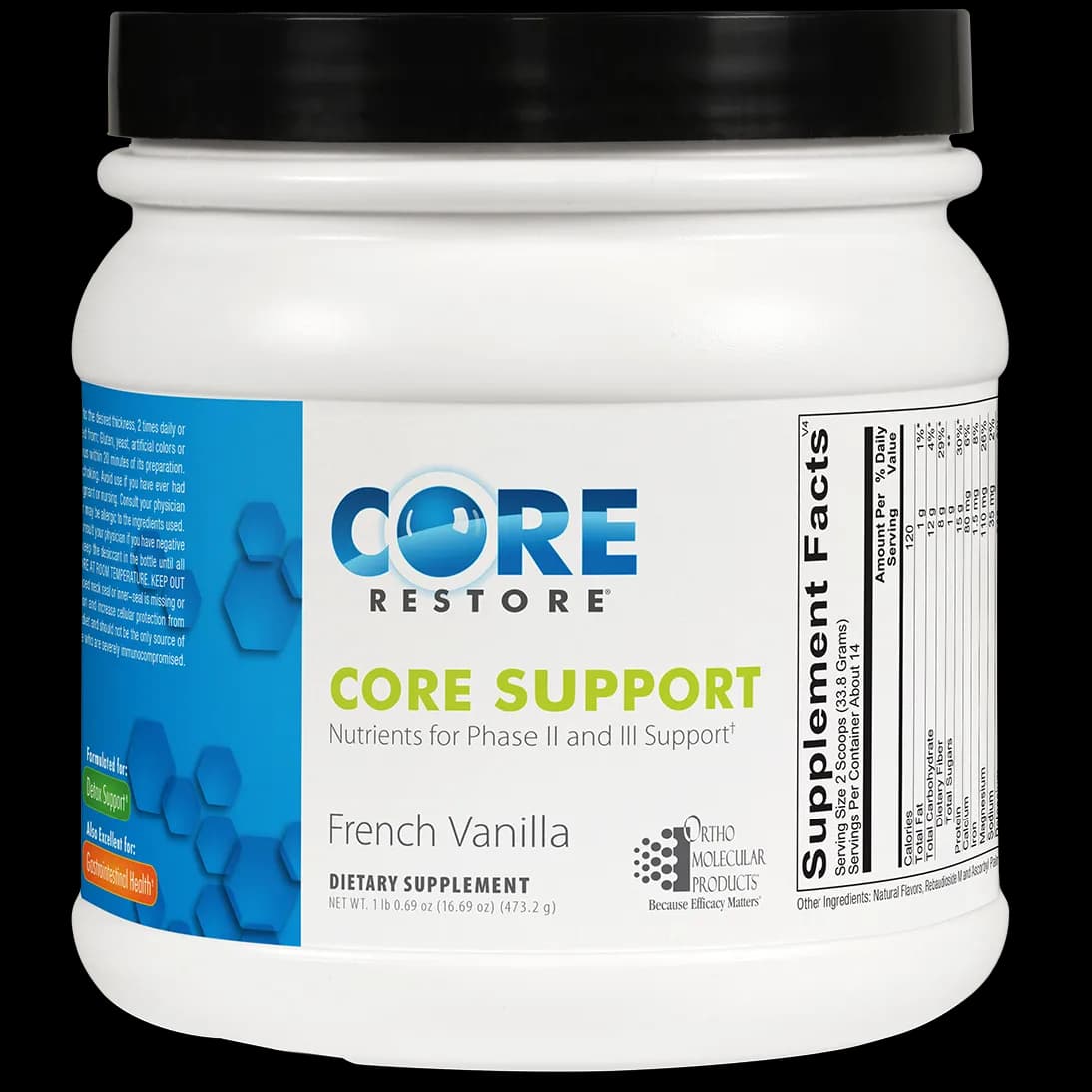
Core Support, meticulously formulated by Ortho Molecular Products, is a clinical-grade nutritional intervention specifically designed to provide advanced, targeted support for the critical Phase II and Phase III pathways. The standard American diet is typically high in processed sugars and caffeine while severely lacking in nutrient density and essential fiber. Core Support addresses this profound deficit by supplying a comprehensive matrix of targeted amino acids, potent botanical antioxidants, and functional dietary fibers. By delivering high doses of compounds like N-acetyl cysteine (NAC), glycine, taurine, and a specialized vegetable antioxidant blend, the formula ensures that the liver has the exact biochemical substrates required to upregulate Phase II conjugation enzymes. Without these specific substrates, Phase II stalls, and Phase I toxicity builds up unchecked.
Simultaneously, the formulation addresses the often-overlooked final step of the detoxification process: elimination. Its inclusion of specific botanical extracts like watercress and pomegranate, alongside alkalinizing minerals like potassium citrate, provides essential support for kidney function. This ensures that once toxins are successfully neutralized in Phase II, they are efficiently eliminated from the body through urinary excretion rather than being reabsorbed into systemic circulation. By supporting the entire continuum of the detoxification matrix, Core Support aims to restore the body's natural ability to clear the inflammatory debris that so often plagues patients with complex chronic illnesses. You can learn more about the importance of targeted liver support in our related guide, Can Silymarin Support Liver Health and Detoxification in Long COVID and ME/CFS?.
How Long COVID and ME/CFS Impact Liver Detoxification
Viral Persistence and the "ROS Storm"
In complex chronic conditions like Long COVID, myalgic encephalomyelitis/chronic fatigue syndrome (ME/CFS), and mast cell activation syndrome (MCAS), the body's natural detoxification pathways are often profoundly disrupted at the cellular level. During a severe acute viral infection, such as SARS-CoV-2 or Epstein-Barr virus, the immune system triggers a massive, systemic inflammatory response to eradicate the invading pathogen. This aggressive immune response generates an enormous excess of Reactive Oxygen Species (ROS). While a controlled, localized amount of ROS is absolutely necessary for destroying viruses and signaling immune cells, an unchecked "ROS storm" quickly overwhelms the body’s innate antioxidant defenses. Recent studies published in Frontiers in Immunology have highlighted how this excessive oxidative stress creates a highly toxic cellular environment that damages host tissues, the central nervous system, and the vascular endothelium. In patients who develop Long COVID or ME/CFS, this inflammatory state often fails to resolve after the acute infection clears, leaving the body in a perpetual state of oxidative crisis that continuously burdens and degrades the liver's detoxification machinery.
Glutathione Depletion and the Detoxification Bottleneck
To neutralize these relentless ROS storms and protect delicate cellular structures, the body rapidly consumes its intracellular stores of glutathione, a vital tripeptide widely considered the human body's "master antioxidant." Because the liver is the primary hub for glutathione production, storage, and utilization, this systemic depletion has a devastating, cascading impact on Phase II detoxification. The liver relies heavily on Glutathione S-transferase (GST) enzymes to physically bind glutathione to metabolic waste, heavy metals, and environmental toxins. When glutathione levels crash, the Phase II conjugation pathway dramatically slows down, creating a dangerous biochemical bottleneck. Phase I continues to produce highly reactive intermediate metabolites, but Phase II cannot neutralize them fast enough. This allows neurotoxins and inflammatory metabolic waste to accumulate in the bloodstream, directly contributing to the severe brain fog, neuroinflammation, and profound chemical sensitivities frequently reported by patients. You can explore the mechanics of this depletion further in our article, Can Reduced Glutathione Support Detoxification and Energy in Long COVID and ME/CFS?.
Dysautonomia, Microthrombosis, and Systemic Backlog
The downstream, systemic effects of this detoxification bottleneck extend far beyond the liver itself, heavily impacting the autonomic nervous system and cardiovascular function. The inability to clear inflammatory cytokines and oxidative waste drives a hypercoagulable state in the blood, often referred to as immunothrombosis, which is a recognized hallmark of Long COVID pathology. Microclots can form in the tiny capillaries throughout the body, severely impairing oxygen delivery to tissues and exacerbating the debilitating symptoms of dysautonomia, such as postural orthostatic tachycardia syndrome (POTS). Furthermore, when Phase III elimination pathways are sluggish due to poor bile flow or compromised kidney function, toxins that were successfully conjugated in Phase II can be prematurely de-conjugated in the gut by dysbiotic bacteria and reabsorbed into the bloodstream—a toxic process known as enterohepatic recirculation. This systemic backlog of toxins places continuous, unrelenting stress on mast cells, triggering inappropriate immune responses and perpetuating the vicious cycle of chronic illness. Understanding the critical link between gut health, microbiome balance, and systemic inflammation is crucial, as explored in our detailed overview of Gastrointestinal Symptoms Seen with Long COVID.
Core Support: Supporting Phase II and Phase III Pathways
N-Acetyl Cysteine (NAC) and Glutathione Synthesis
Core Support is meticulously formulated to break the vicious cycle of oxidative stress by directly resupplying the liver with the exact biochemical substrates needed to restart Phase II conjugation. A primary cornerstone of this advanced formula is N-acetyl cysteine (NAC), a highly bioavailable, stable derivative of the amino acid L-cysteine. NAC serves as the crucial rate-limiting building block for the intracellular synthesis of glutathione. By providing a steady, high-dose supply of NAC, alongside the synergistic amino acids glycine and taurine, Core Support ensures that the liver can rapidly rebuild its depleted glutathione reserves. This critical replenishment allows Glutathione S-transferase enzymes to resume the vital work of binding and neutralizing the dangerous reactive intermediates generated during Phase I metabolism. For a deeper, comprehensive dive into this specific ingredient, see our post, Can NAC (N-Acetyl-l-Cysteine) Support Detoxification and Respiratory Health in Long COVID and ME/CFS?.
Glucosinolates and the Nrf2/ARE Genetic Switch
Beyond simply providing the raw materials for conjugation, Core Support actively upregulates the genetic expression of the liver's detoxification machinery, forcing the body to build more enzymes. The formula includes a specialized, high-potency vegetable antioxidant blend rich in glucosinolates, which are naturally occurring sulfur-containing compounds found abundantly in cruciferous vegetables like broccoli, kale, and watercress. When consumed, glucosinolates are enzymatically converted into highly bioactive molecules called isothiocyanates, such as sulforaphane. When activated by these phytonutrients, Nrf2 travels directly to the cell nucleus and binds to Antioxidant Response Elements (ARE), effectively flipping a master genetic switch that commands the cell to produce massive quantities of Phase II detoxifying enzymes, including UDP-glucuronosyltransferases and NAD(P)H:quinone oxidoreductase 1. This profound, gene-level mechanism is further detailed in our article, Can Sulforaphane Support Detoxification and Cellular Health in Long COVID and ME/CFS?.
Ellagic Acid and Green Tea Extract for Antioxidant Defense
To protect the delicate hepatocytes (liver cells) from the crossfire of Phase I reactive intermediates, Core Support incorporates a robust, multi-faceted matrix of botanical antioxidants, including ellagic acid from pomegranate fruit extract and Epigallocatechin gallate (EGCG) from green tea leaf extract. Ellagic acid is a complex, planar polyphenol that utilizes its unique molecular structure to directly bind to and detoxify highly reactive environmental carcinogens, helping to protect cellular DNA from mutation. Green tea extract, standardized to contain 45% EGCG, provides a localized, powerful antioxidant shield for the liver while independently upregulating a broad spectrum of Phase II enzymes. Together with alpha-lipoic acid and schisandra berry extract, these targeted botanicals ensure that the liver can process high volumes of toxins without succumbing to oxidative self-destruction.
Phase III Elimination via Fiber and Kidney Support
Neutralizing a toxin in Phase II is only half the battle; it must be permanently removed from the body via Phase III elimination to help reduce systemic re-exposure. Core Support facilitates this crucial final step through a highly effective dual-action approach targeting both the gastrointestinal tract and the renal system. The formula contains 8 grams of a diverse, complex dietary fiber blend, including rice protein, tapioca dextrin, and glucomannan. In the gut, this specialized fiber matrix acts as a physical binder, latching onto the toxin-laden bile excreted by the liver and ensuring it is safely passed in the stool, thereby helping to reduce the risk of enterohepatic recirculation. For water-soluble toxins destined for urinary excretion, Core Support provides precise doses of potassium citrate, calcium citrate, and magnesium citrate. These alkalinizing minerals, combined with the natural diuretic properties of watercress extract, optimize the pH of the urine and support kidney filtration rates, facilitating the rapid, safe, and efficient elimination of xenobiotics from the systemic circulation. You can explore other compounds that assist this specific elimination pathway in our guide, Can Calcium-D-Glucarate Support Detoxification in Long COVID and ME/CFS?.

Symptoms Core Support May Help Manage
Targeting the Systemic Effects of Toxicity
By comprehensively supporting the liver's Phase II and Phase III pathways, Core Support addresses the root biochemical dysfunctions that drive many debilitating symptoms in chronic post-viral syndromes. Patients often notice improvements in several interconnected areas of their health.
Severe Brain Fog and Cognitive Dysfunction: When Phase II detoxification is impaired, neurotoxic metabolic waste and inflammatory cytokines can cross the blood-brain barrier, triggering profound neuroinflammation. By boosting intracellular glutathione levels and upregulating clearance pathways, Core Support helps reduce this toxic burden, potentially alleviating the confusion, memory loss, word-finding difficulties, and lack of mental clarity associated with Long COVID.
Post-Exertional Malaise (PEM) and Fatigue: Mitochondria require massive amounts of intracellular glutathione to protect their delicate membranes from oxidative damage during ATP (cellular energy) production. By providing NAC and upregulating the Nrf2 pathway, Core Support helps restore mitochondrial antioxidant defenses, which may improve cellular energy output and reduce the severity, duration, and frequency of devastating physical crashes after minor exertion.
Chemical Sensitivities and MCAS Triggers: Patients with mast cell activation syndrome (MCAS) often react violently to low-level environmental chemicals, perfumes, and exhaust fumes. By enhancing the liver's ability to rapidly conjugate and eliminate these xenobiotics before they can trigger an immune response, Core Support can help lower the overall systemic toxic load, potentially reducing the frequency and severity of mast cell degranulation events.
Gastrointestinal Distress and Bloating: The comprehensive 8-gram fiber blend in Core Support not only binds toxins for safe elimination but also serves as a potent prebiotic to nourish beneficial gut flora. This can help improve bowel regularity, reduce painful bloating, and support the structural integrity of the intestinal mucosal barrier, which is often severely compromised in patients dealing with chronic, systemic inflammation.
Practical Considerations: Forms, Dosing, and Absorption
Bioavailability and Synergistic Formulation
When utilizing a comprehensive, multi-ingredient detoxification formula like Core Support, understanding the synergy, dosing, and bioavailability of its components is crucial for maximizing clinical benefit. The formula is intentionally designed as a powder rather than a capsule, allowing for the delivery of clinically meaningful, therapeutic doses of macronutrients—such as 15 grams of hypoallergenic brown rice protein and 8 grams of dietary fiber—that would be physically impossible to fit into a standard pill regimen. This high-quality protein provides a clean, easily digestible source of amino acids necessary for maintaining lean muscle mass, stabilizing blood sugar, and supporting cellular repair during a detoxification protocol. Furthermore, the inclusion of specific mineral citrates (magnesium citrate, potassium citrate, and calcium citrate) ensures exceptionally high gastrointestinal absorption rates compared to cheaper, poorly absorbed oxide or carbonate forms, providing immediate alkalinizing support to the kidneys for Phase III elimination.
Optimal Dosing and the Core Restore Protocol
Core Support is most frequently and effectively utilized as the foundational nutritional component of a structured, multi-day detoxification program, such as the Ortho Molecular Core Restore protocol. The standard suggested use is to mix 2 scoops of the French Vanilla or Chocolate powder with 8-10 ounces of water, almond milk, or the beverage of your choice, blending vigorously to the desired thickness. This is typically consumed twice daily. Because the formula contains a significant amount of functional, water-absorbing fiber, it is highly recommended to drink plenty of additional water throughout the day to help avoid constipation and facilitate the flushing of water-soluble toxins through the kidneys. Patients with severe chronic illnesses, such as ME/CFS, MCAS, or severe dysautonomia, should always start with a much lower dose (e.g., half a scoop once daily) to carefully assess their tolerance. Rapidly upregulating detoxification pathways in a highly toxic body can sometimes cause a temporary exacerbation of symptoms, commonly known as a Herxheimer reaction or "healing crisis."
Safety, Tolerability, and Potential Interactions
While Core Support is formulated with generally recognized as safe (GRAS) ingredients, there are important clinical and safety considerations to keep in mind. The presence of therapeutic doses of N-acetyl cysteine (NAC) and potent botanical extracts means that the formula can potentially interact with certain prescription medications. For example, NAC can enhance the vasodilatory effects of nitroglycerin and certain blood pressure medications, potentially leading to unwanted hypotension (low blood pressure), which is particularly relevant for patients with dysautonomia. Additionally, the high fiber content acts as a powerful binder and can interfere with the absorption of oral pharmaceuticals; therefore, it is strictly advisable to take Core Support at least two hours apart from any prescription medications. Individuals with a history of severe sulfur intolerance or those with hydrogen sulfide-dominant Small Intestinal Bacterial Overgrowth (SIBO) may experience bloating or gastrointestinal discomfort due to the sulfur-containing amino acids (NAC, taurine) and cruciferous vegetable extracts. Always consult with a knowledgeable healthcare provider before initiating an aggressive detoxification strategy.

Follow the Science: Clinical Evidence for Detoxification Support
Research on N-Acetyl Cysteine and Glutathione Replenishment
The clinical efficacy of the individual components within Core Support is backed by a robust, growing body of scientific literature, particularly regarding the critical restoration of intracellular antioxidants in chronic illness. Advanced neuroimaging studies conducted by researchers at Weill Cornell have demonstrated that patients with ME/CFS exhibit massive, statistically significant decreases in cortical brain glutathione levels (up to a 36% reduction), which correlate strongly with unchecked oxidative stress and severe neuroinflammation. Pilot clinical trials utilizing high-dose NAC supplementation in these specific patient populations have shown measurable, objective increases in brain glutathione alongside subjective improvements in debilitating fatigue and cognitive function, strongly validating the use of NAC as a primary, foundational intervention for post-viral syndromes.
The Clinical Impact of Phytonutrients on Phase II Enzymes
The ability of specific, targeted botanicals to upregulate Phase II detoxification is also exceptionally well-established in the pharmacological literature. Research published in the journal Carcinogenesis has detailed the precise structure-function relationships of ellagic acid, demonstrating its unique molecular capacity to induce Glutathione S-transferase and quinone reductase activity while simultaneously directly neutralizing dangerous environmental toxins. Similarly, a rigorous multicenter clinical trial evaluated the effects of a plant-based dietary supplement rich in glucosinolates and green tea catechins on human metabolic detoxification capacity, supporting the mechanistic validity and clinical utility of the specific vegetable antioxidant blend utilized in Core Support.
Emerging Data on Detoxification in Post-Viral Syndromes
Recent, cutting-edge investigations into the pathophysiology of Long COVID have further highlighted the absolute critical need for robust Phase II and Phase III detoxification support. A landmark 2023 study published in Frontiers in Immunology explored the devastating phenomenon of mitochondrial ROS storms in Long COVID pathogenesis, concluding that the failure to clear oxidative waste and restore cellular redox balance is a primary, driving factor of persistent, debilitating symptoms. Additionally, complex toxicological studies examining the physiological effects of environmental chemical exposure have shown that the liver dynamically upregulates Phase III efflux transporters (like MRP2 and MRP3) in direct response to toxic burdens, but this vital process is highly dependent on the availability of cellular ATP and specific phytonutrient triggers. By supplying these exact biochemical triggers and antioxidant precursors, Core Support aligns perfectly with the latest scientific consensus on managing systemic toxicity and oxidative stress in complex chronic illness.
The Path Forward
Validating the Complex Reality of Chronic Illness
Living with a complex, invisible chronic condition like Long COVID, ME/CFS, or dysautonomia is an profoundly exhausting and often deeply isolating experience. The crushing fatigue, unpredictable cognitive crashes, and heightened, painful sensitivities to everyday environments are not merely psychological manifestations; they are the tangible, physiological results of deep biochemical disruptions, including rampant oxidative stress and severely impaired cellular detoxification. It is completely valid to feel frustrated, overwhelmed, and dismissed when standard medical blood tests fail to capture the severe reality of your daily symptoms. Acknowledging that your body is fighting a continuous, exhausting battle at the molecular level is the first, crucial step toward finding targeted, compassionate, and validating management strategies. You are not alone in this difficult journey, and the rapidly emerging science surrounding mitochondrial health, ROS storms, and liver function offers a validating, concrete explanation for exactly what you are experiencing.
Integrating Core Support into a Broader Management Strategy
While Core Support provides a powerful, scientifically grounded, and clinically utilized tool for enhancing Phase II and Phase III detoxification, it is vitally important to remember that no single supplement is a miracle solution for complex post-viral syndromes. True, lasting symptom management requires a comprehensive, multi-disciplinary, and patient-centric approach. This includes meticulous, daily pacing to avoid the devastating effects of post-exertional malaise, targeted dietary modifications to support gut microbiome health, nervous system regulation techniques to calm the autonomic nervous system, and careful, consistent symptom tracking to identify specific environmental triggers. Core Support is designed to work synergistically within this broader, holistic framework, helping to lower your overall systemic toxic burden so that your body's innate, natural healing mechanisms can finally begin to recover. Always work closely with a dysautonomia-literate or ME/CFS-literate healthcare provider to carefully tailor your detoxification protocol to your unique physiological needs, sensitivities, and tolerances.
Explore Your Options
If you and your healthcare provider believe that supporting your liver's critical Phase II and Phase III detoxification pathways could be a beneficial, targeted part of your chronic illness management plan, we invite you to learn more about this specialized, clinical-grade formulation.