Can Core Support Enhance Liver Detoxification in Long COVID and ME/CFS?
March 6, 2026
Core SupportLiver DetoxificationLong COVID
Share:
Disclaimer: The information provided here is for educational purposes only and is not intended as medical advice. It should not be used to diagnose, treat, cure, or prevent any medical condition. Instead, use it as a starting point for discussion with your healthcare provider. Always consult with a qualified healthcare provider before starting any new medication, supplement, device, or making changes to your health regimen.
In the wake of a viral infection, the body is often left functioning like a city after a massive storm. Debris, metabolic waste, and inflammatory byproducts litter the cellular landscape. For many individuals living with Long COVID, myalgic encephalomyelitis/chronic fatigue syndrome (ME/CFS), and mast cell activation syndrome (MCAS), the body's natural cleanup crew—the liver and kidneys—struggles to keep up with this overwhelming demand. When these detoxification pathways become sluggish or blocked, toxins recirculate through the bloodstream, triggering a vicious cycle of oxidative stress, neuroinflammation, and debilitating fatigue. Patients often describe this systemic toxic burden as a profound, poisoned feeling that exacerbates brain fog and post-exertional malaise (PEM).
Addressing this internal bottleneck requires more than just passive rest; it requires actively supplying the liver and kidneys with the precise biochemical raw materials they need to neutralize and excrete these metabolic poisons. This is where targeted nutritional interventions come into play. Core Support, a comprehensive nutraceutical formula, is specifically designed to upregulate the liver's Phase II conjugation pathways and facilitate Phase III renal elimination. By combining crucial amino acids like N-acetyl-L-cysteine (NAC), glycine, and taurine with potent botanical antioxidants like watercress, pomegranate, and schisandra, Core Support aims to restore the body's sophisticated filtration system. In this article, we will explore the intricate biochemistry of cellular detoxification, how complex chronic illnesses disrupt these pathways, and how the specific ingredients in Core Support may help restore metabolic balance.
What is Core Support?
To understand how a complex formula like Core Support functions, we must first understand the remarkable, multi-stage filtration system of the human body. The liver is the body's primary chemical processing plant, tasked with neutralizing both endogenous toxins (metabolic waste products like ammonia and excess hormones) and exogenous toxins (environmental pollutants, heavy metals, and medications). This detoxification process is not a single event but a highly coordinated, sequential operation divided into three distinct phases. Phase I detoxification utilizes a family of enzymes known as cytochrome P450. These enzymes use oxygen to modify fat-soluble toxins, essentially "unlocking" them so they can be processed further. However, this initial oxidation process is inherently dangerous.
During Phase I, the modified toxins become highly reactive intermediate metabolites. In many cases, these intermediates are actually more toxic and generate more unstable free radicals than the original substance. If the liver's subsequent processing phases cannot keep pace with Phase I, these reactive oxygen species (ROS) will escape into the bloodstream, causing massive oxidative damage to cellular membranes, mitochondrial DNA, and endothelial tissue. This is why a balanced detoxification system is critical; stimulating Phase I without simultaneously supporting the later phases is a recipe for systemic inflammation and cellular exhaustion.
Phase II detoxification is the "conjugation" phase, and it is the primary target of the amino acids found in Core Support. During this stage, the liver utilizes specific enzymes to attach (conjugate) water-soluble molecules—such as amino acids, sulfur, or antioxidants—to the highly reactive Phase I intermediates. This chemical binding process instantly neutralizes the reactivity of the toxin and, crucially, makes it hydrophilic (water-soluble). There are several primary Phase II pathways, including glutathione conjugation, glycine conjugation, sulfation, and glucuronidation. Each pathway requires specific nutritional substrates to function. For example, the glutathione conjugation pathway relies on a superfamily of enzymes called Glutathione S-transferases (GSTs) to bind glutathione to heavy metals and environmental carcinogens.
Similarly, the glycine conjugation pathway relies on the enzyme Glycine N-acyltransferase (GLYAT) to neutralize carboxylic acids, salicylates, and food preservatives like benzoates. The taurine conjugation pathway is heavily utilized to bind and emulsify bile acids, preventing them from becoming toxic to the liver tissue itself. If the body is deficient in these critical amino acids—glutathione, glycine, or taurine—Phase II grinds to a halt. The liver becomes congested, and the dangerous Phase I intermediates begin to accumulate, leading to severe hepatotoxicity and systemic oxidative stress. Core Support is scientifically formulated to supply high doses of these exact Phase II substrates, ensuring the liver has the raw materials required to keep the conjugation pathways running smoothly.
While much of functional medicine focuses on Phase I and Phase II, Phase III detoxification is the indispensable final step. Phase III is the elimination phase, often referred to as the "antiporter phase." Once a toxin has been successfully neutralized and made water-soluble in Phase II, it must be physically transported out of the liver cells and excreted from the body. This process relies on membrane-bound cellular transport proteins, specifically ATP-binding cassette (ABC) transporters and multidrug resistance proteins (MRPs). These proteins act as cellular pumps, requiring significant cellular energy (ATP) to push the conjugated toxins into two primary escape routes: the bile (for elimination via the gastrointestinal tract) or the bloodstream (for filtration by the kidneys and elimination via urine).
The kidneys are the unsung heroes of Phase III detoxification. They continuously filter roughly 150 quarts of blood every single day, specifically extracting the water-soluble toxins, heavy metals, and metabolic waste products that the liver has prepared. Because of the sheer volume of reactive material they process, the delicate tissues of the kidneys are highly susceptible to oxidative damage. If Phase III is compromised due to poor kidney function, dehydration, or a lack of protective antioxidants, the toxins cannot leave the body. Instead, they risk being reabsorbed into the bloodstream through a process called enterohepatic recirculation, triggering severe "detox flu" symptoms. Core Support includes specific botanicals like watercress and pomegranate to protect the renal system and facilitate this critical final exit.
How Long COVID and ME/CFS Impact Liver Detoxification
The intersection of Long COVID, ME/CFS, and liver function represents one of the most heavily researched areas in post-viral immunology today. Extensive research has revealed that these conditions are not simply characterized by fatigue, but by profound metabolic and neuro-immune dysfunction. At the core of this pathology is a devastating combination of oxidative stress, mitochondrial failure, and impaired liver detoxification. A landmark 2025 study published in the Proceedings of the National Academy of Sciences (PNAS) demonstrated that elevated oxidative stress is a shared, defining characteristic of both Long COVID and ME/CFS. The immune system's memory cells in these patients exhibit significantly lower levels of ATP (cellular energy) and decreased levels of protective antioxidant enzymes.
This systemic oxidative stress creates a biological vicious cycle. When the body is fighting a persistent viral reservoir, dealing with reactivated pathogens (like Epstein-Barr Virus), or managing chronic mast cell degranulation, it generates massive amounts of reactive oxygen species (ROS). These free radicals damage the mitochondria, the powerhouses of the cells. Because Phase III detoxification transport proteins require abundant ATP to pump toxins out of the liver, mitochondrial dysfunction directly paralyzes the elimination phase. Toxins become trapped inside the cells, generating even more oxidative stress, further damaging the mitochondria, and deepening the patient's exhaustion and post-exertional malaise (PEM).
One of the most significant consequences of chronic oxidative stress in Long COVID and ME/CFS is the rapid depletion of the body's master antioxidant, glutathione. Glutathione is heavily utilized by the liver for Phase II detoxification. In a healthy body, glutathione binds to metabolic waste and neutralizes it. However, in patients with post-viral syndromes, the constant demand to neutralize viral-induced free radicals completely drains the liver's glutathione reserves. Without sufficient glutathione, the Phase II conjugation pathways become severely bottlenecked. The liver can no longer effectively bind to and excrete circulating viral proteins, environmental toxins, or endotoxins.
This bottleneck is further complicated by widespread amino acid deficiencies. Foundational metabolic profiling studies have discovered severe reductions in primary bile acids and their conjugating amino acids in ME/CFS patients. The most affected pathway is often taurine, a vital amino acid used in bile acid biosynthesis and liver detoxification. When taurine and glutathione are depleted, the liver cannot process toxins, leading to a state of chronic hepatic distress. This is why simply resting is rarely enough to recover from these conditions; the liver requires a massive influx of specific amino acid precursors, like those found in NAC supplements, to rebuild its Phase II capacity.
When the liver's Phase II and Phase III pathways fail, the consequences are felt throughout the entire body, particularly in the brain. Metabolomic studies have repeatedly highlighted abnormalities in the urea cycle in patients with ME/CFS and Long COVID. The urea cycle takes place in the mitochondria of liver cells and is responsible for converting highly toxic ammonia—a byproduct of protein metabolism—into urea so it can be safely excreted by the kidneys. When mitochondrial dysfunction impairs the urea cycle, systemic ammonia levels rise. Ammonia easily crosses the blood-brain barrier, heavily contributing to the severe neuroinflammation and profound "brain fog" that patients experience daily.
Furthermore, a 2025 study in Frontiers in Immunology highlighted that patients with Post-COVID Syndrome and ME/CFS have distinct, elevated levels of gut-derived uremic toxins, such as p-cresol sulfate. In a healthy individual, the liver easily filters these bacterial metabolites. However, impaired hepatic detoxification allows these uremic toxins to enter systemic circulation, shifting the body into a chronic pro-inflammatory state and exacerbating symptoms of dysautonomia and MCAS. Restoring the liver's ability to clear these specific neurotoxic compounds is a primary therapeutic goal in managing complex chronic illness.
Core Support: Enhancing Phase II and Phase III Pathways
Core Support is meticulously engineered to address the specific biochemical bottlenecks seen in chronic illness by flooding the liver with the exact raw materials required for Phase II conjugation. The foundation of this formula is the triad of amino acids: N-Acetyl-L-Cysteine (NAC), Glycine, and Taurine. NAC is a stable, modified form of the amino acid L-cysteine and is the rate-limiting precursor for glutathione synthesis. Because oral glutathione is often poorly absorbed, providing 125 mg of NAC gives the liver the direct building blocks it needs to rapidly synthesize its own intracellular glutathione. This instantly recharges the Glutathione S-transferase (GST) enzymes, allowing them to resume clearing heavy metals, viral debris, and reactive oxygen species.
Working synergistically with NAC is a robust 750 mg dose of Glycine. Glycine is not only the second crucial component required to manufacture glutathione, but it also drives its own independent Phase II pathway. The enzyme Glycine N-acyltransferase (GLYAT) uses glycine to bind and neutralize carboxylic acids and environmental xenobiotics. Additionally, the formula provides 250 mg of Taurine. Taurine is essential for the conjugation of bile acids. By ensuring bile acids are properly conjugated with taurine, the formula promotes smooth bile flow, preventing toxic bile from backing up into the liver (cholestasis) and ensuring that fat-soluble toxins can be effectively escorted out of the body via the gastrointestinal tract. Together, these three amino acids ensure that Phase II never runs out of substrate.
Beyond simply supplying raw materials, Core Support actively commands the liver to increase its detoxification capacity by targeting the Nrf2 (Nuclear factor erythroid 2-related factor 2) signaling pathway. Nrf2 is widely considered the "master regulator" of the cellular antioxidant response. When activated, Nrf2 translocates into the cell nucleus and binds to Antioxidant Response Elements (ARE), triggering a massive upregulation in the expression of critical Phase II detoxification enzymes, including Heme Oxygenase-1 (HO-1) and NAD(P)H Quinone Dehydrogenase 1 (NQO1). Core Support utilizes specific botanical extracts, notably Schisandra berry and Green Tea Extract, to act as potent Nrf2 activators.
Schisandra chinensis is an adaptogenic botanical containing active lignans that are highly hepatoprotective. Research demonstrates that Schisandra extracts powerfully activate the Nrf2/ARE signaling pathway while simultaneously inhibiting pro-inflammatory pathways like NF-κB. This protects the liver from drug-induced and toxin-induced injury. Similarly, the 50 mg of Green Tea Extract (standardized to 45% EGCG) acts as a catalyst for Phase II enzymes. EGCG modulates Nrf2-mediated antioxidant enzyme induction, which mitigates hepatic oxidative stress and specifically increases the production of crucial detoxifying enzymes like UDP-glucuronosyltransferase. By combining these botanicals, Core Support effectively turns up the dial on the liver's innate detoxification machinery.
The most sophisticated aspect of Core Support is its inclusion of ingredients designed to bridge the gap between Phase II conjugation and Phase III elimination. If toxins are neutralized but cannot be excreted, the patient will experience severe Herxheimer-like reactions. To prevent this, the formula includes 100 mg of Watercress Extract and 200 mg of Pomegranate Fruit Extract. Watercress is naturally rich in glucosinolates, specifically phenethyl isothiocyanate (PEITC). PEITCs act as powerful up-regulators of Phase II enzymes, ensuring that fat-soluble toxins are aggressively converted into water-soluble forms that the kidneys can actually excrete in Phase III. Watercress also provides essential hydration and mineral support to the renal system.
Pomegranate extract plays a multifaceted role in protecting the kidneys during this intense elimination phase. Pomegranate is an exceptionally rich source of ellagic acid, a potent polyphenol. In Phase III, ellagic acid has been shown to directly bind (chelate) to certain toxic metals and environmental pollutants, preventing their reabsorption into the bloodstream. Furthermore, because the kidneys are subjected to immense oxidative stress as they filter reactive toxins out of the blood, the anthocyanins and polyphenols in pomegranate neutralize free radicals, protecting the fragile renal filtering mechanisms from damage. This comprehensive approach ensures that toxins are not just processed by the liver, but safely and permanently escorted out of the body.

Symptoms Core Support May Help Manage
By comprehensively supporting both the liver's conjugation pathways and the kidneys' elimination pathways, Core Support targets the root metabolic dysfunctions that drive many debilitating symptoms in complex chronic illnesses. Patients dealing with a high toxic burden, impaired methylation, or severe oxidative stress may find that upregulating these pathways helps alleviate the following symptoms:
Profound Brain Fog and Cognitive Dysfunction: By supporting the urea cycle and enhancing the clearance of neurotoxic ammonia and uremic bacterial metabolites, Core Support helps reduce the neuroinflammation that clouds cognitive processing and memory retrieval.
Post-Exertional Malaise (PEM) and Severe Fatigue: By providing NAC and glycine to replenish intracellular glutathione, the formula helps neutralize the reactive oxygen species that damage mitochondria. Protecting mitochondrial ATP production is essential for raising the cellular energy ceiling and reducing the severity of crashes.
Chemical Sensitivities and MCAS Flares: A sluggish liver struggles to clear excess histamine and environmental xenobiotics. By upregulating Phase II enzymes via the Nrf2 pathway, the body can more efficiently process and excrete these triggers, potentially lowering the frequency of mast cell degranulation and allergic-type reactions.
Digestive Distress and Nausea: The inclusion of taurine supports the proper conjugation and flow of bile acids. Healthy bile flow is critical for preventing intestinal bacterial overgrowth (SIBO), emulsifying dietary fats, and ensuring that toxins excreted via the gastrointestinal tract do not damage the gut lining.
Muscle Aches and Joint Pain: Systemic oxidative stress and the buildup of lactic acid and metabolic waste in the tissues contribute heavily to chronic pain. By facilitating Phase III renal elimination, Core Support helps the kidneys efficiently flush these inflammatory byproducts out of the muscular system.
"Detox Flu" and Herxheimer Reactions: For patients who feel worse when attempting to kill off pathogens or mobilize toxins, the specific kidney-protective botanicals (watercress and pomegranate) ensure that mobilized toxins are actually excreted rather than simply recirculating and causing systemic inflammation.
Practical Considerations: Forms, Dosing, and Absorption
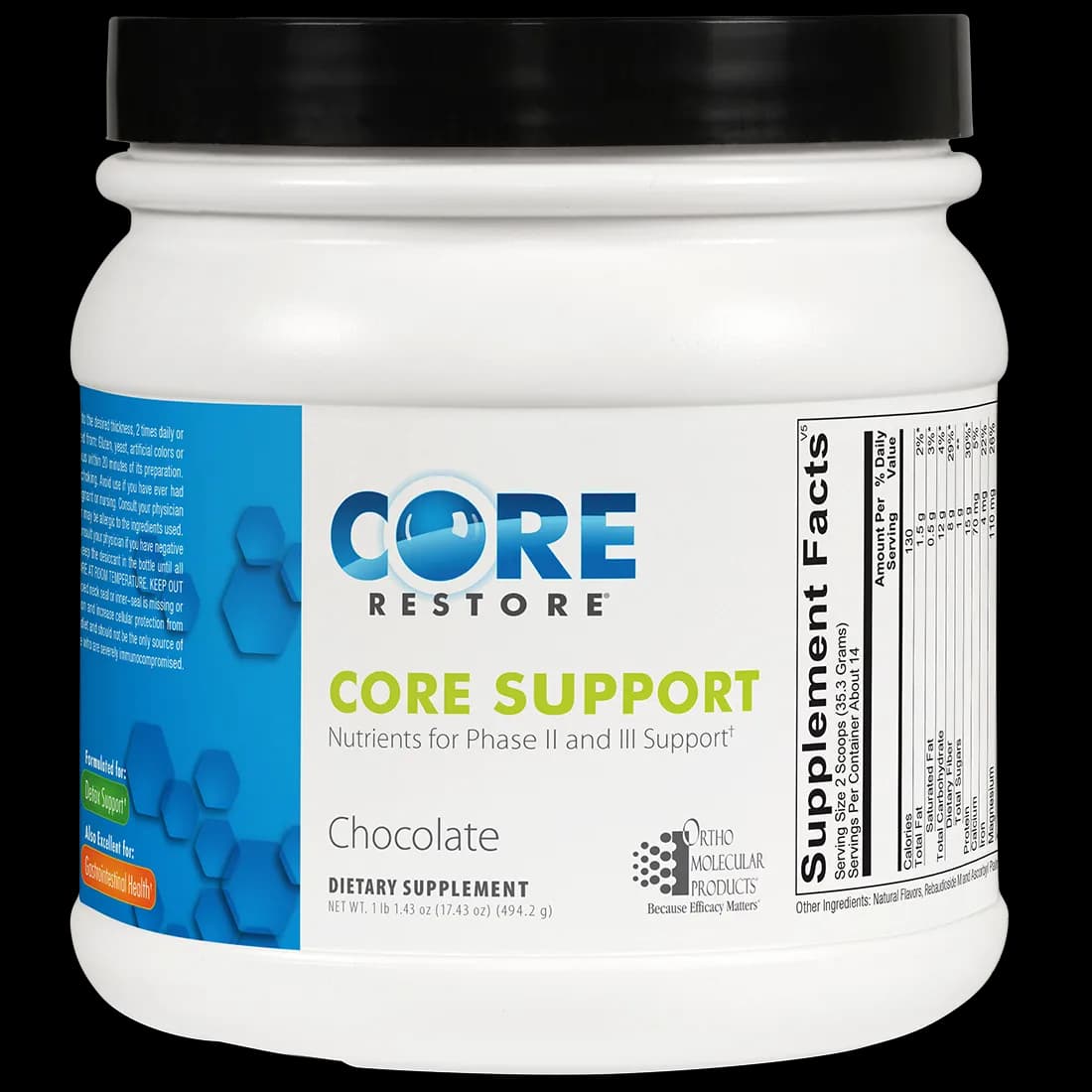
Core Support is formulated as a comprehensive nutritional powder, specifically designed to provide macro and micronutrient support alongside its targeted detoxification ingredients. The suggested use is to mix 2 scoops of the Core Support - Chocolate powder with 8-10 ounces of a beverage of your choice, taken twice daily or as recommended by a healthcare professional. This powder format is highly intentional. Delivering these amino acids and botanicals in a liquid suspension enhances their bioavailability, allowing for rapid absorption across the gastrointestinal mucosa. Furthermore, the inclusion of 15 grams of protein (from rice) and 8 grams of dietary fiber per serving ensures that the body has the fundamental macronutrients required to sustain the energy-intensive processes of Phase II and Phase III detoxification.
The high fiber content is particularly crucial for Phase III elimination. While the kidneys filter water-soluble toxins into the urine, the liver excretes fat-soluble toxins into the bile, which is then deposited into the intestines. If a patient is constipated or lacks sufficient dietary fiber, these biliary toxins can be reabsorbed through the intestinal wall back into the bloodstream (enterohepatic recirculation). The 8 grams of fiber in Core Support acts as a binder in the gut, trapping these toxins and ensuring they are safely excreted in the stool. This dual-action approach—supporting both renal and gastrointestinal elimination—is what makes the formula so effective for patients with compromised detox pathways.
When utilizing a powerful detoxification support supplement like Core Support, aggressive hydration is absolutely non-negotiable. As discussed, Phase III detoxification relies heavily on the kidneys to filter water-soluble conjugates out of the blood. The kidneys require abundant water to maintain the glomerular filtration rate and physically flush these toxins through the urinary tract. If a patient takes Core Support but remains dehydrated, the liver will successfully conjugate the toxins, but the kidneys will lack the fluid volume necessary to excrete them, leading to a painful buildup of reactive metabolites. Patients should aim to consume significant amounts of clean, filtered water throughout the day while using this product.
Additionally, the formula includes strategic doses of electrolytes, including 110 mg of Magnesium Citrate and 600 mg of Potassium Citrate. Potassium citrate is particularly important for renal health; it helps alkalinize the urine, which prevents the crystallization of certain metabolic waste products and provides essential physical support to the kidneys, facilitating smoother urinary excretion. The magnesium supports the ATP-dependent transport proteins required for Phase III cellular pumping.
Because Core Support actively upregulates the liver's cytochrome P450 and Phase II conjugation enzymes, it has the potential to alter the metabolism of certain prescription medications. If the liver is processing substances more rapidly, the half-life and efficacy of certain drugs may be reduced. Conversely, the high fiber content can physically bind to medications in the digestive tract, preventing their absorption. Therefore, it is generally recommended to take Core Support at least two hours away from any vital prescription medications. Patients with severe kidney disease or those on dialysis should exercise extreme caution and consult their nephrologist before introducing high doses of potassium or amino acids.
Furthermore, patients with severe sulfur sensitivities or those with specific genetic mutations in the CBS (cystathionine beta-synthase) pathway may occasionally struggle to process sulfur-containing amino acids like NAC and taurine. In these cases, introducing the supplement very slowly—perhaps starting with a quarter or half scoop—can help the body acclimate without overwhelming the transsulfuration pathways. As always, patients with complex chronic illnesses like Long COVID and ME/CFS should work closely with a functional medicine practitioner to determine the optimal dosing strategy and ensure it aligns with their broader treatment protocol.

Follow the Science
The clinical efficacy of the ingredients in Core Support is backed by a robust body of scientific literature focusing on hepatic protection and antioxidant defense. The role of the Nrf2 pathway in neutralizing oxidative stress is particularly well-documented. A comprehensive review published in the International Journal of Molecular Sciences highlighted how botanical compounds, specifically EGCG from green tea and lignans from Schisandra, act as potent Nrf2 activators. These studies demonstrate that physiologic concentrations of these extracts can increase the nuclear accumulation of Nrf2 in human hepatocyte cells within just hours of exposure, leading to a massive upregulation of Phase II enzymes like glutathione S-transferase and quinone reductase. This mechanism is critical for clearing hepatic lipid accumulation and suppressing the NF-κB inflammatory response.
Furthermore, the hepatoprotective effects of ellagic acid (found in the pomegranate extract) have been extensively studied in models of liver injury. Research published in Frontiers in Nutrition demonstrated that ellagic acid supplementation restored antioxidant defense statuses that were depleted by heavy toxic burdens. It repaired hepatocyte integrity and decreased the leakage of ALT and AST enzymes into the bloodstream by inhibiting oxidative stress-induced inflammation. The studies frequently note that ellagic acid exerts its protective effects by directly targeting the Nrf2 pathway to boost the cellular antioxidant system, while simultaneously downregulating enzymes that generate vascular and hepatic oxidative stress.
The specific inclusion of watercress to support Phase III elimination is supported by compelling clinical trial data. A randomized clinical crossover trial published in the journal Carcinogenesis involved 240 participants who consumed a freeze-dried watercress drink (yielding about 40 mg of PEITC per day) for two weeks. The study found that the watercress significantly increased the detoxification and urinary excretion of several monitored environmental toxicants and carcinogens. This provides direct human evidence that the glucosinolates in watercress effectively bridge the gap between Phase II conjugation and Phase III renal elimination, ensuring that toxins are successfully flushed from the body.
Additionally, the foundational role of N-Acetyl-L-Cysteine (NAC) in replenishing glutathione is universally recognized in medical literature. A recent narrative review published in MDPI exploring mitochondrial reactive oxygen species as a unifying mechanism in Long COVID specifically highlighted NAC as a vital therapeutic intervention. The review noted that as a glutathione precursor, NAC may reduce neutrophil-driven oxidative injury and mitigate the endothelial damage frequently seen in post-viral syndromes. By restoring the intracellular glutathione pool, NAC ensures that the liver's GST enzymes have the substrate required to continuously neutralize the massive influx of free radicals generated by viral persistence and immune dysregulation.
The connection between impaired detoxification and chronic fatigue is becoming increasingly clear. The 2025 PNAS study led by Dr. Vishnu Shankar provides some of the most compelling evidence to date that elevated oxidative stress is a shared characteristic of both Long COVID and ME/CFS. The study confirmed that patients exhibit lower levels of ATP and decreased levels of protective enzymes like mitochondrial superoxide dismutase. This mitochondrial failure directly paralyzes the energy-dependent Phase III transport proteins in the liver and kidneys. By utilizing a comprehensive formula like Core Support to simultaneously neutralize oxidative stress (via Nrf2 activation) and supply the raw materials for ATP-dependent elimination, patients can directly target the metabolic bottlenecks identified in this cutting-edge research.
The Path Forward
Living with the heavy, poisoned sensation of impaired detoxification is one of the most frustrating and debilitating aspects of Long COVID, ME/CFS, and dysautonomia. When your body's natural filtration system is overwhelmed by oxidative stress and viral debris, it can feel like you are fighting an uphill battle against your own metabolism. It is entirely validating to recognize that this toxic burden is not in your head; it is a measurable, biochemical reality driven by depleted amino acids, sluggish Phase II enzymes, and compromised Phase III elimination pathways. Acknowledging this physiological bottleneck is the first step toward restoring your cellular health.
While no single supplement can instantly reverse the complex web of post-viral metabolic dysfunction, providing your liver and kidneys with the precise raw materials they need is a powerful foundational strategy. Core Support offers a highly sophisticated, multi-targeted approach to detoxification. By combining glutathione precursors like NAC and glycine with Nrf2-activating botanicals and kidney-protective extracts, it helps rebuild the body's innate capacity to neutralize and excrete harmful metabolic waste. When combined with aggressive hydration, a nutrient-dense diet, and careful pacing to protect your mitochondria, targeted liver support can help lift the fog of systemic inflammation and improve your overall quality of life.
As always, because detoxification can mobilize reactive compounds and interact with medications, it is crucial to approach this process under the guidance of a knowledgeable healthcare provider. They can help you determine the appropriate dosage, monitor your response, and ensure that your elimination pathways are fully supported before upregulating Phase II conjugation.
Sources
National Institutes of Health: Glutathione Conjugation and Phase II Detoxification
PNAS: Oxidative stress is a shared characteristic of ME/CFS and Long COVID (2025)
PMC: Naturally Occurring Nrf2 Activators: Potential in Treatment of Liver Injury
MDPI: Research Progress on the Protective Effect of Green Tea Polyphenol (EGCG) on the Liver
Frontiers in Nutrition: Protective Effects of Ellagic Acid Against Alcoholic Liver Disease
The Watercress Company: Daily detox with watercress and glucosinolates