Can the Core Restore 7-Day Detox Kit Support Liver Function in Long COVID and ME/CFS?
March 6, 2026
Core RestoreLiver DetoxificationLong COVID
Share:
Disclaimer: The information provided here is for educational purposes only and is not intended as medical advice. It should not be used to diagnose, treat, cure, or prevent any medical condition. Instead, use it as a starting point for discussion with your healthcare provider. Always consult with a qualified healthcare provider before starting any new medication, supplement, device, or making changes to your health regimen.
Months or even years after a viral infection, many patients living with Long COVID and myalgic encephalomyelitis/chronic fatigue syndrome (ME/CFS) find themselves battling a relentless combination of profound fatigue, cognitive impairment, and systemic inflammation. While the initial trigger may have been a virus, the ongoing symptoms are often driven by a cascade of downstream metabolic consequences. One of the most significant, yet frequently overlooked, factors in chronic illness is the impairment of the body's natural detoxification systems. When the liver becomes overwhelmed by oxidative stress and cellular damage, it loses its ability to efficiently clear metabolic waste, environmental toxins, and inflammatory byproducts, creating a vicious cycle that perpetuates chronic symptoms.
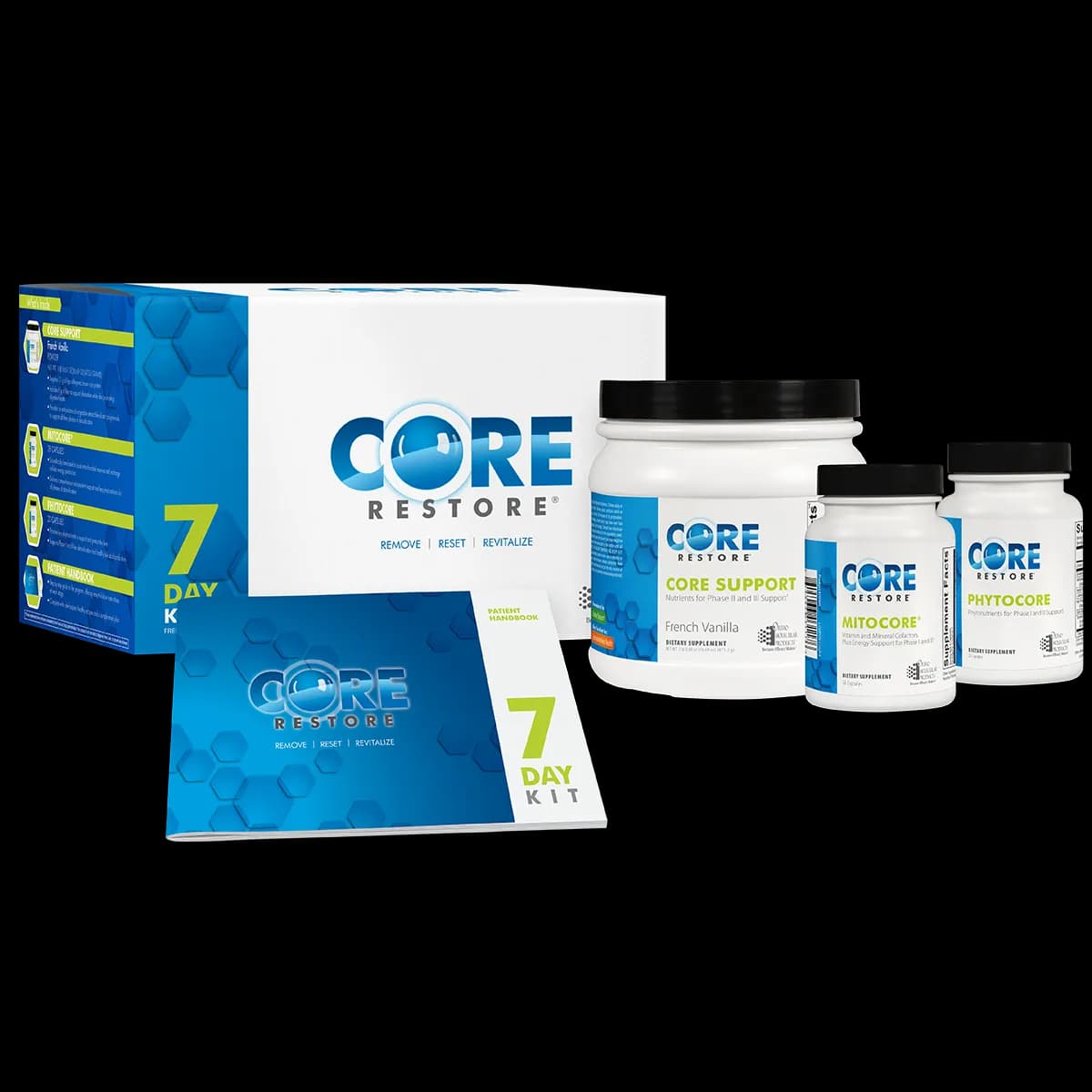
The Core Restore 7-Day Kit (French Vanilla) by Ortho Molecular is a comprehensive, clinical-grade program designed to safely enhance and promote all three pathways of active liver detoxification. By combining three synergistic formulas—Core Support, MitoCORE®, and PhytoCore—this system provides the exact micronutrients, phytonutrients, and hypoallergenic proteins required to fuel optimal biotransformation. For patients navigating the complexities of post-viral syndromes, supporting the liver's ability to neutralize and eliminate toxins is a critical step toward restoring cellular energy and reducing systemic inflammation. In this comprehensive guide, we will explore the intricate biochemistry of liver detoxification, how chronic illness disrupts these pathways, and how the targeted ingredients in Core Restore can help you regain metabolic balance.
TL;DR
Liver detoxification is a three-phase process that is often impaired in Long COVID and ME/CFS.
Chronic viral infections can severely deplete glutathione and disrupt mitochondrial energy production.
The Core Restore 7-Day Kit provides targeted nutrients that may help support liver function and cellular energy.
Always consult a healthcare provider before starting new supplements or comprehensive detoxification protocols.
What is Core Restore and the Science of Liver Detoxification?
The Liver’s Role as the Body’s Primary Filter
The liver is the body's primary organ for biotransformation, acting as a highly sophisticated filtration and chemical processing plant. Every day, it is tasked with neutralizing and eliminating two main categories of toxins: endobiotics and xenobiotics. Endobiotics are internal metabolic waste products, such as excess hormones, bilirubin from broken-down red blood cells, and cellular debris generated during normal energy production. Xenobiotics are external compounds, including environmental pollutants, heavy metals, synthetic chemicals, and pharmaceutical medications. To maintain homeostasis, the liver must continuously process these compounds to prevent them from accumulating in delicate tissues, particularly the brain and nervous system.
The fundamental challenge the liver faces is that most toxic compounds are highly lipophilic, meaning they are fat-soluble. Because the human body primarily eliminates waste through water-based fluids like urine and bile, these fat-soluble toxins cannot be easily excreted. If left unprocessed, lipophilic toxins will naturally seek out and accumulate in the body's lipid-rich environments, such as cellular membranes, adipose (fat) tissue, and the myelin sheaths surrounding nerves. To solve this problem, the liver utilizes a highly coordinated, three-phase biochemical process to convert these dangerous, fat-soluble compounds into harmless, water-soluble (hydrophilic) metabolites that can be safely flushed from the body. According to clinical reviews on metabolic detoxification, the synchronization of these three phases is absolutely critical for health, as an imbalance can lead to severe tissue damage.
Phase I Detoxification: Activation and Cytochrome P450
Phase I detoxification is the liver's first line of defense and serves as a critical preparation phase for toxic compounds. The primary biochemical goal of Phase I is not to completely neutralize the toxin, but rather to introduce or expose a reactive functional group—such as a hydroxyl (-OH), carboxyl (-COOH), or amino (-NH2) group—on the lipophilic molecule. This slight structural modification marginally increases the compound's water solubility and, more importantly, creates a chemical "handle" that Phase II enzymes can grab onto. This intricate process is predominantly catalyzed by the Cytochrome P450 (CYP450) superfamily of enzymes, which are membrane-bound monooxygenases located deep within the smooth endoplasmic reticulum of hepatocytes (liver cells).
The most common chemical reaction performed by CYP450 enzymes is oxidation, which requires a steady supply of molecular oxygen and an electron transport system to function. However, Phase I detoxification presents a significant biological paradox. While this activation step is absolutely necessary, it frequently transforms relatively stable toxins into highly reactive intermediate compounds, known as free radicals. These activated metabolites are often significantly more toxic and chemically aggressive than the original parent compound. If these reactive oxygen species (ROS) are not immediately processed by the next phase of detoxification, they can cause severe oxidative damage to the liver's own DNA, proteins, and cellular membranes, a phenomenon well-documented in studies on hepatic biotransformation.
Phase II Conjugation: Neutralizing Reactive Toxins
Because Phase I generates dangerous reactive intermediates, Phase II detoxification must follow immediately to neutralize the threat. This phase involves a process called conjugation, where specific transferase enzymes biochemically attach a bulky, endogenous, water-soluble molecule directly to the reactive "handle" created during Phase I. This permanent binding neutralizes the free radical and renders the entire compound highly polar, water-soluble, and largely non-toxic. Phase II relies on several distinct conjugation pathways, including glucuronidation, sulfation, acetylation, methylation, and glutathione conjugation, each specializing in different types of chemical threats.
Glutathione conjugation is perhaps the most critical pathway for patients dealing with chronic illness and oxidative stress. Mediated by Glutathione S-transferase (GST) enzymes, this pathway attaches glutathione—the body's master antioxidant—directly to heavy metals, pesticides, and reactive drug metabolites. Another vital pathway is glucuronidation, which utilizes UDP-glucuronosyltransferases (UGTs) to clear pharmaceuticals, steroid hormones, and bilirubin. Because Phase II is a highly nutrient-demanding process, it requires a constant supply of specific amino acids, vitamins, and minerals to function. If the body is depleted of these essential cofactors, Phase II becomes sluggish, leading to a dangerous backup of Phase I reactive intermediates that actively destroy liver tissue.
Phase III Elimination: Transporting Waste Out of the Body
Once a toxin has been successfully conjugated and made water-soluble in Phase II, it must be physically transported out of the liver cell to be excreted. This final step is known as Phase III elimination. Because the neutralized metabolites are now highly polar and often need to be moved against a steep concentration gradient, they cannot simply diffuse passively across the cellular membrane. Instead, Phase III relies heavily on a specialized network of antiporter transport proteins, specifically ATP-binding cassette (ABC) transporters and Solute carrier (SLC) transporters. These proteins act as powerful molecular pumps that hydrolyze cellular energy (ATP) to actively push the conjugated toxins out of the hepatocyte.
After being pumped out of the liver cells, these water-soluble metabolites take one of two primary exit routes. Smaller molecules are typically pumped back into the systemic bloodstream, where they travel to the kidneys, are filtered out, and are ultimately eliminated via urine. Larger conjugated molecules, such as those bound to glutathione or glucuronic acid, are actively pumped into the bile canaliculi. From there, they travel through the bile ducts and are released into the intestines to be eliminated in feces. Successful detoxification requires not just chemical neutralization, but also robust cellular energy to power the final elimination pumps.
How Long COVID and ME/CFS Impact Detoxification Pathways
Viral Infection and Direct Liver Injury
The intersection of Long COVID, liver dysfunction, and detoxification impairment represents a complex biochemical cascade that researchers are increasingly recognizing as a central driver of chronic post-viral symptoms. When the SARS-CoV-2 virus infects the body, it can cause significant metabolic and structural damage directly to the liver. The virus gains entry into human cells by binding to ACE2 and TMPRSS2 receptors, which are highly expressed on cholangiocytes (the cells lining the bile ducts) and hepatocytes. This direct viral infiltration triggers a severe localized inflammatory response, leading to cellular swelling and impaired bile flow, which immediately bottlenecks the liver's ability to excrete Phase III toxins.
Furthermore, Long COVID is heavily characterized by persistent endothelial dysfunction and the formation of microthrombi (tiny blood clots) throughout the vascular system. In the liver, these microclots restrict vital blood flow, causing ischemic and hypoxic (low oxygen) damage to the delicate hepatic tissues. Clinical studies have shown that elevated levels of liver enzymes—specifically ALT, AST, and GGT—can persist for many months following the initial acute infection, indicating ongoing, low-grade liver injury. If you are wondering What Causes Long COVID?, this persistent thromboinflammation and subsequent organ strain is a major piece of the puzzle, as a damaged liver cannot effectively clear the massive amount of cellular debris generated by the immune system's battle with the virus.
The Glutathione Collapse and Oxidative Stress
One of the most devastating impacts of chronic viral infections on the detoxification system is the rapid and profound depletion of intracellular glutathione. During an acute SARS-CoV-2 infection, the virus forces host cells to generate excessive reactive oxygen species (ROS), triggering a severe inflammatory response. To fight the virus and neutralize this massive ROS production, the body rapidly consumes its stored reserves of glutathione. A 2024 study published in PNAS demonstrated that patients with Long COVID and ME/CFS exhibit sustained, severe intracellular glutathione deficiency and elevated oxidative stress, particularly within their memory lymphocytes.
This glutathione collapse has catastrophic consequences for liver biotransformation. Because glutathione is the absolute limiting factor for Phase II detoxification, its depletion causes the entire conjugation process to stall. As Phase II slows down, the highly reactive, dangerous intermediate toxins generated by Phase I begin to accumulate in the liver. These un-neutralized free radicals cause rampant lipid peroxidation, destroying the cellular membranes of hepatocytes and perpetuating a vicious cycle of systemic inflammation. For patients interested in how specific nutrients can intervene, exploring Can NAC Support Detoxification and Respiratory Health in Long COVID and ME/CFS? provides deeper insight into restoring these critical antioxidant pathways.
Mitochondrial Dysfunction and the "Hypometabolic" State
The burden of oxidative stress and impaired detoxification ultimately falls on the mitochondria, the energy-producing powerhouses of the cells. In ME/CFS and Long COVID, persistent oxidative stress damages the mitochondrial electron transport chain, uncoupling the process and severely reducing the production of ATP. Because both Phase I activation and Phase III elimination pumps require massive amounts of ATP to function, this mitochondrial energy deficit directly paralyzes the liver's ability to clear toxins. The liver is forced to divert its remaining energy away from standard metabolic regulation and detoxification, redirecting it toward constant cellular repair and basal survival.
Groundbreaking metabolomics research by Dr. Robert Naviaux, published in PNAS, demonstrated that ME/CFS represents a concerted "hypometabolic" state, similar to a survival hibernation mode found in some organisms facing harsh environmental stress. The study found deep abnormalities in sphingolipids, phospholipids, and purines—pathways that rely heavily on healthy liver metabolism. This suggests that systemic energy failure and toxic overload force the body to actively downregulate normal functioning, manifesting clinically as the profound, debilitating fatigue that patients experience. Understanding this link is crucial when asking, Can Long COVID Trigger ME/CFS?, as the shared mechanism of mitochondrial and hepatic exhaustion is a unifying feature of both conditions.
Core Restore: Supporting Liver Function and Cellular Energy
Core Support: Fueling Phase II Conjugation
The Core Restore program is strategically designed to address the specific biochemical bottlenecks that occur in chronic illness, starting with the Core Support powder. This formula provides a massive infusion of the exact amino acids and micronutrients required to fuel Phase II conjugation pathways. A standout ingredient is N-Acetyl-L-Cysteine (NAC), which serves as a highly stable, rate-limiting precursor for glutathione synthesis. By donating a crucial sulfhydryl group, NAC ensures the liver has the raw materials necessary to rebuild its depleted glutathione stores, directly unblocking the stalled Phase II glutathione conjugation pathway and allowing the liver to safely neutralize reactive oxygen species.
In addition to NAC, Core Support delivers high clinical doses of Glycine (750 mg) and L-Glutamine (150 mg). Glycine is a fundamental amino acid required for the glycination pathway, which is heavily relied upon to clear salicylates and environmental pollutants. Studies on ME/CFS patients suggest they often have upregulated glycination and glucuronidation pathways as their bodies desperately try to clear metabolic waste. By supplying exogenous glycine and glutamine, Core Support prevents the body from cannibalizing its own muscle tissue to source these amino acids, thereby supporting efficient Phase II detoxification without exacerbating systemic fatigue.
PhytoCore: Genomic Upregulation via Nrf2
While Core Support provides the physical building blocks for detoxification, the PhytoCore capsules are designed to act as genomic modulators, essentially flipping the genetic switches that control the liver's antioxidant defenses. PhytoCore contains a potent blend of specialized phytonutrients, including Schisandra Berry Extract, Green Tea Leaf Extract, and Alpha Lipoic Acid (ALA). Schisandra is a traditional adaptogen associated with Nrf2 activation. When Nrf2 is activated, it travels to the nucleus of liver cells and significantly upregulates the expression of key Phase II drug-metabolizing enzymes, such as Glutathione S-transferase (GST).
Alpha Lipoic Acid plays a synergistic role in this formula. As an amphipathic (both water- and fat-soluble) compound, ALA can penetrate virtually all bodily tissues to directly chelate heavy metals. More importantly, molecular research on ALA demonstrates that it acts as a powerful redox couple, actively recycling and regenerating other depleted antioxidants, including oxidized glutathione and Vitamin C. Combined with the Epigallocatechin gallate (EGCG) from Green Tea Extract, which protects hepatocytes from lipid peroxidation, PhytoCore ensures that the Phase II enzymes are not only built but are highly active and protected from the very free radicals they are attempting to neutralize.
MitoCORE: Restoring Mitochondrial Energy
Recognizing that detoxification is an incredibly energy-intensive process, the Core Restore kit includes MitoCORE®, a formula specifically engineered to reverse the mitochondrial dysfunction seen in post-viral syndromes. MitoCORE provides essential cofactors that directly support the electron transport chain and ATP synthesis. A key ingredient is Acetyl L-Carnitine Hydrochloride, a specialized amino acid derivative that acts as a critical shuttle system. It transports long-chain fatty acids across the inner mitochondrial membrane, delivering them directly into the mitochondrial matrix where they can be oxidized (burned) to produce ATP.
Furthermore, MitoCORE supplies highly bioavailable forms of essential macrominerals, including Magnesium Citrate and Potassium Citrate. Magnesium is an absolute requirement for the stabilization of the ATP molecule; without adequate intracellular magnesium, the energy produced by the mitochondria cannot be utilized by the Phase III elimination pumps. By restoring the flow of electrons and providing the necessary mineral cofactors, MitoCORE helps lift the liver out of its hypometabolic state, providing the cellular horsepower required to actively push conjugated toxins out of the hepatocytes and into the bile for final elimination.
Phase III Support: Fiber and the Gut-Liver Axis
The final, crucial component of the Core Restore system addresses Phase III elimination and the gut-liver axis. Once the liver successfully pumps conjugated toxins into the bile, that bile is released into the small intestine. However, if the digestive tract is sluggish or lacks adequate binding agents, these toxins can be uncoupled by gut bacteria and reabsorbed back into the bloodstream—a dangerous process known as enterohepatic recirculation. To prevent this, the Core Support powder includes 6.7 grams of a specialized Fiber Blend.
This fiber acts as a physical binder in the gastrointestinal tract. As the bile containing the neutralized toxins enters the intestines, the fiber matrix traps the conjugated metabolites, ensuring they remain securely bound until they are safely excreted in the stool. Additionally, the inclusion of 18.9 grams of hypoallergenic Rice Protein provides a clean, easily digested macronutrient source that sustains blood sugar levels during the detoxification protocol, preventing the metabolic stress and cortisol spikes that can further impair liver function in patients with dysautonomia and ME/CFS.

Symptoms Core Restore May Help Manage
Chronic Fatigue and Post-Exertional Malaise (PEM)
Profound Cellular Fatigue: By supplying Acetyl L-Carnitine and essential mineral cofactors, Core Restore directly supports mitochondrial ATP production. When the liver has adequate energy to process metabolic waste, the body no longer has to divert systemic energy toward constant cellular repair, which can help lift the baseline of daily fatigue.
Post-Exertional Malaise (PEM): PEM is often driven by a buildup of oxidative stress and lactic acid following minor exertion. The high doses of NAC and Alpha Lipoic Acid in this kit help rapidly regenerate glutathione, allowing the body to clear these exertion-induced inflammatory byproducts more efficiently, potentially reducing the severity and duration of crashes.
Brain Fog and Neurocognitive Issues
Cognitive Impairment (Brain Fog): Brain fog in Long COVID is frequently linked to neuroinflammation caused by circulating systemic toxins and reactive oxygen species that cross the blood-brain barrier. By upregulating Phase II liver clearance, Core Restore helps reduce the overall systemic toxic burden, preventing these inflammatory mediators from reaching the central nervous system.
Neurological Energy Deficits: The brain requires massive amounts of ATP to function. The mitochondrial support provided by MitoCORE, combined with the neuroprotective properties of Alpha Lipoic Acid (which easily crosses the blood-brain barrier), helps restore energy metabolism in neural tissues, supporting improved focus and mental clarity.
Chemical Sensitivities and MCAS Triggers
Multiple Chemical Sensitivities (MCS): Patients with ME/CFS and MCAS often develop severe sensitivities to perfumes, cleaning products, and medications. This is frequently a direct result of a bottlenecked Phase I/Phase II detoxification system. By providing the specific amino acids (Glycine, Glutamine, NAC) required to clear these xenobiotics, Core Restore helps improve the body's tolerance to environmental exposures.
Histamine and Mast Cell Overload: While not an antihistamine, supporting liver function is critical for MCAS management. The liver is responsible for clearing excess histamine and inflammatory prostaglandins from the bloodstream. By optimizing hepatic biotransformation, the Core Restore kit assists the body in processing and eliminating the chemical mediators released during mast cell degranulation.
Practical Considerations: Forms, Dosing, and Absorption
Understanding the 7-Day Protocol Structure
The Core Restore kit is designed as a strategic, step-by-step 7-day or 14-day protocol, which is crucial for patients with complex chronic illnesses who may be sensitive to rapid detoxification. The program typically begins with a modified fasting or light eating phase, combined with the Core Support powder, to gently reduce the incoming burden of dietary toxins and stabilize blood sugar. Days 3 through 7 introduce the MitoCORE and PhytoCore capsules to actively upregulate Phase II and Phase III pathways. This phased approach prevents the "Herxheimer reaction" or detox crash that often occurs when Phase I is stimulated too quickly without adequate Phase II support in place. The included patient handbook provides clear dietary guidelines to ensure compliance and minimize metabolic stress during the process.
Bioavailability of Key Ingredients
Ortho Molecular has specifically formulated Core Restore using highly bioavailable forms of its key nutrients to ensure maximum cellular absorption. The minerals, such as Magnesium Citrate and Potassium Citrate, are bound to citric acid, which not only enhances their absorption across the intestinal wall but also provides an intermediate substrate for the Krebs cycle, further supporting ATP production. The inclusion of specialized branded ingredients, such as MitoCarn® (a highly stable form of Acetyl L-Carnitine) and Pomanox® (a standardized Pomegranate Fruit Extract), ensures that the active phytonutrients survive the harsh acidic environment of the stomach and reach the liver intact. Furthermore, the hypoallergenic rice protein is easily digested, making it ideal for patients with compromised gut barriers or severe food intolerances.
Potential Interactions and Contraindications
While Core Restore is designed to be safe and comprehensive, patients with Long COVID, dysautonomia, and ME/CFS must approach any detoxification protocol with care. Because PhytoCore and Core Support actively upregulate Cytochrome P450 and Phase II enzymes, they can alter the rate at which the liver metabolizes certain prescription medications. For example, increased Phase II clearance may reduce the half-life and effectiveness of specific beta-blockers, antihistamines, or psychiatric medications. Additionally, the Alpha Lipoic Acid in the formula can improve insulin sensitivity, which may require blood sugar monitoring for patients on hypoglycemic medications. It is imperative to consult with your healthcare provider before beginning the Core Restore program to ensure it does not interact with your current pharmaceutical regimen. If you are exploring What Drugs Are Used for COVID Long Haulers?, understanding these interactions is a vital part of your care plan.

Follow the Science
Clinical Evidence on Glutathione and Viral Recovery
The scientific community is increasingly focused on the role of hepatic detoxification and antioxidant status in post-viral recovery. A pivotal 2024 study published in PNAS investigated the shared characteristics of ME/CFS and Long COVID, discovering that both patient populations exhibit severe aberrations in reactive oxygen species (ROS) clearance pathways. The researchers noted significant decreases in mitochondrial superoxide dismutase and profound glutathione depletion, leading to rampant lipid oxidative damage. This structural damage to immune cells directly consumes host energy, driving debilitating fatigue. By supplementing with NAC—the primary precursor in Core Support—clinical trials have consistently demonstrated the ability to rapidly correct this severe glutathione deficiency, lower oxidative stress, and repair mitochondrial dysfunction in post-viral patients.
Studies on Nrf2 Activation and Hepatic Protection
The genomic modulation provided by the PhytoCore formula is strongly supported by pharmacological research. Pharmacological research has isolated the specific lignans found in Schisandra chinensis to evaluate their effect on liver cells. The researchers discovered that these lignans act as potent activators of the Nrf2 pathway, significantly inducing Phase II detoxification enzymes like quinone reductase (NQO1). These compounds exhibit a very high Chemoprevention Index, meaning they possess a strong ability to upregulate detoxification and protect the liver from toxic mutations without causing any cellular toxicity themselves. This confirms the traditional use of Schisandra as a powerful, safe hepatoprotective agent.
Research on Mitochondrial Support in Chronic Illness
The inclusion of mitochondrial support in a detoxification protocol is validated by extensive metabolomics research. Dr. Robert Naviaux's landmark 2016 study in PNAS revealed that ME/CFS is characterized by a hypometabolic survival state, heavily involving disrupted liver metabolism and sphingolipid abnormalities. Furthermore, comprehensive reviews on Epstein-Barr Virus and Long COVID emphasize that chronic viral reactivation drives systemic oxidative stress and metabolic exhaustion. Interventions that supply targeted mitochondrial cofactors—such as the Acetyl L-Carnitine and Alpha Lipoic Acid found in MitoCORE—have been shown in separate clinical reviews to restore electron flow, increase ATP production, and reduce systemic inflammatory markers like IL-6.
The Path Forward
Validating the Burden of Toxic Overload
Living with a complex chronic illness like Long COVID, ME/CFS, or MCAS often feels like fighting an invisible battle on multiple fronts. When your body is constantly generating inflammatory byproducts and your liver lacks the energy to clear them, the resulting toxic overload can make every day feel like wading through wet concrete. The profound fatigue, brain fog, and chemical sensitivities you experience are not in your head; they are the direct clinical manifestations of a cellular detoxification system that has been pushed beyond its limits. Acknowledging that your liver and mitochondria are actively struggling under the weight of oxidative stress is a validating and crucial step toward finding targeted, physiological solutions. If you find yourself asking How Can You Live with Long-Term COVID, understanding and supporting these underlying mechanisms is key to improving your daily quality of life.
Integrating Core Restore into a Broader Management Plan
While the Core Restore 7-Day Kit provides a powerful, scientifically backed intervention to unblock stalled detoxification pathways, it is most effective when utilized as part of a comprehensive management strategy. Restoring liver function and mitochondrial energy takes time, and supplements should be paired with aggressive pacing, meticulous symptom tracking, and a nutrient-dense diet that minimizes incoming toxic burdens. By systematically supporting your Phase I, II, and III clearance pathways, you are giving your body the foundational metabolic support it needs to begin repairing cellular damage and reclaiming vital energy.
Exploring Your Detoxification Options
If you are struggling with the lingering effects of a viral infection, profound fatigue, or signs of a sluggish metabolism, supporting your liver's natural biotransformation pathways may be a vital component of your recovery journey. Always consult with your healthcare provider before starting any new supplement regimen, especially comprehensive detoxification protocols, to ensure it aligns safely with your specific medical history and current treatments.