Can the Core Restore 14-Day Kit Support Detoxification and Energy in Long COVID and ME/CFS?
March 6, 2026
Core RestoreDetoxificationLong COVID
Share:
Disclaimer: The information provided here is for educational purposes only and is not intended as medical advice. It should not be used to diagnose, treat, cure, or prevent any medical condition. Instead, use it as a starting point for discussion with your healthcare provider. Always consult with a qualified healthcare provider before starting any new medication, supplement, device, or making changes to your health regimen.
For many individuals living with complex chronic conditions like Long COVID, myalgic encephalomyelitis/chronic fatigue syndrome (ME/CFS), and mast cell activation syndrome (MCAS), the body can often feel like a stagnant, heavy environment. Patients frequently describe a profound sense of feeling "toxic"—a state characterized by relentless brain fog, deep cellular exhaustion, and an increasing, unpredictable sensitivity to foods, chemicals, and environmental triggers. This is not merely a subjective feeling; it is often the physiological reality of a body whose natural detoxification and energy production systems have been overwhelmed by chronic viral persistence, systemic inflammation, and severe oxidative stress. When the body's internal filtration systems cannot keep up with the daily metabolic waste and environmental burden, a vicious cycle of cellular damage, neuroinflammation, and profound fatigue ensues, leaving patients trapped in a state of constant physiological stress.
In the search for comprehensive management strategies, addressing the body's detoxification pathways is a critical foundational step. The Core Restore 14-Day Kit by Ortho Molecular Products is designed to provide a strategic, science-backed approach to liver biotransformation. Rather than a harsh, depleting "cleanse," this clinical program supplies the exact amino acids, phytonutrients, and mitochondrial cofactors required to safely process and eliminate toxins while simultaneously rebuilding cellular energy. By supporting all three phases of liver detoxification, this protocol aims to reduce the systemic toxic burden, enhance nutrient absorption, and help patients reclaim their baseline energy levels. This comprehensive approach is particularly relevant for those exploring how to manage fatigue with Long COVID and restore metabolic balance.
TL;DR
Chronic illness can impair liver detoxification, leading to toxin buildup, oxidative stress, and severe fatigue.
The Core Restore 14-Day Kit supports all three phases of liver detoxification to safely clear toxins.
Key nutrients like NAC, glutathione, and ALCAR help rebuild cellular energy and reduce brain fog.
Always consult your healthcare provider before starting a detox protocol to ensure it fits your care plan.
What is the Core Restore 14-Day Kit?
A Comprehensive Approach to Liver Biotransformation
The liver is the body’s primary filtration system, working relentlessly 24 hours a day to process and neutralize everything from natural metabolic byproducts and excess hormones to pharmaceuticals, heavy metals, and environmental pollutants. To accomplish this monumental task, the liver utilizes a highly coordinated, sequential biochemical process known as biotransformation. This system is designed to transform lipophilic (fat-soluble) toxins—which easily lodge in our tissues and cross cellular membranes—into hydrophilic (water-soluble) waste products so they can be safely excreted from the body. This transformation occurs in three distinct but deeply interconnected phases: Phase I, Phase II, and Phase III.
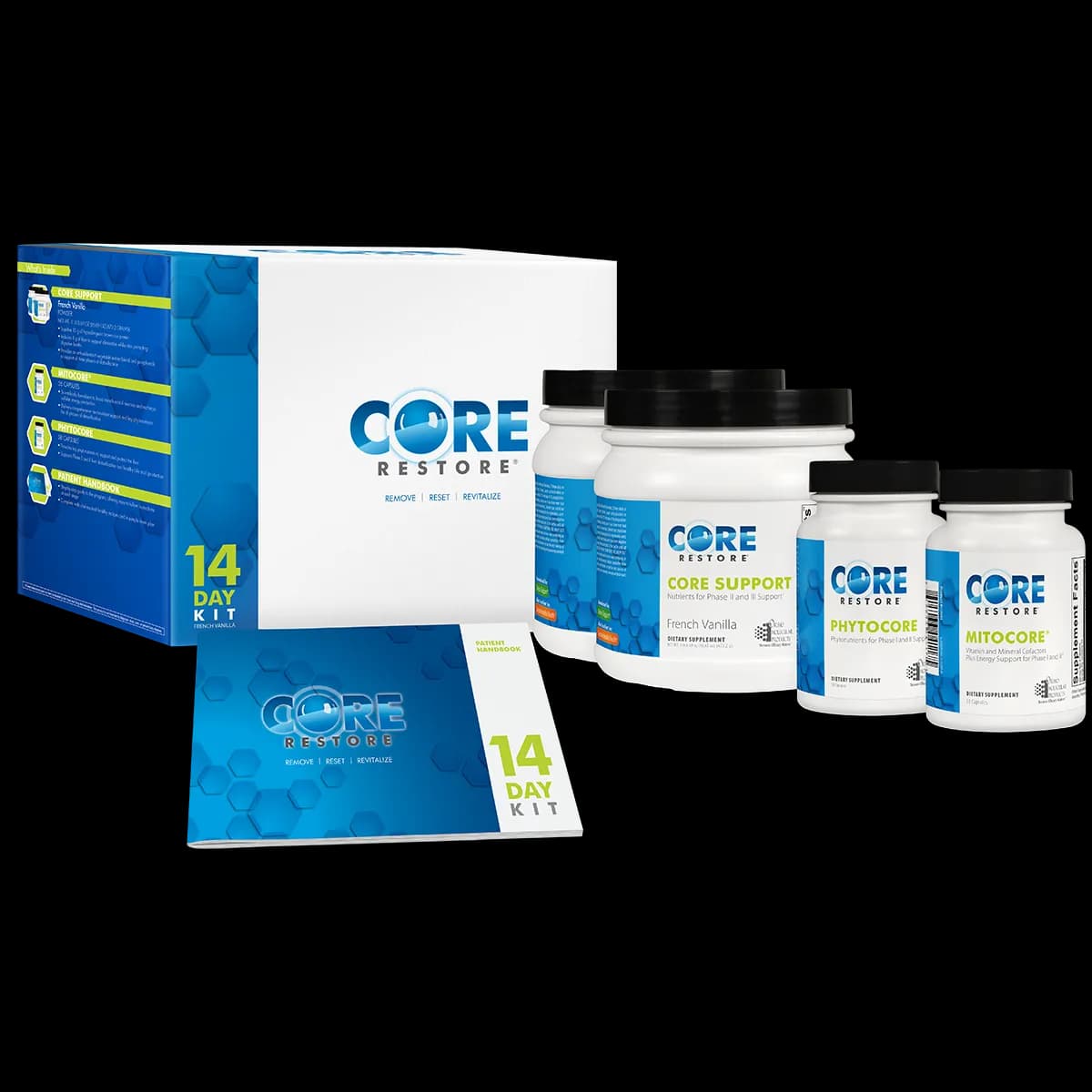
The Core Restore 14-Day Kit is a comprehensive program meticulously engineered to support this entire sequence. Many over-the-counter detoxification programs fail because they indiscriminately stimulate the liver without providing the necessary nutritional cofactors, leading to a dangerous buildup of partially processed toxins. The Core Restore system is built on the clinical understanding that successful detoxification requires a precise balance of macronutrients, micronutrients, and botanical extracts to ensure that toxins are not just mobilized, but effectively eliminated.
The Three Phases of Detoxification
Phase I, often referred to as the functionalization phase, is the first line of defense. This phase relies heavily on the Cytochrome P450 (CYP450) superfamily of enzymes, which are heme-containing monooxygenases located primarily in the smooth endoplasmic reticulum of hepatocytes (liver cells). These enzymes chemically alter toxins through oxidation, reduction, hydrolysis, hydration, or dehalogenation. The most common reaction is oxidation, which adds or unmasks a polar functional group on the toxin. However, Phase I routinely converts these substances into highly reactive intermediate metabolites (free radicals) that can be significantly more toxic and immune-reactive than the original compound. Therefore, the liver relies heavily on a robust supply of antioxidants to help prevent oxidative damage while these dangerous metabolites wait for Phase II.
Phase II is known as the conjugation phase, and it is the critical bottleneck where detoxification often fails in chronically ill patients. Because Phase I leaves behind dangerous, reactive intermediates, Phase II must quickly neutralize them. Specific transferase enzymes attach (conjugate) large, water-soluble endogenous molecules—like amino acids, sugars, or sulfur compounds—to the reactive site created during Phase I. This renders the toxin harmless and highly water-soluble. The six primary Phase II pathways include glucuronidation, sulfation, glutathione conjugation, acetylation, amino acid conjugation, and methylation. Each of these pathways requires specific nutritional substrates, such as glycine, taurine, and cysteine, to function.
Phase III is the active transport and elimination phase. Even if a toxin is successfully neutralized and made water-soluble in Phase II, it must be physically moved out of the liver cells. This process is driven by ATP-binding cassette (ABC) transporters, which act as cellular antiporters, pumping the conjugated toxins across the cellular membrane. Once pushed out of the hepatocytes, these water-soluble compounds are routed into the bile (to be eliminated via the intestines and stool) or into the bloodstream (to be filtered by the kidneys and eliminated in urine). If Phase III is sluggish due to poor bile flow or constipation, toxins can be reabsorbed through the intestinal wall, restarting the entire cycle.
The Synergistic Components of Core Restore
The Core Restore kit addresses these three phases through a synergistic trio of specialized formulas. The first is Core Support, a functional food powder that provides 15 grams of easily digested, hypoallergenic brown rice protein and a robust fiber blend. This powder is fortified with Phase II-activating nutrients like N-Acetyl-L-Cysteine (NAC), glycine, and taurine, ensuring the liver has the raw materials needed for conjugation, while the fiber binds to toxins in the gut for Phase III elimination.
The second component is MitoCORE (or Alpha Base, depending on the specific kit variation), which serves as the cellular energy engine of the program. Detoxification is an incredibly energy-intensive process. MitoCORE provides essential micronutrients, specialized antioxidants like Alpha Lipoic Acid, and mitochondrial cofactors like Acetyl-L-Carnitine to fuel the ATP-binding cassette transporters required for Phase III and to protect the cells from the oxidative stress generated during Phase I.
The final component is PhytoCore, a targeted blend of botanical extracts including Silymarin (from milk thistle), Schisandra berry, and Green Tea Extract (EGCg). These phytonutrients are specifically chosen for their ability to gently stimulate Phase I biotransformation while simultaneously upregulating Phase II enzymes, ensuring a balanced, safe clearance of environmental pollutants, hormone disruptors, and endogenous waste.
How Chronic Illness Impacts Liver Detoxification
The Viral Impact on Detoxification Pathways
In healthy individuals, the three phases of liver detoxification operate in a seamless, synchronized rhythm. However, in patients suffering from Long COVID, ME/CFS, and dysautonomia, this delicate balance is frequently shattered. The pathophysiology of these conditions involves chronic immune activation, viral persistence, and the formation of microclots, all of which place an extraordinary metabolic demand on the body. When the immune system is locked in a perpetual state of high alert, it diverts vital resources—like amino acids, ATP, and antioxidants—away from routine maintenance tasks like liver detoxification to fight the perceived systemic threat.
This diversion of resources creates a profound "toxic bottleneck." As the body struggles to clear the cellular debris generated by chronic inflammation, the Phase I Cytochrome P450 enzymes continue to break down metabolic waste, creating highly reactive intermediate metabolites. However, because the nutritional cofactors required for Phase II conjugation are depleted, these dangerous free radicals accumulate in the liver and systemic circulation. This accumulation damages cellular membranes, impairs enzymatic function, and further suppresses the body's ability to heal, creating a self-perpetuating cycle of toxicity and immune dysfunction.
Oxidative Stress and the Glutathione Deficit
At the heart of this detoxification failure is severe oxidative stress and the depletion of intracellular glutathione. Glutathione is widely considered the body's "master antioxidant" and is the primary substrate for one of the most critical Phase II conjugation pathways (glutathione S-transferase). It is responsible for neutralizing heavy metals, environmental pollutants, and the massive influx of Reactive Oxygen Species (ROS) generated by damaged mitochondria.
Research has consistently shown that patients with ME/CFS and Long COVID suffer from profound, documented deficits of intracellular glutathione. Advanced brain imaging studies have even demonstrated massive cortical glutathione deficits in these patient populations. When glutathione levels crash, the body loses its primary shield against oxidative damage. The mitochondria, which are highly sensitive to ROS, sustain structural damage to their lipid membranes, drastically reducing their ability to produce ATP. This mitochondrial energy failure is a primary driver of the debilitating fatigue and post-exertional malaise (PEM) that define these complex chronic conditions. For more information on this mechanism, see our guide on how reduced glutathione supports energy in Long COVID.
The Toxin Accumulation Cycle and MCAS
The consequences of impaired detoxification extend far beyond the liver and mitochondria; they directly impact the immune system, particularly the mast cells. Mast cell activation syndrome (MCAS) is a frequent comorbidity in Long COVID and ME/CFS, characterized by mast cells that inappropriately degranulate, releasing histamine and inflammatory cytokines in response to minor triggers.
When Phase II detoxification pathways are stalled, environmental toxins, un-metabolized hormones (like excess estrogen), and metabolic waste products circulate longer in the bloodstream. These circulating toxins act as direct triggers for mast cells. The mast cells interpret this toxic burden as a constant threat, leading to a state of hyper-reactivity. This is why many patients with chronic illness suddenly develop severe chemical sensitivities, reacting poorly to perfumes, cleaning products, and previously tolerated foods. By restoring the liver's ability to conjugate and excrete these triggers, comprehensive detoxification support can play a vital role in calming the hyperactive immune response and reducing the severity of MCAS flares.
Core Restore: Supporting Detoxification and Cellular Energy
Fueling Phase II Conjugation with Amino Acids
The Core Restore program is meticulously formulated to address the specific biochemical bottlenecks seen in chronic illness, starting with the critical Phase II amino acid conjugation pathways. The Core Support powder delivers high therapeutic doses of Glycine and Taurine, two amino acids that are frequently depleted in states of chronic physiological stress. Glycine is the most highly utilized amino acid in Phase II detoxification, primarily responsible for clearing exogenous (xenobiotic) and endogenous organic acids. It utilizes the enzyme Glycine N-acyltransferase (GLYAT) to conjugate and neutralize compounds like benzoates and salicylates, forming highly water-soluble acylglycines that can be safely excreted in the urine.
Taurine plays a parallel, indispensable role in the detoxification of bile acids. Unconjugated bile acids are highly toxic, hydrophobic molecules that can damage cellular membranes if allowed to accumulate. Through the action of the Bile Acid-CoA:Amino Acid N-acyltransferase (BAAT) enzyme, taurine conjugates these bile acids, drastically reducing their toxicity and transforming them into essential components for digesting and absorbing dietary fats. By supplying abundant glycine and taurine, the Core Restore kit ensures these vital Phase II pathways remain open and efficient, helping to prevent the dangerous accumulation of toxic intermediates.
Rebuilding Antioxidant Defenses with NAC and ALA
To combat the severe oxidative stress and glutathione depletion characteristic of Long COVID and ME/CFS, the kit incorporates highly bioavailable precursors and antioxidant recyclers. N-Acetyl-L-Cysteine (NAC) is a highly stable prodrug to the amino acid cysteine, which is the rate-limiting building block for glutathione synthesis. Because oral glutathione is often broken down in the digestive tract, supplying NAC allows the body to bypass this breakdown and successfully replenish intracellular glutathione levels, effectively rebuilding the body's primary defense against mitochondrial oxidative damage. You can read more about this in our NAC supplement guide.
Working synergistically with NAC is Alpha Lipoic Acid (ALA). ALA is unique among antioxidants due to its amphiphilic properties—meaning it is both water- and fat-soluble. This allows ALA to penetrate all parts of the cell, including the lipid membranes of the mitochondria, and cross the blood-brain barrier to alleviate neuroinflammation. Furthermore, once ALA neutralizes a free radical, it converts into dihydrolipoic acid (DHLA), which has the rare ability to recycle and regenerate other depleted antioxidants, such as Vitamin C, Vitamin E, and CoQ10, restoring them to their active states and amplifying the body's overall antioxidant capacity.
Restoring Mitochondrial Energy with Acetyl-L-Carnitine
Detoxification, particularly the Phase III active transport of conjugated toxins out of the cell, requires massive amounts of cellular energy (ATP). To support this, the MitoCORE component of the kit features Acetyl-L-Carnitine (ALCAR). ALCAR plays an indispensable role in cellular bioenergetics by acting as a fatty acid shuttle. It is essential for transporting long-chain fatty acids across the inner mitochondrial membrane so they can undergo beta-oxidation to produce ATP.
In the context of ME/CFS and Long COVID, where mitochondrial function is severely impaired, ALCAR provides a direct, ready-to-use pool of Acetyl-CoA, the primary fuel for the Krebs cycle. This bypasses several rate-limiting steps in normal glucose metabolism that are often broken in neuroinflammatory conditions. Additionally, the acetylated structure of ALCAR allows it to easily cross the blood-brain barrier, where it donates its acetyl group to synthesize acetylcholine, a vital neurotransmitter for memory, focus, and executive function, directly combating the symptom of brain fog.
Stimulating Clearance with Phytonutrients
Once the Phase II conjugation pathways are fully supported with amino acids and the mitochondria are fueled, the PhytoCore component introduces targeted botanicals to gently stimulate Phase I and ensure complete clearance. Silymarin (from milk thistle) is a well-documented hepatoprotective agent that creates a favorable detoxification profile by moderately regulating Phase I enzymes while strongly activating Phase II enzymes, limiting the production of reactive intermediates. For more details, see our Silymarin supplement guide.
Similarly, Schisandra berry extract and Green Tea Extract (EGCg) are potent activators of the Nrf2-ARE (Nuclear factor erythroid 2-related factor 2) signaling pathway. Nrf2 is considered the master regulator of cytoprotective genes. When activated by these phytonutrients, Nrf2 directly upregulates Phase II drug-metabolizing enzymes and increases hepatic levels of reduced glutathione. This botanical synergy ensures that toxins are efficiently processed, conjugated, and effectively flushed from the body without causing secondary oxidative damage.

Symptoms Core Restore May Help Manage
Targeting Systemic Toxicity and Fatigue
By comprehensively supporting all three phases of liver biotransformation and rebuilding mitochondrial energy, the Core Restore 14-Day Kit targets several core symptoms associated with complex chronic illnesses:
Debilitating Fatigue and Post-Exertional Malaise (PEM): By supplying Acetyl-L-Carnitine and Alpha Lipoic Acid, the protocol directly fuels the mitochondrial Krebs cycle and beta-oxidation pathways, helping to restore cellular ATP production and raise the threshold at which PEM is triggered.
Severe Brain Fog and Cognitive Dysfunction: ALCAR crosses the blood-brain barrier to synthesize acetylcholine, while NAC and ALA reduce the neuroinflammation and oxidative stress that impair executive function and memory.
Chemical Sensitivities and MCAS Triggers: By upregulating Phase II conjugation with glycine, taurine, and glutathione precursors, the liver can efficiently clear the environmental pollutants, synthetic fragrances, and endogenous waste products that frequently trigger hyperactive mast cells.
Digestive Distress and Sluggish Motility: The hypoallergenic rice protein and robust fiber blend in Core Support bind to conjugated toxins in the gastrointestinal tract, helping to prevent their reabsorption and promoting healthy, regular bowel movements essential for Phase III elimination.
Muscle Pain and Systemic Inflammation: By replenishing intracellular glutathione levels, the protocol neutralizes the massive influx of Reactive Oxygen Species (ROS) that drive systemic tissue damage and inflammatory pain signaling.
Practical Considerations: Forms, Dosing, and Absorption
Understanding the 14-Day Protocol
The Core Restore 14-Day Kit is not just a collection of supplements; it is a highly structured, phased clinical protocol designed to safely upregulate detoxification without overwhelming the body's clearance capacities. The program typically begins with a dietary elimination phase, removing common inflammatory triggers like gluten, dairy, refined sugars, and processed foods to immediately reduce the incoming toxic burden on the liver and gastrointestinal tract.
During the first two days of the protocol, patients focus exclusively on taking the Core Support powder and the MitoCORE capsules. This strategic delay is crucial. By front-loading the amino acids (glycine, taurine, NAC) and mitochondrial cofactors, the protocol ensures that the Phase II conjugation pathways are fully open, fueled, and ready to catch reactive metabolites. Only on Day 3 are the PhytoCore capsules introduced. This introduces the botanical extracts (Silymarin, Schisandra, EGCg) that gently stimulate Phase I biotransformation, ensuring that any toxins mobilized by Phase I are immediately neutralized by the robust Phase II system established in the first two days.
Bioavailability and Chelated Minerals
A critical factor in the efficacy of the Core Restore kit is the bioavailability of its ingredients. The liver requires massive amounts of specific minerals, particularly magnesium and zinc, to fuel the enzymatic reactions of Phase II and the active transport pumps of Phase III. To ensure maximum absorption, Ortho Molecular utilizes Albion® patented chelated minerals in their MitoCORE and Core Support formulas.
Mineral chelation is a process where a mineral is bound to an amino acid (like glycine) to create a stable, neutral molecule that easily passes through the intestinal wall. Clinical trials comparing mineral absorption have demonstrated that Albion's patented chelate formulations offer significantly higher absorption rates compared to standard, cheaper mineral salts like calcium carbonate or magnesium oxide, ensuring that the liver actually receives the micronutrients required for active biotransformation.
Potential Interactions and Detox Reactions
When undertaking a comprehensive detoxification protocol, especially for individuals with complex chronic conditions, it is important to be aware of potential "detox reactions," sometimes referred to as a Herxheimer-type reaction. As stored toxins are mobilized from adipose (fat) tissue and cellular membranes, patients may temporarily experience mild fatigue, headaches, or changes in bowel habits. These symptoms are typically transient and indicate that the biotransformation pathways are actively processing waste.
To minimize these reactions, aggressive hydration is absolutely essential to flush water-soluble toxins through the kidneys. Furthermore, ensuring daily, healthy bowel movements is critical; if constipation occurs, toxins conjugated in the liver and dumped into the bile can be reabsorbed through the intestinal wall (enterohepatic recirculation), completely negating the detoxification process. Patients taking prescription medications should consult their healthcare provider before starting the Core Restore kit, as upregulating Phase I and Phase II liver enzymes can alter the metabolism and clearance rates of certain pharmaceuticals.

Follow the Science
Evidence for Glutathione and NAC in Post-Viral Fatigue
The scientific foundation for the ingredients in the Core Restore kit is robust, particularly regarding the use of glutathione precursors for post-viral syndromes. A massive 2024 study published in PNAS analyzed patient-reported treatment outcomes from nearly 4,000 patients suffering from ME/CFS and Long COVID. The researchers found that N-Acetyl-L-Cysteine (NAC), a primary ingredient in Core Support, exhibited significant positive effects for 45.8% of patients, while direct glutathione support was rated as highly effective by 42.4% of users.
This clinical efficacy is supported by advanced neuroimaging research. Studies conducted by Dr. Dikoma Shungu and his team at Weill Cornell Medicine utilized proton magnetic resonance spectroscopy to discover that ME/CFS patients suffer from a massive 36% deficit of cortical glutathione in the brain. In their pilot studies, administering high-dose NAC helped normalize brain glutathione levels, clear excess free radicals, and significantly reduce systemic symptoms, suggesting that targeted nutritional support may help address core metabolic failures in these populations.
The Requpero Study on Alpha Lipoic Acid
The inclusion of Alpha Lipoic Acid (ALA) is strongly supported by recent clinical trials focusing on post-viral recovery. The Requpero Study, a prospective observational trial published in 2022, evaluated 174 patients suffering from Long COVID, specifically targeting profound fatigue and myalgia. The treatment group received a combination of Alpha Lipoic Acid and Coenzyme Q10 for two months. The results were striking: 53.5% of the patients in the ALA treatment group achieved a "complete response" (a highly significant reduction in fatigue scores), compared to only 3.5% of the untreated control group. The researchers concluded that ALA helped support cellular energy production and reduce systemic oxidative stress.
Botanical Support for Phase II Pathways
The botanical extracts in PhytoCore are extensively documented for their ability to regulate liver biotransformation. A landmark 2022 human pharmacokinetic study on Green Tea Extract (EGCg) discovered that it relies extensively on Phase II sulfation and methylation for its systemic bioavailability, acting as a potent epigenetic modulator that upregulates antioxidant enzymes like glutathione peroxidase. Similarly, in vitro studies on Schisandra lignans have demonstrated that they activate the Nrf2-ARE pathway, increasing the activity of Phase II enzymes like NQO1 by over 4.3-fold, providing profound hepatoprotection against chemical toxicity.
Clinical Data on Acetyl-L-Carnitine and Mitochondria
The use of Acetyl-L-Carnitine (ALCAR) for profound fatigue is backed by decades of research. A heavily cited randomized, exploratory open-label study by Vermeulen et al. evaluated different forms of carnitine for managing CFS. The study revealed that ALCAR showed a statistically significant, targeted positive effect on mental fatigue and cognitive concentration, aligning perfectly with its biochemical ability to cross the blood-brain barrier and fuel the stalled metabolic engines in the brains of patients with chronic neuroimmune conditions.
The Path Forward
Integrating Detoxification into Your Care Plan
Living with a complex chronic condition like Long COVID, ME/CFS, or MCAS often means navigating a body that feels fundamentally altered and overwhelmed. Validating the physiological reality of this "toxic burden"—driven by mitochondrial dysfunction, viral persistence, and stalled biotransformation pathways—is a crucial step toward finding effective management strategies. The Core Restore 14-Day Kit offers a structured, scientifically grounded approach to reopening these vital clearance pathways, providing the exact nutritional substrates your liver needs to safely process waste and rebuild cellular energy.
However, it is important to remember that detoxification is just one piece of a comprehensive, multidisciplinary care plan. Supplements should always be utilized alongside careful pacing, symptom tracking, and nervous system regulation. Because upregulating liver enzymes can impact how your body processes other medications, it is essential to consult with your healthcare provider before beginning any intensive detoxification protocol to ensure it aligns safely with your individual health needs and current treatments.
Sources
Scientific References
Glutathione Depletion and Oxidative Stress in Chronic Illness
Glycine N-acyltransferase (GLYAT) and Phase II Amino Acid Conjugation
PNAS 2024: Patient Outcomes with NAC and Glutathione for ME/CFS and Long COVID
The Requpero Study: Alpha Lipoic Acid and CoQ10 for Post-Viral Fatigue
Exploratory Open-Label Study of Acetyl-L-Carnitine for Chronic Fatigue Syndrome