Compression Garments for POTS: How They Work and Which to Choose
March 10, 2026
POTSdysautonomiaorthostatic intolerance

Share:
Disclaimer: The information provided here is for educational purposes only and is not intended as medical advice. It should not be used to diagnose, treat, cure, or prevent any medical condition. Instead, use it as a starting point for discussion with your healthcare provider. Always consult with a qualified healthcare provider before starting any new medication, supplement, device, or making changes to your health regimen.
For many individuals living with postural orthostatic tachycardia syndrome (POTS), the simple act of standing up can feel like running a marathon. You might be familiar with the daily routine: you rise from a chair, and within seconds, your heart begins to race violently against your ribs. A wave of dizziness washes over you, your vision might narrow or blur, and a profound, heavy fatigue settles into your limbs. This constellation of debilitating symptoms, known as orthostatic intolerance, is a hallmark of dysautonomia. It is a complex, invisible struggle that can make everyday tasks—like cooking a meal, taking a shower, or standing in line at the grocery store—feel entirely insurmountable. If you have been searching for validating, science-backed ways to manage these unpredictable symptoms, you are not alone, and there are tangible tools that can help.
One of the most effective, frontline management strategies recommended by dysautonomia specialists is the use of medical-grade compression garments. However, navigating the world of compression therapy can be incredibly overwhelming. Patients are often told simply to "wear compression socks," only to find that standard knee-high socks do little to stop their heart from racing. The reality of POTS management is much more nuanced. To truly alleviate symptoms, we must look at the specific biological mechanisms driving them, particularly the phenomenon of venous pooling in the lower body and abdomen. In this comprehensive guide, we will explore exactly how compression garments counteract gravity, dive into the clinical research comparing different styles and pressures, and provide actionable, step-by-step advice on how to implement this vital tool into your daily life without exhausting your limited energy reserves.
TL;DR
Medical-grade compression garments (20-30+ mmHg) help manage POTS by reducing blood pooling and lowering heart rate.
Abdominal and waist-high compression provides significantly better symptom relief than lower-leg socks alone.
Put garments on first thing in the morning while lying down to prevent blood from pooling.
Pair compression therapy with adequate hydration and electrolytes to maximize your blood volume and symptom relief.
Why Compression Garments Matter for POTS
The Daily Struggle of Orthostatic Intolerance
Living with POTS means navigating a nervous system that struggles to adapt to gravity. When a healthy person stands up, their autonomic nervous system seamlessly adjusts blood vessel tone and heart rate to ensure a steady supply of oxygen to the brain. For someone with POTS, this automatic adjustment misfires. As gravity pulls blood downward, the blood vessels fail to constrict adequately, leading to a cascade of compensatory mechanisms that leave the patient feeling drained, dizzy, and cognitively impaired. This is not merely a sensation of being "tired"; it is a profound physiological event that can trigger severe post-exertional malaise (PEM) and completely derail a person's day. Understanding why this happens is the first step toward reclaiming control over your body and your daily routine.
The impact of these symptoms extends far beyond physical discomfort. The unpredictable nature of orthostatic tachycardia can lead to a shrinking world, where patients avoid social outings, struggle to maintain employment, and experience significant anxiety about when the next symptom flare might occur. Because POTS is an invisible illness, patients often face skepticism from peers and even medical professionals who may dismiss their racing heart as simple anxiety. Validating the physiological reality of these symptoms is crucial. The heart is racing for a very real, mechanical reason: it is desperately trying to pump blood that is trapped in the lower half of the body. By addressing this mechanical problem with a mechanical solution, we can begin to stabilize the system.
Beyond Just "Tight Socks": A Medical Tool
When newly diagnosed patients are advised to try compression therapy, they often picture the thin, mildly tight socks sold at pharmacies for long flights. However, managing POTS requires a fundamentally different approach. Medical-grade compression garments are sophisticated, highly engineered medical tools designed to exert specific, graduated pressure on the vascular system. They act as an external "exoskeleton" for your blood vessels, providing the mechanical squeeze that your autonomic nervous system is currently failing to deliver. This is not about comfort or athletic performance; it is about fundamentally altering the hemodynamics of your body to keep blood circulating efficiently to your brain and vital organs.
The distinction between over-the-counter athletic wear and medical-grade compression is a critical one that many patients learn the hard way. Standard athletic leggings might offer 10 to 15 mmHg of uniform pressure, which feels supportive but does very little to move pooled blood against the force of gravity. Medical garments, on the other hand, are graduated—meaning they are tightest at the extremities and gradually decrease in pressure as they move upward—and they deliver firm, therapeutic pressures of 20 to 40 mmHg. Understanding this difference is essential for patients who may have tried basic compression socks in the past, found no relief, and prematurely concluded that compression therapy does not work for their specific presentation of dysautonomia.
Regaining Independence and Mobility
The ultimate goal of integrating compression garments into your POTS management plan is not to cure the underlying condition, but to significantly improve your quality of life and expand your functional capacity. By effectively managing venous pooling, compression therapy can lower your standing heart rate, reduce the severity of brain fog, and extend the amount of time you can spend upright before symptoms become intolerable. This means more time participating in life—whether that is returning to work, enjoying a hobby, or simply being able to stand in the kitchen long enough to prepare a nourishing meal. It is about shifting from a state of constant survival and symptom mitigation to a state where you have the energetic bandwidth to engage with the world around you.
Furthermore, compression therapy serves as a foundational pillar that enhances the effectiveness of other management strategies. For instance, if you are diligently practicing salt and fluid loading to increase your overall blood volume, compression garments ensure that this newly expanded blood volume actually reaches your upper body rather than simply pooling in your legs and abdomen. It is a synergistic approach. While compression alone may not eliminate every symptom, when combined with proper hydration, electrolyte management, and careful pacing, it forms a robust defense against the daily challenges of orthostatic intolerance, empowering patients to navigate their days with greater confidence and stability.
The Science Behind Compression and Venous Pooling
The Mechanics of Venous Pooling in Dysautonomia
To truly appreciate how compression garments work, we must first dive into the biological mechanics of what happens inside the body of a POTS patient upon standing. In a healthy physiological system, moving from a supine (lying down) to an upright position causes roughly 500 milliliters of blood to shift downward due to gravity. Specialized sensors in the blood vessels, called baroreceptors, instantly detect this drop in blood pressure above the heart. They send rapid signals to the brain, which responds by activating the sympathetic nervous system to release norepinephrine. This neurotransmitter causes the blood vessels in the lower body to constrict (vasoconstriction), effectively squeezing the blood back up toward the heart and brain, ensuring stable circulation.
In individuals with POTS, this precise neurovascular choreography is disrupted. While the exact underlying causes can vary—ranging from small fiber neuropathy to autoimmune mechanisms—the end result is often a failure of the peripheral blood vessels to constrict adequately. Consequently, an abnormal and excessive amount of blood becomes trapped in the highly distensible veins of the lower extremities and the splanchnic (abdominal and mesenteric) vascular bed. This phenomenon is known clinically as venous pooling. Because the veins are highly elastic, they stretch to accommodate this trapped blood, turning the lower half of the body into a massive reservoir that hoards the blood supply meant for the brain and upper organs.
How External Pressure Counteracts Gravity
When venous pooling occurs, the amount of blood returning to the right side of the heart—known as venous return—is drastically reduced. According to the Frank-Starling law of the heart, the heart can only pump out as much blood as it receives. With less blood entering the heart chambers, the volume of blood pumped out with each beat (stroke volume) drops significantly. To compensate for this low stroke volume and prevent the patient from fainting, the brain commands the heart to beat faster and harder. This compensatory overdrive is what causes the hallmark heart rate spikes in POTS, often resulting in an increase of 30 beats per minute or more within ten minutes of standing.
Medical-grade compression garments intervene by acting as an artificial, external substitute for the body's impaired vasoconstriction. By applying firm, graduated mechanical pressure to the surface of the skin, these garments physically compress the superficial and deep veins beneath. This external force prevents the vein walls from expanding and forcefully pushes the pooled blood out of the lower extremities and abdomen, directing it back into the central circulation. By manually restoring venous return, compression garments increase cardiac preload and normalize stroke volume. Once the heart is receiving an adequate supply of blood per beat, the brain no longer needs to trigger the extreme compensatory tachycardia, leading to a direct and measurable stabilization of the heart rate.
The Critical Role of the Splanchnic Vascular Bed
For decades, the standard medical advice for POTS and orthostatic hypotension was to wear knee-high compression socks. However, modern dysautonomia research has revealed a crucial anatomical reality: the lower legs actually hold a relatively small percentage of pooled blood compared to the abdomen. The splanchnic vascular bed, which includes the veins of the stomach, intestines, and pelvic region, possesses a massive capacitance. It is estimated that up to 25% of the body's total blood volume can pool in this abdominal reservoir during upright posture in patients with severe autonomic dysfunction. Therefore, squeezing the calves while ignoring the abdomen is akin to squeezing the bottom of a toothpaste tube while the middle is bulging outward.
This understanding has revolutionized how specialists prescribe compression therapy. Recent clinical studies have definitively shown that applying pressure to the abdominal region yields vastly superior hemodynamic benefits compared to lower-leg compression alone. By utilizing high-waisted compression tights or dedicated medical abdominal binders, patients can effectively compress this massive splanchnic reservoir, forcing a much larger volume of blood back to the heart. This targeted approach not only provides a more profound reduction in standing heart rate but also significantly alleviates the cognitive symptoms of brain fog and presyncope, as cerebral blood flow is more robustly restored.
How to Implement Compression Therapy: Step by Step
Choosing the Right Style: Waist-High vs. Thigh-High vs. Abdominal
Implementing compression therapy effectively requires selecting the right style of garment for your specific body and symptom profile. As clinical evidence heavily favors targeting the splanchnic bed, the gold standard recommendation for POTS is waist-high compression tights (often referred to as medical pantyhose). These garments provide continuous, graduated pressure from the toes all the way up to the ribcage, simultaneously compressing the calves, thighs, pelvis, and abdomen. By addressing all major areas of venous pooling at once, waist-high tights offer the most dramatic reduction in orthostatic tachycardia and dizziness. However, they are also the most difficult to put on and can be uncomfortably warm in hot climates.
If waist-high tights are not feasible due to sensory issues, joint hypermobility, or severe fatigue, the next best approach is a combination strategy: wearing a standalone abdominal binder paired with either thigh-high or knee-high compression stockings. An abdominal binder is a wide, elasticized belt that wraps tightly around the midsection, specifically targeting the massive blood reservoir in the splanchnic bed. Many patients find binders much easier to put on and adjust throughout the day compared to full tights. When combined with thigh-high stockings, which compress the large veins of the upper legs, this modular approach provides excellent hemodynamic support while offering greater flexibility for restroom use and temperature regulation.
Selecting the Correct Compression Level (mmHg)
Compression garments are measured in millimeters of mercury (mmHg), indicating the amount of pressure they exert. For the general public seeking relief from mild leg fatigue, 15-20 mmHg is often sufficient. However, for managing the severe venous pooling associated with POTS, dysautonomia specialists generally recommend starting with a minimum of 20-30 mmHg (firm compression). This level provides enough mechanical force to actively counteract gravity and improve venous return without being entirely impossible to put on. Many patients find that 20-30 mmHg strikes the ideal balance between therapeutic efficacy and daily wearability, making it the most common starting point for new patients.
For patients with more severe orthostatic intolerance or those who do not experience adequate relief at the firm level, the optimal clinical recommendation is 30-40 mmHg (extra-firm compression). Clinical trials have demonstrated that this higher pressure provides the most significant reduction in standing heart rate and symptom severity. However, 30-40 mmHg garments are incredibly tight, rigid, and physically exhausting to don. It is highly recommended to work with a certified fitter at a medical supply store when moving to this level of compression, as improperly sized extra-firm garments can cause pain, restrict arterial blood flow, or create a tourniquet effect if they bunch up behind the knees.
Best Practices for Donning and Doffing
The timing of when you put on your compression garments is just as important as the garments themselves. The golden rule of POTS compression therapy is to put your garments on first thing in the morning, while you are still lying down in bed. Do not get up to use the restroom, make coffee, or brush your teeth first. The moment you stand up, gravity begins pulling blood into your lower extremities, causing the veins to expand and pool. If you wait until after you have been upright to put on your stockings, you are simply trapping the already-pooled blood in your legs, which defeats the entire purpose of the therapy and can actually increase discomfort.
When it comes to the physical act of donning (putting on) the stockings, never bunch them up like a regular cotton sock. Bunching creates a thick, highly pressurized ring of elastic that is nearly impossible to pull over the heel. Instead, use the "inside-out" or "sock-puppet" method. Reach inside the stocking, grab the heel pocket, and pull the top of the stocking inside out over your arm until only the foot section remains. Slip your foot into this pocket, carefully maneuver the fabric over your heel, and then gradually roll the rest of the stocking up your leg. Ensure the fabric is completely smooth; any wrinkles can act as a tourniquet, cutting off circulation and causing localized pain or swelling.
Common Mistakes and Pitfalls in POTS Compression
Starting Too Strong or Too Weak
One of the most frequent pitfalls patients encounter when beginning compression therapy is selecting the wrong pressure level, leading to frustration and premature abandonment of the treatment. Many patients, eager for maximum relief, immediately purchase 30-40 mmHg waist-high tights. However, without prior experience, wrestling these incredibly stiff garments onto the body can trigger a massive spike in heart rate, severe fatigue, and even a full-blown dysautonomia crash before the day has even begun. If the physical exertion required to put the garment on outweighs the hemodynamic benefits it provides, the intervention is ultimately counterproductive. It is often wiser to start with 20-30 mmHg to build tolerance and master the donning techniques.
Conversely, a common mistake on the other end of the spectrum is relying solely on light, over-the-counter compression socks (8-15 mmHg or 15-20 mmHg) and concluding that "compression doesn't work for me." While these lighter socks might feel supportive and reduce mild ankle swelling, they simply do not possess the mechanical strength required to compress the deep veins and force pooled blood back up to the heart against the intense pull of gravity. If you have only tried light compression or standard athletic leggings and found no relief for your POTS symptoms, it is highly likely that you have not yet experienced the true therapeutic benefit of medical-grade, firm compression.
Inconsistent Wear and The "Boom-Bust" Trap
Another significant challenge is inconsistent wear, often tied to the "boom-bust" cycle of chronic illness. On days when a patient feels relatively well (a "boom" day), they might decide to skip wearing their compression garments, assuming they don't need them. However, orthostatic stress is cumulative. Standing without compression allows venous pooling to occur unchecked, silently draining the body's energetic reserves and increasing the allostatic load on the autonomic nervous system. This unprotected exertion often leads to a severe symptom flare or crash (the "bust") the following day. Consistent, daily use of compression garments acts as a preventative measure, helping to stabilize the baseline and smooth out the unpredictable peaks and valleys of POTS symptoms.
It is also important to recognize that compression garments are not a cure, and wearing them does not grant invincibility. A common pitfall is putting on high-quality compression and then immediately overexerting—standing for hours, doing heavy chores, or ignoring the body's early warning signs of fatigue. While compression significantly increases your orthostatic tolerance, it does not eliminate the underlying autonomic dysfunction. Patients must still practice careful pacing, listen to their bodies, and sit or lie down when symptoms begin to escalate. Using compression as a tool to support safe activity, rather than a shield to push through exhaustion, is key to long-term management.
Neglecting Hydration and Electrolytes
Compression therapy is fundamentally a mechanical intervention designed to optimize blood volume distribution. However, it cannot distribute blood that isn't there. Many POTS patients suffer from absolute hypovolemia, meaning their total blood volume is lower than normal. If a patient relies solely on compression garments but neglects their internal fluid volume, the garments will have limited effectiveness. Squeezing the blood vessels is only highly effective if those vessels are adequately filled with fluid. Therefore, compression therapy must always be paired with aggressive fluid and electrolyte management.
To maximize the benefits of your compression garments, you must ensure you are consuming adequate sodium and fluids to build up your blood plasma volume. Products like the Electrolyte/Energy Formula can be highly beneficial in supporting this hydration strategy. When your blood volume is expanded through proper electrolyte intake, and that expanded volume is mechanically pushed upward by compression garments, the synergistic effect on your standing heart rate and cognitive clarity can be profound. Ignoring the hydration aspect while focusing solely on compression is a missed opportunity for comprehensive symptom relief.
Ignoring Sensory Sensitivities
Many individuals with POTS also live with comorbid conditions like Mast Cell Activation Syndrome (MCAS), fibromyalgia, or autism, which can present with profound sensory processing differences and skin sensitivities. A major pitfall in compression therapy is ignoring these sensory needs in the pursuit of hemodynamic perfection. Medical-grade compression garments are tight, thick, and often made of synthetic materials that can cause itching, overheating, or a feeling of claustrophobia. If wearing a 30-40 mmHg waist-high tight causes severe sensory distress or triggers a mast cell flare on the skin, the resulting sympathetic nervous system activation will likely negate any heart rate benefits the compression provides.
It is crucial to honor your body's sensory limits. If full tights are intolerable, pivot to an abdominal binder worn over a soft, seamless cotton tank top to protect the skin. If the silicone grip bands on thigh-high stockings cause blistering or allergic reactions—a common issue for those with sensitive skin—look for brands that offer silicone-free options or use a specialized body adhesive (like "It Stays") to hold the stockings up without the irritating bands. Finding a compression strategy that you can comfortably tolerate for hours is far more effective than forcing yourself into the "optimal" garment that you rip off after twenty minutes due to sensory overload.
Tools, Apps, and Resources for Compression Management
Donning Aids and Assistive Devices
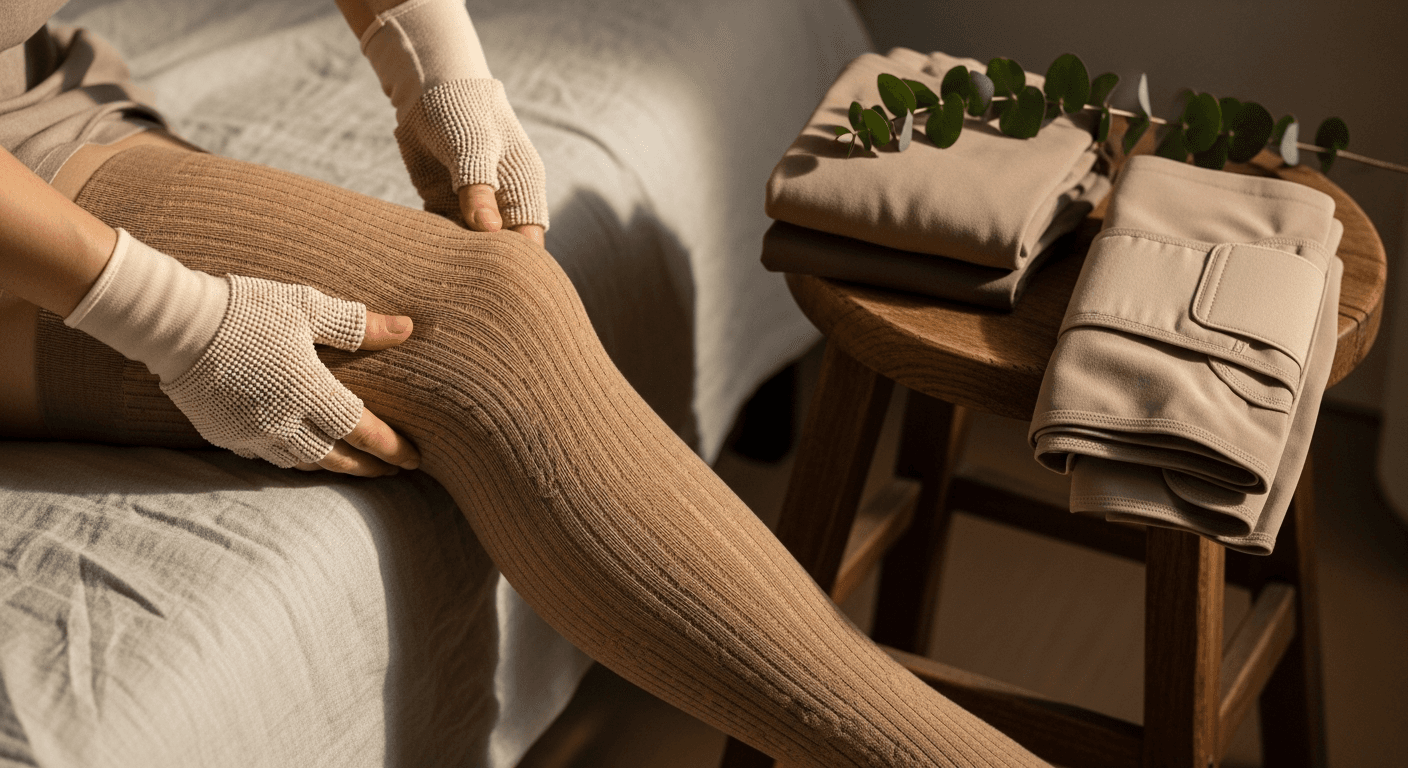
Because putting on medical-grade compression can be physically taxing, utilizing specialized donning aids is not just a convenience—it is a medical necessity for many POTS patients to prevent triggering symptoms. The most fundamental tool is a pair of donning gloves. These are specialized, rubberized gloves (though clean dishwashing or gardening gloves work perfectly) that provide a tacky grip on the fabric. Instead of pinching and pulling the tight elastic with your bare fingers—which can tear the threads and exhaust your hands—the gloves allow you to place your flat palms against your leg and smoothly glide the fabric upward. This distributes the force evenly and makes smoothing out wrinkles significantly easier.
For patients with limited mobility, joint hypermobility (such as Ehlers-Danlos Syndrome), or severe fatigue, a wire frame stocking donner (often called a "stocking butler") is invaluable. This device consists of a metal or plastic frame with a central U-shape and two long handles. You stretch the stocking inside-out over the frame, place it on the floor, step your foot directly into the pocket, and use the handles to pull the stocking up your leg without ever having to bend over. This eliminates the intense orthostatic stress of bending and straining, preserving your energy for the rest of the day.
Another highly effective category of tools includes friction-reducing sliders, such as the Juzo Slippie Gator or the Arion Magnide. These are slick, parachute-like sleeves that you slip over your foot before putting on the stocking. Because the material is virtually frictionless, the tight compression garment glides effortlessly over the heel and ankle—typically the most difficult part of the process. Once the stocking is in place, you simply pull the slippery sleeve out through the open toe of the garment. For those who struggle with the sheer physical force required to get compression over the heel, these sliders are absolute game-changers.
Symptom Tracking Apps
To truly understand if your compression strategy is working, objective data collection is incredibly helpful. Relying solely on memory can be difficult, especially when dealing with the cognitive impairment of brain fog. Utilizing symptom tracking apps allows you to monitor your heart rate trends and symptom severity on days you wear different types of compression versus days you do not. Apps like Guava, Bearable, or Cardiogram (which syncs with smartwatches like Apple Watch or Garmin) can help you visualize the direct impact of your garments.
By tracking your standing heart rate, you can perform your own "poor man's tilt table test" at home to evaluate different garments. For example, you might track your heart rate upon standing for 5 minutes while wearing knee-highs, and compare it to your heart rate the next day while wearing an abdominal binder and thigh-highs. Seeing the objective data—such as a 15 bpm difference between the two strategies—can provide immense validation and help you make informed decisions about which garments are truly worth the effort and investment for your specific body.
Trusted Brands and Patient Communities
Navigating the market of medical compression can be daunting, but several trusted brands consistently receive high marks from the dysautonomia community for their durability, accurate compression ratings, and variety of sizes. Brands like Sigvaris, Juzo, Jobst, and Medi are considered the gold standard in the medical field. They offer a wide range of fabrics, from sheer and breathable options for summer to opaque, softer microfibers for sensitive skin. For abdominal binders, many patients find success with surgical binders found at medical supply stores, or specialized compression shapewear brands that offer firm, targeted abdominal control.
Beyond physical tools, connecting with patient communities is an invaluable resource. Organizations like Dysautonomia International offer extensive educational materials, webinars, and local support group networks. Engaging with these communities allows you to learn from the lived experiences of thousands of other POTS patients. You can find recommendations for sensory-friendly brands, tips for getting compression garments covered by insurance, and emotional support from people who truly understand the daily reality of living with complex chronic conditions. The collective wisdom of the patient community is often one of the most powerful tools in your management arsenal.
What Research Shows About Compression for POTS
Landmark Studies on Abdominal vs. Lower Body Compression
The clinical understanding of compression therapy for POTS has evolved significantly over the past decade, shifting from a focus on the lower legs to a profound emphasis on the splanchnic (abdominal) vascular bed. The most definitive and frequently cited research on this topic is a landmark 2021 study published in the Journal of the American College of Cardiology (JACC) by Bourne et al.. This randomized crossover trial sought to objectively measure the hemodynamic impact of different compression garments on 30 patients diagnosed with POTS. The researchers utilized continuous heart rate and blood pressure monitoring during a 10-minute Head-Up Tilt (HUT) test, evaluating the patients under four distinct conditions: no compression, lower-leg compression only, abdominal and thigh compression, and full waist-high compression.
The findings of this study were groundbreaking and provided clear, actionable data for patients and physicians. The researchers discovered a direct, dose-dependent response based on the amount of body surface area compressed. Without any compression, the patients' average standing heart rate was 109 ± 19 beats per minute (bpm). When wearing lower-leg compression alone, the heart rate dropped modestly to 103 ± 16 bpm. However, when abdominal and thigh compression was applied, the heart rate dropped significantly to 97 ± 15 bpm. Finally, the application of full, waist-high compression (combining the abdomen and full legs) yielded the most dramatic result, lowering the average standing heart rate to 92 ± 14 bpm. This study definitively proved that to achieve optimal heart rate control in POTS, the abdomen must be compressed.
Hemodynamic Improvements and Heart Rate Reduction
Beyond simply lowering the heart rate, research has illuminated exactly how abdominal compression improves overall hemodynamics. A pivotal 2020 study published in the Journal of the American Heart Association by Smith, Diedrich et al. investigated the use of an automated inflatable abdominal binder in POTS patients. The researchers compared the effects of the binder alone, the beta-blocker propranolol alone, and the combination of both. They found that while the beta-blocker successfully lowered the standing heart rate, it also inadvertently lowered the standing blood pressure, which can exacerbate dizziness and brain fog in some patients.
Crucially, when the abdominal binder (inflated to 40 mmHg) was added to the treatment protocol, it acted as a powerful mechanical pressor. The binder prevented the drop in blood pressure caused by the medication and significantly enhanced venous return. By mechanically squeezing the massive capacitance vessels of the splanchnic bed, the binder increased cardiac preload and stroke volume. The study concluded that targeted abdominal compression not only provides superior symptom relief compared to medication alone but also acts synergistically with pharmacological treatments to stabilize the entire cardiovascular system during orthostatic stress.
Patient-Reported Outcomes and Quality of Life
While laboratory tilt-table tests provide excellent objective data, understanding how compression garments perform in the real world is equally important. A recent 2024 mixed-methods study published in PMC/MDPI explored the real-world habits and patient-reported outcomes of over 300 individuals utilizing compression products for dysautonomia. The survey data revealed a fascinating disconnect between clinical evidence and patient practice. While 98.9% of patients had tried compression garments, over 65% still relied primarily on lower-leg socks, despite clinical guidelines emphasizing the superiority of abdominal compression. Only about 23% regularly utilized abdominal binders or medical-grade shapewear.
The study highlighted that this "adherence gap" is largely driven by comfort and accessibility. Patients reported that full medical-grade tights and rigid binders can be physically uncomfortable, hot, and difficult to put on, especially for those dealing with chronic fatigue or joint pain. However, among the patients who did consistently use abdominal or waist-high compression, the self-reported improvements in quality of life were substantial. These patients reported fewer episodes of presyncope, improved cognitive function (less brain fog), and a greater ability to perform activities of daily living. The research underscores the need for continuous innovation in garment design to make highly effective abdominal compression more comfortable and accessible for daily, long-term wear.
The Path Forward with POTS Management
Building a Comprehensive Toolkit
Managing POTS and dysautonomia is rarely about finding a single "magic bullet" that eliminates all symptoms. Instead, it is about meticulously building a comprehensive, personalized toolkit of management strategies that work together synergistically. Compression garments—specifically those that target the abdomen and upper legs—are a foundational piece of this toolkit. By mechanically supporting your vascular system and reducing venous pooling, compression creates a more stable physiological baseline. This stability allows your other interventions, such as electrolyte supplementation, fluid loading, and carefully paced physical conditioning, to be significantly more effective. When your blood volume is optimized and mechanically directed toward your brain, your entire body functions with greater ease.
As you build this toolkit, remember that flexibility is key. Your needs may change from day to day based on the weather, your hormonal cycle, or your current energy envelope. Having a variety of compression options—such as a firm abdominal binder for hot summer days, waist-high tights for high-activity days, and comfortable thigh-highs for lounging—allows you to adapt your strategy to your body's real-time needs. Do not be afraid to experiment with different brands, styles, and donning aids until you find the exact combination that provides maximum hemodynamic benefit with minimal sensory or physical strain.
Setting Realistic Expectations
As you integrate compression therapy into your life, setting realistic expectations is crucial for long-term success and mental well-being. Compression garments are a highly effective management tool, but they are not a cure for autonomic dysfunction. Wearing them will not necessarily make your heart rate perfectly normal, nor will it grant you the ability to stand motionless for hours without consequence. What they will do is lower the peak of your tachycardia, delay the onset of severe symptoms, and widen your window of functional capacity. They are designed to improve your quality of life, reduce the severity of your daily struggles, and help you avoid debilitating post-exertional crashes.
It is also completely normal to experience a learning curve. Finding the right fit, mastering the donning techniques, and adjusting to the sensation of firm medical compression takes time and patience. Give yourself grace during this process. Celebrate the small victories—like being able to cook dinner without needing to sit on the floor, or taking a shower without feeling completely drained afterward. These incremental improvements, facilitated by consistent compression use, add up to a profoundly positive shift in your overall trajectory and independence.
Working with Your Healthcare Team
While this guide provides a comprehensive overview of compression therapy, it is imperative to remember that every patient's presentation of POTS is unique. Before making significant changes to your management plan, especially if you have co-occurring cardiovascular issues, peripheral neuropathy, or severe skin sensitivities, you must consult with your healthcare provider. A knowledgeable dysautonomia specialist can help you determine the safest and most effective compression level for your specific physiology, and can provide a prescription for medical-grade garments, which may help with insurance coverage.
If you are struggling to navigate the complexities of POTS, Long COVID, or other chronic complex conditions, you do not have to do it alone. The clinical team at RTHM is dedicated to providing comprehensive, evidence-based care tailored to the unique needs of patients with dysautonomia. From personalized medical management to advanced diagnostic insights, we are here to support you in building a robust, effective treatment plan. Learn more about RTHM's approach to complex chronic care and discover how a dedicated, specialized healthcare team can help you reclaim your quality of life and move forward with confidence.
Sources
Bourne, K. M., et al. (2021). "Compression Garment Reduces Orthostatic Tachycardia and Symptoms in Patients With Postural Orthostatic Tachycardia Syndrome." Journal of the American College of Cardiology (JACC), 77(3), 285-296. Link
Smith, W., Diedrich, A., et al. (2020). "Abdominal Compression as a Treatment for Postural Tachycardia Syndrome." Journal of the American Heart Association (JAHA), 9(14). Link
Heyer, G. L. (2014). "Abdominal and lower extremity compression attenuates orthostatic tachycardia and symptoms in youth with postural tachycardia syndrome." The Journal of Pediatrics, 165(2), 395-399.
Dysautonomia International. "How do compression garments work?" The Dysautonomia Dispatch. Link
Raj, S. R. (2013). "Postural tachycardia syndrome (POTS)." Circulation, 127(23), 2336-2342.
Arnold, A. C., et al. (2013). "Splanchnic capacitance and venous pooling in postural tachycardia syndrome." Journal of Applied Physiology, 114(5), 611-617.