Can Astaxanthin Support Cellular Energy and Brain Fog in Long COVID and ME/CFS?
March 6, 2026
AstaxanthinLong COVIDME/CFS
Share:
Disclaimer: The information provided here is for educational purposes only and is not intended as medical advice. It should not be used to diagnose, treat, cure, or prevent any medical condition. Instead, use it as a starting point for discussion with your healthcare provider. Always consult with a qualified healthcare provider before starting any new medication, supplement, device, or making changes to your health regimen.
Months or even years after recovering from an initial viral infection, many individuals find themselves trapped in a relentless cycle of debilitating symptoms. If you are living with Long COVID, myalgic encephalomyelitis/chronic fatigue syndrome (ME/CFS), or dysautonomia, you are likely intimately familiar with the profound, heavy fatigue that does not improve with rest. You may also experience severe brain fog that makes simple conversations difficult, or post-exertional malaise (PEM) that triggers a cascade of systemic symptoms after minimal physical or cognitive effort. These are not merely signs of being "tired"; they are the result of complex, invisible physiological disruptions occurring at the deepest cellular levels of your body, leaving you frustrated and searching for answers.
In the ongoing search for therapies that address these root cellular dysfunctions, researchers are increasingly turning their attention to naturally occurring compounds with profound biological activity. One such compound is astaxanthin, a vibrant red pigment and incredibly potent antioxidant derived from microalgae. Unlike standard over-the-counter vitamins, astaxanthin possesses a unique molecular structure that allows it to cross the blood-brain barrier and physically embed itself into the membranes of our cells and mitochondria. By targeting the exact mechanisms of oxidative stress and neuroinflammation that drive post-acute infection syndromes, astaxanthin is emerging as a compelling tool for supporting cellular resilience and managing the complex symptoms of chronic illness.
TL;DR
Astaxanthin is a potent antioxidant that crosses the blood-brain barrier to support cellular and mitochondrial health.
It may help manage brain fog, fatigue, and post-exertional malaise by reducing oxidative stress and neuroinflammation.
For maximum absorption, astaxanthin must be taken alongside a meal containing healthy fats.
Always consult your doctor before starting, as it may interact with blood pressure or blood-thinning medications.
What is Astaxanthin?
Astaxanthin is a naturally occurring, deep-red xanthophyll carotenoid, a class of organic pigments produced by plants and algae. In nature, it is most abundantly synthesized by the microalgae Haematococcus pluvialis as a survival mechanism. When this algae is subjected to severe environmental stress—such as intense sunlight, extreme temperature changes, or nutrient deprivation—it produces massive amounts of astaxanthin to protect its cellular DNA and mitochondria from destruction. This pigment is then passed up the food chain, providing the characteristic pink and red hues to marine life that consume it, including wild salmon, krill, shrimp, and flamingos. In human biology, astaxanthin is highly regarded by researchers as one of the most potent natural antioxidants discovered to date, with an antioxidant capacity estimated to be roughly 6,000 times greater than Vitamin C, 800 times that of Coenzyme Q10 (CoQ10), and 550 times that of Vitamin E, according to comprehensive pharmacological reviews.
What truly separates astaxanthin from other well-known antioxidants is its unique biochemical behavior when neutralizing free radicals. Many conventional antioxidants, such as Vitamin C or Vitamin E, can sometimes flip into a harmful "pro-oxidant" state after they donate an electron to neutralize a reactive oxygen species (ROS). This means they can inadvertently contribute to the very oxidative stress they are meant to prevent if not properly recycled by the body. Astaxanthin, however, is considered a "pure" antioxidant. Its molecular structure allows it to absorb and dissipate the excess energy of free radicals without ever becoming a dangerous pro-oxidant itself, making it exceptionally safe and effective for long-term cellular protection, as detailed in research on marine-derived antioxidants.
To understand why astaxanthin is so effective, we must look at its physical shape and how it interacts with the phospholipid bilayers that form the outer membranes of our cells and our mitochondria. Standard antioxidants are typically limited by their solubility. For instance, Vitamin C is hydrophilic (water-soluble), meaning it circulates in the watery environment outside the cell but cannot easily penetrate the lipid (fatty) membrane. Conversely, beta-carotene is highly lipophilic (fat-soluble) and gets trapped entirely inside the hydrophobic core of the cell membrane. Astaxanthin possesses a long, conjugated polyene chain with polar (water-loving) hydroxyl and carbonyl groups at both ends, allowing it to act as a transmembrane-spanning molecule.
Because of this unique molecular architecture, astaxanthin physically anchors itself across the entire thickness of the cellular membrane. One polar end sits on the outside of the cell, the long lipid chain spans the middle, and the other polar end sits on the inside of the cell. This allows astaxanthin to simultaneously protect the inner and outer layers of the membrane from oxidative destruction while also intercepting free radicals generated within the lipid core. By preserving the structural integrity of these membranes, astaxanthin ensures that cellular receptors function correctly, nutrient transport remains efficient, and the cell can effectively communicate with its environment.
Beyond acting as a direct physical shield against free radicals, astaxanthin functions as a profound modulator of biological signaling pathways, effectively reprogramming the cell to defend itself. Its primary mechanism of action involves the activation of the Nrf2/ARE (Nuclear factor erythroid 2-related factor 2 / Antioxidant Response Element) pathway. Under normal conditions, the Nrf2 protein is bound to an inhibitor protein called Keap1, which keeps it dormant in the cell's cytoplasm. Astaxanthin competitively interacts with Keap1, causing it to release Nrf2. Once liberated, Nrf2 travels into the cell's nucleus and binds to the DNA, upregulating the body’s own endogenous antioxidant enzymes, including superoxide dismutase (SOD), catalase (CAT), and glutathione peroxidase (GPx). This forces the body to manufacture its own internal defense system against oxidative stress, as explained in research on astaxanthin's regulatory mechanisms.
Simultaneously, astaxanthin exerts powerful anti-inflammatory effects by suppressing the NF-κB (Nuclear factor kappa-light-chain-enhancer of activated B cells) pathway. NF-κB is a protein complex that controls the transcription of DNA, cytokine production, and cell survival; it is essentially the "master switch" for inflammation in the human body. When activated by stress or infection, NF-κB triggers the massive release of pro-inflammatory cytokines like Tumor Necrosis Factor-alpha (TNF-α) and Interleukin-6 (IL-6). By actively inhibiting the translocation of NF-κB into the nucleus, astaxanthin effectively turns down the volume on systemic inflammation, helping to manage the runaway inflammatory cascades that are characteristic of complex chronic illnesses.
How Chronic Illness Impacts Cellular Health
In healthy individuals, the immune system mounts a temporary inflammatory response to clear an infection, followed by a resolution phase where tissues heal and return to normal. However, in conditions like Long COVID, this resolution phase fails to occur. The initial SARS-CoV-2 infection triggers a massive "cytokine storm," an explosive release of inflammatory signaling molecules that causes widespread tissue damage. This process generates overwhelming amounts of reactive oxygen species (ROS), highly unstable molecules that steal electrons from healthy tissues, causing massive oxidative stress. Research indicates that the SARS-CoV-2 virus actively binds to and disrupts the Keap1-Nrf2 pathway, effectively disabling the body's natural antioxidant response just when it is needed most, as detailed in studies on viral antioxidant suppression.
This creates a vicious, self-perpetuating cycle. The unneutralized ROS cause continuous damage to the endothelial cells lining the blood vessels, leading to microvascular dysfunction and the formation of microscopic blood clots (fibrin amyloid microclots). This impairs oxygen delivery to tissues, a condition known as hypoxia. Hypoxia then triggers the mitochondria to produce even more ROS, which in turn stimulates the NF-κB pathway to release more inflammatory cytokines. For patients with Long COVID and ME/CFS, this relentless loop of oxidative stress and chronic inflammation prevents the body from achieving homeostasis, leaving the patient in a constant state of physiological exhaustion and immune hyperactivation.
One of the most debilitating symptoms shared by Long COVID, ME/CFS, and dysautonomia is severe cognitive impairment, commonly referred to as "brain fog." This is not a psychological symptom, but rather a direct result of neuroinflammation—the chronic activation of the brain's resident immune cells, known as microglia and astrocytes. When systemic inflammation and oxidative stress breach the blood-brain barrier, these microglial cells shift from a resting, neuroprotective state into an aggressive, pro-inflammatory "M1" state. They begin secreting neurotoxic cytokines (like IL-1β and TNF-α) directly into the delicate neural tissue, disrupting synaptic communication and slowing down the speed at which neurons can process information, as outlined in research on neuroinflammation modulation.
Furthermore, the brain is an incredibly energy-demanding organ, consuming roughly 20% of the body's total ATP (cellular energy) despite accounting for only 2% of its mass. Because it is so rich in polyunsaturated fatty acids and has a high oxygen consumption rate, the brain is uniquely vulnerable to lipid peroxidation—the oxidative destruction of fats. When the protective lipid membranes of neurons are damaged by unchecked free radicals, the electrical signaling between brain cells misfires. This neuroinflammatory environment is what makes reading a book, following a conversation, or tolerating bright lights and loud noises feel physically painful and exhausting for patients navigating these complex neuroimmune conditions.
At the core of the profound fatigue and post-exertional malaise (PEM) seen in ME/CFS and Long COVID lies severe mitochondrial dysfunction. Mitochondria are the microscopic powerhouses inside our cells responsible for converting the food we eat and the oxygen we breathe into adenosine triphosphate (ATP), the energy currency of the body. This process occurs along the inner mitochondrial membrane through a sequence of protein complexes known as the electron transport chain (ETC). In a healthy state, electrons flow smoothly down this chain. However, metabolic studies on ME/CFS and Long COVID have shown that the mitochondria in these patients are structurally abnormal, often appearing swollen with disrupted cristae (the inner folds), and they struggle to efficiently produce ATP.
When the electron transport chain is damaged by chronic inflammation or viral remnants, it begins to "leak" electrons. These rogue electrons bind with oxygen to form superoxide, a highly destructive free radical. Instead of producing energy, the mitochondria become factories for oxidative stress, damaging their own DNA (mtDNA) and lipid membranes in the process. This forces the cells to abandon efficient aerobic respiration and switch to a highly inefficient, emergency energy production method called glycolysis, which produces lactic acid as a byproduct. This rapid accumulation of lactic acid and the sheer lack of ATP explain why patients experience debilitating crashes and muscle weakness after seemingly minor physical or cognitive exertion.
Astaxanthin: Supporting Cellular Energy and Brain Health
Because neuroinflammation is a primary driver of cognitive dysfunction in Long COVID and ME/CFS, any effective therapeutic agent must be able to physically reach the central nervous system. The blood-brain barrier (BBB) is a highly selective, semi-permeable border of endothelial cells that prevents circulating toxins and pathogens from entering the brain. Unfortunately, it also blocks many beneficial supplements and conventional antioxidants. Astaxanthin, however, possesses a unique lipophilic (fat-soluble) structure with polar ends that allows it to seamlessly cross the blood-brain barrier and integrate directly into the lipid bilayers of brain cells, as demonstrated in recent clinical reviews of astaxanthin and cognitive function.
Once inside the brain, astaxanthin exerts direct neuroprotective effects. It actively suppresses the NF-κB signaling cascade within the brain tissue, which halts the activation of microglia and astrocytes. By shifting these immune cells away from their destructive "M1" state and promoting a tissue-repairing "M2" state, astaxanthin drastically reduces the localized release of pro-inflammatory cytokines like IL-6 and TNF-α. Additionally, astaxanthin has been shown in 2024 studies to upregulate Brain-Derived Neurotrophic Factor (BDNF), a crucial protein that supports the survival of existing neurons and encourages the growth of new neural connections (synaptic plasticity). This multi-targeted approach helps to clear the neuroinflammatory "fog," potentially improving processing speed, memory recall, and sensory tolerance in patients with chronic neuroimmune conditions.
To combat the profound fatigue and post-exertional malaise (PEM) that define ME/CFS and Long COVID, cellular energy production must be restored at the root level. Astaxanthin acts as a highly effective, mitochondrial-targeted antioxidant. Because it spans the cellular membrane, it physically integrates into the inner mitochondrial membrane right alongside the electron transport chain (ETC). Here, it acts as a structural shield, protecting the delicate respiratory chain proteins from being destroyed by the very free radicals they produce during ATP synthesis. By helping to protect against lipid peroxidation of the mitochondrial membrane, astaxanthin ensures that the ETC can function efficiently without leaking rogue electrons.
Furthermore, astaxanthin does not just protect existing mitochondria; it actively stimulates the creation of new ones. Under metabolic stress, astaxanthin upregulates a master regulatory gene called PGC-1α (Peroxisome proliferator-activated receptor-gamma coactivator 1-alpha) and mitochondrial transcription factor A (TFAM). The activation of these pathways triggers mitochondrial biogenesis—the cellular process of manufacturing fresh, healthy mitochondria to replace those that have been damaged or destroyed by viral infection or chronic inflammation. By increasing the total density and health of the mitochondrial network within skeletal muscle and organs, astaxanthin helps restore the body's capacity to generate ATP aerobically, thereby raising the threshold for exertion and potentially reducing the severity of PEM crashes.
In conditions like mast cell activation syndrome (MCAS) and Long COVID, the immune system is locked in a state of hyper-reactivity, constantly misidentifying benign stimuli as threats and releasing cascades of inflammatory mediators. Astaxanthin provides critical support by modulating this systemic immune response. By activating the Nrf2/ARE pathway, astaxanthin forces the body to upregulate its endogenous antioxidant enzymes—such as superoxide dismutase (SOD) and catalase (CAT)—which systematically sweep through the bloodstream and tissues, neutralizing the reactive oxygen species that keep the immune system in a state of panic, according to studies on Nrf2 activation and Long COVID recovery.
This systemic redox balance is crucial for endothelial health, which is deeply compromised in dysautonomia and POTS (Postural Orthostatic Tachycardia Syndrome). Oxidative stress damages the endothelial cells lining the blood vessels, impairing their ability to produce nitric oxide, a molecule necessary for proper blood vessel dilation and constriction. By lowering the levels of oxidized LDL cholesterol and reducing advanced oxidation protein products (AOPP) in the blood, astaxanthin helps restore endothelial function and blood rheology (the smooth flow of red blood cells). This cardiovascular support is vital for patients struggling with the blood pooling, rapid heart rates, and orthostatic intolerance that characterize dysautonomia and Long COVID.
Symptoms Astaxanthin May Help Manage
Because astaxanthin operates at the foundational level of cellular membranes and mitochondrial function, its benefits can cascade across multiple organ systems. For patients managing the unpredictable and overlapping symptoms of Long COVID, ME/CFS, and dysautonomia, this multi-targeted approach is particularly valuable. While astaxanthin is not a cure, clinical research and mechanistic data suggest it may help manage the following specific symptoms:
Profound Fatigue and Low Energy: By protecting the electron transport chain and stimulating mitochondrial biogenesis (via the PGC-1α pathway), astaxanthin helps restore efficient ATP production, potentially raising your baseline energy levels and reducing the constant feeling of cellular exhaustion.
Brain Fog and Cognitive Impairment: Because it crosses the blood-brain barrier, astaxanthin directly suppresses microglial activation and neuroinflammation (via the NF-κB pathway), which may improve processing speed, memory recall, and the ability to concentrate.
Post-Exertional Malaise (PEM): By helping to protect against lipid peroxidation in skeletal muscle and reducing the accumulation of lactic acid during physical exertion, astaxanthin may help raise the threshold for exertion, potentially reducing the severity and duration of PEM crashes.
Orthostatic Intolerance and Blood Pooling: Astaxanthin supports endothelial function and nitric oxide bioavailability by reducing oxidative damage to blood vessels, which may assist the autonomic nervous system in properly regulating blood flow and heart rate upon standing.
Sensory Overload: By upregulating Brain-Derived Neurotrophic Factor (BDNF) and reducing neurotoxic cytokines in the central nervous system, astaxanthin may help calm an overactive nervous system, reducing hypersensitivity to light, sound, and stimuli.
Muscle and Joint Pain: Its potent systemic anti-inflammatory properties help lower circulating levels of pro-inflammatory cytokines (like TNF-α and IL-6), which can alleviate the chronic, widespread muscular aching often reported in post-viral syndromes.
Vision Issues and Eye Strain: As a carotenoid that accumulates in the retina, astaxanthin protects the eyes from oxidative stress and blue light damage, helping to reduce the visual fatigue and blurred vision that often accompany severe dysautonomia and screen use.
Practical Considerations: Forms, Dosing, and Absorption
While astaxanthin is an incredibly potent molecule, it is notoriously difficult for the human body to absorb in its raw, natural state. Its absolute oral bioavailability is estimated to be quite low (between 4% and 18%) when taken incorrectly. Because astaxanthin is a lipophilic (fat-soluble) compound, it cannot be effectively absorbed in a watery environment; it requires the presence of dietary fat and the secretion of bile acids in the intestines to form "micelles." These micelles are tiny lipid-containing delivery vesicles that transport the astaxanthin through the intestinal wall and into the bloodstream. Therefore, taking astaxanthin on an empty stomach will result in the vast majority of the supplement passing through your digestive tract unabsorbed.
To maximize bioavailability, it is critical to take your astaxanthin supplement alongside a meal that contains a substantial amount of healthy fats—such as eggs, avocados, olive oil, nuts, or fatty fish. Furthermore, the timing of the dose matters significantly. Clinical pharmacokinetic research comparing absorption rates found that taking astaxanthin after a fat-containing meal resulted in an area under the curve (AUC, a measurement of total drug absorption) that was more than double the absorption rate of taking it before a meal. Once absorbed, native astaxanthin takes a relatively long time to peak in the bloodstream (typically 6 to 11 hours) but remains active for a substantial period, boasting a half-life of 16 to 32 hours.
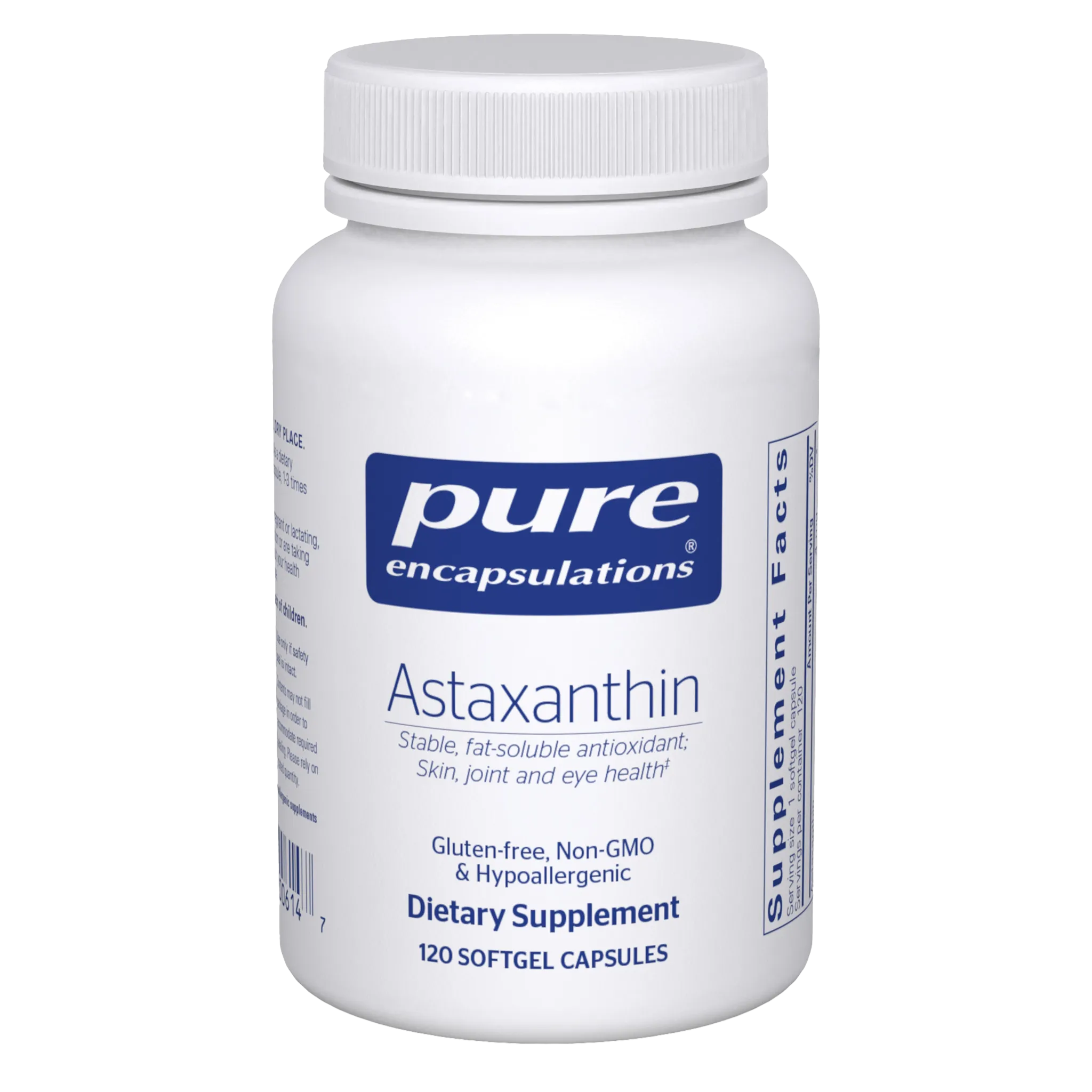
There is no single standardized dose for astaxanthin, as the optimal amount depends heavily on your specific health goals and the severity of your systemic oxidative stress. In clinical trials, daily doses generally range from 2 mg to 12 mg. For general antioxidant and immune support, doses of 2 to 4 mg are often sufficient. However, for targeting neuroinflammation, severe mitochondrial dysfunction, and cardiovascular health, studies frequently utilize higher doses ranging from 6 mg to 12 mg daily. The Pure Encapsulations product provides 4 mg of esterified astaxanthin per capsule, allowing patients to easily titrate their dose from 4 mg up to 12 mg daily (taken in divided doses with meals) under the guidance of a healthcare professional.
When selecting an astaxanthin supplement, the source is paramount. The most bioavailable and clinically researched form is natural, esterified astaxanthin derived directly from the Haematococcus pluvialis microalgae. In this natural state, the astaxanthin molecule is attached to fatty acids (esterified), which makes it significantly more stable and easier for the human body to utilize compared to synthetic astaxanthin (which is derived from petrochemicals and is not approved for human consumption). Advanced formulations, such as those utilizing micellar technology or sustained-release dispersions, can further enhance absorption, but a high-quality algal extract taken with adequate dietary fat remains the gold standard for therapeutic use.
Naturally derived astaxanthin boasts a robust safety profile and is considered Generally Recognized as Safe (GRAS) by the FDA. Clinical studies involving thousands of participants have demonstrated excellent tolerability at doses up to 12 mg per day for extended periods. The most commonly reported side effect is a harmless, reddish discoloration of the stool, which is simply the unabsorbed red pigment passing through the digestive tract. However, because astaxanthin is a biologically active compound that modulates immune and cardiovascular pathways, it can interact with certain medications. It acts as a mild 5-alpha-reductase inhibitor, meaning it can theoretically alter hormone metabolism (similar to drugs like finasteride), though this is rare at standard doses, according to comprehensive safety reviews on astaxanthin.
Crucially, astaxanthin can interact with blood thinners and blood pressure medications. Because it naturally improves blood flow and can lower diastolic blood pressure, combining it with prescription antihypertensives can cause an additive effect, leading to hypotension (abnormally low blood pressure)—a particular concern for patients with dysautonomia or POTS who already struggle with blood pressure regulation. Additionally, astaxanthin may increase the risk of bruising or bleeding if taken alongside anticoagulants like warfarin, aspirin, or NSAIDs. It may also interact with the CYP450 enzyme system in the liver, potentially altering how other medications are metabolized. As always, patients with complex chronic illnesses should consult their healthcare provider or pharmacist before introducing astaxanthin, especially if they are on a complex medication regimen or have an autoimmune condition.
Follow the Science
The scientific literature surrounding astaxanthin has expanded rapidly, particularly regarding its role as a "geroneuroprotector"—an agent that protects the brain against aging and neurodegeneration. A comprehensive 2024 critical review published in Nutrients synthesized multiple human clinical trials evaluating astaxanthin's impact on cognitive function. The review confirmed that administering 6 mg to 12 mg of astaxanthin daily over 8 to 12 weeks yielded modest but statistically significant improvements in episodic memory, psychomotor speed, and processing speed in older adults and those with mild cognitive impairment. These cognitive improvements were directly correlated with measurable reductions in systemic oxidative stress biomarkers, such as malondialdehyde and lipid hydroperoxides, in the patients' blood plasma, as detailed in the critical review of astaxanthin on cognitive function.
Furthermore, ongoing clinical trials registered in 2023 and 2024 are rigorously testing astaxanthin's disease-modifying potential in more severe neurological conditions. For example, a 1-year randomized, double-blind, placebo-controlled trial (NCT05015374) is currently evaluating astaxanthin as an adjuvant therapy for patients with mild Alzheimer's Disease who are already taking standard cholinesterase inhibitors. Researchers are tracking specific cognitive endpoints, including the Mini-Mental State Examination (MMSE) and Clinical Dementia Rating (CDR), to determine if astaxanthin's ability to cross the blood-brain barrier and suppress amyloid-beta production translates into long-term cognitive preservation. These robust trial designs highlight the medical community's growing confidence in astaxanthin's neuroprotective mechanisms.
While large-scale, double-blind clinical trials specifically isolating astaxanthin for Long COVID and ME/CFS are still in their infancy, emerging observational data and multi-ingredient studies provide highly compelling evidence for its efficacy. A 2022 observational, open-label study published in JSciMed Central investigated 113 patients suffering from ME/CFS and Long COVID. The patients were treated with a specialized nutraceutical protocol that featured a high dose of astaxanthin derived from Haematococcus pluvialis, alongside ubiquinol (CoQ10) and adaptogens. After just 4 to 6 weeks of treatment, an astounding 86% of the patients reported a noticeable decrease in their profound fatigue, with an average 23% reduction in their standardized Fatigue Severity Scale (FSS) scores.
This clinical data aligns perfectly with the known pathophysiology of post-acute infection syndromes. As highlighted by recent research into ME/CFS and Long COVID shared mechanisms, both conditions are driven by a failure to resolve an acute immune response, leading to chronic systemic inflammation, microglial activation, and severe mitochondrial defects. By acting as a targeted mitochondrial antioxidant that simultaneously upregulates the Nrf2 defense pathway and downregulates the NF-κB inflammatory cascade, astaxanthin addresses the exact cellular dysfunctions that perpetuate the cycle of long-term COVID symptoms. As research continues to evolve, astaxanthin is rapidly securing its place in orthomolecular and integrative protocols designed to restore cellular metabolic function in post-viral patients.
The Path Forward
Living with a complex chronic illness like Long COVID, ME/CFS, or dysautonomia is an exhausting, unpredictable journey. It is entirely valid to feel overwhelmed by the sheer physical weight of your symptoms and the cognitive fog that clouds your daily life. While no single supplement is a magic cure for these deeply entrenched neuroimmune conditions, compounds like astaxanthin offer a scientifically grounded way to support your body at the foundational cellular level. By protecting your mitochondria from oxidative destruction, calming neuroinflammation in the brain, and supporting cardiovascular health, astaxanthin can help raise your baseline resilience and provide your cells with the environment they need to begin repairing themselves.
Astaxanthin is most effective when utilized as one piece of a comprehensive, multi-disciplinary management strategy. It should be combined with aggressive pacing to avoid triggering post-exertional malaise, meticulous symptom tracking, autonomic nervous system regulation techniques, and ongoing medical care from specialists who understand the nuances of diagnosing and treating Long COVID. Because astaxanthin is biologically active and can interact with certain medications, it is crucial to consult with your healthcare provider before adding it to your regimen to ensure it is safe and appropriate for your specific clinical picture.